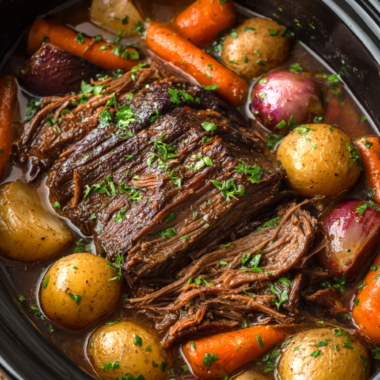
There’s a reason pot roast shows up on so many fall and winter dinner tables — it’s the kind of meal that fills the house with a smell that makes everyone wander into the kitchen asking when it’s ready.
This crockpot pot roast takes maybe 15 minutes of actual hands-on work, then the slow cooker does the rest while you go about your day.
This version leans into a fully trimmed chuck roast, which means it’s not just comforting; it’s genuinely high in protein — a real dinner, not a side dish with a little meat on top. Potatoes and carrots cook right alongside it, so you’re not juggling multiple pots for one meal.
It’s a good one to put in the rotation now, before the weather gets cold enough that you actually need it. Once the temperature drops, this is the kind of dinner that makes a rough week feel a little more manageable.
Why This Recipe Works

Searing the roast first builds a deep, browned flavor base that a slow cooker alone can’t create. The Maillard reaction creates complex savory notes that infuse the entire dish.
Chuck roast has enough marbling and connective tissue to turn tender and shreddable over a long cook, instead of drying out like leaner cuts.
Potatoes and carrots cook in the same pot, so there’s no extra side dish to manage on a busy night.
The gravy step turns the cooking liquid into something worth spooning over every bite, instead of letting it go to waste.
Crockpot Pot Roast (Fall-Off-the-Fork Tender)

This high-protein crockpot pot roast is fall-off-the-bone tender, packed with 46g of protein per serving, and needs just 15 minutes of prep before it cooks itself into a rich, comforting dinner the whole family will love.
Ingredients
- 3 lb beef chuck roast, trimmed of excess fat
- 1 tbsp olive oil (or avocado oil)
- 1 tsp salt
- ½ tsp black pepper
- 1 tsp garlic powder
- 1 lb baby potatoes, halved (or Yukon Gold, cut into 2-inch chunks)
- 4 large carrots, cut into 2-inch pieces (thicker than potatoes)
- 1 yellow onion, cut into 8 wedges
- 4 cloves garlic, smashed
- 3 cups low-sodium beef broth
- 2 tbsp tomato paste
- 1 tbsp Worcestershire sauce
- 1 tbsp low-sodium soy sauce (or coconut aminos)
- 1 tsp dried thyme (or 3 sprigs fresh)
- 1 tsp dried rosemary (or 2 sprigs fresh)
- 2 bay leaves
- 1 tbsp balsamic vinegar or red wine vinegar (for brightness)
For the gravy (optional):
- 2 tbsp butter
- 2 tbsp all-purpose flour (or cornstarch for gluten-free)
- 2 tbsp cold water (if using cornstarch)
Instructions
- Pat the chuck roast completely dry with paper towels. This step is critical — moisture prevents browning. Season all over with salt, pepper, and garlic powder.
- Heat the olive oil in a large skillet or Dutch oven over medium-high heat until shimmering. The oil should ripple when you tilt the pan. Sear the roast for 4 to 5 minutes per side, until deeply browned and a crust has formed. Don’t rush this step — the brown color equals flavor. Transfer the roast to a plate.
- Pour off all but 1 tablespoon of the fat from the skillet. Reduce heat to medium. Add the onion wedges and cook for 3 to 4 minutes, stirring occasionally, until they start to soften and brown at the edges. Add the garlic and tomato paste and cook for 1 minute, stirring constantly, until the tomato paste darkens slightly. This “blooms” the tomato paste and deepens its flavor.
- Pour about ½ cup of the beef broth into the skillet and scrape up any browned bits from the bottom with a wooden spoon. This deglazes the pan and captures all the flavor. Pour this mixture into the crockpot.
- Place the potatoes and carrots in the bottom of the crockpot. Set the seared roast on top of the vegetables.
- In a bowl, whisk together the remaining beef broth, Worcestershire sauce, soy sauce, thyme, rosemary, and balsamic vinegar. Pour over the roast and vegetables. Tuck in the bay leaves.
- Cover and cook on LOW for 8 to 9 hours, or on HIGH for 5 to 6 hours, until the roast is fork-tender and shreds easily. The internal temperature should reach at least 195°F for shreddable meat.
- Carefully remove the roast and vegetables to a platter. Tent with foil and let rest for 15 minutes. This allows the juices to redistribute. Discard the bay leaves.
- For the gravy: Strain the cooking liquid through a fine-mesh strainer into a saucepan. Skim off any excess fat. Roux method: Melt the butter in a small saucepan over medium heat. Whisk in the flour and cook for 1 to 2 minutes, stirring constantly, until golden and bubbling. Slowly whisk in 2 cups of the strained liquid. Simmer 3 to 4 minutes, whisking occasionally, until thickened. Cornstarch method: Whisk the cornstarch with cold water until smooth. Bring the strained liquid to a simmer, then whisk in the cornstarch slurry. Cook 2 to 3 minutes, stirring occasionally, until thickened. Season the gravy with salt and pepper to taste.
- Shred the roast with two forks (it should fall apart easily). Serve the shredded meat alongside the vegetables, generously spooning the gravy over everything.
Ingredient Notes & Substitutions
Chuck roast: This is the ideal cut for pot roast. Look for one with good marbling — the fat streaks melt during cooking, keeping the meat moist and flavorful. If you can’t find chuck, beef brisket is a good alternative.
Potatoes: Baby potatoes hold their shape better than russets. If using Yukon Gold, cut them into 2-inch chunks. Cut potatoes larger than carrots since they cook faster.
Carrots: Cut carrots into 2-inch pieces, thicker than the potatoes, so they cook at the same rate. Avoid cutting them too small — they’ll turn to mush.
Broth: Use low-sodium beef broth to control the salt level. You can also use chicken broth in a pinch.
Herbs: Fresh thyme and rosemary are ideal, but dried work well — use about half the amount called for.
Pro Tips for the Best Pot Roast

Pat the roast completely dry. Moisture is the enemy of browning. Use paper towels to remove as much surface moisture as possible.
Don’t skip the sear. This is the single most important step for flavor. The browned crust creates the foundation of the entire dish.
Season generously. Chuck roast is a large cut of meat. Don’t be shy with the salt and pepper.
Let it rest. Resting the meat for 15 minutes before shredding allows the juices to redistribute throughout the meat rather than run out onto the cutting board.
Cook low and slow. The connective tissue in chuck roast needs time to break down. Low and slow (8 hours on LOW) yields the most tender result.
Add acid. A splash of balsamic or red wine vinegar brightens the dish and balances the richness of the meat and gravy.
Layer flavors. Building flavor in stages — searing, sautéing aromatics, blooming tomato paste, deglazing — creates a depth that one-step methods can’t achieve.
Storage and Reheating

Refrigerate: Store the roast, vegetables, and gravy together in an airtight container in the fridge for up to 4 days. Reheat gently on the stove over medium-low heat or in the microwave, adding a splash of beef broth if the gravy has thickened too much overnight.
Freeze: For longer storage, this freezes well for up to 3 months. The potatoes may turn slightly grainy after thawing, so consider freezing without potatoes or accepting the texture change.
Meal prep idea: Shred the leftover meat and use it for sandwiches, over rice, or folded into a quick beef-and-vegetable soup the next day.
Variations to Try

Lower-carb version: Swap the potatoes for parsnips or turnips for a still-hearty, lower-carb option.
Red wine version: Add ½ cup of red wine to the broth mixture, reducing the beef broth by the same amount. The wine adds richness and depth.
French onion version: Add 2 cups of sliced onions to the bottom of the crockpot, then use 1 cup of beef broth and 1 cup of dry red wine for a French onion-inspired pot roast.
Mushroom version: Add 8 oz of sliced mushrooms during the last hour of cooking for an earthy, savory variation.
Herb variation: Add a bundle of fresh thyme, rosemary, and parsley tied with kitchen twine for easy removal.
QA
What’s the best cut of beef for crockpot pot roast?
Chuck roast is the standard choice, and for good reason. It has enough connective tissue and marbling to break down into tender, shreddable meat over a long, slow cook. Leaner cuts like sirloin or round roast don’t do nearly as well.
Do I really need to sear the roast first?
You don’t have to, but it makes a real difference in flavor. Searing builds a browned crust that adds depth to the whole dish. If you’re short on time, you can skip it and still end up with a good pot roast, just a slightly less complex one.
Can I make this pot roast on high instead of low?
Yes. Cooking on high for 5 to 6 hours works if you’re short on time, but cooking low and slow for 8 to 9 hours tends to yield a more tender, evenly cooked result, since the connective tissue has more time to break down gently.
How do I store and reheat leftover pot roast?
Store the meat, vegetables, and gravy together in an airtight container in the fridge for up to 4 days. Reheat gently on the stove or in the microwave, adding a splash of beef broth if the gravy has thickened too much.
Can I freeze crockpot pot roast?
Yes, it freezes well for up to 3 months. The potatoes can turn slightly grainy after freezing and thawing, so if you’re planning to freeze portions, consider leaving some potatoes out and adding freshly cooked ones when reheating.
Is crockpot pot roast actually high in protein?
Yes. A trimmed 3-pound chuck roast split into 6 servings yields roughly 46 grams of protein per serving, which is a substantial amount for a single dinner portion.
What if my pot roast is tough after cooking?
It likely needs more time. Chuck roast becomes tender as collagen breaks down, a process that requires both time and temperature. Put it back in the crockpot for another 1-2 hours on LOW and check again.
How do I keep the vegetables from getting mushy?
Cut the potatoes larger than the carrots. Potatoes cook faster, so making them bigger ensures they don’t disintegrate. Also, arrange the vegetables at the bottom of the crockpot where they cook more gently.
Can I add more vegetables?
Absolutely! Mushrooms, celery, and parsnips all work well. Add firm vegetables at the start and softer ones (like peas or green beans) during the last hour.
What if I don’t have beef broth?
Chicken broth or vegetable broth will work in a pinch. You can also use water with a bouillon cube or Better Than Bouillon paste.
Conclusion
Crockpot pot roast earns its place as a fall and winter staple, honestly — it’s genuinely low-effort, it feeds a family without extra sides to think about, and it actually comes with enough protein to count as a full dinner. Once the roast and vegetables are in, the slow cooker takes it from there.
Make it once this season, and you’ll probably understand why it keeps showing up on so many dinner tables once the weather turns. Keep the leftovers on hand too, since a shredded pot roast sandwich the next day might be just as good as the first night.