If Sunday dinner keeps sliding into “whatever’s fastest” by Wednesday, you’re not alone. Between work, errands, and the general chaos of a normal week, most of us aren’t looking for a complicated dinner — we’re looking for one that basically makes itself.
That’s exactly where this Mississippi pot roast crockpot recipe earns its spot in the weekly rotation. Five ingredients, five minutes of prep, and a payoff that tastes like you spent all day in the kitchen even though you didn’t.
What makes this version worth bookmarking, though, is the protein. A lot of comfort-food crockpot meals are heavy on carbs and light on the nutrients that actually keep you full.
This one flips that. With a well-marbled chuck roast as the base, you’re looking at roughly 35 grams of protein per serving, which makes it a genuinely solid option if you’re trying to build meals around protein instead of just calories.
Why This Recipe Works for High-Protein Meal Planning

Chuck roast is one of the most underrated cuts for high-protein cooking. It’s affordable, it shreds beautifully after a long, slow cook, and it holds up well to reheating — which matters if you’re planning to eat this more than once. Add a splash of bone broth to the pot, and you add a few extra grams of protein without changing the flavor.
This recipe doesn’t require you to think about macros while you’re cooking, either. You dump everything in, walk away for eight hours, and shred it at the end. The protein math takes care of itself.
If you’re building out a rotation of crockpot meals around a Mississippi roast base, this one’s a good anchor recipe — it’s flexible enough to swap in different proteins, adjust the sodium, or stretch across a full week of lunches.
Fall-Apart Tender Mississippi Pot Roast Crockpot Recipe

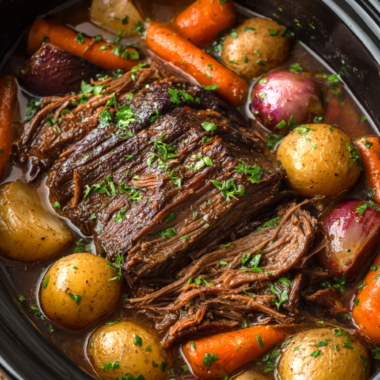
A true 5-minute slow cooker dinner. A marbled chuck roast braised in its own rich juices with ranch seasoning, savory au jus, butter, and tangy pepperoncini until it shreds effortlessly with a fork.
Ingredients
- 3½ to 4 lbs boneless beef chuck roast, well-marbled
- 1 packet (1 oz) dry ranch seasoning mix
- 1 packet (1 oz) au jus gravy mix
- ½ cup (1 stick) unsalted butter, sliced into pads
- 6 to 8 whole pepperoncini peppers, plus 2 tbsp jar brine
Instructions
- Dump into Slow Cooker: Place the raw 3½-4 lb chuck roast directly in the bottom of a 6-quart or larger slow cooker. (No searing or added water/broth needed—the chuck roast and butter create an intensely rich gravy on their own).
- Layer Seasonings & Toppings: Sprinkle the dry ranch seasoning mix and au jus gravy mix evenly over the roast. Lay the sliced unsalted butter pads and whole pepperoncini peppers right on top, and pour 2 tablespoons of the pepperoncini jar brine directly over the meat.
- Slow Cook on LOW: Cover securely with the lid and cook on LOW for 8 hours (or until the beef is melt-in-your-mouth tender and shreds effortlessly with a fork).
- Shred & Rest: Using two forks, shred the chuck roast directly in the slow cooker, tossing it with the buttery pan juices. Let it rest for 5 minutes to absorb the gravy.
- Serve: Serve piping hot over garlic mashed potatoes, buttered egg noodles, or piled high into crusty hoagie rolls!.
Notes
Macros per Serving (estimated): ~420 Calories | 38g Protein | 3g Carbs | 28g Fat | 880mg Sodium
Nutrition Information:
Yield:
10Serving Size:
1Amount Per Serving: Calories: 110Total Fat: 10gSaturated Fat: 6gUnsaturated Fat: 4gCholesterol: 27mgSodium: 371mgCarbohydrates: 3gFiber: 0gSugar: 1gProtein: 2g
All nutritional values provided on this website (including calories, macros, and nutrient percentages) are estimates intended for informational and educational purposes only. These values are calculated using online recipe nutrition databases and software. Because individual cooking methods, product brands, ingredient substitutions, and exact portion sizes vary, the actual nutritional content of your meal may differ from the estimates shown here.
Tips for Extra-Tender Results
- Resist checking on it. Every time you open the lid, you add cook time back on the clock.
- If your roast still feels tough after 8 hours, give it another 30 to 60 minutes on LOW rather than switching to HIGH — slow and steady is what breaks down a tough chuck roast.
- Let the shredded meat rest in the juices for 10 minutes before serving. It soaks up more flavor and stays moister.
What to Eat with Mississippi Pot Roast

This roast is rich and savory, so it pairs best with something simple on the side. A few go-tos:
- Mashed potatoes or mashed cauliflower for a lower-carb swap
- Buttered egg noodles
- Roasted green beans or broccoli
- A simple side salad if you want to keep the meal lighter
- Crusty bread for soaking up the juices
If you’re meal-prepping, cooked rice or quinoa holds up well in containers, making it an easy grab-and-go lunch for the week.
Healthy and Low-Sodium Variations
The classic combo of ranch mix, au jus packet, and pepperoncini juice brings a lot of sodium to the table, so if that’s something you’re watching, a few swaps help:
- Use a low-sodium or homemade ranch seasoning blend instead of the packet.
- Skip the pepperoncini juice and just use the peppers themselves for flavor without the extra salt.
- Choose a low-sodium beef broth if you’re adding liquid.
- Trim visible fat from the roast before cooking for a slightly leaner result.
These adjustments won’t change the core flavor much — you’ll still get that same tangy, buttery richness, just with more control over the sodium.
Ingredient Swaps: Pork, Chicken, and Other Roasts

One of the reasons this recipe shows up in so many different forms online is that the method translates well across proteins:
- Chicken: Boneless, skinless chicken thighs work well and cook faster — about 5-6 hours on LOW.
- Pork: A pork loin or pork shoulder roast takes on the ranch and au jus flavors just as well as beef and shreds just as easily.
- Rump roast: A slightly leaner alternative to chuck if you’re looking to cut back on fat, though it can be a touch less forgiving if overcooked.
- Stew meat: Cubed beef stew meat works if you want a faster cook time and a slightly different texture — more like a stew than a shreddable roast.
If you prefer a slightly different flavor base, swapping in a packet of onion soup mix alongside or instead of the au jus gives the roast a deeper, more savory backbone.
Storage, Leftovers, and Make-Ahead Tips
This is a recipe that genuinely gets better as leftovers, which makes it a solid pick for anyone trying to eat well without cooking every single day.
- Fridge: Store shredded meat with its juices in an airtight container for up to 4 days.
- Freezer: Portion into freezer-safe bags or containers and freeze for up to 3 months. Freezing with a bit of the cooking liquid keeps it from drying out when reheated.
- Reheating: A quick stovetop simmer with a splash of broth brings it back to life better than the microwave, though the microwave works fine in a pinch.
- Sandwiches: Pile the shredded roast onto a toasted bun with a little of the juice for dipping — it holds up beautifully as a next-day sandwich.
- Bowls: Add it over rice or greens, then drizzle with the pan juices for an easy, high-protein lunch bowl.
If you’re cooking for a crowd, this recipe scales up easily — just use a larger roast and a bigger crockpot, and plan on roughly the same 8-hour cook time.
Frequently Asked Questions
Can I cook Mississippi pot roast on high instead of low? You can, but low and slow is what gives you that fall-apart texture. If you’re short on time, HIGH for 4-5 hours will work, though the meat may not shred quite as easily.
Can I use a frozen roast? It’s safer and more consistent to thaw the roast first. Cooking from frozen in a crockpot can leave the meat in the “danger zone” temperature range for too long before it heats through.
Can I make it without ranch seasoning? Yes — a mix of dried dill, garlic powder, onion powder, and a little buttermilk powder gets you close to the same flavor if you’re avoiding the packet.
What size crockpot do I need? A 6-quart crockpot comfortably fits a 3-4 lb roast. If you’re using a larger cut, size up to avoid overcrowding.
Bringing It All Together
Once you’ve made this Mississippi pot roast crockpot recipe a couple of times, it stops feeling like a “recipe” at all and starts feeling more like a system — one you can lean on any week you don’t have the energy to plan something new.
Dump it in, forget about it for eight hours, and you’ve got a high-protein dinner that reheats well, freezes well, and stretches into lunches without much extra effort. That’s really all a weeknight meal needs to do.