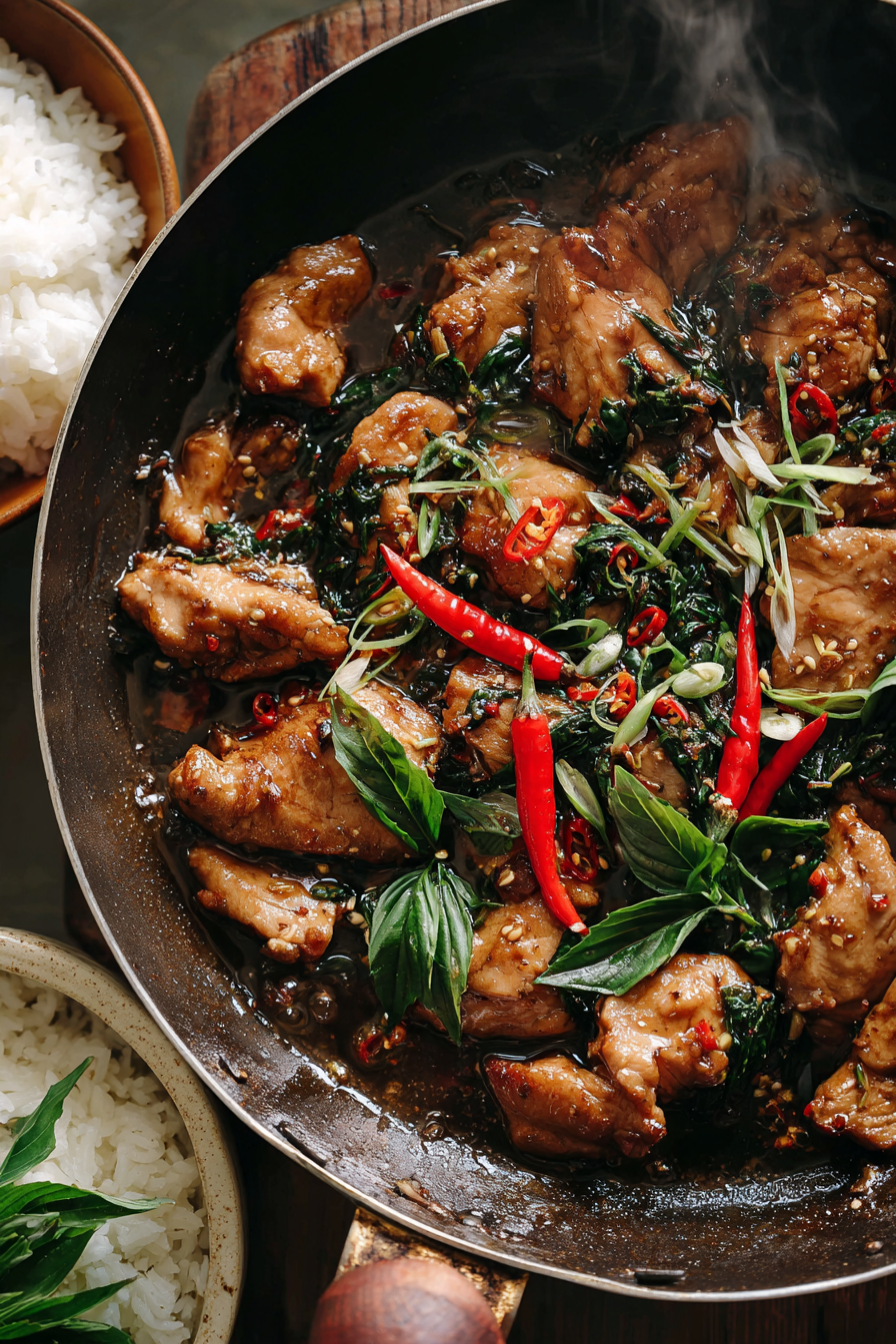

Thai basil chicken is the recipe that taught me what a hot wok actually does.
The first version I made, I crowded the pan with chicken and the whole thing steamed instead of searing — the sauce pooled at the bottom, the basil turned dark, and the whole dish tasted flat.
The fix was three things: hand-chop the chicken into small pieces, get the wok properly hot, and cook in batches if the pan is small. That’s it.
That’s the whole difference between pad krapow gai that tastes like a Bangkok street stall and one that tastes like stir-fried chicken.
The reason pad krapow gai works is the paste. Garlic and Thai bird’s eye chilies pounded together into a coarse paste, fried in hot oil for 15 seconds until fragrant, then the chicken goes in and cooks in that flavor.
The sauce goes in at the end — oyster sauce, light soy, dark soy, fish sauce, brown sugar — and the cornstarch slurry turns it into a light glaze that clings to every piece instead of running off.
Then the basil goes in off the heat, just wilting, so it keeps its color and its peppery aroma.
This is a Thai-inspired version of the classic street food dish, made with chicken breast instead of the traditional ground pork or chicken.
Breast is leaner and higher in protein — 55 grams per serving — and hand-chopping it into small pieces means the sauce coats every bite the way it’s supposed to.
It takes 10 minutes of prep and 7 minutes of cooking, and it serves two generously.
Why This Recipe Works
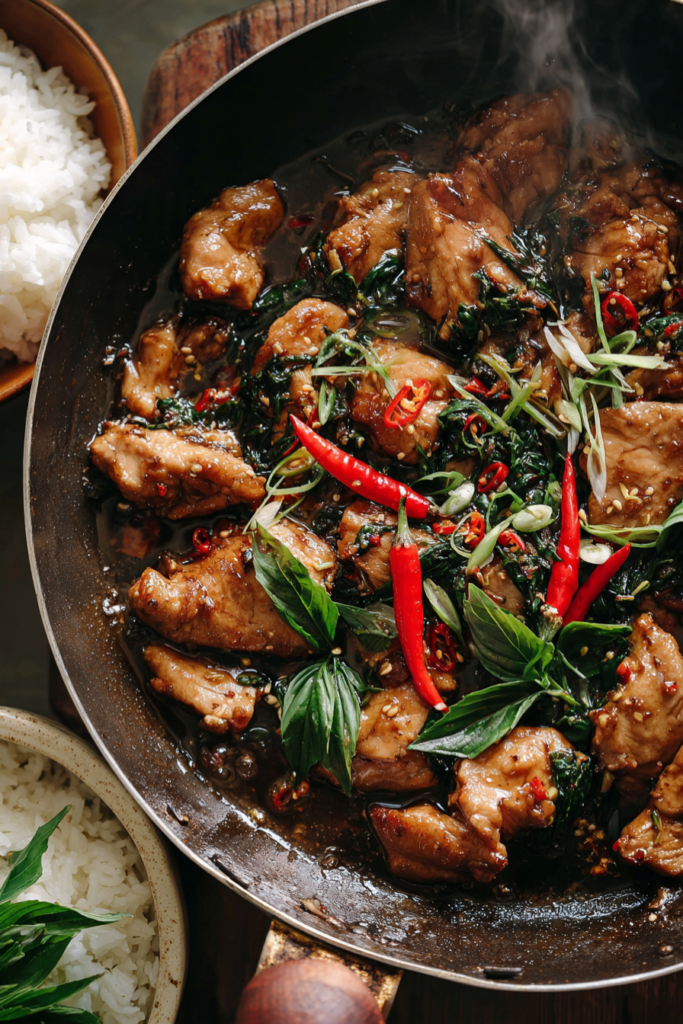
Thai basil chicken goes wrong in three specific ways: chicken that steams instead of sears, a sauce that pools at the bottom of the pan, and basil that turns dark and loses its flavor. Here’s how this version solves each one.
1. Hand-Chop the Chicken Into Small, Uniform Pieces
Hand-chopping the chicken breast into ½-inch pieces does three things: it gives you more surface area for the sauce to cling to, it lets every piece cook through in the same amount of time, and it lets the chicken absorb the garlic-chili paste instead of sitting above it. Pre-cut chicken or large cubes will cook unevenly and won’t hold the sauce the same way.
2. Get the Wok Hot, and Cook in Batches
A hot wok is what makes stir-fry taste like stir-fry. The chicken should sizzle the moment it hits the oil, and if it doesn’t, the pan isn’t hot enough or it’s overcrowded. Cooking in two batches if needed keeps the pan hot enough to brown the chicken instead of steaming it. The 45 to 60 seconds undisturbed at the start is what gives it a crust.
3. Add the Basil Off the Heat
Thai basil is fragile — it loses its color, its aroma, and its peppery flavor after about 15 seconds of direct heat. That’s why it goes in after the pan is off the heat. Toss it in, let it wilt in the residual heat, and serve immediately. The green color and the peppery bite are what make the dish taste like pad krapow gai instead of just stir-fried chicken.
Ingredients That Matter
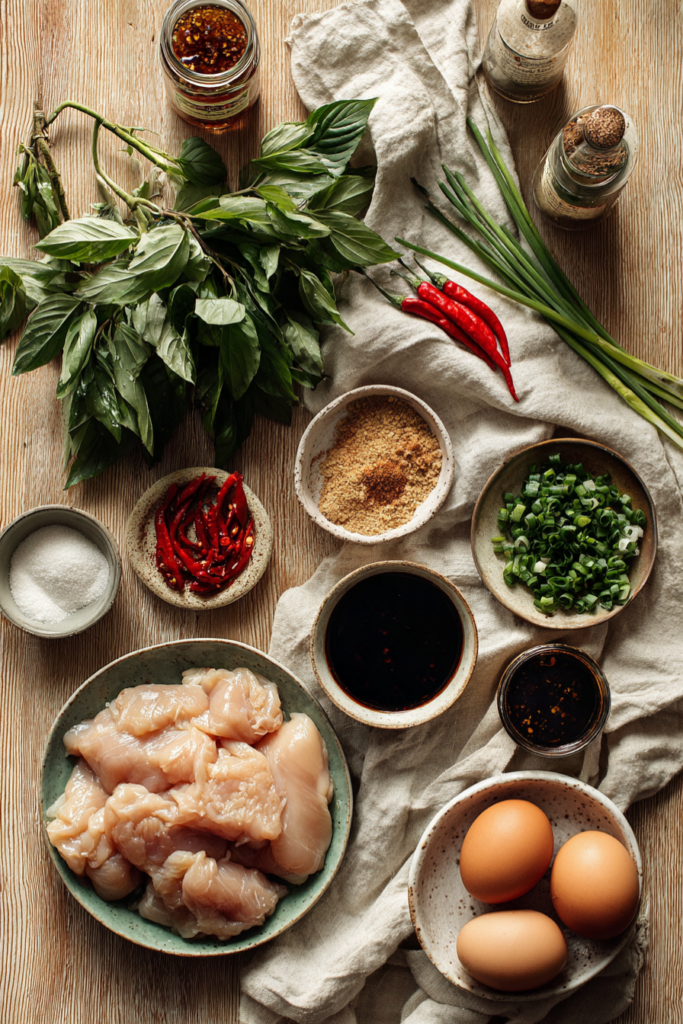
Boneless, skinless chicken breasts. One and a quarter pounds, finely chopped into ½-inch pieces. Hand-chopping is important — the smaller, more uniform pieces cook faster and hold more sauce. Ground chicken breast works as a substitute (see Substitutions) but the texture is different.
Thai holy basil or Thai sweet basil. Half a cup, loosely packed. Holy basil is the traditional choice for pad krapow gai — it has a peppery, almost clove-like flavor that Italian basil doesn’t. Thai sweet basil is the next-best substitute and easier to find. Italian basil will work in a pinch but the flavor is noticeably different.
Garlic and Thai bird’s eye chilies. Four large garlic cloves and two fresh Thai chilies, pounded together into a coarse paste. The mortar and pestle method releases more flavor than mincing, but mincing works if you don’t have one. The paste is the heart of the dish — don’t skip it.
Oyster sauce, light soy, dark soy, fish sauce, and brown sugar. The sauce. Oyster sauce gives it depth and umami; light soy is the main salt; dark soy gives it color and a slightly molasses note; fish sauce adds the funk that makes Thai food taste like Thai food; brown sugar balances it. Don’t substitute or skip — each one does something the others don’t.
Cornstarch slurry. One teaspoon cornstarch whisked into a tablespoon of cold water. This is what thickens the sauce into a light glaze. Add it last and cook only 20 to 30 seconds — any longer and the sauce turns gluey.
Jasmine rice. Two servings, steamed. Jasmine rice is the right choice — its floral aroma complements the basil and chilies.
Crispy fried eggs. Optional but traditional. A fried egg with crispy edges and a runny yolk on top of pad krapow gai is the classic serving style. The yolk mixes into the rice and sauce and makes the whole dish richer.
Sliced cucumber. A traditional cooling side that balances the heat from the chilies.
How to Make Thai Basil Chicken
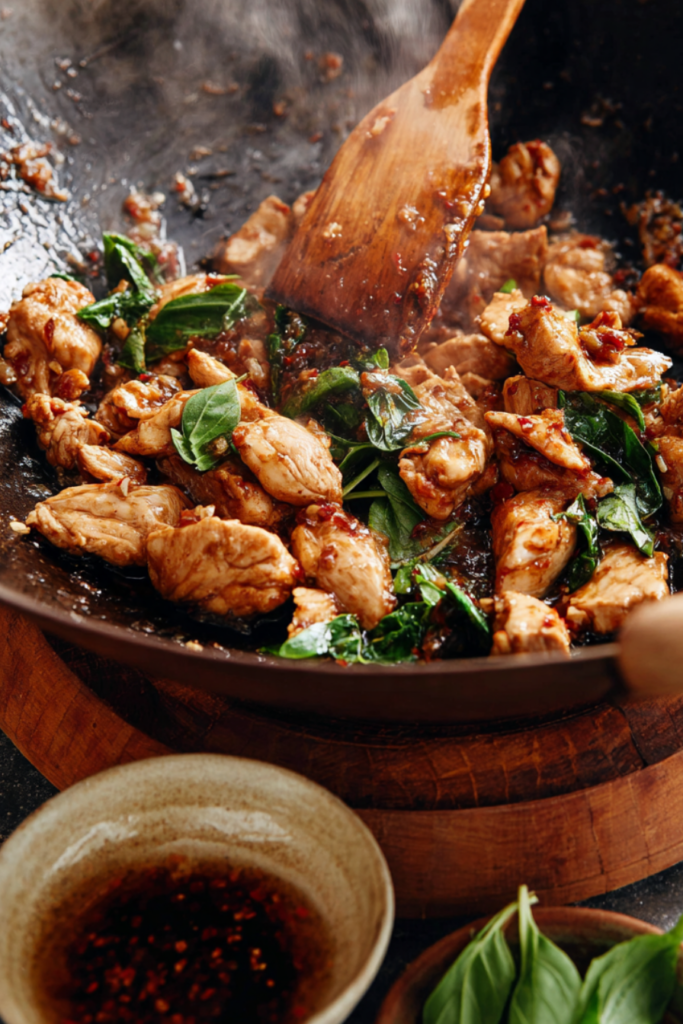
(See the recipe card below — the steps are identical and the card is the single source of truth.)
Tips and Troubleshooting
The chicken steamed instead of seared. The pan wasn’t hot enough, or it was overcrowded. Get the wok hot until the oil shimmers, and cook in batches if needed.
The sauce pooled at the bottom of the pan. The cornstarch slurry wasn’t added, or it wasn’t cooked long enough. Whisk the slurry into the sauce just before it goes in, and cook the sauce 20 to 30 seconds until it’s glossy.
The basil turned dark and slimy. It went in too early. Add it off the heat, toss for 10 to 15 seconds, and serve immediately.
The garlic burned and tasted bitter. The oil was too hot, or the garlic cooked too long. Fry the garlic-chili paste for 15 seconds only, stirring constantly.
The dish is too spicy. Reduce the chilies to one, or remove the seeds and membranes. The heat is concentrated in the seeds and membranes.
The chicken is dry. It cooked too long, or the pieces were too large. Cook until it just reaches 165°F and no longer — chicken breast dries out fast.
The sauce is too salty. Too much fish sauce or soy sauce. Taste before adding salt — the oyster sauce and soy are already salty, and the dish usually needs none.
The dish tastes flat. The dark soy and fish sauce were skipped, or the basil went in too early. Both are essential to the flavor, and the basil needs to stay bright.
Substitutions and Swaps
Chicken breast → ground chicken breast. Cook the ground chicken in the same way, breaking it into small crumbles instead of chopping. Same quantity. The texture is more traditional for pad krapow gai.
Chicken breast → ground pork or ground chicken thigh. Traditional pad krapow gai is made with ground pork or chicken. Same quantity and method.
Thai holy basil → Thai sweet basil. The next-best substitute. Italian basil works in a pinch but the flavor is noticeably different.
Thai bird’s eye chilies → serrano or jalapeño. Serrano is closest in heat; jalapeño is milder. Adjust the quantity to taste.
Oyster sauce → vegetarian oyster sauce or hoisin. Vegetarian oyster sauce is a direct substitute. Hoisin is sweeter and thicker — use a little less and adjust the brown sugar.
Fish sauce → soy sauce. For a vegetarian version, use light soy sauce in place of the fish sauce and add a pinch of salt. The flavor will be less funky but still good.
For a Thai basil chicken bowl: serve over jasmine rice with a fried egg, sliced cucumber, and a lime wedge.
For a spicy basil chicken version: double the chilies and add a teaspoon of chili garlic sauce with the sauce.
Storage and Reheat
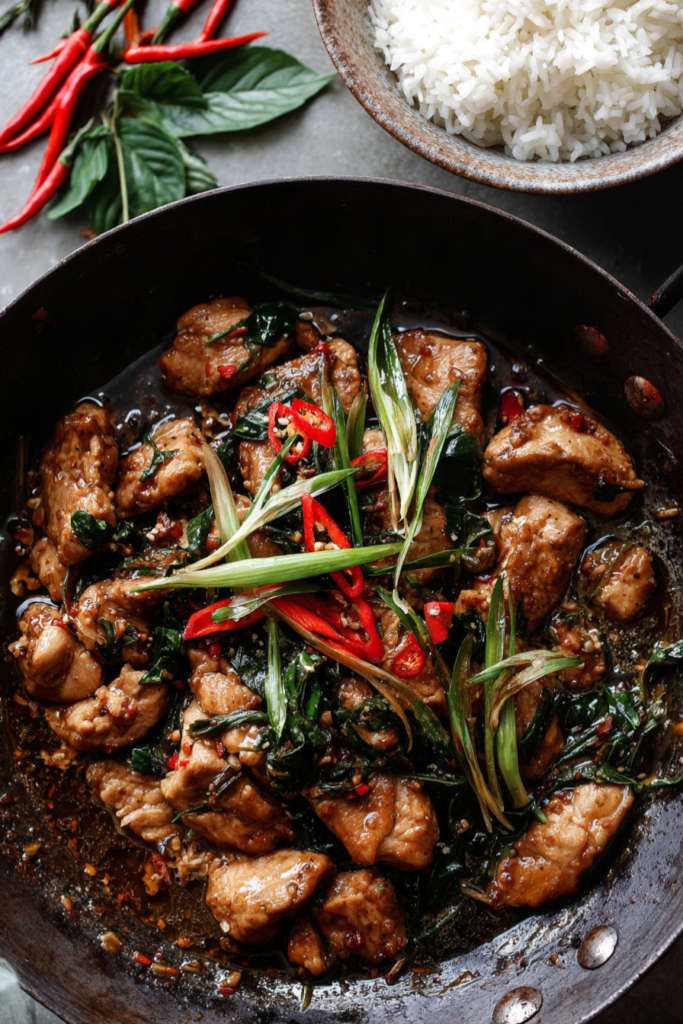
Refrigerate cooked chicken in an airtight container for 3 to 4 days.
Reheat gently in a skillet over medium-low heat with 1 tablespoon of water, stirring until steaming hot. Reheat to 165°F.
Store rice separately when possible. Refrigerate promptly and reheat until steaming hot.
Add fresh basil after reheating to refresh the aroma — the basil from the original cook will have lost its color and flavor.
Prepare fried eggs fresh when serving for the best texture. Reheated fried eggs turn rubbery.
Food safety: store leftovers within 2 hours of cooking. Discard anything left at room temperature longer than 2 hours.
Thai Basil Chicken (Pad Krapow Gai)
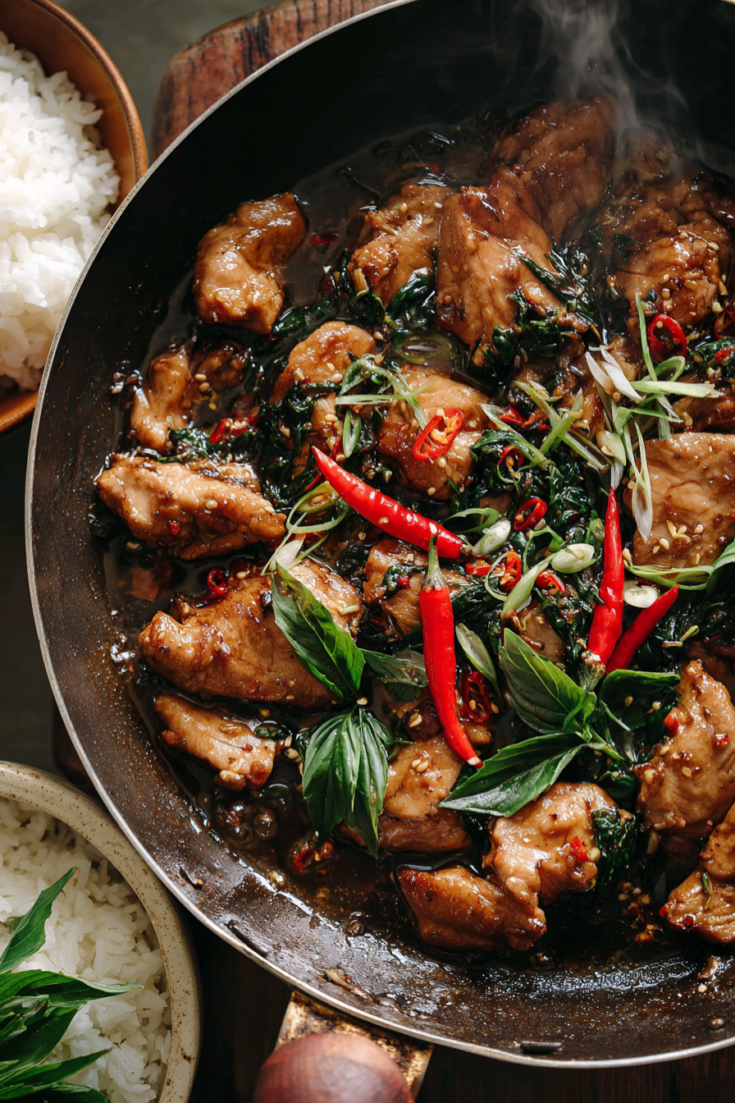
Tender, hand-chopped chicken breast stir-fried with fragrant garlic, fiery Thai chilies, and fresh basil in a glossy, savory-sweet sauce — 55g of protein per generous serving, ready in under 20 minutes.
Ingredients
For the Chicken
- 1¼ lbs boneless, skinless chicken breasts, finely chopped into about ½-inch pieces
- 1 tablespoon neutral oil (peanut, canola, or avocado)
- ½ cup Thai holy basil leaves, loosely packed (or Thai sweet basil)
- 2 green onions, cut into 1-inch pieces, white and green portions separated
For the Garlic-Chili Paste
- 4 large garlic cloves, coarsely chopped
- 2 fresh Thai bird's eye chilies, roughly chopped (adjust to taste)
For the Stir-Fry Sauce
- 1 tablespoon oyster sauce
- 1½ teaspoons low-sodium light soy sauce
- ½ teaspoon dark soy sauce
- ¾ teaspoon fish sauce
- 2 teaspoons brown sugar or palm sugar
- 2 tablespoons water
For the Cornstarch Slurry
- 1 teaspoon cornstarch
- 1 tablespoon cold water
For Serving
- 2 servings steamed jasmine rice
- 2 eggs, for optional crispy fried eggs
- Sliced fresh cucumber
Instructions
- Prepare the Chicken: Pat the chicken breasts dry with paper towels. Using a sharp knife, cut them into small, roughly ½-inch pieces, keeping them as uniform as possible so they cook evenly.
- Prepare the Aromatics and Sauce: Pound the garlic and Thai chilies together in a mortar and pestle until they form a coarse paste, or finely mince them together. In a small bowl, whisk together the oyster sauce, light soy sauce, dark soy sauce, fish sauce, brown sugar, and 2 tablespoons of water. In a separate small bowl, stir together the cornstarch and 1 tablespoon cold water until smooth.
- Heat the Wok: Heat the neutral oil in a large wok or heavy skillet over medium-high to high heat until shimmering. Avoid letting the oil smoke excessively.
- Fry the Garlic and Chilies: Add the garlic-chili paste and the white portions of the green onions. Stir-fry about 15 seconds until fragrant, keeping the mixture moving to prevent the garlic from burning.
- Cook the Chicken Breast: Add the chopped chicken in a single layer. If necessary, work in two batches to avoid overcrowding. Let the chicken cook undisturbed 45 to 60 seconds, then stir-fry another 2 to 3 minutes, breaking up any pieces that stick together. Continue cooking until the chicken is nearly cooked through — the thickest pieces should reach 165°F.
- Add the Sauce: Pour the prepared sauce around the sides of the wok. Stir-fry about 30 to 45 seconds, until the chicken is coated. Give the cornstarch slurry another stir, then drizzle it into the wok while tossing continuously. Cook another 20 to 30 seconds, until the sauce becomes lightly glossy and clings to the chicken. Avoid cooking the sauce too long — chicken breast can dry out quickly.
- Add the Basil: Turn off the heat. Fold in the Thai basil leaves and the green portions of the onions. Toss about 10 to 15 seconds, until the basil just wilts.
- Serve Immediately: Divide the chicken between two serving bowls over warm jasmine rice. Top each serving with a freshly fried egg with crispy edges and a runny yolk, if desired. Serve with sliced cucumber on the side.
Notes
Notes
Hand-chopping the chicken into uniform ½-inch pieces is what makes the sauce cling and the pieces cook evenly. Get the wok properly hot before the chicken goes in, and cook in batches if it's crowded — a crowded pan steams instead of sears.
The basil goes in off the heat, tossed for 10 to 15 seconds only, so it keeps its color and peppery flavor.
The cornstarch slurry is what turns the sauce into a light glaze — don't skip it, and don't cook it longer than 30 seconds. Leftovers keep 3 to 4 days in the fridge; reheat gently with a splash of water and add fresh basil after reheating. Nutrition is an estimate and varies by sauce brands and rice portion.
Estimated per serving: 480 calories · 55g protein · 22g carbs · 18g fat · 1g fiber · 1,020mg sodium
Frequently Asked Questions
Can I use ground chicken breast instead of hand-chopped?
Yes. Ground chicken breast is a convenient alternative. Break it into small crumbles while cooking, taking care not to overcook it. The texture is more traditional for pad krapow gai.
How do I keep the chicken breast juicy?
Cut it into evenly sized pieces, avoid overcrowding the pan, and cook just until it reaches 165°F. The quick cooking time and light sauce coating help preserve moisture.
Can I make this recipe less spicy?
Yes. Use one Thai chili instead of two, or remove the seeds and membranes for a milder result. The heat is concentrated in the seeds and membranes.
Can I use regular basil instead of Thai basil?
Thai holy basil is preferred for traditional pad krapow gai flavor. Thai sweet basil is the next-best substitute. Italian basil produces a different but still pleasant variation.
What can I use instead of fish sauce?
Light soy sauce plus a pinch of salt is the closest substitute for a vegetarian version. The flavor is less funky but still good.
Is this gluten-free?
Only if you use gluten-free soy sauce, oyster sauce, and fish sauce. Standard versions contain wheat. Check the labels carefully.
Can I make this ahead for meal prep?
Yes. Cook it fully, cool it, and store the chicken and sauce in an airtight container for 3 to 4 days. Reheat gently with a splash of water and add fresh basil after reheating to refresh the aroma.
What do you serve with Thai basil chicken?
Jasmine rice is the classic pairing. A fried egg with crispy edges and a runny yolk is traditional. Sliced cucumber, lime wedges, and extra basil on the side complete the plate.
More Thai and Chicken Breast Recipes You’ll Love
One-Pot Crispy Chicken and Rice — 35g protein, one Dutch oven, 1 hour.
Hawaiian Chicken Crockpot — 34g protein, sticky pineapple glaze, 10 minutes of prep.
Slow-Cooker Lemon Herb Chicken Breast — 44g protein, juicy every time, one pot.
Chimichurri Chicken Thighs — 44g protein, hand-chopped herb sauce, 30-minute marinade.
15 Easy Chicken Crockpot Recipes for Busy Families — the full collection, organized by night-type.
High-Protein Slow Cooker Dinners — ten weeknight dinners organized by cook time.
Closing
I’ve made this Thai basil chicken more times than I can count, and the two things that changed everything for me were hand-chopping the chicken into small pieces and getting the wok properly hot before it went in.
The first batch I made steamed instead of seared — the fix was the chop and the heat, and those are the steps I’d fight you over now.
If you make it with ground chicken or top it with a crispy fried egg, let me know how it turns out in the comments.