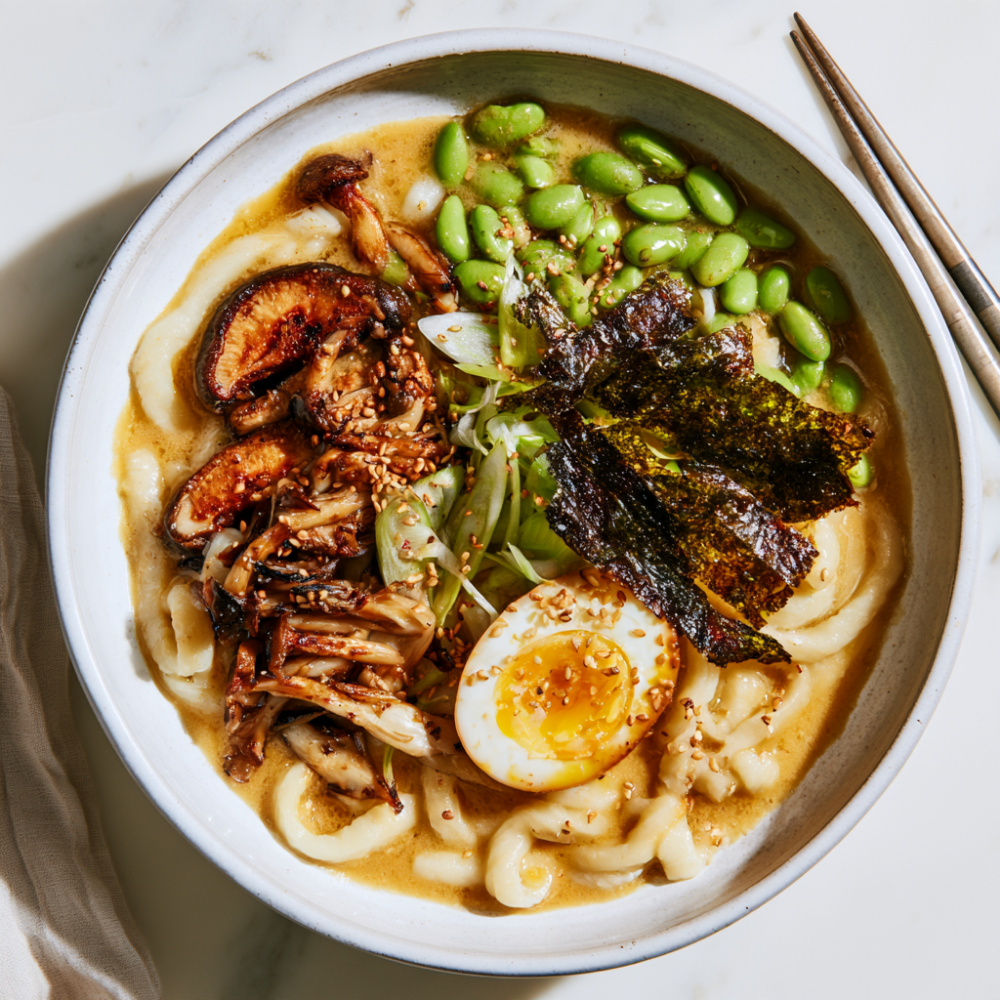

I reach for udon noodles when I want something that feels indulgent but comes together faster than takeout. They’re thick, chewy, and they soak up sauce like nothing else. And this creamy miso udon might be the best thing I’ve made with them.
The sauce is where the magic happens. White miso paste and Parmesan cheese don’t sound like they belong together—but they absolutely do.
The miso brings a deep, savory umami. The Parmesan brings salty, nutty richness. A splash of dashi ties it all together into a silky sauce that clings to every noodle.
Add a pile of golden-seared mushrooms and a jammy soft-boiled egg on top, and you have a 25-minute dinner that tastes as if it came from a restaurant.
And here’s what makes this version stand out. Most creamy udon recipes rely on heavy cream alone for that silky texture.
This version uses a blend of cottage cheese and a smaller amount of cream, adding about 24 grams of protein to the sauce without changing the flavor. With the udon noodles, Parmesan, edamame, and eggs on top, each bowl delivers about 32 grams of protein.
It’s a real meal. It’s fast. And it’s the kind of bowl that makes you forget you’re eating something that took less than half an hour.
This udon noodle recipe earns a permanent spot in your weekly rotation.
Why This Recipe Works
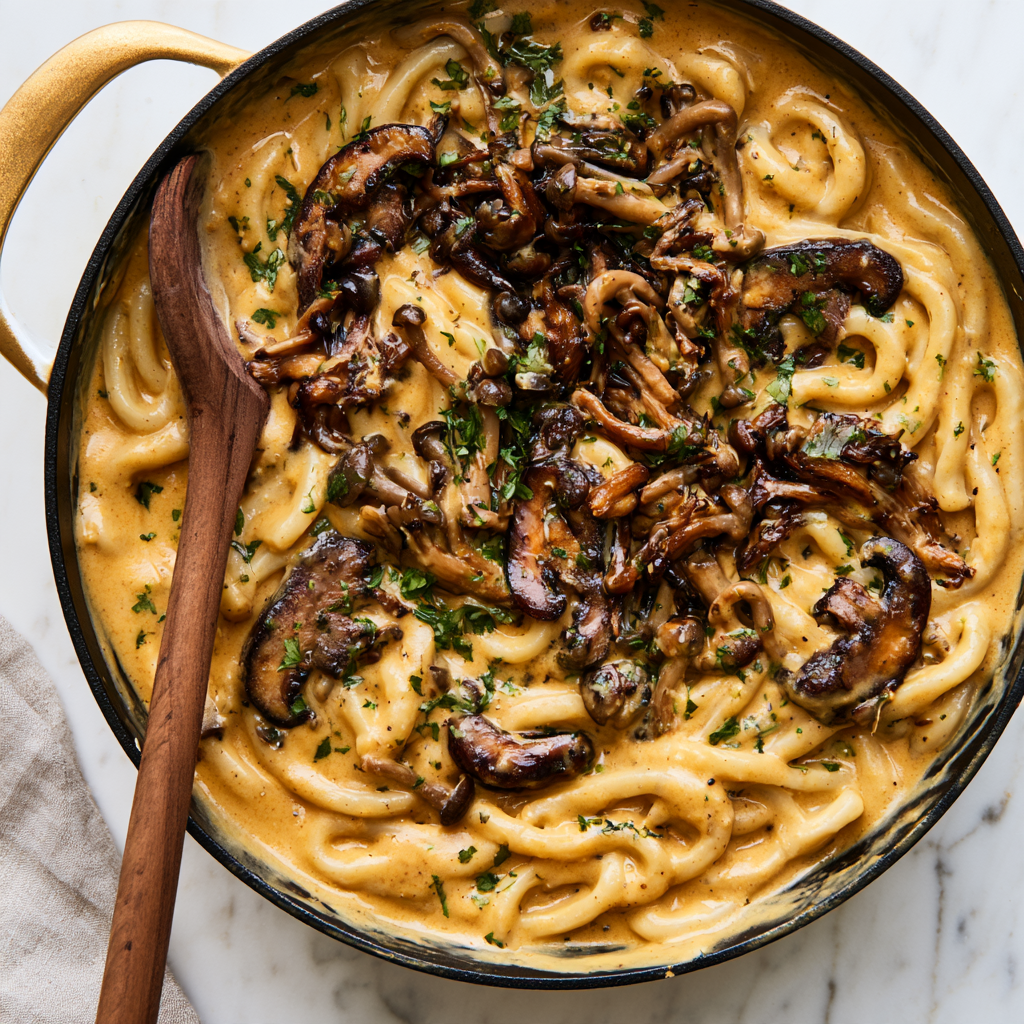
This isn’t a complicated dish, but a few small decisions make it better than most creamy udon recipes. Here’s what actually matters:
Dashi Instead of Pasta Water. The original recipe uses pasta water to thin the sauce. Dashi does the same job but adds a layer of Japanese umami that pasta water can’t match. Dashi is a simple stock made from kombu (seaweed), bonito flakes (dried fish), or both. You can buy dashi powder at any Asian grocery store or online, and it dissolves in hot water in seconds. For a vegetarian version, use kombu dashi or a mushroom-based dashi.
White Miso, Not Brown. White miso (shiro miso) is milder and slightly sweeter than brown or red miso. It blends seamlessly into a creamy sauce without overpowering the Parmesan or the mushrooms. Brown miso is more intense and works better in soups and braises. For this creamy udon, white is the right choice.
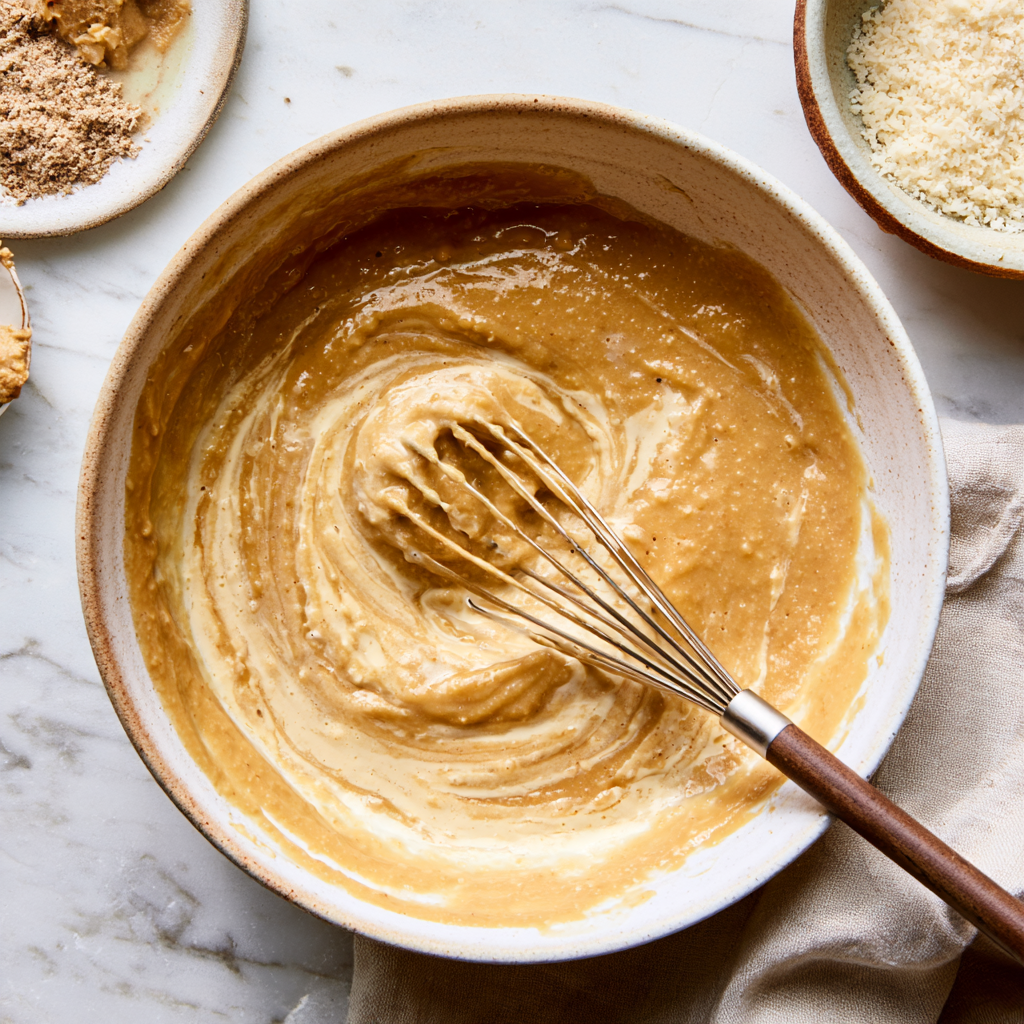
Temper the Miso Before It Goes In. This prevents stubborn miso lumps. Whisking thick white miso paste directly into a pan of warm cream and broth often leaves clumps that never fully dissolve. The fix is to whisk the miso with ¼ cup warm dashi in a small bowl until completely smooth, then pour the slurry into the pan. The miso dissolves evenly, and the sauce stays silky.
Blended Cottage Cheese for Creaminess and Protein. This upgrade changes everything. Blending cottage cheese until completely smooth and whisking it into the sauce gives you the same silky, creamy texture as heavy cream, plus about 24 grams of protein in the whole dish. Once it’s mixed with the miso, Parmesan, and dashi, nobody will know it’s there.
Don’t Boil Vacuum-Packed Udon. This is the fix that keeps the noodles intact. Precooked vacuum-packed udon noodles are already cooked and delicate. Boiling them for a full minute softens them too much, and tossing them in a skillet then breaks them into stubby pieces. The fix is to submerge them in hot tap water for 1 to 2 minutes to loosen the strands, drain, and transfer them directly into the hot sauce so they finish absorbing flavor without breaking.
Three Kinds of Mushrooms, Cooked in the Right Order. Different mushrooms cook at different rates. Shiitake and cremini need 5 to 6 minutes to brown and soften. Shimeji needs about 3-4 minutes. Enoki needs 30 seconds to 1 minute and should be added last so it stays crisp. If you cook them all together, the enoki turns to mush before the shiitake is done. This recipe adds them in stages.
Sear the Mushrooms Without Crowding. Mushrooms release water when they cook. If you crowd the pan, they steam instead of sear. Cook them in a single layer, and don’t toss them too often—let them sit and develop that golden crust.
Miso Goes In Off the Heat or at a Gentle Simmer. Boiling miso paste destroys its delicate flavor and aroma. Add it to the sauce after you take the pan off the heat, or at most at a very gentle simmer. The residual heat is enough to dissolve it into the sauce.
Reserve Some Udon Water. Pre-cooked udon noodles just need to be warmed through. But a splash of the starchy cooking water helps the sauce cling to the noodles. Save about ½ cup before you drain.
Toss the Noodles in the Sauce, Not the Other Way Around. Finishing the udon in the pan for 1 to 2 minutes lets the noodles absorb the sauce instead of just being coated. This is what makes every bite taste seasoned instead of just topped.
Top With a Jammy Soft-Boiled Egg. A 6½-minute egg on top of udon is a classic Japanese touch. The yolk mixes into the noodles as you eat, adding richness, creaminess, and about 6 grams of protein. It’s optional, but it’s the finishing touch that makes this feel like a real restaurant bowl.
Roasted Nori and Red Pepper Flakes for Texture. The sauce is creamy and rich. A scatter of crushed roasted nori adds umami and a papery crunch. Red pepper flakes add heat. Together they keep the bowl from tasting one-note.
It’s Flexible. Don’t like mushrooms? Use thinly sliced chicken or ground pork. Want it spicier? Add chili crisp. Vegetarian? Use kombu dashi and skip the egg. This is a template, not a rule.
This meal earns its spot in the weekly rotation. It’s creamy, savory, and undeniably delicious.
Creamy Miso Udon Noodle Recipe
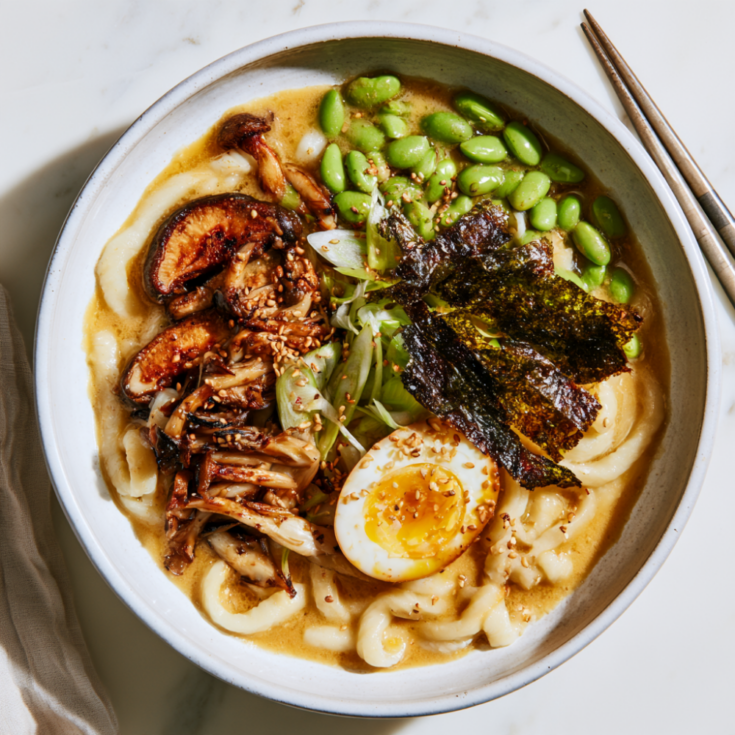
A creamy miso udon noodle recipe with dashi, three kinds of mushrooms, and a savory miso Parmesan sauce. Ready in 25 minutes and packed with 32g protein per serving.
Ingredients
For the Udon
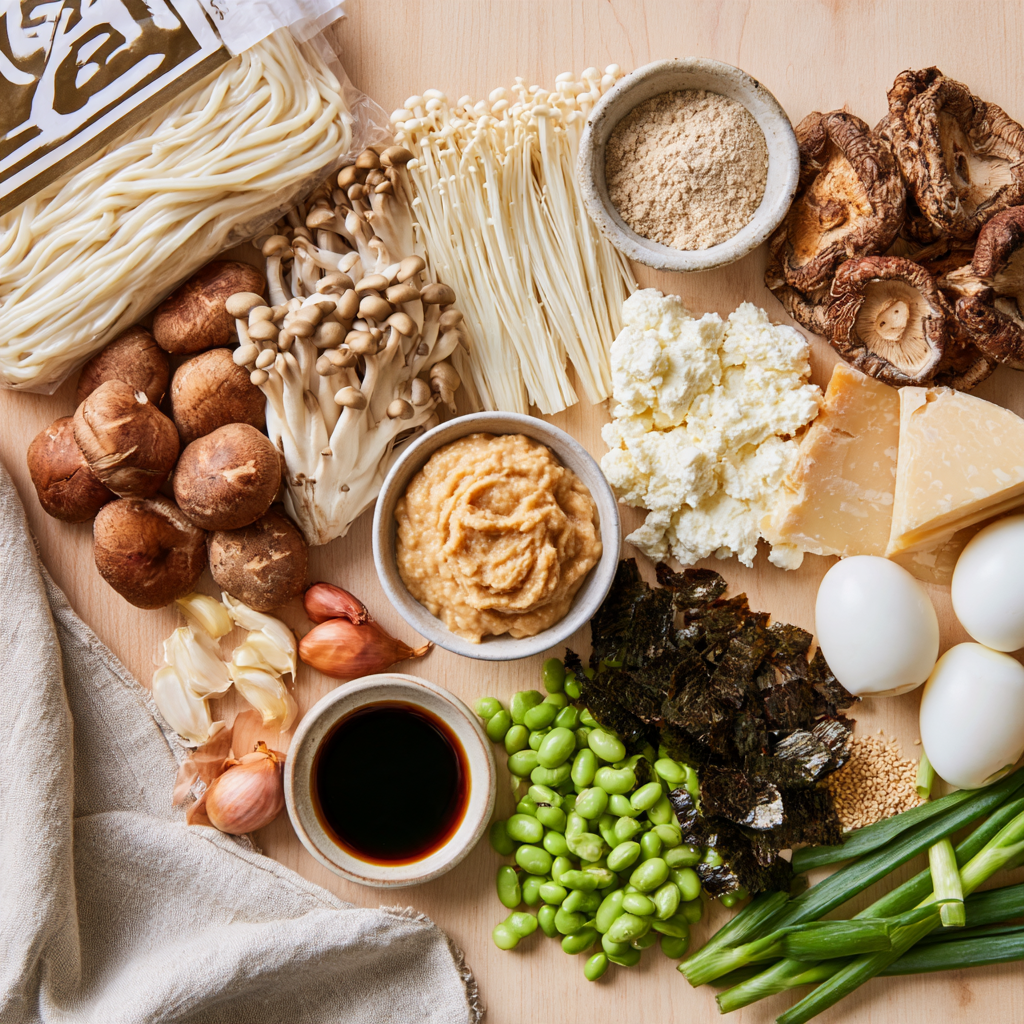
- 4 (7-oz) packets precooked udon noodles (vacuum-packed or frozen)
- 1 tbsp olive oil
For the Mushrooms
- 1½ lbs mixed mushrooms: 6 oz shiitake (stems removed, caps sliced), 6 oz cremini (sliced), 6 oz shimeji (bases trimmed, clusters separated), and 6 oz enoki (bases trimmed, strands separated)
- 2 tbsp unsalted butter
- 4 cloves garlic, minced
- 1 large shallot, finely diced
For the Creamy Miso Sauce
- 1 cup dashi (or 1 cup warm water + 1 tsp dashi powder)
- 3 tbsp white miso paste
- 1 cup 2% cottage cheese, blended until completely smooth
- ½ cup heavy cream (or half-and-half)
- ¼ cup freshly grated Parmesan
- 1 tsp low-sodium soy sauce or tamari
- Kosher salt and freshly ground black pepper, to taste
For Serving
- 4 soft-boiled eggs (6½ minutes), halved
- 2 cups shelled edamame, steamed
- Roasted nori strips
- Sliced green onions
- Toasted sesame seeds
- Red pepper flakes
- Chili crisp (optional)
Instructions
- Loosen the udon noodles. Place the vacuum-packed or frozen udon noodles in a large bowl and cover them with hot tap water. Let them sit for 1 to 2 minutes to gently loosen the strands. Drain well and set aside. Do not boil them—precooked udon is already cooked, and boiling makes it soft and prone to breaking when it's tossed.
- Prep the mushrooms. Clean and prep the mushrooms: remove the shiitake stems and slice the caps, slice the cremini, trim the shimeji bases and separate the clusters, and trim the enoki bases and separate the strands.
- Blend the cottage cheese. Add the cottage cheese to a blender or food processor and blend for 45 seconds, until completely smooth with no visible curds. Set aside.
- Sear the mushrooms in stages. Heat the olive oil in a large skillet over medium-high heat. Add the shiitake and cremini in a single layer. Sear for 4 to 5 minutes without tossing too often, until deeply golden and browned. Add the shimeji and cook for 3 to 4 minutes more, until softened and golden. Add the enoki last and cook for 30 seconds to 1 minute, just until wilted. Transfer the mushrooms to a plate and set aside.
- Bloom the aromatics. Reduce the heat to medium. Add the butter to the same skillet and let it melt. Add the minced garlic and diced shallot and cook for 1 minute, until fragrant and soft. Do not let the garlic brown.
- Build the sauce and temper the miso. Pour ¾ cup of the dashi into the skillet and bring it to a gentle simmer. Add the blended cottage cheese, heavy cream, and Parmesan. Stir until the sauce is smooth and uniform. In a small bowl, whisk the white miso paste with the remaining ¼ cup of warm dashi until completely smooth—this is the tempering step that keeps the miso from forming lumps. Pour the miso slurry and the soy sauce into the skillet. Reduce the heat to low so the sauce does not boil.
- Coat the noodles and mushrooms. Add the seared mushrooms and the loosened udon noodles directly into the skillet. Toss gently for 1 to 2 minutes, until the sauce turns glossy, silky, and coats every noodle. If the sauce looks thick, add a splash of dashi or udon water to loosen it.
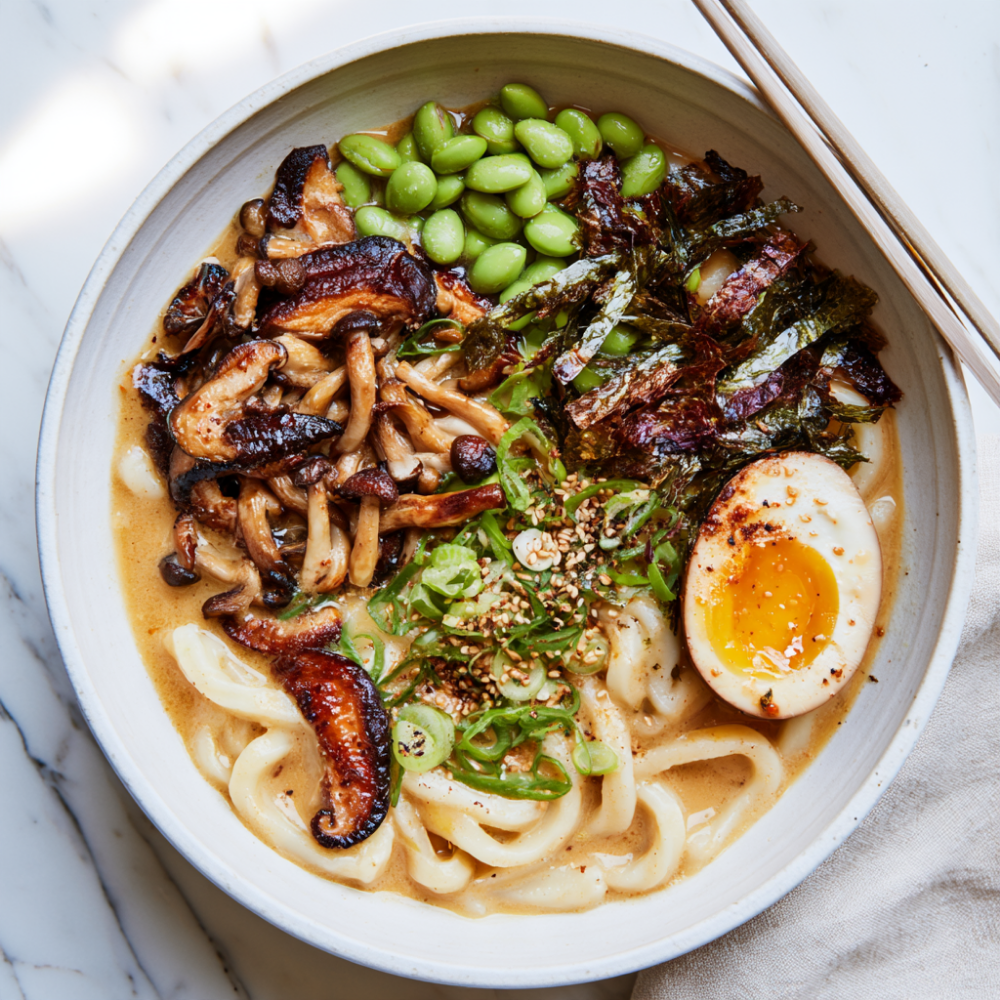
- Assemble and serve. Taste and adjust salt and pepper. Divide the creamy miso udon among 4 wide bowls. Top each bowl with a halved soft-boiled egg, ½ cup of steamed edamame, sliced green onions, toasted sesame seeds, roasted nori strips, and a drizzle of chili crisp.
Notes
Protein per Serving: About 32g Nutrition Note: Protein calculated from 4 (7-oz) packets precooked udon noodles (≈24g), 1 cup 2% cottage cheese (≈24g), ½ cup heavy cream (≈2g), ¼ cup grated Parmesan (≈7g), 3 tbsp white miso (≈6g), 1½ lbs mixed mushrooms (≈6g), 2 cups shelled edamame (≈18g), and 4 soft-boiled eggs (≈24g) — about 111g total across 4 servings — about 32g per serving (with about 4g more from the dashi). About 620 calories per serving. Skip the eggs to drop the calories to about 520 per serving and the protein to about 26g. Skip the heavy cream and add an extra ½ cup of blended cottage cheese to cut calories further.
Tips for the Best Creamy Miso Udon
Don’t boil vacuum-packed udon. Precooked udon noodles are already cooked and delicate. Boiling them for a full minute softens them too much. Submerge them in hot tap water for 1 to 2 minutes to loosen the strands, drain, and finish them in the sauce.
Use white miso, not brown or red. White miso is milder and sweeter, and it blends seamlessly into a creamy sauce without overpowering the Parmesan or mushrooms.
Temper the miso with warm dashi. Whisk the miso with ¼ cup of warm dashi in a small bowl until it’s completely smooth before adding it to the pan. Any undissolved miso clumps will leave salty pockets in the finished dish.
Add the miso off the heat or at a gentle simmer. Boiling miso paste destroys its delicate flavor. Add it after the pan comes off the heat, or at most a very gentle simmer.
Cook the mushrooms in stages. Shiitake and cremini need 5 minutes. Shimeji needs 3 to 4 minutes. Enoki needs 30 seconds. Adding them all at once means the enoki turns to mush before the shiitake is done.
Don’t crowd the pan with mushrooms. Mushrooms release water when they cook. If you crowd the pan, they steam instead of sear. Cook them in two batches if needed.
Blend the cottage cheese completely smooth. Any visible curds will show up as grainy spots in the sauce. Forty-five seconds in a blender is the whole difference.
Use dashi instead of pasta water. Dashi adds a layer of Japanese umami that pasta water can’t match. Look for dashi powder in the international aisle or online. For a vegetarian version, use kombu dashi or a mushroom-based dashi.
Reserve some udon water. The starch helps the sauce cling to the noodles. Add it a splash at a time if the sauce looks thick.
Toss the noodles in the sauce, not the other way around. Finishing the udon in the pan for 1 to 2 minutes lets the noodles absorb the sauce instead of just being coated.
Top with a jammy soft-boiled egg. A 6½-minute egg adds richness, creaminess, and about 6 grams of protein. It’s the finishing touch that makes this feel like a restaurant bowl.
Add heat at the table. Red pepper flakes or chili crisp add a slow, warming heat that cuts through the richness. Let everyone add their own.
Easy Variations
Curry Udon Recipe. Add 1 tablespoon of Japanese curry powder to the sauce along with the miso. The result is a warming, slightly spicy curry udon that’s a staple in Japanese noodle shops.
Udon Carbonara. Skip the miso and dashi. Use 2 eggs, ¼ cup of Parmesan, and 4 slices of cooked, crumbled bacon. Toss the udon with the egg mixture off the heat, adding udon water to loosen it into a creamy sauce. This Japanese-Italian fusion started the creamy udon trend.
Udon Noodle Soup. Skip the cottage cheese and heavy cream entirely. Use 4 cups dashi, 3 tablespoons white miso, and 2 tablespoons soy sauce for the broth. Add the mushrooms, noodles, and toppings. The result is a lighter, brothier version.
Beef Udon Noodles. Add 1 lb thinly sliced beef (ribeye or sirloin) to the skillet after the mushrooms, and sear 2 minutes per side. Protein jumps to about 42g per serving.
Vegetarian Udon. Use kombu dashi instead of bonito dashi, skip the Parmesan, and use a dairy-free cream and cottage cheese alternative. Add an extra cup of edamame for protein.
Spicy Miso Udon. Add 1 to 2 teaspoons of chili paste or chili crisp to the sauce along with the miso. Top with extra chili crisp at the table.
Storage and Food Safety
Refrigerator: Store leftovers covered in an airtight container for up to 3 days. The udon will absorb sauce as it sits. Reheat gently in a skillet over medium-low heat with a splash of dashi or water to loosen the sauce. Top with a fresh soft-boiled egg if you have one.
Freezer: The sauce freezes well for up to 3 months, but the udon noodles turn mushy when frozen and thawed. Freeze the sauce and mushrooms without the noodles. Thaw overnight in the refrigerator and toss with freshly cooked udon.
Make Ahead: Blend the cottage cheese and make the sauce up to 2 days ahead. Store it in the refrigerator. Cook the mushrooms and noodles fresh when you’re ready to serve.
Food Safety: Heat cooked udon, eggs, and mushrooms to 165°F before serving. Cool leftovers within 2 hours and refrigerate promptly. Reheat leftovers to 165°F. Do not leave udon at room temperature for more than 2 hours.
Frequently Asked Questions
How much protein is in creamy miso udon? About 32g per serving from the udon noodles, blended cottage cheese, Parmesan, miso, edamame, and soft-boiled eggs across 4 servings. Skipping the eggs drops the protein to about 26g per serving.
What is dashi and where do I find it? Dashi is a Japanese stock made from kombu (seaweed) and bonito flakes (dried fish). It’s the base of most Japanese soups and sauces. Look for dashi powder in the international aisle of most grocery stores or order it online. For a vegetarian version, use kombu dashi or a mushroom-based dashi.
What kind of miso should I use? White miso (shiro miso) is the best choice for this recipe. It’s milder and slightly sweeter than brown or red miso, and it blends seamlessly into a creamy sauce. Brown miso is more intense and works better in soups and braises.
Why shouldn’t I boil vacuum-packed udon? Precooked udon noodles are already cooked and delicate. Boiling them softens them too much, and then tossing them in a skillet makes them break into stubby pieces. Instead, submerge them in hot tap water for 1 to 2 minutes to loosen the strands.
Why does my miso clump in the sauce? The miso wasn’t tempered. Whisk it with ¼ cup of warm dashi in a small bowl until it’s completely smooth before adding it to the pan.
Can I use a different kind of noodle? Yes. Fresh udon, frozen udon, or vacuum-packed udon all work. If you can’t find udon, thick rice noodles or lo mein noodles will work in a pinch.
Can I make this vegetarian? Yes. Use kombu dashi instead of bonito dashi, skip the Parmesan, and use a dairy-free cream and cottage cheese alternative. Add an extra cup of edamame for protein.
Can I make this gluten-free? Yes. Use 100% buckwheat soba noodles instead of udon, and use gluten-free soy sauce or tamari. Everything else in the recipe is naturally gluten-free.
Can I make this without cottage cheese? Yes. Use 1 cup of heavy cream or half-and-half instead. Protein drops to about 26g per serving.
What mushrooms are best for this recipe? Shiitake, shimeji, enoki, and cremini are all excellent. Shiitake and cremini bring meaty texture and deep umami. Shimeji brings a delicate, slightly sweet note. Enoki adds a crisp, mild crunch.
What do I serve with creamy miso udon? It’s a complete meal on its own. If you want a side, a simple cucumber salad with rice vinegar or a bowl of edamame works well.
More Easy Healthy Noodle Recipes You’ll Love
Creamy High-Protein Taco Pasta
Conclusion
A Creamy Miso Udon Noodle recipe is the kind of dinner that earns its spot in the weekly rotation. It’s creamy, savory, and undeniably delicious. And with about 32 grams of protein per serving, it’s a real meal that keeps you full.
The original version is delicious and also relies entirely on heavy cream for its creaminess.
This one keeps all the miso, Parmesan, dashi, and mushrooms you love, and rebuilds it with blended cottage cheese for creaminess and protein, a smaller amount of cream for richness, and three kinds of mushrooms cooked in stages so each one keeps its texture.
Temper the miso with warm dashi so it dissolves evenly. The udon gets loosened in warm water—not boiled—so the noodles stay intact. And a jammy soft-boiled egg and roasted nori on top make it feel like a restaurant bowl.
The three things that make it work are these. Temper the miso with warm dashi before it goes in. Don’t boil vacuum-packed udon—loosen it in warm water. And cook the mushrooms in stages.
About 32 grams of protein per serving. Four generous portions. Ready in 25 minutes and endlessly adaptable as curry, carbonara, or soup.
Make it tonight and add it to your weekly rotation. This udon noodle recipe earns a permanent spot on the table.