
One of the fun parts of cooking is getting to try flavors from other cuisines.
Cuban cooking isn’t my forte, and I’m not going to pretend I know what an authentic mojo chicken would taste like in Havana.
What I do know is that I had a version at a restaurant that stuck with me — garlicky, citrusy, with skin that crackled — and I’ve been trying to get mine closer to that ever since.
This is the closest I’ve come. It’s inspired by a version I had, and I’ve adjusted it until it tastes great to me.
The marinade is the whole story. Fresh orange juice and lime juice, a lot of garlic, cumin, oregano, and olive oil — the classic mojo building blocks.
What makes this version work is where the marinade goes: under the skin, not on top of it. Loosening the skin and spooning the marinade directly onto the meat means the flavor gets into the chicken, and the skin stays dry enough to crisp when it roasts.
The other rule is to keep the skin as dry as possible before it goes in the oven — pat it thoroughly, and keep the marinade off the outside of the skin.
The sauce is the second half. A third of the marinade gets reserved before the chicken ever touches it, so it stays clean — no raw chicken juices.
That reserved portion gets simmered on the stovetop while the chicken roasts, which cooks the garlic, reduces the sauce slightly, and turns it into a warm mojo sauce to spoon around the chicken at the end.
The chicken comes out at about 36 grams of protein per serving, made with bone-in skin-on thighs, fresh citrus, garlic, and a handful of pantry spices.
It takes 15 minutes of active prep, 2 to 4 hours of marinating, and 40 to 50 minutes in the oven.
It’s a high-protein chicken recipe that tastes like something you’d order at a Cuban restaurant, made in your own kitchen.
Why This Recipe Works

Cuban mojo chicken goes wrong in three specific ways: pale, soft skin, bland meat, and a sauce that tastes raw or harsh. Here’s how this version solves each one.
1. Put the Marinade Under the Skin, Not on It
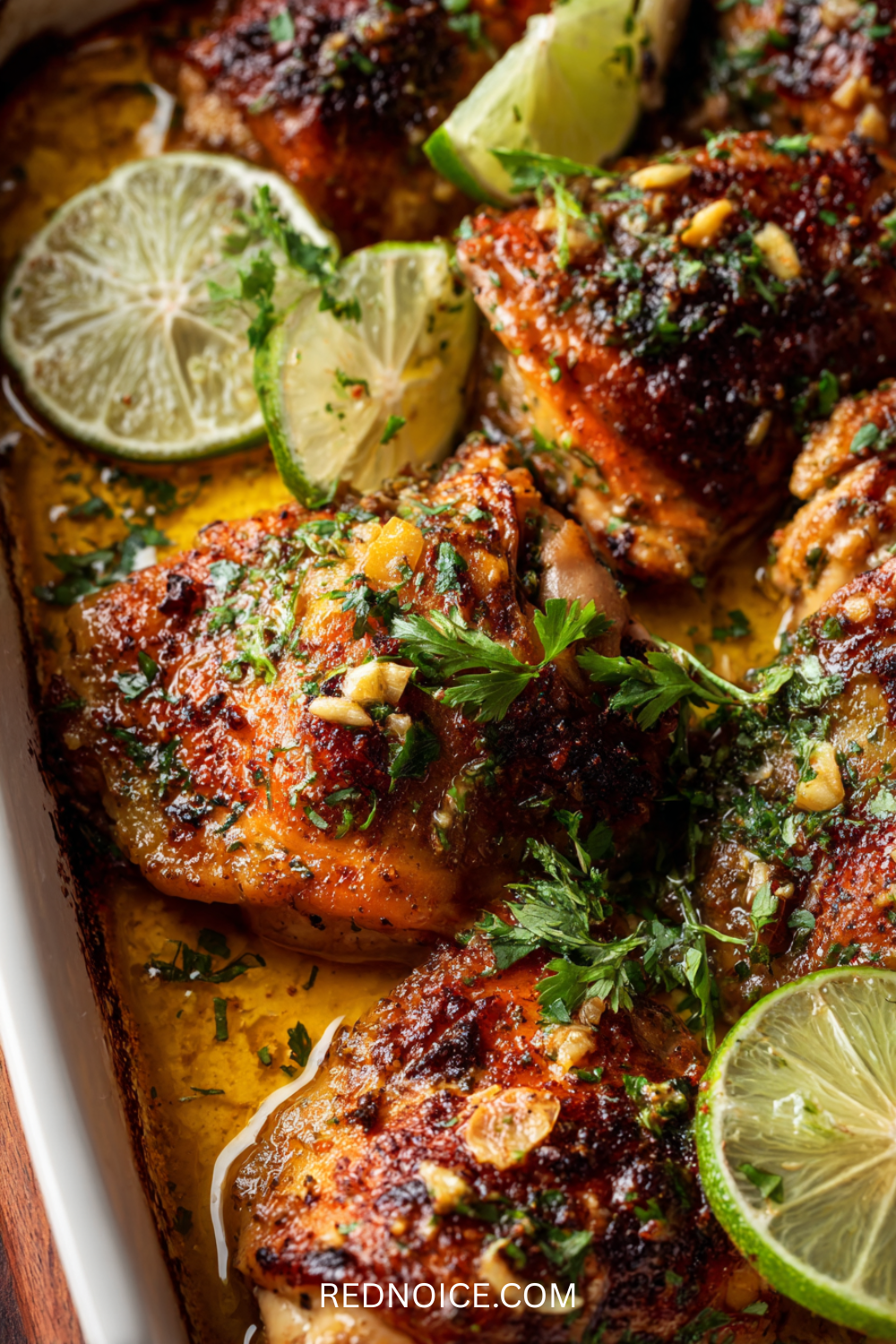
The skin is what makes the chicken crisp — and wet skin steams instead of crisping. Loosening the skin and spooning the marinade directly onto the meat lets the flavor get into the chicken while keeping the outside of the skin dry. Then, before roasting, the thighs get patted thoroughly dry and arranged on a wire rack so hot air can circulate around them. That’s the difference between crackling skin and pale, rubbery skin.
2. Roast at 425°F on a Wire Rack
High heat is what renders the fat under the skin and crisps the outside. A wire rack set over a foil-lined baking sheet lifts the chicken out of the rendered fat so it roasts instead of fries, and it lets the hot air reach the bottom of the thighs too. Roasting at 425°F for 40 to 50 minutes gives you deeply golden, rendered skin and meat that reaches 175–185°F — the temperature where thigh meat is tender and juicy.
3. Reserve a Third of the Marinade Before the Chicken Touches It
This is the food-safety step that also improves the sauce. A third of the marinade gets set aside in a separate container before the raw chicken goes anywhere near it, so it stays clean. That reserved portion gets simmered on the stovetop for 4 to 5 minutes while the chicken roasts — the simmer cooks the garlic, softens the raw citrus edge, and reduces the sauce into something warm and glossy. Spoon it around the chicken at the end, not over the crispy skin.
Ingredients That Matter
Bone-in, skin-on chicken thighs. Two and a half pounds, about four to five large thighs. Bone-in keeps the meat juicy while it roasts, and the skin is what crisps. Boneless skinless thighs work but the skin is the whole point — you’d be making a different dish.
Fresh orange juice and lime juice. A half cup of orange and a quarter cup of lime. Fresh, not bottled — bottled citrus tastes flat and the marinade is the whole flavor of the dish. The orange brings sweetness, the lime brings acidity, and the two together are what make it taste like mojo instead of like garlic chicken.
Fresh orange zest. One teaspoon. The zest is where the orange oil lives and it holds up to roasting better than the juice. Don’t skip it.
Garlic. Eight cloves, finely minced or microplaned. This is not a background note. Mojo is a garlic sauce at its core, and eight cloves is the minimum. Microplaning gives you a finer, more even garlic flavor; mincing gives you little bursts.
Dried oregano and ground cumin. One tablespoon each. The two spices that define Cuban cooking. Dried oregano is the right choice here — fresh oregano turns dull in the oven.
Extra-virgin olive oil. A quarter cup. The oil carries the flavor and helps the marinade cling to the meat.
Fresh parsley or cilantro. A quarter cup, chopped, for the garnish. Cilantro is more traditional for Cuban mojo; parsley is a good substitute if you’re one of the people for whom cilantro tastes like soap.
A fresh lime, cut into wedges. For serving. The squeeze of lime at the table is what wakes up the whole dish.
Do not add salt to the skin. The marinade carries salt, and the skin should stay as dry as possible before roasting. Salting the skin draws moisture to the surface and works against the crisp.
How to Make Cuban Mojo Chicken
(See the recipe card below — the steps are identical and the card is the single source of truth.)
Tips and Troubleshooting
The skin came out pale and soft. It was wet when it went into the oven, or the temperature was too low. Pat the thighs thoroughly dry with paper towels, keep the marinade off the outside of the skin, and roast at 425°F on a wire rack.
The chicken is dry. It roasted too long, or the thighs were small. Start checking at 40 minutes — the thickest part should reach 175–185°F. Thighs are forgiving, but past 190°F they start to dry out.
The marinade tastes raw or harsh. The reserved sauce wasn’t simmered. Bring it to a boil, then reduce to a gentle simmer for 4 to 5 minutes before serving.
The sauce is too concentrated or acidic. It reduced too far, or the citrus was very acidic. Add 1 to 2 tablespoons of water or chicken broth to loosen it.
The garlic burned in the sauce. The heat was too high, or the sauce cooked too long. Keep it on a gentle simmer, not a rolling boil.
The meat tastes bland. The marinade didn’t get under the skin, or the marinating time was too short. Loosen the skin and spoon the marinade directly onto the meat, and marinate for the full 2 to 4 hours.
The chicken stuck to the rack. The rack wasn’t oiled, or the skin wasn’t dry. Spray or brush the rack with oil before arranging the thighs, and pat the skin dry.
The reserved sauce tastes different from the marinade. It should — the simmer cooks the garlic and softens the raw citrus. That’s the point of reserving and simmering it separately.
Substitutions and Swaps
Bone-in, skin-on thighs → bone-in, skin-on drumsticks or breasts. Drumsticks roast in about the same time. Breasts are leaner and cook faster — check at 25 to 30 minutes and pull at 165°F. The skin won’t be as rich without the thigh fat.
Fresh orange juice → fresh grapefruit or tangerine juice. Grapefruit is slightly more bitter; tangerine is sweeter. Both work as citrus swaps.
Fresh lime juice → fresh lemon juice. Different flavor — sharper and less floral — but it works if you don’t have limes.
Cilantro → parsley. For anyone who tastes soap when they eat cilantro. Same quantity.
For a Cuban mojo pork version: swap the chicken for a 3- to 4-pound pork shoulder, marinate overnight, and roast low and slow at 325°F for 3 to 4 hours until it shreds. Same marinade, different protein.
For a Cuban mojo chicken bowl: serve the sliced chicken over rice with black beans, sliced avocado, and a squeeze of lime.
For a spicier version: add ½ teaspoon of red pepper flakes or a minced serrano chile to the marinade.
Storage and Reheat
Refrigerate the leftover chicken and mojo sauce separately in airtight containers for 3 to 4 days.
Reheat the chicken in an air fryer or toaster oven at 350°F until heated through and the skin is crisp again — 4 to 6 minutes. Warm the sauce separately in a small saucepan or microwave.
Food safety: store leftovers within 2 hours of cooking. Reheat to 165°F before serving. Discard anything left at room temperature longer than 2 hours.
Roasted Cuban Mojo Chicken
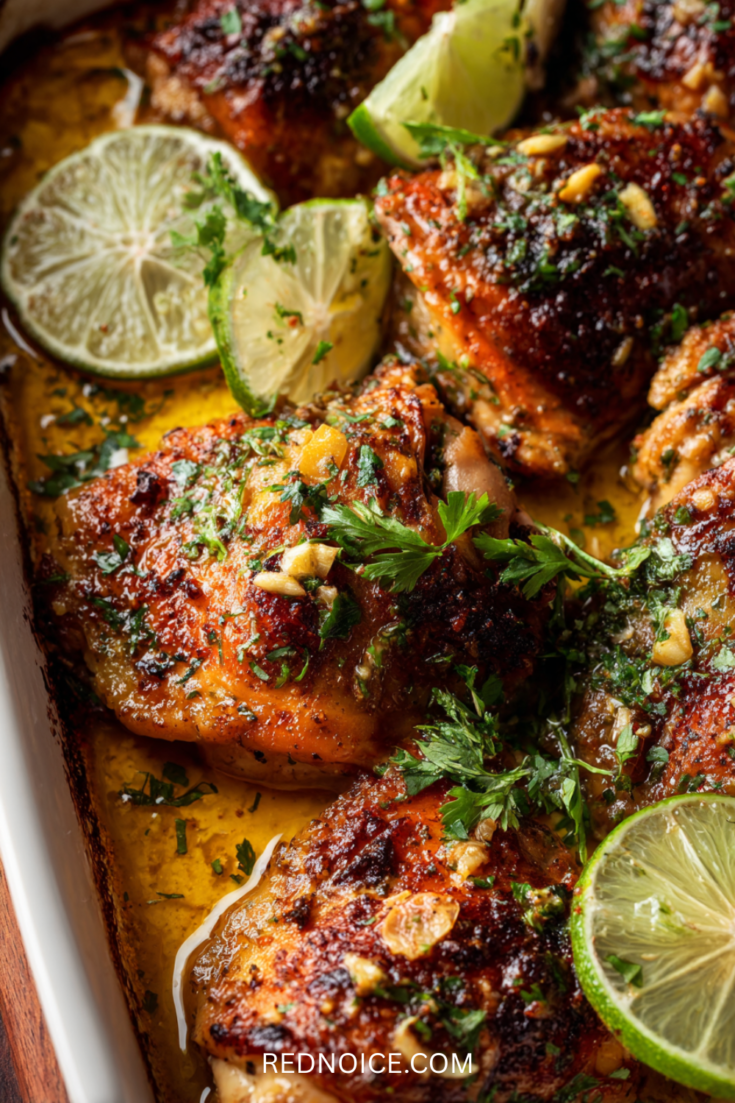
Crispy-skinned roasted chicken thighs marinated in a vibrant blend of garlic, fresh orange, lime, cumin, and oregano, finished with a warm reduced garlic-citrus mojo sauce — about 36g of protein per serving.
Ingredients
Chicken and Mojo Marinade
- 2½ lbs bone-in, skin-on chicken thighs (about 4 to 5 large thighs)
- ½ cup fresh orange juice
- ¼ cup fresh lime juice
- 1 teaspoon fresh orange zest
- 8 garlic cloves, finely minced or microplaned
- 1 tablespoon dried oregano
- 1 tablespoon ground cumin
- 1 teaspoon fine sea salt
- ½ teaspoon freshly cracked black pepper
- ¼ cup extra-virgin olive oil
Mojo Sauce and Garnish
- ¼ cup finely chopped fresh flat-leaf parsley or cilantro
- 1 fresh lime, cut into wedges
- 1 to 2 tablespoons water or chicken broth, as needed to adjust sauce consistency
Instructions
- Prepare the Mojo Marinade: In a medium bowl, whisk together the orange juice, lime juice, orange zest, minced garlic, oregano, cumin, salt, black pepper, and olive oil until combined.
- Marinate the Chicken: Before adding the chicken, transfer about one-third of the marinade into a separate small saucepan or airtight container. Cover and refrigerate for the sauce. Place the chicken thighs in a large glass baking dish. Carefully loosen the skin slightly and spoon some of the remaining marinade underneath the skin and over the meat. Keep as much marinade as possible off the outside of the skin. Cover and refrigerate 2 to 4 hours.
- Prepare the Chicken for Roasting: Preheat the oven to 425°F. Remove the chicken from the refrigerator. Lift each thigh from the marinade and allow the excess liquid to drip away. Thoroughly pat the skin dry with paper towels. Arrange the thighs skin-side up on a wire rack set over a foil-lined rimmed baking sheet, leaving space between each piece to allow hot air to circulate. Discard the marinade that contacted the raw chicken.
- Roast Until Golden and Crispy: Roast uncovered 40 to 50 minutes, depending on the size of the thighs. The skin should be deeply golden, crisp, and visibly rendered. The meat should be cooked through and tender, with juices running clear. For confirmation, use a food thermometer in the thickest part of the thigh without touching the bone — poultry must reach at least 165°F. Thighs are often especially tender at 175–185°F.
- Prepare the Clean Mojo Sauce: While the chicken roasts, pour the reserved, uncontaminated marinade into a small saucepan. Bring to a full boil, then reduce to a gentle simmer. Cook 4 to 5 minutes, stirring occasionally, until the garlic is cooked and the sauce has reduced slightly. Taste and adjust — if the sauce is too concentrated or acidic, add 1 to 2 tablespoons of water or chicken broth. For a smoother sauce, strain out the garlic solids if desired.
- Crisp and Finish: If the chicken needs additional browning, switch the oven to broil for 1 to 2 minutes, watching closely to prevent burning. Transfer the chicken to a serving platter. Spoon the warm mojo sauce around the chicken rather than directly over the crispy skin. Finish with chopped parsley or cilantro and fresh lime wedges. Serve immediately.
Notes
Notes
The two steps that make this work: marinate under the skin, not on it, so the flavor gets into the meat and the outside of the skin stays dry; and roast at 425°F on a wire rack so the skin renders and crisps instead of steaming.
The reserved third of the marinade gets simmered on the stovetop while the chicken roasts — that's the food-safety step and it also cooks the raw garlic and softens the citrus into a warm sauce. Spoon the sauce around the chicken, not over the skin, so the crackle stays crisp.
Leftovers keep 3 to 4 days in the fridge; reheat the chicken in an air fryer at 350°F to bring the skin back. Nutrition is an estimate and varies by thigh size.
Estimated per serving: 470 calories · 36g protein · 6g carbs · 32g fat · 1g fiber · 620mg sodium
Frequently Asked Questions
What is mojo sauce?
Mojo is a Cuban sauce made from garlic, citrus juice (usually sour orange or a mix of orange and lime), cumin, oregano, and olive oil. It’s used as both a marinade and a finishing sauce. This recipe uses a mix of fresh orange and lime juice because sour oranges are hard to find outside Florida.
Can I use sour orange instead of orange and lime?
Yes. If you can find sour orange (Seville orange), use ¾ cup of fresh sour orange juice and skip the lime. The flavor is closer to traditional Cuban mojo.
Can I use chicken breasts instead of thighs?
Yes. Use bone-in, skin-on breasts, reduce the roast time to 25 to 30 minutes, and pull at 165°F. The skin won’t be quite as rich without the thigh fat.
Why does the marinade go under the skin?
Two reasons. It gets the flavor into the meat instead of just on the surface, and it keeps the outside of the skin dry so it can crisp when it roasts. Wet skin steams instead of crisping.
Is this authentic Cuban mojo chicken?
It’s Cuban-inspired. I’m not going to pretend I know what authentic mojo chicken tastes like in Havana — this is my version, adjusted until it tastes great to me. It uses the traditional mojo building blocks — garlic, citrus, cumin, oregano — but the balance is mine.
Can I marinate it overnight?
Yes. Marinate 2 to 4 hours for the best result, or up to overnight for a deeper flavor. Don’t go past 24 hours — the acid in the citrus starts to break down the meat.
Can I make this in a slow cooker?
Not really. The whole point of this recipe is the crispy skin, and a slow cooker steams the skin instead of crisping it. If you want a slow cooker Cuban chicken, use boneless skinless thighs and finish them under the broiler.
What do you serve with Cuban mojo chicken?
Rice and black beans, sliced avocado, a simple cabbage slaw, or roasted potatoes. The mojo sauce is also excellent spooned over rice.
More High-Protein Chicken Recipes You’ll Love
One-Pot Crispy Chicken and Rice — 35g protein, one Dutch oven, 1 hour.
Chimichurri Chicken Thighs — 44g protein, hand-chopped herb sauce, 30-minute marinade.
Thai Basil Chicken — 55g protein, one wok, 17 minutes.
Slow-Cooker Lemon Herb Chicken Breast — 44g protein, juicy every time, one pot.
15 Easy Chicken Crockpot Recipes for Busy Families — the full collection, organized by night-type.
High-Protein Slow Cooker Dinners — ten weeknight dinners organized by cook time.
Closing
I’ve made this Cuban mojo chicken more times than I can count, and the two things that changed everything for me were marinating under the skin instead of on it and roasting at high heat on a wire rack.
The first batch I made had flavor in the meat but pale, soft skin — those two fixes turned it into something with crackle.
If you make it with sour orange or swap in chicken breasts, let me know how it turns out in the comments.