If you buy rotisserie chickens, you already know the feeling: you eat the meat, and then you’re left with a carcass and a decision.
Throw it away, or do something with it.
For years I threw mine away. Now I make a pot of broth with it every single week, and I genuinely can’t remember the last time a rotisserie carcass went in the trash at my house.
The first time I made it, I was skeptical.
How much flavor could there really be in a picked-over chicken skeleton? The answer is: a lot.
The collagen in the bones and cartilage breaks down over a long slow cook into gelatin, which is what gives the broth that silky body and the jiggle when it’s chilled.
The flavor is deep and savory and chicken-y, richer than the boxed stuff, and it makes everything you cook with it taste better — rice, soups, noodle bowls, risotto, gravies, braised vegetables.
The other reason I keep doing this is the money.
A rotisserie chicken costs $6 to $8 and gives you one meal’s worth of meat plus a pot of broth worth $4 to $6 if you were buying the good stuff at the store.
That’s two to three meals’ worth of flavor from one chicken, plus the collagen and minerals you can’t buy in a carton.
The technique is mostly hands-off.
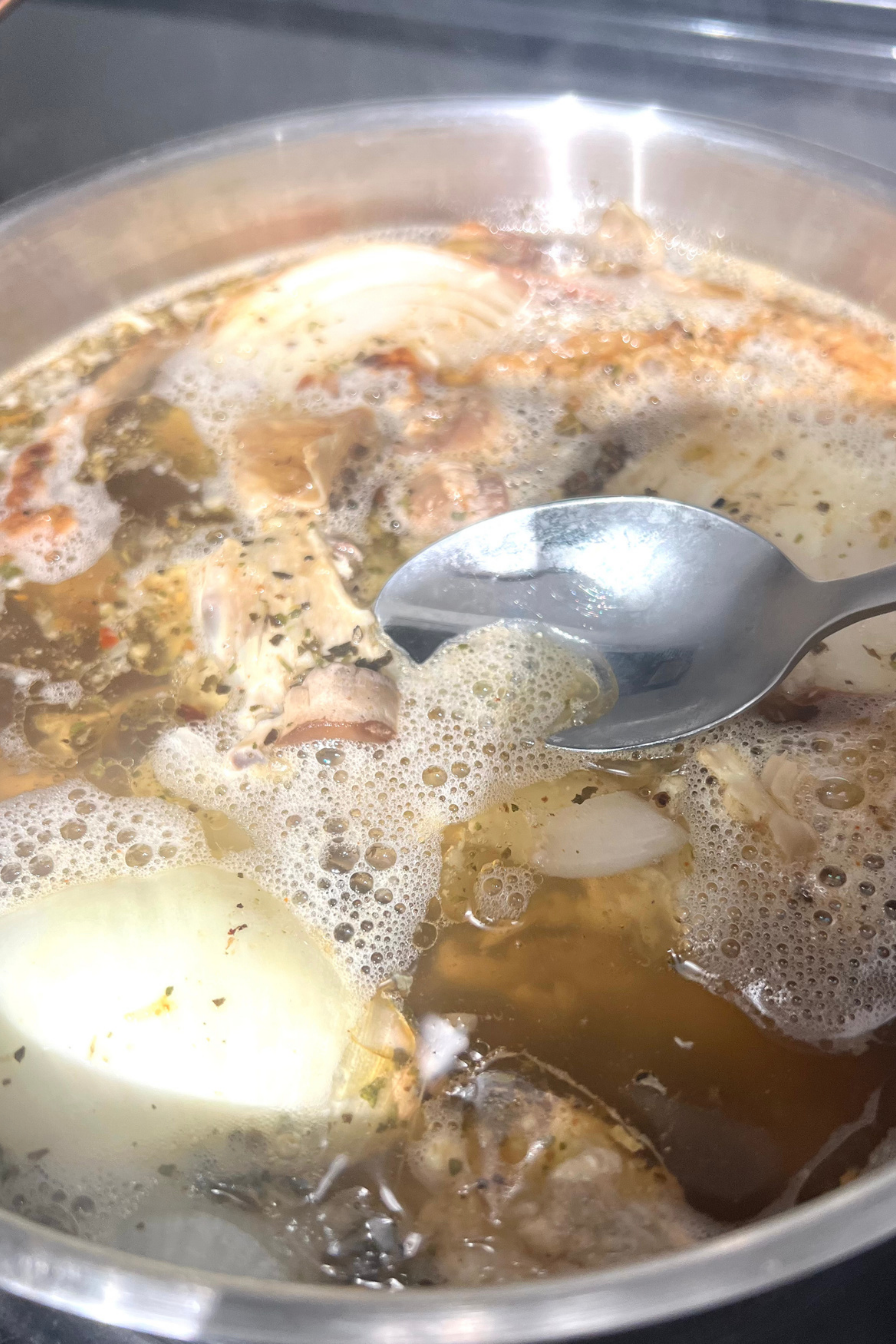
The one thing that makes this broth crystal clear instead of cloudy is the parboil step: the bones go into a pot of cold water, come up to a boil, and get skimmed of the gray foam that rises to the top — that’s coagulated protein, and if you leave it in, the broth stays cloudy.
Skim it off, transfer the clean bones and clear liquid to the crockpot, and walk away for 8 to 12 hours.
The recipe makes about 5 to 7 cups of finished broth and takes about 10 minutes of active prep.
The slow cooker does the rest. It’s the kind of thing that becomes a weekly habit without you really deciding to make it one.
Why This Recipe Works
Homemade rotisserie chicken bone broth goes wrong in three specific ways: cloudy broth, thin broth with no body, and a flavor that tastes like watered-down chicken. Here’s how this version solves each one.
1. Parboil and Skim Before the Slow Cooker
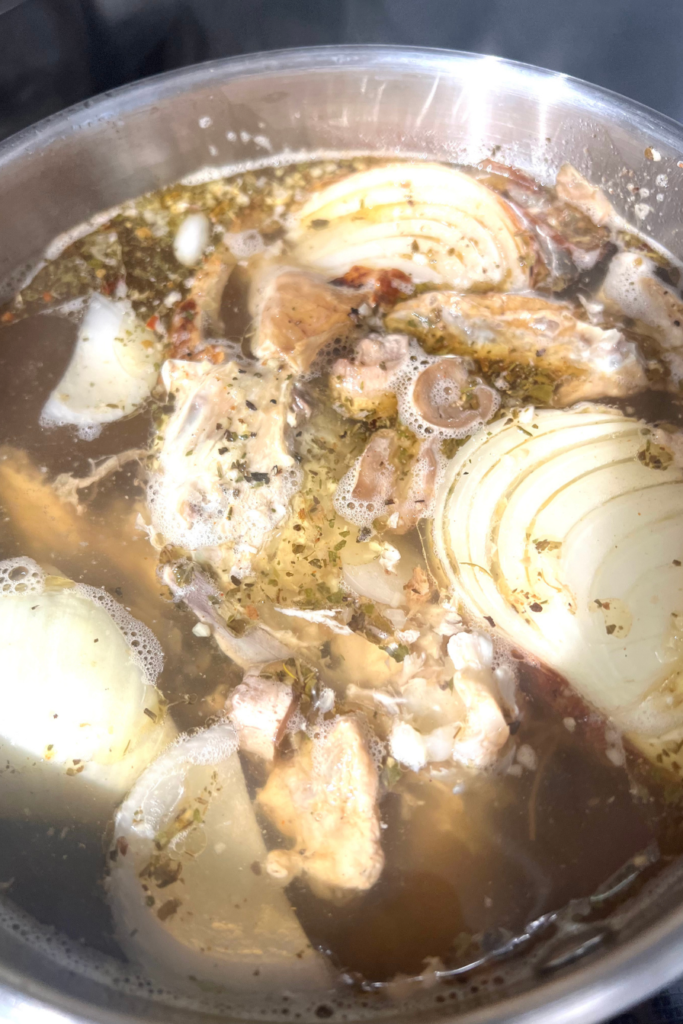
The gray foam that rises to the top when bones come to a boil is coagulated protein. If you leave it in, the broth stays cloudy — and no amount of straining will fix it. Bringing the bones to a boil in a separate pot, skimming the foam for 3 to 5 minutes, then transferring the clean bones and clear liquid to the crockpot is the technique that produces a crystal-clear broth. It’s the single most important step in the recipe.
2. Add a Splash of Apple Cider Vinegar
A tablespoon of apple cider vinegar lowers the pH of the water slightly, which helps pull more collagen and minerals out of the bones during the long cook. You won’t taste the vinegar in the finished broth — it’s doing invisible chemistry. The result is a broth with more body and a better gel set when chilled.
3. Cook Low and Slow, and Don’t Lift the Lid
Eight to twelve hours on LOW extracts the maximum collagen and flavor from the bones. Lifting the lid lets the steam and aroma escape, and it slows the cook down. Set it before bed (or before work) and leave it alone.
Ingredients That Matter
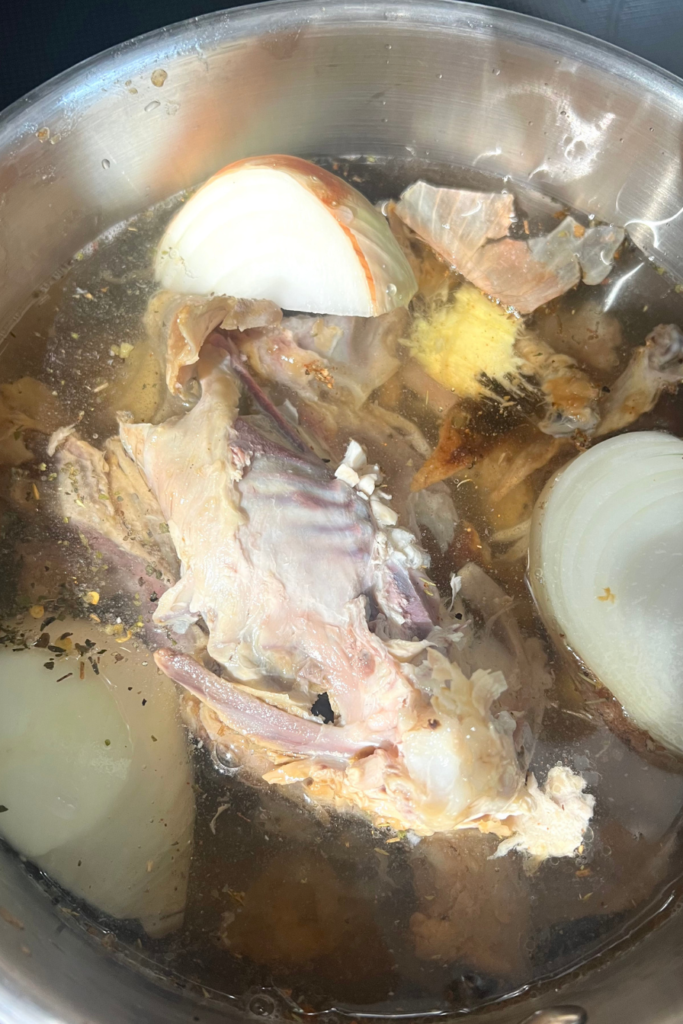
One leftover rotisserie chicken carcass. All the bones, cartilage, wing tips, and skinless scraps — about 1 to 1½ pounds. Pick off any large pieces of meat first (use them in a salad or soup), because leftover meat makes the broth cloudier and tastes better used elsewhere. The bones, cartilage, and connective tissue are what you want for the collagen.
Cold water. 10 to 12 cups to start, divided between the parboil pot and the slow cooker. Cold water is important for the parboil — it helps the proteins coagulate gradually and rise to the top where you can skim them.
One large yellow onion, quartered. Leave the papery skin on — it gives the broth a deeper golden-amber color. This is a traditional technique that makes a real difference in the finished look.
Garlic and ginger. Four to five cloves of garlic, smashed with the flat of a knife, and a 2-inch piece of fresh ginger sliced into coins (no need to peel). The garlic adds depth, and the ginger adds a subtle warmth that makes the broth taste more complex.
Whole black peppercorns. One teaspoon. Whole peppercorns release their flavor slowly over the long cook, and they don’t leave a bitter edge the way ground pepper can.
Apple cider vinegar. One tablespoon. The collagen booster. A splash of lemon juice works too, but the vinegar is the standard for bone broth.
Kosher salt, added at the very end. Rotisserie chicken carcasses are already seasoned, and the broth will pick up that salt. Taste the broth before adding any salt — it may already be salty enough.
Optional boosters: mushroom stems, bay leaf, green onion tops or cilantro stems. The mushroom stems add umami and golden depth. The bay leaf adds a subtle herbal background. The green onion tops and cilantro stems go in during the last 1 to 2 hours only — they turn bitter if they cook too long.
How to Make Rotisserie Chicken Bone Broth in the Slow Cooker
(See the recipe card below — the steps are identical and the card is the single source of truth.)
Is Bone Broth High-Protein?
No — and this matters if you’re making broth for the protein. A 1-cup serving of homemade bone broth has about 3 to 5 grams of protein. The protein comes from the collagen and gelatin extracted from the bones, and the amount is much lower than a meat-based broth or a chicken soup with chicken in it.
What bone broth is good for is collagen. Collagen is the protein that gives the broth its body, its gel set, and its reputation as a health food. It’s not a complete protein (it’s low in tryptophan, an essential amino acid), so it doesn’t replace a protein source on its own. But it’s a genuinely useful thing to have in the kitchen: it adds flavor, body, and collagen to everything you cook with it.
If you want a high-protein meal built on this broth, add a protein to it — shredded chicken, poached eggs, tofu, or beans. The broth is the base, not the meal.
How to Use Rotisserie Chicken Bone Broth
Soups. Any soup recipe that calls for chicken broth will taste noticeably better with this one. Chicken noodle, chicken tortilla, egg drop, wonton, minestrone, and any creamy chicken soup.
Rice and grains. Cook rice, quinoa, farro, or risotto in broth instead of water. The grains absorb the flavor, and the collagen adds body.
Noodle bowls. Ramen, pho, or any weeknight noodle bowl. The broth is the base, and the toppings do the rest.
Gravy and pan sauces. Use it to deglaze a pan after searing chicken, pork, or steak. The collagen adds body to the sauce.
Braised vegetables. Braise cabbage, greens, or root vegetables in broth with a little butter or olive oil.
Sipping broth. Warm it up, add a pinch of salt and a squeeze of lemon, and sip it as a savory warm drink.
Cooking liquid for beans. Cook dried beans in broth instead of water for a richer flavor.
Tips and Troubleshooting
The broth turned out cloudy. The parboil step was skipped, or the foam wasn’t skimmed thoroughly. Skim for the full 3 to 5 minutes, and don’t stir the pot during the boil — stirring disturbs the sediment and clouds the broth.
The broth has no body or gel set. The cook time was too short, or the vinegar was skipped. Cook for the full 8 to 12 hours, and use the apple cider vinegar — it’s what pulls the collagen out.
The broth is too salty. Rotisserie carcasses are already seasoned, and the broth picks up that salt. Don’t add any salt until the end, and taste before salting.
The broth tastes bland. The aromatics were skipped, or the cook time was too short. Use the full amount of onion, garlic, ginger, and peppercorns, and cook the full 8 to 12 hours.
The broth went bad in the fridge. It wasn’t cooled safely. Cool it in an ice bath or divide it into smaller containers before refrigerating — don’t put a large hot pot directly into the fridge.
The broth didn’t gel when chilled. That’s not a failure — some rotisserie carcasses have less collagen than others, and a gel set depends on how much connective tissue was in the bones. A liquid broth is still a good broth.
The broth has a green tint. The green onion tops or cilantro stems went in too early and cooked too long. Add them in the last 1 to 2 hours only.
The broth smells strong. The parboil step was skipped, or the bones weren’t fully submerged. Skim the foam, and make sure the bones are covered by an inch of water.
Substitutions and Swaps
Rotisserie chicken carcass → raw chicken bones. Same quantity by weight. Raw bones need 12 to 24 hours on LOW instead of 8 to 12, and the parboil step is even more important.
Rotisserie chicken carcass → turkey carcass. Same method, longer cook — 12 to 16 hours. A turkey carcass yields more broth (about 10 to 14 cups).
Apple cider vinegar → lemon juice or white vinegar. Same quantity. All three lower the pH and help extract collagen.
Yellow onion → leek, shallot, or green onion. Same quantity. Leeks add a milder sweetness; shallots are more delicate; green onion is sharper.
Ginger → skip it. The ginger adds a subtle warmth, but the broth works without it.
For a crockpot chicken broth soups version: use the broth as the base for chicken noodle soup, chicken tortilla soup, or any soup recipe that calls for chicken broth.
For an overnight crockpot chicken broth version: load the slow cooker before bed, cook on LOW overnight, and strain in the morning.
Storage and Reheat
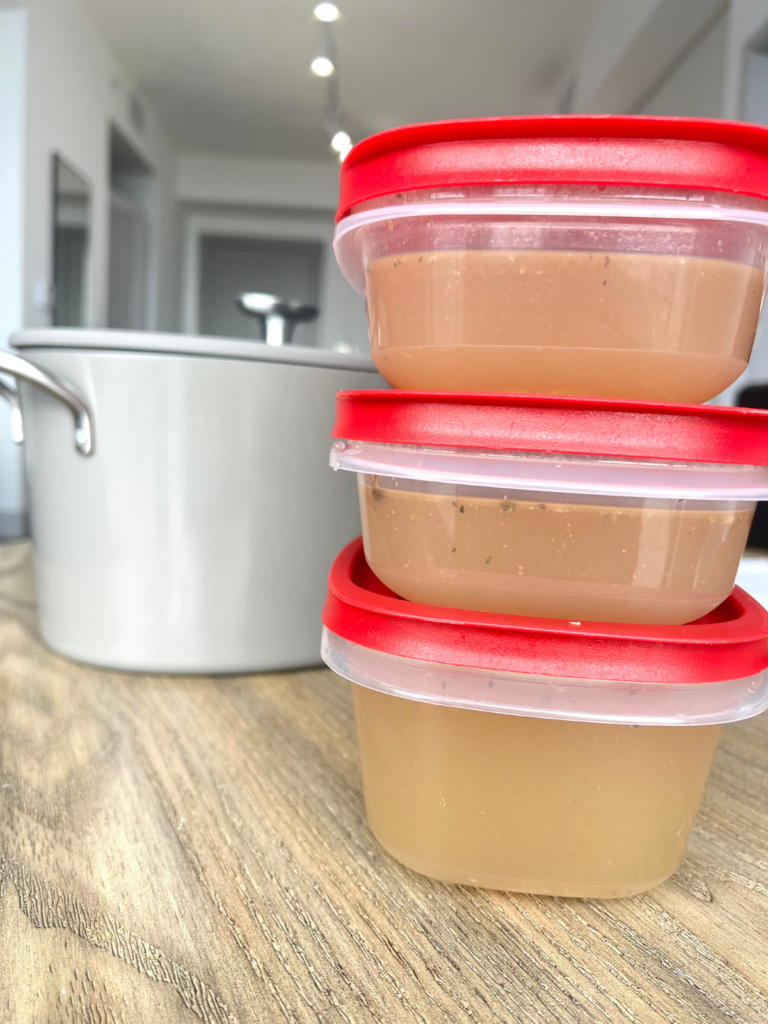
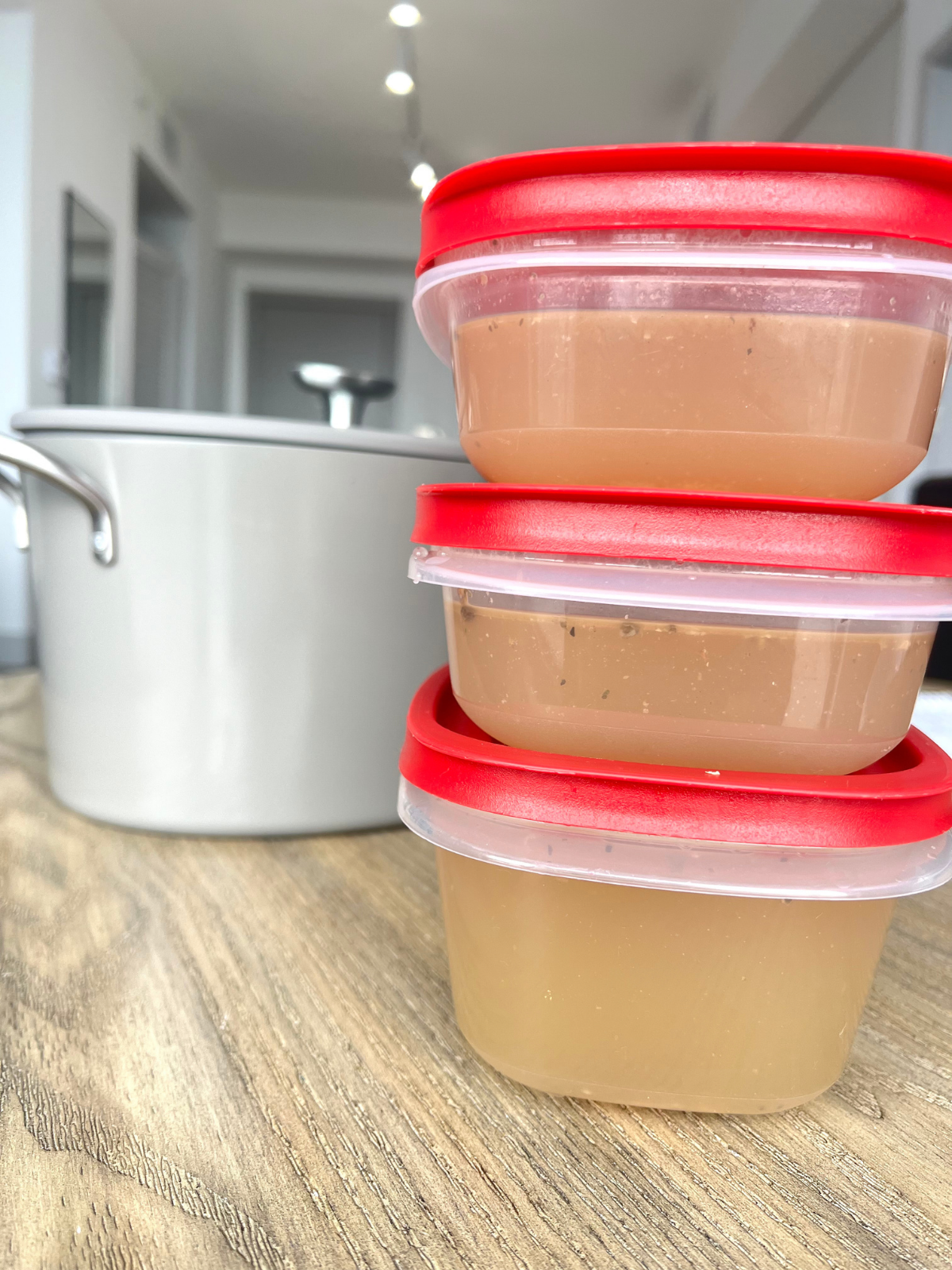
Refrigerate the broth in airtight glass mason jars or meal prep containers for up to 5 days. When chilled, a properly extracted broth will turn into a firm gel — this melts back into liquid when heated and is the hallmark of high collagen.
Cool the broth safely. Don’t put a large hot pot directly into the refrigerator. Cool it in an ice bath, or divide it into smaller containers and refrigerate within 2 hours.
Freeze in 1-cup or 2-cup portions, leaving an inch of headspace in jars or using silicone freezer cubes, for up to 4 months. Freeze for instant soup bases, rice cooking liquid, or pan sauces.
Food safety: store leftovers within 2 hours of cooking. Discard anything left at room temperature longer than 2 hours.
Notes
The parboil-and-skim step is what makes the broth crystal clear — don’t skip it. This recipe adds the aromatics to the parboil pot along with the bones, which gives them a head start on flavor and softens them before the slow cook.
Some recipes add the aromatics after the parboil so the foam is easier to skim; either order works, and the finished broth is the same.
The apple cider vinegar lowers the pH and helps pull more collagen out of the bones, which is what gives the broth its body and gel set.
Don’t salt the broth until the end — rotisserie carcasses are already seasoned, and the broth may already be salty.
Cool the broth safely: don’t put a large hot pot directly into the fridge — use an ice bath or divide it into smaller containers and refrigerate within 2 hours.
A properly extracted broth will gel when chilled; that’s the collagen, and it melts back into liquid when heated. If it doesn’t gel, the broth is still good — some carcasses have less collagen than others.
The broth keeps 5 days in the fridge or 4 months in the freezer. Nutrition is an estimate and varies by rotisserie seasoning and collagen extraction.
Crockpot Chicken Broth From a Rotisserie Chicken Carcass
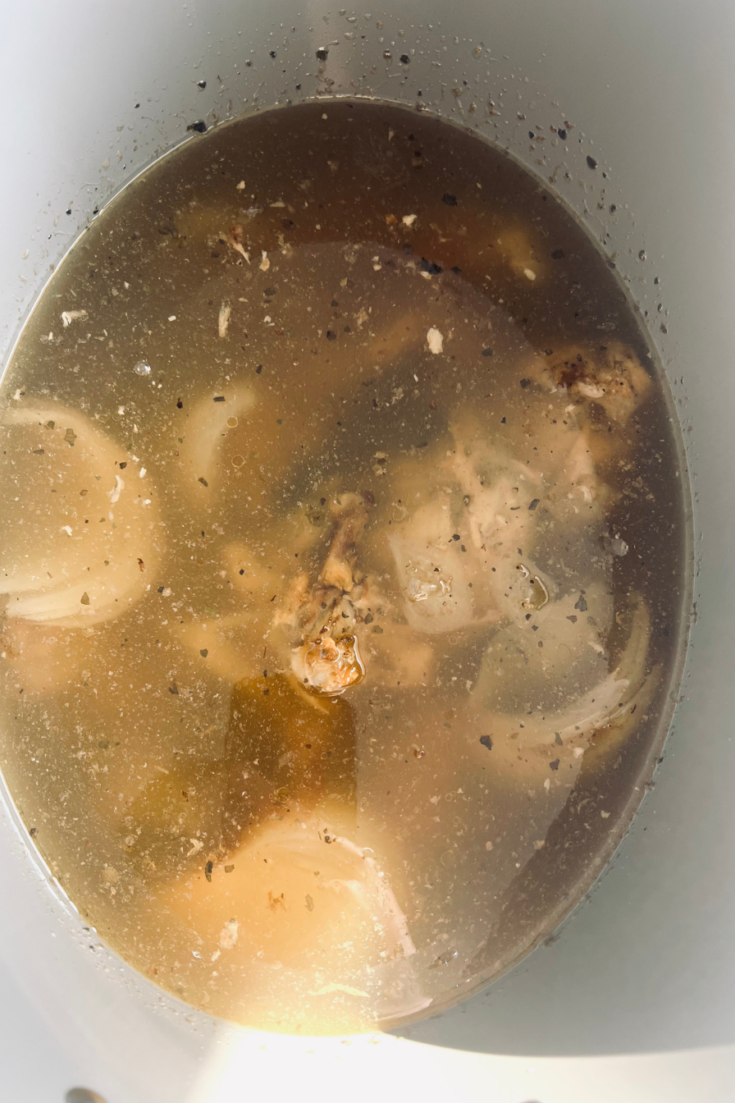
A rich, collagen-packed golden broth made from leftover rotisserie chicken bones, aromatics, ginger, and garlic. A quick stovetop parboil and skim before slow-cooking yields a clean, restaurant-quality broth with zero cloudiness.
Ingredients
Bone and Liquid Base
- 1 leftover rotisserie chicken carcass (all bones, cartilage, wing tips, and skinless scraps — about 1 to 1½ lbs)
- 10 to 12 cups cold water (divided: enough to submerge the bones by 1 inch)
Core Aromatics
- 1 large yellow onion, quartered (leave the clean outer papery skin on for a deep golden-amber color)
- 4 to 5 cloves garlic, smashed with the flat of a knife
- 1 (2-inch) piece fresh ginger, sliced into coins (no need to peel)
- 1 teaspoon whole black peppercorns
- Kosher salt to taste (add at the very end — rotisserie carcasses already carry seasoning)
Optional Flavor and Collagen Boosters
- Mushroom bottoms and stems (rinsed well of grit; adds rich natural umami and golden depth)
- 1 tablespoon apple cider vinegar (or a splash of lemon juice; gently lowers pH to pull extra collagen and minerals from the bones)
- 1 bay leaf (adds subtle herbal background warmth)
- Green onion tops or cilantro stems (add during the last 1 to 2 hours only for fresh aromatic brightness without turning bitter)
Instructions
- Stovetop Parboil and Skim (The Clarity Step): Place the rotisserie chicken bones and the quartered onion, smashed garlic, sliced ginger, and whole peppercorns in a large stockpot. Cover with cold water. Bring to a boil over medium-high heat. As it reaches a boil, gray-brown foam (coagulated proteins) will rise to the top. Reduce the heat to a gentle boil and use a fine-mesh skimmer or spoon to skim off the foam for 3 to 5 minutes, until the liquid looks clear. The aromatics are in the pot during this step to get a head start on the flavor — see the note below.
- Transfer to the Slow Cooker: Using tongs, transfer the clean bones and aromatics into a 6-quart slow cooker, then carefully pour the clear, hot liquid from the pot over them, leaving any settled sediment at the bottom of the stockpot behind.
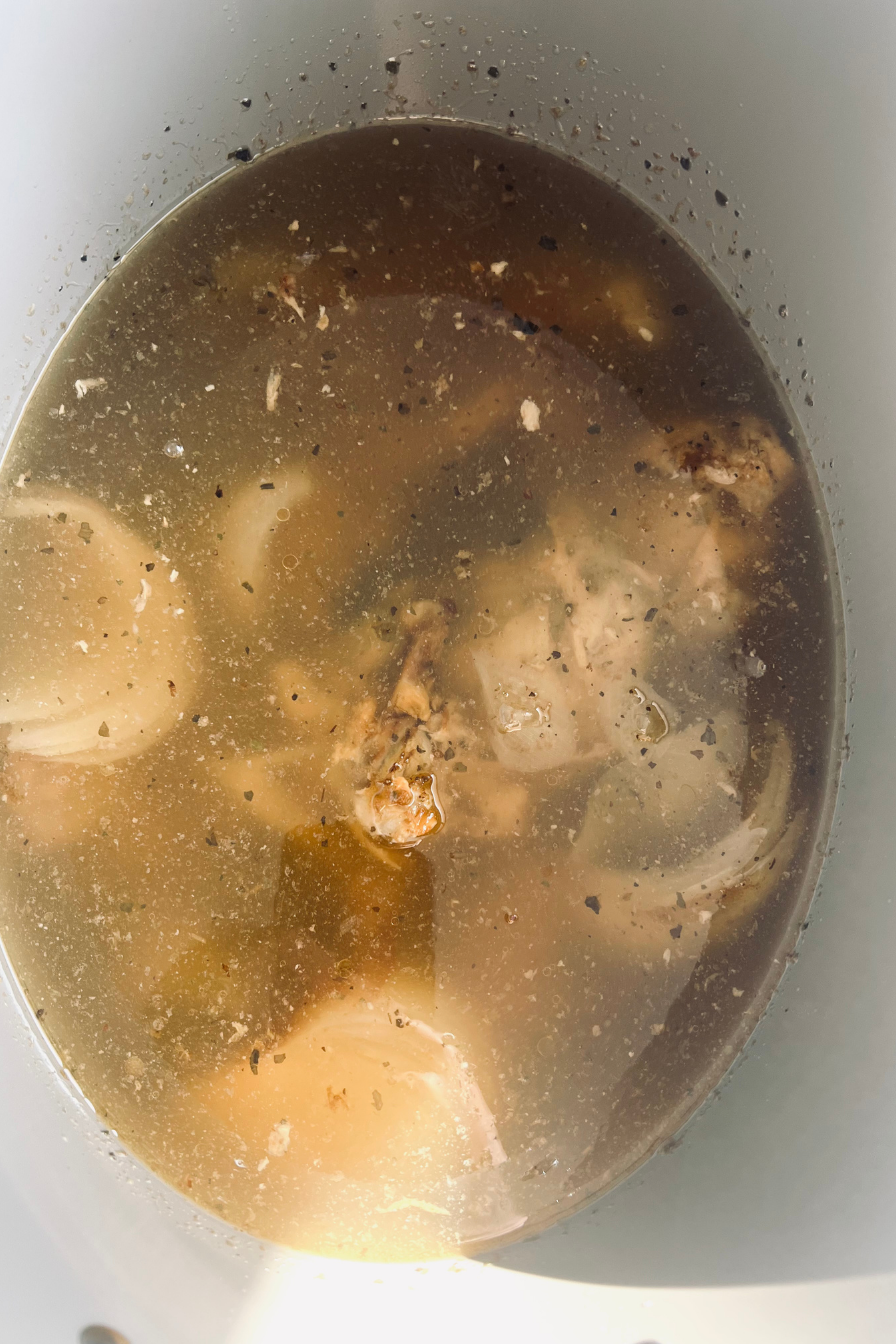
- Add the Optional Boosters: Add any optional boosters you have on hand — rinsed mushroom bottoms, apple cider vinegar, and the bay leaf. If needed, top off with hot water so the bones are submerged by about 1 inch.
- Slow Cook on LOW: Cover with the lid and cook on LOW for 8 to 12 hours. Avoid lifting the lid during cooking so moisture and aroma stay locked inside. If adding green onion tops or cilantro stems, tuck them in during the final 1 to 2 hours.
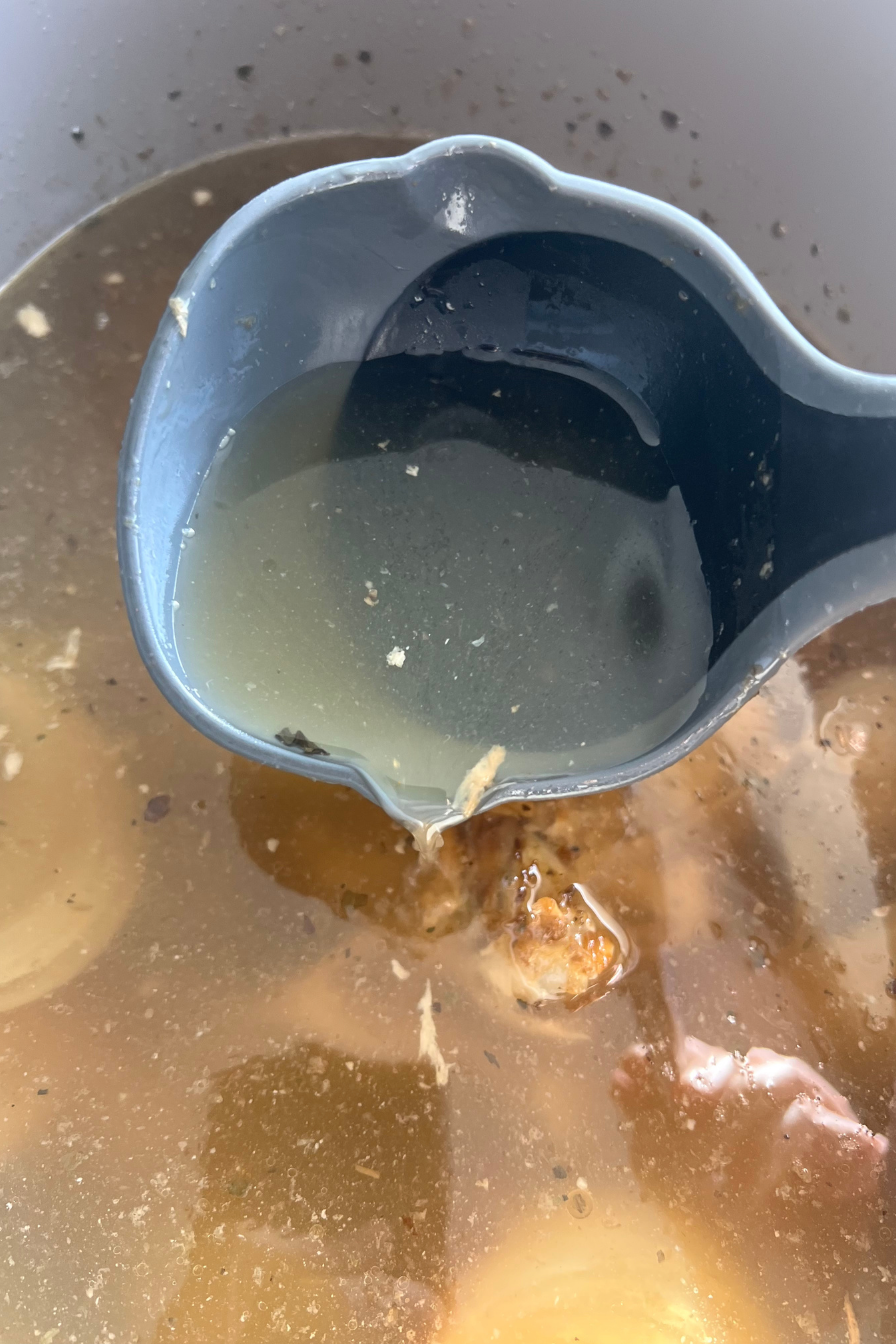
- Strain and Cool: Set a fine-mesh strainer lined with cheesecloth or a paper towel over a large heatproof bowl or pot. Ladle or pour the broth through the strainer, pressing gently on the aromatics to extract every drop of flavor, then discard the spent bones and solids.
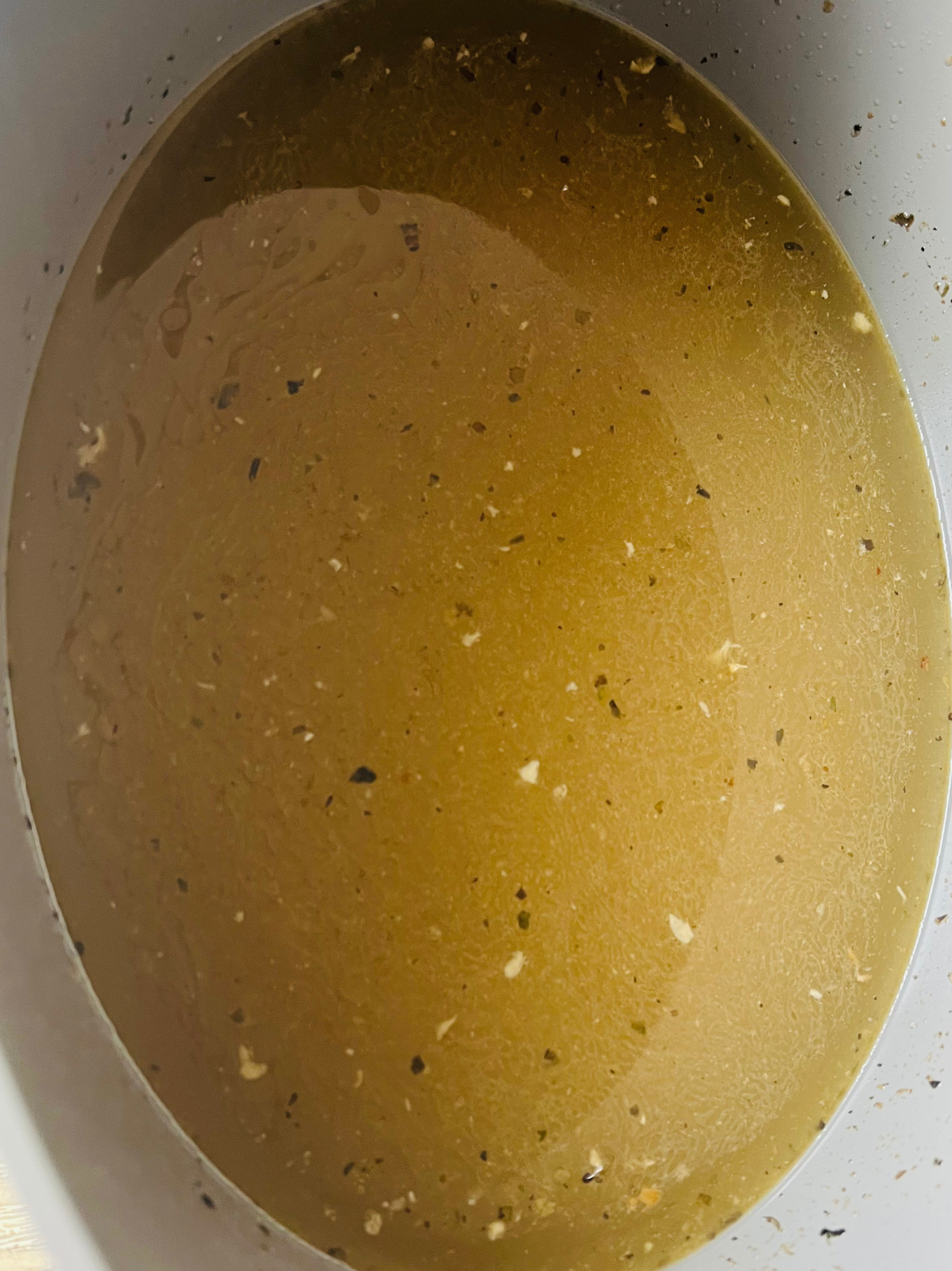
- Season and Degrease: Taste the warm broth before adding any salt — rotisserie carcasses carry a lot of seasoning, and the broth may already be salty enough. For the cleanest finish, chill the broth in the refrigerator for a few hours; any remaining fat will solidify into a solid cap on top that you can easily lift off with a spoon.
Notes
Estimated per serving (1 cup, skimmed of surface fat): About 40 calories · 3 to 5g protein · 1g carbs · 0.5g fat · 0g fiber · 140mg sodium
Nutrition varies based on rotisserie seasoning and how much collagen is extracted. Verify against your labels.
Frequently Asked Questions
Can I make this with raw chicken bones instead of a rotisserie carcass?
Yes. Same method, but raw bones need 12 to 24 hours on LOW instead of 8 to 12. The parboil step is even more important for raw bones — they release more foam.
Can I make this with a whole chicken?
Yes. Roast or poach a whole chicken, remove the meat, and use the carcass. The broth will be richer than a picked-over rotisserie carcass, and the yield will be slightly higher.
Why is my broth cloudy?
The parboil step was skipped, or the foam wasn’t skimmed thoroughly. Skim for the full 3 to 5 minutes, and don’t stir the pot during the boil.
Should I add the aromatics before or after the parboil?
Either works. This recipe adds them before the parboil, along with the bones, which gives them a head start on flavor and softens them before the slow cook. Some recipes add them after the parboil so the foam is easier to skim. The finished broth is the same either way.
How long does homemade chicken broth last in the fridge?
Up to 5 days in airtight containers. If you’re not going to use it within 5 days, freeze it.
Why didn’t my broth gel when chilled?
The broth gels when there’s enough collagen in the bones. Some rotisserie carcasses have less collagen than others, and a shorter cook time extracts less. A liquid broth is still a good broth — the gel set is a bonus, not a requirement.
Can I freeze chicken broth?
Yes. Freeze in 1-cup or 2-cup portions for up to 4 months. Leave an inch of headspace in jars, or use silicone freezer cubes.
How do I cool the broth safely?
Don’t put a large hot pot directly into the refrigerator — it raises the fridge temperature and puts other food into the danger zone. Cool it in an ice bath, or divide it into smaller containers and refrigerate within 2 hours.
Is bone broth high in protein?
No. A 1-cup serving of homemade bone broth has about 3 to 5 grams of protein. The protein comes from collagen and gelatin, and it’s not a complete protein. Bone broth is a flavor and collagen base, not a protein source on its own.
More Crockpot and Soup Recipes You’ll Love
Homemade Chicken Noodle Soup — the slow cooker chicken soup with a Parmesan rind.
Hearty Taco Soup — one-pot, ready in 35 minutes.
15 Easy Chicken Crockpot Recipes for Busy Families — the full collection, organized by night-type.
Closing
I’ve been making this rotisserie chicken bone broth for years, and the thing that changed everything for me was the parboil-and-skim step.
The first batch I made was cloudy and had a slightly muddy flavor — the parboil fixed both problems, and I haven’t looked back.
Now it’s a weekly habit: I buy a rotisserie chicken, eat the meat, and make the broth that same day.
Nothing goes to waste, and I always have a jar of good broth in the fridge for soups, rice, or just a warm cup on a cold afternoon.
If you make the raw-bones version or use the broth in a specific recipe, let me know how it turns out in the comments.