There’s a specific kind of weeknight when you want the restaurant dinner. The one with golden-seared chicken and a glossy, garlicky alfredo sauce clinging to every strand of fettuccine. You just don’t want to stand at the stove for an hour, dirty three pots, or finish with a pint of heavy cream.
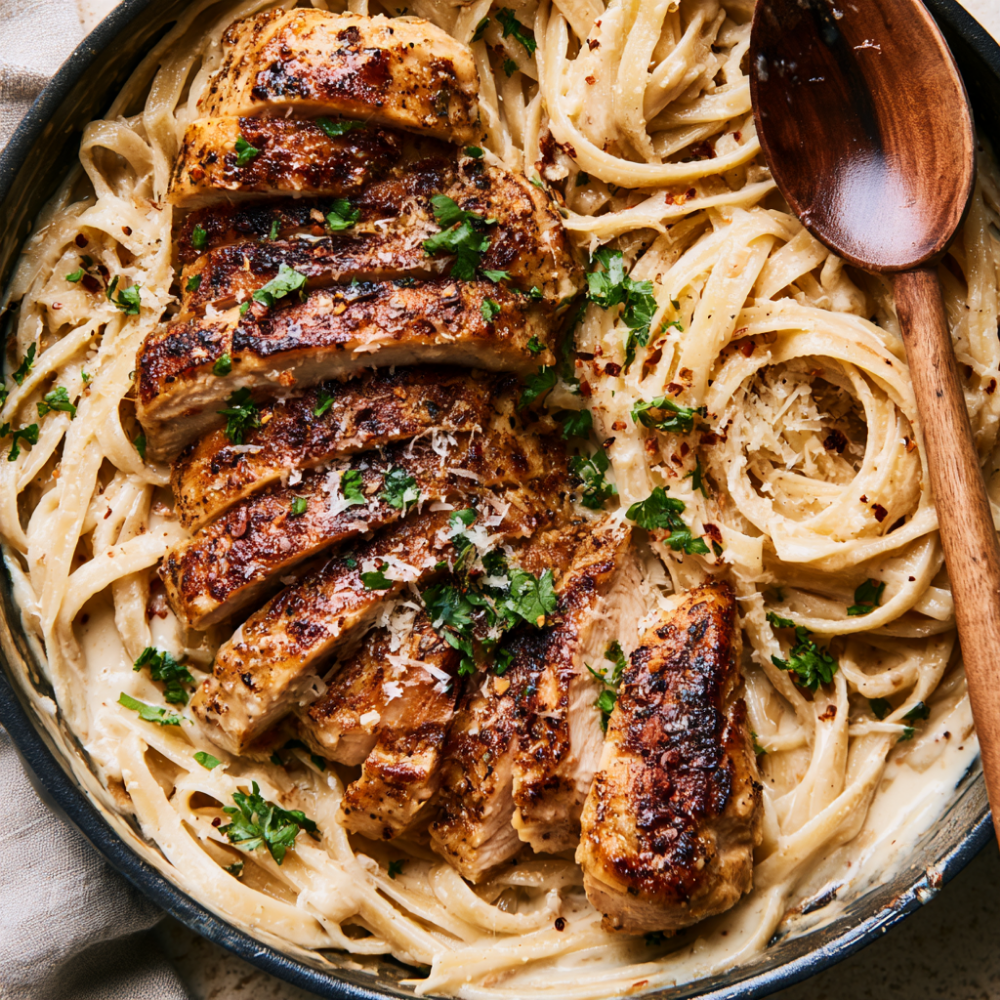
This one-pan creamy chicken alfredo is the answer. Golden-seared chicken, fettuccine cooked right in the sauce, and a velvety garlic-Parmesan alfredo made without heavy cream. About 45–50 grams of protein per serving, and it comes together in about 35 minutes in one skillet.
The trick is building the creaminess. Instead of heavy cream, this version uses whole milk, cream cheese, and freshly grated Parmesan.
The cream cheese melts into the sauce, giving it a rich, velvety body. The Parmesan brings sharp, nutty depth. And the pasta cooks directly in the sauce, so the starch it releases thickens everything naturally.
Two things decide whether this turns out silky or grainy, and neither is optional.
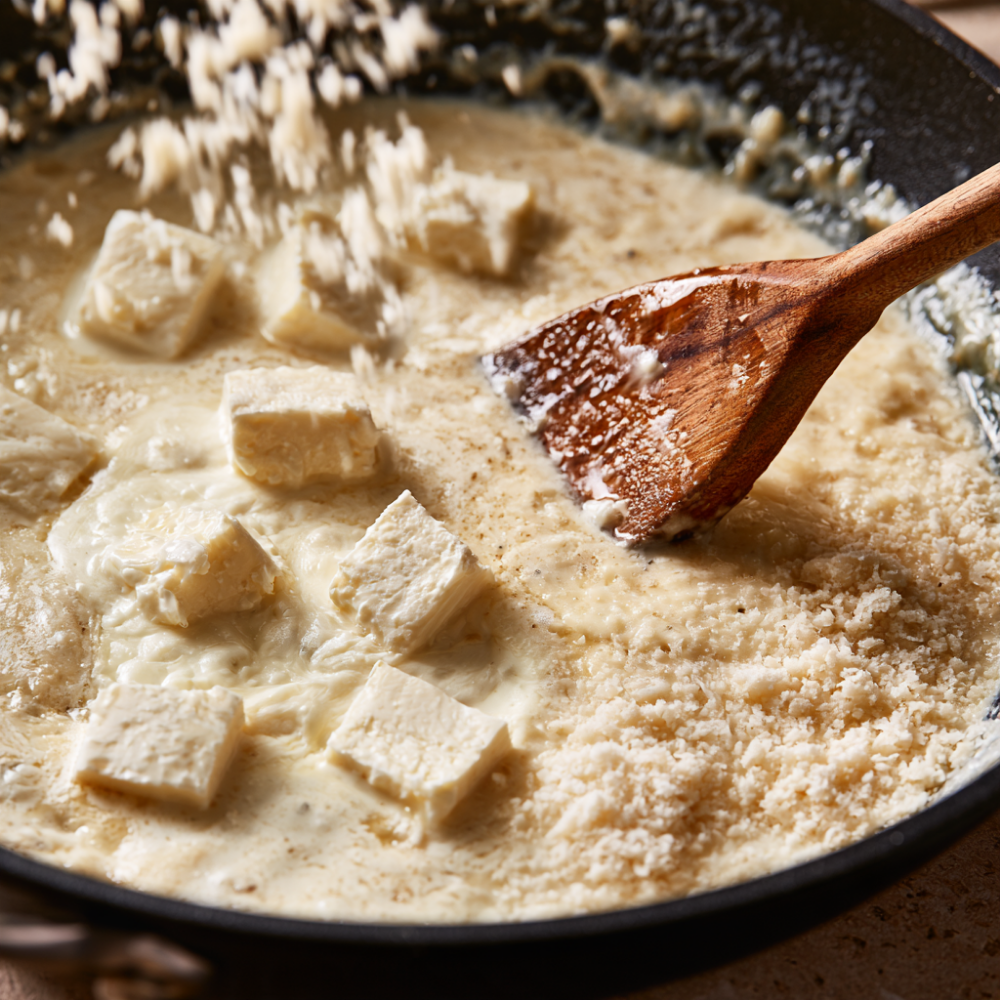
Add the cream cheese and Parmesan off heat. Both break when they hit a hard boil. Pull the skillet off the burner, let it sit for a minute, then stir in the cheese a little at a time. This is the difference between a smooth, restaurant-quality sauce and one with tiny curds floating in it.
Use freshly grated Parmesan from a block. Pre-shredded Parmesan is coated with cellulose and anti-caking agents that prevent it from melting smoothly. A block you grate yourself melts into a silky sauce.
Everything else is forgiving, flexible, and takes about 10 minutes of actual work.
Why This Recipe Works
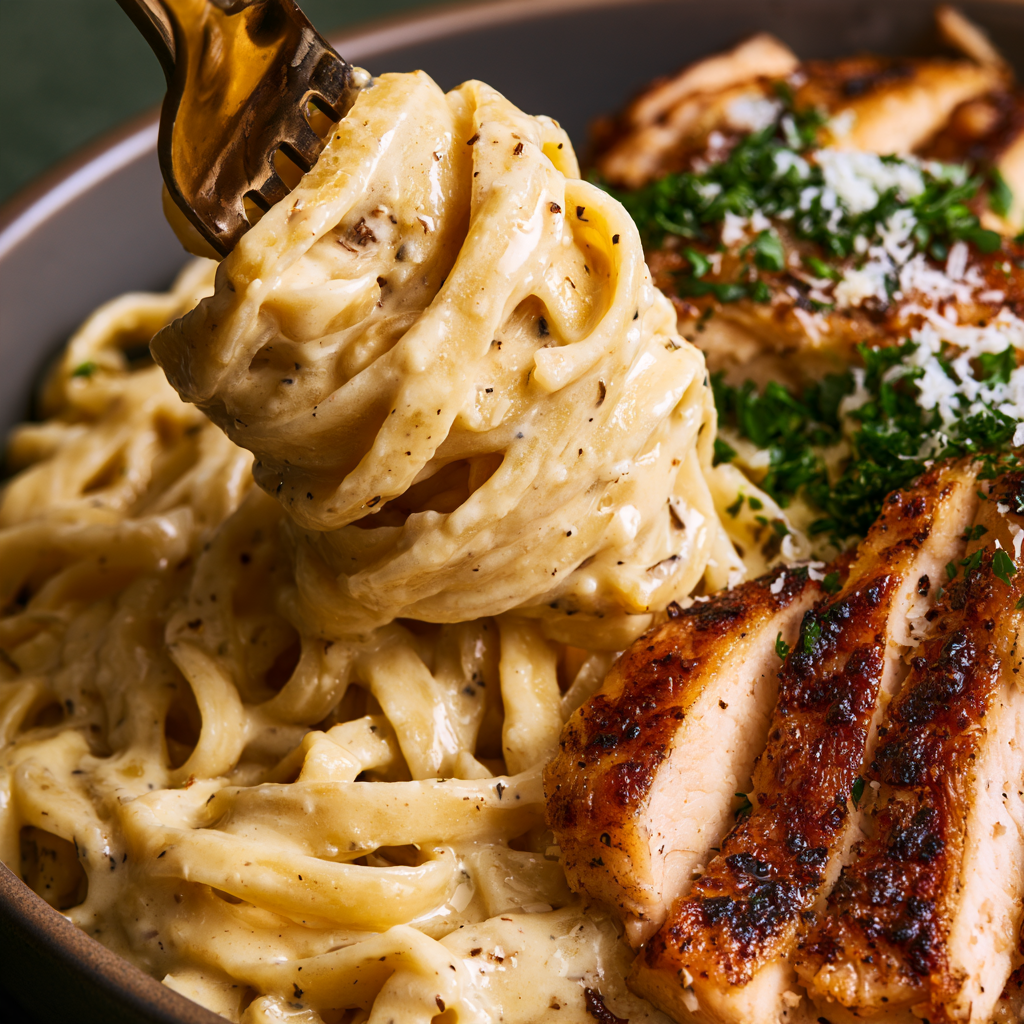
The pasta cooks directly in the sauce. Instead of boiling fettuccine in a separate pot and draining it, the pasta cooks in a seasoned milk-and-broth mixture.
It absorbs the garlic and Parmesan flavor as it cooks, and the starch it releases naturally thickens the sauce. This is what makes it a genuine one-pan meal.
Cream cheese gives you the creamy body without heavy cream. Four ounces of cream cheese melts into the sauce, giving it the rich, velvety texture you expect from alfredo. It’s the same trick used in high-protein pasta sauces and dips, and it works perfectly here.
Whole milk brings the liquid without the fat of cream. Whole milk has enough fat to keep the sauce stable and creamy. Skim milk works in a pinch, but the sauce will be thinner.
Freshly grated Parmesan does the heavy lifting for flavor. Parmesan is sharp, salty, and nutty. Stirring in a full cup gives you classic alfredo flavor without needing any other cheese.
Garlic and butter build the flavor base. Sautéing minced garlic in butter for 30 seconds before adding the liquid is what makes the sauce taste like something from a restaurant kitchen instead of a jar.
Sear the chicken first, then return it at the end. Searing gives the chicken a golden crust, and returning it at the very end keeps it from drying out while the pasta cooks.
A pinch of nutmeg is the secret ingredient. Traditional alfredo calls for a tiny amount of nutmeg. You won’t notice it in the finished dish, but it makes the sauce taste more complex.
It’s genuinely better on day two. The pasta absorbs more sauce overnight, and the flavors deepen. Add a splash of milk when you reheat it.
One Pan Creamy Chicken Alfredo
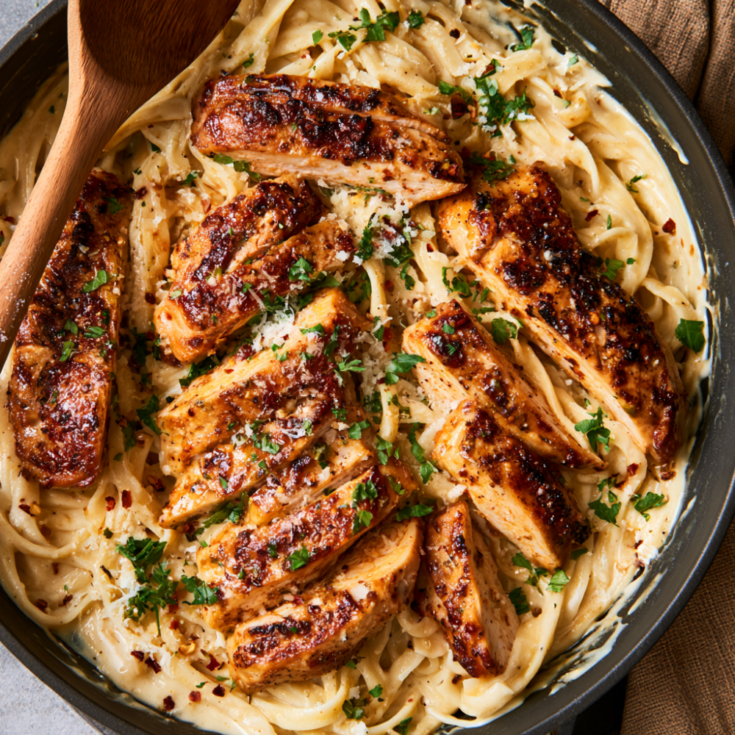
Golden-seared chicken and tender fettuccine coated in a rich, creamy garlic-Parmesan sauce — without heavy cream. Everything comes together in one skillet for an easy, satisfying dinner with plenty of protein.
Ingredients
For the Chicken:
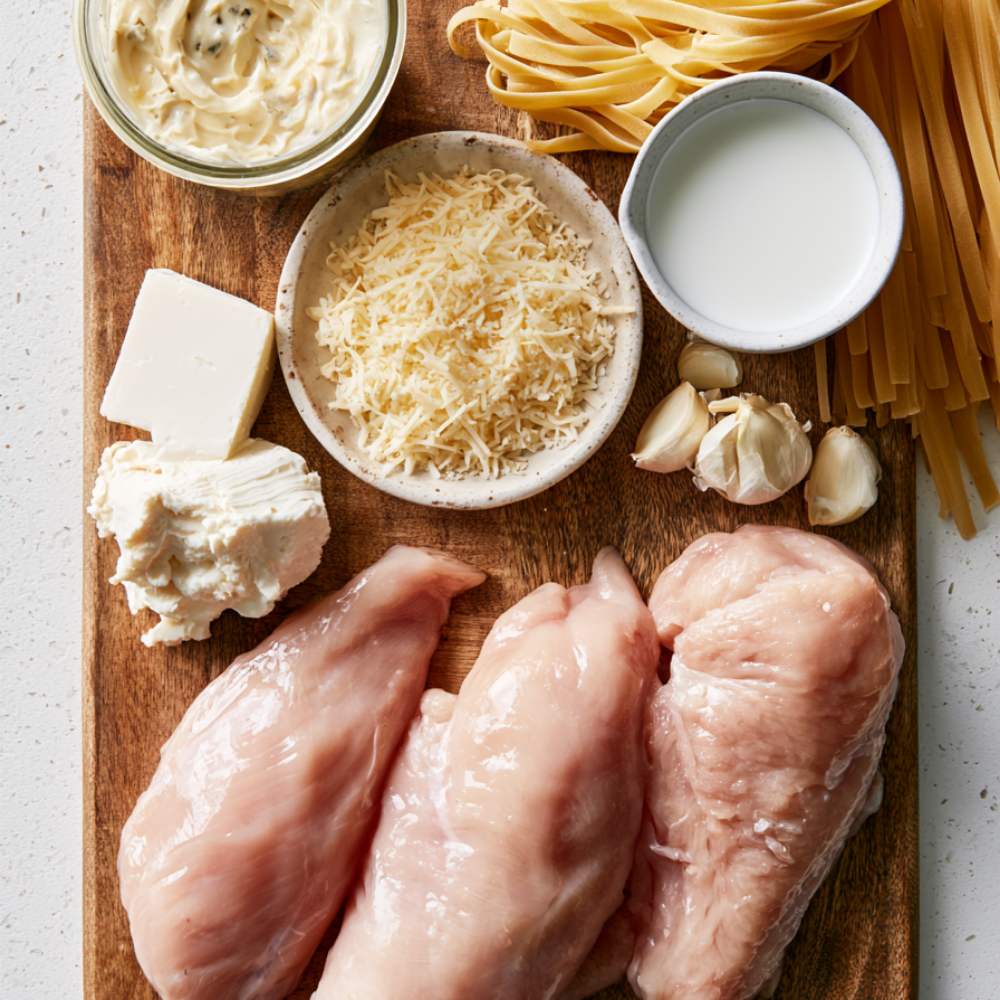
- 1½ lbs boneless, skinless chicken breasts
- 1 tbsp olive oil
- 1 tsp kosher salt
- ½ tsp black pepper
- 1 tsp garlic powder
- ½ tsp smoked paprika
- ½ tsp dried Italian seasoning
For the Creamy Alfredo Sauce:
- 2 tbsp unsalted butter
- 5 cloves garlic, finely minced
- 1½ tbsp all-purpose flour
- 2 cups whole milk
- 1½ cups low-sodium chicken broth
- 4 oz full-fat cream cheese, softened and cut into small cubes
- 1 cup finely grated Parmesan cheese
- ¼ tsp kosher salt, plus more to taste
- ¼ tsp black pepper
- Pinch of ground nutmeg
- Pinch of cayenne pepper (optional)
For the Pasta:
- 12 oz fettuccine
For Finishing:
- 3 cups fresh baby spinach (optional)
- 2 tbsp fresh parsley, chopped
- Extra finely grated Parmesan
- Red pepper flakes (optional)
Instructions
1. Prepare the chicken. Pat the chicken breasts thoroughly dry with paper towels. If the breasts are very thick, place them between two pieces of plastic wrap or parchment and gently pound them to an even ¾-inch thickness.
Season both sides evenly with the kosher salt, black pepper, garlic powder, smoked paprika, and Italian seasoning.
2. Sear the chicken. Heat a large 12-inch deep skillet or Dutch oven over medium-high heat. Add the olive oil and heat until shimmering.
Place the chicken in the skillet in a single layer. If your pan is too small, cook the chicken in batches rather than crowding the pan.
Cook for 4–5 minutes on the first side, then flip and cook for another 3–5 minutes, depending on thickness. The chicken is done when the thickest part reaches 165°F on an instant-read thermometer.
Transfer the chicken to a clean plate or cutting board and loosely cover with foil.
Don't slice it yet. Keeping the chicken whole while the pasta cooks helps it retain more juice.
3. Make the sauce base. Reduce the heat to medium. Add the butter to the same skillet. Once melted, add the garlic and cook for 30–45 seconds, stirring constantly, until fragrant. Do not let the garlic brown.
Sprinkle the flour evenly over the butter and garlic. Whisk continuously for about 30 seconds, until the flour is incorporated and forms a smooth paste.
4. Add the milk and broth. Slowly pour in the milk while whisking constantly to prevent lumps. Add the chicken broth gradually, whisking as you go. Use a wooden spoon or spatula to scrape the browned bits from the bottom of the skillet.
Bring the liquid to a gentle simmer, not a hard boil.
5. Cook the pasta. Add the fettuccine to the skillet. If necessary, gently bend the noodles as they soften so they fit into the pan. Use tongs to separate the strands and make sure the pasta is mostly submerged.
Reduce the heat to medium-low. Cover and cook for about 10–13 minutes, stirring and separating the noodles every 2–3 minutes.
This stirring is important. Because the pasta is cooking directly in the sauce, it can stick together if left undisturbed.
Begin checking the pasta at about 10 minutes. It should be just shy of al dente when you move to the next step — tender but still with a slight firmness in the center.
6. Adjust the sauce before adding the cheese. At this point, the sauce should be creamy and slightly loose around the pasta. Don't wait until the sauce looks completely thick.
The sauce should look a little thinner than you ultimately want at this stage. The cream cheese and Parmesan will thicken it considerably.
If the skillet looks dry or the pasta is still firm, add ¼ cup hot water or chicken broth, stir well, and continue cooking for another 1–2 minutes. Repeat as needed until the pasta is tender.
7. Add the cream cheese. Remove the skillet from the heat. Let it stand for about 1 minute. Add the softened cream cheese a few cubes at a time, tossing the pasta continuously until the cheese melts and the sauce is smooth.
8. Add the Parmesan. Add the finely grated Parmesan in 3–4 small additions, tossing or stirring well after each addition until melted before adding more.
Don't dump all the Parmesan in at once. It will clump.
If the sauce gets thicker than you want, stir in 1–2 tablespoons hot water or broth at a time until it's smooth and glossy. Add the remaining ¼ teaspoon salt, black pepper, and nutmeg. Add cayenne if using.
Taste before adding more salt. Parmesan and chicken broth both contribute salt.
9. Add the spinach. If using spinach, add it directly to the hot pasta. Toss for 1–2 minutes, until the spinach wilts. The residual heat is sufficient.
10. Slice and add the chicken. Let the chicken rest for at least 5 minutes before slicing. Slice it against the grain into thin strips. Return the chicken and any juices that accumulated on the plate to the skillet. Gently toss everything together.
If the sauce has thickened while the chicken rested, add another splash of hot broth or water and toss until creamy.
11. Serve immediately. Divide the pasta and chicken among four bowls. Finish with fresh parsley, additional Parmesan, and red pepper flakes if desired. Serve immediately while the sauce is at its creamiest.
Notes
Protein per Serving: About 45–50g
Nutrition note: Protein and calories vary by chicken, pasta, cream cheese, and Parmesan brands, and by how much moisture the chicken loses during cooking. Estimated per serving: ~700 calories, 45–50g protein, ~60 g carbs, ~30 g fat. Calculate with your specific products for the most accurate numbers.
Tips for the Best One-Pan Chicken Alfredo
- Use a 12-inch deep skillet. It gives the fettuccine enough room to cook evenly.
- Pound the chicken to an even thickness so it cooks evenly.
- Pat the chicken dry before seasoning. Moisture prevents a good sear.
- Bring the cream cheese to room temperature before cooking. Cold cream cheese leaves lumps.
- Add the cream cheese and Parmesan off heat. High heat makes the dairy break.
- Use freshly grated Parmesan from a block. Pre-shredded Parmesan doesn’t melt smoothly.
- Stir the pasta every 2–3 minutes so it doesn’t stick together.
- Pull the pasta while it’s still slightly firm. It finishes cooking as the cheese goes in.
- Leave the sauce slightly looser than you want. It thickens fast once the cheese goes in.
- Add a pinch of nutmeg. It’s the classic Alfredo ingredient that makes the sauce taste more complex.
- If the sauce is too thick, add hot water or broth 1–2 tablespoons at a time. A little goes a long way.
- Slice the chicken against the grain. It makes each piece more tender.
- Serve immediately. Alfredo is best the moment it’s finished.
Troubleshooting
The sauce turned out grainy. You added the cheese over too much heat, or it wasn’t freshly grated. Remove the skillet from the heat and stir in a splash of warm milk. Next time, use block Parmesan and add it off heat.
The sauce turned out greasy. You added the dairy over high heat, or the cream cheese was cold. Bring the cream cheese to room temperature and add all dairy off heat.
The pasta turned out mushy. It cooked too long, or there wasn’t enough liquid. Pull it while it’s just shy of al dente and make sure there’s always a small amount of sauce pooling at the bottom.
The pasta turned out crunchy. You didn’t add enough liquid, or the heat was too high. Add ¼ cup of hot broth, cover, and cook for another 1–2 minutes.
The sauce tastes flat. Add a pinch of salt and an extra handful of Parmesan. Parmesan and broth vary in saltiness, so you may need to adjust the sauce at the end.
The dish tastes too rich. Add a squeeze of fresh lemon juice or a pinch of red pepper flakes. Acid and heat cut through the dairy’s richness.
Easy Variations
Cajun Chicken Alfredo. Add 1 tablespoon of Cajun seasoning to the chicken before searing and ½ teaspoon to the sauce.
Chicken Alfredo with Broccoli. Add 4 cups of small broccoli florets to the skillet during the last 5 minutes of pasta cooking.
Shredded Chicken Alfredo. Skip the searing and stir in 4 cups shredded rotisserie chicken at the end.
Chicken Alfredo Pasta Bake. Transfer the finished skillet to a baking dish, top with 1 cup of shredded mozzarella, and broil for 2–3 minutes.
Storage and Food Safety
Refrigerator: Store in an airtight container for up to 3–4 days. Reheat gently over low heat with a splash of milk or broth.
Freezer: Freeze the sauce and chicken separately for up to 3 months. Thaw overnight and combine with fresh pasta.
Reheating: Reheat on the stovetop over low heat or in the microwave at 70% power. High heat makes the sauce split.
Food safety: Cook chicken to 165°F. Refrigerate leftovers within 2 hours. Reheat leftovers to 165°F.
Frequently Asked Questions
How much protein is in each serving?
About 45–50 grams based on 4 servings. Most of it comes from the chicken (about 35–38g per serving), with the rest from the Parmesan, cream cheese, milk, and pasta.
Can I use a different pasta?
Yes. Linguine, penne, and rigatoni all work. Adjust the cook time by 1–2 minutes depending on the shape.
Why did my sauce turn out grainy?
You added the cheese over too much heat, or you used pre-shredded Parmesan. Add the cheese off the heat and use freshly grated Parmesan from a block.
Can I make this without cream cheese?
Yes. Use ½ cup of heavy cream instead, added with the milk. The sauce will be slightly thinner.
Can I double this recipe?
Yes, but use a very large skillet or Dutch oven. The pasta needs room to cook evenly.
Is this recipe gluten-free?
Not as written, because of the pasta and flour. Use gluten-free pasta and swap the flour for 1 teaspoon of cornstarch.
More High-Protein Italian Recipes You’ll Love
- Creamy Tuscan Chicken (High-Protein & Healthy Winter Dinner)
- Chicken Piccata: 30-Minute Lighter Lemon Caper Chicken
- Mac and Cheese with Ground Beef (Creamy Cheeseburger Pasta Skillet)
- One-Pot Creamy Chicken Pot Pie Pasta
Conclusion
This one-pan creamy chicken alfredo is the weeknight dinner that tastes like a restaurant plate but doesn’t require a restaurant kitchen. Golden-seared chicken and fettuccine cooked in a velvety garlic-Parmesan sauce made without heavy cream. About 45–50 grams of protein per serving, and it comes together in one skillet in about 35 minutes.
The keys are simple: use a 12-inch deep skillet, pound the chicken to an even thickness, cook the pasta directly in the sauce, leave the sauce slightly loose before adding the cheese, add the cream cheese and Parmesan off heat, and finish with a pinch of nutmeg. Do that, and you’ll have an alfredo that beats the jarred stuff by a mile.