I’ve made a lot of meal prep pasta, and most of it has the same problem: by Wednesday, the pasta has drunk all the sauce and turned into a soft, one-note bowl of noodles. It’s not bad, exactly.
It’s just not something I look forward to opening at noon. This chicken sausage pasta is the version that holds up — the one that’s still glossy and savory on day three, and the one I actually find myself reaching for instead of whatever’s in the office kitchen.
The difference is what’s not in it. There’s no marinara, no cream, and no heavy sauce sitting at the bottom of the container, waiting to soak into the pasta overnight. Instead, the coating comes from the pan itself: the rendered fat from the seared chicken sausage, the juices from the burst cherry tomatoes, a little olive oil, and a splash of starchy pasta water.
Tossed over heat, those four things emulsify into a light, glossy coating that clings to every piece of rigatoni without drowning it.
And the vegetables are built for reheating.
Charred bell peppers and zucchini keep their texture through four days in the fridge, then come back to life in the microwave, while the cherry tomatoes soften into the sauce instead of turning watery.
That’s the whole point of a meal prep bowl — not that it survives the week, but that it’s still something you want to eat on day four.
I make this routinely, especially in the fall and winter when those vegetables are in season. The most important detail is letting the containers cool completely before you put the lids on.
Steam trapped under a lid condenses into water, and water turns a good pasta bowl soggy. Let the bowls sit uncovered on the counter for 15 minutes, then put them in the fridge dry and keep them that way.
Why This Recipe Works
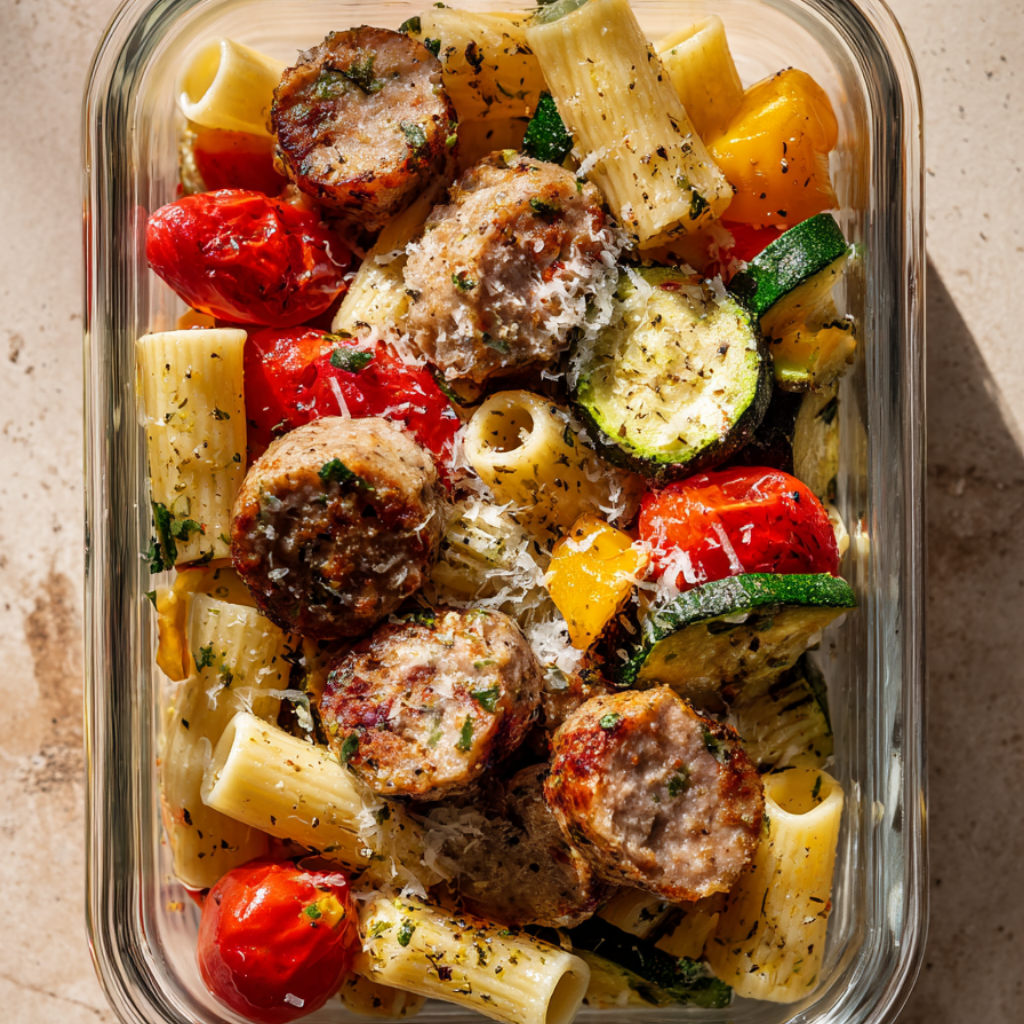
No heavy sauce means nothing for the pasta to absorb overnight. Marinara and cream sauces keep soaking into the noodles as the container sits in the fridge, and by day two the pasta is soft, and the sauce is gone. This version coats the pasta with a thin, glossy layer of fat and pan juices instead of surrounding it with liquid, so the pasta stays firm and the flavor stays on the surface where you can taste it.
Cook the pasta 2 minutes short of al dente, then finish it in the container. Even a light coating adds moisture, and pasta fully cooked on the stove has nowhere to go but mushy. Pull it while it still has a bite, and the microwave finishes the job.
Browning the chicken sausage first is where the flavor comes from. Pre-cooked sausage straight from the package is bland and a little rubbery. Searing it in a hot skillet until the edges caramelize gives it a savory crust, and the rendered fat it leaves behind becomes the base of the coating that goes on the pasta.
Charring the vegetables in a single layer keeps them crisp through the week. Seared undisturbed in a hot pan, bell peppers and zucchini get a hard golden char on the outside while staying firm inside. That structure holds up through four days in the fridge and a couple of minutes in the microwave, more than most vegetables can handle.
The burst cherry tomatoes are the sauce, and they don’t need to be cooked down. They blister and release their juices in two minutes, which is enough to add sweetness and acidity to the pan without turning into a watery tomato sauce. Left whole or halved, they hold their shape in the container and reheat into something jammy instead of mushy.
Pasta water is the emulsifier that makes the coating cling. Three tablespoons of the starchy cooking water, tossed with the pasta, sausage, and pan juices over medium heat, bind the fat and liquid into a glossy sauce. Without it, the olive oil sits on the surface, and the pasta tastes greasy instead of coated.
Add the Parmesan off the heat; it’s what makes the bowls taste finished. Grate it over the pasta off the heat; it melts into the coating and adds a salty, savory note. Overheat it, and it clumps and turns stringy.
Ingredients That Matter
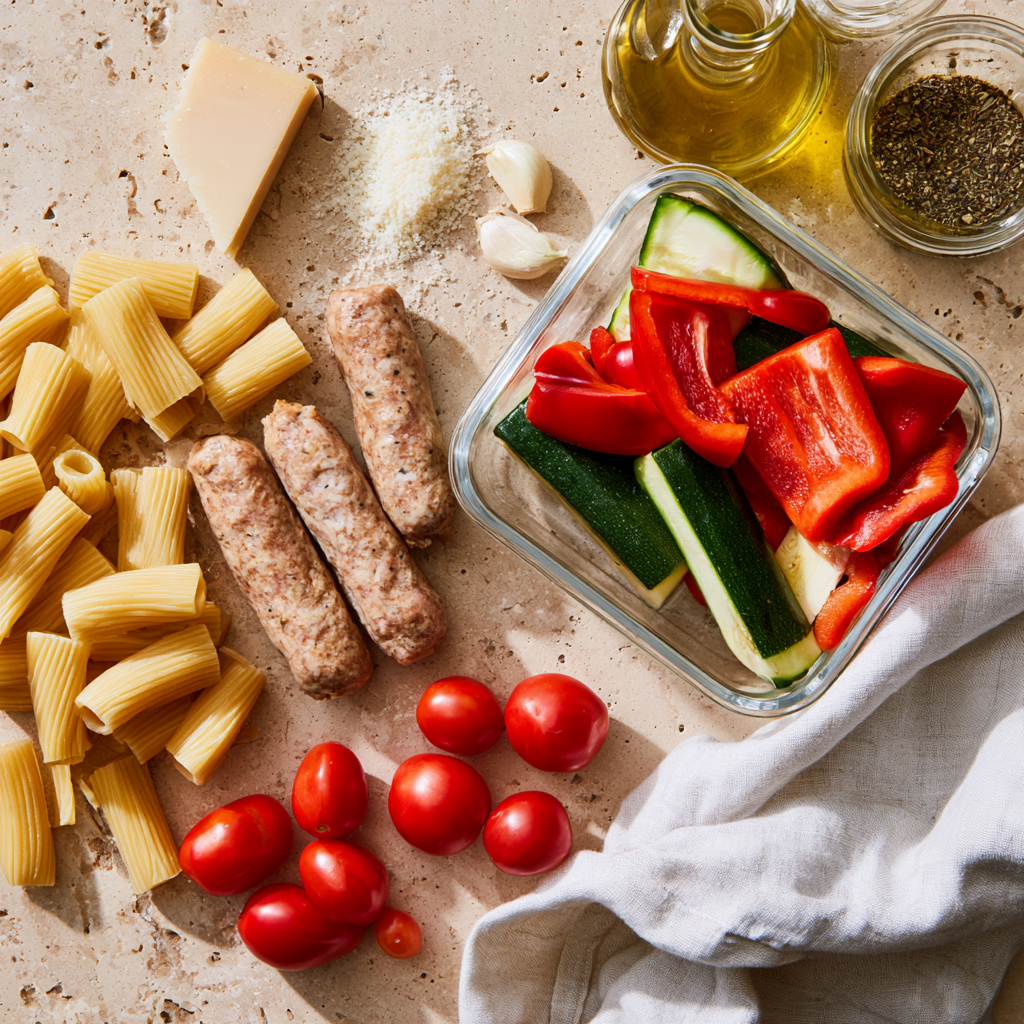
Most of this list is flexible. Three ingredients are easy to get wrong, so those are the ones worth explaining.
Fully cooked Italian-style chicken sausage, sliced into rounds. This is the flavor backbone and the reason the bowls taste like something on day three. Look for a brand with at least 12g of protein per link — brands vary widely, and the protein number on the card depends on it. Italian, spicy, or garlic-herb all work; pick one you actually like eating cold-ish and reheated.
Rigatoni or penne, cooked two minutes short of al dente. Short, sturdy pasta holds the coating and stays firm in the container. Long pasta clumps and doesn’t reheat evenly, and small shapes like orzo turn to porridge. If you want to boost the protein, chickpea rigatoni works and adds fiber, but it cooks faster and needs more attention.
Add freshly grated Parmesan off the heat. This is the finishing ingredient that makes the bowls taste like a real dish instead of pasta with vegetables. Pre-grated Parmesan from a shaker doesn’t melt into the coating. Grate it from a block on the fine side of a box grater.
How to Make It
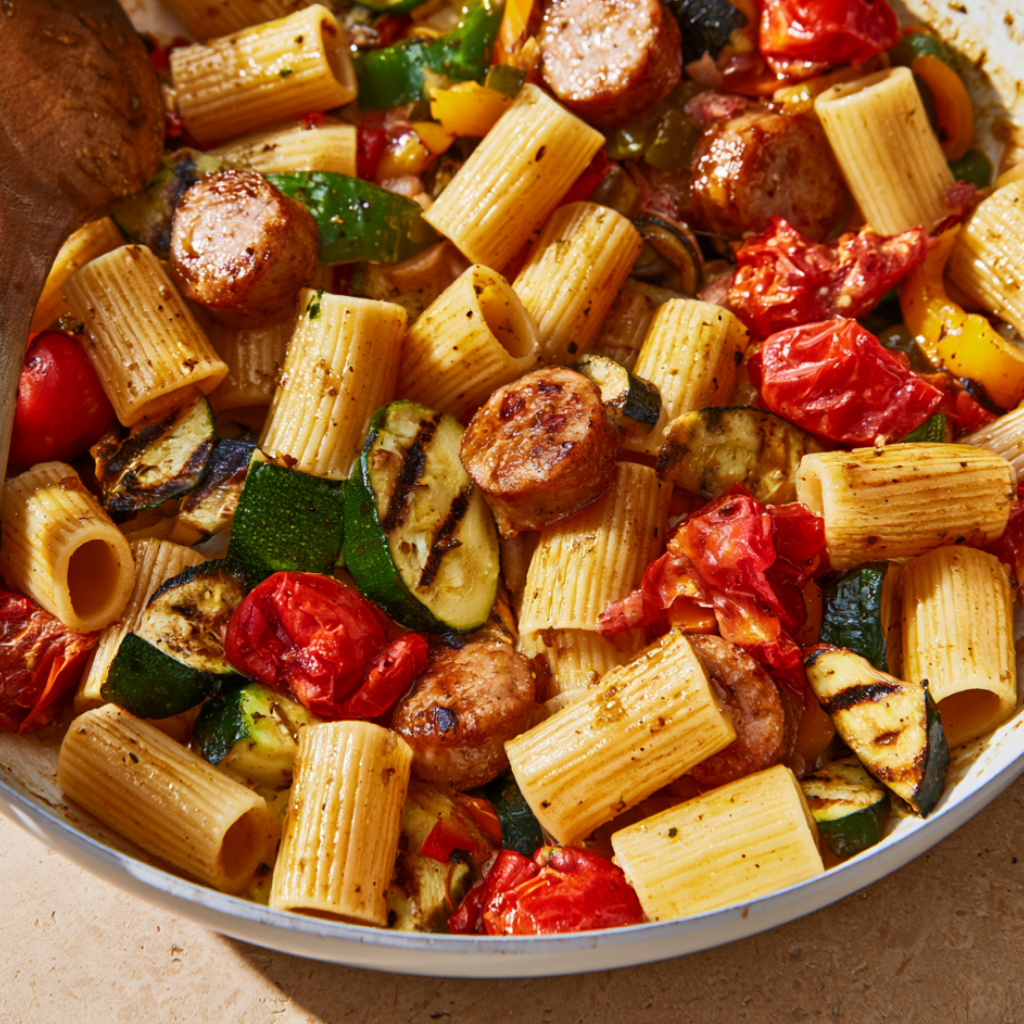
Step 1: Cook the pasta.
Bring a large pot of well-salted water to a boil. Cook 8 ounces of rigatoni for 2 minutes less than the package directions, until firm al dente. Reserve 3 tablespoons of the starchy pasta water, then drain and set aside.
Step 2: Sear the sausage.
Heat 1 tablespoon of olive oil in a large skillet over high heat. Add 4 sliced chicken sausage links and cook for about 3 minutes, until deeply browned on both sides. Transfer the sausage to a plate.
Step 3: Char the vegetables.
In the same hot skillet, add the remaining ½ tablespoon olive oil and 1 chopped zucchini and 1 chopped bell pepper in a single layer. Sear for 3 minutes undisturbed, until the vegetables have a hard golden char on the bottom but are still crisp.
Step 4: Burst the tomatoes and bloom the garlic.
Turn the heat to medium. Add 1 cup cherry tomatoes, 3 minced garlic cloves, ½ teaspoon Italian seasoning, ¼ teaspoon red pepper flakes (if using), salt, and black pepper. Cook for 2 minutes, until the tomatoes start to soften and blister and the garlic is fragrant.
Step 5: Emulsify and coat.
Add the cooked rigatoni, seared sausage, and the reserved 3 tablespoons of pasta water to the skillet. Toss over medium heat for 1 to 2 minutes, until the pan juices, olive oil, and pasta water bind into a glossy coating that clings to every piece of pasta. If it looks dry, add another splash of pasta water.
Step 6: Finish with Parmesan and herbs.
Remove the skillet from the heat. Immediately toss in ⅓ cup of grated Parmesan and a handful of chopped fresh parsley or basil, until the cheese melts evenly over the noodles and vegetables. Taste and adjust the salt.
Step 7: Cool and portion.
Divide evenly among 4 glass meal prep containers. Let the containers cool completely, uncovered, for about 15 minutes before sealing. Trapped steam is what makes the pasta soggy and the vegetables watery.
Step 8: Store and reheat.
Seal and refrigerate for up to 4 days. To reheat, cover loosely and microwave for 1½ to 2 minutes, until steaming hot. Stir before eating.
Tips and Troubleshooting
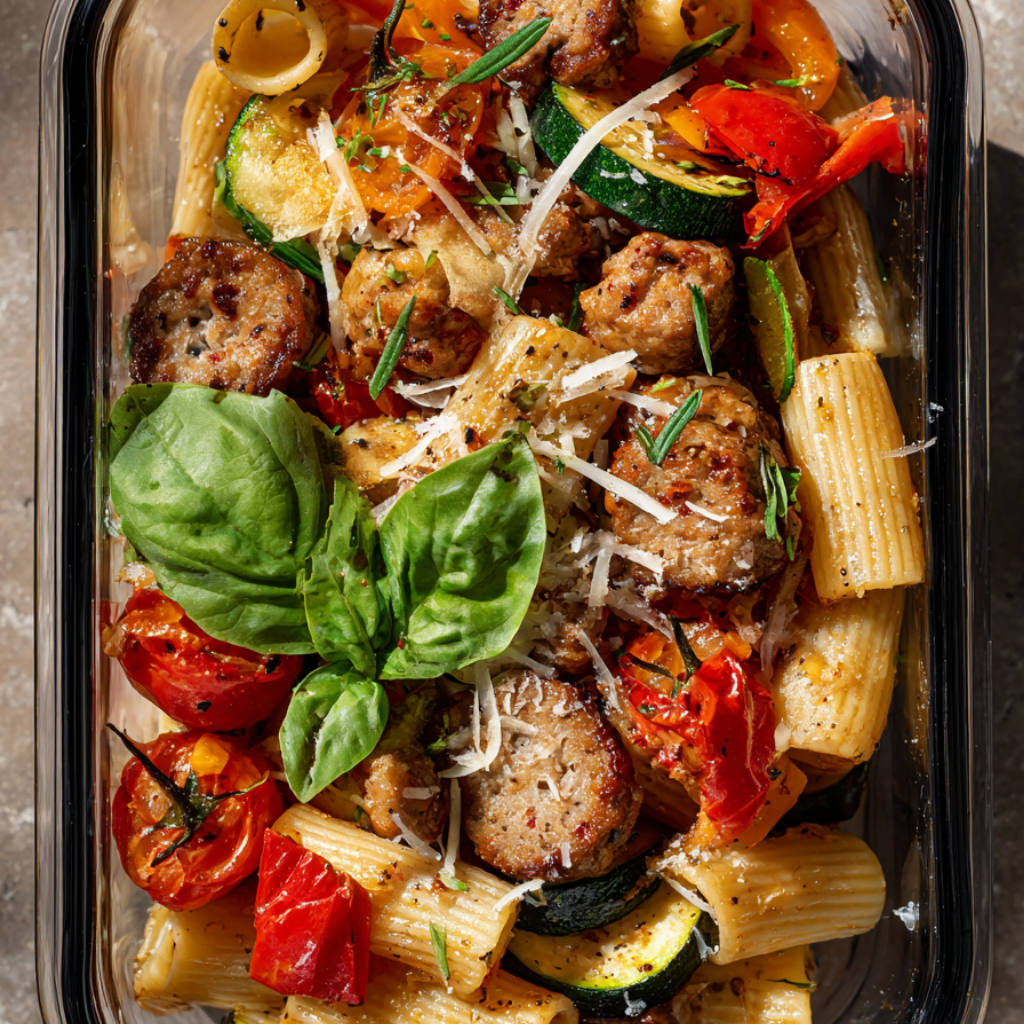
The pasta is mushy after reheating. You cooked it fully al dente instead of 2 minutes short, or you sealed the containers while warm. Cook it firm al dente and cool the containers uncovered before lidding.
The bowls are dry. You didn’t use enough pasta water, or the pan was too hot when you added the pasta. Use the full 3 tablespoons of pasta water and toss over medium heat, not high.
The vegetables turned soft. They were cooked too long, or they steamed under the lid. Sear them undisturbed in a single layer for the full 3 minutes and cool the containers before sealing.
The sausage tastes bland. It wasn’t browned before it went into the bowls. Sear it in a hot skillet until the edges caramelize — that’s the flavor.
The coating is greasy instead of glossy. You left the pasta water out, or the heat was too low. Toss over medium heat with the starchy water until the fat and liquid bind.
The Parmesan clumped. It went in over heat. Toss it in with the skillet off the burner.
The tomatoes released too much liquid. They were overripe or cooked too long. Use firm cherry tomatoes and cook them for only 2 minutes, until they just start to blister.
Storage and Make-Ahead
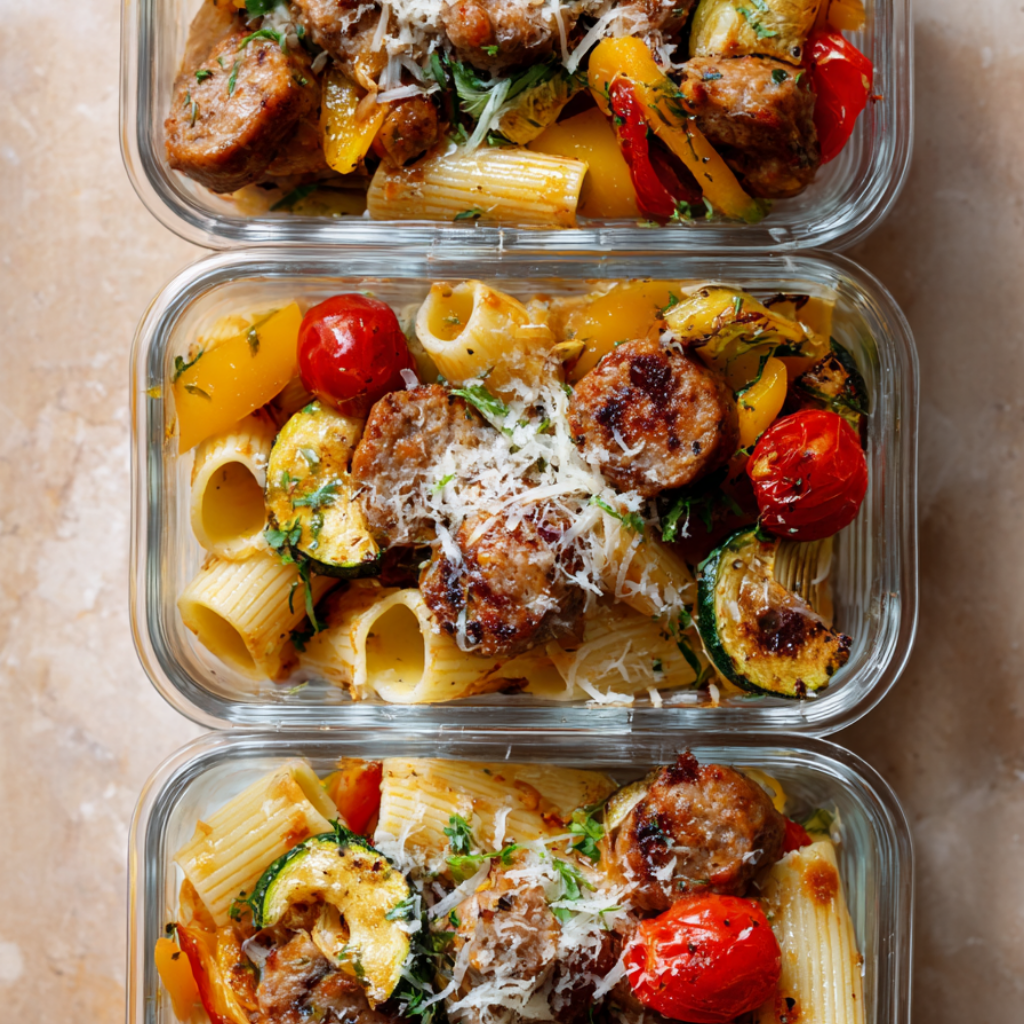
Store the bowls in a sealed container in the refrigerator for up to 4 days. They’re best on days 1 through 3, and the vegetables soften slightly by day 4.
You can make the pasta and sausage mixture up to a day ahead and store it in the refrigerator before portioning. Add the Parmesan and herbs right before you put the bowls in the fridge if you want them to stay distinct.
I don’t recommend freezing these bowls. The pasta absorbs moisture, and the vegetables get watery on thawing. If you want to freeze something for later, freeze the sausage and vegetable mixture separately, and cook fresh pasta when you’re ready.
Store leftovers in the refrigerator within 2 hours of cooking, and discard anything left at room temperature for more than 2 hours.
15-Minute Chicken Sausage Pasta Meal Prep Bowls
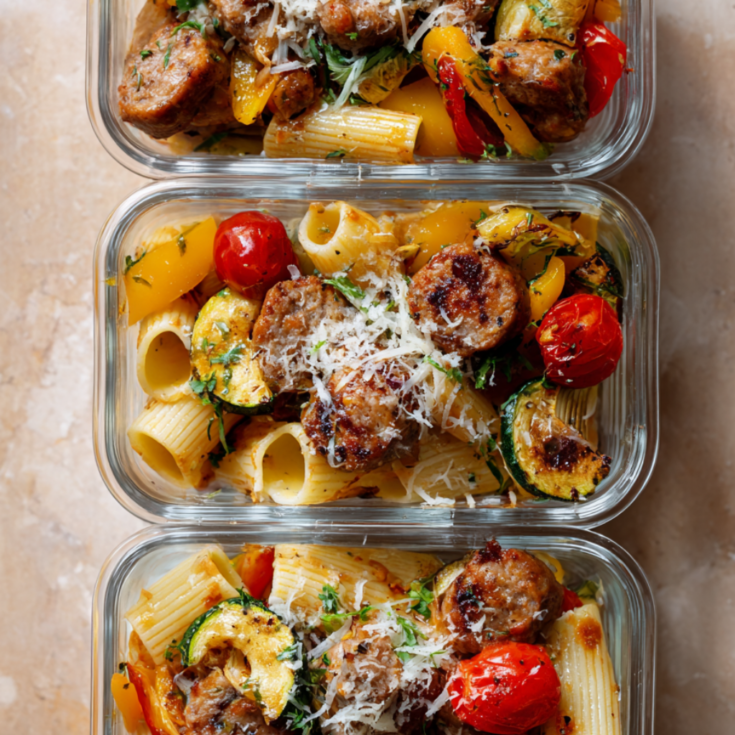
Rigatoni tossed with seared chicken sausage, charred bell peppers, zucchini, burst cherry tomatoes, garlic, and Parmesan — a light, glossy olive-oil coating instead of a heavy sauce, packed into four meal prep bowls with about 31g of protein each.
Ingredients
- 8 oz rigatoni or penne (or chickpea rigatoni for more protein)
- 4 fully cooked Italian-style chicken sausage links, sliced into ¼-inch rounds
- 1½ tbsp extra virgin olive oil, divided
- 1 medium zucchini, cut into bite-sized quarter-moons
- 1 bell pepper, chopped into 1-inch pieces
- 1 cup cherry or grape tomatoes
- 3 cloves garlic, minced
- ½ tsp Italian seasoning
- ¼ tsp red pepper flakes (optional)
- ⅓ cup freshly grated Parmesan
- 3 tbsp reserved pasta water
- Salt and freshly cracked black pepper, to taste
- Fresh parsley or basil, chopped, for garnish
Instructions
- Boil the rigatoni in salted water 2 minutes short of al dente. Reserve 3 tablespoons pasta water and drain.
- Heat 1 tablespoon olive oil in a large skillet over high heat. Sear the sausage for 3 minutes, until deeply browned. Transfer to a plate.
- Add the remaining ½ tablespoon of oil, zucchini, and bell pepper to the skillet in a single layer. Sear undisturbed 3 minutes until charred but still crisp.
- Turn the heat to medium. Add the tomatoes, garlic, Italian seasoning, red pepper flakes, salt, and pepper. Cook 2 minutes until the tomatoes blister.
- Add the pasta, sausage, and pasta water to the skillet. Toss over medium heat for 1 to 2 minutes, until the coating is glossy and clings.
- Remove from the heat, then toss in the Parmesan and herbs until melted.
- Divide among 4 containers and cool uncovered for 15 minutes before sealing.
- Refrigerate up to 4 days. Reheat covered for 1½ to 2 minutes.
Notes
Notes: Cool completely before lidding to prevent sogginess. Best on days 1 through 3. Not recommended for freezing. Nutrition information is an estimate and depends on the sausage and pasta brands.
Nutrition (per serving, estimated): About 420 calories, 31g protein, 44g carbs, 14g fat, 5g fiber, 760mg sodium.
FAQ
Can I use turkey sausage instead of chicken sausage?
Yes. Turkey sausage works the same way — brown it first, and check the label for the protein count, since brands vary.
Can I use Italian pork sausage instead?
Yes, but the fat and calorie counts go up and the protein per bowl drops. It’s richer, and you may want to drain some of the rendered fat before the vegetables go in.
Can I make these with Cajun seasoning?
Yes. Add 1 to 2 teaspoons of Cajun seasoning with the garlic and tomatoes, and use a spicy chicken sausage. It becomes a Cajun chicken sausage pasta bowl, which is one of the variations in your keyword list.
Can I add spinach or kale?
Yes, but add it off the heat at the very end and let it wilt. Greens release water, so don’t pack them in raw or the bowls will be watery.
How do I keep the pasta from drying out when reheating?
Cover the container loosely and microwave for 1½ to 2 minutes. If it looks dry before reheating, add a teaspoon of water.
Can I eat these cold?
Yes. They’re good cold as a pasta salad, though the pasta firms up in the fridge. A drizzle of olive oil or a squeeze of lemon loosens it.
More Meal Prep Ideas for the Week You’ll Love
- High-Protein Steak Meal Prep (3 Easy Recipes for the Week)
- Pescatarian Meal Prep for the Week — 5 Recipes, 32-38g Protein Each
- Korean Beef Bulgogi Meal Prep Bowls (Better Than Takeout, 4-Day Prep)
Closing
Make these chicken sausage pasta bowls on a Sunday and eat them for lunch all week.
The technique in the recipe card — cooking the pasta two minutes short, searing the sausage and vegetables in a hot pan, and using the pan juices and pasta water to create a glossy coating instead of a heavy sauce — is what keeps them from turning into the soggy meal prep pasta you’ve had before.
This is the recipe I use often, and it’s the one I can confidently recommend. If you try it with Cajun seasoning or turkey sausage, let me know how it turns out.