If you’ve ever stood in the dairy aisle wondering whether you can just swap cottage cheese for ricotta in your lasagna, the answer is yes — and once it’s baked, you won’t be able to tell the difference.
Cottage cheese melts into the same creamy, rich layers as ricotta, but with a noticeably bigger protein boost per serving.
If you want the classic version this recipe is built on, start with our Classic Homemade Lasagna — it’s the same comforting, slow-simmered sauce and layering method, made the traditional way with ricotta.
This version swaps in cottage cheese for anyone who wants the same lasagna with a higher protein count.
This recipe is also one of ten dishes from our 10 Sneaky Cottage Cheese Recipes That Add Protein to Everything roundup — if you want more ways to sneak extra protein into meals without changing how they taste, that’s a great place to start.
Cottage Cheese vs. Ricotta: Why This Swap Works

Ricotta and cottage cheese are more similar than most people expect — both are mild, slightly tangy, high-moisture cheeses that melt into a creamy layer rather than a stretchy one.
The difference that actually matters here is protein: cottage cheese typically packs more protein per cup than ricotta, which is exactly why this swap is worth making if you’re trying to hit a daily protein target without overhauling your usual dinner rotation.
Texture-wise, once it’s mixed with egg and parmesan and baked under a layer of sauce and mozzarella, cottage cheese behaves almost identically to ricotta.
If you’re worried about curds being noticeable, a quick pulse in a blender or food processor before mixing smooths it out completely — though most people find the curds melt down enough on their own during baking that this step isn’t strictly necessary.
High-Protein Lasagna with Cottage Cheese Recipe
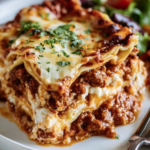
This high-protein lasagna swaps ricotta for cottage cheese and you'll never taste the difference. Easy, cheesy, and made for protein-conscious dinners.
- 9 lasagna noodles (cooked)
- 2 cups cottage cheese
- 1 large egg
- ½ cup grated Parmesan cheese
- 2 cups shredded mozzarella cheese
- 3 cups marinara sauce
- 1 pound ground beef cooked and drained
- 1 teaspoon Italian seasoning
- Salt and black pepper (to taste)
- Preheat your oven to 375°F and lightly grease a 9×13-inch baking dish.
- In a medium bowl, mix the cottage cheese, egg, parmesan, Italian seasoning, salt, and pepper until evenly combined.
- In a separate bowl, stir your cooked ground meat into the marinara sauce.
- Spread a thin layer of the meat sauce across the bottom of the baking dish, then layer noodles, the cottage cheese mixture, more meat sauce, and a scattering of mozzarella.
- Repeat the layering process, finishing with a generous final layer of mozzarella.
- Cover the dish with foil and bake for 30 minutes, then remove the foil and bake for another 15 minutes, until the top is bubbly and golden.
- Let the lasagna rest for 10 minutes before slicing — this is what keeps each piece from sliding apart.
Why This Recipe Works
The protein math here is simple but meaningful: swapping the same volume of ricotta for cottage cheese adds a real protein boost to every slice without changing a single step of how you cook it.
Because the cottage cheese is mixed with egg and parmesan before layering, it sets up firm in the oven, just like a ricotta filling — so you get the familiar creamy lasagna layers, just with more staying power.
Make-Ahead and Storage Tips

- This lasagna reheats well, which makes it a strong meal-prep option — portion it into containers once it’s cooled and reheat covered in the oven or microwave.
- Store well covered in the fridge for up to 4 days.
- Freezes well either before or after baking; if freezing unbaked, add about 15 extra minutes to the covered bake time.
More High-Protein Cottage Cheese Recipes
Looking for more ways to work cottage cheese into meals you already make?
Check out the rest of the high-protein cottage cheese recipes in this series, including breakfast, dessert, and pasta-night options that all use the same blend-it-in approach.
And if cottage cheese isn’t for you this time around, the original ricotta version of this recipe is just as good — same method, same comfort food, no swap required.