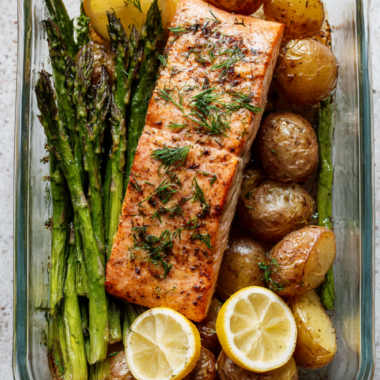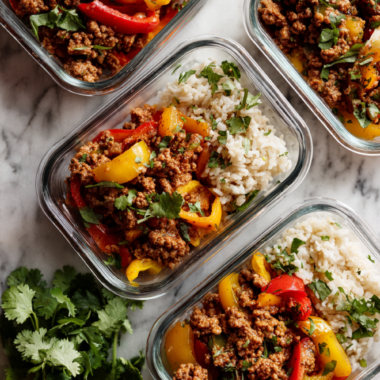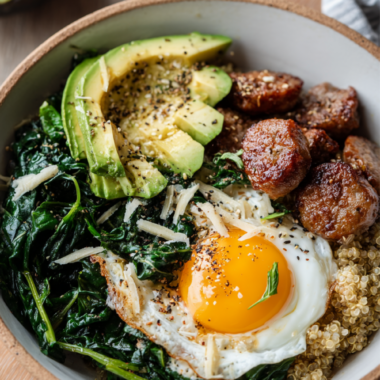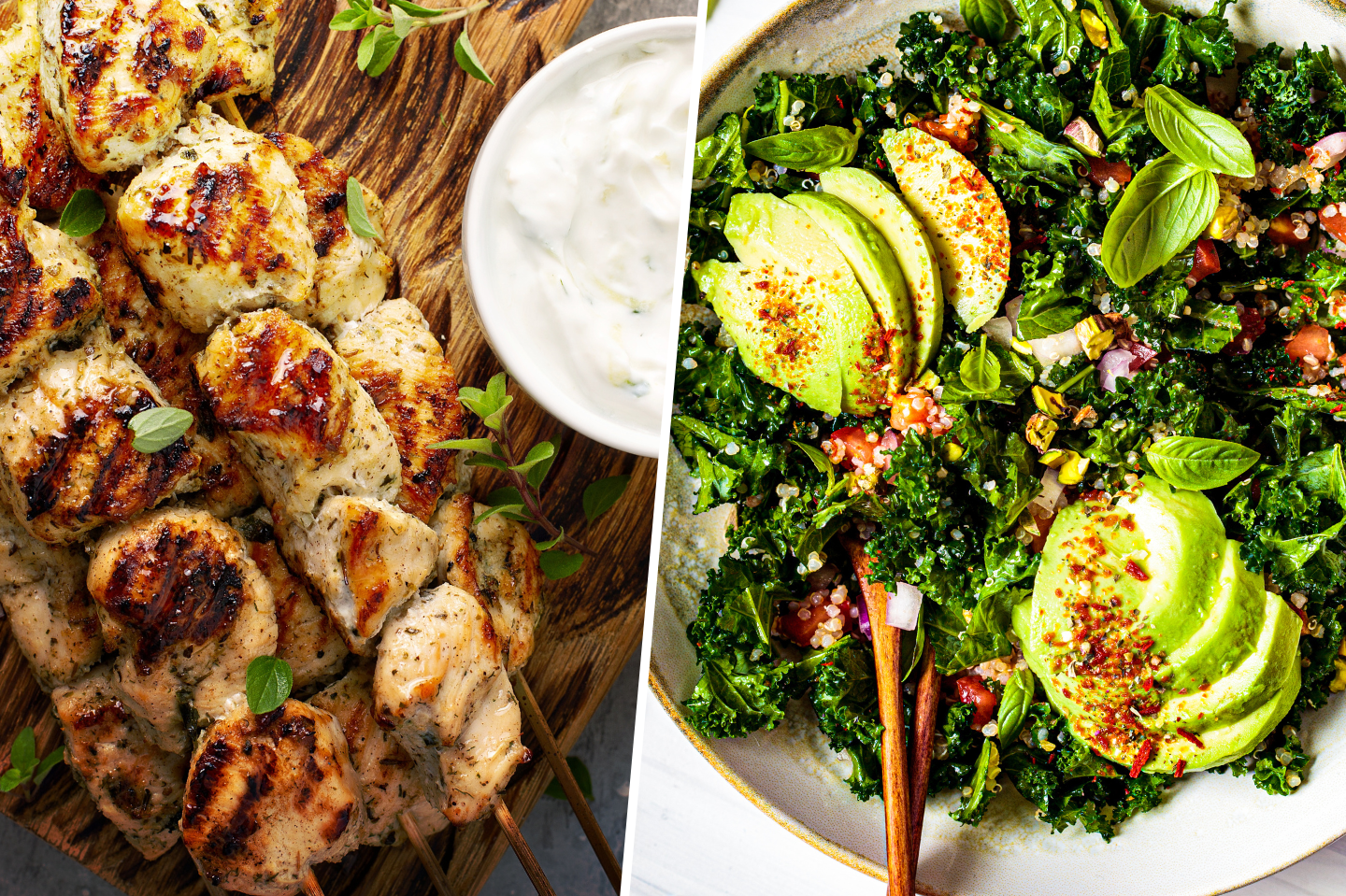
Walk into any Japanese convenience store at lunchtime, and you’ll see them. Rows of perfectly arranged bento boxes, each one a miniature meal that looks like it took an hour to assemble—grilled salmon on one side. A rolled omelet sliced into neat rounds. Pickles, rice, and a small piece of something green filling every gap.
Here’s what most people don’t realize: those bentos are high in protein by default. Grilled fish. Teriyaki chicken. Rolled tamagoyaki. Edamame. These are everyday Japanese staples, and they happen to deliver 30 grams of protein or more per box without anyone calling them a “protein recipe.”
That’s the beauty of the bento format. It isn’t a container you fill. It’s a composition. Rice on one side—protein on the other. Small, colorful, carefully placed bites of vegetables, pickles, and eggs filling the gaps. Every compartment has a purpose.
This guide focuses on the three most iconic Japanese bento proteins: karaage, shiozake (grilled salted salmon), and saba shioyaki (grilled salted mackerel). Each one follows the traditional 5-part bento formula, delivers 33–34 grams of protein per box, and is cold-pack friendly, meal-prep ready, and genuinely beautiful on the plate.
Let’s build them.
Why This Approach Works
The Japanese bento formula is naturally high in protein. Traditional bento balances rice, a protein, a rolled egg, vegetables, and pickles. The protein and egg alone deliver 25–35 grams before you add the edamame or the rice. You aren’t adding protein to a bento. It’s already there.
Three proteins, three flavor profiles. Karaage is crispy, juicy, and kid-friendly. Shiozake is clean, elegant, and classic. Saba is bold, savory, and deeply traditional. Together they cover every mood and every palate.
The 5-part layout makes assembly fast. Once you understand the formula — rice on one side, protein on the other, tamagoyaki and vegetables filling the gaps — you can build a bento from whatever’s in your fridge in under 15 minutes.
Cold-pack friendly by design. Japanese bento is traditionally eaten at room temperature. That means no reheating, no microwave, no thermos. Everything holds up beautifully in a lunch bag with a small ice pack.
Meal prep friendly. Cook a batch of rice, grill a few salmon or saba fillets, and make a batch of tamagoyaki on Sunday. Each bento then takes five minutes to assemble for the rest of the week.
The High-Protein Japanese Bento Formula
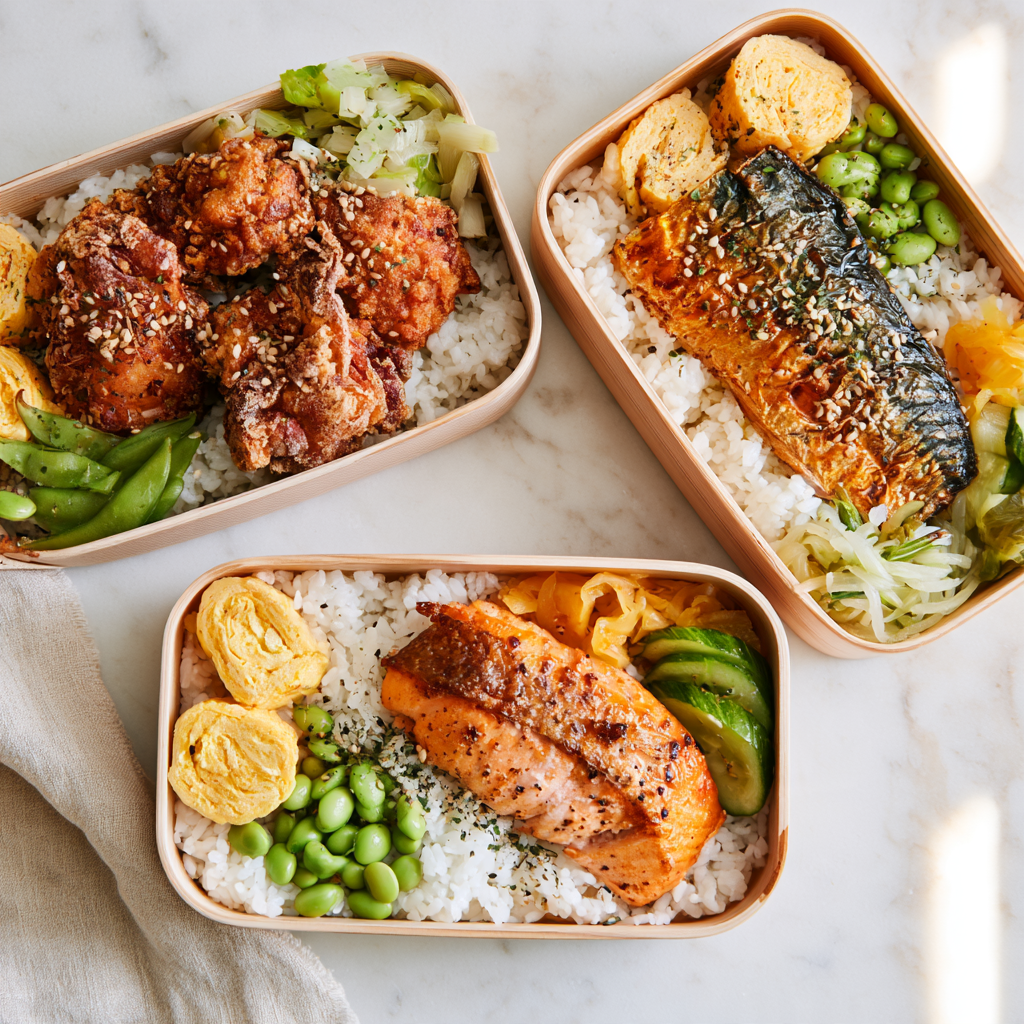
Every bento in this roundup follows the classic Japanese 5-part structure. Learn it once, and you can build endless variations from whatever’s in your kitchen.
1. The Rice (5–8g protein) — Steamed short-grain or medium-grain rice, packed into one side of the box. Short-grain rice is the traditional choice because it holds its shape and has a slightly sticky, satisfying texture.
2. The Protein (22–28g) — Grilled salmon, grilled saba, or air-fried karaage. This is the anchor of the box and the source of most of the protein.
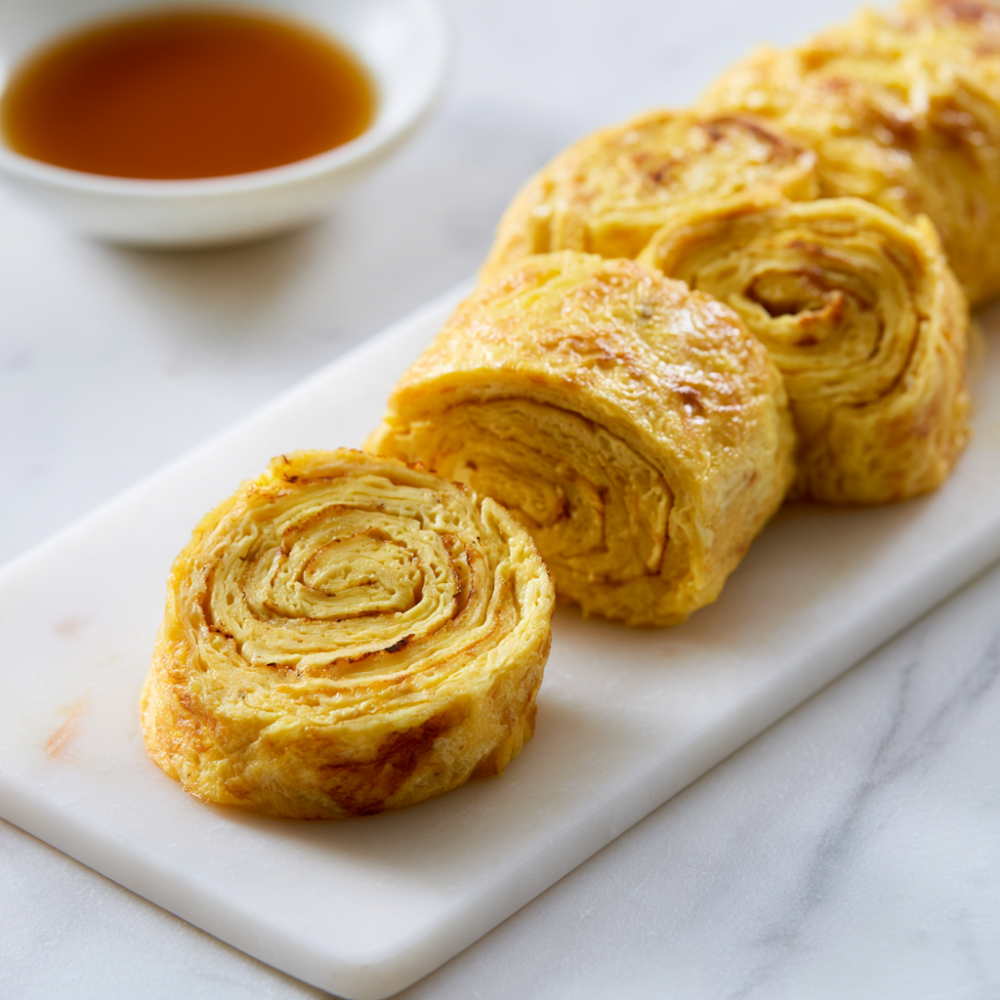
3. The Tamagoyaki (6–12g) — A Japanese rolled omelet, sliced into rounds. It’s sweet, savory, and a defining element of a traditional bento. Two eggs give you about 12 grams of protein.
4. The Vegetables (1–2g) — Cucumber, cherry tomatoes, or blanched broccoli. These add color, crunch, and contrast.
5. The Pickles and Edamame (4–6g) — Takuan (pickled daikon), beni shoga (pickled red ginger), or shelled edamame. The edamame is a serious protein contributor.
Total: 33–40g of protein per box.
The Bento Ratio: Traditional Japanese bento follows a rough 4:3:2:1 ratio — four parts rice, three parts protein, two parts vegetables, one part pickles. Adjust to your macro goals by increasing the protein portion and decreasing the rice.
Recipe 1: Air-Fried Karaage Chicken Bento
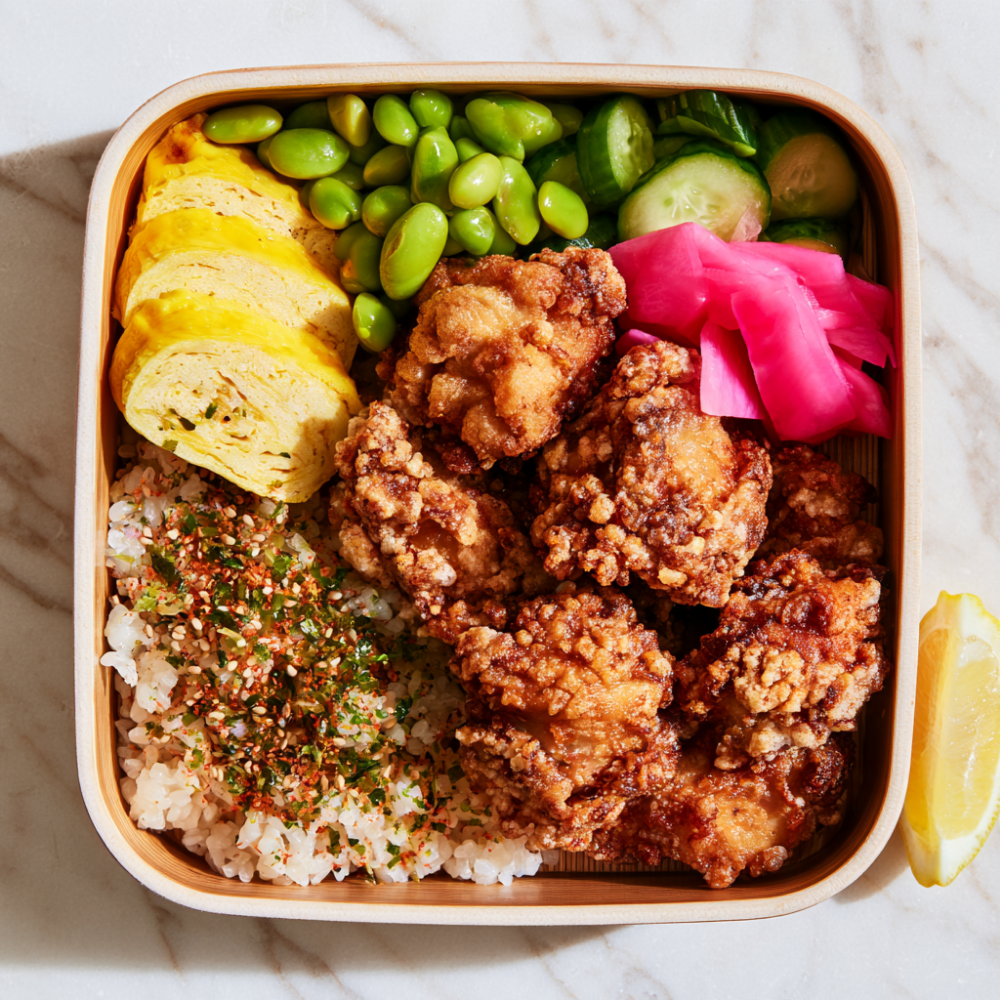
The Vibe: Crispy, savory, and kid-friendly. Traditional karaage is deep-fried, but this version uses an air fryer to get the same shatteringly crisp potato starch coating with a fraction of the oil. It’s the bento that converts people who think they don’t like Japanese food.
Servings: 1 bento box
Prep Time: 15 minutes (plus 30 minutes marinade)
Cook Time: 12 minutes
Estimated Nutrition: ~560 calories, 34g protein, 50g carbs, 18g fat
Ingredients:
- 4 oz boneless, skinless chicken thigh, cut into bite-sized pieces
- 1 tbsp low-sodium soy sauce
- 1 tsp sake or mirin
- 1 tsp fresh ginger, grated
- 1 clove garlic, minced
- 2 tbsp potato starch or cornstarch
- Oil spray (avocado or canola)
- ½ cup cooked short-grain rice
- 2 large eggs (for tamagoyaki)
- 1 tsp mirin (for tamagoyaki)
- 1 tsp soy sauce (for tamagoyaki)
- ¼ cup cucumber, thinly sliced and lightly pickled in rice vinegar
- ¼ cup cherry tomatoes, halved
- 1 tbsp beni shoga (pickled red ginger)
- 1 tsp furikake
- 1 tsp toasted sesame seeds
- 1 lemon wedge
- (Pantry staples: salt, oil for the pan)
Instructions:
- Marinate the chicken: whisk together the soy sauce, sake, ginger, and garlic. Add the chicken pieces and marinate for 30 minutes in the refrigerator.
- Make the tamagoyaki: whisk the eggs with the mirin, soy sauce, and a pinch of salt. Heat a small rectangular tamagoyaki pan over medium-low heat. Add a thin layer of oil, then a thin layer of egg. When just set, roll it tightly to one side. Add another layer and roll again. Repeat until you use all the egg. Slice into ½-inch rounds.
- Drain the chicken and pat dry. Toss in the potato starch until evenly coated. Shake off any excess.
- Preheat the air fryer to 400°F. Arrange the coated chicken in a single layer, spray lightly with oil, and air-fry for 10–12 minutes, shaking the basket halfway through, until golden and crispy.
- Cool the karaage completely on a wire rack. Packing warm karaage creates steam and makes the coating soggy.
- Pack the rice into one half of the bento box. Sprinkle with furikake and sesame seeds. Arrange the karaage, tamagoyaki rounds, pickled cucumber, cherry tomatoes, and beni shoga in the remaining compartments. Add the lemon wedge on the side.
- Seal and refrigerate until ready to pack.
Protein Breakdown: Chicken (26g) + tamagoyaki (12g) = 38g total, ~34g per serving.
Recipe 2: Shiozake (Grilled Salted Salmon) Bento
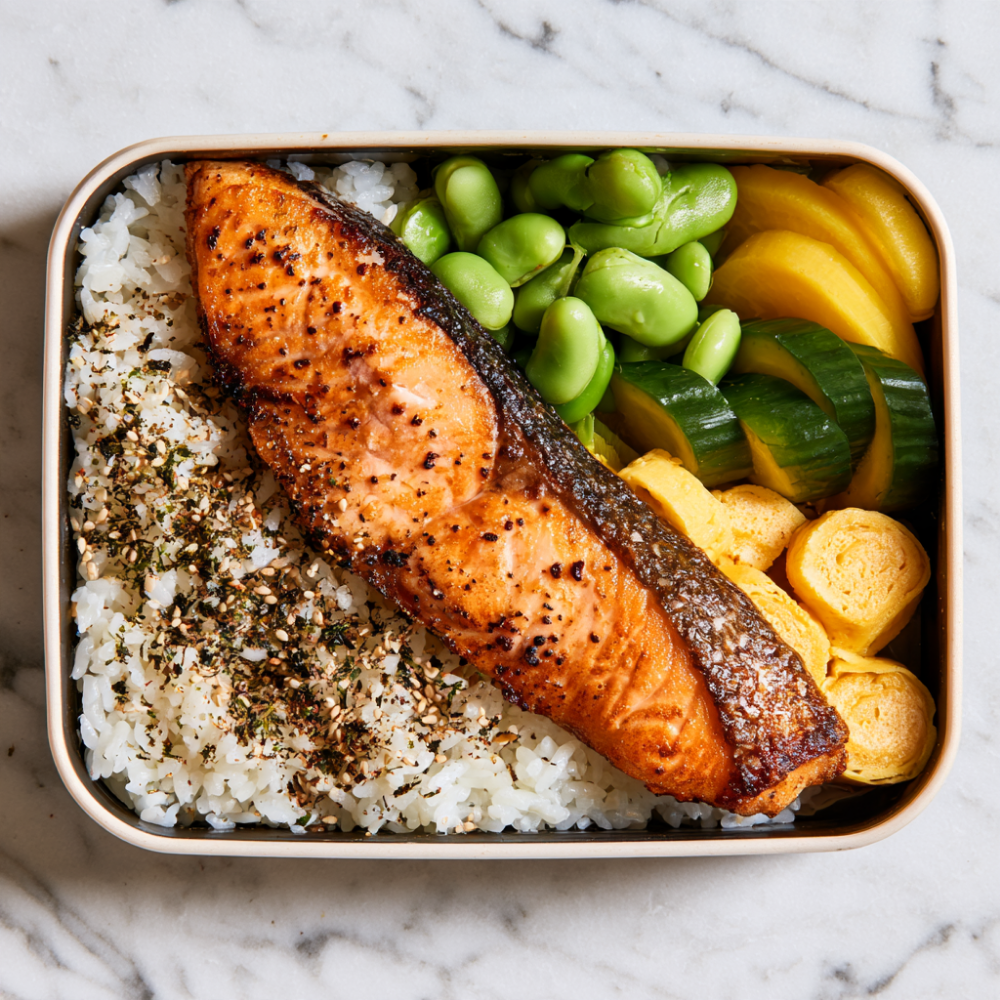
The Vibe: The most traditional bento in the lineup. Grilled salted salmon, steamed rice, rolled tamagoyaki, and pickled cucumber. Clean, simple, and unmistakably Japanese. This is the bento you’ll see in every Japanese train station and convenience store.
Servings: 1 bento box
Prep Time: 10 minutes (if rice, salmon, and tamagoyaki are prepped)
Cook Time: 15 minutes (for the salmon and tamagoyaki, if not prepped)
Estimated Nutrition: ~520 calories, 34g protein, 48g carbs, 16g fat
Ingredients:
- 4 oz salmon fillet, salted and grilled (shiozake)
- ½ cup cooked short-grain rice
- 2 large eggs (for tamagoyaki)
- 1 tsp mirin (for tamagoyaki)
- 1 tsp soy sauce (for tamagoyaki)
- ¼ cup shelled edamame, steamed
- ¼ cup cucumber, thinly sliced and lightly pickled in rice vinegar
- 1 tbsp takuan (pickled daikon), sliced
- 1 tsp furikake
- 1 tsp toasted sesame seeds
- (Pantry staples: salt, oil for the pan)
Instructions:
- Salt the salmon fillet generously and let it sit for 20 minutes. Pat dry and grill or pan-sear skin-side down for 5 minutes, flip, and cook for 2–3 more minutes until just cooked through.
- Make the tamagoyaki using the same method as Recipe 1. Slice into ½-inch rounds.
- Pack the cooked short-grain rice into one half of the bento box. Sprinkle with furikake and toasted sesame seeds.
- Place the grilled salmon fillet in the other half of the box.
- Fill the remaining gaps with three tamagoyaki rounds, shelled edamame, pickled cucumber slices, and takuan.
- Seal and refrigerate until ready to pack.
Protein Breakdown: Salmon (25g) + tamagoyaki (12g) + edamame (4g) = 41g total, ~34g per serving.
Recipe 3: Saba Shioyaki (Grilled Salted Mackerel) Bento
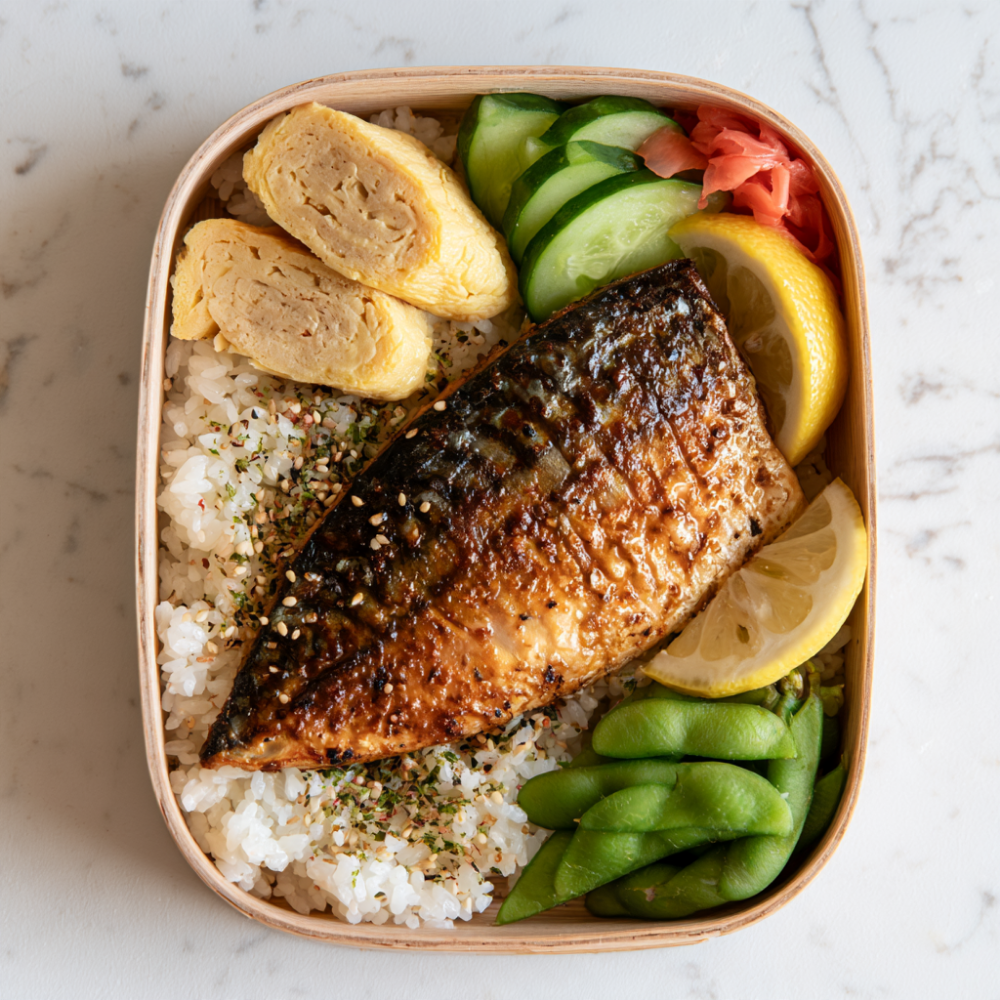
The Vibe: Bold, savory, and deeply traditional. Grilled salted mackerel is one of the most classic Japanese proteins, and it’s one of the highest in protein and omega-3s. This bento is for people who want the real deal.
Servings: 1 bento box
Prep Time: 10 minutes (if rice, saba, and tamagoyaki are prepped)
Cook Time: 15 minutes (for the saba and tamagoyaki, if not prepped)
Estimated Nutrition: ~500 calories, 33g protein, 46g carbs, 18g fat
Ingredients:
- 4 oz saba (mackerel) fillet, salted and grilled (saba shioyaki)
- ½ cup cooked short-grain rice
- 2 large eggs (for tamagoyaki)
- 1 tsp mirin (for tamagoyaki)
- 1 tsp soy sauce (for tamagoyaki)
- ¼ cup shelled edamame, steamed
- ¼ cup cucumber, thinly sliced and lightly pickled in rice vinegar
- 1 tbsp beni shoga (pickled red ginger)
- 1 tsp furikake
- 1 tsp toasted sesame seeds
- 1 lemon wedge
- (Pantry staples: salt, oil for the pan)
Instructions:
- Salt the mackerel fillet generously and let it sit for 20 minutes. Pat dry and grill or pan-sear skin-side down for 5–6 minutes, flip, and cook for 2–3 more minutes until cooked through.
- Make the tamagoyaki using the same method as Recipe 1. Slice into ½-inch rounds.
- Pack the cooked short-grain rice into one half of the bento box. Sprinkle with furikake and sesame seeds.
- Place the grilled saba fillet in the other half of the box. Add the lemon wedge on the side.
- Fill the remaining gaps with three tamagoyaki rounds, shelled edamame, pickled cucumber slices, and beni shoga.
- Seal and refrigerate until ready to pack.
Protein Breakdown: Saba (22g) + tamagoyaki (12g) + edamame (4g) = 38g total, ~33g per serving.
Tips for the Best Japanese Lunch Box Bento
Cook short-grain rice, not long-grain. Japanese short-grain rice (like Calrose or Koshihikari) is stickier and holds its shape better in a bento box. Long-grain rice falls apart and doesn’t pack as neatly.
Cool everything before packing. Warm food creates steam, which makes the bento soggy and shortens its shelf life. Let the rice, protein, and tamagoyaki cool to room temperature before assembling.
Use the 4:3:2:1 ratio as a starting point. Four parts rice, three parts protein, two parts vegetables, one part pickles. Adjust based on your protein goals — if you’re targeting higher protein, increase the protein portion and decrease the rice.
Pack tightly, but don’t crush. A tightly packed bento doesn’t shift during transport. But don’t press so hard that you squash the rice or the tamagoyaki.
Separate wet and dry elements. Put pickles, sauces, and juicy vegetables in silicone cups or small lidded containers to keep the rice and crispy elements from getting soggy.
Make tamagoyaki ahead of time. A batch of tamagoyaki keeps in the refrigerator for 3 days. Slice it fresh each morning.
Prep rice in batches. Cook a large batch of short-grain rice on Sunday and refrigerate it in portions.
Add furikake and sesame seeds. These simple garnishes add umami, texture, and visual appeal. They also make the rice taste like more than just rice.
Pack a small ice pack. Even though Japanese bento is designed to be eaten at room temperature, a small ice pack in an insulated lunch bag keeps everything safe for 4–5 hours.
Invest in a traditional bento box. Look for a two-tier or single-tier box with a snug-fitting lid. Traditional boxes are often lacquered wood or BPA-free plastic.
Troubleshooting
The rice got hard and dry. You refrigerated it without sealing it properly, or you packed it too far in advance. Store rice in an airtight container with a damp paper towel over the top to keep it moist.
The tamagoyaki fell apart. Your pan was too hot, or you didn’t oil it enough between layers. Use medium-low heat and a thin layer of oil before each egg layer.
The bento looks boring. You’re missing color contrast. Add beni shoga (bright pink), cherry tomatoes (red), and edamame (bright green) to break up the browns and whites.
The salmon was dry. You overcooked it. Salmon is best at medium — 125°F to 130°F internal temperature. Pull it off the heat a minute before you think it’s done.
The saba was too fishy. You didn’t salt it long enough. Salting the mackerel for 20 minutes draws out excess moisture and significantly reduces the fishiness.
The karaage got soggy. You packed it while it was still hot, or you didn’t drain the oil properly. Cool the karaage completely on a wire rack before packing.
The pickles leaked into the rice. You didn’t use a silicone cup or lidded container. Always separate wet ingredients from the rice.
Easy Variations
Kawaii Bento. Use small cookie cutters to shape the vegetables into flowers and stars. Shape the rice into small onigiri balls and add nori faces. Use a bright, colorful bento box. The karaage bento works best for kawaii styling.
Japanese School Lunch Bento. Simplify the layout for kids. Use a smaller bento box with fewer compartments and pack familiar proteins like karaage or salmon. Add a small treat like a yogurt-covered raisin or a piece of fruit.
Korean Lunch Box Ideas. Swap the tamagoyaki for a Korean rolled omelet (gyeran mari), add kimchi in a small lidded container, and use gochujang-glazed chicken instead of karaage.
Asian Lunch Box Ideas. Blend Japanese and other Asian flavors. Add dumplings, spring rolls, or a small portion of fried rice alongside the traditional Japanese components.
Simple Bento. Skip the tamagoyaki and pickles. Pack rice, a protein, and one vegetable. It’s not traditional, but it’s fast and still delivers protein.
Low Carb Japanese Bento. Swap the rice for cauliflower rice or shredded cabbage. Increase the protein portion to compensate.
Gluten-Free Japanese Bento. Use tamari instead of soy sauce in the marinades and tamagoyaki. Check the label on any store-bought pickles, furikake, or beni shoga.
Storage and Food Safety
Refrigerator: Store assembled bento boxes in the refrigerator for up to 3 days. For best results, assemble the night before and refrigerate overnight.
Freezer: You can freeze the cooked karaage and grilled fish separately for up to 2 months. Do not freeze the assembled bento boxes—rice and tamagoyaki don’t thaw well.
Cold Pack: Always pack a small ice pack in an insulated lunch bag. Keep perishable proteins like salmon, mackerel, chicken, and eggs below 40°F for safety.
Food Safety: Chicken must reach an internal temperature of 165°F. Fish should reach 145°F. Cooked rice can harbor Bacillus cereus if left at room temperature for too long—cool it quickly, refrigerate within 2 hours, and consume within 3 days. Discard any leftovers that come home warm.
Frequently Asked Questions
What is a Japanese lunch box bento?
A Japanese bento is a single-portion packed meal, traditionally consisting of rice, a protein (like grilled fish or karaage), a rolled egg (tamagoyaki), vegetables, and pickles, all arranged in a compartmentalized box. It’s designed to be eaten at room temperature.
What’s the difference between a bento box and a regular lunchbox?
A bento box is compartmentalized, so foods don’t mix. It’s also designed to be packed tightly and eaten at room temperature. A regular lunchbox typically has one large compartment that holds a sandwich or main dish.
How much protein is in a Japanese bento?
Traditional Japanese bento is naturally high in protein. The bento boxes in this roundup deliver 33–34 grams of protein per box, thanks to grilled fish, chicken, tamagoyaki, and edamame.
What is the difference between karaage, shiozake, and saba shioyaki?
Karaage is bite-sized marinated chicken coated in potato starch and fried. Shiozake is salmon salted and grilled. Saba shioyaki is salted and grilled mackerel. All three are classic Japanese bento proteins.
Can I make a Japanese bento ahead of time?
Yes. Assemble the bento the night before and refrigerate overnight. Cool all cooked components completely before packing to prevent sogginess.
What is tamagoyaki?
Tamagoyaki is a Japanese rolled omelet made by cooking thin layers of seasoned egg in a rectangular pan and rolling them into a log. It’s sliced into rounds and served in bento boxes.
Where do I buy a traditional Japanese bento box?
Japanese bento boxes are widely available online, at Asian grocery stores, and at home goods stores. Look for a two-tier or single-tier box with a snug-fitting lid.
Is Japanese bento gluten-free?
Traditional Japanese bento can be gluten-free if you use tamari instead of soy sauce and avoid wheat-based ingredients. Always check the labels on store-bought pickles, furikake, and sauces.
How long does a Japanese bento last in the fridge?
Eat assembled bento boxes within 24 hours. You can prep cooked components like rice, grilled fish, and tamagoyaki up to 3 days ahead and store them separately in the refrigerator.
More High-Protein Meal Prep Recipes You’ll Love
- High-Protein Bento Box Lunch for Kids (5 Easy Ideas!)
- 5 Lazy High-Protein Meal Prep Recipes (Under 30 Minutes!)
- High-Protein Mason Jar Salads for the Work Week
- 40g Protein Crockpot Chicken Ramen
Conclusion
These three high-protein Japanese lunch box bentos prove that traditional Japanese food is already built for macro-friendly eating. Karaage, shiozake, and saba shioyaki are the three most iconic bento proteins for a reason—they’re delicious, they hold up beautifully at room temperature, and they deliver 33–34 grams of protein per box.
The keys are simple: use short-grain rice, cook your proteins ahead, make tamagoyaki in batches, cool everything before packing, and separate wet and dry ingredients with silicone cups or small lidded containers. Do that, and you’ll never look at a sad desk lunch the same way again.
Pick a protein. Build a bento this Sunday. Eat like you’re in Tokyo all week.