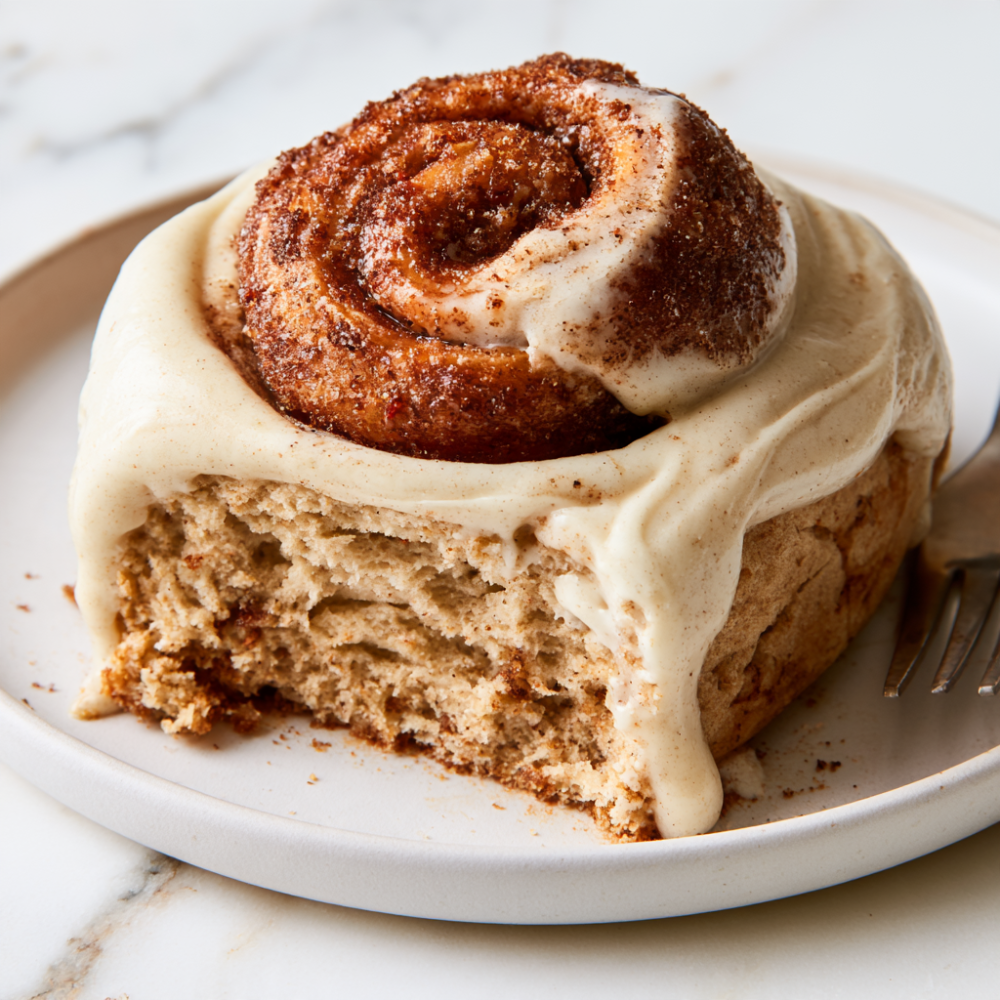

A cinnamon roll is a commitment. You’re either planning ahead for a yeasted dough that needs to rise twice, or you’re driving to the mall and paying $8 for something that leaves you in a sugar coma by 10 AM.
There’s no in-between. Until now.
These protein cinnamon rolls skip the yeast entirely. The dough is leavened with baking powder and the natural acidity in cottage cheese, which means there’s no rise time, no waiting, and no planning. You go from craving to frosted roll in about 37 minutes.
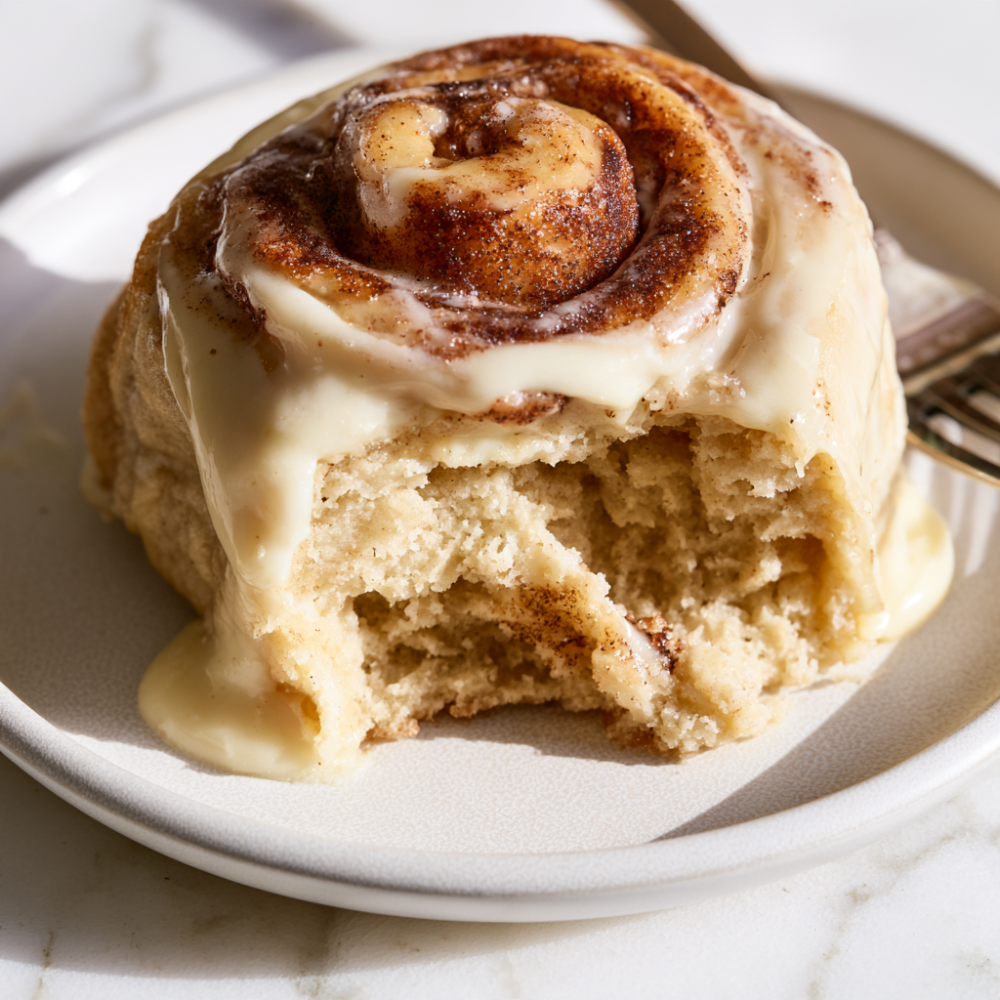
And they deliver 15 grams of protein per roll. That’s roughly triple a traditional cinnamon roll, which means they actually hold you over instead of spiking your blood sugar and dropping you an hour later. They work as a high-protein breakfast, a post-workout snack, or a legitimately satisfying dessert.
This is a small-batch recipe—just four rolls. Perfect for one or two people, and perfect for anyone who doesn’t want a full pan of cinnamon rolls sitting on the counter for three days.
Let’s make them.
Why This Recipe Works
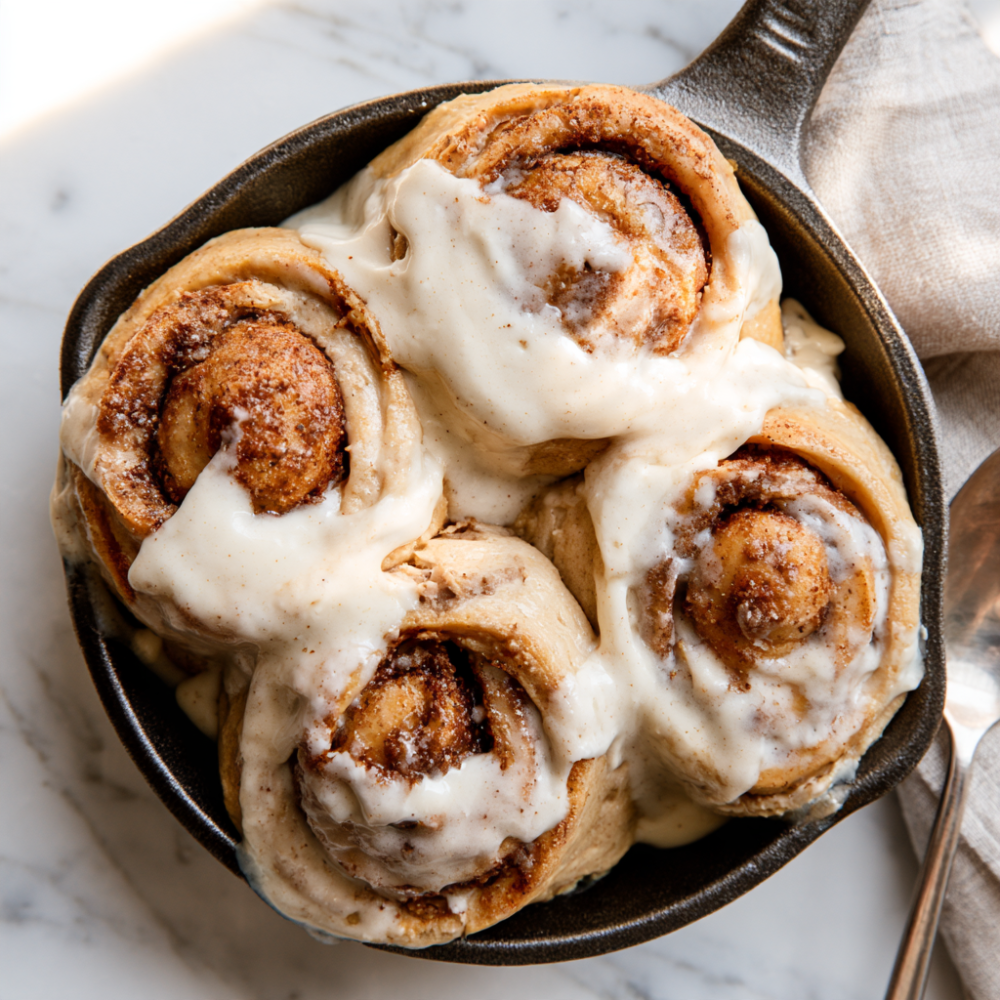
Cottage cheese is acidic, which activates the baking powder. This chemistry makes a no-yeast cinnamon roll possible. The lactic acid in cottage cheese reacts with baking powder to produce carbon dioxide, which lifts the dough. No yeast, no rise time, no waiting.
Protein powder goes in the filling, not the dough. Protein powder dries out dough and makes it rubbery. Putting it in the filling adds protein with zero texture risk, and the brown sugar and cinnamon mask any chalky flavor.
Blending the cottage cheese until smooth is non-negotiable. Any remaining curds will show up as grainy pockets in the dough and frosting. Blend for a full 45 seconds.
Greek yogurt in the frosting adds protein without changing the flavor. It blends seamlessly with the cottage cheese and cream cheese and boosts the protein count.
Salt in the dough and filling balances the sweetness. Without it, the rolls taste flat and one-dimensionally sweet. This is the fix most no-yeast recipes miss.
The 10-minute dough rest improves the texture. It lets the flour hydrate fully, making the dough easier to roll and producing a more tender roll.
Baking them touching each other keeps the sides soft. Cinnamon rolls bake best when crowded together in a small dish or skillet. This traps steam and gives you soft edges. Spacing them apart on a sheet pan yields dry, scone-like sides.
Protein Cinnamon Rolls
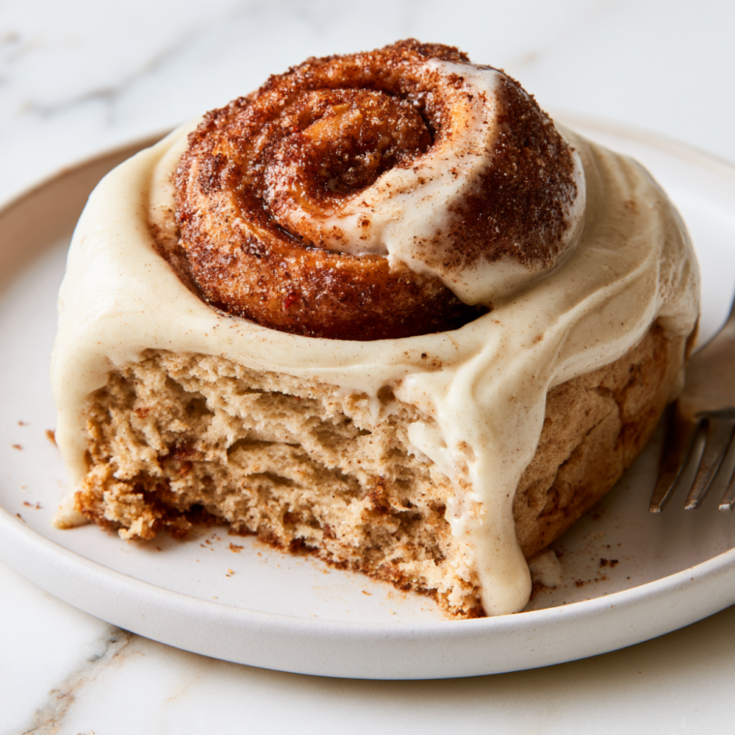
Soft, tender protein cinnamon rolls made in small batches with a cottage cheese dough and a protein-packed filling. No yeast, no rise time, and 15 grams of protein per roll. Four rolls, start to finish, in under 40 minutes.
Ingredients
For the Dough:
- 1¼ cups all-purpose flour, plus up to ½ cup more as needed
- 1 cup blended cottage cheese (2% or 4%—see note below)
- 2 tbsp maple syrup
- 1½ tsp baking powder
- ¼ tsp kosher salt
For the Filling:
- ¼ cup brown sugar (or monk fruit brown sugar)
- 2 tbsp vanilla protein powder
- 1 tbsp ground cinnamon
- Pinch of kosher salt
For the Frosting:
- 2 tbsp cream cheese, softened to room temperature
- ¼ cup blended cottage cheese
- 2 tbsp plain non-fat Greek yogurt
- 1 tbsp maple syrup
- ½ tsp vanilla extract
Optional:
- 1 tbsp melted butter, for brushing
Instructions
- Preheat and prep. Preheat the oven to 350°F. Grease a small baking dish or 8-inch cast-iron skillet.
- Blend the cottage cheese until completely smooth. Add the cottage cheese to a blender or food processor and blend for 45 seconds until no curds remain. This is non-negotiable—any texture left in the cottage cheese will show up in the dough. Set aside.
- Mix the dough. In a medium bowl, whisk together the flour, baking powder, and salt. Add the blended cottage cheese and maple syrup. Stir with a wooden spoon until a shaggy dough forms, then turn it out onto a lightly floured surface and knead for 1–2 minutes until it forms a soft ball.
- Check the texture. The dough should be soft and slightly tacky but not sticky. If it sticks aggressively to your hands, add flour one tablespoon at a time. Cottage cheese water content varies significantly by brand—even between 2% and 4%—so you may need up to 1½ to 1¾ cups of flour total. If the dough feels dry or crumbly, add a teaspoon of milk.
- Rest the dough. Cover with a clean kitchen towel and let it rest for 10 minutes. This gives the flour time to hydrate and makes the dough easier to roll.
- Make the filling. In a small bowl, stir together the brown sugar, protein powder, cinnamon, and salt. Break up any protein powder clumps with the back of a spoon—clumps will not dissolve during baking.
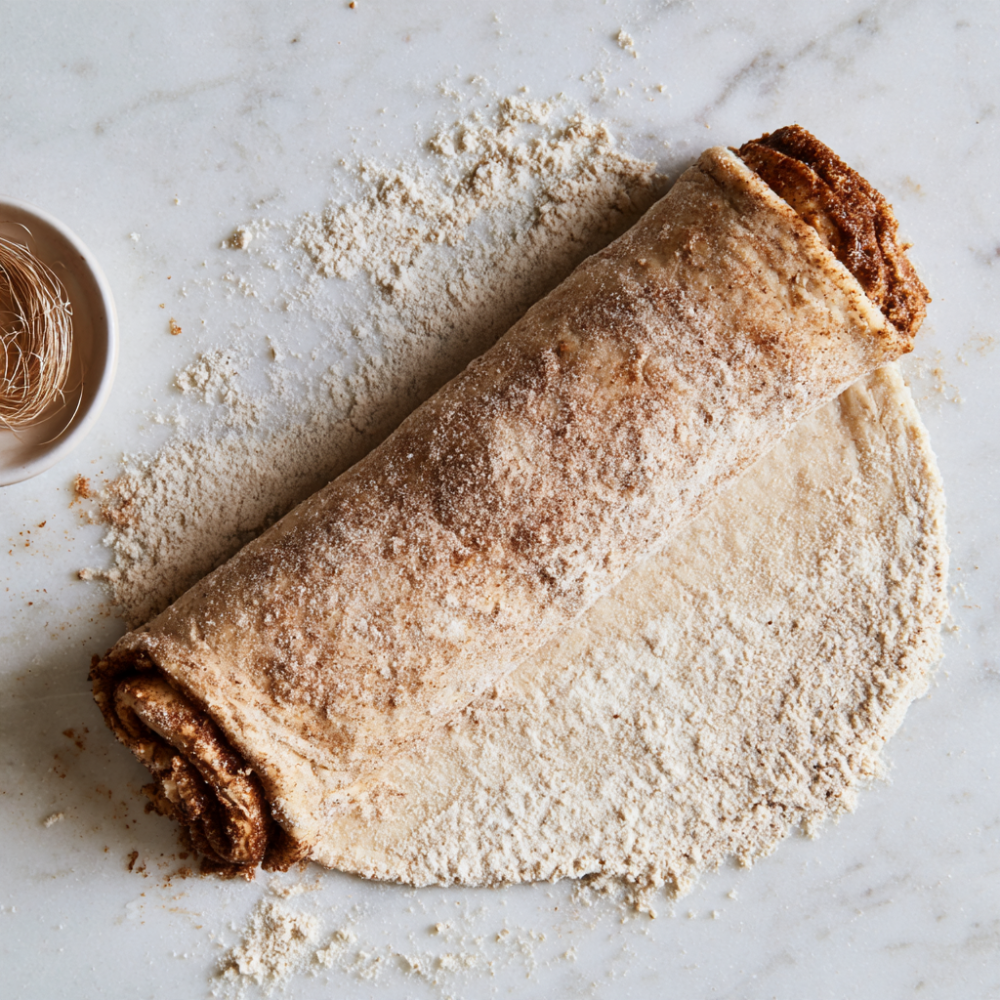
- Roll and fill. Roll the rested dough into a rectangle approximately 5 x 10 inches on a lightly floured surface. Spread the filling evenly over the dough, leaving a ½-inch bare border along one long edge.
- Roll and cut. Starting from the long edge opposite the bare border, roll the dough tightly into a log. Pinch the seam firmly to seal. Cut into 4 equal rolls, about 2 to 2½ inches each, using a serrated knife or a length of dental floss.
- Arrange and bake. Place the rolls cut-side up in the prepared dish or skillet, touching each other. Tuck any loose ends underneath. Bake for 20–22 minutes, until the tops are golden and the centers feel set.
- Make the frosting. While the rolls bake, beat the softened cream cheese in a small bowl with an electric hand mixer until completely smooth. Add the blended cottage cheese, Greek yogurt, maple syrup, and vanilla extract. Beat until fully combined and creamy.
- Brush and frost. Remove the rolls from the oven and brush the tops with melted butter if using. Let them cool for 5 minutes, then frost generously right before serving. Sprinkle with an extra pinch of cinnamon.
Notes
Protein per Serving: About 15g per roll
Nutrition note: Estimated per roll with 2% cottage cheese, vanilla protein powder, and the Greek yogurt frosting: ~375 calories, 15g protein, 56g carbs, 10g fat. Using monk fruit brown sugar in the filling and powdered monk fruit in the frosting will cut carbs by roughly 20 grams per roll.
Tips for the Best Protein Cinnamon Rolls
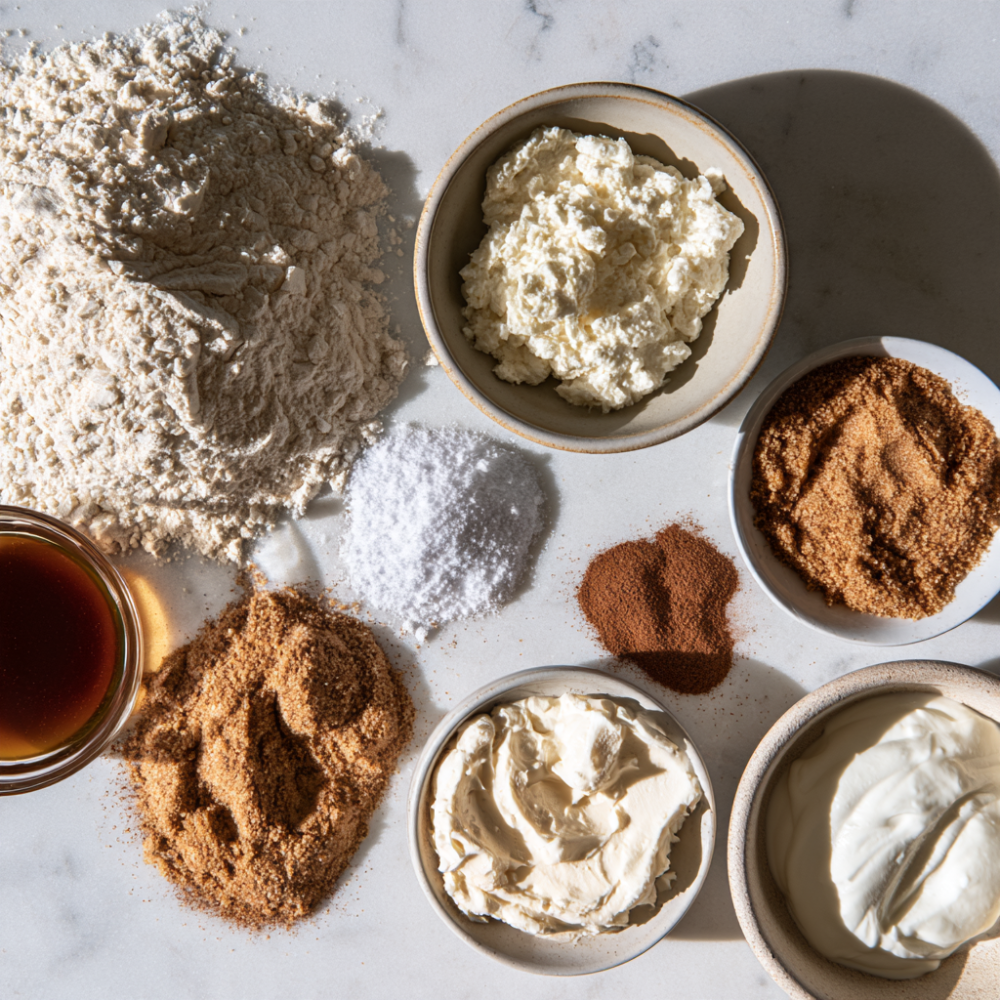
Use 2% or 4% cottage cheese, never fat-free. Fat-free cottage cheese contains more water and stabilizer gums that break down under heat. It will make the dough wet, sticky, and difficult to work with. If you only have fat-free, add 3–4 extra tablespoons of flour and expect a denser roll.
Blend the cottage cheese for a full 45 seconds. This is the single most important step. Any curds left in the mixture will show up in the finished dough and frosting.
Add flour until the dough is just manageable. Cottage cheese brand variability means the flour amount is a range, not a fixed number. Start with 1¼ cups and add one tablespoon at a time until the dough is soft but no longer sticking aggressively to your hands.
Rest the dough for 10 minutes. Even a no-yeast dough benefits from hydration time. It makes the dough easier to roll out without tearing.
Mix the protein powder with the sugar before adding it to the dough. Protein powder clumps easily, and clumps won’t dissolve during baking. Stirring it into the brown sugar first breaks up the clumps.
Use dental floss to cut the rolls. A serrated knife compresses the dough and crushes the swirl. Slide dental floss under the log, cross the ends over the top, and pull tight.
Bake them touching each other. A small dish or cast-iron skillet keeps the rolls crowded, trapping steam and keeping the sides soft.
Frost right before serving, not right after baking. The frosting will melt and run if the rolls are too hot. Wait 5 minutes, then frost.
Expect a tender, biscuit-like texture, not a chewy yeasted one. These rolls are soft and tender, closer to a scone than a traditional yeasted cinnamon roll. That’s the tradeoff for the 37-minute timeline, and it’s a good one.
Troubleshooting
The dough is too sticky to work with. Your cottage cheese had more water than expected. Add flour one tablespoon at a time until the dough is soft but no longer sticking to your hands.
The dough is dry and crumbly. You added too much flour, or your cottage cheese was on the drier side. Add milk one teaspoon at a time until the dough comes together.
The rolls spread instead of rising. Your baking powder was expired, or you used fat-free cottage cheese. Check the expiration date and use 2% or 4% cottage cheese.
The filling tastes gritty. You didn’t break up the protein powder clumps. Mix it into the brown sugar first, pressing out any lumps with the back of a spoon.
The frosting is lumpy. Your cream cheese wasn’t fully softened. Beat the cream cheese alone until smooth before adding anything else.
The rolls are dry. You overbaked them, or the dough was too dry. Pull the rolls at 20 minutes and check the center with a toothpick.
The rolls taste flat. You skipped the salt. It’s only ¼ teaspoon, but it makes a noticeable difference.
The rolls stuck to the pan. You didn’t grease it well enough. Use a generous coat of cooking spray or butter, especially in the corners.
Easy Variations
Pistachio Protein Cinnamon Rolls. Add ¼ cup of chopped pistachios to the filling and 2 tablespoons of pistachio butter to the frosting.
Chocolate Protein Cinnamon Rolls. Swap the vanilla protein powder for chocolate and add 1 tablespoon of cocoa powder to the filling.
Orange Cardamom Rolls. Add 1 teaspoon of orange zest and ¼ teaspoon of ground cardamom to the filling.
Blueberry Protein Cinnamon Rolls. Scatter ¼ cup of fresh blueberries over the filling before rolling. The berries will burst, creating jammy pockets.
Maple Pecan Rolls. Add ¼ cup chopped pecans to the filling, and swap 1 tablespoon of the maple syrup in the frosting for pure maple syrup.
Gluten-Free Protein Cinnamon Rolls. Use a 1-to-1 gluten-free flour blend with xanthan gum. Add an extra tablespoon of milk, and expect a slightly denser texture.
High Protein Cinnamon Muffins. Instead of rolling, drop the dough into a greased muffin tin and bake at 350°F for 15–18 minutes. Same flavor, different shape.
Double Batch. Double all ingredients and bake in a 9×13 pan. Add 3–5 minutes to the bake time.
Storage and Food Safety
Refrigerator: Store frosted rolls in an airtight container in the refrigerator for up to 3 days. Store the frosting separately if you’re not eating them all at once.
Freezer: Wrap baked rolls tightly in plastic wrap, then foil, and freeze for up to 2 months. Thaw overnight in the refrigerator or reheat directly from frozen in the microwave for 45 seconds.
Meal Prep: These are built for it. Make a double batch on Sunday, freeze individually, and pull one out for a high-protein breakfast or snack all week.
Make Ahead: You can make, roll, and cut the dough up to 24 hours in advance. Cover tightly and refrigerate, then bake straight from the fridge, adding 2–3 minutes to the bake time. You can make the frosting up to 3 days ahead.
Food Safety: The dough contains raw cottage cheese and should not be eaten before baking. Refrigerate leftovers within 2 hours of cooling.
Frequently Asked Questions
Are these cinnamon rolls yeasted?
No. They’re leavened with baking powder, which activates with the cottage cheese’s natural acidity. That’s what makes a 37-minute timeline possible.
How much protein is in each roll?
About 15 grams per roll with the Greek yogurt frosting. That’s roughly triple a traditional cinnamon roll.
Can I use Greek yogurt instead of cottage cheese in the dough?
Yes, but the dough will be wetter and less structured. Add 2–3 extra tablespoons of flour and expect a slightly denser roll.
Can I skip the protein powder?
Yes. Swap it for 2 extra tablespoons of brown sugar in the filling. Protein drops to about 9 grams per roll.
Why did my dough turn out sticky?
Cottage cheese water content varies significantly by brand. If your dough is sticky, add flour one tablespoon at a time until it’s workable.
Can I make these ahead of time?
Yes. Prepare the dough, cover tightly, and refrigerate for up to 24 hours. Bake straight from the fridge, adding 2–3 minutes.
Can I double this recipe?
Yes. Double all ingredients and bake in a 9×13 pan. Add 3–5 minutes to the bake time.
Are these gluten-free?
Only if you use a 1-to-1 gluten-free flour blend with xanthan gum. The texture will be slightly denser.
Can I make these dairy-free?
It’s difficult because the recipe relies on cottage cheese and cream cheese. You can try dairy-free versions, but the texture will be noticeably different.
How do these compare to traditional cinnamon rolls?
They’re more tender and biscuit-like, less chewy than a yeasted roll. The flavor is very close, and the 37-minute timeline is the trade-off.
Are these good for meal prep?
Yes. Make a double batch, freeze individually, and reheat one at a time for a high-protein breakfast or snack.
Can I eat these for breakfast?
Yes. At 15 grams of protein per roll, they’re a legitimate breakfast, not just a dessert.
More High-Protein Snack Recipes You’ll Love
- Cinnamon Roll Protein Mug Cake (Single-Serve, 32g Protein)
- High-Protein Mini Pancakes (32g Protein, Blender Recipe!)
- Maple Pecan Protein French Toast Casserole (High-Protein & Make-Ahead)
Conclusion
These protein cinnamon rolls prove you don’t need yeast, a rise time, or a bakery-level commitment to have fresh cinnamon rolls on a weekday morning.
Cottage cheese dough, a protein-packed filling, and a Greek yogurt frosting get you from mixing bowl to frosted roll in about 47 minutes, with 15 grams of protein per roll.
The keys are simple: use 2% or 4% cottage cheese, blend it completely smooth, rest the dough for 10 minutes, mix the protein powder with the sugar before adding it, bake them touching in a small dish, and frost right before serving. Do that, and you’ll have tender, cinnamon-swirled rolls that taste like they took all morning.
Make a batch this weekend. Freeze half. Thank yourself on a Tuesday.