You want French toast on a weekend morning. The kind with crisp edges, a custardy center, and a maple-pecan topping that makes the whole house smell like a bakery. What you don’t want is to stand at the stove dipping and flipping individual slices while everyone else eats.
This maple pecan protein French toast casserole is the answer. Thick-cut whole grain bread soaked overnight in a high-protein custard, topped with chopped pecans and a light maple drizzle, then baked in one pan until golden and puffed. About 26–28 grams of protein per serving, and it’s genuinely a make-ahead recipe.
The trick is the custard. Most protein French toast recipes either use too much protein powder (which makes the custard grainy and rubbery) or too little (which means it doesn’t earn the “protein” label).
This version uses a measured amount of protein powder with eggs, Greek yogurt, and almond milk, which together create a smooth, custardy texture with real protein in every bite.
The best part is that it’s designed for meal prep. Assemble it the night before, refrigerate it, and bake it in the morning. Or bake it on Sunday, slice it into squares, and reheat individual portions all week.
Two things decide whether this turns out custardy and golden or dry and rubbery, and neither is optional.
Use stale or day-old bread, not fresh. Fresh bread absorbs too much custard and turns mushy. Stale bread holds its structure and gives you the custardy inside and crisp-outside contrast you want. If your bread is fresh, spread the slices on a sheet pan and leave them out for an hour, or toast them lightly.
Let it soak overnight in the refrigerator. A 30-minute soak works in a pinch, but overnight is what gives you the custardy, bread-pudding-like texture that makes this recipe special. The bread needs time to absorb the custard all the way through.
Everything else is forgiving and flexible, and it takes about 15 minutes of actual work.
Why This Recipe Works
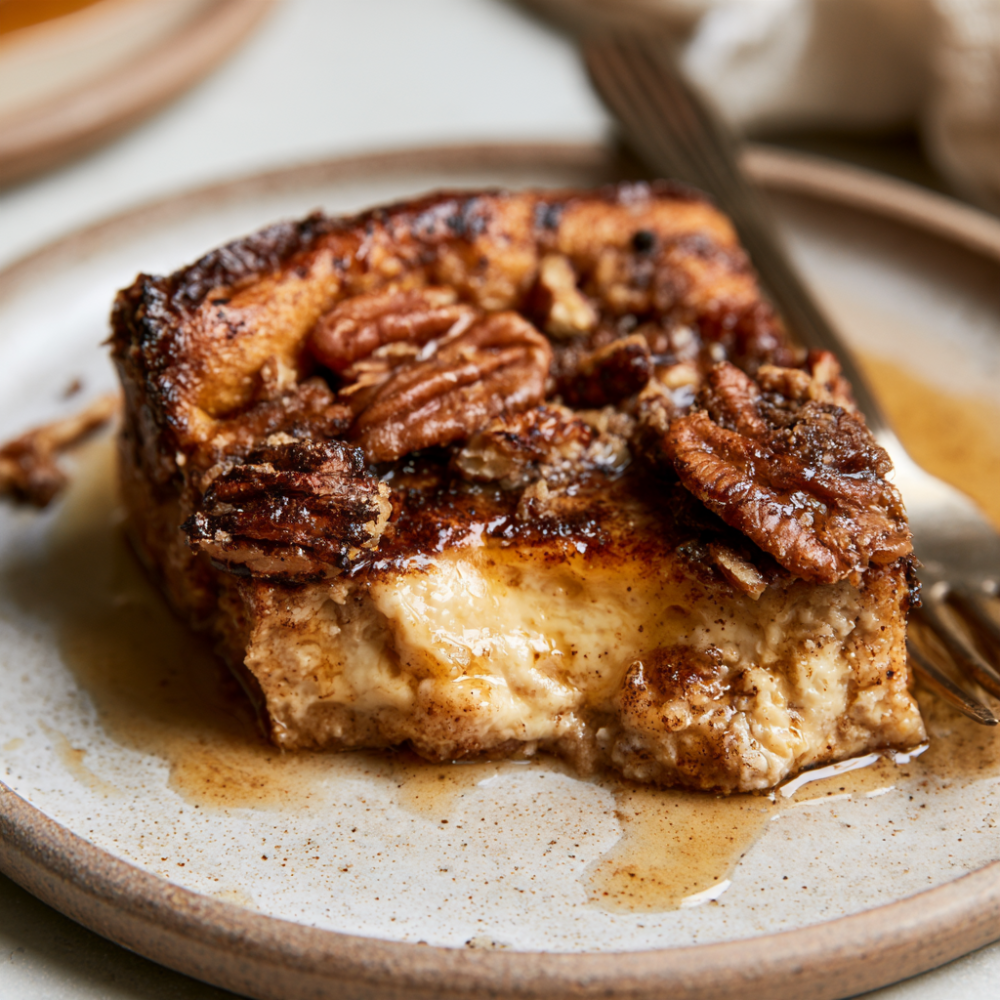
Greek yogurt and protein powder create a smooth, custardy base. Greek yogurt adds protein and a slight tang that balances the maple syrup. Protein powder adds more protein and sweetness. Together, they create a custard that’s rich and creamy without being heavy.
Eggs are the backbone of the custard. Eight whole eggs give you structure, richness, and about 48 grams of protein. They’re what make the casserole set into a custardy, sliceable texture instead of a soggy bread pile.
Almond milk keeps the custard light. Whole milk works too, but almond milk keeps the calories lower without sacrificing texture. The custard is rich enough from the eggs, yogurt, and protein powder that you don’t need the extra fat.
Cinnamon and vanilla make it taste like French toast. Without them, it tastes like baked bread pudding. With them, it tastes like the French toast you actually want.
Chopped pecans add crunch and richness. Toasting them first brings out their nutty flavor and keeps them crisp on top of the casserole. Don’t skip the toasting step.
A light maple drizzle is better than soaking it in syrup. Drizzle two tablespoons of maple syrup over the top for flavor without turning the casserole soggy. Serve extra syrup on the side for anyone who wants more.
It’s designed for meal prep. Assemble it the night before, bake it in the morning, and reheat individual squares all week. It also freezes beautifully.
It reheats without drying out. Unlike stovetop French toast, which can get rubbery in the microwave, this casserole stays moist and custardy. A quick reheat in the microwave or toaster oven brings it right back.
Maple Pecan Protein French Toast Casserole
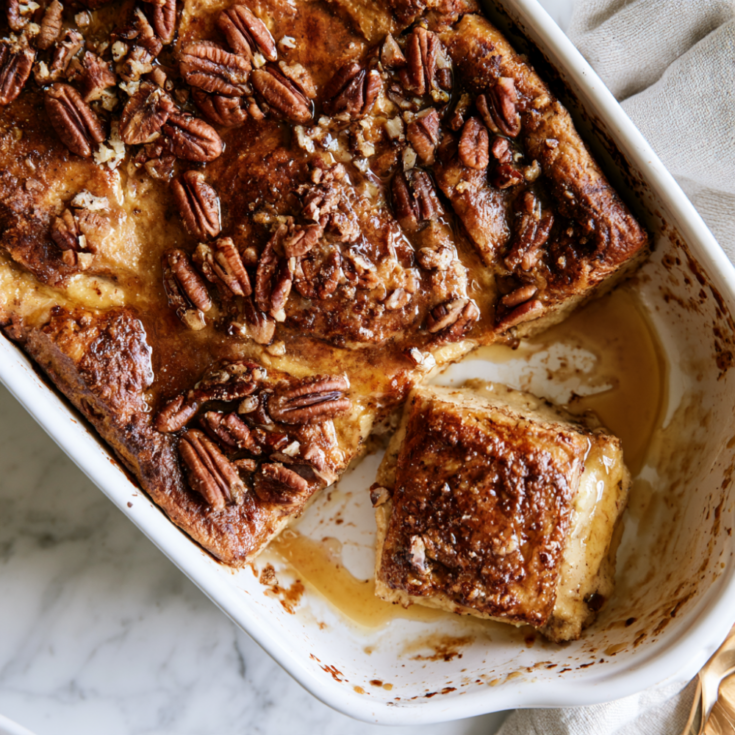
Thick-cut whole-grain bread baked in a high-protein custard made with eggs, Greek yogurt, and vanilla protein powder, topped with toasted pecans and a light maple drizzle. About 26–28 grams of protein per serving.
Ingredients
For the Casserole:
- 12 slices thick-cut whole grain bread (or brioche, challah, or sourdough), cut into 1-inch cubes
- 8 large eggs
- 1 cup plain Greek yogurt (2% or full-fat)
- 1½ cups unsweetened almond milk (or whole milk)
- ⅓ cup vanilla whey-casein protein powder
- ¼ cup pure maple syrup
- 2 tsp vanilla extract
- 2 tsp ground cinnamon
- ½ tsp ground nutmeg
- ¼ tsp kosher salt
- 2 tbsp melted unsalted butter, cooled slightly
For the Topping:
- ¾ cup pecan halves, roughly chopped
- 2 tbsp pure maple syrup
- 1 tbsp melted unsalted butter
- ½ tsp ground cinnamon
- Pinch of kosher salt
For Serving:
- Pure maple syrup
- Greek yogurt
- Fresh berries
- A dusting of cinnamon
Instructions
1. Prepare the bread. If your bread is fresh, spread the slices on a sheet pan and leave them out for an hour to dry slightly. Or toast them lightly in a 300°F oven for 5–8 minutes. Stale or day-old bread works best.
Cut the bread into 1-inch cubes. You should have about 10–12 cups of cubed bread.
2. Grease the baking dish. Generously grease a 9x13-inch baking dish with butter or cooking spray.
3. Make the custard. In a large bowl, whisk together the eggs, Greek yogurt, almond milk, protein powder, maple syrup, vanilla extract, cinnamon, nutmeg, and kosher salt until completely smooth. Whisk in the melted butter.
If your protein powder tends to clump, whisk it into the almond milk first before adding it to the eggs.
4. Assemble the casserole. Spread the bread cubes evenly in the prepared baking dish. Pour the custard over the top, pressing down gently with a spatula so every piece of bread soaks up the custard.
Don't stir. You want the bread to stay in an even layer.
5. Soak. Cover the dish with foil and refrigerate for at least 4 hours, preferably overnight. If you're short on time, let it sit at room temperature for 30 minutes, pressing down on the bread every 10 minutes to help it absorb the custard.
6. Make the pecan topping. In a small bowl, toss the chopped pecans with the maple syrup, melted butter, cinnamon, and salt until evenly coated. Set aside.
7. Preheat the oven. Preheat to 350°F. Remove the casserole from the refrigerator and let it sit at room temperature for 15 minutes while the oven preheats.
8. Add the topping. Uncover the casserole and scatter the pecan topping evenly over the top.
9. Bake covered.Cover with foil and bake for 25 minutes.
10. Bake uncovered. Remove the foil and bake for another 15–20 minutes, until the top is golden brown, the custard is set, and a knife inserted into the center comes out clean.
If the pecans start to brown too quickly, tent the casserole loosely with foil.
11. Rest and serve. Let the casserole rest for 10 minutes before slicing. Cut into 8 squares. Serve warm with maple syrup, Greek yogurt, fresh berries, and a dusting of cinnamon.
Notes
Protein per Serving: About 26–28g
Nutrition note: Protein and calories vary by bread, protein powder, Greek yogurt, and pecan brands. Estimated per serving: ~400 calories, 26–28g protein, ~38 g carbs, ~17 g fat. Calculate with your specific products for the most accurate numbers.
Make-ahead: Assemble the casserole up to 24 hours ahead, cover, and refrigerate. Bake in the morning. You can also bake it fully, cool, and refrigerate for up to 4 days. Reheat individual squares in the microwave or toaster oven.
Freezer: Bake, cool completely, then cut into squares. Wrap individual squares tightly and freeze for up to 3 months. Reheat in the microwave or toaster oven.
Recipe Notes
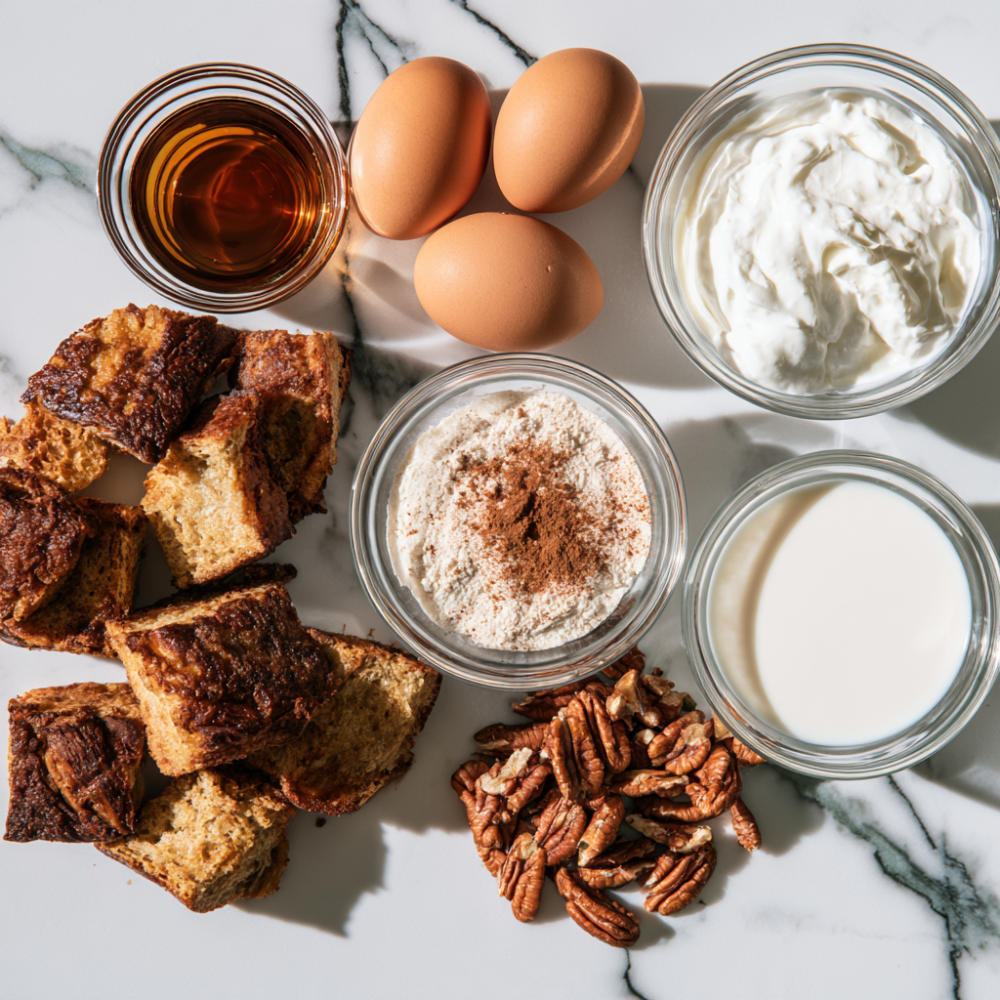
Use stale or day-old bread. Fresh bread absorbs too much custard and turns mushy. Stale bread holds its structure and gives you the custardy inside, crisp outside contrast you want.
Thick-cut bread works best. Thin sandwich bread disintegrates. Look for bread sliced at least ¾-inch thick. Brioche, challah, and sourdough all work well.
Use a whey-casein blend protein powder. Different protein powders absorb liquid very differently. A whey-casein blend gives you the most consistent custard. Whey alone can turn grainy. Plant-based can turn gummy.
If it clumps, whisk the protein powder into the milk first. This prevents lumps in the custard.
Soak overnight for the best texture. A 30-minute soak works in a pinch, but overnight is what gives you the custardy, bread-pudding-like texture.
Toast the pecans before adding them to the topping. Two minutes in a dry skillet transforms them from flat to nutty. This small step makes a real difference.
Don’t skip the rest time before slicing. Ten minutes lets the custard set and the portions hold together.
Serve extra maple syrup on the side. The casserole itself is only lightly sweetened. Let people add more if they want it.
Tips for the Best Protein French Toast Casserole
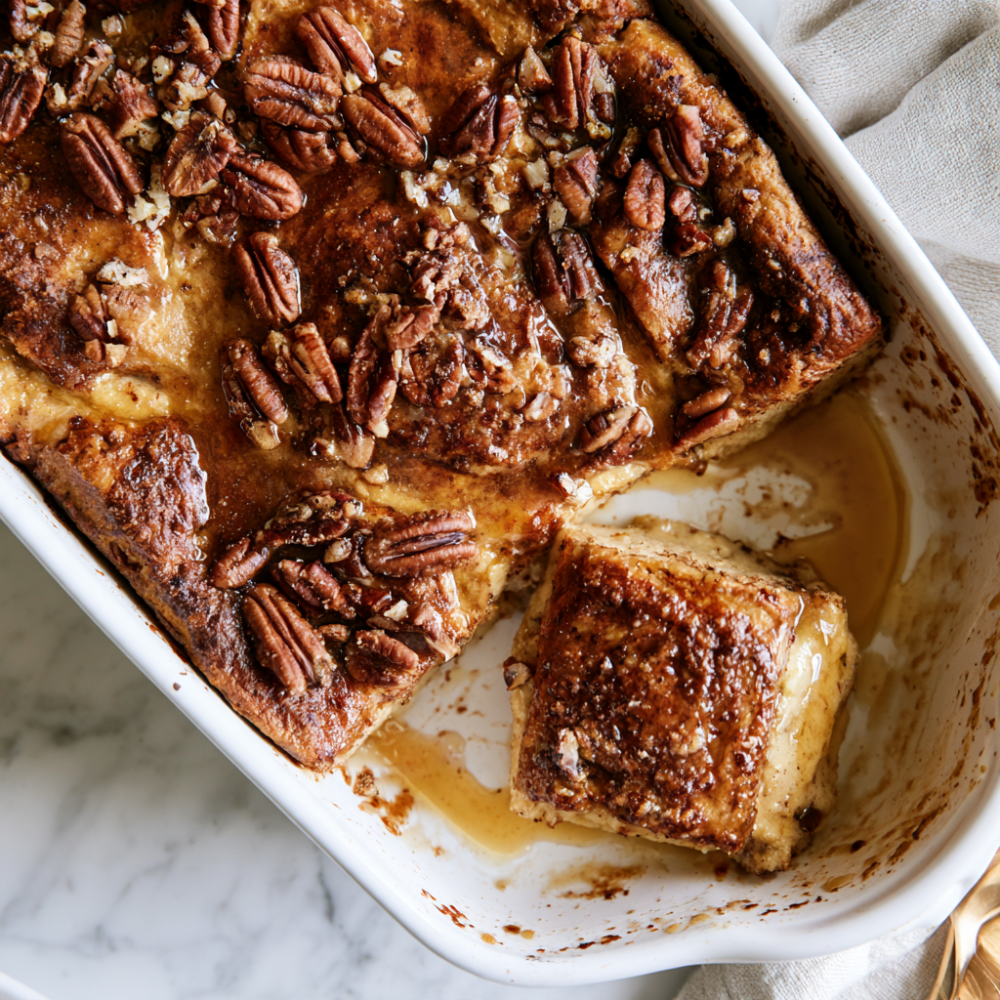
- Use stale or day-old bread, not fresh. It holds its structure.
- Cut the bread into even 1-inch cubes so they soak evenly.
- Whisk the protein powder into the milk first to prevent clumps.
- Press the bread down into the custard so every piece gets soaked.
- Soak overnight in the refrigerator for the best texture.
- Toast the pecans before adding them to the topping.
- Cover with foil for the first 25 minutes so the top doesn’t burn.
- Let it rest for 10 minutes before slicing so the portions hold together.
- Serve with Greek yogurt and fresh berries to balance the richness.
- Reheat leftovers in the toaster oven for a crisper top.
Easy Variations
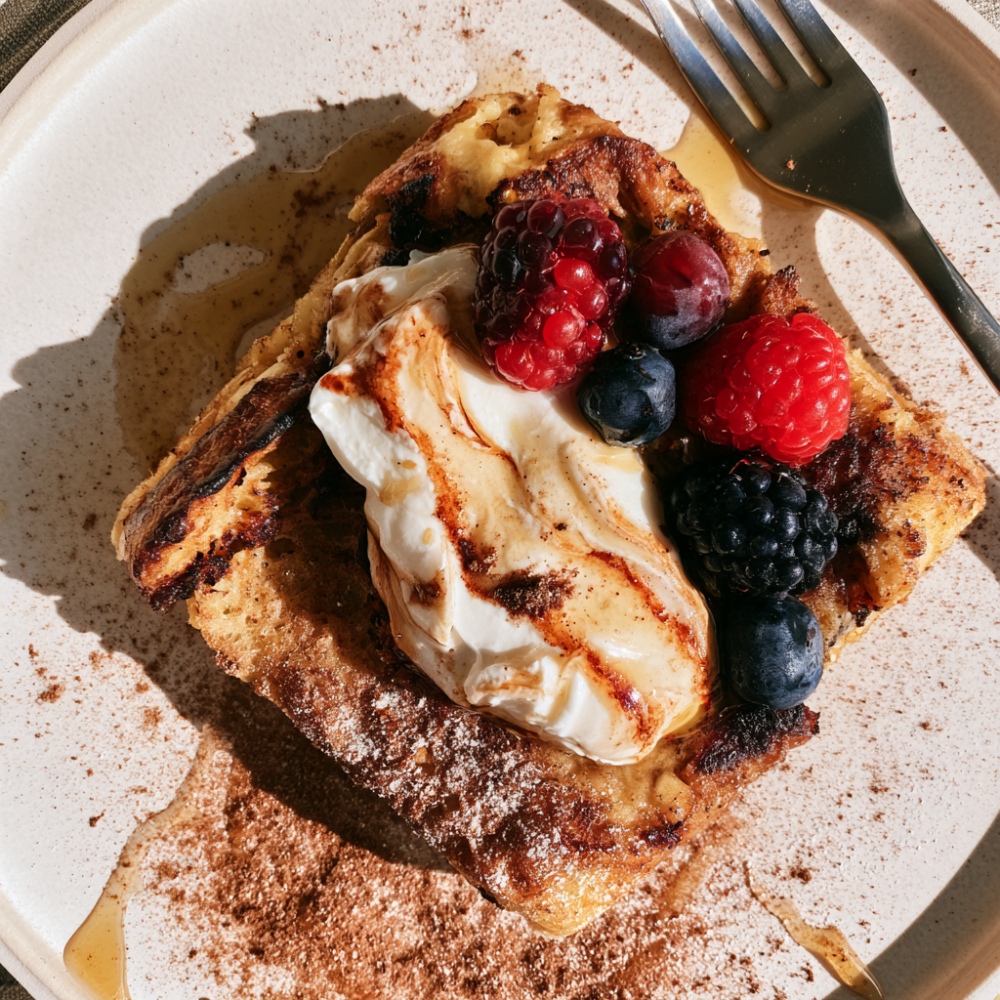
High Protein French Toast with Eggs (Extra Protein). Add an extra ¼ cup of protein powder and ½ cup of Greek yogurt. Increase the almond milk by ¼ cup. About 30–32g protein per serving.
French Toast with Protein Powder (Chocolate Version). Use chocolate protein powder instead of vanilla. Add 1 tablespoon of cocoa powder to the custard—about 26–28g protein per serving.
Blueberry Protein French Toast Casserole. Scatter 1 cup of fresh blueberries over the bread before adding the custard—about 26–28g protein per serving.
Banana Protein French Toast Casserole. Add 1 mashed ripe banana to the custard and slice another banana over the top before baking—about 26–28g protein per serving.
Protein French Toast Recipe (Stovetop Version). Skip the casserole. Dip thick-cut bread slices in the custard and cook them in a buttered skillet over medium heat for 3–4 minutes per side. About 20–22g protein per serving.
Storage and Food Safety
Refrigerator: Store cooled casserole in an airtight container for up to 4 days. Reheat individual squares in the microwave for 60–90 seconds or in a toaster oven at 350°F for 8–10 minutes.
Freezer: Cut into squares, wrap individually, and freeze for up to 3 months. Reheat in the microwave or toaster oven.
Reheating: The microwave is fastest. A toaster oven gives you a crisper top. Add a splash of maple syrup or a pat of butter before reheating if it seems dry.
Food safety: Cook until the custard reaches 165°F in the center. Refrigerate leftovers within 2 hours. Reheat leftovers to 165°F.
Frequently Asked Questions
How much protein is in each serving?
About 26–28 grams per serving, depending on your protein powder, Greek yogurt, and bread brands. Most of it comes from the eggs, protein powder, and Greek yogurt.
What kind of bread should I use?
Thick-cut whole grain bread, brioche, challah, or sourdough all work. Use stale or day-old bread for the best texture. Avoid thin sandwich bread, which disintegrates.
Can I use fresh bread?
Yes, but dry it out first. Spread the slices on a sheet pan and leave them out for an hour, or toast them lightly in a 300°F oven for 5–8 minutes.
Why did my casserole turn out mushy?
The bread was too fresh, or it soaked too long. Use stale bread and don’t soak longer than overnight.
Why did my casserole turn out dry?
Not enough custard, or it baked too long. Use the full amount of custard and check the center at 40 minutes.
Can I use a different protein powder?
Yes, but different powders behave differently. Whey-casein blends work best. Whey alone can turn grainy. Plant-based can turn gummy. Adjust the liquid as needed.
Can I make this without protein powder?
Yes. Skip the protein powder and add an extra ½ cup of Greek yogurt and ¼ cup of almond milk. About 18–20g protein per serving.
Can I make this dairy-free?
Yes. Use dairy-free Greek yogurt, dairy-free protein powder, and coconut oil instead of butter—about 24–26g protein per serving.
Can I make this gluten-free?
Yes, if you use gluten-free bread and a gluten-free protein powder. About 26–28g protein per serving.
Can I make this vegan?
Yes. Use flax eggs (2 tablespoons ground flax + 6 tablespoons water per egg), dairy-free yogurt, and a plant-based protein powder. About 20–22g protein per serving.
Can I double this recipe?
Yes. Use two 9×13 dishes and double all ingredients. Bake both at once and rotate the pans halfway through.
How long does this last in the refrigerator?
Up to 4 days in an airtight container.
How long does this last in the freezer?
Up to 3 months wrapped individually.
Can I eat this cold?
Yes, though it’s much better warm. The custard firms up significantly when cold.
What goes with protein French toast casserole?
Greek yogurt, fresh berries, maple syrup, a dusting of cinnamon, or a side of scrambled eggs for extra protein.
More High-Protein Breakfast Recipes You’ll Love
- Greek Yogurt Blueberry Protein Waffles
- High-Protein Sheet Pan Pancakes
- 10 High-Protein Pancakes That Taste Like the Real Thing (No Powdery Texture!)
- Cranberry Orange Protein Baked Oatmeal Squares
Conclusion
This maple pecan protein French toast casserole is the weekend breakfast that works on a weekday.
Thick-cut whole grain bread soaked overnight in a high-protein custard made with eggs, Greek yogurt, and vanilla protein powder, topped with toasted pecans and a light maple drizzle, then baked until golden and puffed. About 26–28 grams of protein per serving.
The keys are simple: use stale or day-old bread, cut it into even cubes, whisk the protein powder into the milk first, press the bread down into the custard, soak overnight in the refrigerator, toast the pecans before adding them to the topping, cover with foil for the first 25 minutes, and let it rest for 10 minutes before slicing.
That way, you’ll have a French toast casserole that tastes like a weekend treat but works like a meal-prep breakfast.
Assemble it on Saturday night, bake it on Sunday morning, and reheat the leftovers all week.