Looking for a breakfast that’s filling, family-friendly, easy to prep, and actually high in protein? These protein waffles fit the bill.
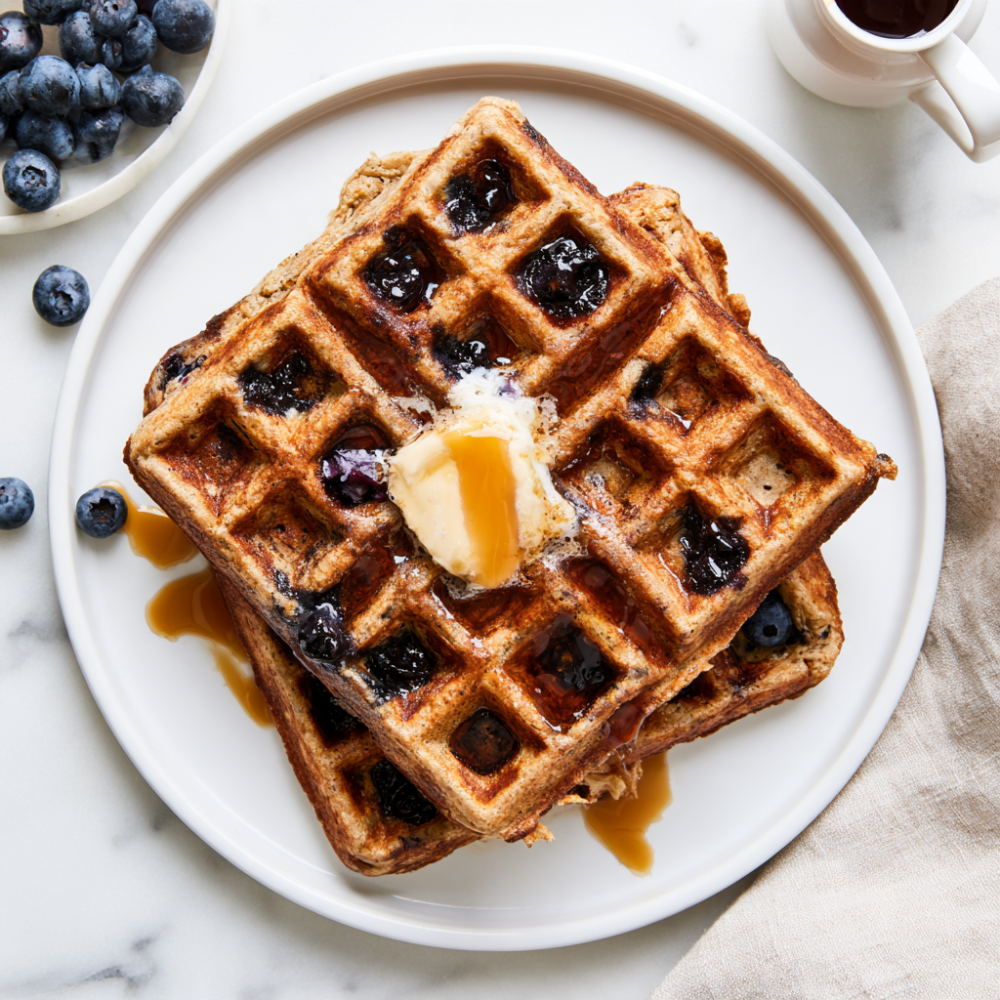
They’re fluffy, golden, and studded with juicy blueberries, made with creamy Greek yogurt and vanilla protein powder. Each two-waffle serving has about 22–23 grams of protein, and they freeze beautifully for busy mornings.
The trick is the formula. Most protein waffle recipes dump in a huge amount of protein powder, which produces dense, rubbery waffles that taste like a supplement. This version uses a moderate amount of protein powder alongside oat flour, which gives you structure, lift, and a texture that actually tastes like a waffle. The Greek yogurt adds moisture and protein.
The best part is that they’re genuinely freezer-friendly. Make a batch on Sunday, cool them on a wire rack, freeze them flat, and reheat in the toaster on a weekday morning. You get a warm, crisp waffle in about 4 minutes without touching the waffle iron.
Two things decide whether these turn out fluffy and crisp or dense and rubbery, and neither is optional.
Don’t replace the oat flour with more protein powder. Protein powder alone makes rubbery waffles. The oat flour gives structure, lift, and the texture that makes a waffle taste like a waffle.
Cook them longer than you think. Protein waffles look done before they are. Pull them when they’re deeply golden and crisp at the edges, not when they’re pale and just barely set.
Everything else is forgiving, flexible, and takes about 15 minutes of actual work.
Why This Recipe Works
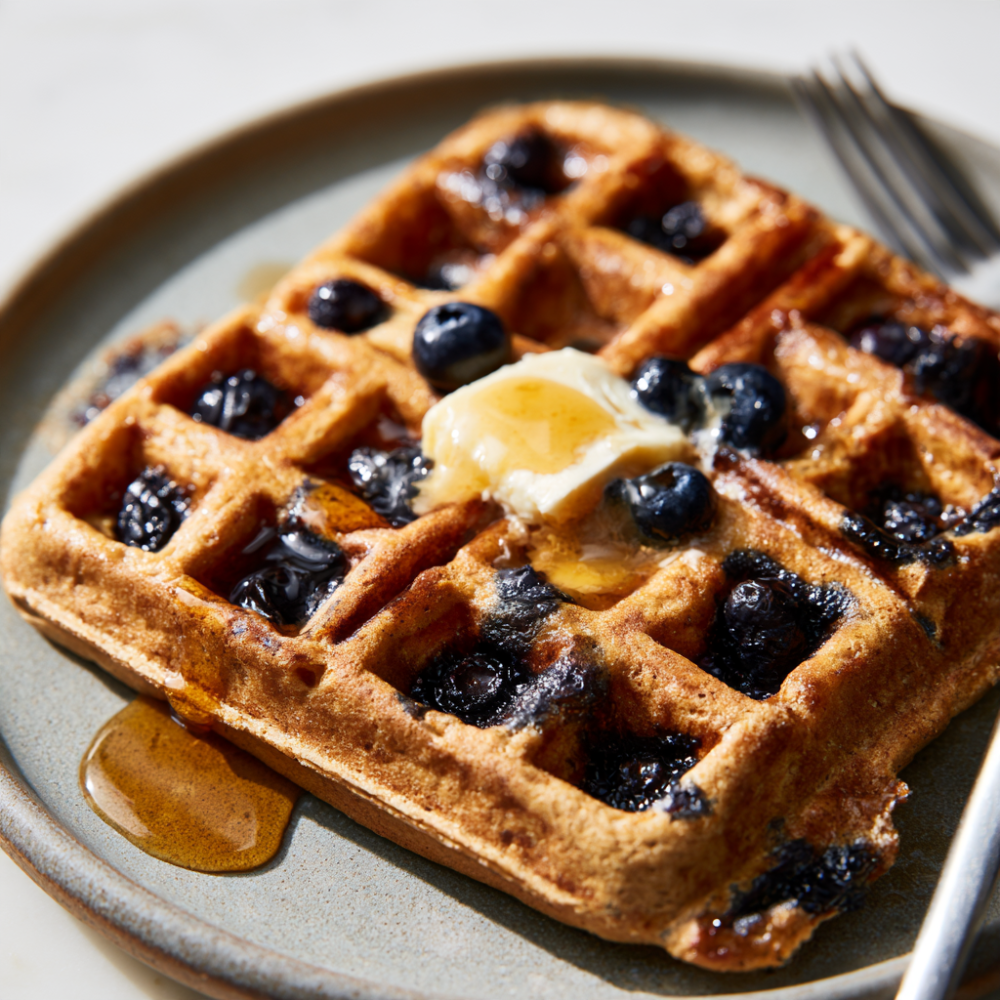
Greek yogurt adds moisture and protein at once. A cup of plain Greek yogurt adds about 20 grams of protein to the batch and keeps the waffles tender without making them wet. It also adds a slight tang that balances the blueberries’ sweetness.
The oat flour-to-protein powder ratio is what makes the texture work. Oat flour gives the waffles structure, lift, and a slightly hearty texture. Protein powder adds protein and sweetness. One cup of oat flour to ⅓ cup of protein powder is the sweet spot — enough protein to matter, enough flour to keep the waffle fluffy.
The batter is not protein-powder-heavy relative to its liquid. The recipe uses ½ cup of milk plus 1–2 tablespoons more if needed. This is a substantial increase over most protein waffle recipes and helps keep the batter reliable across different protein powder brands.
Oat flour keeps the waffles tender and slightly nutty. It also adds fiber and slow-release carbs, which keep you full longer than a white-flour waffle.
Baking powder does most of the lifting, and a small amount of baking soda reacts with the Greek yogurt. One and a half teaspoons of baking powder plus ¼ teaspoon of baking soda gives you real rise without making the waffles taste soapy.
Cinnamon and vanilla make the flavor taste intentional. Without them, the waffles taste like plain protein batter. With them, they taste like a blueberry muffin in waffle form.
Fold in fresh blueberries gently at the end—no flouring needed. The berries distribute easily through the batter, giving you little pockets of blueberry flavor in every bite.
Cooling on a wire rack is what keeps them crisp. Stacking warm waffles on a plate traps steam and turns them soft. A wire rack lets the steam escape so the exterior stays crisp.
They freeze and reheat better than almost any breakfast. Freeze them flat, then toast them straight from frozen. They come out crisp on the outside and fluffy on the inside.
Greek Yogurt Blueberry Protein Waffles
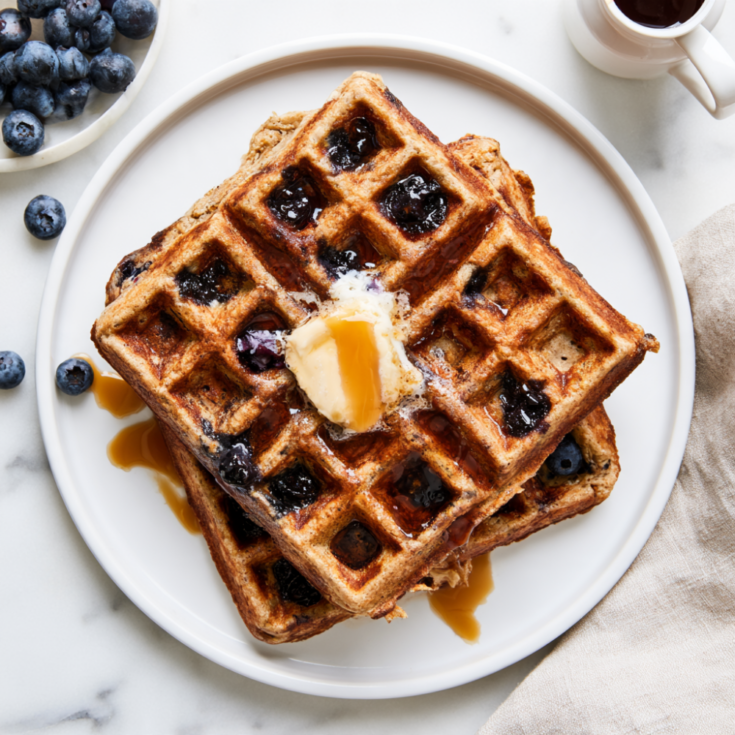
Fluffy, golden waffles made with creamy Greek yogurt and vanilla protein powder, studded with juicy blueberries and cooked until crisp around the edges.
They're high in protein without becoming dense or rubbery, and they freeze beautifully for quick breakfasts.
Ingredients
For the Waffles:
- 1 cup plain Greek yogurt (2% or full-fat)
- 2 large eggs
- ½ cup whole milk or unsweetened almond milk, plus 1–2 tbsp more if needed
- 2 tbsp melted unsalted butter or neutral oil, cooled slightly
- 1 tsp vanilla extract
- 1 cup oat flour
- ⅓ cup vanilla whey-casein protein powder
- 1½ tsp baking powder
- ¼ tsp baking soda
- ½ tsp kosher salt
- 1 tsp ground cinnamon
- 1 cup fresh blueberries
For Serving:
- Pure maple syrup
- Greek yogurt
- Extra fresh blueberries
- Chopped pecans or walnuts
- Butter, optional
Instructions
1. Preheat the waffle iron. Preheat your waffle iron according to the manufacturer's instructions, using a medium-high setting if it has temperature controls. Let it fully preheat before adding any batter. Lightly grease the plates with cooking spray or a small amount of melted butter or oil.
A fully preheated waffle iron is the difference between a crisp waffle and a soggy one.
2. Mix the wet ingredients. In a large bowl, whisk together the Greek yogurt, eggs, milk, melted butter, and vanilla until smooth.
Let the melted butter cool slightly before adding it so it doesn't partially cook the eggs.
3. Mix the dry ingredients. In a separate bowl, whisk together the oat flour, protein powder, baking powder, baking soda, salt, and cinnamon. Break up any clumps of protein powder with your fingers or a whisk — this gives you a more evenly textured batter.
4. Make the batter. Add the dry ingredients to the wet ingredients. Stir gently with a spatula just until no large pockets of dry flour remain. Don't aggressively beat the batter.
Let the batter rest for 5 minutes. After resting, the batter should be thick but easily scoopable and spreadable — thicker than regular pancake batter but not stiff.
If the batter seems unusually thick, add milk 1 tablespoon at a time until it reaches the proper consistency. If your protein powder is particularly absorbent, you may need the additional 1–2 tablespoons of milk.
5. Add the blueberries. Gently fold the blueberries into the rested batter. Don't overmix. A few berries may break, which is fine and will give the waffles little pockets of blueberry flavor.
For easier waffle removal, avoid putting a large concentration of blueberries directly around the outer edge of each waffle.
6. Cook the waffles. Scoop enough batter into the center of the preheated waffle iron to fill the plates without overflowing. Depending on the size of your waffle iron, this will usually be about ½ cup of batter per waffle.
Close the lid and cook until the waffle is deeply golden, crisp around the edges, and releases easily from the plates.
This will usually take about 4–6 minutes, but waffle irons vary considerably. Don't rely on the timer alone. If the waffle still looks pale or feels soft when you check it, continue cooking for another 30–60 seconds. A properly cooked waffle should feel crisp when you gently touch the surface and should release without tearing.
7. Transfer to a wire rack. Transfer each cooked waffle to a wire rack immediately. Don't stack hot waffles — trapped steam will soften the crisp exterior.
If you're cooking several batches before serving, you can hold the waffles in a 200°F oven on a wire rack for a short time, but avoid leaving them there too long because protein waffles can dry out.
8. Repeat. Lightly grease the waffle iron again only if the plates begin to look dry or the waffles start sticking. Continue cooking until you use all the batter.
9. Serve. Serve the waffles warm with maple syrup, Greek yogurt, fresh blueberries, chopped nuts, and butter if desired. For extra crispness, place the finished waffles in a toaster or air fryer for a minute or two immediately before serving.
Notes
Protein per Serving: About 22–23g
Nutrition note: Protein and calories vary by protein powder, Greek yogurt, flour, and milk brands. Estimated per two-waffle serving: ~360 calories, 22–23g protein, ~38 g carbs, ~13 g fat. Calculate with your specific products for the most accurate numbers.
Make-ahead: Cool the waffles completely on a wire rack before refrigerating. Store in an airtight container in the refrigerator for up to 4 days. Reheat in a toaster, toaster oven, or air fryer until heated through and crisp.
Freezer: Cool the waffles completely. Arrange them in a single layer on a sheet pan and freeze for about 1 hour, until firm. Transfer the frozen waffles to a freezer-safe bag or container and freeze for up to 3 months. Reheat directly from frozen in a toaster, toaster oven, or 350°F air fryer. No thawing is necessary.
Recipe Notes
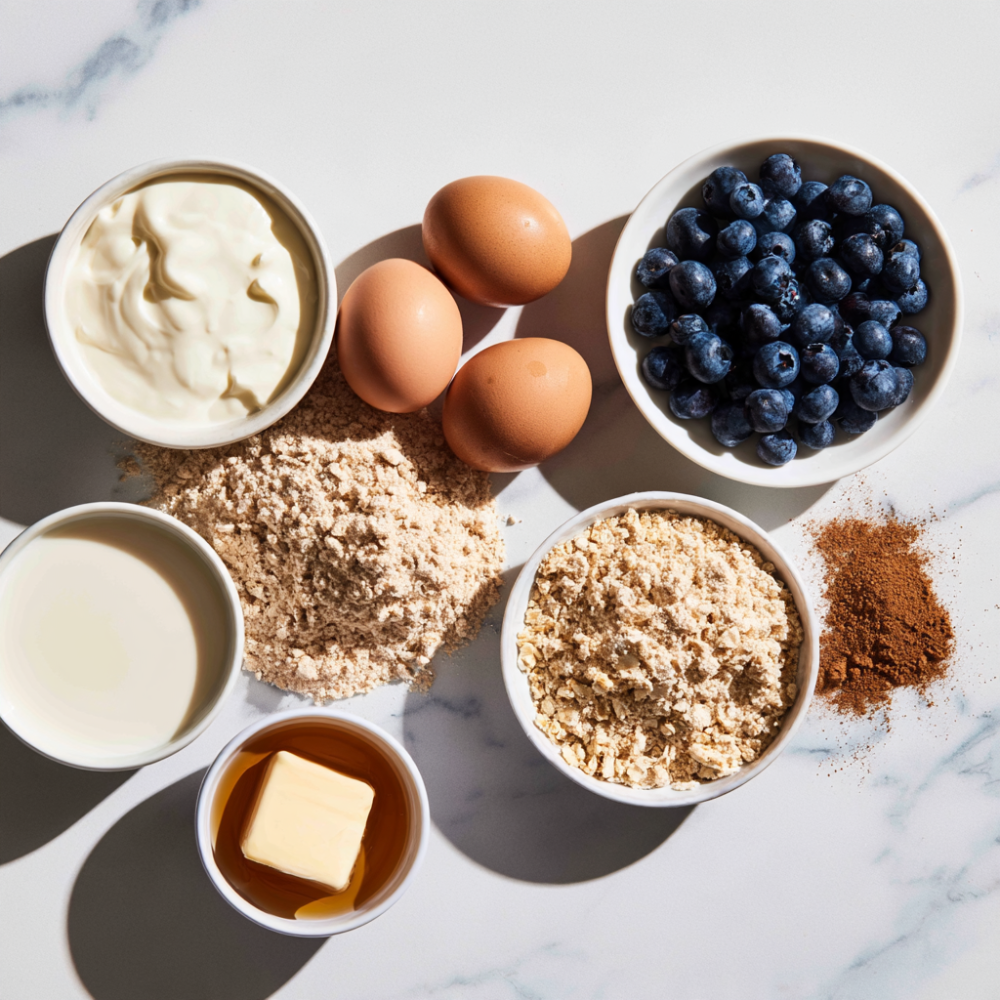
Use a whey-casein blend for the most predictable texture. Different protein powders absorb liquid very differently. A whey-casein blend bakes the most reliably. If you use a very absorbent protein powder, expect to need an additional tablespoon or two of milk.
Oat flour gives these waffles a tender, slightly hearty texture. All-purpose flour can work, but it will produce a different waffle and may require slightly less liquid. Don’t replace the oat flour and protein powder with equal amounts of another flour and expect identical results.
Fresh blueberries work best. They distribute easily through the batter. If using frozen blueberries, fold them in while still frozen and expect a little extra cooking time.
Don’t overmix the batter. A few small lumps are fine. Overmixing develops gluten and makes the waffles dense.
Cook until deeply golden. Protein waffles can look finished on the outside before the interior has fully set.
Always cool waffles on a wire rack rather than stacking them. Trapped steam softens the crisp exterior.
Tips for the Best Protein Waffles

- Preheat the waffle iron fully, at least 5 minutes, before you put the first waffle on.
- Don’t replace the oat flour with more protein powder. Protein powder alone makes rubbery waffles.
- Let the batter rest for 5 minutes so the flour and protein powder hydrate.
- Add milk a tablespoon at a time if the batter seems thick. Protein powders absorb different amounts of liquid.
- Fold the blueberries in gently at the end, not at the beginning.
- Keep blueberries away from the waffle’s outer edge for easier removal.
- Cook the waffles longer than you think. They should be deeply golden, not pale.
- Cool the waffles on a wire rack, not a plate.
- Re-grease the waffle iron between batches if the waffles start sticking.
- Reheat from frozen in the toaster or air fryer for the best texture. The microwave makes them soft.
Easy Variations
Gluten-Free Protein Waffles. Use certified gluten-free oat flour and a gluten-free protein powder—about 22–23g protein per serving.
Oats Waffle Recipe (Healthy, Blended Oats). Replace the oat flour with 1½ cups of rolled oats blended into a fine flour in a blender—about 22–23g protein per serving.
Kodiak Waffle Recipe (Kodiak Mix Version). Replace the oat flour and protein powder with 1½ cups of Kodiak Cakes mix. Skip the baking powder, baking soda, and salt. About 18–20g protein per serving.
Low Carb Waffle Recipe (Almond Flour). Replace the oat flour with 1 cup of almond flour. Add an extra egg. About 20–22g protein per serving.
Chocolate Chip Protein Waffles. Swap the blueberries for ½ cup of mini chocolate chips—about 22–23g protein per serving.
Strawberry Protein Waffles. Swap the blueberries for 1 cup of diced fresh strawberries, patted dry—about 22–23g protein per serving.
Banana Protein Waffles. Add 1 mashed ripe banana to the wet ingredients and reduce the milk to ⅓ cup—about 22–23g protein per serving.
Chaffles Recipe Breakfast (Savory Version). Skip the blueberries, cinnamon, and vanilla. Add ½ cup of shredded cheddar and ½ teaspoon of garlic powder—about 24–26g protein per serving.
Protein Waffles with Protein Powder (Extra Protein). Add an extra 2 tablespoons of protein powder and 2 tablespoons of milk—about 25–27g protein per serving.
Healthy Waffles for Kids. Cut the cooked waffles into strips or small squares. Serve with Greek yogurt for dipping instead of syrup—about 22–23g protein per serving.
Meal Prep Healthy Waffles. Double the batch, freeze the waffles flat, and reheat two at a time in the toaster throughout the week—about 22–23g protein per serving.
Storage and Food Safety
Refrigerator: Cool completely, then store in an airtight container for up to 4 days. Reheat in a toaster or toaster oven until crisp.
Freezer: Freeze the cooled waffles in a single layer on a sheet pan for 1 hour, then transfer to a freezer-safe bag. Freeze for up to 3 months.
Reheating: Reheat straight from frozen in a toaster or air fryer at 350°F for 4–5 minutes, until crisp. The microwave makes them soft, so avoid it if you want a crisp exterior.
Food safety: Cook waffles until the internal temperature reaches 165°F. Refrigerate leftovers within 2 hours. Reheat leftovers to 165°F.
Frequently Asked Questions
How much protein is in each serving?
About 22–23 grams per two-waffle serving, depending on your protein powder and Greek yogurt brands.
Why did my waffles turn out rubbery?
Too much protein powder relative to the flour, or overmixing the batter. Keep the flour in the recipe and stir until just combined.
Why did my waffles turn out dense?
The batter was overmixed, the batter didn’t rest long enough, or the protein powder absorbed too much liquid. Stir gently, let the batter sit for 5 minutes, and add milk a tablespoon at a time if it seems thick.
Why did my waffles turn out pale and soft?
They weren’t cooked long enough. Protein waffles need to be deeply golden and crisp. Cook them 1–2 minutes longer than you think.
Can I use frozen blueberries?
Yes, but don’t thaw them first. Fold them in frozen and expect a little extra cooking time.
Can I make these without protein powder?
Yes. Replace the protein powder with an extra ⅓ cup of oat flour. The protein drops to about 14–16g per serving.
Can I make these without Greek yogurt?
Yes. Use an equal amount of cottage cheese blended until completely smooth. The texture will be slightly different, but the protein is similar.
Can I make these gluten-free?
Yes, if you use certified gluten-free oat flour and a gluten-free protein powder.
Can I make these dairy-free?
Yes. Use dairy-free Greek yogurt, dairy-free protein powder, and coconut oil instead of butter. Use unsweetened almond milk.
Can I make these vegan?
Yes. Use flax eggs (2 tablespoons ground flax + 6 tablespoons water per egg), dairy-free yogurt, and a plant-based protein powder. The texture will be slightly different but still good.
Can I make these in a regular waffle iron?
Yes. This recipe works in a standard waffle iron, a Belgian waffle iron, or a mini waffle maker. Adjust the batter amount per waffle to fit your iron.
How long do these last in the refrigerator?
Up to 4 days in an airtight container.
How long do these last in the freezer?
Up to 3 months in a freezer-safe bag.
Can I reheat these in the microwave?
Yes, but the microwave makes them soft. A toaster or air fryer gives you a much better texture.
Can I double this recipe?
Yes. Double all ingredients and cook in batches. Freeze the extras.
More High-Protein Breakfast Recipes You’ll Love
- High-Protein Sheet Pan Pancakes
- Freezer Breakfast Tacos with Black Beans & Eggs
- Cranberry Orange Protein Baked Oatmeal Squares
- Sheet Pan Eggs for Breakfast Sandwiches (Easy Meal Prep Hack)
Conclusion
These Greek yogurt blueberry protein waffles are the breakfast that actually feels like breakfast. Fluffy, golden, and studded with juicy blueberries, with about 22–23 grams of protein per two-waffle serving. They’re crisp on the outside, tender on the inside, and they freeze beautifully.
The keys are simple: keep the oat flour in the recipe, don’t replace it with more protein powder, let the batter rest for 5 minutes, add milk a tablespoon at a time if the batter seems thick, fold the blueberries in gently at the end, preheat the waffle iron fully, cook them longer than you think, and cool them on a wire rack so they stay crisp.
Do that, and you’ll have waffles that taste like a weekend breakfast but work like a weekday meal prep.
Make a batch on Sunday, freeze them flat, and reheat them in the toaster all week.