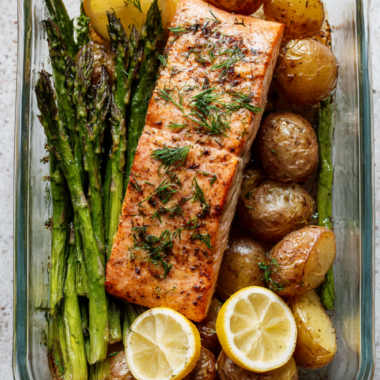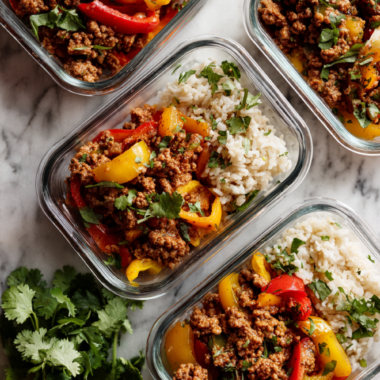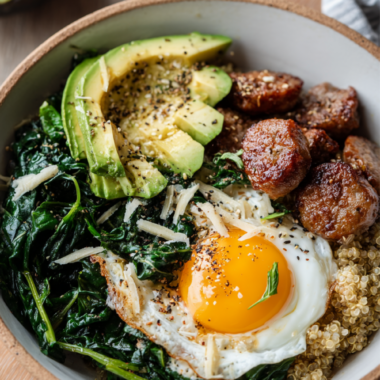

There’s a specific kind of lunchtime despair that happens at 12:30 PM in an office break room. You’re standing in front of a microwave, waiting for a sad container of leftovers to heat up, watching someone else eat a $14 salad.
Mason jar ramen is the fix. You build it on Sunday. You keep it in the fridge. You bring it to work, pour boiling water over the top, wait five minutes, and eat something that tastes as if it came from a ramen shop—with 32 grams of protein and no microwave required.
It takes about 8 minutes to assemble. No cooking. No reheating. Just layer, seal, refrigerate, and add water.
Most mason jar ramen recipes are basically college food in a prettier container—instant noodles, a bouillon cube, and some vegetables. They clock in around 12 grams of protein and leave you hungry by 2 PM. This one fixes that. Real miso paste, fresh ginger, shredded chicken, and edamame stack into a broth that tastes like it simmered all day, in a jar you built in minutes.
Let’s build it.
Why This Recipe Works
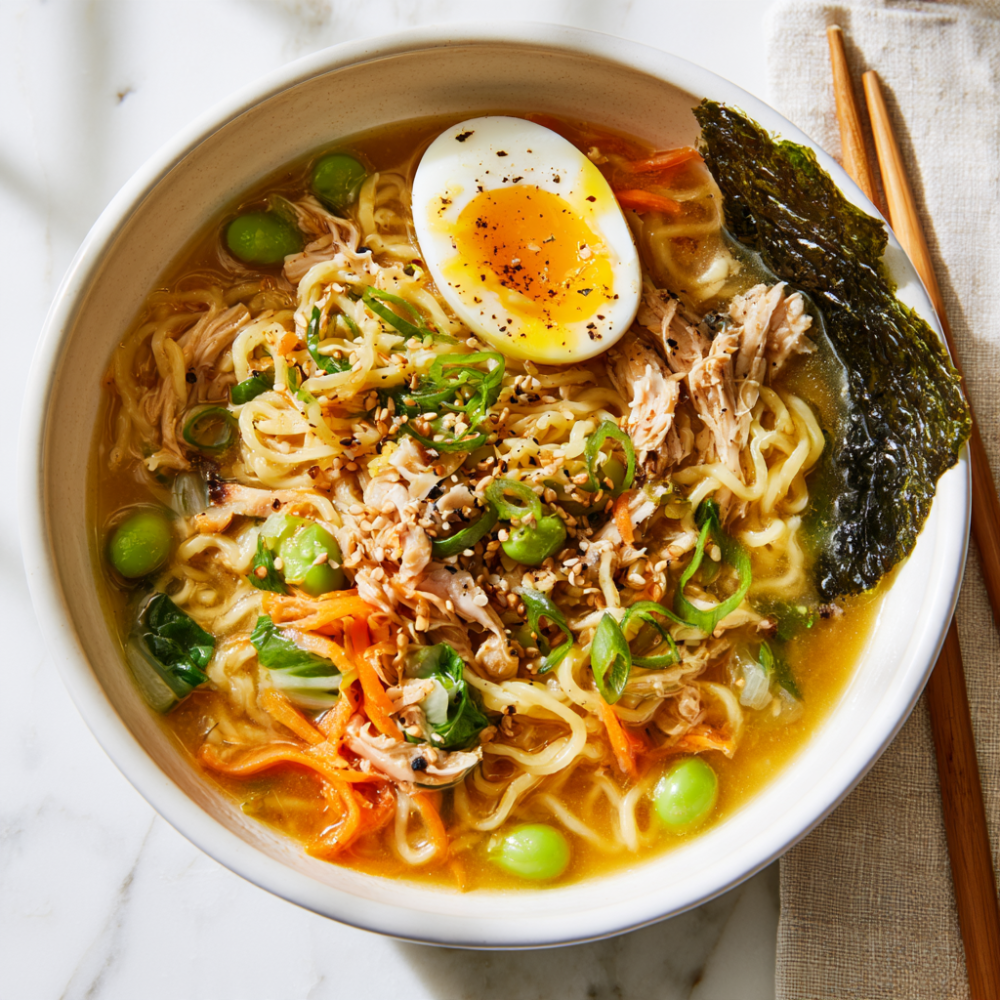
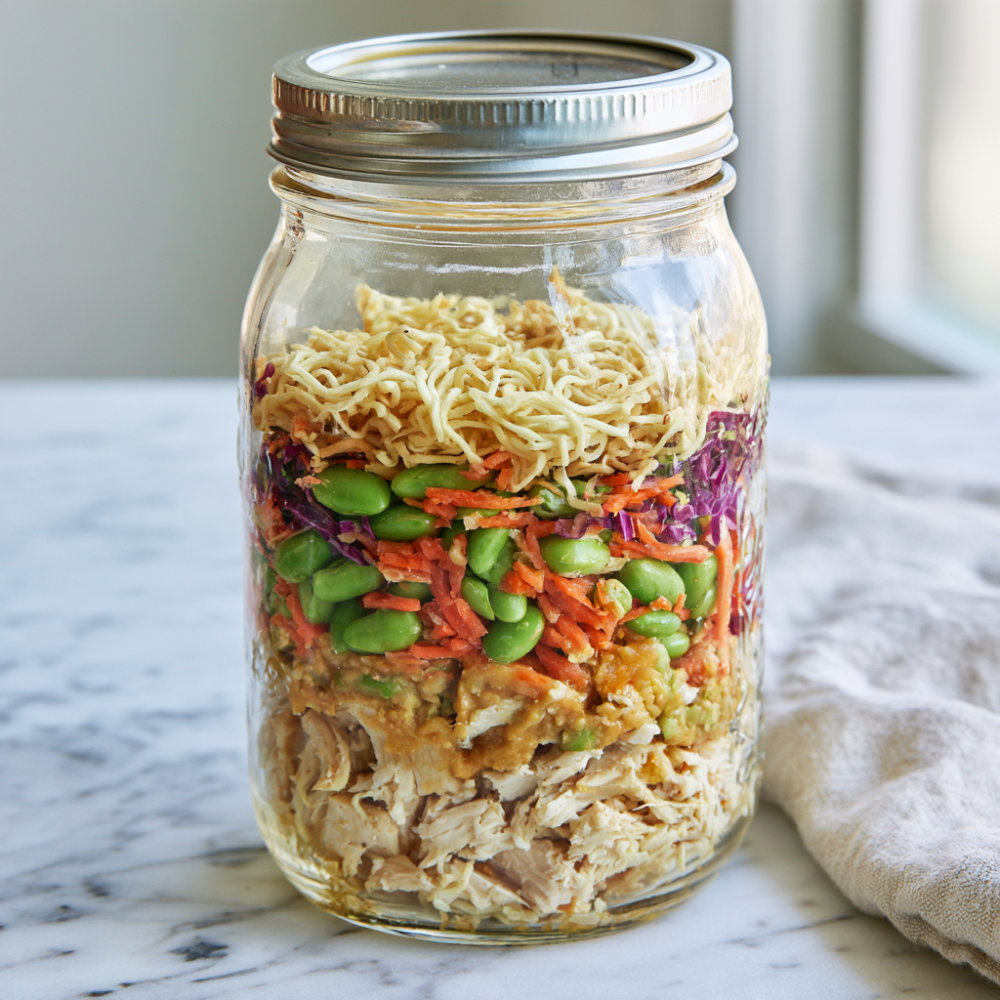
The layering order is everything. Put the flavor paste at the bottom, the chicken in the middle, the vegetables above that, and the noodles on top. When you pour in boiling water, it cascades through every layer, dissolving the miso and cooking the noodles along the way. Layer it wrong, and you get clumps of undissolved miso and raw-tasting noodles.
The bouillon goes into the paste, not on top. A solid bouillon cube sitting on dry noodles barely dissolves in a 5-minute steep—you end up with a bland broth and a salty chunk at the bottom of the jar. Mixing bouillon paste into the flavor layer guarantees it dissolves instantly when the water hits.
Dry noodles go in the jar, not cooked noodles. Dry ramen noodles sit in the jar for days without getting soggy because there’s no moisture to absorb yet. Cooked noodles would turn to paste by day two. That’s why the method works.
Thin, quick-cooking noodles rehydrate fully. Standard thick wavy ramen blocks are designed to boil for 3 minutes in a rolling pot of water. Steeped in a jar, they can stay crunchy in the center. Thin air-dried ramen, ramen-style rice noodles, or millet noodles soften completely in 5 minutes without active boiling.
Add the chicken cold and fully cooked. Shredded rotisserie chicken or poached chicken breast, cold from the fridge, is safe to eat after a 5-minute steep in boiling water. Never put raw meat in a mason jar—boiling water won’t cook it through.
Boiling water means boiling water. Not hot tap water. Not microwaved water that’s lukewarm. You need a rolling boil, poured directly over the contents, filling the jar almost to the top. Anything less and the noodles won’t soften properly.
Cover and steep for 5 to 7 minutes. The trapped steam is what finishes cooking the noodles and wilts the bok choy. Don’t skip the lid.
Add the soft-boiled egg fresh, not from the jar. Eggs don’t hold up for six days in a jar. Boil them the night before, slice, and add them after the steep. They add 6 grams of protein and make the bowl feel like a real ramen shop order.
Mason Jar Ramen (Miso Ginger Chicken)
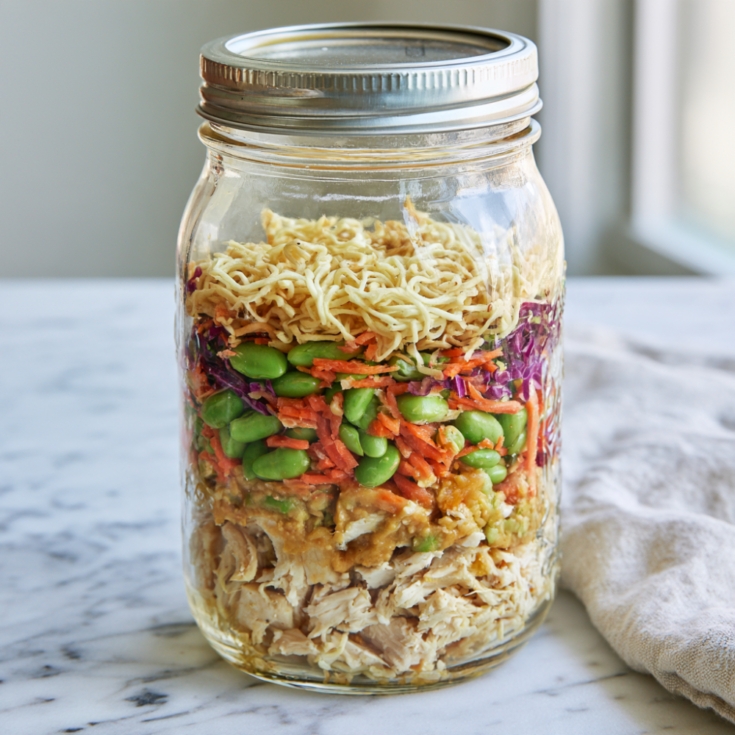
A layered mason jar ramen with white miso, fresh ginger, bouillon paste, shredded chicken, edamame, and bok choy. Just add boiling water, steep for 5 minutes, and eat—32 grams of protein per jar.
Ingredients
For the Flavor Paste (bottom of the jar):
- 1 tbsp white miso paste
- 1 tbsp low-sodium soy sauce (or tamari)
- 1 tsp toasted sesame oil
- ½ tsp fresh ginger, grated
- 1 small clove garlic, grated (optional but recommended)
- 1 tsp bouillon paste (or ½ cube crushed into powder)
For the Dense Protein Layer:
- ½ cup shredded cooked chicken breast (or rotisserie chicken)
For the Vegetables:
- ½ cup shelled edamame
- ½ cup shredded carrots
- 1 cup baby bok choy, chopped (stems and leaves separated if you want them crisper)
- 2 green onions, sliced
For the Top Layer:
- 1 portion (3 oz) thin, quick-cooking dry ramen noodles, seasoning packet discarded
To Serve:
- 2 cups boiling water
- 1 soft-boiled egg, halved (optional, adds 6g protein)
- Toasted sesame seeds
- Chili crisp or sriracha (optional)
Instructions
- Build the flavor paste. Combine the miso paste, soy sauce, sesame oil, grated ginger, grated garlic, and bouillon paste in a 1-quart wide-mouth mason jar. Stir into a smooth, even paste with the back of a spoon. If using a bouillon cube instead of paste, crush it into powder first so it dissolves completely.
- Add the chicken. Layer the shredded chicken directly on top of the paste. It should form a solid layer covering most of the paste.
- Add the hard vegetables. Add the edamame, then the shredded carrots, then the chopped bok choy, then the green onions. Press down gently so everything settles into an even layer.
- Add the noodles. Break the dry ramen noodles in half and place them on top of the vegetables. They should sit at the top of the jar, not pressed down into the vegetables.
- Seal and refrigerate. Screw the lid on tightly and refrigerate for up to 6 days.
- When ready to eat, bring water to a boil. Bring 2 cups of water to a rolling boil. Pour it directly into the jar, filling it almost to the top. The water should cascade down through the noodles, vegetables, chicken, and into the flavor paste at the bottom.
- Cover and steep. Place the lid loosely on top (don't seal it—steam needs to escape) and let it steep for 5–7 minutes.
- Stir and finish. Stir thoroughly with a chopstick or long spoon, scraping the bottom to dissolve the miso and bouillon completely. Taste and adjust with more soy sauce if needed. Top with a halved soft-boiled egg, sesame seeds, and chili crisp if using.
- Eat straight from the jar, or pour into a bowl—either works. A bowl lets you see everything and cools it down faster.
Notes
Protein per Jar: About 32g (38g with a soft-boiled egg)
Nutrition note: Estimated per jar with shredded chicken breast, edamame, dry ramen noodles, and the miso-ginger paste: ~490 calories, 32g protein, 52g carbs, 14g fat. Adding one soft-boiled egg brings it to ~560 calories and 38g protein.
Tips for the Best Mason Jar Ramen
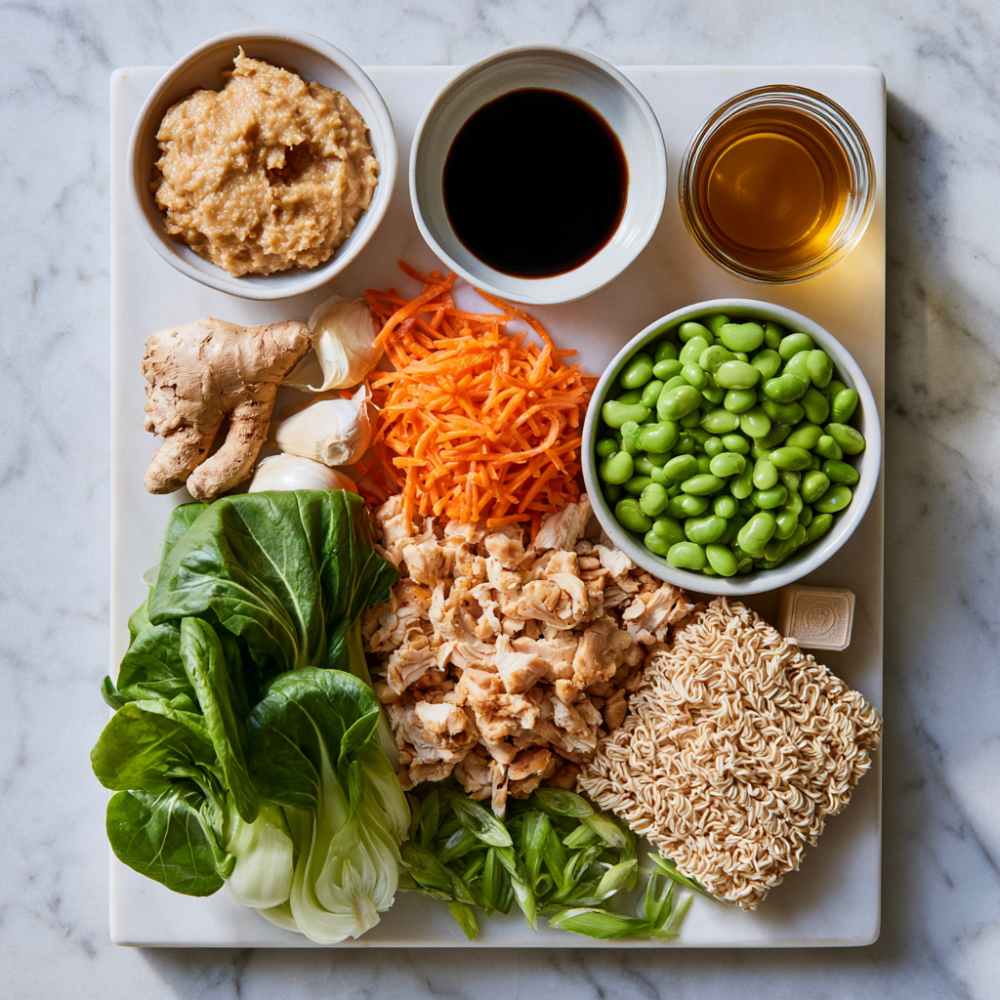
Use bouillon paste, not cubes. A solid cube sitting on top of dry noodles won’t fully dissolve in a 5-minute steep. Paste dissolves instantly when the water hits it, and mixing it into the flavor paste guarantees a smooth, rich broth from the first sip.
Choose thin, quick-cooking noodles. Standard thick wavy ramen blocks are designed to boil for 3 minutes in a rolling pot of water. Steeped in a jar, they can stay crunchy in the center. Look for thin air-dried ramen, ramen-style rice noodles, or millet noodles—they rehydrate fully in 5 minutes.
Use a 1-quart wide-mouth jar. Anything smaller won’t fit the noodles plus 2 cups of water. Wide-mouth matters because you need to get the noodles in and the finished ramen out.
Layer in the correct order. Paste at the bottom, protein next, then vegetables, then noodles on top. This order helps the broth dissolve properly.
Use dry noodles, never cooked. Dry ramen noodles sit in the jar for days without getting soggy. Cooked noodles turn to paste by day two.
Discard the seasoning packet. It’s mostly salt and MSG. Your miso-ginger paste does the work.
Only use cooked protein: shredded rotisserie chicken, poached chicken breast, or leftover roast chicken. Never use raw meat in a jar.
Pour truly boiling water. Not hot tap water. Bring it to a rolling boil and pour it directly into the jar, filling almost to the top.
Cover and steep 5–7 minutes. The trapped steam finishes cooking the noodles. Don’t skip the lid.
Add soft-boiled eggs fresh. Eggs don’t hold up in the fridge for six days. Boil them the night before, slice them, and add them after the steep.
Stir aggressively before eating. The miso paste settles at the bottom. If you don’t stir it into the broth, the first few bites taste bland and the last few taste like pure miso.
Salt at the end, not the beginning. Miso and bouillon are both salty—taste before adding anything else.
Make three or four jars at once. The assembly takes 8 minutes for one jar and 25 minutes for four. Do the whole week in one session.
Troubleshooting
The noodles are still hard after 5 minutes. Your water wasn’t boiling, you didn’t use enough, or your noodles are too thick. Use 2 full cups at a rolling boil, steep for a full 7 minutes, and switch to thin quick-cooking noodles.
The broth tastes watery. Your miso paste didn’t dissolve. Stir more aggressively after the steep, scraping the bottom of the jar with a chopstick or spoon.
The broth tastes weak or has a chalky chunk at the bottom. You used a bouillon cube instead of paste, or you didn’t crush it. Use bouillon paste mixed into the flavor paste, or crush the cube into powder before layering.
The miso clumped at the bottom. You packed the jar too tightly, or the water didn’t reach it. Leave a little space around the paste and pour the water slowly, aiming for the bottom of the jar.
The bok choy got mushy by day four. You packed delicate greens too early. Add the bok choy leaves the morning of if you’re eating this later in the week.
The jar leaked in my bag. You overfilled it, or the lid wasn’t sealed properly. Leave half an inch of headspace and tighten the lid firmly.
The chicken tastes dry. Rotisserie chicken dries out in the fridge. Toss it with a teaspoon of sesame oil before layering.
The jar cracked when I poured boiling water in. You used a jar that wasn’t heat-safe, or you poured into a cold jar straight from the fridge. Let the jar sit at room temperature for 10 minutes before pouring, or use a jar specifically rated for hot liquids.
Easy Variations
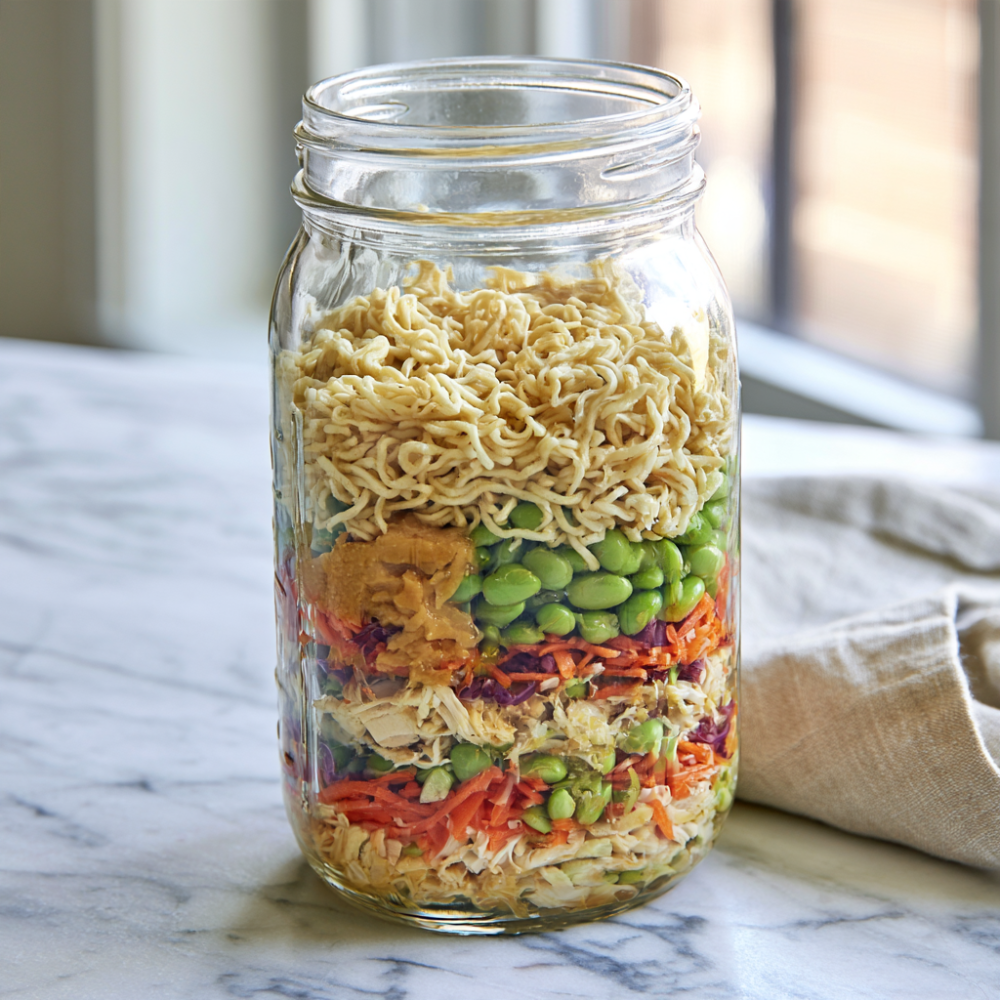
Spicy Miso Ramen Jar. Add 1 tablespoon of chili garlic sauce to the flavor paste.
Shoyu Chicken Ramen Jar. Swap the miso for an extra tablespoon of soy sauce plus 1 tablespoon of mirin. Add a clove of grated garlic.
Coconut Curry Ramen Jar. Swap the miso for 1 tablespoon red curry paste, and add 2 tablespoons coconut milk to the paste.
Peanut Sesame Ramen Jar. Swap the miso for 1 tablespoon peanut butter, 1 tablespoon soy sauce, 1 teaspoon sesame oil, 1 teaspoon rice vinegar, and 1 teaspoon honey.
Tofu Ramen Jar. Swap the chicken for ½ cup of cubed firm tofu, pressed and drained.
Low Carb Ramen Jar. Swap the ramen noodles for shirataki noodles. Add them after the steep—they need to heat through.
Beef Shoyu Ramen Jar. Use cooked shredded beef instead of chicken, and beef bouillon paste instead of chicken bouillon paste.
Vegetarian Ramen Jar. Skip the chicken, use vegetable bouillon paste, and increase the edamame to 1 cup.
Storage and Food Safety
Refrigerator: Assembled jars keep for up to 6 days in the refrigerator. Keep them upright and sealed.
Freezer: Do not freeze assembled jars. The vegetables turn mushy when thawed.
Make Ahead: Build three or four jars on Sunday. They’re designed to be eaten cold from the fridge and finished with boiling water at work.
Food Safety: Only use fully cooked protein. Pouring boiling water over cold, cooked chicken brings it to a safe temperature, but the chicken must already be cooked. Do not eat the jar’s contents if the water wasn’t boiling. Discard any jar that’s been at room temperature for more than 2 hours after adding water.
Frequently Asked Questions
Can I use hot tap water instead of boiling water?
No. Tap water isn’t hot enough to soften the noodles or safely reheat the protein. You need water at a rolling boil.
How long do mason jar ramen jars last in the fridge?
Up to 6 days, sealed and refrigerated.
Can I microwave the jar?
Only if you’re using a microwave-safe jar without a metal lid. Most mason jars are microwave-safe, but remove the lid and any metal bands first. Alternatively, pour the contents into a bowl.
Can I put raw chicken in the jar?
No. The boiling water won’t cook raw chicken through. Always use fully cooked protein.
Why do you use bouillon paste instead of a cube?
A solid cube sitting on top of dry noodles won’t fully dissolve in a 5-minute steep. Paste mixed into the flavor layer dissolves instantly when the water hits.
What’s the best noodle for mason jar ramen?
Thin, quick-cooking dry ramen noodles work best. Standard thick wavy blocks can stay crunchy in the center. Thin air-dried ramen, ramen-style rice noodles, or millet noodles all rehydrate fully in 5 minutes.
Do I have to discard the ramen seasoning packet?
Yes. It’s mostly salt and MSG, and your miso-ginger paste is doing the work.
How much protein is in each jar?
About 32 grams, plus 6 more if you add a soft-boiled egg.
Can I eat these cold?
Technically yes, but they won’t be good. The noodles need the hot water to soften.
Can I make these for a college student?
Yes—that’s one of the best uses. They keep for 6 days, require no cooking equipment, and only need access to a kettle or hot water dispenser.
Can I add the egg to the jar on Sunday?
No. Eggs don’t last 6 days. Add them fresh on the day you eat.
What size jar should I use?
A 1-quart (32-ounce) wide-mouth mason jar. Anything smaller won’t fit the noodles plus 2 cups of water.
More High-Protein Meal Prep Recipes You’ll Love
- Rotisserie Chicken Meal Prep Salads (4 Ways: Sandwiches, Wraps, Bowls & Cups!)
- High-Protein Mason Jar Salads for the Work Week
- Steak & Sweet Potato Power Bowl Salad in a Mason Jar
Conclusion
This mason jar ramen is the lunch that solves the office problem—one jar, built in 8 minutes, sitting in the fridge until you need it. Pour boiling water over the top, wait five minutes, and eat a bowl of ramen with 32 grams of protein—no microwave, no cooking, no sad leftovers.
The keys are simple: mix the bouillon paste into the flavor layer at the bottom, use thin quick-cooking noodles, layer chicken next, then vegetables, then noodles on top. Use only cooked protein. Pour truly boiling water—cover and steep. Stir aggressively before eating. Add the egg fresh.
Build three jars this Sunday. Bring one to work every day. Never eat a sad lunch again.