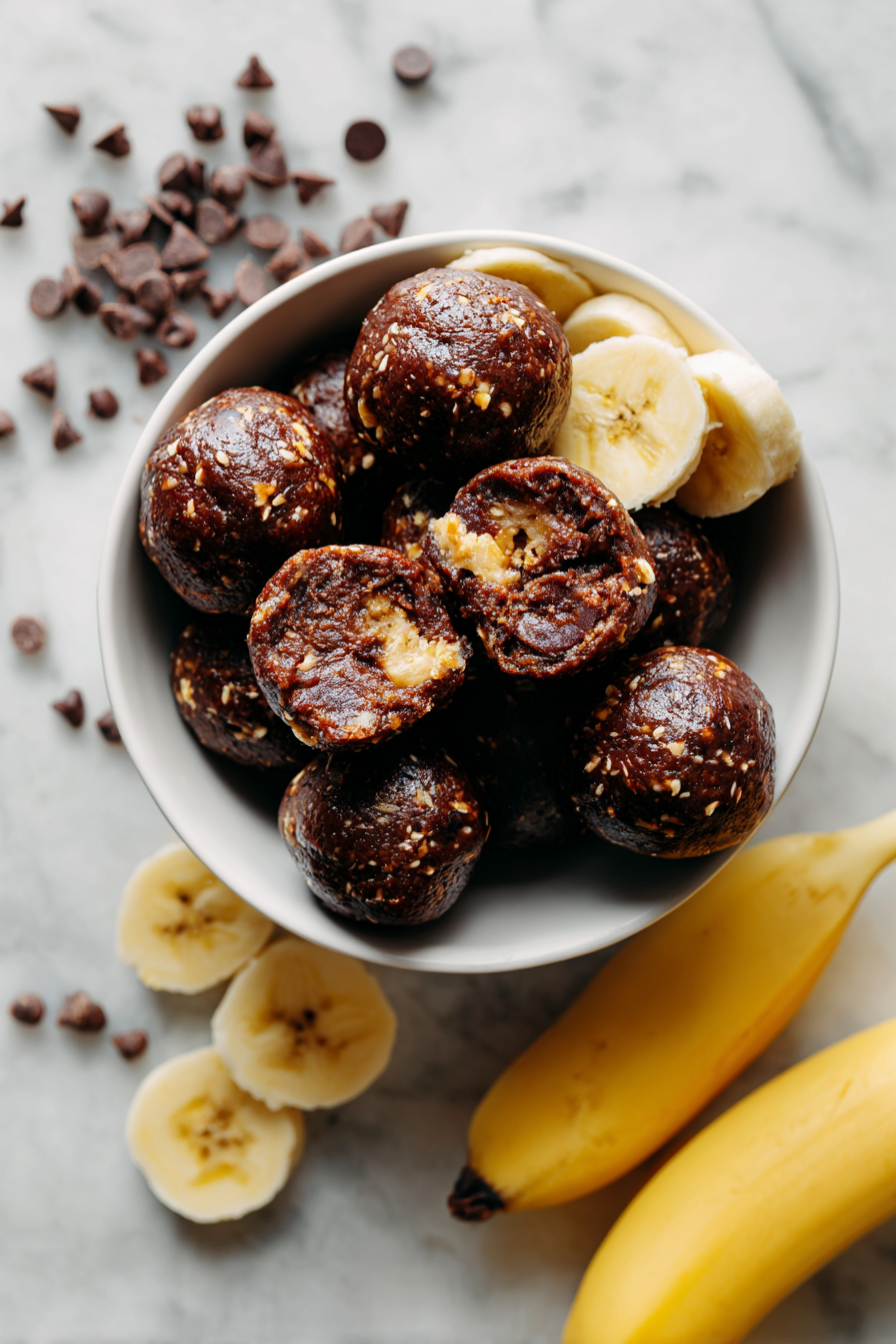

Banana protein balls are the snack I make when I want something that tastes like a brownie bite but actually does something for me.
The first batch I made came out dry and crumbly — I’d used a banana that was still mostly yellow, and there wasn’t enough moisture in it to hold the oats and protein powder together.
The fix was simple: use a banana with heavy brown spotting. That’s the whole trick. A ripe banana is soft, sweet, and wet enough to bind the dough.
The flavor is what makes these disappear.
Ripe banana, creamy peanut butter, Dutch-process cocoa, honey, vanilla, protein powder, oats, and ground flaxseed — it’s a chocolate peanut butter banana situation where the cocoa is doing the heavy lifting on the “fudgy” part.
The banana keeps the texture soft, the peanut butter adds richness, and the protein powder makes it a real snack instead of a cookie.
They taste like the inside of a chocolate peanut butter banana muffin.
The technique is mostly about texture.
The dough needs to be thick and slightly sticky, not wet and not crumbly, before it goes in the fridge.
Forty-five minutes of chilling is what firms it up enough to roll. And the rolling itself is fast — 2-tablespoon portions, rolled between your palms, into 12 balls.
The whole thing takes about 15 minutes of active work plus the chill time.
The batch makes 12 balls, which is 6 servings of two balls each, and each serving comes out at about 15 grams of protein.
It’s a high-protein snack that tastes like a dessert, and it holds four days in the fridge or two months in the freezer.
It’s a banana protein ball that actually earns its place on your snack rotation.
Why This Recipe Works
Banana protein balls go wrong in three specific ways: dough that’s too dry to roll, balls that taste chalky, and a texture that’s more like granola than fudge. Here’s how this version solves each one.
1. Use a Very Ripe Banana
The banana is the binder in this recipe. A yellow banana with no spots is starchy and dry — it doesn’t have enough moisture or sugar to hold the oats and protein powder together, and the finished balls come out crumbly. A banana with heavy brown spotting is soft, sweet, and wet enough to bind the dough. The riper the banana, the fudgier the ball.
2. Make a Chocolate Paste Before the Dry Ingredients
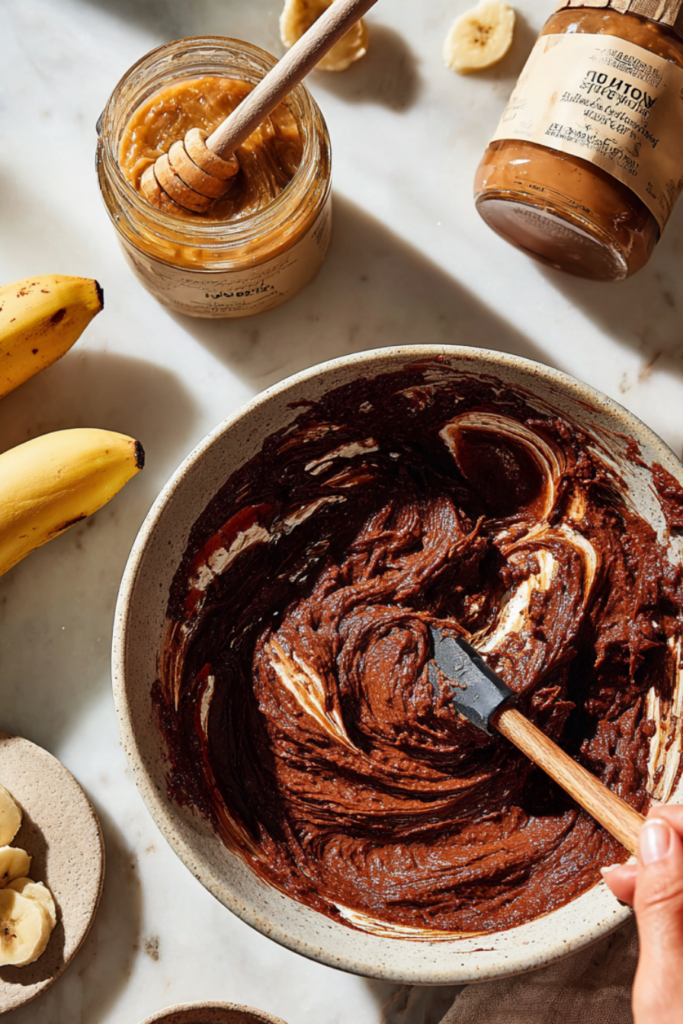
The cocoa powder, peanut butter, banana, honey, vanilla, and salt get mixed together first into a thick, glossy chocolate paste before the oats, protein powder, and flaxseed go in. That’s what prevents dry cocoa pockets and gritty clumps — the cocoa blooms into the wet ingredients instead of sitting dry against the oats.
3. Ground Flaxseed Binds the Dough Without Adding Grit
Ground flaxseed absorbs moisture and gels, which is what binds the dough together and gives it the structure to roll into balls. It also adds fiber and a subtle nutty flavor that fits the chocolate peanut butter profile. Without it, the dough would be crumbly and the balls would fall apart. The “1 tablespoon of oats or 1 teaspoon of peanut butter” adjustment is the dial for getting the texture right.
Ingredients That Matter
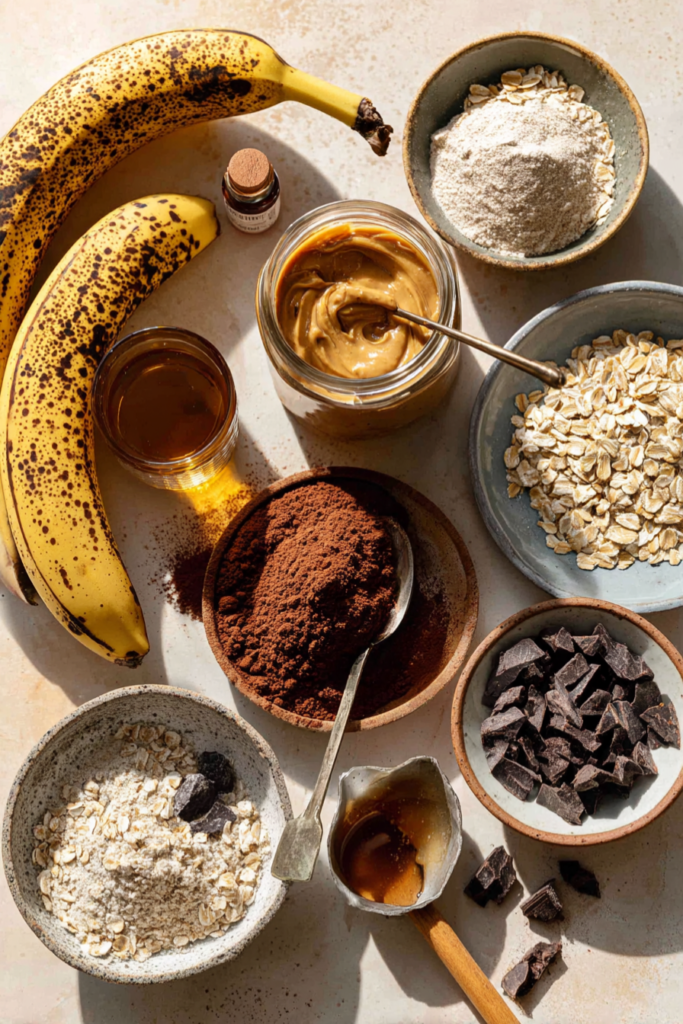
One medium ripe banana. The browner the spots, the better. A banana with heavy spotting is soft, sweet, and wet enough to bind the dough. Mash it thoroughly — no large chunks.
Creamy natural peanut butter. Half a cup, well stirred. Natural peanut butter is runnier than conventional, which is why the recipe relies on flaxseed to bind. Stir it thoroughly before measuring.
Dutch-process cocoa powder. Three tablespoons. Dutch-process cocoa is darker, smoother, and less acidic than natural cocoa — it tastes like brownies instead of unsweetened chocolate. It’s what gives the balls their fudgy color and flavor.
Honey or maple syrup. Two tablespoons. Honey is thicker and holds the dough together better. Maple syrup is thinner and makes the dough looser — if you use it, add an extra tablespoon of oats.
Old-fashioned rolled oats. One cup. Rolled oats hydrate and bind; instant oats turn to mush, and steel-cut stay hard.
Vanilla or chocolate whey/casein blend protein powder. 50 grams, about 1½ scoops. The whey/casein blend gives a more tender texture than whey alone. Vanilla is the default for flavor; chocolate makes the balls more intensely chocolatey.
Ground flaxseed. Two tablespoons. The binder. Ground flaxseed is what holds the dough together and gives it the structure to roll into balls. Don’t substitute whole flaxseed — it won’t gel the same way.
Optional: mini dark chocolate chips. Two tablespoons. For texture and extra chocolate. Skip them if you want a lower-calorie version.
Pure vanilla extract and a pinch of fine sea salt. Half a teaspoon and a small pinch. The vanilla rounds out the flavor; the salt makes the chocolate taste like chocolate.
How to Make Banana Protein Balls
(See the recipe card below — the steps are identical and the card is the single source of truth.)
Tips and Troubleshooting
The dough is dry and crumbly. The banana wasn’t ripe enough, or the protein powder absorbed more liquid than expected. Stir in 1 teaspoon of peanut butter at a time until the dough holds together.
The dough is too wet to roll. The banana was very large, or the peanut butter was extra runny. Add 1 tablespoon of oats at a time until the dough firms up.
The balls won’t hold together. The dough wasn’t chilled long enough, or the flaxseed was skipped. Chill the full 45 minutes, and don’t skip the flax — it’s the binder.
The balls taste chalky. The protein powder is a strongly flavored brand, or the salt was left out. Salt rounds out the protein flavor; a milder powder or a half scoop of unflavored plus a half scoop of vanilla also helps.
The balls taste too sweet. Maple syrup instead of honey, or too much honey. Use honey and measure carefully — don’t eyeball it.
The balls taste bitter. Natural cocoa was used instead of Dutch-process, or the cocoa was over-measured. Dutch-process is smoother and less bitter. Measure the cocoa level.
The banana flavor is barely there. The banana wasn’t ripe enough, or it was under-mashed. Use a banana with heavy spotting and mash it thoroughly.
The chocolate chips melted into the dough. The dough was too warm when the chips went in. Fold them in last, after the dough has come together, and use mini chips straight from the fridge.
Substitutions and Swaps
Whey/casein blend → whey isolate. Same quantity, but the texture is slightly less tender. Add an extra tablespoon of peanut butter to compensate.
Whey/casein blend → plant-based protein. Same quantity, but add a splash of milk — plant proteins absorb more liquid.
Peanut butter → almond butter or sunflower seed butter. Same quantity, well stirred. Almond butter is slightly drier (add 1 tablespoon of milk); sunflower butter is slightly runnier (add 1 tablespoon of oats). Sunflower butter makes the recipe nut-free.
Honey → maple syrup. Same quantity, but thinner dough. Add 1 tablespoon of oats.
Dutch-process cocoa → natural cocoa powder. The flavor is sharper and slightly more acidic. Increase the honey by a teaspoon to compensate.
Ground flaxseed → chia seeds. Same quantity, ground. Chia gels similarly but slightly less strongly.
Rolled oats → quick oats. Same quantity, but the texture is softer and the dough needs less chill time. Rolled oats are the better choice.
For a PB2 version: substitute ½ cup of PB2 (powdered peanut butter) reconstituted with water per the package directions for the peanut butter. The dough will need slightly less added liquid. Captures the “PB2 protein balls” keyword.
For a no-oat version: skip the oats and add an extra 2 tablespoons of protein powder plus 2 tablespoons of ground flaxseed. The texture is denser and fudgier. Captures the “protein balls without oats” keyword.
Storage and Reheat
Refrigerate the balls in a glass airtight container for up to 4 days.
Freeze in a single layer on a baking sheet until firm, then transfer to a freezer-safe zip-top bag for up to 2 months.
Thaw at room temperature for 5 to 10 minutes before eating for a soft, brownie-batter fudge texture.
No reheating needed. These are a no-bake, eat-cold snack.
Food safety: these are a no-bake recipe with no raw eggs or meat, so the main concern is storage time. Keep them refrigerated and eat within 4 days.
Chocolate Peanut Butter Banana Energy Balls
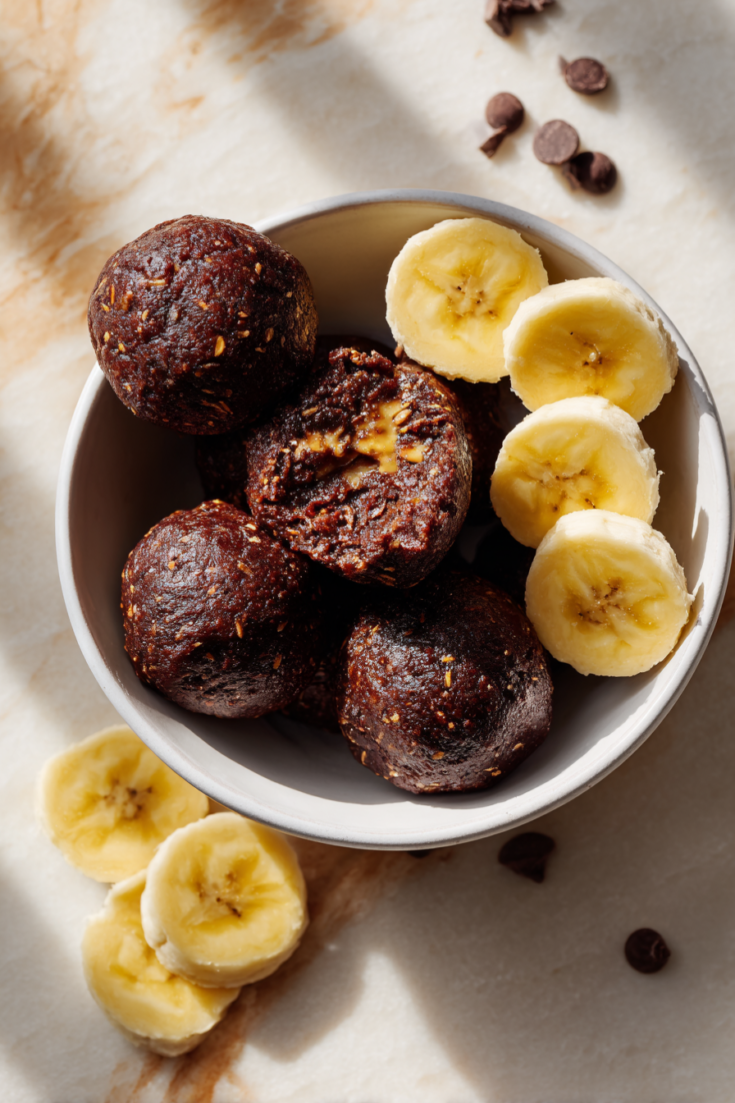
Soft, fudgy no-bake energy balls made with ripe banana, creamy peanut butter, Dutch-process cocoa, and vanilla protein — 15g of complete protein per two-ball serving.
Ingredients
Wet Ingredients and Chocolate Paste
- 1 medium ripe banana, thoroughly mashed (about ½ cup purée)
- ½ cup creamy natural peanut butter, well stirred
- 2 tablespoons honey or pure maple syrup
- 3 tablespoons unsweetened Dutch-process cocoa powder
- ½ teaspoon pure vanilla extract
- Pinch of fine sea salt
Dry Ingredients and Boosters
- 1 cup old-fashioned rolled oats (do not use instant or steel-cut)
- 50g vanilla or chocolate whey/casein blend protein powder (about 1½ scoops)
- 2 tablespoons ground flaxseed
Optional Mix-In
- 2 tablespoons mini dark chocolate chips
Instructions
- Prepare the Banana Mixture: In a medium mixing bowl, mash the ripe banana thoroughly with a fork until smooth, leaving no large chunks behind.
- Make the Chocolate Peanut Butter Base: Add the peanut butter, honey, vanilla extract, and salt to the banana and stir until smooth. Add the Dutch-process cocoa powder and mix vigorously until a thick, glossy chocolate paste forms.
- Integrate the Dry Ingredients: Stir in the rolled oats, protein powder, and ground flaxseed using a sturdy spatula until no dry pockets remain. Fold in the optional mini dark chocolate chips if using.
- Evaluate the Texture: The mixture should be thick, slightly sticky, and hold its shape when pressed. If it feels too wet, add 1 tablespoon of oats. If it's too crumbly, stir in 1 teaspoon of peanut butter.
- Chill the Dough: Cover the bowl tightly and refrigerate 45 minutes. This allows the oats and ground flaxseed to absorb liquid and firm up for clean rolling.
- Roll into Uniform Balls: Portion 2-tablespoon mounds of dough and roll between your palms into 12 uniform 1½-inch balls. Place on a parchment-lined plate or container.
- Set and Serve: Refrigerate another 10 minutes to set the outer shell. Serve chilled.
Notes
Notes
The banana is the binder — use one with heavy brown spotting, not a yellow one. A yellow banana is too dry and the balls come out crumbly.
Mix the cocoa powder into the wet ingredients first to make a thick paste before the dry ingredients go in; that's what prevents dry cocoa pockets.
Ground flaxseed is what gives the dough the structure to roll, so don't skip it. The dough should be thick and slightly sticky — if it's too wet, add oats; if it's crumbly, add peanut butter.
Refrigerate up to 4 days or freeze up to 2 months; thaw at room temperature 5 to 10 minutes for the fudgiest texture. Nutrition is an estimate and varies by protein powder brand and portion size.
Estimated per serving (2 balls, without optional chocolate chips): 270 calories · 15g protein · 28g carbs · 13g fat · 5g fiber · 110mg sodium
Frequently Asked Questions
Why did my banana protein balls turn out dry and crumbly?
The banana wasn’t ripe enough. A yellow banana with no brown spots is starchy and dry — it doesn’t have enough moisture to bind the dough. Use a banana with heavy brown spotting.
Why did my dough turn out too wet to roll?
The banana was very large, or the peanut butter was extra runny. Add 1 tablespoon of oats at a time until the dough firms up.
Can I use a different protein powder?
Yes. Whey isolate gives a slightly less tender texture — add an extra tablespoon of peanut butter. Plant-based protein absorbs more liquid — add a splash of milk. Unflavored protein needs an extra ½ teaspoon of vanilla extract.
Can I make these without oats?
Yes. Skip the oats and add an extra 2 tablespoons of protein powder plus 2 tablespoons of ground flaxseed. The texture is denser and fudgier.
Can I use PB2 instead of peanut butter?
Yes. Reconstitute ½ cup of PB2 with water per the package directions before measuring. The dough will need slightly less added liquid.
How much protein is in one ball?
About 7.5 grams per ball, or 15 grams per two-ball serving. If you make the balls smaller, you’ll get more per batch but the same total protein.
Are these gluten-free?
Only if you use certified gluten-free oats. Oats are naturally gluten-free but are often processed on shared equipment with wheat.
How long do they last?
Up to 4 days in the refrigerator, or up to 2 months in the freezer. Thaw at room temperature 5 to 10 minutes for the best texture.
More High-Protein Snack Recipes You’ll Love
Monster Cookie Protein Balls — 16g protein, no-bake, 15 minutes, and the flaxseed binder trick.
Peanut Butter Protein Balls — 12g protein, no-bake, 10 minutes, keeps a week.
Blueberry Overnight Oats — 28g protein, 5 minutes, and the mash-and-fold blueberry technique.
Closing
I’ve made these banana protein balls more times than I can count, and the two things that changed everything for me were using a banana with heavy brown spotting and making the chocolate paste before the dry ingredients went in. The first batch I made was dry and crumbly — the ripe banana and the paste fixed that completely.
If you make the no-oat version or add mini chocolate chips, let me know how they turn out in the comments.