There’s a specific kind of salad that makes you want to eat the whole bowl standing at the counter. Crunchy, creamy, tangy, and a little bit spicy. The kind where every forkful gives you something different — a snap of cabbage, a pop of edamame, a hit of creamy peanut-ginger dressing, a warm piece of grilled chicken.
That’s this cabbage salad. Shredded purple and green cabbage, matchstick carrots, edamame, grilled chicken, green onions, and cilantro, all tossed in a creamy peanut-ginger dressing that’s tangy from lime and rice vinegar and rich from natural peanut butter and Greek yogurt. About 35–38 grams of protein per serving, and it’s one of the few salads that genuinely gets better on day two.
The trick is the cabbage. Unlike lettuce, which wilts the moment it’s dressed, cabbage holds its crunch for days. That means you can make a big bowl on Sunday, store the dressing separately, and still have a crisp, satisfying salad on Wednesday. It’s also one of the cheapest vegetables you can buy, making it one of the most budget-friendly high-protein meals you can put together.
The best part is the dressing. It’s creamy and peanutty without being heavy because Greek yogurt does most of the work. Peanut butter, soy sauce, rice vinegar, lime juice, fresh ginger, and garlic give you the sweet-savory balance you want from an Asian-inspired slaw, and a teaspoon of sesame oil adds that unmistakable nutty finish without making the dressing greasy.
Two things decide whether this turns out crisp and creamy or soggy and bland, and neither is optional.
Dress it at the very end, or keep the dressing separate for meal prep. Cabbage holds up far better than lettuce when dressed, but it still softens over time. If you’re prepping for the week, store the dressing in a separate jar and toss right before eating.
Balance the dressing with all three — salty, sweet, and acidic. Peanut butter, soy sauce, and lime juice each do something different. If it tastes flat, it needs more soy. If it tastes too tangy, it needs more peanut butter or maple. If it tastes heavy, it needs more lime or rice vinegar. Taste before you dress the salad.
Everything else is forgiving, flexible, and takes about 25 minutes of actual work.
Why This Recipe Works
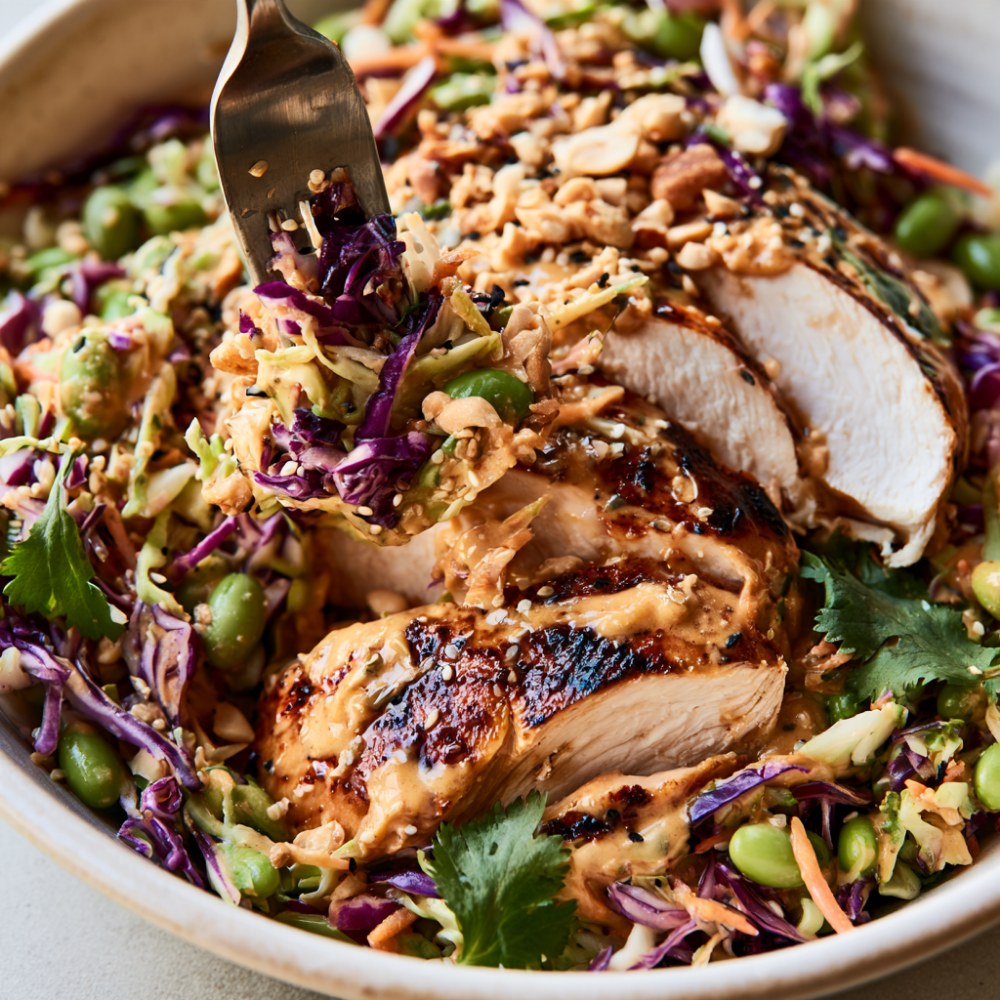
Cabbage is the right green for a make-ahead salad. Unlike romaine, spinach, or spring mix, cabbage doesn’t wilt when it’s dressed. It softens slightly but keeps its crunch for days. That’s what makes this salad a true meal prep recipe, not just a salad that’s only good the day you make it.
Purple and green cabbage together give you color and texture. Purple cabbage is slightly sweeter and gives the salad its vibrant color. Green cabbage is crunchier and slightly more peppery. Using both gives you a more interesting bowl and a better mix of textures.
The creamy peanut-ginger dressing is the star. Natural peanut butter, Greek yogurt, soy sauce, rice vinegar, lime juice, fresh ginger, garlic, and a teaspoon of toasted sesame oil. The Greek yogurt replaces most of the mayo or oil you’d find in a traditional peanut dressing, which is what keeps the calories reasonable and the protein high.
One pound of chicken goes a long way when you slice it thin. Piling sliced chicken breast over a large volume of cabbage gives you a substantial protein portion in every bite without doubling the meat. That’s the whole point of a cabbage salad — the vegetables do the volume work.
Edamame adds plant-based protein and fiber. A cup of shelled edamame has about 18 grams of protein and 8 grams of fiber. It’s one of the only complete plant proteins, and it adds a satisfying pop of texture in every bite.
Matchstick carrots add sweetness and crunch. A bag of pre-shredded carrots saves 10 minutes of prep and gives you consistent, thin pieces that distribute evenly.
Toasted peanuts and sesame seeds add a crunchy finish. Toast them separately for 2–3 minutes in a dry skillet to bring out their nutty flavor. Sesame seeds burn before peanuts toast, so toast them in separate batches.
Fresh cilantro and green onions brighten the whole bowl. Herbs and scallions add freshness that balances the richness of the peanut dressing.
It’s genuinely better on day two. The cabbage softens slightly, absorbs more dressing, and the flavors meld. It’s one of the few salads that actually improves overnight.
Crunchy Peanut Chicken Cabbage Salad
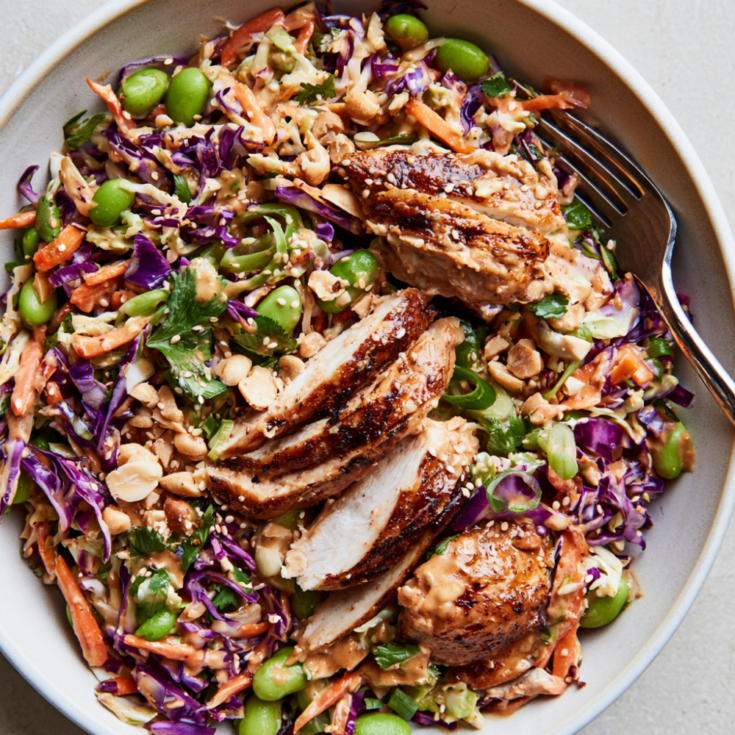
A crunchy, colorful chicken salad with shredded green and purple cabbage, carrots, edamame, green onions, and cilantro, all tossed in a creamy peanut-ginger dressing made with Greek yogurt, natural peanut butter, and fresh lime.
Toasted peanuts and sesame seeds add plenty of crunch, while crispy wonton strips are an optional finishing touch.
Ingredients
For the Chicken:
- 1 lb boneless, skinless chicken breasts
- 1 tbsp olive oil
- 1 tsp kosher salt
- ½ tsp black pepper
- ½ tsp garlic powder
- ½ tsp smoked paprika
- 1 tbsp fresh lime juice
For the Peanut-Ginger Dressing:
- ¼ cup natural creamy peanut butter, well stirred
- ½ cup plain Greek yogurt (2% or full-fat)
- 2 tbsp low-sodium soy sauce or tamari
- 2 tbsp unseasoned rice vinegar
- 2 tbsp fresh lime juice
- 1 tbsp pure maple syrup or honey
- 1 tsp toasted sesame oil
- 1 tbsp fresh ginger, finely grated
- 2 garlic cloves, finely minced
- ¼ tsp red pepper flakes (optional)
- 2–4 tbsp warm water, as needed
For the Salad:
- 4 cups shredded green cabbage (about ½ small head)
- 4 cups shredded purple cabbage (about ½ small head)
- 2 cups matchstick carrots
- 1 cup shelled edamame, cooked and cooled
- 4 green onions, thinly sliced
- ½ cup fresh cilantro, roughly chopped
- ¼ cup roasted peanuts, roughly chopped
- 2 tbsp sesame seeds
- 1 cup crispy wonton strips (optional)
Instructions
1. Prepare the chicken. Pat the chicken breasts dry. If they are very thick, place them between two pieces of plastic wrap or parchment and gently pound them to an even thickness of about ¾ inch. This helps the chicken cook evenly without the thinner portions drying out.
Season both sides with the kosher salt, black pepper, garlic powder, and smoked paprika.
Heat the olive oil in a large skillet over medium-high heat. Add the chicken and cook for about 5–7 minutes on the first side, then 4–6 minutes on the second side, depending on thickness.
The chicken is done when the thickest part reaches 165°F, and the center is no longer pink. Transfer to a cutting board and squeeze lime juice over the chicken immediately. Let it rest for 5 minutes, then slice thinly against the grain.
2. Toast the peanuts and sesame seeds. Heat a dry skillet over medium heat. Add the sesame seeds and toast for about 1–2 minutes, stirring frequently, until fragrant and lightly golden. Transfer them immediately to a plate.
Add the peanuts to the same skillet and toast for about 2 minutes, stirring frequently, until fragrant. Transfer them to the plate with the sesame seeds. Let cool.
Toast them separately. Sesame seeds are small and burn before the peanuts toast properly.
3. Make the peanut-ginger dressing. Add the peanut butter, Greek yogurt, soy sauce, rice vinegar, lime juice, maple syrup, sesame oil, ginger, garlic, and red pepper flakes to a medium bowl. Whisk until completely smooth.
Add warm water 1 tablespoon at a time, whisking after each addition, until the dressing is thick but easily pourable. You may need 2 to 4 tablespoons, depending on the thickness of your peanut butter and Greek yogurt.
Taste before dressing the salad. If it tastes too rich, add a little more lime juice or rice vinegar. If it needs more savory flavor, add a small splash of soy sauce. If it is too tangy, add a little more maple syrup or peanut butter.
4. Build the salad. Add the green cabbage, purple cabbage, carrots, edamame, green onions, and cilantro to a very large bowl. Toss gently until evenly combined.
5. Add the chicken. Add the sliced chicken to the salad and toss gently, or arrange it over the top if you prefer a more composed presentation.
6. Dress and serve. Drizzle about two-thirds of the dressing over the salad and toss thoroughly. Add more dressing a little at a time until the cabbage is lightly coated. You may not need every drop, especially if you prefer a lighter salad.
Sprinkle with the toasted peanuts and sesame seeds. Add the crispy wonton strips immediately before serving so they stay crunchy. Serve with additional lime wedges if desired.
Notes
Protein per Serving: About 35–38g as a main
Nutrition note: Protein and calories vary by chicken, peanut butter, Greek yogurt, and edamame brands. Estimated per main serving: ~500–540 calories, 35–38g protein, ~34 g carbs, ~28 g fat. Calculate with your specific products for the most accurate numbers.
Make-ahead: You can prepare the salad components up to 4 days ahead and store them separately in airtight containers. Keep the dressing refrigerated and stir or whisk it before serving. Store the peanuts, sesame seeds, and wonton strips separately to keep them crunchy. Assemble and dress right before eating.
Freezer: You can freeze the cooked chicken for up to 3 months. Cool it completely before transferring it to a freezer-safe container or bag. Thaw overnight in the refrigerator and use within 3–4 days. The assembled salad, cabbage, dressing, and crunchy toppings don't freeze well.
Recipe Notes
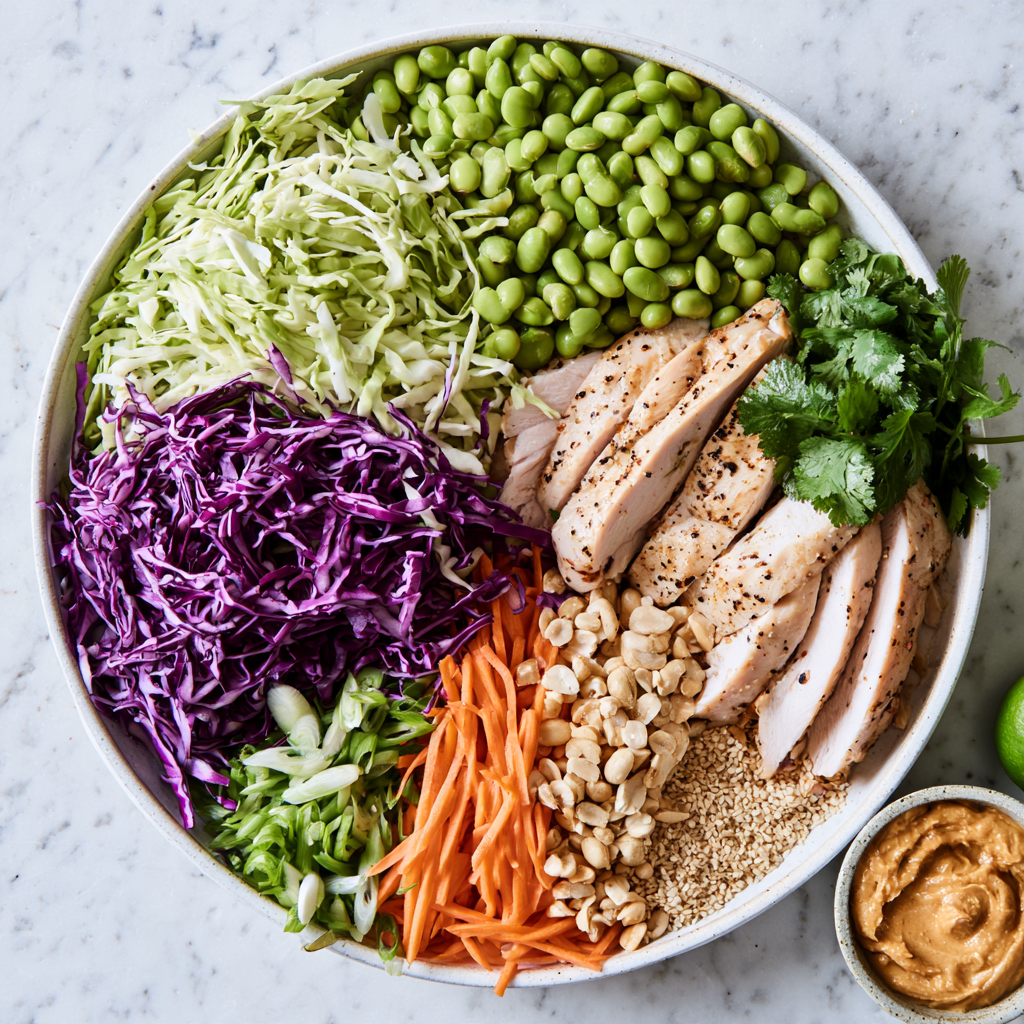
Dry the edamame and cabbage well. Excess water dilutes the dressing and makes the salad less crunchy.
Natural peanut butter works particularly well. Stir it thoroughly before measuring so the oil and solids are evenly combined. Conventional peanut butter will be sweeter and thicker — add an extra splash of water to thin the dressing.
If your Greek yogurt is too thick, add a little more water. Nonfat Greek yogurt is noticeably thicker than 2% or full-fat. Add water a tablespoon at a time until the dressing is pourable.
Do not overcook the chicken. Because the salad is served with a creamy dressing and crunchy vegetables, juicy chicken makes a noticeable difference. Pull it at 165°F and let it rest before slicing.
Toast the sesame seeds and peanuts separately. Sesame seeds are small and can burn before the peanuts toast properly.
Add the wonton strips at the very end. If they sit in the dressed salad, they will soften quickly.
For meal prep, keep the cabbage mixture, chicken, dressing, and crunchy toppings separate. Assemble just before eating. This is what keeps the salad crisp for four days.
Tips for the Best Cabbage Salad
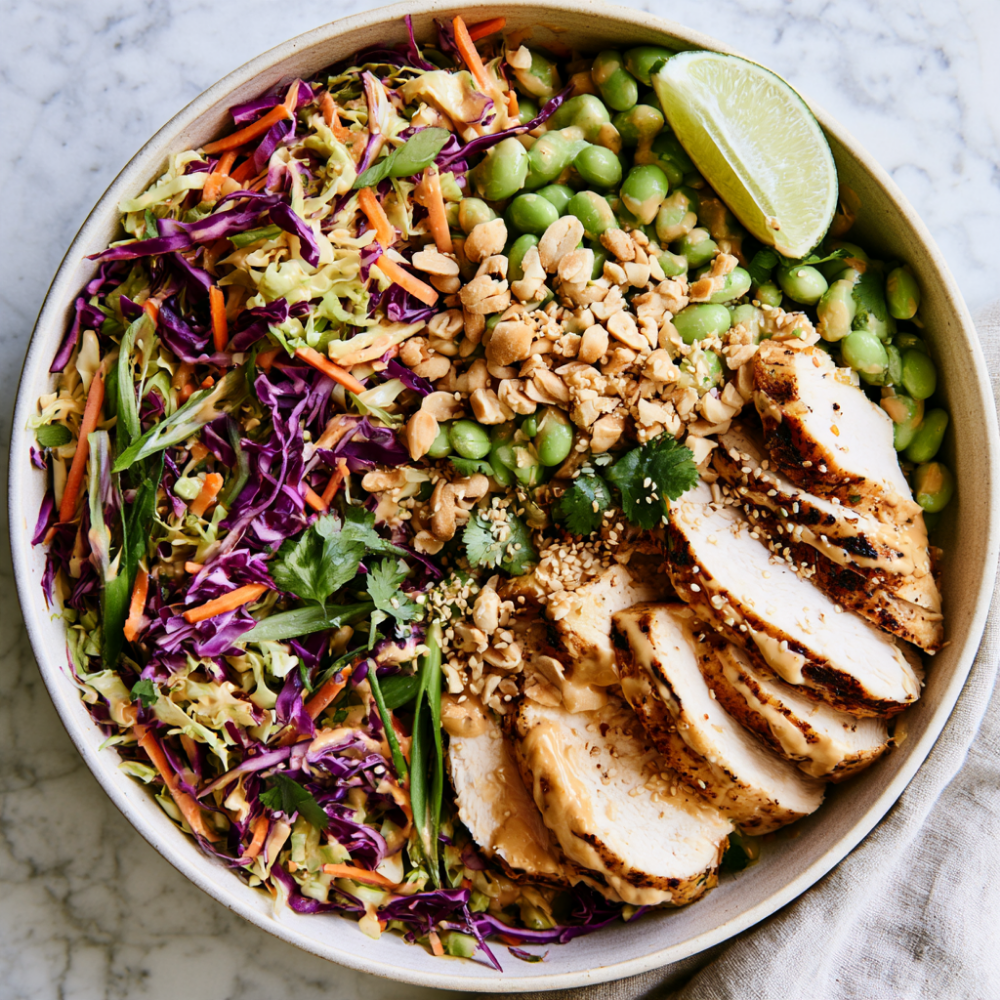
- Use both purple and green cabbage for the best color and texture.
- Shred the cabbage as thinly as possible. A mandoline or food processor makes this fast.
- Use pre-shredded matchstick carrots to save time.
- Pound the chicken to an even ¾-inch thickness before cooking.
- Cook the chicken to 165°F and let it rest before slicing.
- Toast the peanuts and sesame seeds in separate batches in a dry skillet.
- Whisk the dressing until completely smooth before adding water.
- Add water 1 tablespoon at a time until the dressing is pourable.
- Taste the dressing and adjust before dressing the salad.
- Dress the salad at the very end, or keep the dressing separate for meal prep.
- Add the crispy wonton strips and toasted peanuts right before serving.
- Serve cold or at room temperature. It’s best straight from the refrigerator.
Easy Variations
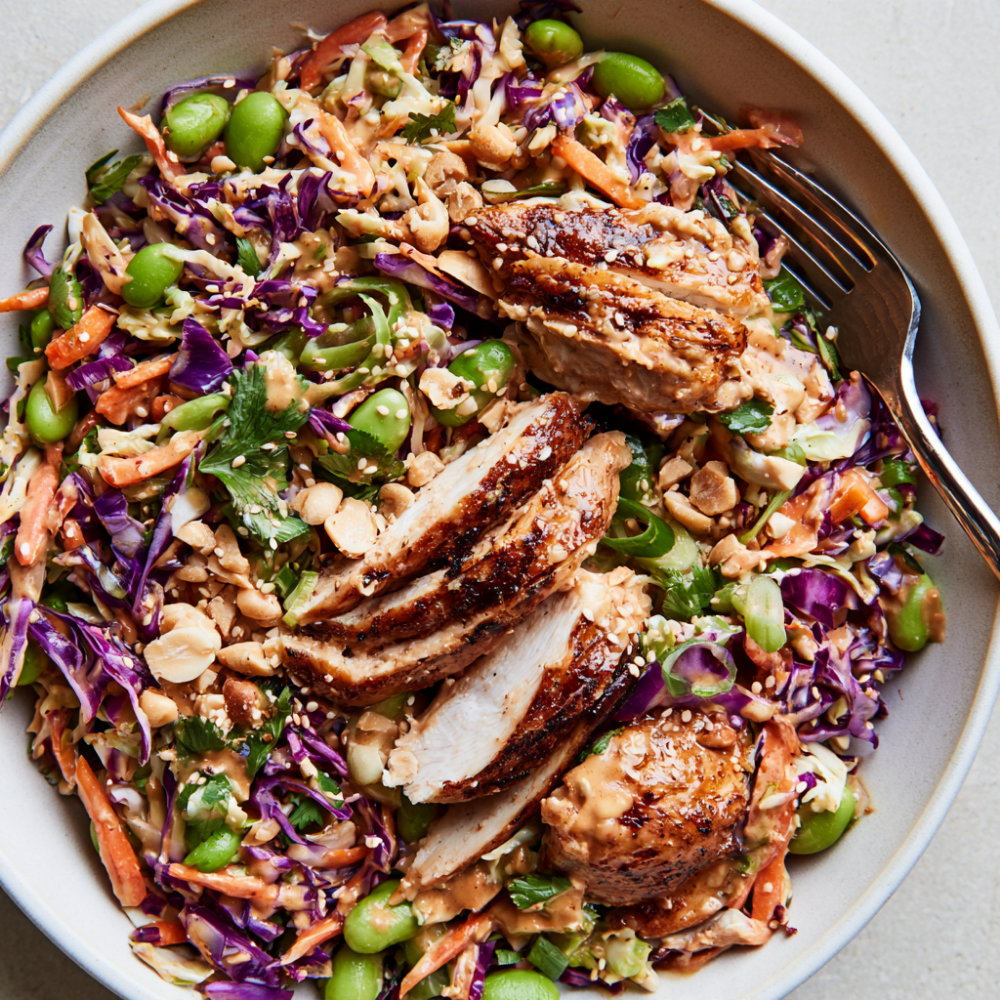
Sesame Chicken Cabbage Salad. Skip the peanut butter in the dressing and add 2 extra teaspoons of sesame oil and 1 tablespoon of tahini. Top with extra sesame seeds. About 34–37g protein per serving.
Sesame Chicken Crunch Salad. Add 1 cup of shredded napa cabbage and ¼ cup of sliced almonds. About 35–38g protein per serving.
Crispy Chicken Cabbage Salad. Use crispy baked chicken strips instead of grilled chicken. Slice them and arrange over the top. About 33–36g protein per serving.
Healthy Chicken Cabbage Salad (No Peanut). Swap the peanut butter for sunflower seed butter and the peanuts for toasted sunflower seeds. About 35–38g protein per serving.
Chicken Cabbage Salad (No Yogurt). Use mayonnaise instead of Greek yogurt for a richer, creamier dressing. The protein drops to about 31–34g per serving.
Cabbage Chicken Salad (Vegetarian). Skip the chicken and double the edamame. Add 1 cup of crispy roasted chickpeas. About 20–24g protein per serving.
Cabbage Chicken Salad Recipes (Shrimp Version). Swap the chicken for 1 lb of large shrimp, cooked and cooled. About 32–35g protein per serving.
Cold Salad Recipes (Make-Ahead Bowl). Layer the cabbage, carrots, edamame, and chicken in a large container. Store the dressing and crunchy toppings separately. Toss right before eating. About 35–38g protein per serving.
Storage and Food Safety
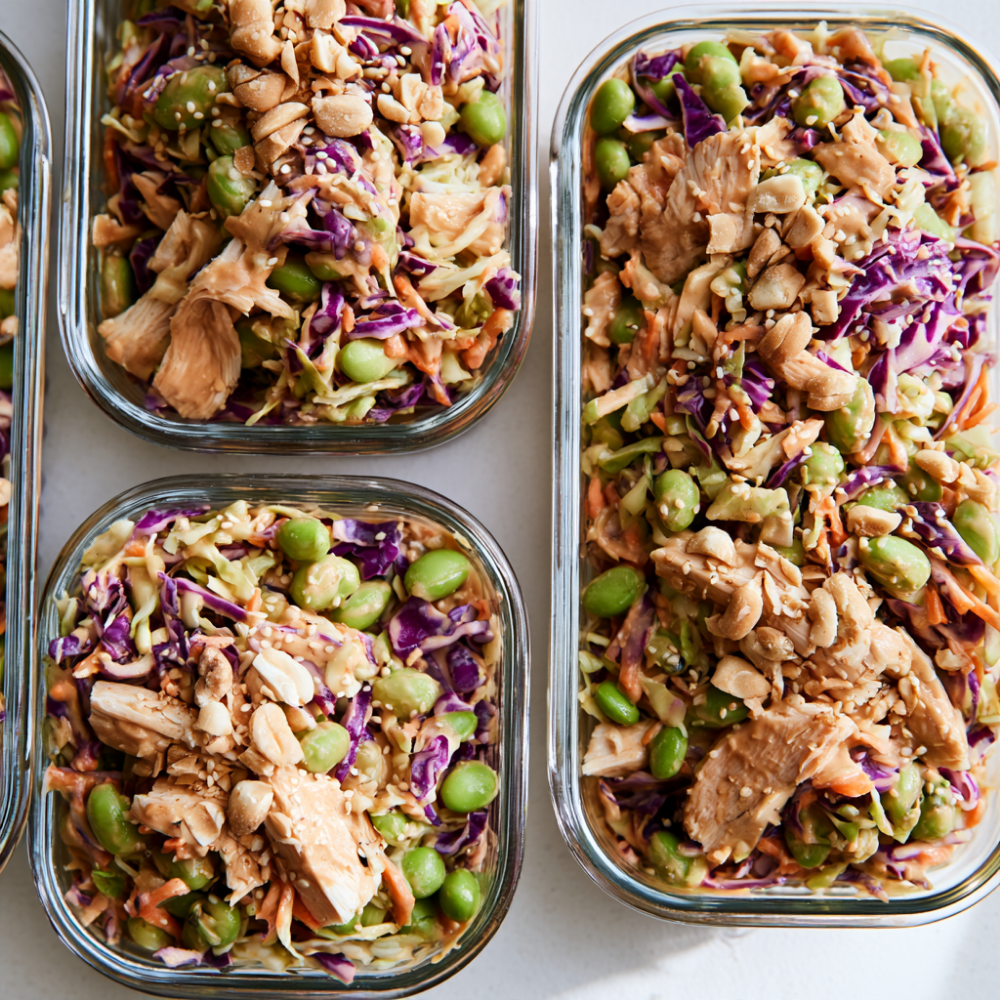
Refrigerator: Store the salad base, sliced chicken, dressing, and crunchy toppings separately in airtight containers for up to 4 days. The cabbage base holds up well and actually improves slightly as it absorbs the flavors.
Freezer: The cooked chicken freezes for up to 3 months. Cool completely, then transfer to a freezer-safe bag. Thaw overnight in the refrigerator. Don’t freeze the cabbage, dressing, or crunchy toppings.
Reheating: You can eat the chicken cold or gently reheat it in a skillet or microwave. The salad itself is best served cold or at room temperature.
Food safety: Cook chicken to 165°F. Refrigerate leftovers within 2 hours. Reheat leftovers to 165°F.
Frequently Asked Questions
How much protein is in each serving?
About 35–38 grams per main serving, based on 4 servings. Most of it comes from the chicken (about 25g per serving), with the rest from the edamame, peanut butter, Greek yogurt, and peanuts.
Can I make this ahead of time?
Yes. Store the salad base, chicken, dressing, and crunchy toppings separately for up to 4 days. Assemble and dress right before eating.
How long does this last in the refrigerator?
The salad base lasts up to 4 days. Once dressed, eat it within 24 hours, though it’s still good on day two.
Why did my salad turn out soggy?
You dressed it too early. Cabbage holds up better than lettuce, but it still softens over time. Keep the dressing separate and toss right before serving.
Can I use bagged coleslaw mix instead of shredding my own cabbage?
Yes. Use about 8 cups of coleslaw mix instead of the shredded green and purple cabbage. It saves 10 minutes of prep.
Can I use a different protein?
Yes. Shrimp, salmon, tofu, or crispy baked chicken strips all work. See the variations section for specific instructions.
Is this recipe gluten-free?
Yes, if you use tamari or a gluten-free soy sauce and skip the wonton strips. Check your peanut butter, edamame, and any other packaged ingredients to confirm.
Can I make this vegan?
Yes. Skip the chicken and use baked tofu or extra edamame. Use a dairy-free yogurt in the dressing. About 22–26g protein per serving.
Can I use conventional peanut butter instead of natural?
Yes, but the dressing will be slightly sweeter and thicker. Add an extra splash of water to thin it.
Can I make the dressing without Greek yogurt?
Yes. Use mayonnaise or a dairy-free alternative. The dressing will be richer, and the protein will drop by about 4 grams per serving.
Can I double this recipe?
Yes. Use two large bowls or one very large bowl. Double all ingredients and store the dressing separately.
How long does the dressing last in the refrigerator?
Up to 5 days in a jar. Whisk well before using — it thickens as it sits.
Can I eat this cold?
Yes. It’s designed to be eaten cold or at room temperature. It’s actually better cold.
What goes with peanut chicken cabbage salad?
It’s a complete meal on its own. If you want a side, serve it with a bowl of miso soup, steamed edamame, or a few vegetable spring rolls.
More High-Protein Salad Recipes You’ll Love
- Southwest Chicken Salad with Cilantro-Lime Dressing
- Couscous Salad: The High-Protein Lunch You’ll Make on Repeat
- This High-Protein Ramen Noodle Salad Stays Crunchy, Not Soggy
Conclusion
This crunchy peanut chicken cabbage salad is the salad that actually fills you up.
Shredded purple and green cabbage, matchstick carrots, shelled edamame, grilled chicken, green onions, and cilantro, all tossed in a creamy peanut-ginger dressing made with Greek yogurt, natural peanut butter, and fresh lime.
About 35–38 grams of protein per serving.
The keys are simple: use both purple and green cabbage, shred it as thinly as possible, pound the chicken to an even thickness, cook it to 165°F and let it rest, toast the peanuts and sesame seeds separately, whisk the dressing until completely smooth, taste and adjust before dressing the salad, and dress it at the very end.
Do that, and you’ll have a salad that’s crunchy, creamy, and satisfying — and one of the few that genuinely tastes better the next day.
Make the components on Sunday, store them separately, and assemble a fresh salad every day of the week.