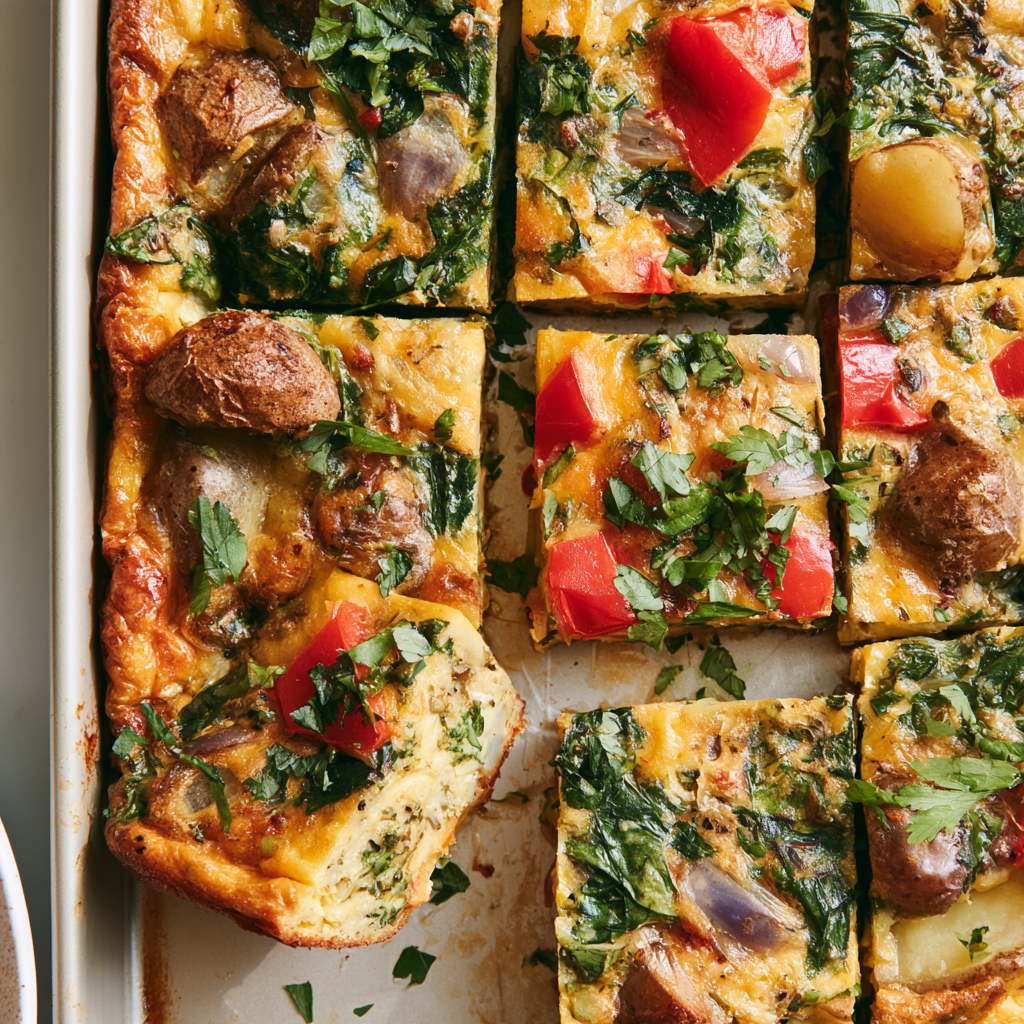

Frittata is one of the most useful breakfasts you can make, and it’s also one of the easiest.
You can make it in a skillet, a muffin pan, or a round baking dish like a quiche, and all of those work.
But when I’m prepping breakfast for the week for the family, or hosting a big brunch and want something I can slice and serve to a crowd, this is the method I use.
The sheet pan does the heavy lifting, the parchment lining makes cleanup easy, and it cuts into twelve clean squares ready to portion into containers or pile onto a platter.
What I love about a sheet pan frittata is how flexible it is. You can use whatever vegetables you have on hand — baby potatoes, spinach, bell peppers, onions, mushrooms, zucchini, asparagus — and it comes out a little different every time.
The cottage cheese whisked into the eggs is what makes it taste rich and creamy without adding a lot of extra cheese, and it’s also what pushes the protein up so each serving actually holds you until lunch.
The technique matters more than the ingredients. Roasting the vegetables first gives them a head start and caramelizes their edges.
Lowering the oven temperature before the eggs go in keeps the custard silky instead of rubbery.
The parchment paper overhang lets you lift the whole frittata onto a cutting board for clean, perfect squares instead of tearing it out of a greased pan.
Why This Recipe Works
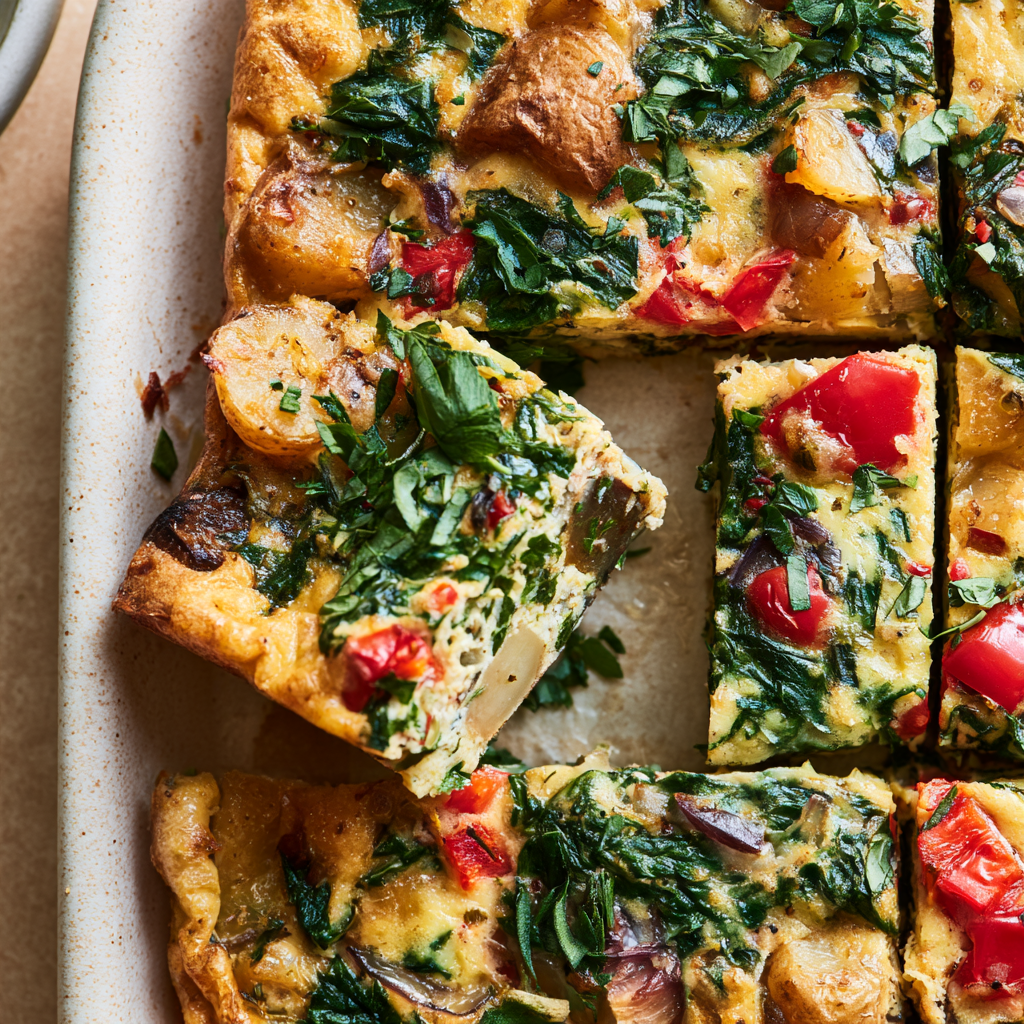
A few specific decisions make this sheet pan frittata work.
Line the pan with parchment paper and leave an overhang on the sides. Eggs poured directly onto a greased metal sheet pan will stick, tear when you slice them, and leave you scrubbing the pan for twenty minutes. Parchment paper with an overhang lets you lift the entire cooked frittata out onto a cutting board in one piece, which is what makes the clean squares possible.
Roast the potatoes and vegetables first, then lower the oven temperature before adding the eggs. Roasting the vegetables at 400°F gives them a head start and caramelizes their edges. But baking a delicate egg-and-cottage-cheese custard at 400°F puffs the edges and squeezes water out, leaving you with a rubbery frittata. Dropping the oven to 350°F before the eggs go in bakes a silky, pillowy custard with a flat, even surface.
Wilt and dry the spinach before it goes into the eggs. Raw baby spinach releases water as it bakes, which creates soggy pockets inside the frittata. Toss the spinach with the hot roasted vegetables for a minute so it wilts from the residual heat, then spread it back out for evenly distributed spinach without the water.
Blend the cottage cheese smooth if you want a creamier custard. Whisking cottage cheese into eggs adds creaminess, protein, and a slightly tangy flavor. Blending it first gives you a smoother, richer texture — closer to ricotta — but leaving it as is works too, and the small curds are less noticeable in the finished frittata than you might expect.
Pull the pan out of the oven when the center still jiggles slightly. Eggs continue cooking from residual heat, and they’ll cook a little more when you reheat the frittata. Overbaking is the single biggest reason frittatas turn out dry.
Ingredients That Matter
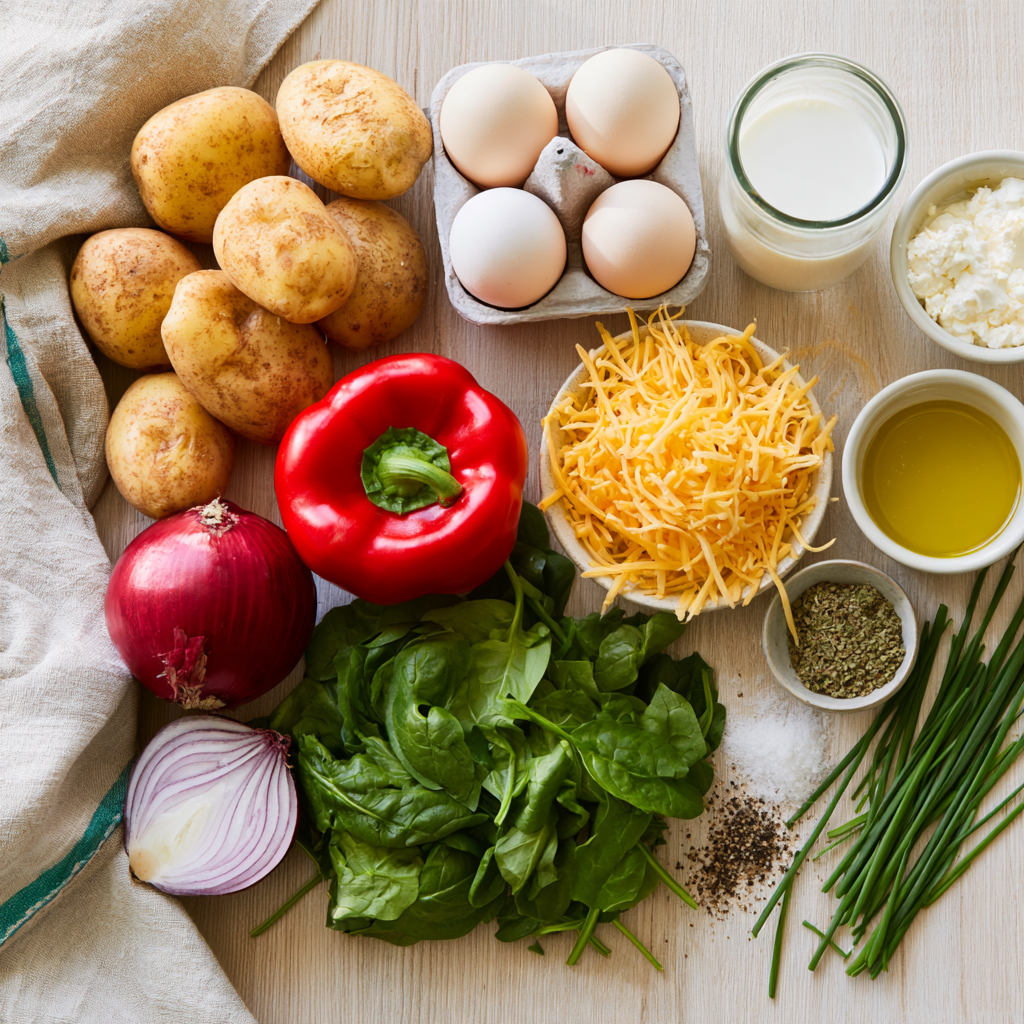
Most of the ingredients in this sheet pan frittata are straightforward. Three of them are easy to get wrong, so those are the ones worth explaining.
Eggs. Use 12 large eggs. To reduce the cholesterol, use 8 whole eggs plus 4 egg whites, and add an extra ¼ cup of milk to compensate. Don’t use egg substitutes — they don’t set the same way, and the frittata will turn out rubbery.
Cottage cheese. Use low-fat or full-fat cottage cheese, blended smooth for a creamier custard. The cottage cheese is what adds protein and creaminess without extra cheese. If you don’t have cottage cheese, ricotta works just as well.
Baby potatoes. Use baby Yukon Gold or baby red potatoes, sliced into thin ⅛-inch rounds. Baby potatoes cook through quickly, and thin rounds hold up well in the frittata. If you only have large potatoes, slice them very thin and roast them an extra 5 minutes.
How to Make It
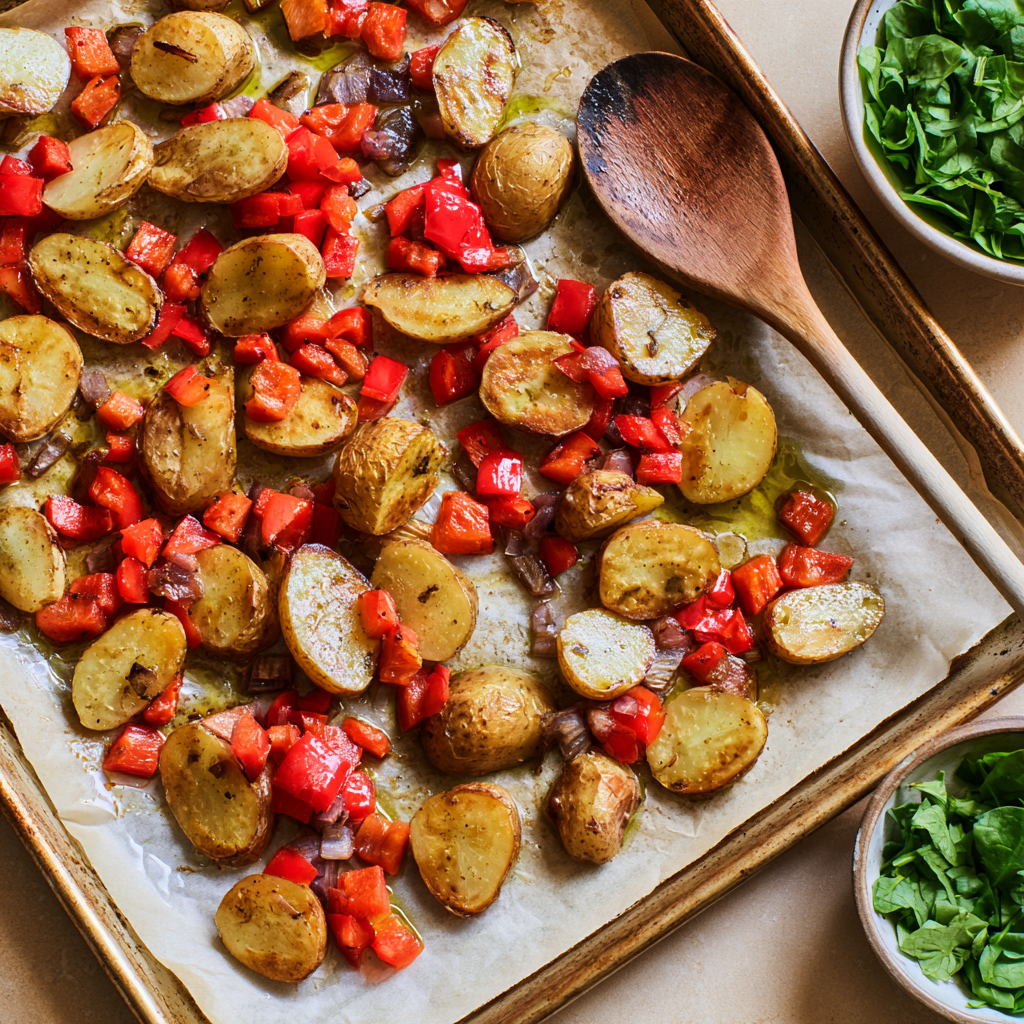
Step 1: Preheat the oven and line the sheet pan.
Preheat the oven to 400°F. Line a 12×18-inch rimmed sheet pan with parchment paper, leaving a small overhang on the sides. Lightly spray the parchment with nonstick spray.
Step 2: Roast the potatoes and vegetables.
Toss 1 pound thinly sliced baby Yukon Gold potatoes, 1 diced red bell pepper, and 1 diced red onion with 2 tablespoons olive oil, 1 teaspoon kosher salt, and ½ teaspoon black pepper. Spread them in an even layer on the prepared sheet pan and roast for 15 to 18 minutes, until the potatoes are fork-tender and the edges are slightly golden.
Step 3: Wilt the spinach and lower the oven temperature.
Remove the pan from the oven. Scatter 3 cups of roughly chopped fresh baby spinach over the hot vegetables and toss gently so it wilts from the residual heat. Spread everything back into an even layer. Reduce the oven temperature to 350°F.
Step 4: Whisk the custard.
In a large bowl, whisk together 12 large eggs, 1 cup cottage cheese, ½ cup milk, ½ cup grated Parmesan, ½ teaspoon dried oregano, 1 teaspoon kosher salt, and ½ teaspoon black pepper until smooth and fully blended.
Step 5: Pour and bake.
Pour the egg mixture evenly over the roasted vegetables, making sure the eggs fill all the gaps. Sprinkle ½ cup of shredded cheddar or Monterey Jack evenly over the top. Bake at 350°F for 16 to 18 minutes, until the center is set and the edges are golden. The center should still jiggle slightly when you pull the pan out.
Step 6: Cool, lift, and slice.
Let the frittata cool in the pan for 5-10 minutes. Use the parchment paper overhang to lift the whole frittata onto a cutting board. Slice into 12 equal squares and garnish with fresh chives or parsley.
Tips and Troubleshooting
The frittata stuck to the pan. This happens when you grease the pan but don’t line it. Line the pan with parchment paper and leave an overhang on the sides — that’s what allows you to lift the whole frittata out in one piece.
The frittata turned out dry. This usually means it was overbaked. Pull it out of the oven when the center still has a slight jiggle — it will continue cooking as it cools. Baking at 350°F instead of 400°F also helps.
The frittata turned out watery. This usually means the spinach released water, or the vegetables were wet when you put them in the pan. Wilt the spinach in the hot pan before adding the eggs, and pat the vegetables dry before roasting.
The frittata puffed up and then deflated. This happens when the oven temperature is too high. Baking at 350°F instead of 400°F gives you a flat, even surface instead of a puffed-up frittata that collapses as it cools.
The frittata turned out rubbery. This usually means you over-whisked the eggs or baked the frittata too long. Whisk the eggs gently until smooth, and pull the pan out when the center still jiggles slightly.
Easy Variations
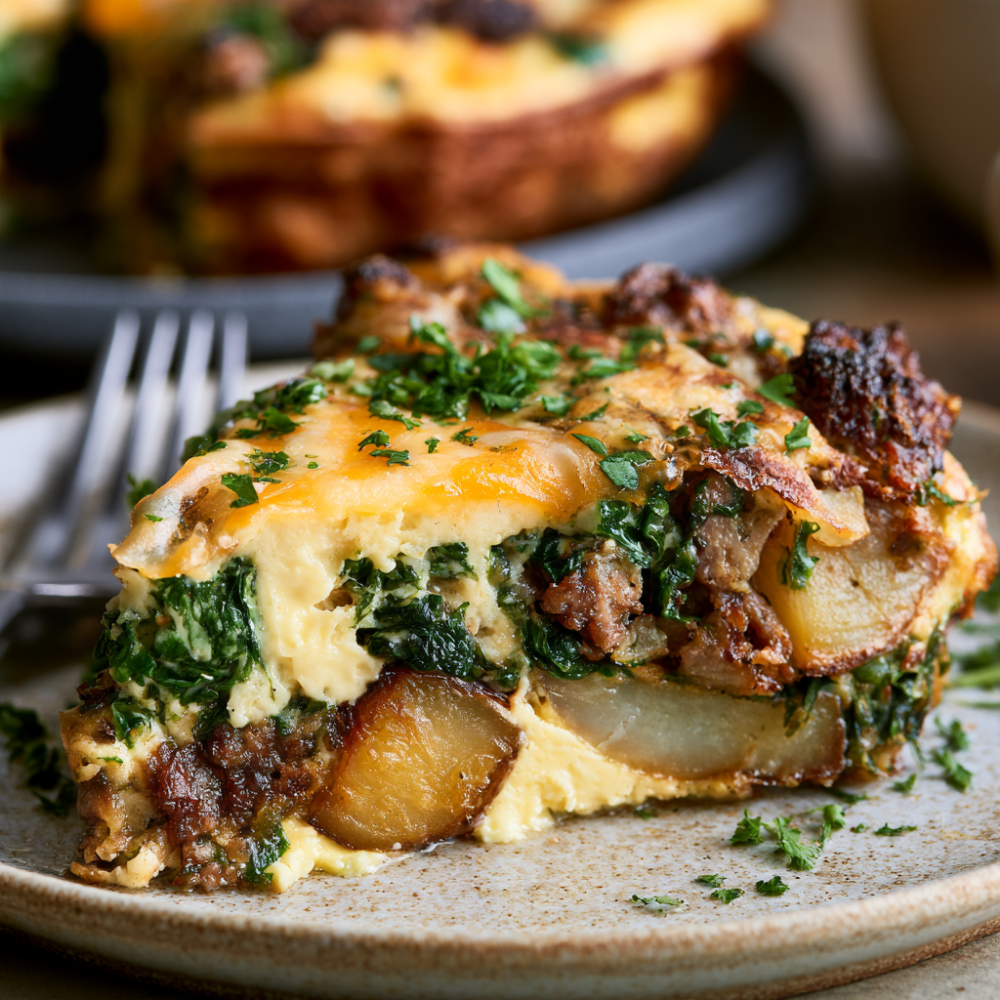
Sheet pan frittata with asparagus. Swap the baby potatoes for 1 pound of asparagus, trimmed and cut into 1-inch pieces. Roast the asparagus for 8 to 10 minutes instead of 15 to 18. The frittata becomes lighter and more springy.
Cheesy chorizo sheet pan frittata. Add 8 ounces of cooked, crumbled chorizo to the pan along with the roasted vegetables. The chorizo adds spice and richness, and the frittata becomes heartier.
Sheet pan zucchini frittata. Swap the baby potatoes for 2 diced zucchini. Roast the zucchini for 10 to 12 minutes, until tender. The frittata becomes lighter and lower in carbs.
Sheet-pan spinach, tomato, ricotta frittata. Swap the cottage cheese for 1 cup ricotta, and add 1 cup halved cherry tomatoes to the pan with the spinach. The frittata becomes slightly richer and more Italian-inspired.
Storage and Make-Ahead
You can make the frittata up to 4 days ahead and store it in a sealed container in the refrigerator. Reheat individual squares in the microwave for 30 to 45 seconds, or in a 350°F oven for 5 to 6 minutes.
Store leftovers in a sealed container in the refrigerator for up to 4 days.
You can freeze the frittata in individual portions for up to 2 months. Thaw overnight in the refrigerator, then reheat gently in the microwave or in a 350°F oven.
Store leftovers in the refrigerator within 2 hours of cooking. Reheat to 165°F before serving. Discard any frittata left at room temperature for more than 2 hours.
Sheet Pan Veggie Frittata
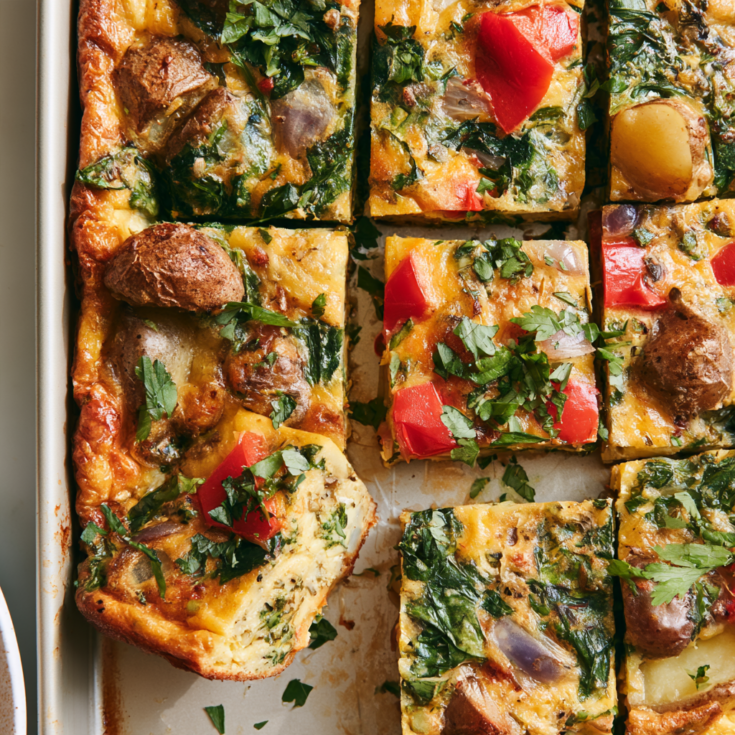
A roasted potato, red pepper, spinach, and onion frittata baked on a parchment-lined sheet pan with eggs, cottage cheese, and Parmesan. Yields 12 clean squares for easy high-protein breakfast meal prep.
Ingredients
For the Roasted Veggie Base
- 1 lb baby Yukon Gold potatoes, sliced into thin ⅛-inch rounds
- 1 medium red bell pepper, diced
- 1 medium red onion, diced
- 2 tbsp extra-virgin olive oil
- 1 tsp kosher salt
- ½ tsp freshly ground black pepper
- 3 cups fresh baby spinach, roughly chopped
For the Protein Egg Custard
- 12 large eggs
- 1 cup low-fat or full-fat cottage cheese (blended smooth or left as-is)
- ½ cup milk (whole or 2%)
- ½ cup freshly grated Parmesan
- ½ cup shredded sharp cheddar or Monterey Jack
- ½ tsp dried oregano
- 1 tsp kosher salt
- ½ tsp freshly ground black pepper
- Fresh chives or parsley, chopped, for garnish
Instructions
- Preheat the oven to 400°F. Line a 12x18-inch rimmed sheet pan with parchment paper, leaving a small overhang on the sides. Spray lightly with nonstick spray.
- Toss the sliced potatoes, diced red bell pepper, and diced red onion with the olive oil, 1 teaspoon of salt, and ½ teaspoon of pepper. Spread in an even layer on the sheet pan and roast for 15 to 18 minutes, until the potatoes are fork-tender and the edges are slightly golden.
- Remove the pan from the oven. Scatter the chopped spinach over the hot vegetables and toss gently so it wilts from the residual heat. Spread everything back out into an even layer. Reduce the oven temperature to 350°F.
- In a large bowl, whisk together the eggs, cottage cheese, milk, grated Parmesan, dried oregano, 1 teaspoon of salt, and ½ teaspoon of black pepper until smooth and fully blended.
- Pour the egg mixture evenly over the roasted vegetables, making sure it fills all the gaps. Sprinkle the shredded cheddar or Monterey Jack evenly over the top.
- Bake at 350°F for 16 to 18 minutes, until the center is set and the edges are golden. The center should still jiggle slightly when you pull the pan out.
- Let the frittata cool in the pan for 5 to 10 minutes. Use the parchment paper overhang to lift the whole frittata onto a cutting board. Slice into 12 equal squares and garnish with fresh chives or parsley.
Notes
Notes: Store leftovers in the refrigerator for up to 4 days, or freeze in individual portions for up to 2 months. Reheat in the microwave for 30-45 seconds, or in a 350°F oven for 5-6 minutes. Nutrition information is an estimate.
Nutrition (per two-square serving, estimated): About 360 calories, 24g protein, 16g carbs, 22g fat, 2g fiber, 620mg sodium. Per single square: about 180 calories, 12g protein.
FAQ
Can I make this sheet pan frittata ahead of time?
Yes. Bake the frittata, cool completely, slice into squares, and store in a sealed container in the refrigerator for up to 4 days. Reheat individual squares in the microwave for 30 to 45 seconds, or in a 350°F oven for 5 to 6 minutes.
Can I use a different size sheet pan?
The recipe is designed for a 12×18-inch rimmed sheet pan. If your pan is smaller, use fewer eggs (about 1 egg per 1.5 square inches of pan) and adjust the vegetables accordingly. If your pan is larger, the frittata will be thinner and will bake faster — check it at 12 minutes.
Can I use frozen spinach instead of fresh?
Yes. Thaw 10 ounces of frozen spinach and squeeze it completely dry before adding it to the pan. Skip the wilting step and stir the spinach into the roasted vegetables before the eggs go in.
Can I make this without cottage cheese?
Yes. Use 1 cup of ricotta instead of the cottage cheese, or skip it entirely and add an extra ½ cup of shredded cheese. The frittata will be slightly less creamy but still delicious.
Can I add meat to this frittata?
Yes. Cook 8 ounces of crumbled chorizo, sausage, or bacon, then add it to the pan with the roasted vegetables before adding the eggs. This makes the frittata heartier and higher in protein.
More High Protein Breakfast Recipes You’ll Love
- 5 Freezer Breakfast Casseroles — Easy Make-Ahead Meal Prep
- Biscuits and Gravy Breakfast Casserole — Easy Make-Ahead Holiday Brunch
- High-Protein Sweet Breakfast Ideas — 7 Make-Ahead Recipes, 11–32g Protein
- Sausage, Spinach & Potato Frittata (High-Protein Breakfast Meal Prep)
Closing
Make this sheet pan frittata when you’re prepping breakfast for the week or hosting brunch and want something you can slice and serve to a crowd.
It reheats in about 30 seconds, holds up beautifully in the refrigerator, and the parchment paper overhang makes it easy to lift out and cut into clean squares. If you make it with asparagus, chorizo, or zucchini, I’d love to hear how it turns out.