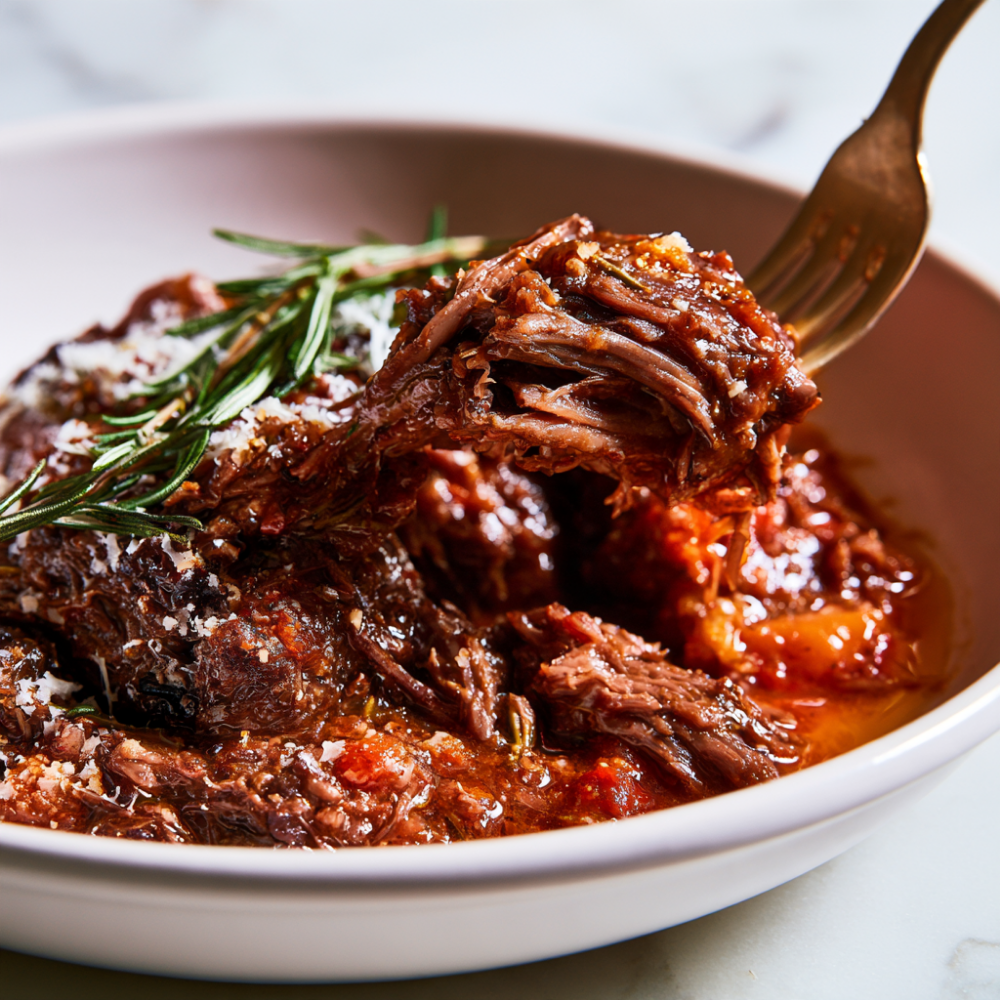
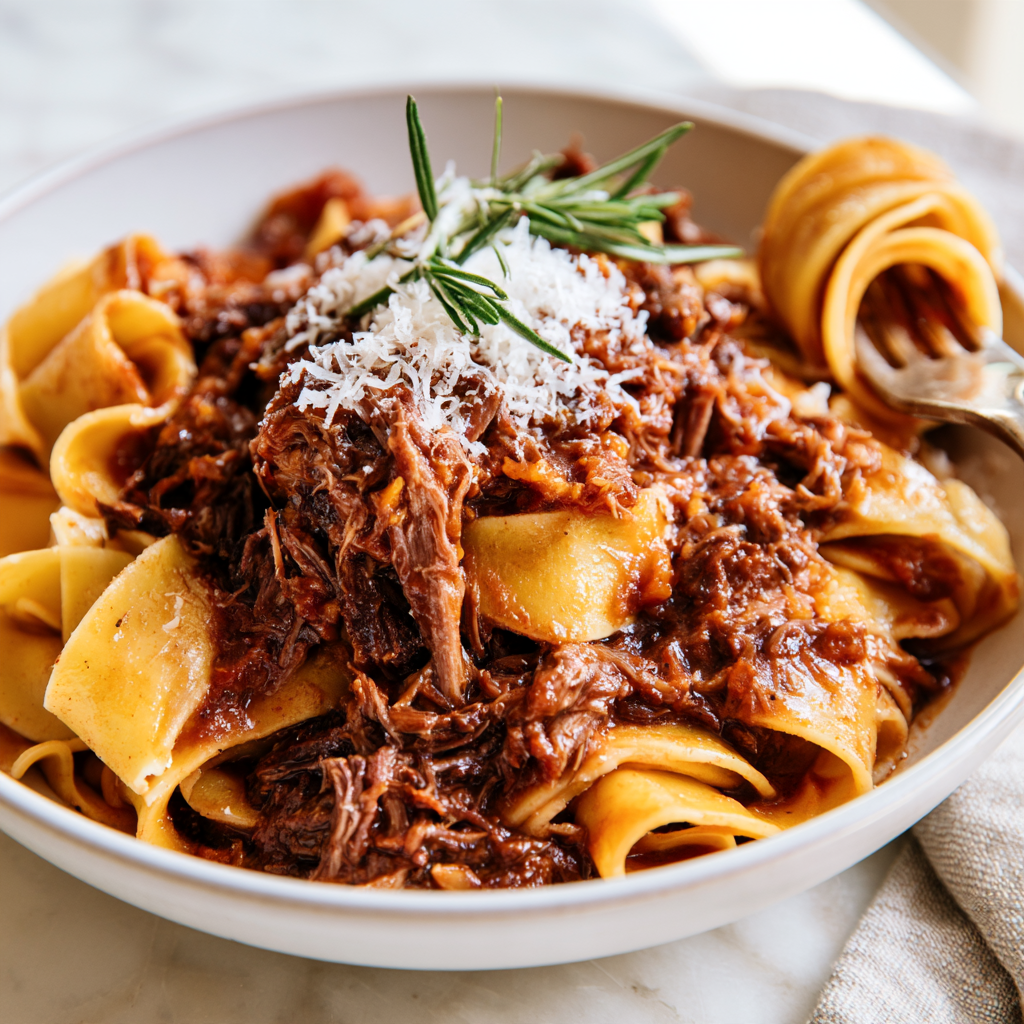
This short rib ragu is the kind of dinner that makes a Sunday feel like a special occasion.
We sear bone-in beef short ribs hard, then braise them low and slow with a classic soffritto, garlic, tomato paste, red wine, and hand-crushed San Marzano tomatoes until the meat falls apart at the touch of a fork and the sauce turns velvety and deep.
Pile it over ribbons of pappardelle, shower it with Pecorino-Romano, and you have a plate that tastes as it came out of a restaurant kitchen.
It’s rich, it’s unfussy, and it’s mostly hands-off. Twenty-five minutes of active work, then about two and a half hours in the oven while you do something else.
The braise does everything: it breaks down the short ribs’ connective tissue into gelatin, giving the sauce body and gloss, and it concentrates the tomatoes and wine into something that clings to every strand of pasta.
It’s also genuinely high in protein — about 44g per serving — which is rare for a braised pasta dish. Three pounds of bone-in short ribs means each of the six servings gets a full four ounces of shredded beef instead of the two ounces most recipes deliver.
Short ribs are a fatty cut, so this version uses a few small techniques to keep the sauce rich, not greasy: sear hard, build a full soffritto, use bone broth instead of water, and skim the fat before adding the meat back in.
Why This Recipe Works
A few small decisions make this short rib ragu taste like a restaurant version instead of a greasy braise:
Use 3 Pounds of Bone-In Short Ribs. Two pounds of bone-in short ribs yields only about 11 to 12 ounces of cooked meat after you remove the bones and fat cap. Spread across six servings, that’s under two ounces of beef per plate — barely enough to be called a ragu. Three pounds gets each serving a real four ounces of shredded short rib.
Build a Complete Soffritto. Traditional Italian ragù starts with onion, carrot, and celery. Skipping the celery removes the fresh, aromatic backbone that balances a braise. All three get diced fine and cooked until soft and translucent before anything else goes in.
Caramelize the Tomato Paste. Cooking the tomato paste with the aromatics for one to two minutes, until it darkens to a deep mahogany, is what gives the ragu its concentrated umami depth. Adding it raw straight from the can skips the step that finishes the sauce.
Use Bone Broth Instead of Water. Water dilutes the sauce. Beef bone broth deepens the body and richness and reinforces the beef flavor. Crush the tomatoes by hand to get a rustic but cohesive sauce with more texture than canned crushed tomatoes.
Sear the Ribs Hard on Every Side. Eight to ten minutes of hard searing builds a deep brown crust and a layer of fond on the bottom of the pan. That fond is pure flavor, and you scrape it up when you add the wine. Don’t rush this step, and don’t crowd the pan.
Cook the Wine Down by Half. Reducing the wine for three to four minutes cooks off the raw alcohol taste and leaves behind only the deep, fruity flavor. Skip this step, and the sauce tastes sharp instead of rich.
Skim the Fat Before Shredding the Meat. This is the pro sequence most recipes get wrong. Short ribs release a lot of fat during the braise, and if you shred the meat first, the shredded beef absorbs the floating oil and the sauce turns greasy. Pull the whole ribs out to a plate, let the sauce sit for three minutes so the clear fat rises, spoon it off, then shred the meat and return it to the pot.
Add Starchy Pasta Water at the End. Add a quarter to a half cup of pasta cooking water to the sauce with the drained pasta. The starch in the water emulsifies the fat and tomato into a glossy sauce that clings to the noodles instead of sliding off.
Finish the Pasta in the Sauce. Never drain the pasta and serve it separately. Cook the pappardelle one minute shy of al dente, then add it to the sauce with the pasta water and toss for one to two minutes. The pasta absorbs the sauce from the inside out, which is what makes restaurant pasta taste different from home pasta.
Short Rib Ragu Recipe
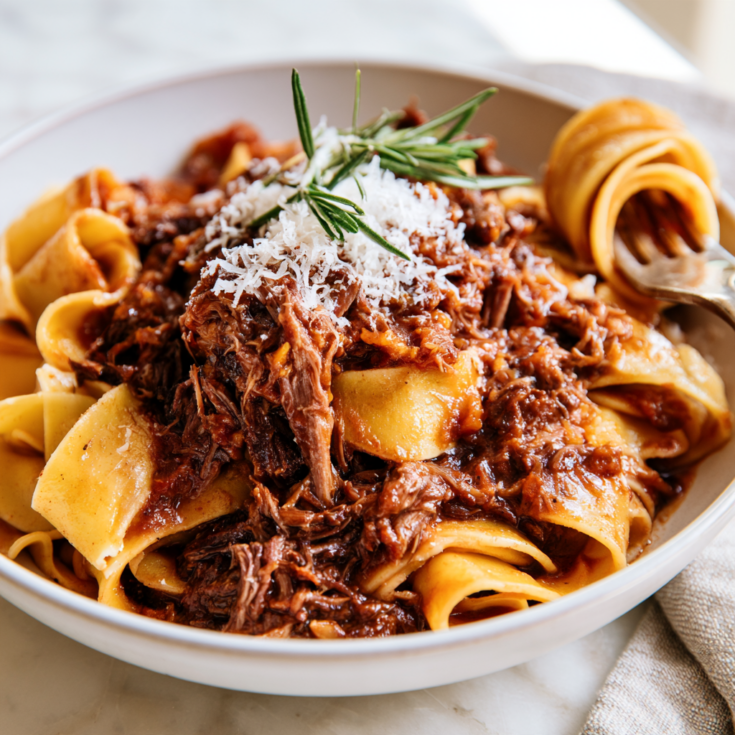
A slow-braised short rib ragu with bone-in short ribs, a classic soffritto, red wine, hand-crushed San Marzano tomatoes, and beef bone broth, served over pappardelle and finished with Pecorino-Romano.
Ingredients
For the Short Rib Braise
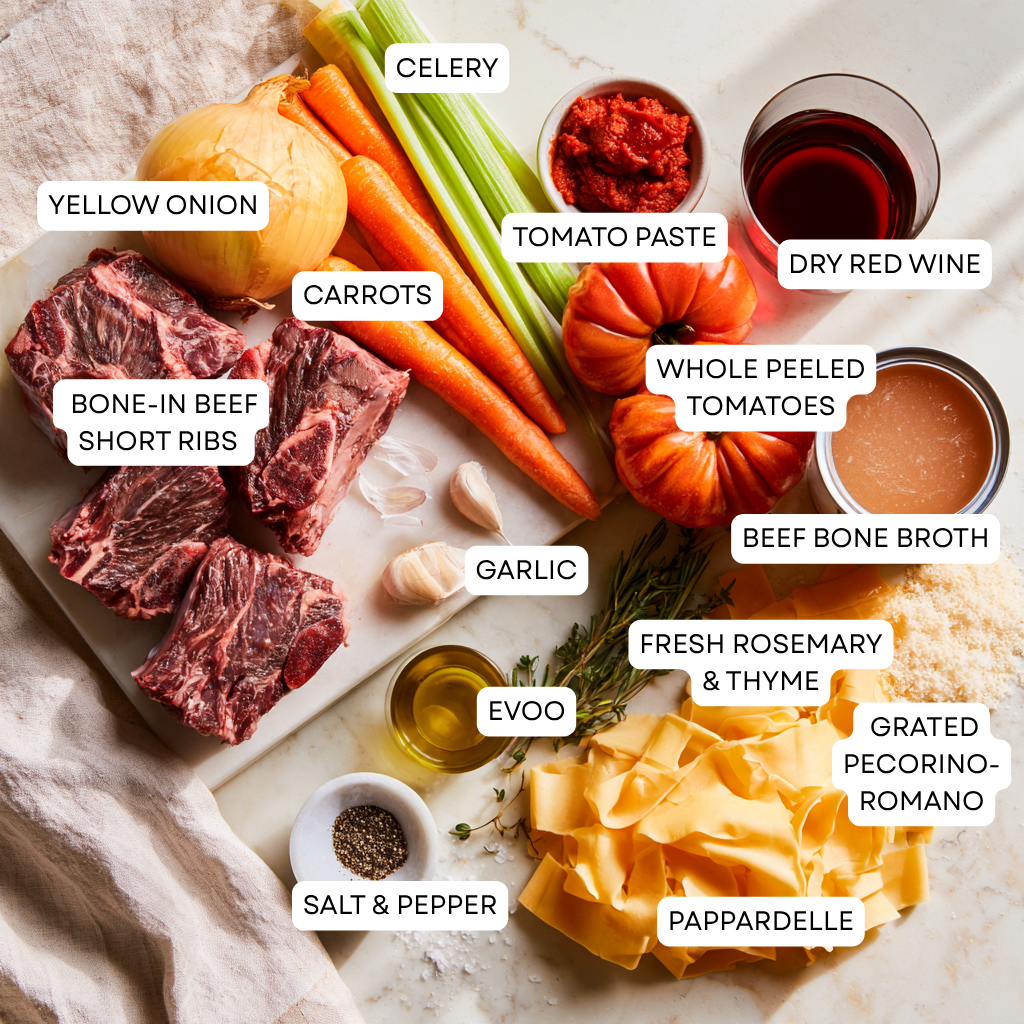
- 3 lbs bone-in beef short ribs (or 2½ lbs boneless short ribs or beef chuck roast)
- 1 tbsp kosher salt
- 1 tsp freshly ground black pepper
- 1 tbsp extra-virgin olive oil
- 1 large yellow onion, finely diced
- 2 medium carrots, finely diced
- 2 stalks celery, finely diced
- 5 cloves garlic, minced
- 2 tbsp tomato paste
- ¾ cup dry red wine (Chianti, Cabernet Sauvignon, or Barolo)
- 1 can (28 oz) San Marzano whole peeled tomatoes, crushed by hand
- ½ cup low-sodium beef bone broth
- 1 large sprig fresh rosemary
- 2 sprigs fresh thyme
For Serving
- 12 oz to 1 lb fresh or dried pappardelle
- ½ cup freshly grated Pecorino-Romano, plus more for serving
- Reserved starchy pasta water, as needed
- Fresh parsley or basil, chopped
Instructions
- Preheat and sear the beef. Preheat the oven to 325°F. Season the short ribs generously with salt and pepper on all sides. Heat the olive oil in a large Dutch oven or French oven over medium-high heat. Sear the short ribs in batches for 8 to 10 minutes, turning until deeply browned on all sides. Transfer to a plate and discard all but 1 tablespoon of rendered fat.
- Build the soffritto and tomato base. Reduce the heat to medium. Add the diced onion, carrots, and celery. Cook for 5 to 6 minutes, until soft and translucent. Add the minced garlic and tomato paste and cook for 1 to 2 minutes, stirring constantly, until the paste turns a deep mahogany color.
- Deglaze with red wine. Pour in the red wine, using a wooden spoon to scrape up every bit of caramelized fond from the bottom of the pot. Simmer for 3 to 4 minutes, until the wine reduces by half.
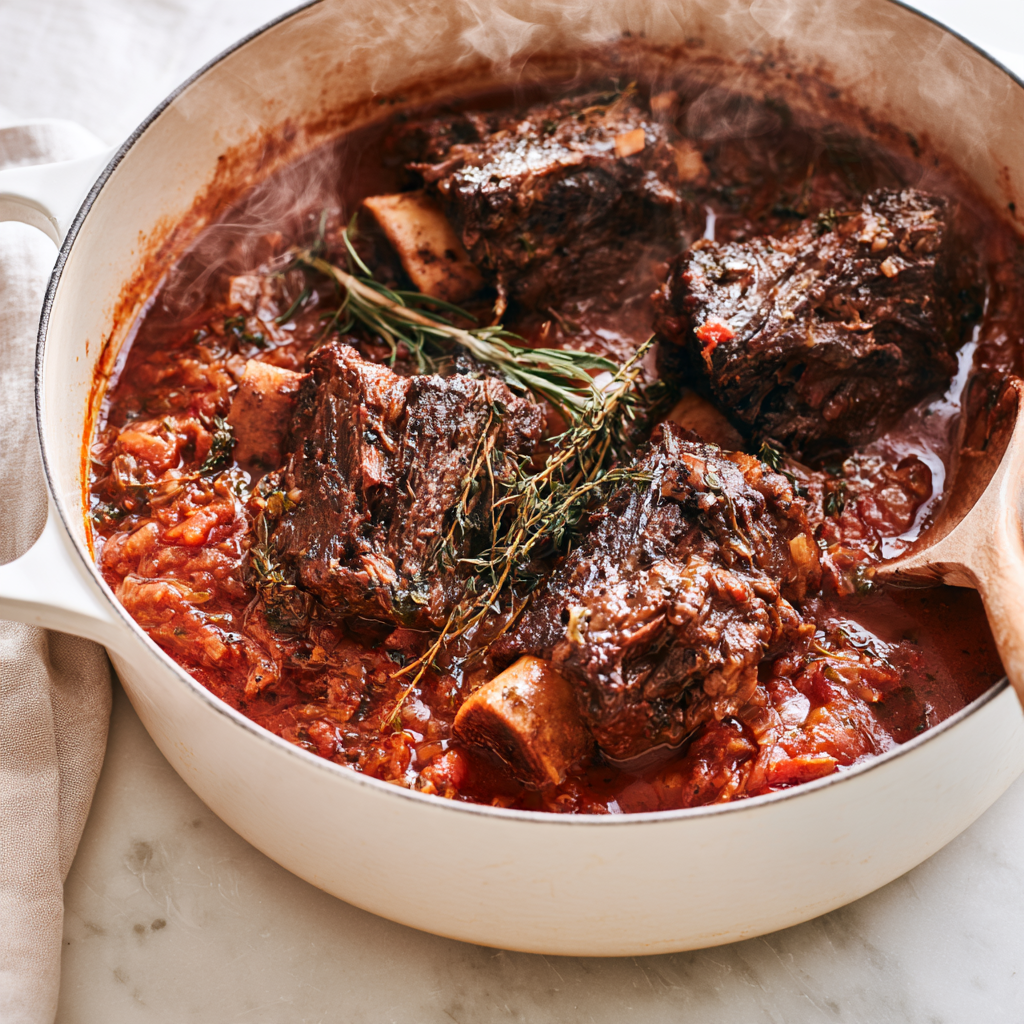
- Build the braise. Return the short ribs and any accumulated juices to the pot. Add the hand-crushed tomatoes and beef bone broth. Nestle the rosemary and thyme sprigs into the liquid. Bring to a gentle simmer.
- Slow oven braise. Cover tightly with the lid and transfer to the oven. Braise for 2 to 2½ hours, until the meat is melt-in-your-mouth tender and slipping off the bone.
- Defat and shred. Transfer the short ribs to a cutting board. Discard the bones, herbs, and any tough cartilage. Let the sauce sit in the pot for 3 minutes so the clear fat rises to the top, then spoon off and discard the excess oil layer. Shred the beef into tender bite-sized chunks and return it to the rich tomato sauce. Keep warm on low.
- Boil the pasta and emulsify. Bring a large pot of salted water to a boil. Cook the pappardelle until 1 minute shy of al dente. Reserve 1 cup of starchy pasta water, then drain.
- Toss and finish. Transfer the drained pappardelle directly into the short rib ragu. Toss gently over low heat for 1 to 2 minutes, adding ¼ to ½ cup of the reserved pasta water and the Pecorino-Romano until a glossy sauce clings to every ribbon of pasta. Garnish with fresh herbs and extra cheese.
Notes
Each serving has about 580 calories and 44g of protein, with roughly 52g of carbs, 20g of fat, 4g of fiber, and 820mg of sodium. The protein comes from three pounds of short ribs, which stay tender through the long braise and deliver a full four-ounce portion of beef per plate. Serve it over polenta, mashed potatoes, or a bed of greens for a lower-carb plate.
Tips for the Best Short Rib Ragu
Freeze the ragu, not the pasta. The sauce freezes perfectly for up to 3 months. Cook the pasta fresh.
Use 3 pounds of bone-in short ribs. Two pounds yields only about 11 to 12 ounces of cooked meat after you remove the bones and fat.
Build a complete soffritto. Onion, carrot, and celery are the traditional base. Skipping the celery loses the aromatic backbone.
Caramelize the tomato paste. Cook for 1 to 2 minutes in the hot pan, until it turns mahogany, to deepen the umami.
Use bone broth instead of water. It reinforces the beef flavor and adds body.
Sear hard on every side. Eight to ten minutes of high-heat searing builds the fond that flavors the whole sauce.
Cook the wine down by half. It removes the raw alcohol taste and leaves only the deep fruit flavor.
Skim the fat before shredding the meat. Pull the whole ribs out first, spoon off the fat layer, then shred.
Shred with two forks. Tear the meat into bite-sized pieces instead of cubing it.
Add pasta water at the end. The starch emulsifies the sauce so it clings to the noodles.
Finish the pasta in the sauce. Cooking it for 1 to 2 minutes in the pan is what makes it taste like restaurant pasta.
Make it a day ahead. This ragu tastes even better on day two. Refrigerate it overnight and reheat gently.
What to Serve With Short Rib Ragu
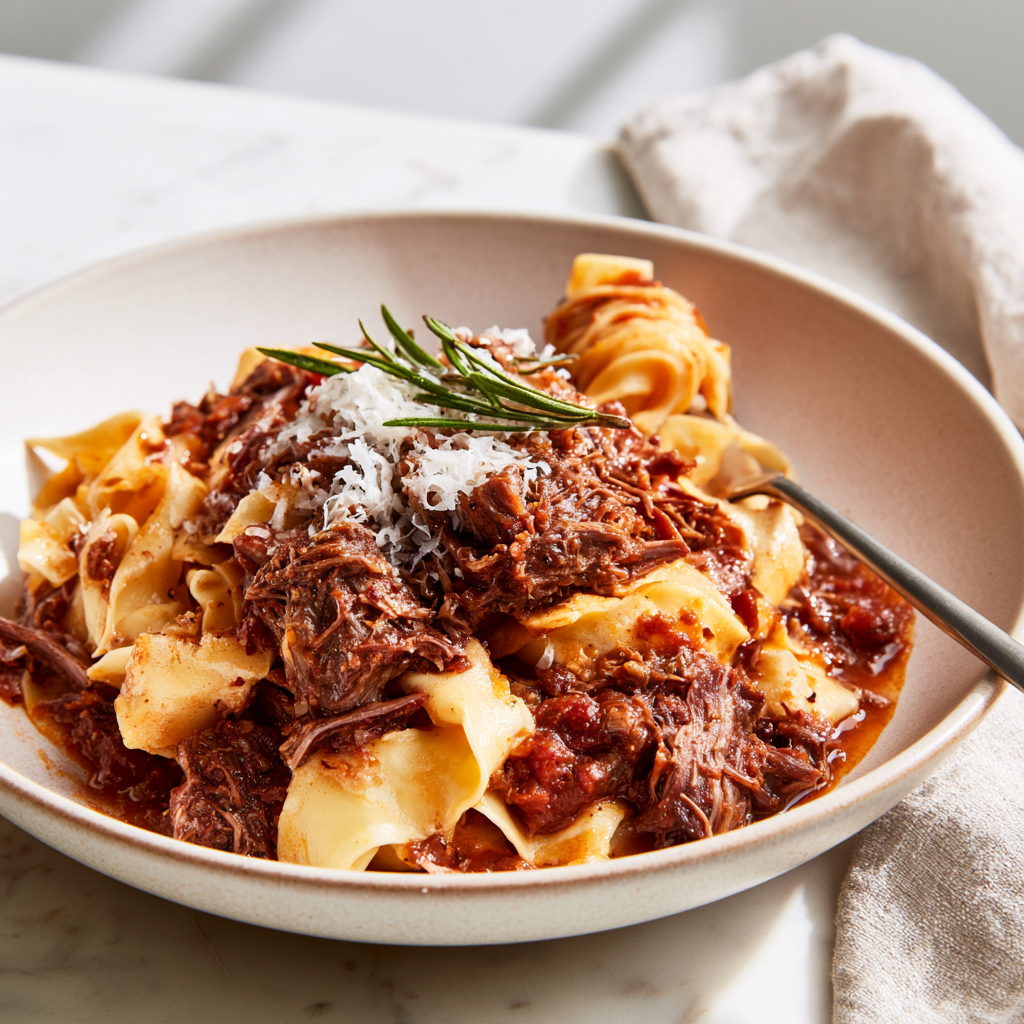
This ragu works with almost any hearty base or side:
- Fresh pappardelle, tagliatelle, or rigatoni
- Creamy polenta
- Mashed potatoes
- Soft polenta with Parmesan
- Crusty bread for dipping
- A glass of the same red wine you cooked with
Make-Ahead, Storage, and Reheating
Make Ahead: This ragu is designed to be made ahead. Make it a day in advance, then refrigerate. The flavor deepens overnight.
Refrigerator: Store the ragu in a sealed container for up to 4 days. Store leftover pasta separately.
Freezer: Freeze the ragu (without pasta) in a sealed container or freezer bag for up to 3 months. Thaw overnight in the refrigerator.
Reheating: Reheat the ragu gently on the stovetop over low heat, adding a splash of water or broth if it has thickened too much. Cook the pasta fresh and finish it in the reheated sauce.
Meal Prep: Portion the ragu into containers and refrigerate for up to 4 days. Cook the pasta fresh or reheat it with a splash of water.
Food Safety: Cook short ribs to an internal temperature of at least 200°F for shreddable texture. Keep leftovers refrigerated within 2 hours of cooking. Reheat to 165°F before serving.
Easy Variations
Short Rib Bolognese. Add 1 lb ground beef or ground pork to the pan after the aromatics, and brown it before adding the wine. The result is a heartier, meatier sauce that’s closer to a traditional bolognese.
Beef Ragu Slow Cooker. Sear the short ribs and sauté the aromatics in a skillet, then transfer everything to a slow cooker with the tomatoes and wine. Cook on low for 7-8 hours. Skim the fat before shredding.
Braised Short Rib Pasta With Rigatoni. Swap the pappardelle for rigatoni or penne. The tubes catch the ragu, and the pasta holds up well to the thick sauce.
Short Rib Ravioli. Use the shredded short rib ragu to fill homemade or store-bought ravioli, then serve with a simple brown butter and sage sauce.
Mushroom Ragu. Swap the short ribs for 2 lbs of mixed mushrooms (cremini, shiitake, and oyster) and use vegetable broth instead of wine. The result is a vegetarian ragu with deep umami.
Frequently Asked Questions
What short ribs are best for ragu?
Bone-in beef short ribs. During the braise, the bone and connective tissue break down into gelatin, which gives the sauce its rich body and gloss. Use 3 pounds for six servings.
Can I make short rib ragu in a slow cooker?
Yes. Sear the short ribs and sauté the aromatics in a skillet first, then transfer everything to a slow cooker with the tomatoes and bone broth. Cook on low for 7-8 hours.
Can I make this in an Instant Pot?
Yes. Sear the ribs and sauté the aromatics using the sauté function, then add the tomatoes and bone broth and pressure cook on high for 45 minutes, followed by a 15-minute natural release. Skim the fat before shredding.
Do I have to use red wine?
No. Substitute an extra ½ cup of beef bone broth plus 1 tablespoon of red wine vinegar. The vinegar adds the acidity the wine would have provided.
Can I use boneless short ribs?
Yes, but the sauce will be slightly thinner because there’s less collagen. Add 1 teaspoon of unflavored gelatin to compensate.
What pasta is best for short rib ragu?
Pappardelle is the classic choice because the wide ribbons catch the thick sauce. Tagliatelle, rigatoni, and penne also work well. Fresh pasta is ideal, but dried works too.
How long does short rib ragu last in the fridge?
Up to 4 days in a sealed container. The flavor deepens overnight.
Can I freeze short rib ragu?
Yes. Freeze the ragu without pasta for up to 3 months. Thaw overnight in the refrigerator and reheat gently.
How do I keep the ragu from being greasy?
Short ribs release a lot of fat during the braise. Pull the whole ribs out first, let the sauce sit for 3 minutes so the fat rises, and spoon it off before you shred the meat and return it to the pot.
Can I make this dairy-free?
Yes. Skip the Pecorino-Romano or use a dairy-free alternative. Everything else in the recipe is naturally dairy-free.
Can I double the recipe?
Yes. Use a larger Dutch oven or two smaller ones and add 30 minutes to the braise time. Short ribs need space to braise evenly.
More High Protein Recipes You’ll Love
- High Protein Chicken Alfredo Bake — 48g Protein, Creamy Cottage Cheese Alfredo
- Creamy Marry Me Chicken Pasta Recipe — Easy Weeknight Dinner
- 4 Easy Healthy Shrimp Pasta Recipes — Ready in 30 Minutes
- Crockpot Minestrone Soup — 16–29g Protein, Pasta That Stays Al Dente
Conclusion
This short rib ragu is the kind of dinner that earns a permanent spot in the rotation. It’s deep, rich, and velvety, and the short ribs braise until they fall apart at the touch of a fork. Twenty-five minutes of active work, then the oven does the rest.
The three things that make it work are these. Use three pounds of bone-in short ribs so every plate gets a real four ounces of shredded beef.
Build a complete soffritto and caramelize the tomato paste so the sauce has real depth. Skim the fat before the meat goes back in so the ragu stays rich, not greasy.
About 580 calories per serving. 44g of protein. Six servings. Ready in about 3¼ hours, freezer-friendly, and endlessly adaptable with bolognese, rigatoni, ravioli, or a slow cooker version.
Pin it to your high-protein meals board and make it your new go-to Sunday supper.