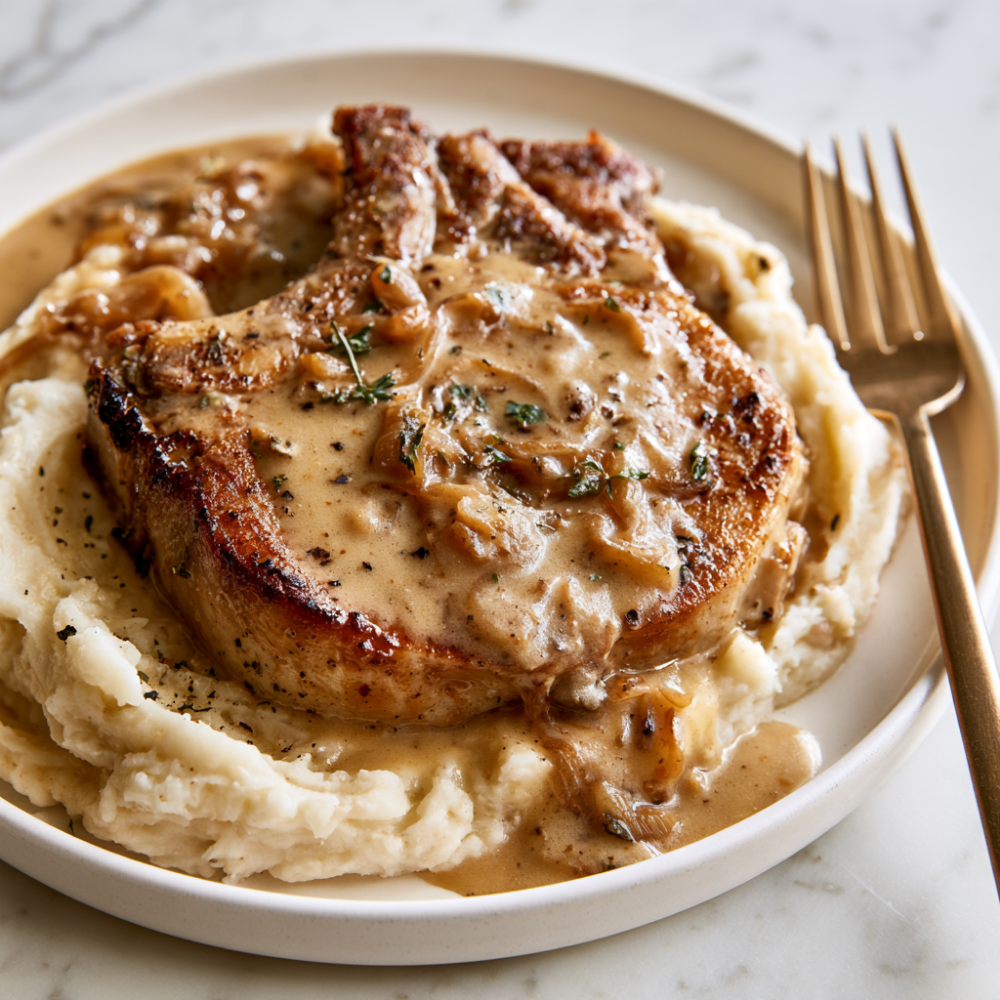
A specific kind of dinner shows up on every Southern meat-and-three menu and every grandmother’s table from Georgia to Louisiana. A thick pork chop, seared until golden, then braised in a gravy built from slowly caramelized onions and a splash of cream. Fork-tender. Deeply savory. The kind of thing that makes you want to sop up every drop with a piece of bread.
The problem with most smothered pork chop recipes is that they either rush the onions or drown the pork in a sauce that tastes like canned soup. The chops come out dry and tough. The gravy is thin and bland. And by the time you sit down to eat, the whole thing tastes like a missed opportunity.
This version fixes all of it.
The onions get the full 20 minutes they need to caramelize into something sweet and jammy. The pork chops sear hard for a deep golden crust, then braise in the gravy until fork-tender. Worcestershire sauce and Dijon mustard add umami depth that most recipes skip. And a small amount of heavy cream at the end gives you a velvety finish without turning the whole thing into cream sauce.
Each serving delivers about 40 grams of protein. It’s one skillet. It’s the kind of dinner that feels like Sunday supper but works on a Tuesday night.
Let’s make it.
Why This Recipe Works
Caramelized onions are the entire flavor foundation. Most recipes call for “sautéing” onions for 5 minutes, which gives you translucent onions with no depth. Twenty minutes over medium-low heat breaks the onions down into a sweet, jammy base that becomes the gravy. This step cannot be rushed.
Bone-in pork chops stay juicier than boneless. The bone insulates the meat and conducts heat more gently. Bone-in chops also have more flavor and stay tender through the braise. Boneless chops work, but they dry out faster.
Searing the chops creates the crust and the fond. The browned bits left in the skillet after searing are pure flavor. Most recipes tell you to wipe out the pan. Don’t. Those browned bits dissolve into the gravy and make it taste as if it simmered for hours.
Worcestershire sauce and Dijon mustard add umami depth. The original recipe uses chicken broth and cream alone, which can taste flat. A tablespoon of Worcestershire and a teaspoon of Dijon give the gravy a savory backbone with a restaurant-made taste.
Add fresh thyme with the broth. Dried thyme works in a pinch, but fresh thyme leaves stirred into the gravy give you a bright, herbal note that complements the richness of the pork and cream.
The chops finish in the gravy, not on the side. Braising the seared chops in the sauce for 15–20 minutes does two things: it gently finishes cooking the pork and lets the chops absorb the flavor of the caramelized onions. The result is pork that tastes seasoned all the way through.
Pull the chops at 145°F. This is the new USDA standard for pork, and it’s the difference between juicy and dry. Pork cooked to 160°F is technically safe but dry. Cooked to 145°F and rested, it’s tender and juicy.
Add a small amount of heavy cream at the very end. A quarter cup for four chops gives you a velvety gravy without making it heavy. If you want a lighter version, Greek yogurt works — see the variations section.
It’s a complete meal in one skillet. Serve over mashed potatoes, rice, or egg noodles for dinner. No sides required.
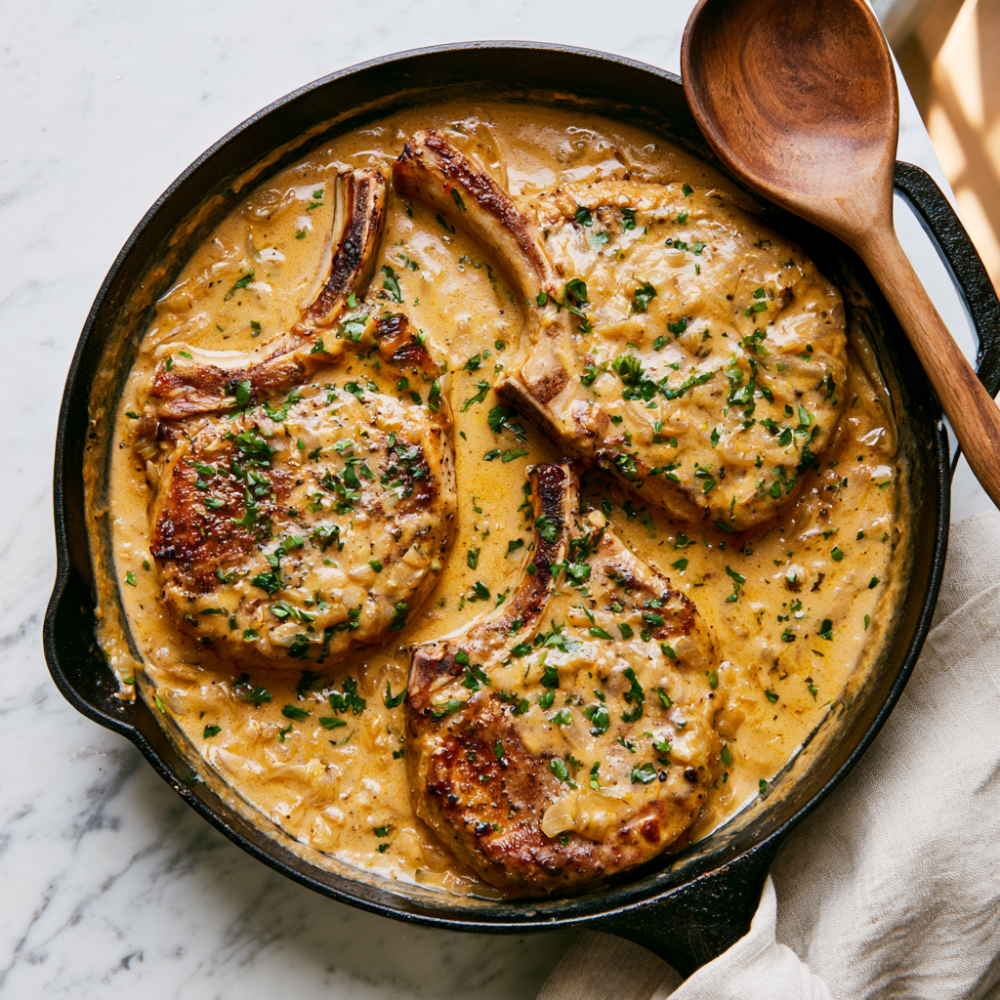
One-Skillet Smothered Pork Chops
Ingredients
Method
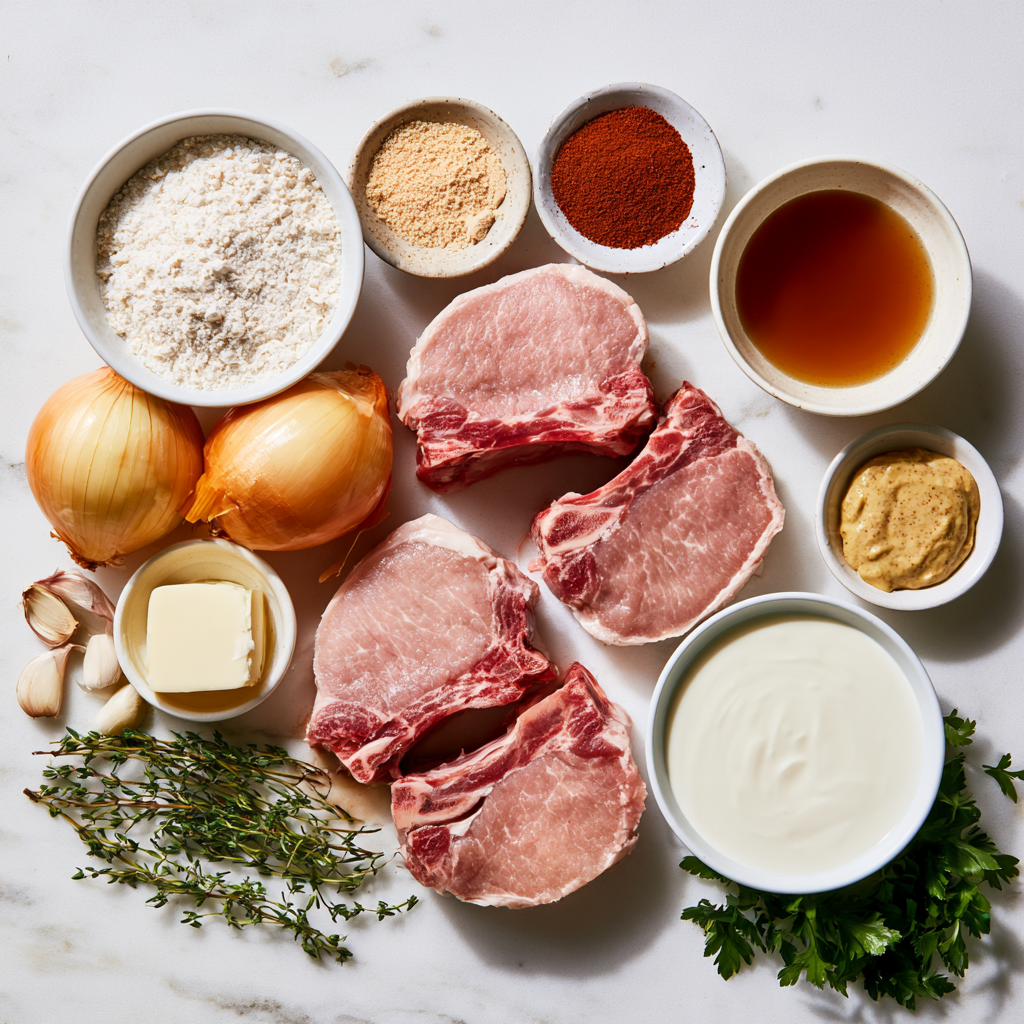
- Season and dredge the pork chops. Pat the chops dry with paper towels. Season both sides generously with the kosher salt and black pepper. In a shallow dish, whisk together the flour, garlic powder, and chili powder. Dredge each chop in the flour mixture, pressing it into the meat so it adheres. Shake off the excess and set the chops aside on a plate. Reserve 2 tablespoons of the seasoned flour for the gravy.
- Sear the pork chops. Heat ¼ cup of the oil in a large heavy skillet over medium-high heat until shimmering. Working in batches if needed, sear the chops for 4–5 minutes per side, until deeply golden brown. Transfer to a plate and set aside. Do not wipe out the skillet. Those browned bits are the foundation of the gravy.
- Caramelize the onions. Reduce the heat to medium-low. Add the sliced onions to the skillet with a pinch of salt. Cook for 18–20 minutes, stirring occasionally, until the onions are soft, deeply golden, and slightly jammy. This is the most important step in the recipe—do not rush it. If the onions start to stick, add a splash of water to deglaze.
- Add the garlic and butter. Add the minced garlic and cook for 30 seconds, until fragrant. Add the butter and let it melt into the onions.
- Build the gravy. Sprinkle the reserved 2 tablespoons of seasoned flour over the onions and stir to coat. Cook for 1 full minute to remove the raw flour taste. Slowly pour in the chicken broth while stirring constantly to prevent lumps. Add the Worcestershire sauce, Dijon mustard, and fresh thyme. Bring to a simmer and cook for 4–5 minutes, until the gravy thickens enough to coat the back of a spoon.
- Finish the gravy. Reduce the heat to low. Stir in the heavy cream and taste. Adjust the salt and pepper. The gravy should be rich, tangy, and slightly sweet from the caramelized onions.
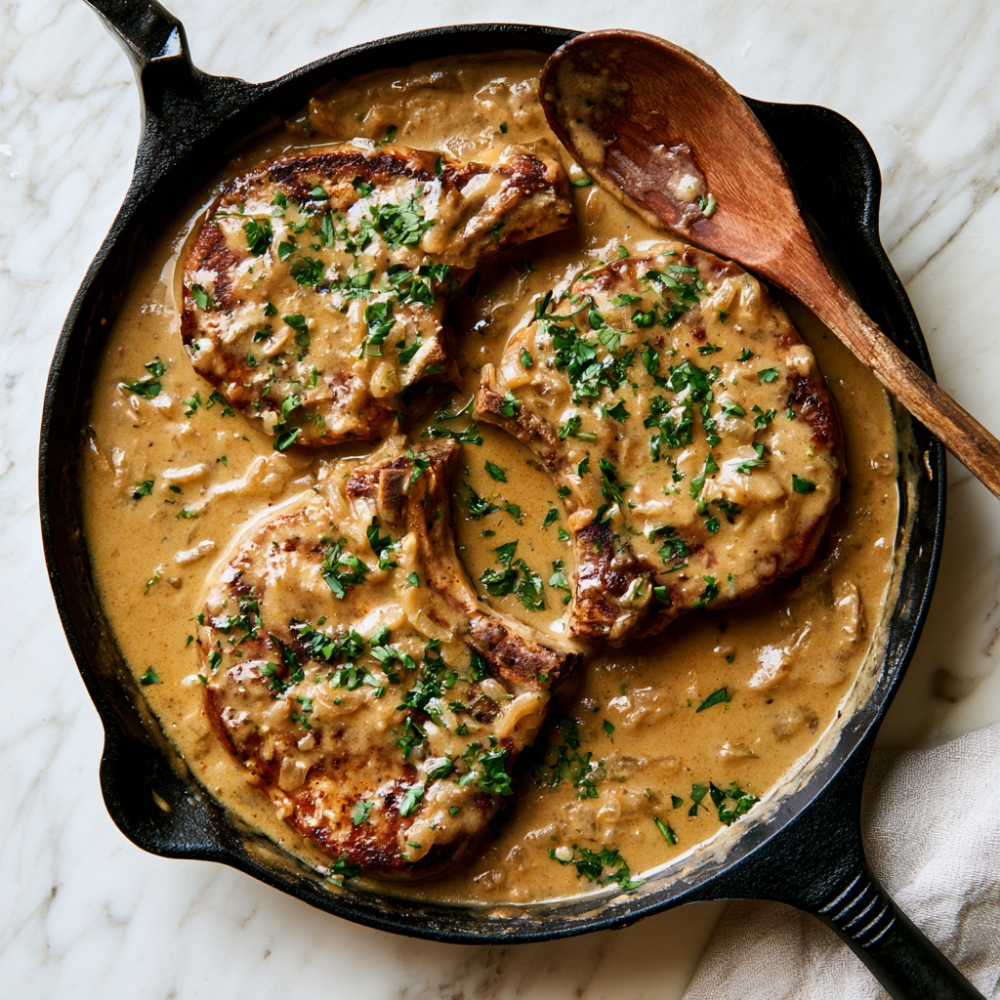
- Braise the pork chops. Nestle the seared pork chops back into the skillet, spooning some of the gravy over the top. Cover and simmer over low heat for 15–20 minutes, until the pork reaches an internal temperature of 145°F. Turn the chops once halfway through.
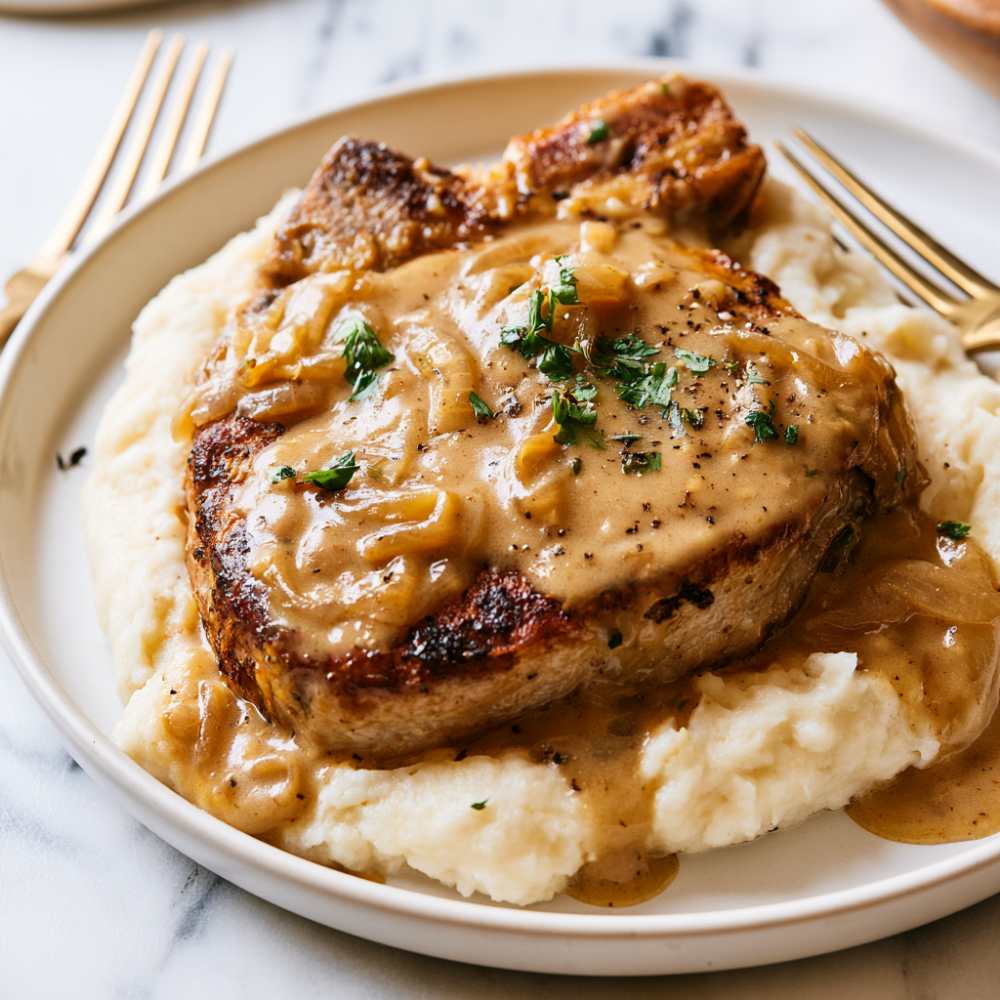
- Rest and serve. Transfer the chops to plates or a serving platter and spoon the gravy generously over the top. Garnish with chopped parsley and serve immediately over mashed potatoes, rice, or egg noodles.
Notes
Tips for the Best Smothered Pork Chops
Give the onions the full 20 minutes. This is the single most important step. Undercooked onions give you a thin, bland gravy. Fully caramelized onions give you a sweet, jammy base that makes the whole dish.
Don’t wipe out the skillet after searing. The browned bits left behind dissolve into the gravy and add depth. Most recipes tell you to wipe the pan. Don’t.
Use bone-in pork chops that are 1 to 1¼ inches thick. Thin chops overcook before they develop a crust. Thick bone-in chops stay juicy through the braise and have more flavor.
Pat the chops dry before dredging. Wet pork steams instead of sears, and the flour slides off. Dry them thoroughly with paper towels first.
Reserve 2 tablespoons of the seasoned flour for the gravy. The flour thickens the gravy and seasons it at the same time. Don’t skip this step or you’ll need to make a separate slurry.
Cook the flour for a full minute after adding it to the onions. Raw flour tastes chalky. One minute in the hot butter removes that taste and thickens the gravy evenly.
Pull the chops at 145°F. This is the new USDA standard, and it’s the difference between juicy pork and dry pork. Use an instant-read thermometer. Pull them the moment they hit 145°F and let them rest.
Rest the chops for 5 minutes before serving. This lets the juices redistribute so they stay in the meat instead of running onto the plate.
Taste the gravy before serving and adjust. The Worcestershire, Dijon, and broth all add salt. Taste and adjust with more salt, pepper, or a splash of Worcestershire.
Serve over something that can absorb the gravy. Mashed potatoes are the classic. Rice, egg noodles, polenta, and crusty bread all work. A plain plate of pork with gravy and nothing under it wastes good sauce.
Double the gravy if you’re feeding a crowd. Keep the pork the same, but increase the broth to 2½ cups and the cream to ½ cup. Use 3 tablespoons of reserved flour.
Troubleshooting
The pork chops are dry. You overcooked them. Pull them at 145°F—not a degree more. Bone-in chops are more forgiving, but even they dry out past 155°F.
The pork chops are tough. You used thin chops, or you didn’t braise them long enough. Use thick bone-in chops and simmer for the full 15–20 minutes.
The gravy is thin. You didn’t cook the flour long enough, or you didn’t let the gravy simmer to reduce. Cook the flour for a full minute, then simmer the gravy for 4–5 minutes, until it coats the back of a spoon.
The gravy is lumpy. You added the broth too fast. Pour it in a slow stream while whisking constantly. If it’s already lumpy, push the gravy through a fine-mesh strainer.
The gravy is too salty. You used regular chicken broth instead of low-sodium, or you didn’t taste before adding more salt. Use low-sodium broth and taste before seasoning.
The onions aren’t caramelizing. Your heat is too high or too low. Medium-low is the target—high enough to soften and brown, low enough to not burn. Add a splash of water if they start sticking.
The flour coating fell off the chops. You didn’t pat the chops dry, or you didn’t press the flour into the meat. Dry them thoroughly and press the flour on firmly.
The chops stuck to the skillet. Your skillet wasn’t hot enough when you added the chops. The oil should be shimmering before the chops go in.
The gravy tastes flat. It needs acid or more umami. Add another teaspoon of Worcestershire, a squeeze of lemon, or a splash of white wine.
The gravy broke or separated. You added the cream to a boiling skillet. Reduce the heat to low before adding the cream, and stir it in gently.
Easy Variations
Creamy Mushroom Smothered Pork Chops. Add 8 ounces of sliced baby bella mushrooms to the skillet after the onions have caramelized for 15 minutes. Cook until the mushrooms release their liquid and brown, then continue with the gravy.
Crockpot Smothered Pork Chops. Sear the chops and caramelize the onions on the stovetop, then transfer everything to a slow cooker with the broth, Worcestershire, and Dijon. Cook on Low for 4–5 hours. Stir in the cream during the last 15 minutes.
Lighter Smothered Pork Chops. Swap the heavy cream for ½ cup of plain full-fat Greek yogurt. Temper the yogurt by whisking a ladle of hot gravy into it first, then stir it back into the skillet off the heat. Adds protein and cuts the fat.
Smothered Pork Chops With Apples. Add 1 sliced Honeycrisp apple to the onions during the last 5 minutes of caramelization. The apple adds sweetness that pairs beautifully with the pork.
Bacon Smothered Pork Chops. Cook 4 slices of bacon in the skillet before searing the chops. Use the rendered bacon fat instead of oil to sear, then crumble the bacon over the finished dish.
Smothered Pork Chops With Cream of Mushroom Soup. Skip the flour-and-broth gravy. Use 1 can of cream of mushroom soup, whisked with 1 cup chicken broth and ¼ cup heavy cream. Faster, but less depth.
Boneless Smothered Pork Chops. Use 1-inch thick boneless chops. Reduce the braise time to 10–12 minutes and check the temperature at 10 minutes.
Smothered Pork Chops For A Crowd. Double the recipe and use a 12-inch skillet or two skillets. Increase the gravy to 2½ cups of broth and ½ cup of cream.
Storage and Food Safety
Refrigerator: Store leftovers in an airtight container for up to 4 days. Keep the chops and gravy together—they reheat better as one dish. Reheat gently on the stovetop over low heat or in the microwave for 90 seconds.
Freezer: Freeze the chops and gravy together in a freezer-safe container for up to 3 months. Thaw overnight in the refrigerator, then reheat gently on the stovetop over low heat, adding a splash of broth if the gravy has thickened too much. Do not freeze if you’ve already served them over mashed potatoes or rice.
Make Ahead: Caramelize the onions and make the gravy base up to 2 days in advance. Store in the refrigerator. Reheat the gravy, sear the chops fresh, and braise as directed.
Food Safety: Pork must reach an internal temperature of 145°F. Refrigerate leftovers within 2 hours. Never leave the skillet at room temperature for more than 2 hours.
Frequently Asked Questions
What are smothered pork chops?
Smothered pork chops are a Southern classic: seared pork chops braised in a gravy made from caramelized onions, broth, and cream. The chops finish cooking in the gravy and come out fork-tender.
What’s the best pork chop for smothered pork chops?
Thick bone-in pork chops, about 1 to 1¼ inches thick. The bone adds flavor and insulates the meat so it stays juicy through the braise.
Can I use boneless pork chops?
Yes. Use 1-inch thick boneless chops and reduce the braise time to 10–12 minutes. Check the temperature at 10 minutes to avoid overcooking.
Why are my pork chops dry?
You overcooked them. Pull them at 145°F—not a degree more. Use an instant-read thermometer and start checking at the earliest end of the braise time.
How do I make the gravy thicker?
Cook the flour for a full minute after adding it to the onions, then simmer the gravy for 4–5 minutes until it coats the back of a spoon. If it’s still thin, whisk in an extra teaspoon of flour mixed with cold water.
Can I make this in a crockpot?
Yes. Sear the chops and caramelize the onions on the stovetop, then transfer everything to a slow cooker with the broth, Worcestershire, and Dijon. Cook on Low for 4–5 hours. Stir in the cream during the last 15 minutes.
Can I use cream of mushroom soup instead of making gravy from scratch?
You can, but this version is designed to avoid it. The homemade gravy uses caramelized onions, broth, Worcestershire, and Dijon for a deeper, richer flavor without the sodium and additives of canned soup.
What do I serve with smothered pork chops?
Serve with mashed potatoes, rice, egg noodles, polenta, or crusty bread. Green beans, collard greens, or a simple side salad round out the plate.
Can I make this dairy-free?
Yes. Skip the heavy cream and use full-fat coconut milk instead. The flavor will be slightly different but still rich.
How much protein is in each serving?
About 40 grams per serving with the recipe as written, thanks to the thick bone-in pork chops.
Can I freeze smothered pork chops?
Yes. Freeze the chops and gravy together for up to 3 months. Thaw overnight in the refrigerator and reheat gently on the stovetop over low heat.
Is this recipe gluten-free?
Only if you use a gluten-free all-purpose flour blend for the dredge and the gravy, and confirm your Worcestershire sauce and broth are gluten-free.
More High-Protein Recipes You’ll Love
- Country-Style Boneless Pork Ribs In The Crockpot (Fall-Off-The-Fork Tender!)
- Sweet and Sticky Crockpot Pork Tenderloin (35g Protein) – 5-Minute Prep
- Crockpot Smothered Chicken (Creamy Gravy, 37g Protein!)
Conclusion
Smothered pork chops are the kind of dinner that makes people think you spent hours in the kitchen. In reality, most of the time is hands-off.
The onions caramelize while you do something else. The chops sear in minutes. The gravy comes together with a whisk and a simmer.
The keys are simple: give the onions the full 20 minutes, don’t wipe out the skillet, add Worcestershire and Dijon for depth, pull the chops at 145°F, and rest them before serving.
Serve them over mashed potatoes or rice, spoon the gravy generously over the top, and watch everyone at the table go quiet.
Make a batch this week. Your kitchen will smell like a Southern grandmother’s.