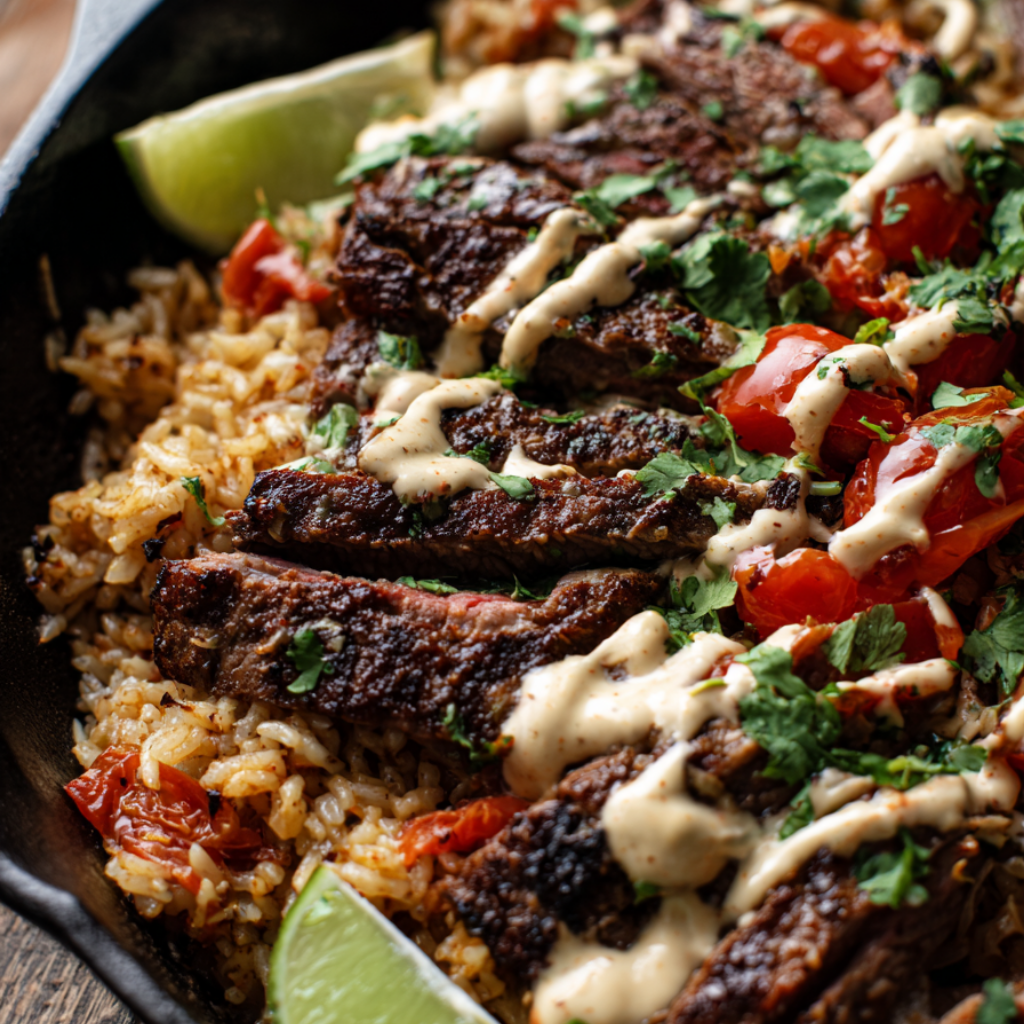

There’s a moment when flank steak first hits a screaming hot cast-iron skillet—the immediate sizzle, the smell of beef fat rendering into the pan, the crust forming in real time—that makes you remember why cooking at home is worth the effort.
And then there’s the moment a few minutes later, when the rice goes in with a can of Rotel tomatoes and green chiles, and you realize the whole dinner is going to come together in one pan in about 30 minutes.
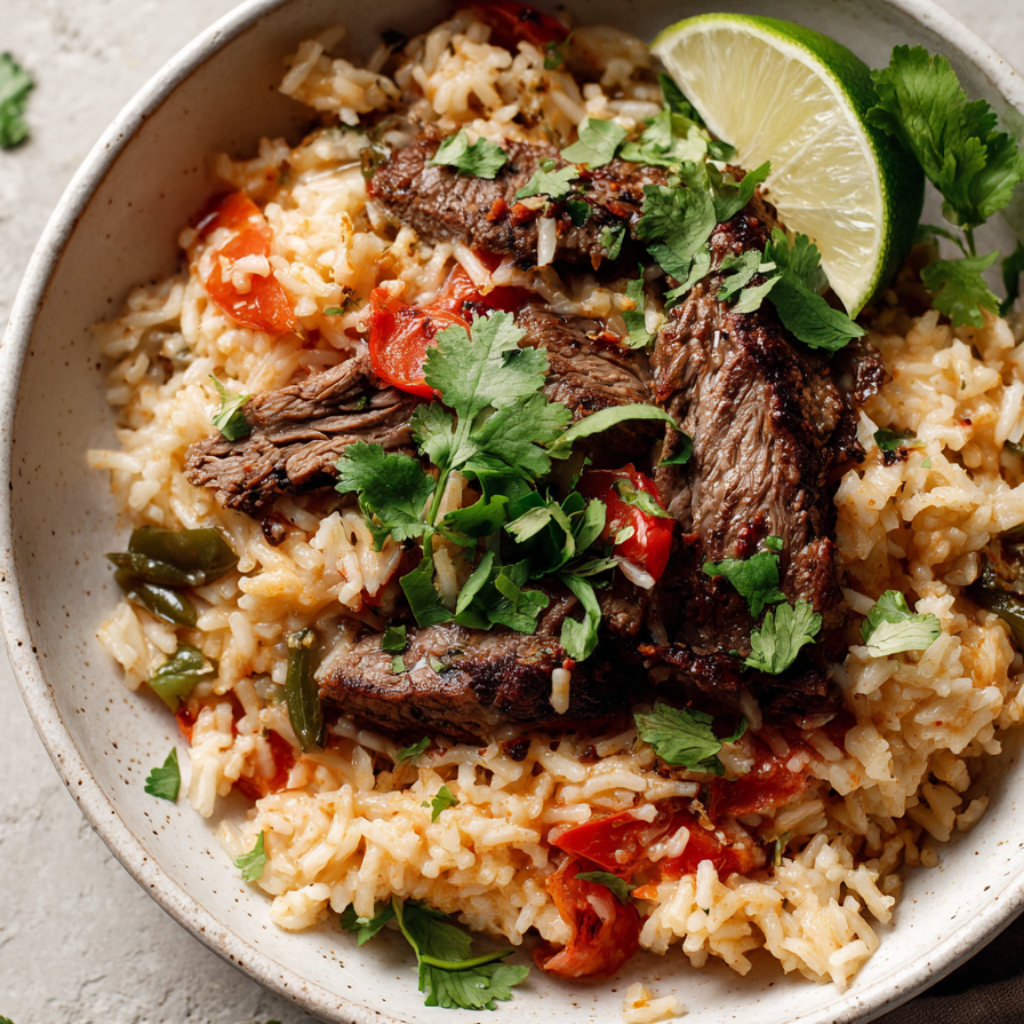
That’s what this recipe is. Seared flank steak and Mexican-spiced rice built in the same skillet, with the steak cooked first so its drippings flavor the vegetables and the rice.
It’s the kind of dinner that looks like you fussed but comes together faster than a delivery order. Bold, saucy, and just a little bit spicy from the Rotel and green chiles.
And here’s what makes it a high-protein dinner: flank steak brings about 38 grams of protein per serving. It’s not a rice dish with beef on top. It’s a real, complete meal.
It’s inspired by the flavors of a Tex-Mex rice bowl—Rotel tomatoes with green chiles, cumin, smoked paprika, garlic, and fresh lime.
And it works for a summer evening on the patio, a fall weeknight when you want something hearty, or any time you want bold flavor without a long ingredient list.
This steak-and-rice skillet earns a permanent spot in your weekly rotation.
Why This Recipe Works
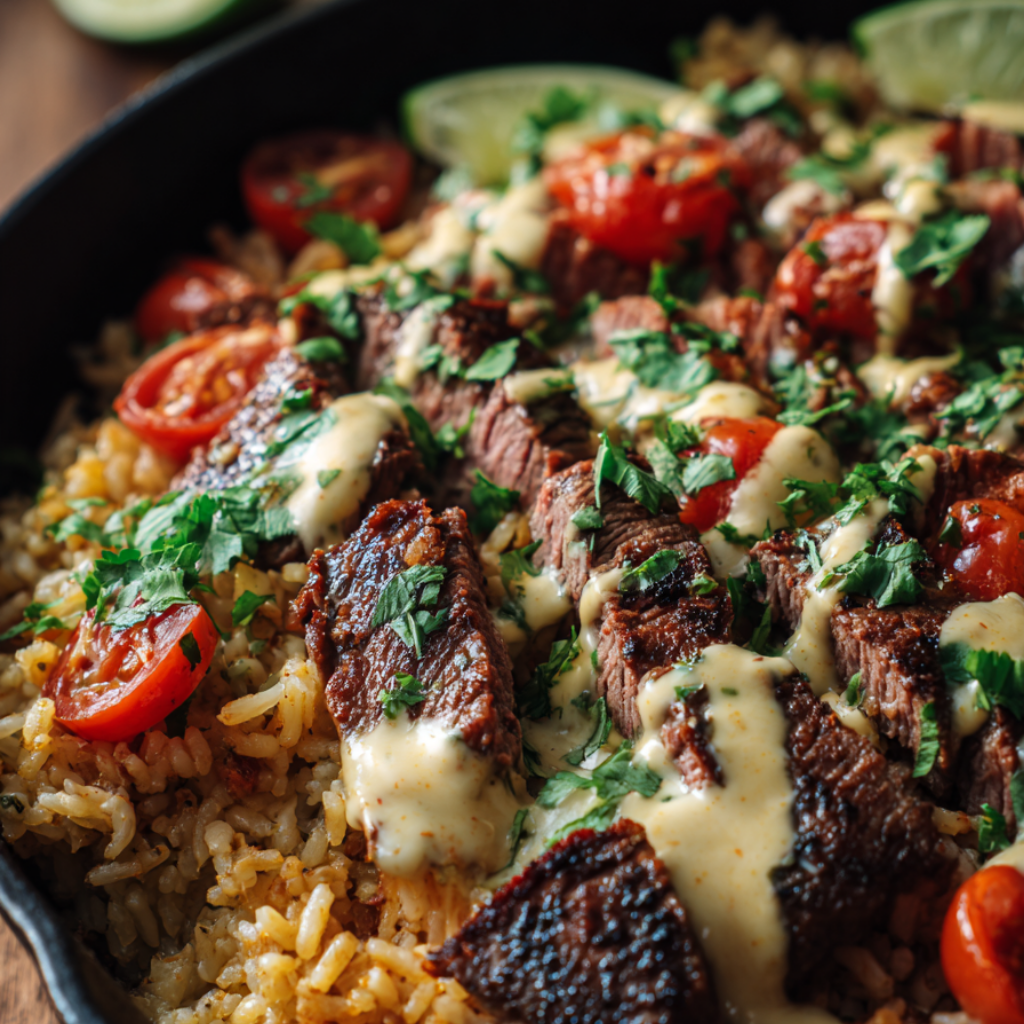
This isn’t a complicated dish, but a few small decisions make it work better than most steak-and-rice recipes. Here’s what actually matters:
Use Flank Steak or Skirt Steak. These cuts are thin, affordable, and packed with beef flavor. They’re also perfect for a quick sear—they cook in 2 to 3 minutes per side and stay tender if you slice against the grain. Ribeye and sirloin also work but cost more. Stew beef does not work here—it needs hours of braising to become tender.
Slice the Steak Thin and Against the Grain. This is the single most important technique for tender steak. Look at the muscle fibers running through the meat, and cut perpendicular to them. This shortens the fibers so each bite is tender, not chewy. Aim for ¼-inch thick slices.
Sear the Steak in a Screaming Hot Cast-Iron Skillet. Cast iron gets screaming hot and holds heat, giving you the deepest golden crust. Preheat the skillet for a full 3 to 4 minutes before the steak goes in. Sear for 2 minutes per side for medium-rare, then transfer to a plate to rest.
Leverage the Fond. Searing the steak first leaves behind precious brown fond—all those caramelized beef bits stuck to the bottom of the pan. Sautéing the onions and bell peppers right in those drippings instantly builds deep savory umami into the rice base.
Cook the Rice Right in the Pan. After the steak comes out, use the same skillet to cook the rice. The rice absorbs the beef drippings, Rotel, green chiles, and spices. This is what makes the whole dish taste cohesive instead of like separate components on a plate.
Use Long-Grain White Rice, Not Instant. Long-grain white rice (like jasmine or basmati) cooks in about 18 minutes and absorbs the liquid without turning mushy. Instant rice turns to paste. Brown rice works but needs more liquid and more time. Rinse the rice first to remove excess surface starch.
The Rice-to-Liquid Ratio Matters. One and a half cups of long-grain white rice with 2½ cups of beef broth, plus the liquid from the Rotel and green chiles, hits the moisture sweet spot needed to cook the rice tender and non-mushy in a covered skillet.
Rotel and Green Chiles for Flavor. Rotel is diced tomatoes with green chiles—it’s what gives this dish its signature tang and mild heat. Canned diced green chiles add another layer of roasted chile flavor. Together, they create deeply seasoned rice with no extra work.
Bloom the Spices and Toast the Tomato Paste. After the steak comes out, add the cumin, smoked paprika, garlic powder, and onion powder to the hot skillet and cook for 30 seconds before adding the rice and liquid. Then cook the tomato paste for a full minute, until it darkens. This is what builds the deep, savory base of the rice.
Don’t Stir the Rice While It Cooks. Once the rice and liquid go in, stir once to combine, then cover and leave it alone. Stirring releases starch and turns the rice gluey.
Watch the Rice Around 15 Minutes. This is the fix that prevents scorching. Cooking rice in a heavy cast-iron skillet on low can scorch the bottom if the burner runs hot. Check the rice at 15 minutes. If the liquid is fully absorbed and the rice is tender, it’s done. If there’s still liquid, cover and cook for another 2 to 3 minutes.
Let It Rest Off the Heat for 5 Minutes. This is the second half of the fix. After the rice is done, remove the skillet from the heat and let it sit covered for 5 minutes. The residual steam finishes the grain and releases the rice from the pan so nothing sticks.
A Squeeze of Lime at the End. Fresh lime juice is what wakes up the whole pan. Add it right before serving to keep the flavor bright.
Scatter Fresh Cilantro Over the Top. Cilantro is the fresh, grassy note that balances the richness of the steak and the spice of the rice.
Rest the Steak Before Slicing. Five minutes off the heat lets the juices redistribute back into the meat instead of running out onto the cutting board.
One-Pan Steak and Rice with Rotel Recipe
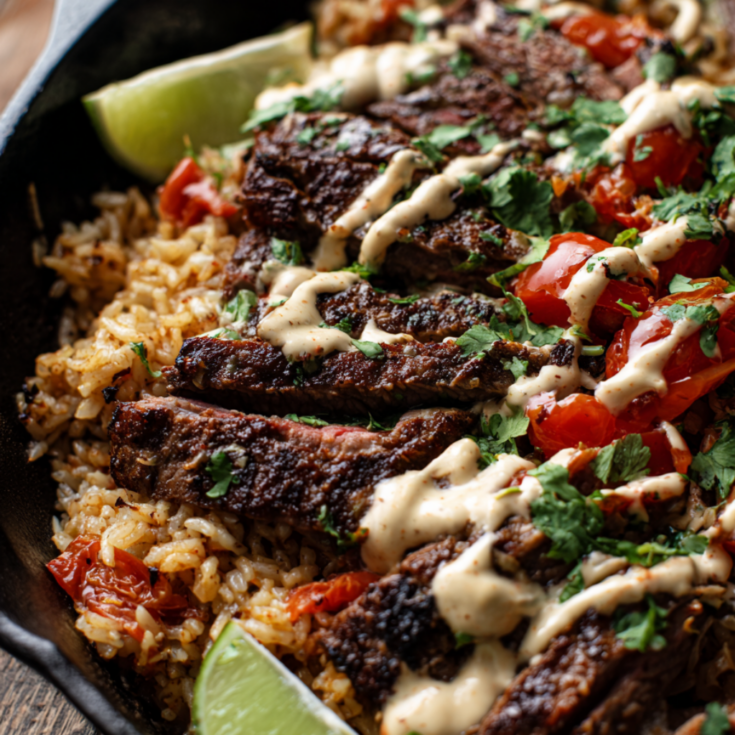
A one-pan steak and rice skillet with seared flank steak, Rotel tomatoes, green chiles, and Mexican-spiced rice. Ready in 30 minutes and packed with 38g protein per serving.
Ingredients
For the Steak
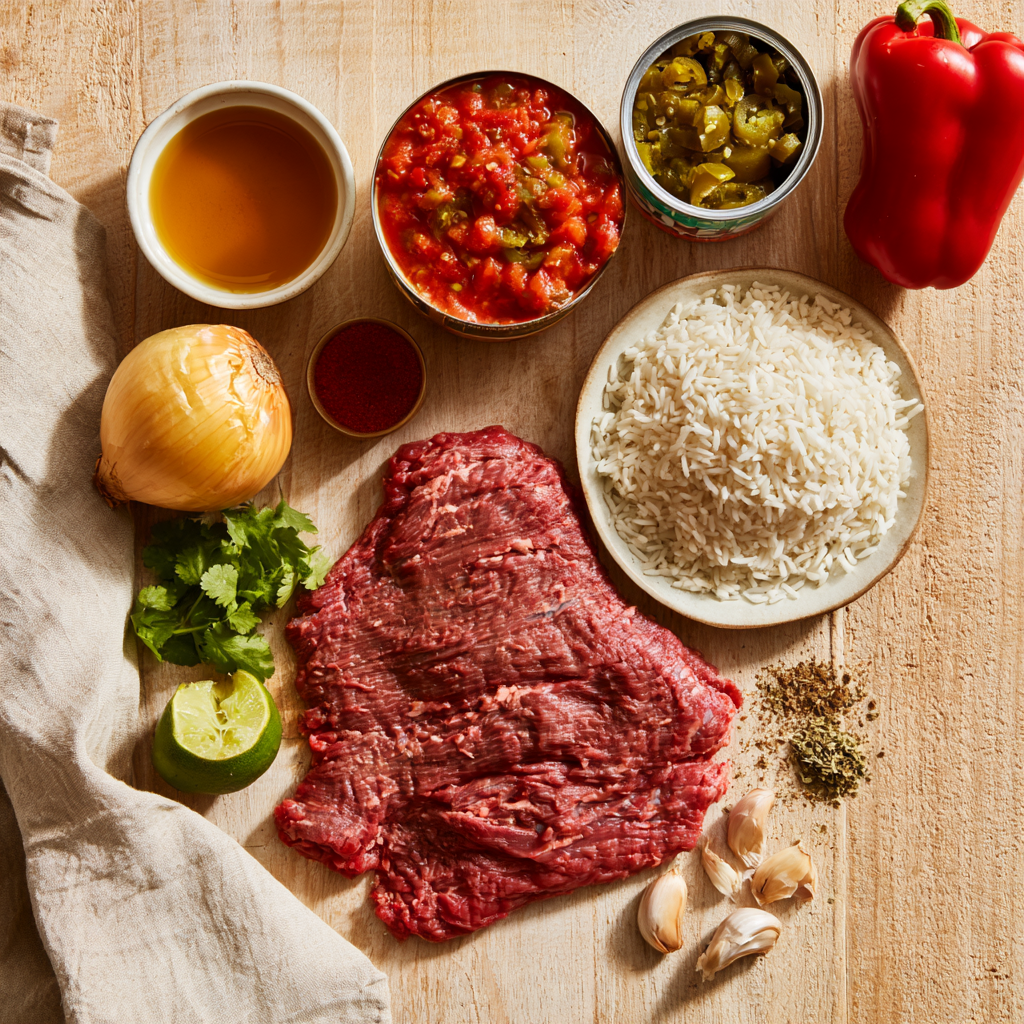
- 1½ lbs flank steak or skirt steak
- 1 tsp kosher salt
- ½ tsp freshly ground black pepper
- ½ tsp garlic powder
- 1 tbsp olive oil
For the Rice
- 1 tbsp olive oil
- 1 small yellow onion, diced
- 1 red bell pepper, diced
- 3 cloves garlic, minced
- 1 tsp ground cumin
- 1 tsp smoked paprika
- ½ tsp dried oregano
- ½ tsp kosher salt
- ¼ tsp freshly ground black pepper
- 1 tbsp tomato paste
- 1 (10 oz) can Rotel diced tomatoes with green chiles, undrained
- 1 (4 oz) can diced green chiles, undrained
- 1½ cups long-grain white rice (jasmine or basmati), rinsed and drained
- 2½ cups low-sodium beef broth
- 1 tbsp Worcestershire sauce
For Serving
- 2 tbsp fresh lime juice (about 1 lime)
- ¼ cup fresh cilantro, chopped
- Lime wedges
- Diced avocado (optional)
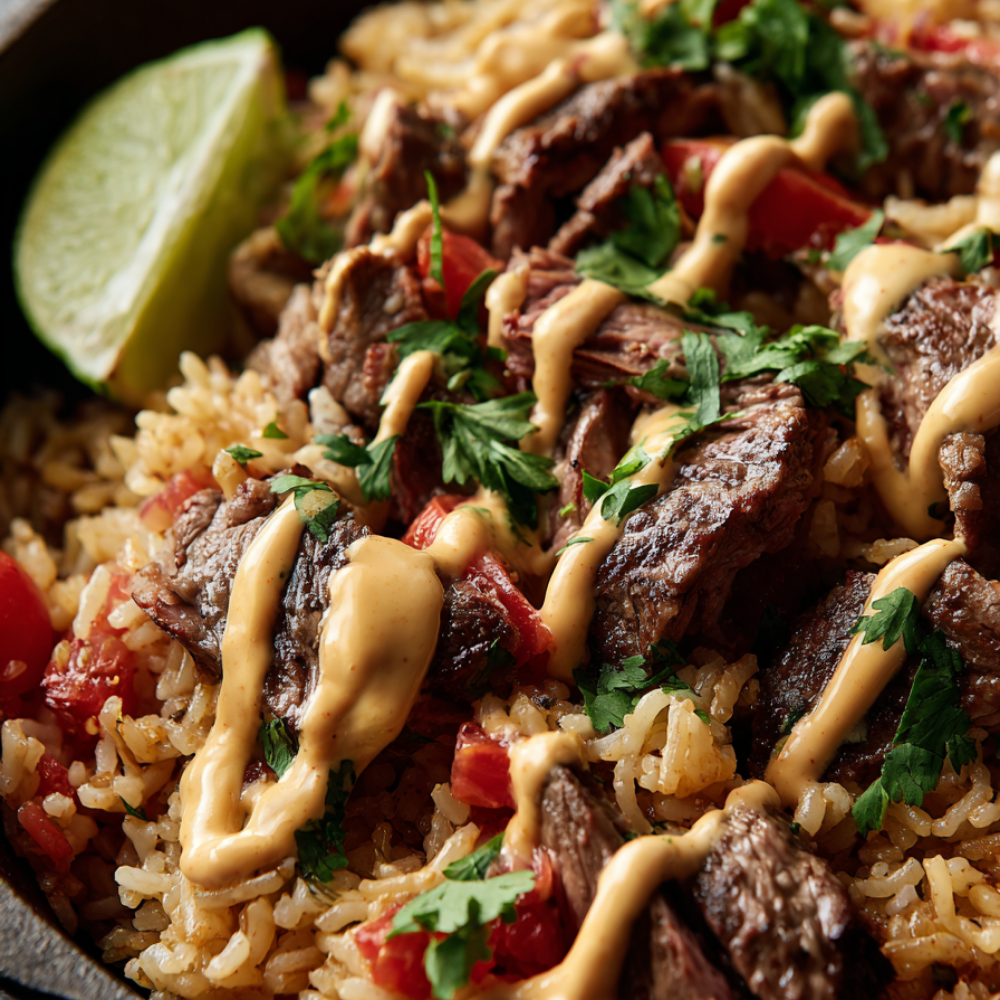
- Dairy-free cashew cream or dairy-free yogurt (optional, for a creamy element without cheese)
Instructions
- Prep the steak. Pat the flank steak dry with paper towels. Season both sides with kosher salt, black pepper, and garlic powder. Let it sit at room temperature for 10 minutes while you prep the vegetables.
- Sear the steak. Heat a large cast-iron skillet over medium-high heat for 3 to 4 minutes, until it's screaming hot. Add the 1 tablespoon of olive oil. Sear the steak for 2 minutes per side for medium-rare, or 3 minutes per side for medium. Transfer the steak to a cutting board and let it rest while you make the rice.
- Sauté the vegetables in the fond. Reduce the heat to medium. Add the 1 tablespoon of olive oil to the same skillet. Add the diced onion and bell pepper and cook for 4 to 5 minutes, until softened, scraping up the browned bits from the bottom of the pan as you go. Add the minced garlic and cook for 30 seconds.
- Bloom the spices and toast the tomato paste. Stir in the cumin, smoked paprika, oregano, kosher salt, and black pepper. Cook for 30 seconds, until fragrant. Add the tomato paste and cook for 1 minute, stirring constantly, until it darkens and toasts.
- Add the Rotel, green chiles, and rice. Pour in the entire can of Rotel, including the juices, and the entire can of green chiles, including the juices. Stir in the rice, beef broth, and Worcestershire sauce. Stir once to combine. Bring to a gentle simmer.
- Cover and cook the rice. Reduce the heat to low, cover the skillet tightly, and cook undisturbed for 16 to 18 minutes. Check the rice at 15 minutes. If the liquid is fully absorbed and the rice is tender, it's done. If there's still liquid, cover and cook for another 2 to 3 minutes.
- Rest off the heat. Remove the skillet from the heat and let it sit covered for 5 minutes. This finishes the grain and prevents the bottom from sticking.
- Slice the steak. While the rice rests, slice the flank steak against the grain into ¼-inch-thick strips.
- Finish and serve. Uncover the rice, fluff gently with a fork, and drizzle the fresh lime juice over the top. Arrange the sliced steak across the rice. Scatter the fresh cilantro over everything. Serve immediately with lime wedges on the side, and add avocado or dairy-free cashew cream for a creamy element.
Notes
Protein per Serving: About 38gNutrition Note: Protein calculated from 1½ lbs raw flank steak yielding about 17 oz cooked (≈144g protein) and 1½ cups dry long-grain white rice (≈12g) — about 156g total across 4 servings — about 38g per serving, with about 2g more from the Rotel and green chiles. About 480 calories per serving. Using skirt steak instead of flank keeps the protein about the same. Using brown rice adds 2- 3 g of fiber per serving and about 5 minutes of cook time.
Tips for the Best Steak and Rice Skillet
Slice the steak against the grain. Look at the muscle fibers running through the meat and cut perpendicular to them. This shortens the fibers so each bite is tender, not chewy.
Use flank steak or skirt steak. These cuts are thin, affordable, and full of beef flavor. Ribeye and sirloin work but cost more. Stew beef does not work here.
Sear in a screaming hot cast-iron skillet. Preheat for 3 to 4 minutes before adding the steak. The steak needs contact with a very hot surface to develop a deep golden crust.
Sauté the vegetables in the steak drippings. Those browned bits left in the pan are pure flavor. Scrape them up as the vegetables cook so they get incorporated into the rice.
Bloom the spices and toast the tomato paste. The spices go in for 30 seconds, then the tomato paste for a full minute. This builds the rice’s deep, savory base.
Don’t stir the rice while it cooks. Once the rice and liquid go in, stir once to combine, then cover and leave it alone. Stirring releases starch and turns the rice gluey.
Check the rice at 15 minutes. Cooking rice in a heavy cast-iron skillet on low can scorch it if the burner runs hot. Check at 15 minutes and pull it off the heat if it’s done.
Let it rest covered off the heat for 5 minutes. The residual steam finishes the grain and releases the rice from the pan.
Use long-grain white rice, not instant. Jasmine or basmati rice cooks in about 18 minutes and absorbs the liquid without turning mushy.
Squeeze lime at the end, not during the cook. Fresh lime juice added off the heat stays bright and doesn’t taste cooked.
Rest the steak before slicing. Five minutes off the heat lets the juices redistribute back into the meat.
Add a creamy element if you want one. A dollop of dairy-free cashew cream, dairy-free yogurt, or a scoop of guacamole all work beautifully. None of them are cheese.
Easy Variations
Beef Tips Over Rice. Swap the flank steak for 1½ lbs of beef sirloin cut into 1-inch cubes. Sear the cubes for 2 minutes per side, then proceed with the recipe. Beef tips are slightly more tender and soak up more sauce.
Steak Fried Rice Recipe. Skip the Rotel and green chiles. Cook the rice separately, then stir-fry it in the skillet with the steak, soy sauce, sesame oil, scrambled eggs, and frozen peas and carrots.
Beef and Rice Skillet (Ground Beef Version). Swap the flank steak for 1½ lbs of 90% lean ground beef. Brown the beef first, then follow the rest of the recipe. The result is a Tex-Mex ground beef and rice skillet that’s even faster to make.
Pepper Steak and Rice Recipes. Skip the Rotel and green chiles. Add 2 sliced bell peppers and 1 sliced onion with the steak, and finish the rice with soy sauce, ginger, and a splash of rice vinegar.
Steak Rice Bowl Recipes. Serve the steak and rice in individual bowls topped with avocado, pickled red onion, and a drizzle of dairy-free cashew cream.
Stew Beef and Rice. Skip the flank steak. Instead, brown 1½ lbs of beef stew meat in the skillet, then add the rice, Rotel, and 3 cups of beef broth. Cover and simmer for 45 minutes, until the beef is tender.
Storage and Food Safety
Refrigerator: Store leftovers covered in an airtight container for up to 3 days. Reheat gently in a skillet over medium-low heat with a splash of broth or water.
Freezer: The rice freezes well for up to 3 months. Cooked steak freezes well for up to 2 months. Cool completely, transfer to freezer-safe containers, and freeze. Thaw overnight in the refrigerator and reheat gently.
Make Ahead: Cook the rice up to 2 days ahead and store it in the refrigerator. You can slice and season the steak up to 24 hours ahead.
Food Safety: Steak must reach an internal temperature of 145°F for medium-rare or 160°F for medium before serving. Cool leftovers within 2 hours and refrigerate promptly. Reheat leftovers to 165°F. Do not leave the steak at room temperature for more than 2 hours.
Frequently Asked Questions
How much protein is in steak and rice? About 38g per serving from the flank steak and rice across 4 servings. Flank steak is one of the leanest and highest-protein cuts of beef.
What’s the best cut of steak for this recipe? Flank steak or skirt steak. Both are thin, affordable, and full of beef flavor. They sear quickly and stay tender if you slice them against the grain.
How do I slice the steak so it’s tender? Slice against the grain. Look at the muscle fibers running through the meat and cut perpendicular to them. This shortens the fibers so each bite is tender.
Why does my rice scorch in the cast-iron skillet? Cooking rice in a heavy cast-iron skillet on low can scorch it if the burner runs hot. Check the rice at 15 minutes and pull it off the heat if it’s done. Then let it rest covered off the heat for 5 minutes before fluffing.
Can I use ground beef instead of flank steak? Yes. Use 1½ lbs of 90% lean ground beef. Brown it first, then proceed with the recipe.
Can I use brown rice instead of white rice? Yes, but brown rice needs more liquid (3 cups instead of 2½) and more time (about 40 minutes instead of 18). It also adds 2-3 grams of fiber per serving.
Can I make this in an Instant Pot? Yes. Sear the steak using the sauté function. Remove and set aside. Sauté the vegetables and bloom the spices. Add the rice, Rotel, green chiles, and broth. Pressure cook on High for 4 minutes, then let it rest for 10 minutes. Slice the steak and serve over the rice.
Can I make this without Rotel? Yes. Use 1 can diced tomatoes and 1 can diced green chiles. The flavor is very close.
Is this spicy? It’s mildly spicy. The Rotel and green chiles add mild heat most people can handle. For more heat, add 1 diced jalapeño with the vegetables.
Can I make this dairy-free? Yes. The recipe is naturally dairy-free as written. For a creamy element, use dairy-free cashew cream or dairy-free yogurt.
What do I serve with steak and rice? Sliced avocado, a simple cabbage slaw, a cucumber salad, or pickled red onion. All of them balance the steak’s richness.
More High Protein Steak Recipes You’ll Love
Beef Barbacoa Slow Cooker Recipe
Conclusion
A One-Pan Steak and Rice with Rotel earns its spot in the weekly rotation. It’s bold, saucy, and undeniably delicious. And with about 38 grams of protein per serving, it’s a real meal that keeps you full.
The restaurant version is delicious and also expensive.
This one keeps all the seared steak, seasoned rice, and saucy Rotel tomatoes you love and rebuilds it in one pan in about 30 minutes. The steak sears hard in a screaming-hot cast-iron skillet and is sliced against the grain.
The rice cooks directly in the pan with the Rotel, green chiles, and spices, absorbing all the flavor. A squeeze of fresh lime and a scatter of cilantro at the end brighten it all.
The three things that make it work are these. Slice the steak against the grain. Cook the rice directly in the pan with the Rotel and green chiles. And check the rice at 15 minutes, then let it rest off the heat for 5 minutes so nothing sticks.
About 38 grams of protein per serving. Four generous portions. Ready in about 30 minutes, one pan, and endlessly adaptable with ground beef, beef tips, or pepper steak versions.
Make it tonight and add it to your weekly rotation. This steak-and-rice skillet earns a permanent spot on the table.