
A good tuna salad makes a great no-cook lunch or afternoon snack, but as soon as it hits a lettuce leaf, things can go wrong fast.
The lettuce wilts, the dressing thins out, and by the time you sit down to eat, you’re holding a soggy hand full of disappointment.
These tuna lettuce wraps fix that.
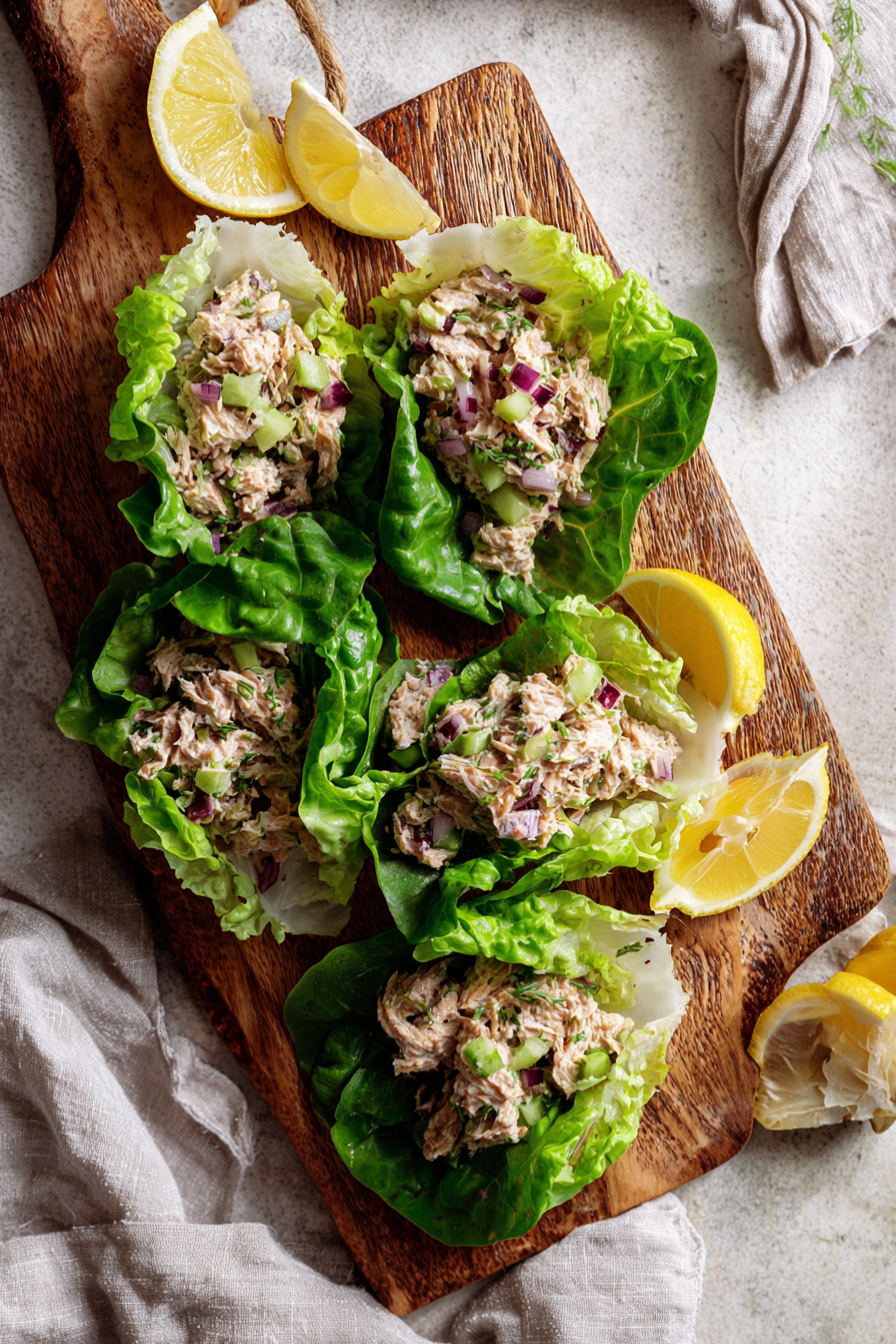
They’re bright and creamy, with a lemon-Dijon Greek yogurt dressing that coats every flake of tuna without drowning it, and they stay crisp from the moment you pack them to the moment you bite in.
The flavor is what keeps me coming back.
Dijon and fresh lemon cut through the richness of the yogurt, finely diced celery and red onion give it crunch and a little bite, and a few capers and a scatter of dill add a briny, herby note that makes it taste like something you’d order at a nice lunch spot.
It’s light enough for a midday meal but satisfying enough that you won’t be hunting for a snack an hour later.
And with 32 grams of protein per serving, it actually keeps you full.
What makes it work is the prep. Press the tuna dry against a strainer and pat it with paper towels so no hidden water dilutes the dressing. Whisk the yogurt, Dijon, and lemon into a smooth emulsion before adding the tuna, which keeps the dressing glossy instead of grainy.
Store the salad separately from the lettuce, so you can assemble fresh wraps whenever you’re ready to eat. It’s a ten-minute lunch that eats like it took more effort, and it’s forgiving enough to become a weekly habit.
Why This Recipe Works
Pressing the tuna dry is the difference between a dressing that holds and one that thins out. Canned tuna packed in water holds more moisture than it looks, and tipping the lid isn’t enough. Pressing it firmly against a fine-mesh strainer with a fork, then patting it with paper towels, keeps the yogurt dressing thick and glossy for days instead of letting it turn watery by day two.
Whisk the dressing before adding the tuna to keep it smooth. Greek yogurt is lower in fat than mayonnaise, and when acid hits it cold, it can look slightly grainy. Whisking the yogurt, Dijon, and lemon juice first creates a cohesive emulsion, so when you fold in the tuna and vegetables, the dressing coats evenly instead of separating.
Celery and red onion are not optional. They’re the texture contrast that makes this feel like a real lunch instead of a protein delivery system. Finely diced celery gives snap, red onion gives a sharp little bite, and both keep their crunch even after a day in the fridge.
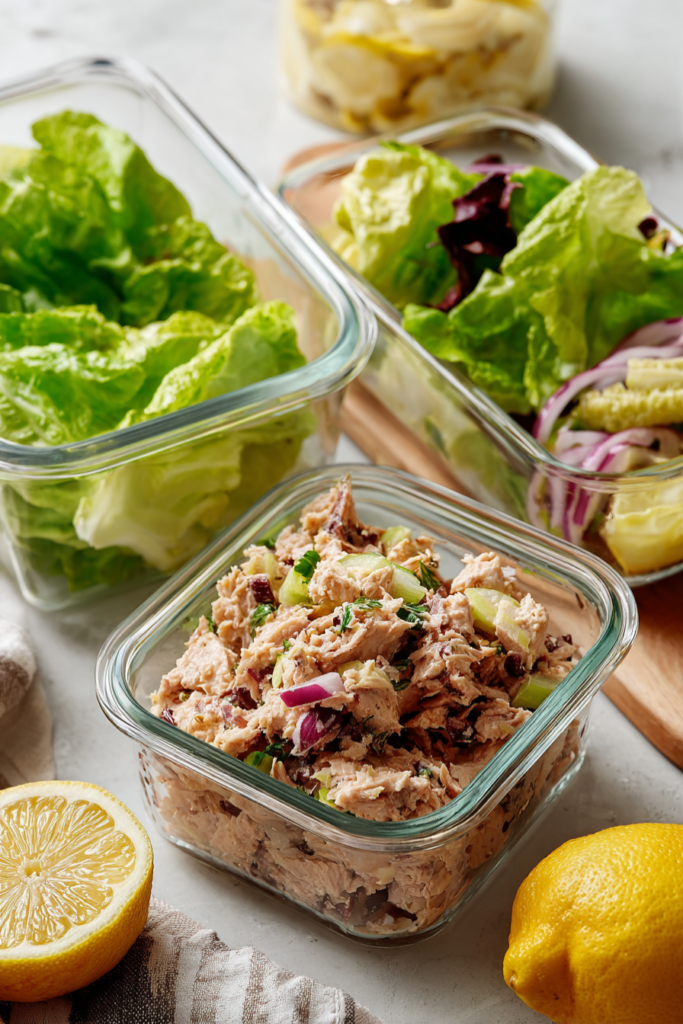
Storing the salad separately and assembling fresh is the whole anti-sog strategy. Wet lettuce is the other culprit behind soggy wraps, so wash the leaves, dry them thoroughly, and chill them. Keep the salad in its own container and spoon it onto the leaves right before eating so every wrap stays crisp.
The dressing is intentionally light, not heavy. Three tablespoons of yogurt for two cans of tuna makes a glossy coating rather than a thick, mayo-heavy salad. That’s the right call for lettuce wraps—a wet salad wilts the leaves—and it keeps the calories low without sacrificing flavor.
Ingredients That Matter
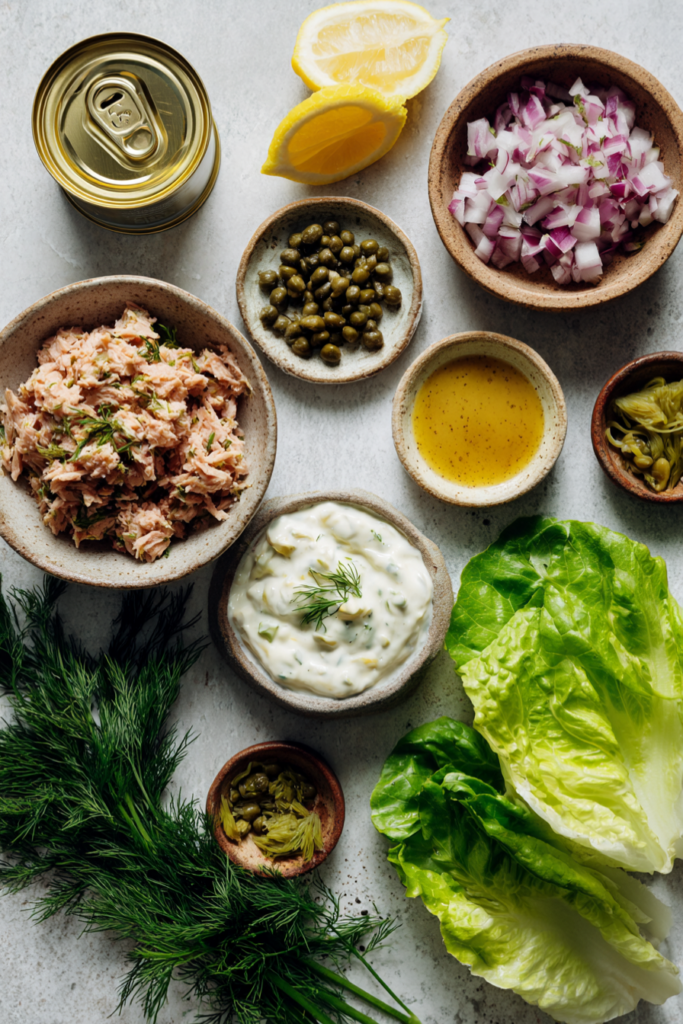
Tuna in water, pressed and patted dry. Tuna packed in oil is richer but heavier, and it doesn’t need as much yogurt dressing. Water-packed tuna lets the lemon and Dijon do the flavor work, but only if you press it dry first—otherwise the dressing turns thin.
Thick-style Greek yogurt (2% or non-fat). Thin or regular yogurt makes the dressing watery. Thick-style Greek yogurt has less whey, so it emulsifies with the Dijon and lemon into something that clings to the tuna instead of pooling at the bottom of the bowl.
Fresh lemon juice, not bottled. Bottled lemon juice tastes flat and slightly metallic, and it won’t brighten the dressing the way fresh juice does. One lemon gives you more than the tablespoon you need, and the extra wedges are good for serving.
How to Make It
1. Drain and press the tuna. Open 2 cans (5 oz each) of tuna in water. Press the tuna firmly against a fine-mesh strainer with a fork to squeeze out the packing water, then pat it dry with paper towels. Transfer to a mixing bowl.
2. Whisk the dressing. In a small bowl, whisk together 3 tablespoons thick Greek yogurt, 1 tablespoon Dijon mustard, 1 tablespoon fresh lemon juice, ½ teaspoon kosher salt, and ¼ teaspoon black pepper until smooth and emulsified.
3. Combine and toss. Add ½ cup of finely diced celery and 2 tablespoons of finely diced red onion to the tuna. Pour the dressing over and gently toss with a spatula until every flake is evenly coated. Taste and adjust salt.
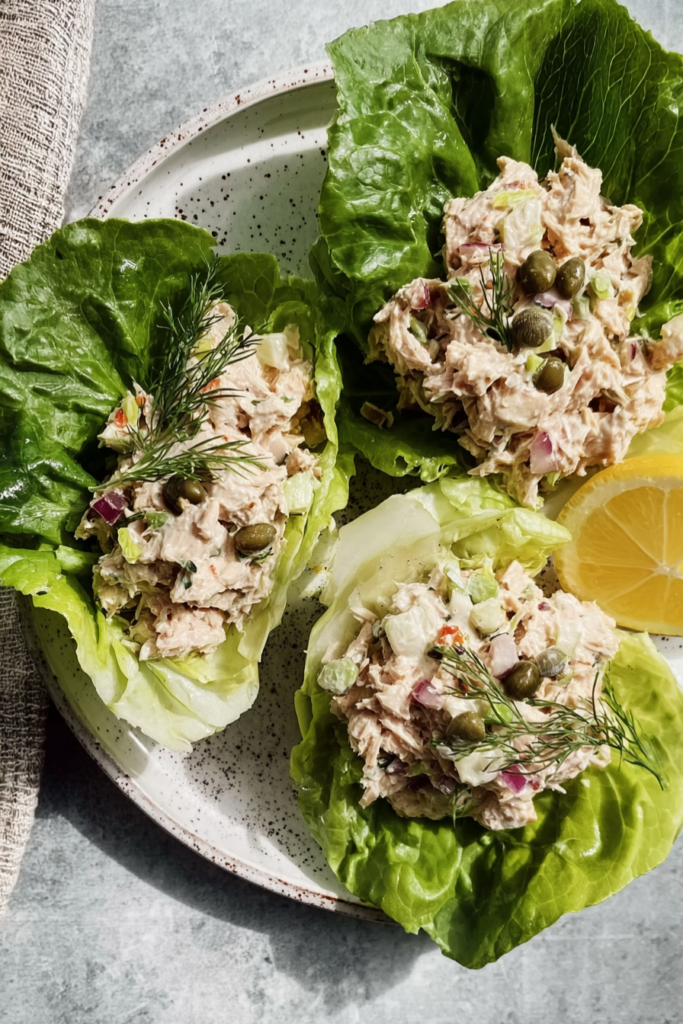
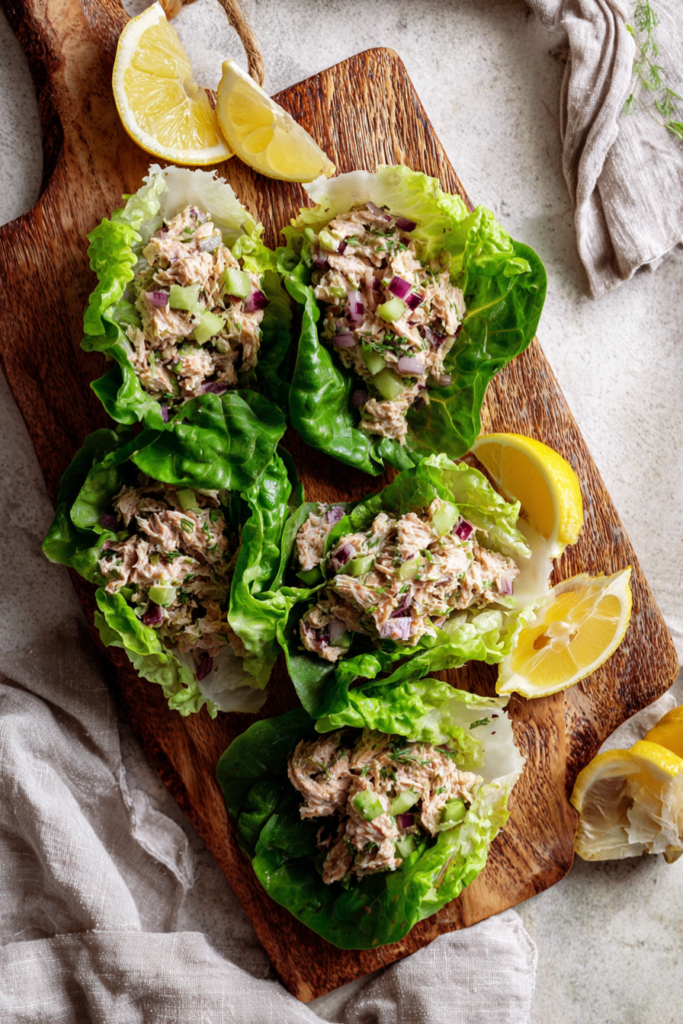
4. Assemble and serve. Spoon generous portions into crisp lettuce leaves—butter lettuce or romaine both work. Garnish with capers, fresh dill, and a lemon wedge if you like.
Make-ahead: Store the tuna salad in an airtight container in the refrigerator for up to 3 days. Keep the lettuce washed, dried, and chilled separately, and assemble wraps fresh each day.
Tips and Troubleshooting
The salad turned watery after a day in the fridge. The tuna wasn’t pressed dry enough. Press it against a fine-mesh strainer and pat it with paper towels until it feels dry to the touch, not just drained.
The dressing looks grainy. You mixed the yogurt and lemon juice cold without whisking first, or the yogurt wasn’t thick-style. Whisk the yogurt, Dijon, and lemon together before adding the tuna, and use thick Greek yogurt.
The lettuce is wilted before you even eat. The leaves were wet, or you spooned the salad in too early. Dry the lettuce thoroughly, chill it, and assemble right before eating.
It tastes flat. It needs a final taste for salt, and the lemon matters. Fresh lemon juice and a pinch of salt at the end wake up the whole bowl.
It’s too salty. Capers, Dijon, and tuna all carry salt. Hold back on added salt until the final taste, and rinse the capers if they’re packed in brine.
You want more protein. Blend 2 tablespoons of low-fat cottage cheese into the yogurt dressing before whisking—it adds about 4g of protein per serving without changing the flavor much.
Storage and Make-Ahead
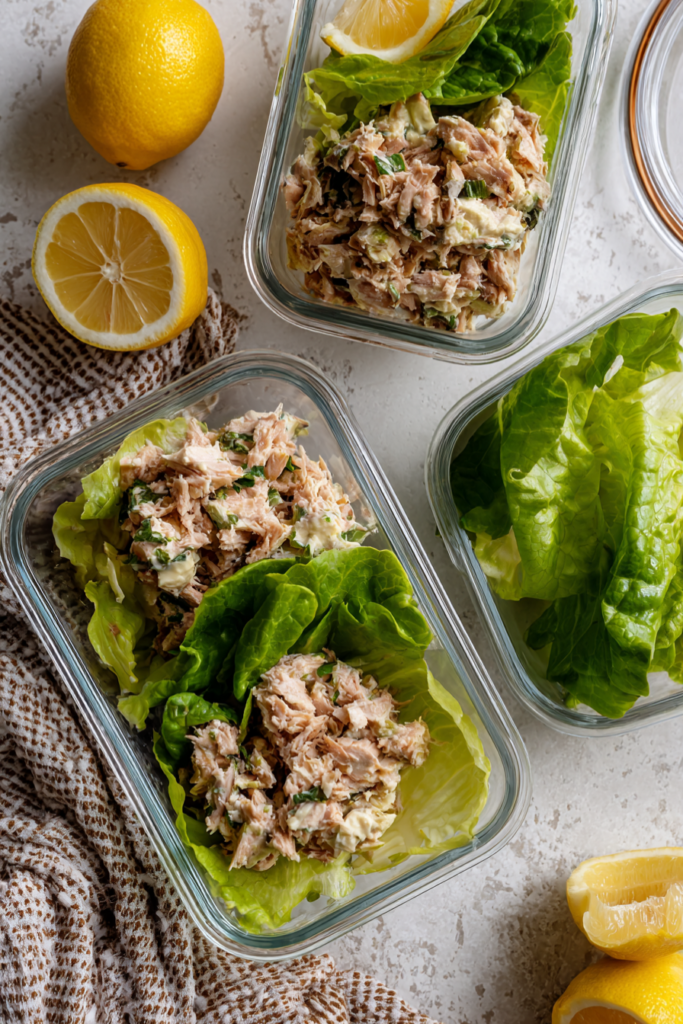
Store the tuna salad in an airtight container in the refrigerator for up to 3 days.
Keep the lettuce separate—washed, thoroughly dried, and chilled in its own container—and assemble wraps fresh each day so the leaves stay crisp.
Don’t freeze the salad; the tuna and yogurt break down when thawed. If you’re packing it for lunch, bring the salad and lettuce separately and assemble at your desk or at the table.
Tuna Salad Lettuce Wraps
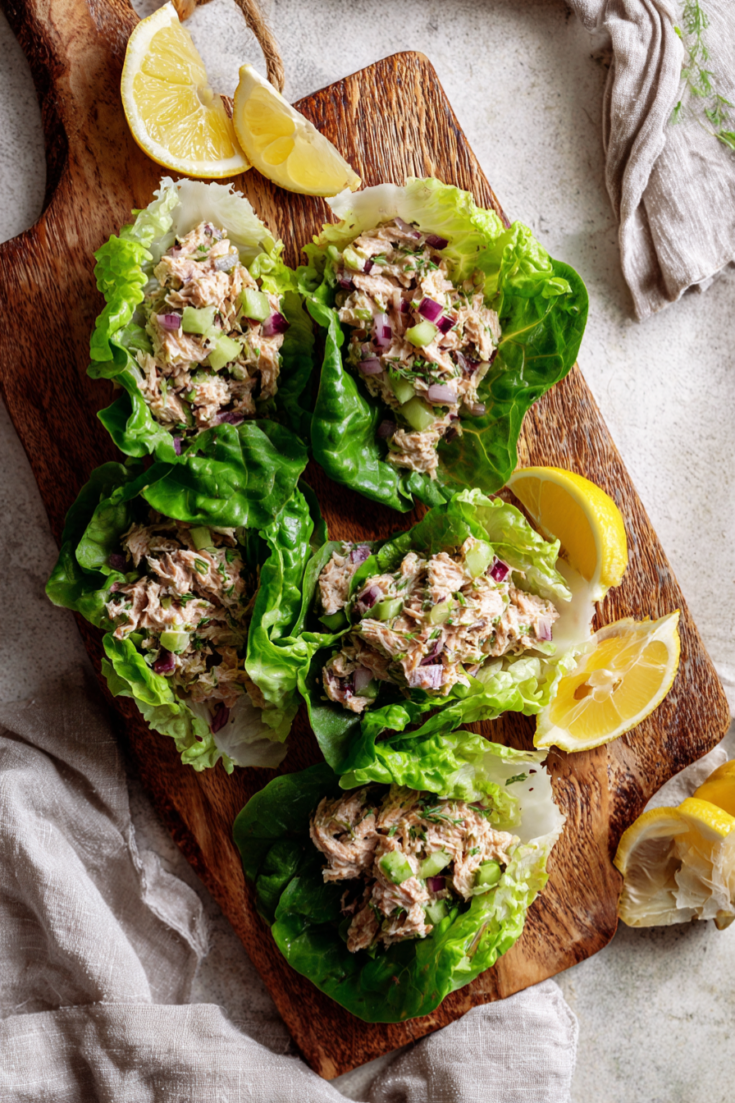
A crisp, high-protein snack or lunch with pressed-dry tuna, a bright lemon-Dijon Greek yogurt dressing, and fresh lettuce cups.
Ingredients
- 2 cans (5 oz each) tuna in water, thoroughly drained, pressed, and patted dry
- 3 tbsp plain Greek yogurt (2% or non-fat, thick style)
- 1 tbsp Dijon mustard
- 1 tbsp fresh lemon juice
- ½ cup celery, finely diced
- 2 tbsp red onion, finely diced
- ½ tsp kosher salt
- ¼ tsp freshly ground black pepper
- Butter lettuce or romaine leaves, washed, thoroughly dried, and chilled
- Optional: 2 tbsp low-fat cottage cheese blended into the dressing for +4g protein
- Optional garnish: capers, fresh dill, lemon wedge
Instructions
- Press the tuna against a fine-mesh strainer with a fork, then pat dry with paper towels. Transfer to a bowl.
- Whisk the yogurt, Dijon, lemon juice, salt, and pepper until smooth and emulsified.
- Add the celery and red onion to the tuna, pour over the dressing, and toss gently to coat. Taste and adjust salt.
- Spoon into crisp lettuce leaves, garnish with capers and dill, and serve with a lemon wedge.
Notes
Notes: Store the tuna salad in an airtight container up to 3 days; keep lettuce separate and assemble fresh. Don't freeze. Nutrition is an estimate.
Nutrition (per serving, estimated): 240 calories, 32g protein, 6g carbs, 4g fat, 2g fiber, 480mg sodium.
FAQ
Can I use Greek yogurt instead of mayonnaise? Yes—that’s what this recipe is built on. Thick Greek yogurt keeps the salad creamy and high-protein without mayo’s fat. Whisk it with the Dijon and lemon first so it doesn’t look grainy.
What if I don’t have Dijon mustard? Yellow mustard works in a pinch, but Dijon brings a sharper, more complex flavor that’s worth keeping on hand. Whole-grain mustard is a good middle ground.
Can I make this with canned salmon or chicken? Yes. Canned salmon works the same way—drain and press it—and leftover shredded chicken is a good swap. Adjust the salt depending on how seasoned the protein is.
Is this a good keto lettuce wrap? It fits keto well—the carbs come mostly from the vegetables and the lettuce. Skip the optional cottage cheese if you’re tracking closely, and serve it with extra lettuce leaves.
Can I add other vegetables? Yes. Finely diced cucumber, radish, or bell pepper all work, but dice them small and pat them dry so they don’t water down the dressing.
How far ahead can I make the tuna salad? Up to 3 days ahead. The flavor actually improves after a few hours in the fridge, but keep the lettuce separate so the wraps stay crisp.
More Recipes You’ll Love
- Smoked Salmon Rice Cakes — High-Protein Snack, 5 Minutes
- Adult Lunchable Ideas: 7 Lazy No-Cook Snack Boxes That Make Meal Prep Easy
- 18 Easy Mediterranean Diet Snacks
Closing
The pressed-dry tuna and the separate storage are the two things that make these wraps stay crisp until you’re ready to eat them—everything else is lemon and Dijon.
It’s the one I’d hand you first on a day when you want a lunch that feels light but actually holds you.
Make a batch, keep the lettuce cold, and tell me whether you used capers.