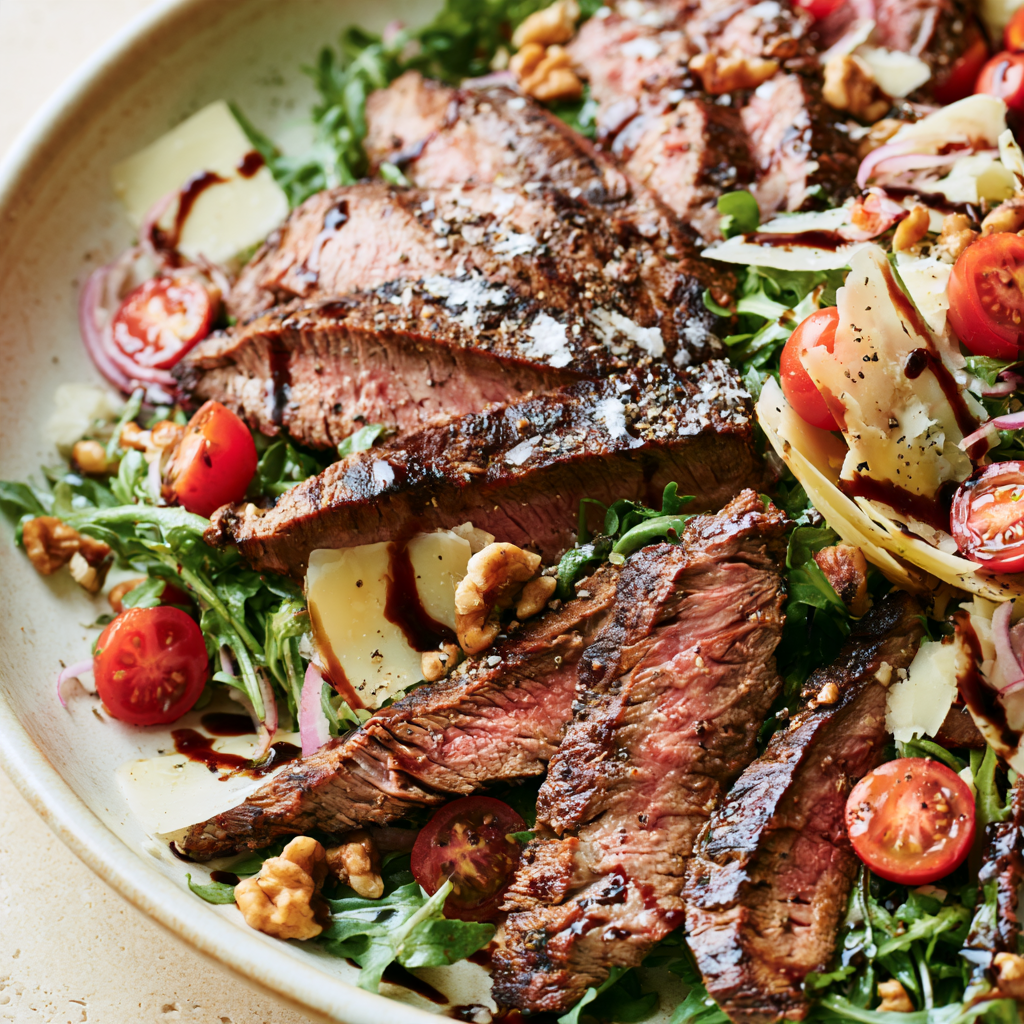

Most arugula salads are side dishes. A handful of peppery greens, a drizzle of dressing, maybe some shaved parmesan — pretty, light, and gone in five minutes. This is not that.
This is a steak and arugula salad that eats like a full dinner.
Juicy, deeply seared flank steak sliced thin against the grain, piled over a bed of peppery arugula, and finished with shaved parmesan, cherry tomatoes, red onion, toasted walnuts, and a glossy balsamic glaze.
About 40g of protein per serving. It’s a restaurant-quality plate you can make in 25 minutes on a Tuesday.
The combination works because of contrast. The arugula is sharp and peppery. The steak is rich and savory. The balsamic glaze is sweet and tangy.
The parmesan adds salty depth, the walnuts add crunch, and the cherry tomatoes add brightness. Every bite has something going on.
It’s also naturally gluten-free, low-carb, and genuinely one of the best high-protein salads you can make. Serve it as a main course for dinner, meal prep it for the week, or bring it to a dinner party as the showpiece. It works for all of it.
And if you’ve been looking for a reason to eat more arugula, here it is. It’s the salad that converts people who think they don’t like salads.
Why This Steak and Arugula Salad Works
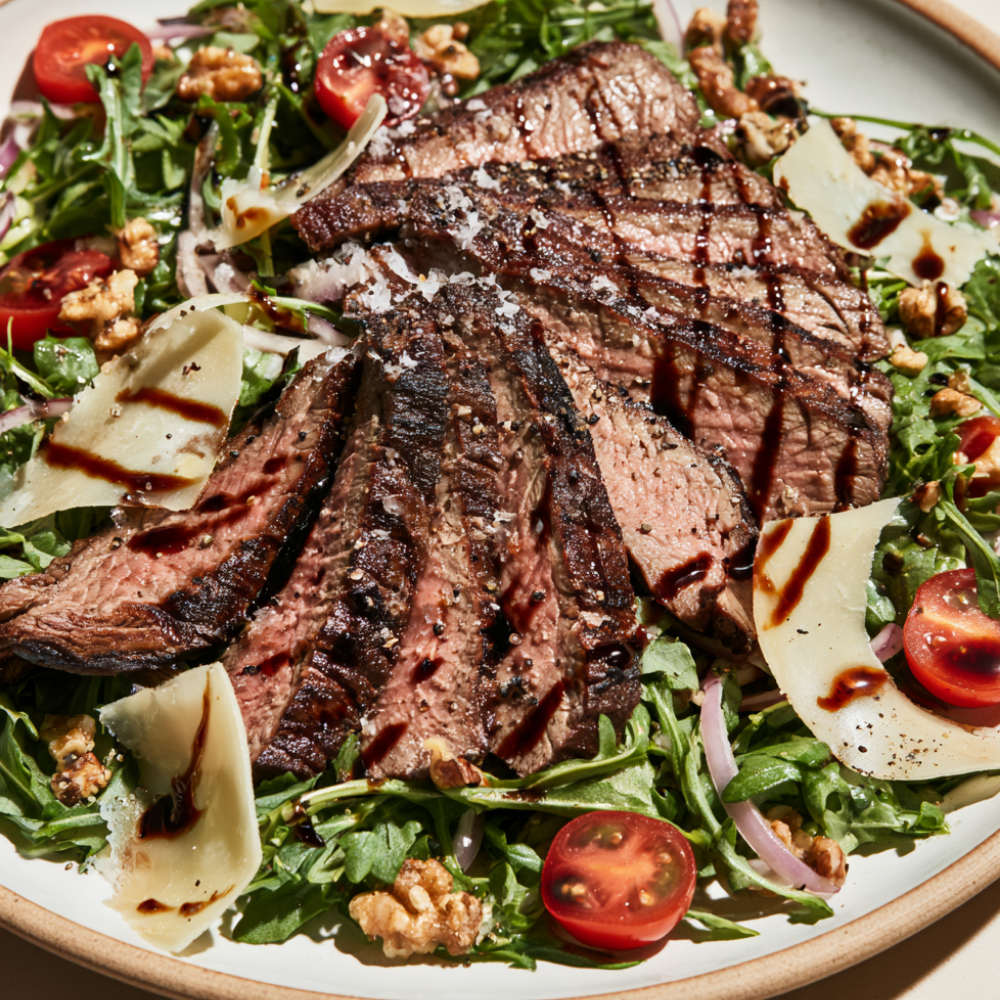
Flank steak is the right cut for a salad. It’s thin, cooks in under 10 minutes, is deeply beefy, and, when sliced against the grain, is tender enough to eat with a fork.
It’s also lean and high in protein — perfect for a dinner salad that actually fills you up.
The balsamic glaze ties everything together. Reduced balsamic vinegar with a touch of honey becomes a sweet, tangy, syrupy drizzle that coats the steak and greens. It’s the same glaze restaurants use, and it’s incredibly easy to make at home.
Arugula is the right green for steak. Its peppery, slightly bitter bite cuts through the richness of the beef and parmesan. Softer greens like spinach or butter lettuce get lost next to a steak. Arugula stands up to it.
Shaved parmesan adds salty depth. A vegetable peeler turns a block of parmesan into delicate ribbons that melt slightly against the warm steak. Pre-grated parmesan is fine in a pinch, but shaved is a different experience.
Toasted walnuts add crunch and richness. Toasting them for 3 minutes in a dry skillet transforms them from flat and slightly bitter to nutty and warm. It’s a small step that makes a real difference.
The steak rests before slicing. Resting for 5–10 minutes lets the juices redistribute so they stay in the meat instead of running out onto the cutting board. Slicing too soon means dry steak.
Slicing against the grain is non-negotiable. Flank steak has long muscle fibers. Slicing perpendicular to them shortens each bite and makes even a medium steak eat tender.
The dressing is light so the steak stays the star. A simple lemon-Dijon vinaigrette dresses the greens, and the balsamic glaze goes on top of the steak. Two layers of flavor, no heavy dressing weighing everything down.
It’s naturally gluten-free and low-carb. No croutons, no flour, no bread. Just steak, greens, and whole ingredients.
It’s meal-prep friendly. Store the components separately, then assemble them the morning you plan to eat. It holds up for 3 days.
High-Protein Steak and Arugula Salad
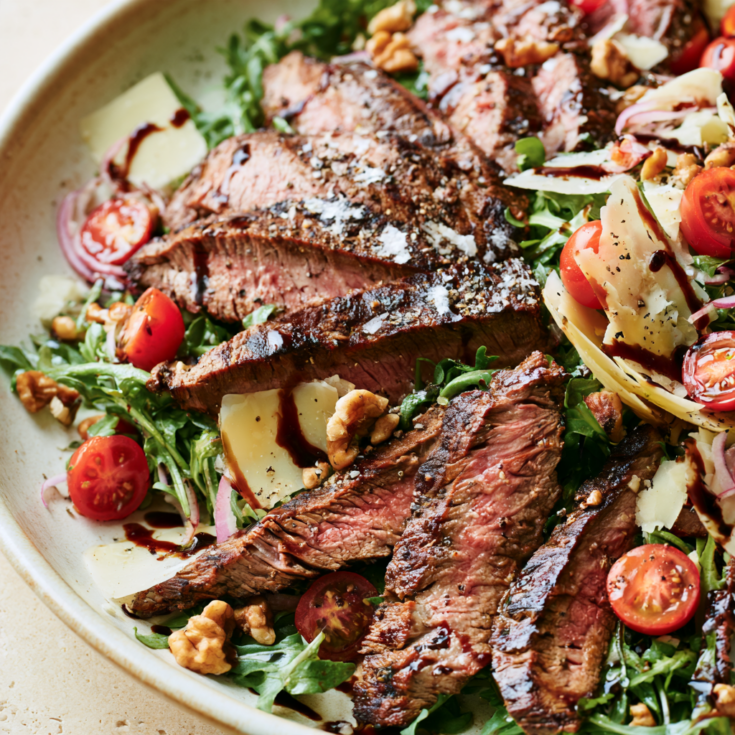
Juicy seared flank steak, thinly sliced over peppery arugula, with shaved parmesan, cherry tomatoes, red onion, toasted walnuts, and a sweet-tangy balsamic glaze.
Ingredients
For the steak:
- 1½ lbs flank steak (or skirt steak, sirloin, or flat iron)
- 1½ tsp kosher salt
- 1 tsp freshly ground black pepper
- 1 tsp garlic powder
- ½ tsp smoked paprika
- 1 tbsp olive oil (for searing)
For the balsamic glaze:
- ½ cup balsamic vinegar
- 1 tbsp honey or maple syrup
- 1 clove garlic, smashed (optional)
- Pinch of salt
For the lemon-Dijon vinaigrette:
- ¼ cup extra-virgin olive oil
- 2 tbsp fresh lemon juice
- 1 tsp Dijon mustard
- 1 tsp honey or maple syrup
- ¼ tsp kosher salt
- ¼ tsp black pepper
For the salad:
- 6 cups fresh arugula, packed (about 5 oz)
- 1 cup cherry tomatoes, halved
- ¼ red onion, thinly sliced
- ½ cup walnut halves, toasted
- ½ cup shaved parmesan (use a vegetable peeler on a block of parmesan)
- Optional: ¼ cup pomegranate arils, 1 avocado sliced, or ¼ cup crumbled feta
Instructions
- Take the steak out of the fridge early. Let the flank steak sit at room temperature for 20–30 minutes before cooking. A cold steak cooks unevenly and won't sear as well. Pat it completely dry with paper towels — moisture is the enemy of a good crust.
- Season the steak. Season both sides generously with the kosher salt, black pepper, garlic powder, and smoked paprika. Press the seasoning into the meat with your hands.
- Make the balsamic glaze. While the steak comes to temperature, combine the balsamic vinegar, honey, smashed garlic (if using), and a pinch of salt in a small saucepan. Bring to a gentle simmer over medium heat, then reduce the heat to low. Simmer for 8–12 minutes, stirring occasionally, until the glaze coats the back of a spoon and has reduced by about half. Remove the garlic clove and set the glaze aside. It will thicken further as it cools.
- Toast the walnuts. Heat a dry skillet over medium heat. Add the walnut halves and toast for 3–4 minutes, stirring frequently, until golden and fragrant. Remove immediately and set aside to cool.
- Sear the steak. Heat the olive oil in a large cast iron skillet over medium-high heat until shimmering. Carefully lay the steak in the skillet away from you. Press it down gently with a spatula for 10 seconds to ensure full contact. Sear undisturbed for 3–4 minutes, until a deep brown crust forms.
- Flip and finish. Flip the steak with tongs and sear the second side for 3–4 minutes. For medium-rare, the internal temperature should read 130–135°F on an instant-read thermometer. For medium, 140–145°F.
- Rest the steak. Transfer the steak to a cutting board and let it rest for 10 minutes. This is non-negotiable — resting allows the juices to redistribute. If you slice it immediately, the juices run out onto the board, and the steak dries out.
- Make the lemon-Dijon vinaigrette. While the steak rests, whisk together the olive oil, lemon juice, Dijon, honey, salt, and pepper in a small bowl or shake everything together in a mason jar. Taste and adjust — it should be bright, tangy, and well-balanced.
- Slice the steak against the grain. Look for the lines running through the meat — those are the muscle fibers. Slice perpendicular to them, at a slight angle, into ¼-inch thick slices. This is the single most important step for tender steak.
- Assemble the salad. Spread the arugula across a large platter or divide it among four shallow bowls. Scatter the cherry tomatoes, red onion, and toasted walnuts over the top. Drizzle the lemon-Dijon vinaigrette over the greens — start with half and add more as needed. You want the greens lightly dressed, not drowned.
- Add the steak and parmesan. Arrange the sliced steak over the greens. Use a vegetable peeler to shave parmesan ribbons over the salad. Drizzle the balsamic glaze over the steak and salad — a zigzag pattern works beautifully.
- Serve immediately. Serve this salad fresh, while the steak is still warm and the arugula is crisp. Add flaky sea salt and a crack of black pepper just before serving.
Notes
Protein per Serving: About 40g
Nutrition note: Protein per serving depends on steak size and portion size. Use your specific ingredients to calculate accurate numbers.
Tips for the Best Steak and Arugula Salad
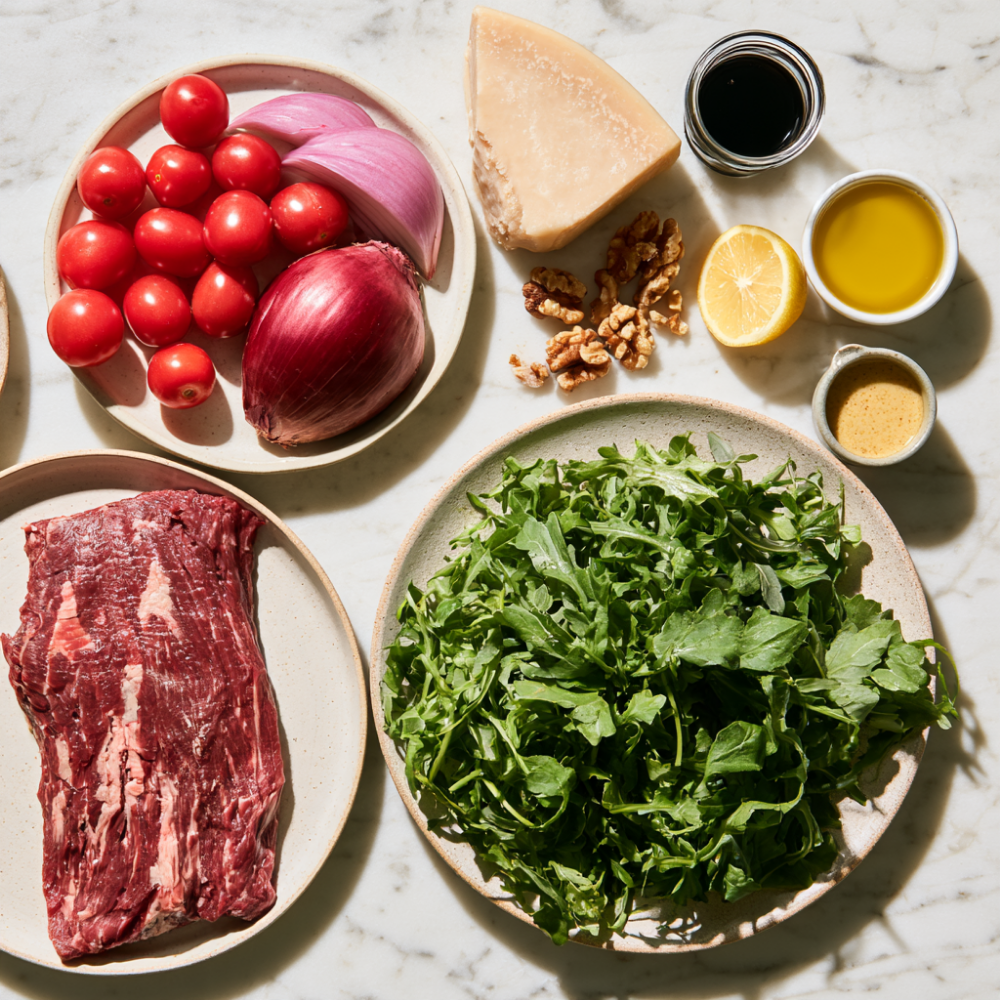
Use flank steak, skirt steak, or sirloin. Flank is the classic choice — thin, beefy, and lean.
Skirt steak is even more flavorful but chewier, so slice it very thin. Sirloin is more tender and slightly less beefy—all three work.
Dry the steak completely. Surface moisture steams instead of searing. Pat the steak dry with paper towels right before it goes in the pan. A dry steak sears well.
Get the pan screaming hot. Flank steak is thin and cooks fast. You want a hard sear in a short time, not a slow cook. A properly preheated cast iron skillet is the difference between a browned crust and a gray steak.
Don’t crowd the pan. If your steak is too big for your skillet, cut it in half and cook it in two batches. Crowding the pan lowers the temperature and steams the meat.
Use an instant-read thermometer. 130–135°F for medium-rare, 140–145°F for medium. Flank steak gets tough past medium, so pull it early. Carryover cooking will raise the temperature another 5°F while it rests.
Rest for 10 minutes. This is not optional. Resting lets the juices redistribute through the meat instead of running out when you slice it.
Slice against the grain—every time. Look for the lines and cut across them. This is the single most important step. Slicing with the grain gives you chewy, stringy steak no matter how perfectly you cooked it.
Make the balsamic glaze ahead. It keeps for weeks in a jar in the fridge. Make a double batch, and you’ll have it ready for salads, roasted vegetables, and bruschetta.
Don’t overdress the arugula. Arugula is delicate and wilts quickly. Dress it lightly right before serving — you want a light coating, not a pool of dressing at the bottom of the bowl.
Toast the walnuts. It takes 3 minutes and completely transforms the flavor. Raw walnuts taste flat and slightly bitter; toasted walnuts taste nutty and warm.
Shave the parmesan with a vegetable peeler. Pre-grated parmesan is fine in a pinch, but shaved ribbons look better, taste fresher, and melt slightly against the warm steak.
Use a platter or shallow bowls, not a deep salad bowl. A wide, shallow surface lets you layer the ingredients so every serving gets a bit of everything.
Add the steak while it’s still warm. Warm steak slightly wilts the arugula underneath it, which is exactly what you want. It softens the greens and releases the steak’s juices into the salad.
Finish with flaky sea salt. Maldon or fleur de sel added after plating gives you little bursts of salinity and a bit of crunch. It’s a small touch that makes a big difference.
For meal prep, store everything separately. Store steak, greens, dressing, and toppings in separate containers. Assemble the morning you plan to eat it. This way, it holds up for 3 days.
Easy Variations
Arugula Salad With Parmesan (Simpler Version)
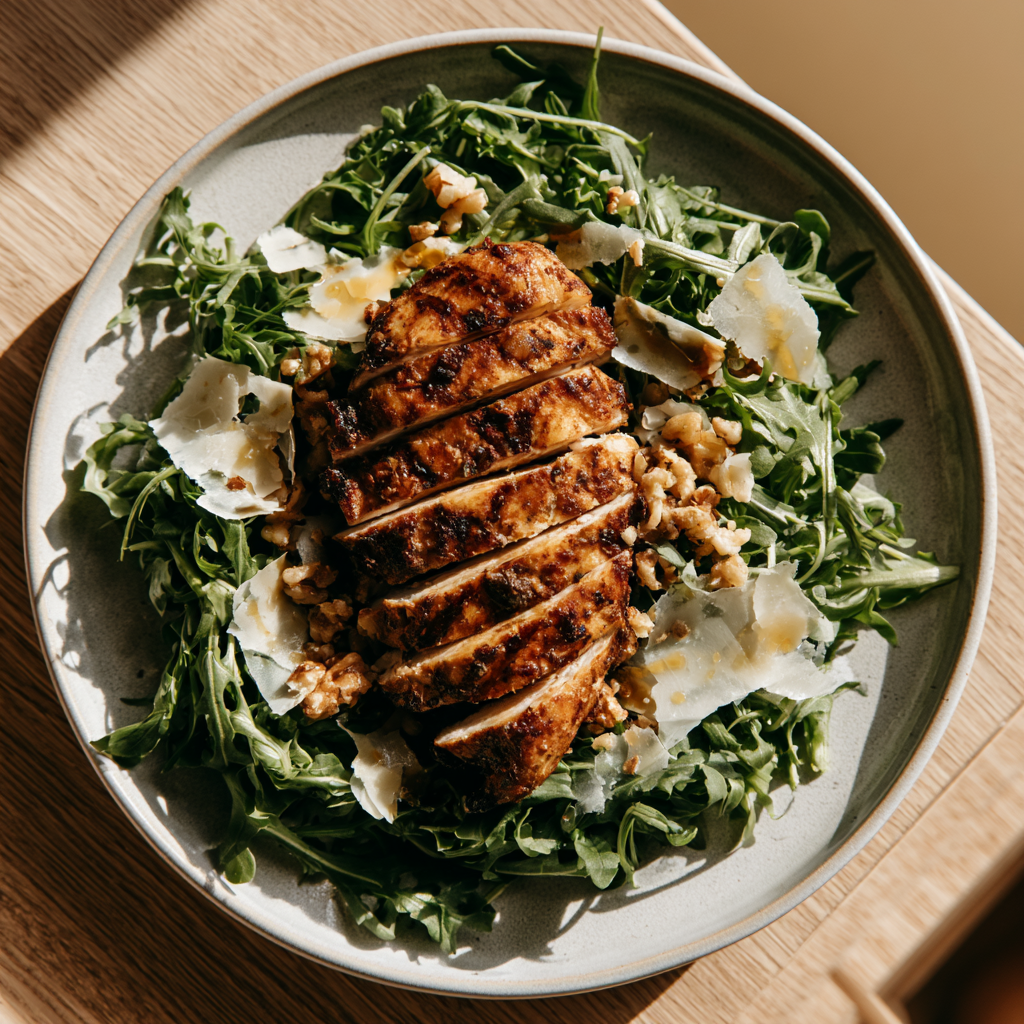
Skip the steak and make a simple arugula salad — arugula, shaved parmesan, lemon-Dijon vinaigrette, and a crack of black pepper. It’s a classic Italian salad that takes 5 minutes and works as a side dish for any meal.
Arugula Salad With Chicken (Lighter Protein)
Swap the steak for 2 cups of shredded or sliced grilled chicken breast. It’s a lighter, leaner version with about 32g of protein per serving. Use the same dressing and toppings.
Arugula Salad With Feta (Greek-Inspired)
Swap the parmesan for crumbled feta, and add ½ cup Kalamata olives and ½ cup diced cucumber. Use a lemon-oregano vinaigrette instead of the Dijon. It’s a Mediterranean version that works beautifully with the steak.
Arugula Salad Summer (Peach and Burrata Version)
Skip the steak and add sliced peaches, torn burrata, and a drizzle of honey. It’s a fresh, sweet summer version that looks stunning on a platter. Add prosciutto for a salty contrast.
Gourmet Arugula Salad Recipe (Restaurant-Style)
Plate individual servings on small plates. Arrange the arugula first, then the steak slices in a fan, then the tomatoes, walnuts, and red onion in separate clusters. Shave parmesan over the top and finish with a drizzle of balsamic glaze in a zigzag pattern. It’s the version that looks like it came from a restaurant.
Arugula Spring Salad (Seasonal Version)
Add ½ cup halved radishes, ½ cup sugar snap peas, and ¼ cup fresh mint. Skip the walnuts and use pistachios. It’s a bright, fresh spring version.
Arugula Salad Dinner (Meal Prep Bowl Version)
Layer cooked quinoa or farro at the bottom of a container. Top with arugula, steak, tomatoes, red onion, and walnuts. Store the dressing and balsamic glaze separately. Add the parmesan right before eating.
Steak Salad With Blue Cheese
Swap the parmesan for crumbled blue cheese and add ¼ cup of crispy fried onions. The blue cheese pairs beautifully with the steak and the balsamic glaze.
Pesto Salad (Pesto Dressing Version)
Swap the lemon-Dijon vinaigrette for ¼ cup of pesto thinned with 2 tbsp of olive oil and a splash of lemon juice. Drizzle over the arugula and top with the steak and parmesan.
Vegetarian Salad (No Steak)
Skip the steak and add 1 can of drained, rinsed chickpeas, ½ cup roasted red peppers, and ¼ cup toasted pine nuts. It’s a vegetarian version with about 14g of protein per serving from the chickpeas and parmesan.
Kale Parmesan Salad (Kale Version)
Swap half or all of the arugula for chopped lacinato kale. Massage the kale with a little olive oil and salt for 1–2 minutes to soften it, then proceed with the recipe. It’s a heartier version that holds up better if you’re making it ahead.
Italian Salad (Antipasto Version)
Add ½ cup marinated artichoke hearts, ¼ cup pepperoncini, and ½ cup cherry-sized mozzarella balls. This Italian-inspired version works beautifully as a starter or a light lunch.
Storage, Reheating, and Food Safety
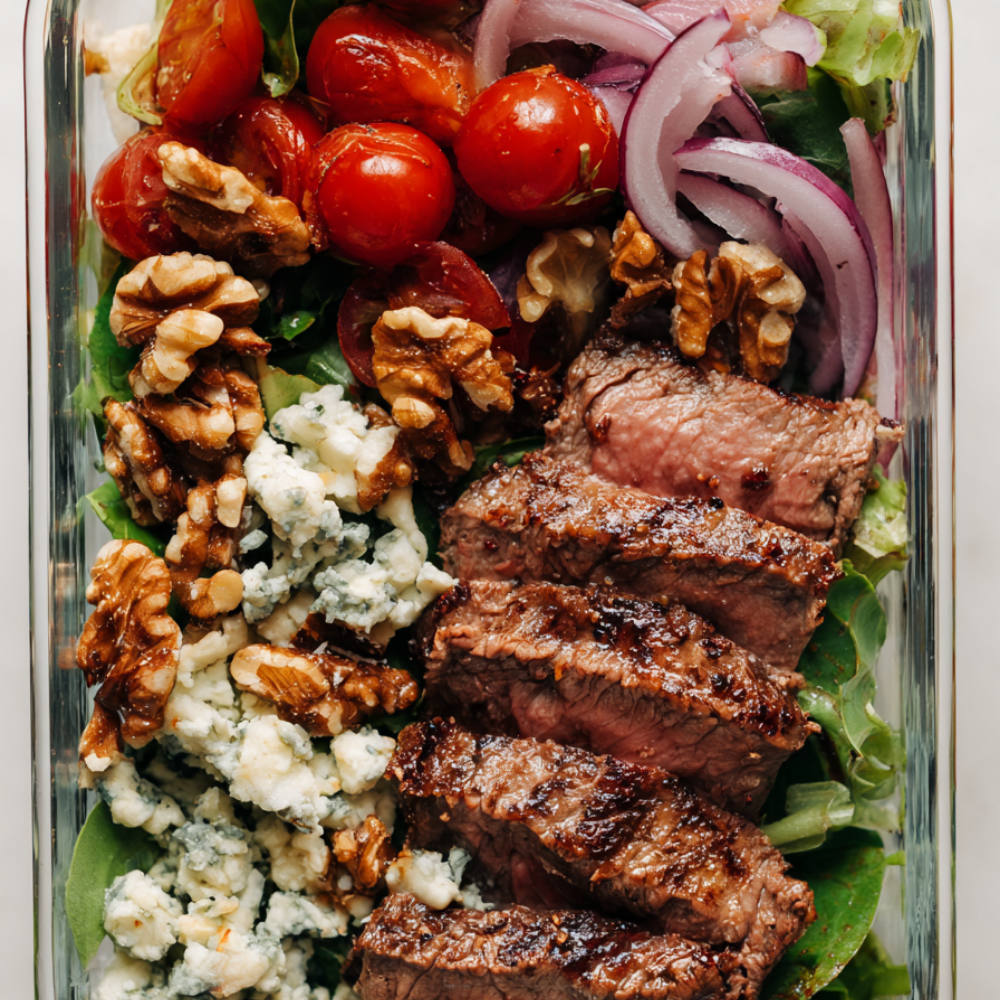
Refrigerator: Store the steak, greens, dressing, and toppings separately for the best texture. Steak keeps for up to 4 days. Arugula is best within 2 days. Dressing and balsamic glaze keep for up to 1 week.
Reheating: Eat the steak cold, at room temperature, or gently warmed.
To warm it, reheat in a 300°F oven for 8–10 minutes, or in a covered skillet over low heat with a splash of broth. Avoid the microwave — it makes the steak tough and rubbery.
Don’t freeze the assembled salad. Arugula, tomatoes, and dressing don’t freeze well. You can freeze the steak on its own for up to 3 months, but for this salad, it’s best to make it fresh.
Meal prep note: Assemble the salads in containers with the steak and greens together, but keep the dressing, balsamic glaze, parmesan, and walnuts in separate small containers. Add them right before eating. It holds up for 3 days.
Food safety: Refrigerate within 2 hours of cooking. Reheat leftovers until hot throughout — 165°F.
Frequently Asked Questions
What’s the best steak for an arugula salad?
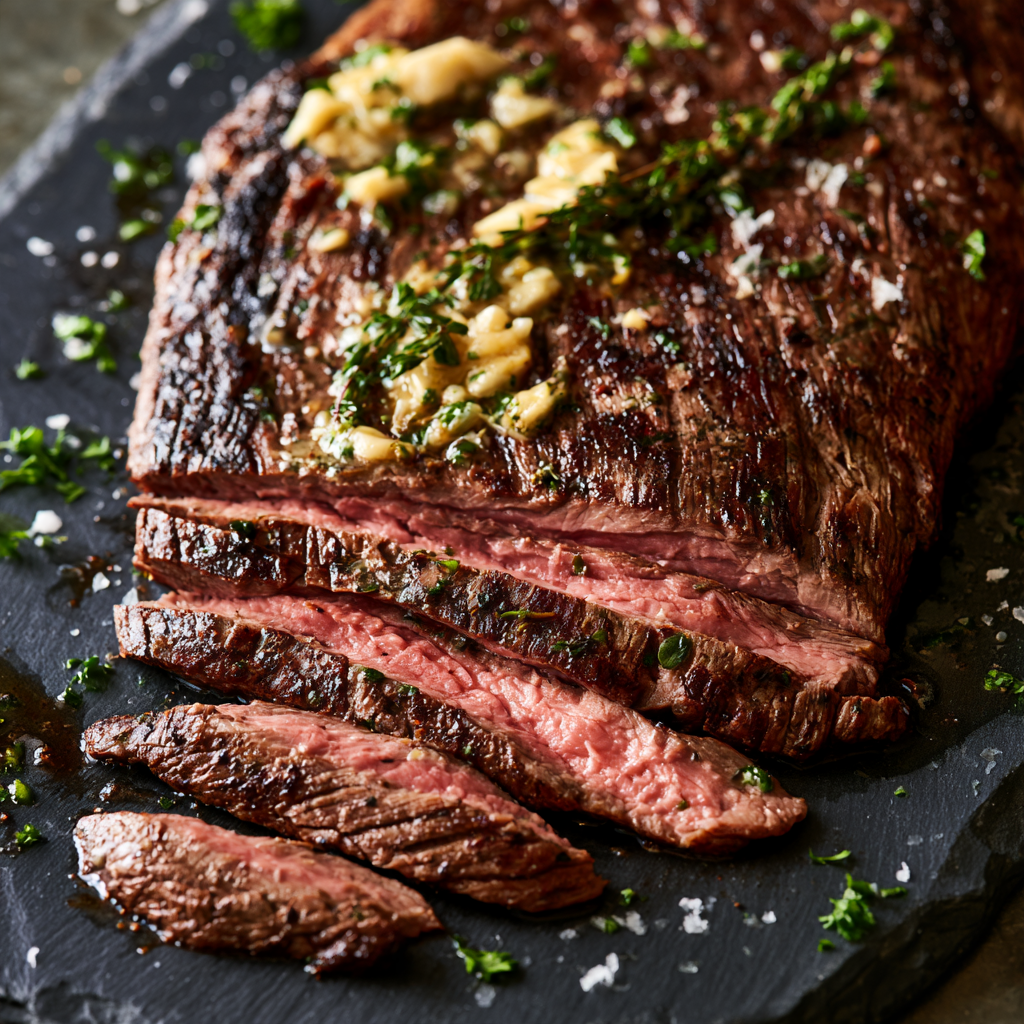
Flank steak is the classic choice — thin, beefy, and lean. Skirt steak is even more flavorful but chewier. Sirloin and flat iron are more tender and slightly less beefy. All four work well.
How do I make balsamic glaze?
Simmer ½ cup of balsamic vinegar with 1 tbsp of honey and a pinch of salt over low heat for 8–12 minutes, until it coats the back of a spoon and has reduced by about half. It thickens further as it cools. Store in a jar in the fridge for up to a month.
Can I use store-bought balsamic glaze?
Yes. Most grocery stores sell balsamic glaze in the vinegar aisle. It’s convenient and works well, though homemade tastes fresher and has a cleaner flavor.
Should I dress the arugula or leave it plain?
Dress it lightly with the lemon-Dijon vinaigrette. Arugula is delicate and wilts quickly, so dress it right before serving and use a light hand. You want a light coating, not a pool of dressing.
Can I make this salad ahead of time?
Yes — store the components separately. Store the steak, greens, dressing, and toppings in separate containers. Assemble the morning you plan to eat it. It holds up for 3 days.
Can I use a different green?
Arugula is the best choice because its peppery bite cuts through the rich steak. If you don’t have arugula, try a mix of baby kale and spinach, or watercress. Avoid soft greens like butter lettuce or iceberg — they get lost next to steak.
How do I keep the steak tender?
Three things: don’t overcook it (pull at 130–135°F for medium-rare), let it rest for 10 minutes, and slice it thinly against the grain. Slicing against the grain is the most important step.
What if I don’t have a cast iron skillet?
A heavy stainless steel skillet works too — preheat it longer. A grill also works beautifully. Grill the steak over high heat for 3–4 minutes per side.
Is this salad healthy?
Yes. It’s high in protein, low in carbs, and made with whole ingredients. It has about 40g of protein per serving. The fat content is moderate—most of it comes from the steak, olive oil, and walnuts, all of which are healthy fats.
Is this salad gluten-free?
Yes, as written. Just confirm your balsamic vinegar, Dijon mustard, and any other packaged ingredients are gluten-free.
Can I add cheese other than parmesan?
Yes. Blue cheese, goat cheese, feta, or shaved Pecorino Romano all work beautifully with steak and arugula. Blue cheese is the classic pairing.
How much protein is in each serving?
About 40g per serving, from the flank steak, parmesan, and walnuts. The exact number depends on the size of your steak and your portion size.
What do I serve with steak and arugula salad?
Serve with crusty bread, roasted potatoes, or a bowl of soup for a heartier meal. For a lighter dinner, it’s a complete meal on its own.
Can I use leftover steak?
Yes. This is one of the best ways to use leftover steak. Slice it thin against the grain, bring it to room temperature or warm it gently, and pile it on the salad. It’s excellent cold.
Can I make this for a crowd?
Yes. Double the recipe and arrange it on a large platter. Serve the dressing and balsamic glaze on the side so people can dress their own. It’s a beautiful platter for a dinner party or holiday table.
More High-Protein Salad Recipes You’ll Love
- Italian Pasta Salad (High-Protein & Meal Prep Friendly)
- Tortellini Pasta Salad (High-Protein & Italian-Style)
- Mandarin Orange Salad with Cottage Cheese
- High-Protein Crockpot Chicken Breast for Meal Prep
- Meal Prep for One Person: Crispy Maple-Mustard Chicken
Conclusion
This steak and arugula salad is the high-protein, restaurant-quality salad that eats like a full dinner.
Juicy seared flank steak sliced thin against the grain, peppery arugula, shaved parmesan, cherry tomatoes, red onion, toasted walnuts, and a sweet-tangy balsamic glaze.
About 40g of protein per serving, and it comes together in about 35 minutes.
The keys are simple: dry the steak, get the pan screaming hot, sear hard on both sides, rest for 10 minutes, slice against the grain, dress the arugula lightly, and finish with the balsamic glaze.
Do that, and you’ll have a salad that looks like it came from a restaurant and tastes even better.
Make it for a weeknight dinner, a dinner party, or meal prep for the week. It’s naturally gluten-free, low-carb, and one of the best ways to eat more arugula. This arugula salad recipe earns a permanent spot in the rotation.