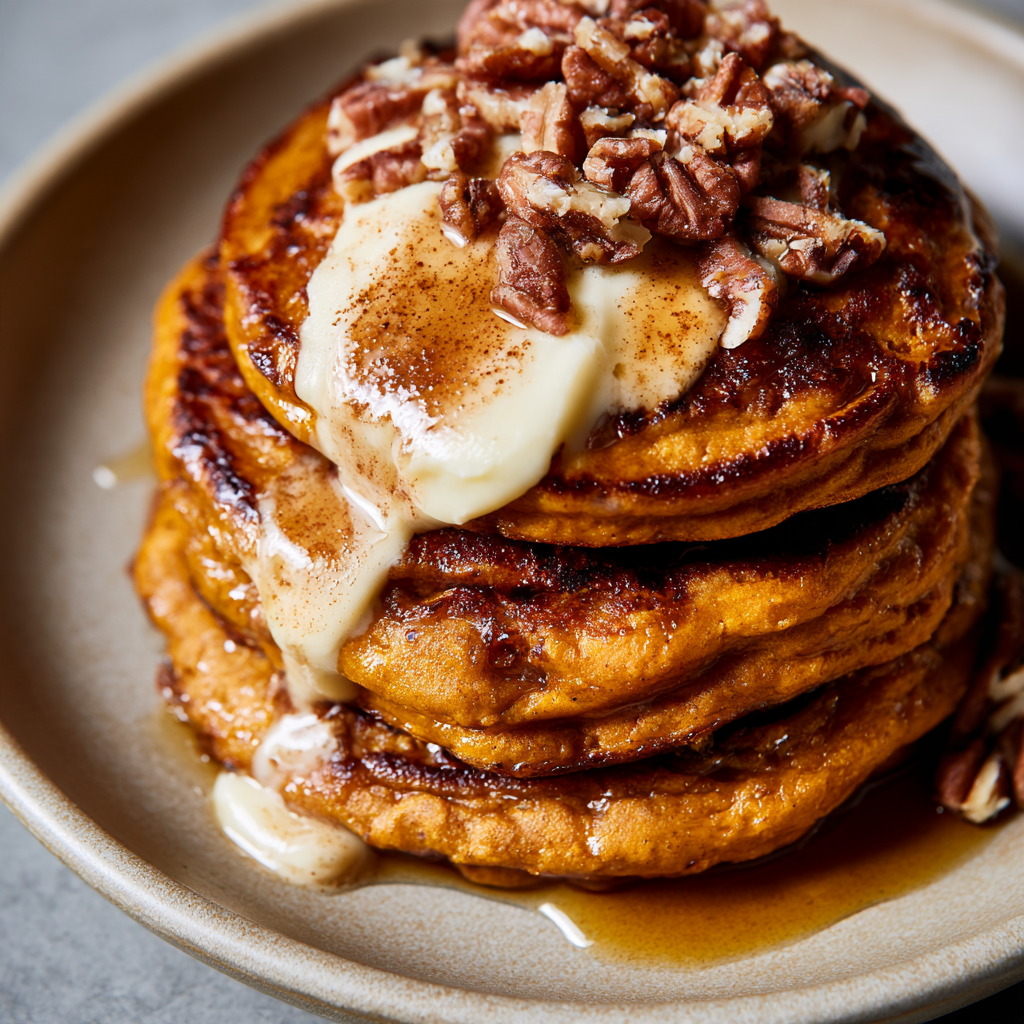
Most protein pancakes have the same problem. You add a scoop of protein powder, and suddenly the pancakes are dense, rubbery, and taste like a supplement. They look like pancakes, but they don’t eat like pancakes.
These do. The protein comes from blended cottage cheese — 1¼ cups — which disappears completely into the batter and gives you a fluffy stack that’s tender and genuinely pancake-like—no chalky aftertaste, no rubbery texture, no protein powder at all.
Then there’s the pumpkin. Real pumpkin purée brings moisture, natural sweetness, and that deep orange color that makes these feel like a fall morning on a plate.
Pumpkin pie spice and cinnamon go into the batter and into the cinnamon butter that melts over the top.
About 18g of protein per serving. A real breakfast that keeps you full past 10 a.m. instead of a sugar crash at 9:30. And it takes about 25 minutes from start to finish — a blender, a bowl, a skillet, and a stack of pancakes on the table.
This pumpkin pancake recipe works for a lazy Sunday, a holiday breakfast, or weekly meal prep. Make a big batch, freeze the extras, and reheat them in the toaster on busy mornings.
Why These Protein Pumpkin Pancakes Work
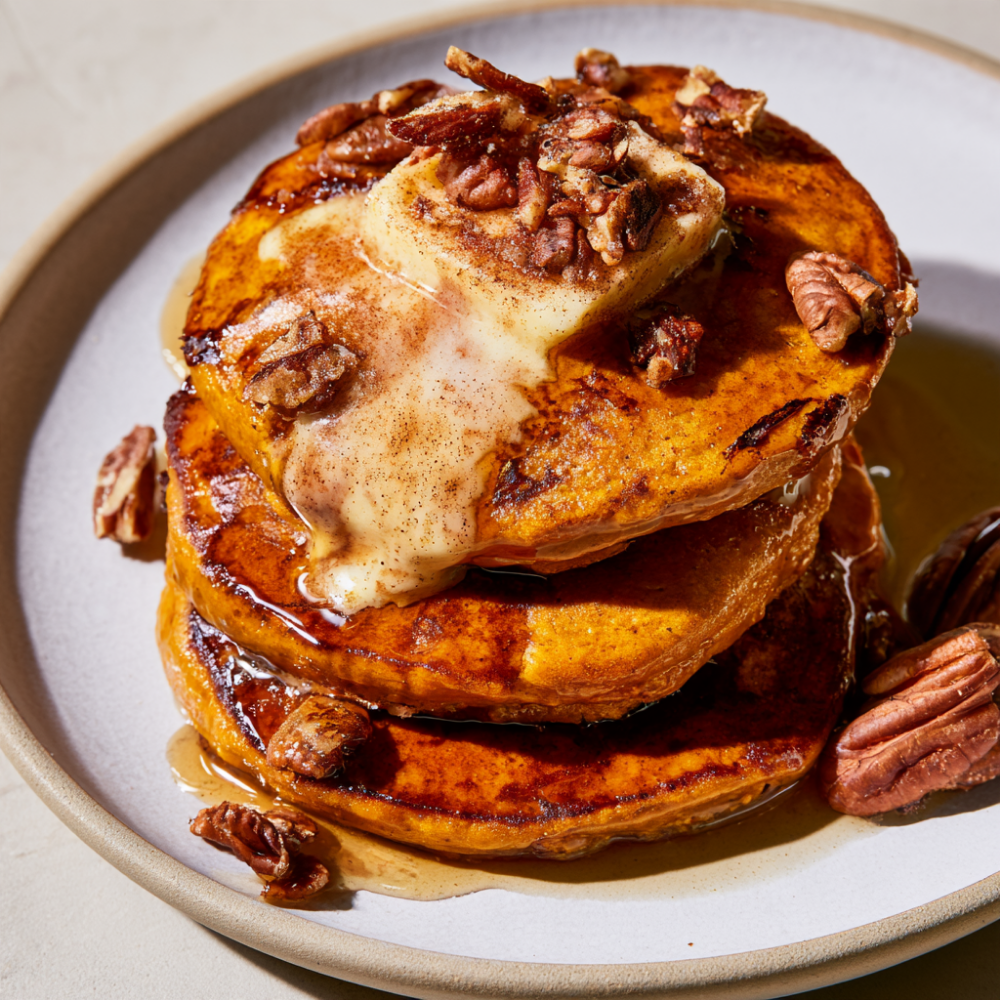
Blended cottage cheese is the protein source. 1¼ cups of cottage cheese blended until completely smooth adds protein and disappears into the batter. It gives the pancakes structure and moisture without the chalkiness protein powder can bring.
Oat flour keeps them naturally gluten-free and hearty. Store-bought oat flour gives you a whole-grain base that’s naturally gluten-free (with certified oats) and holds up to the pumpkin without getting gummy. You can also blend your own from rolled oats if you prefer.
Real pumpkin purée brings moisture and flavor. Not pumpkin pie filling — plain pumpkin purée. ¾ cup gives you a more obvious pumpkin flavor without making the batter excessively wet.
Layer pumpkin pie spice and cinnamon twice: once in the batter, and once in the cinnamon butter on top. That’s what makes every bite taste finished, not just spiced.
Whisk the dry ingredients in by hand, not blend them. This is the biggest technical change from a typical protein pancake recipe. Blending the dry ingredients into the wet overworks the batter and makes it harder to judge consistency. Whisking by hand gives you a lighter, fluffier result.
Let the batter rest for 5 minutes before cooking. This gives the oat flour time to hydrate and the baking powder time to activate. The result is thicker pancakes that rise better and don’t spread too thin in the pan. After resting, check the consistency and adjust with a splash of milk if needed.
Baking powder does the leavening, not baking soda. This recipe doesn’t have enough acid to need baking soda. Baking powder is more predictable and gives you consistent lift every time.
It’s genuinely a 25-minute recipe. Blend the cottage cheese, whisk the batter, rest it for 5 minutes, and cook 12 pancakes in about 12 minutes. That’s it.
It’s high in protein for a pancake—about 18g per serving (3 pancakes). Add Greek yogurt or a couple of eggs on the side, and you’re closer to 30g.
It’s meal-prep and freezer-friendly. Cook a double batch, freeze the extras in a single layer, and reheat them in the toaster. They taste almost as good as fresh.
It’s naturally gluten-free and refined-sugar-free—no white flour, no granulated sugar. Just oat flour, cottage cheese, eggs, pumpkin, and maple syrup — but always check your oat and spice labels if you’re cooking for someone with celiac disease.
Protein Pumpkin Pancakes with Cinnamon Butter
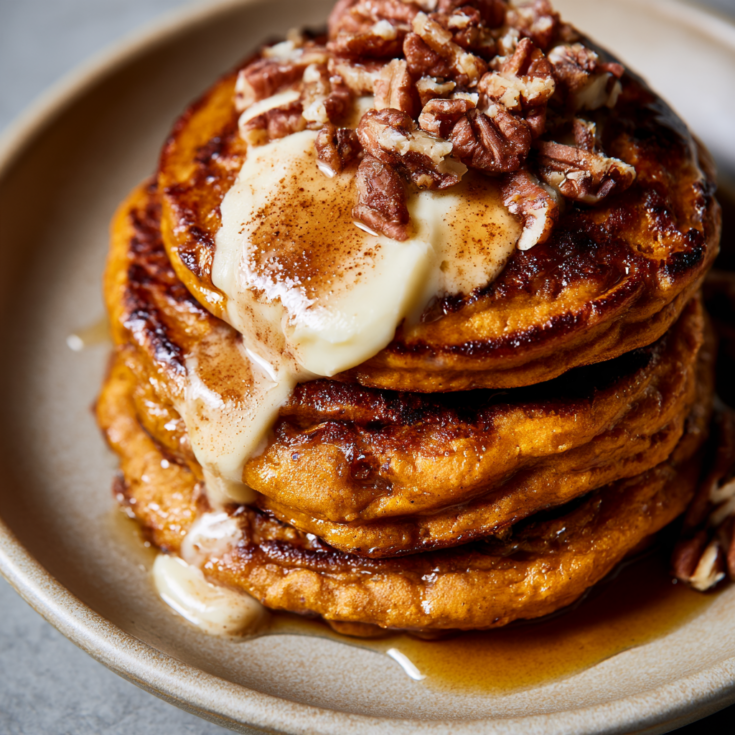
Fluffy pumpkin pancakes made with blended cottage cheese instead of protein powder, warmly spiced with pumpkin pie spice and cinnamon, then topped with homemade cinnamon butter—about 18g of protein per serving.
Ingredients
For the protein pumpkin pancakes:
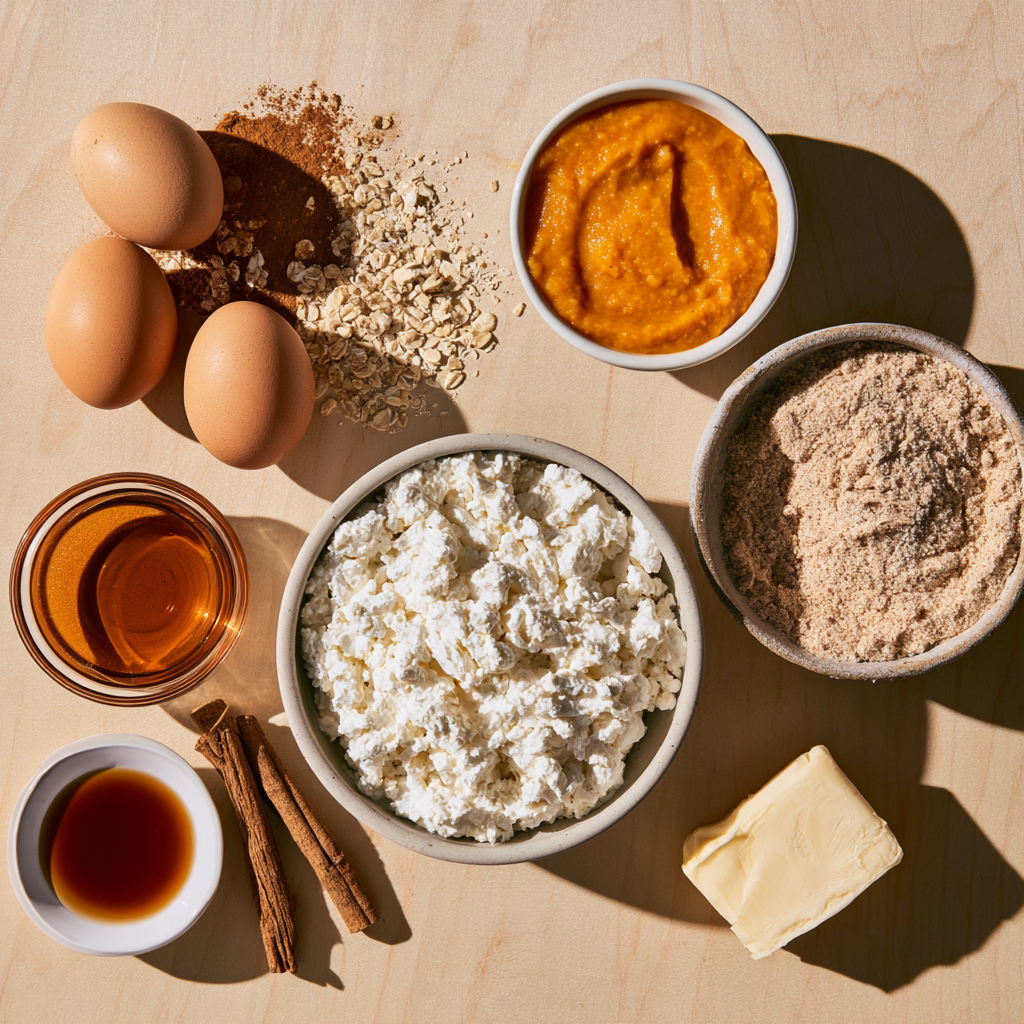
- 1¼ cups (120g) oat flour
- 1¼ cups (285g) full-fat or 2% cottage cheese
- 3 large eggs
- ¾ cup (180g) pumpkin purée (not pumpkin pie filling)
- ¼ cup milk of choice, plus more as needed
- 2 tbsp pure maple syrup
- 2 tsp baking powder
- 1½ tsp pumpkin pie spice
- 1 tsp ground cinnamon
- 1 tsp vanilla extract
- ¼ tsp fine salt
- Butter or neutral oil, for cooking
For the cinnamon butter:
- 4 tbsp unsalted butter, softened to room temperature
- 1½ tbsp pure maple syrup or honey
- 1 tsp ground cinnamon
- ¼ tsp vanilla extract
- Small pinch of fine salt
For serving:
- Pure maple syrup
- Toasted pecans or walnuts
- Greek yogurt
- Fresh fruit or sliced banana
Instructions
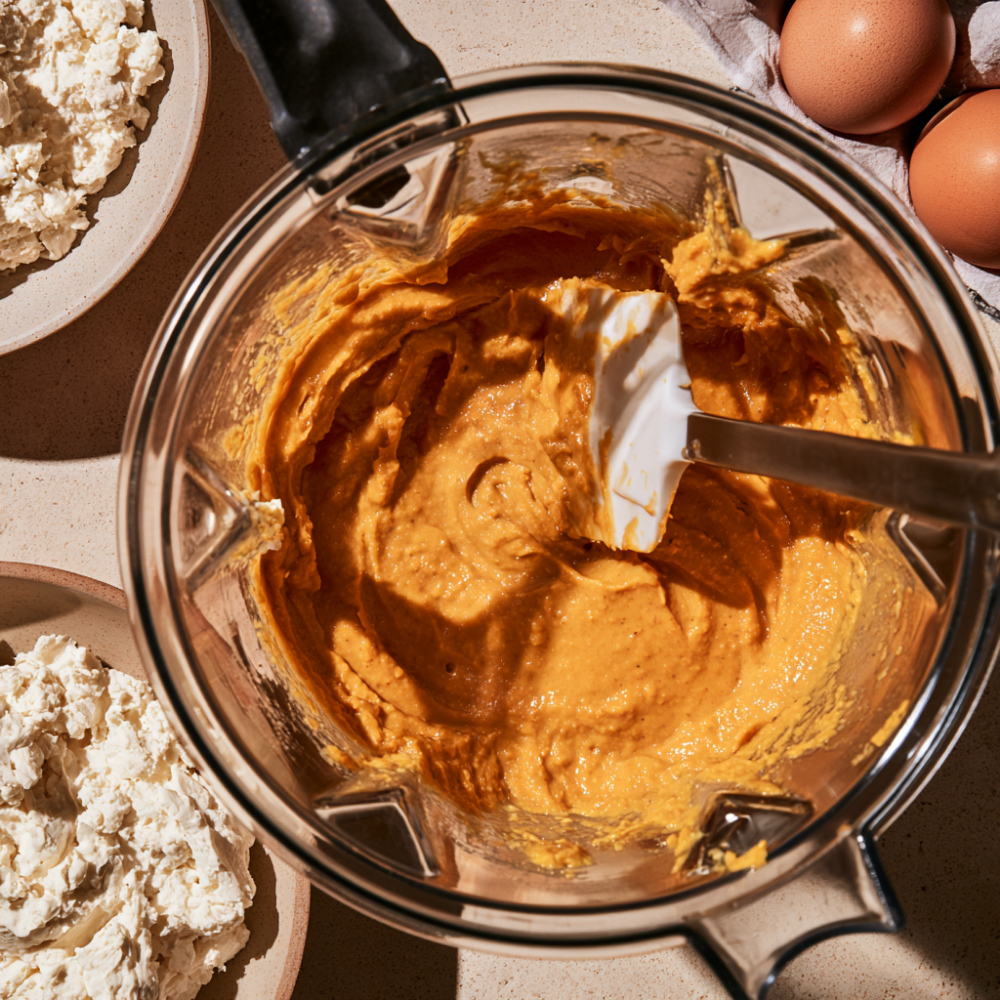
Blend the cottage cheese until completely smooth. Add the cottage cheese to a blender and blend for 30–60 seconds, scraping down the sides once if needed. Continue blending until completely smooth and creamy, with no visible curds. The smoother the cottage cheese, the smoother the pancakes will be. Don't over-blend — 30–60 seconds is enough.
2. Add the wet ingredients. Add the eggs, pumpkin purée, ¼ cup milk, maple syrup, and vanilla to the blender. Blend for about 15–20 seconds, just until the mixture is smooth and evenly combined.
3. Combine the dry ingredients. In a large bowl, whisk together the oat flour, baking powder, pumpkin pie spice, cinnamon, and salt.
4. Make the batter. Pour the blended wet mixture into the bowl with the dry ingredients. Whisk gently just until no dry streaks remain. Do not keep mixing once the batter is combined — a few tiny lumps are fine. Overworking the batter makes the pancakes less tender.
The batter should be thick but easy to scoop and pour. If it looks unusually stiff, add 1 tablespoon of milk at a time until it reaches the right consistency.
5. Rest the batter. Let the batter rest for 5 minutes. The oat flour will absorb some liquid, and the batter will thicken slightly. After resting, give it one gentle stir. If it has become too thick to pour easily, stir in another tablespoon or two of milk.
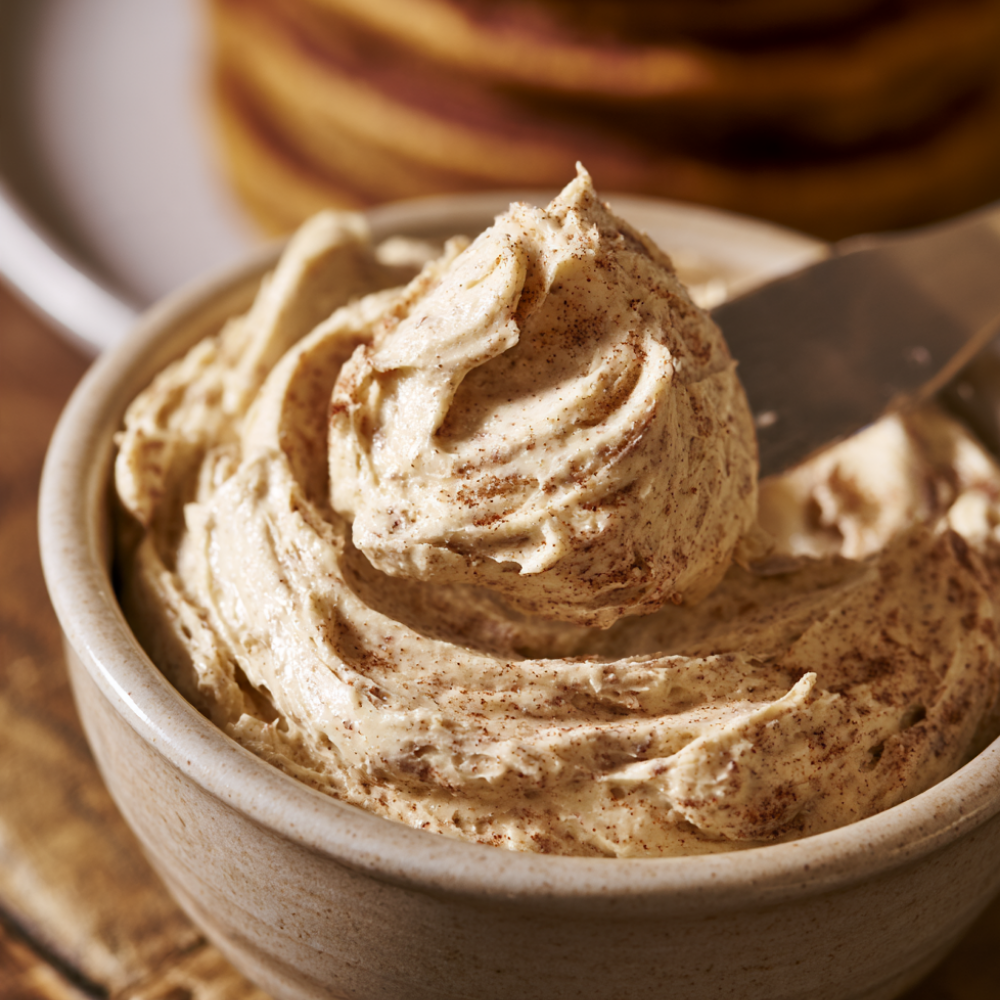
6. Make the cinnamon butter. While the batter rests, place the softened butter in a small bowl. Add the maple syrup or honey, cinnamon, vanilla, and salt. Mash and stir until smooth, creamy, and evenly combined. Leave it at room temperature while the pancakes cook.
7. Heat the pan. Heat a large nonstick skillet or griddle over medium heat. Lightly grease the surface with butter or neutral oil. The pan is ready when a small drop of batter sizzles gently when added to the surface without immediately browning.
8. Cook the pancakes. Use about ¼ cup of batter for each pancake. Cook 3–4 pancakes at a time, leaving enough space between them to flip easily. Cook for about 2–3 minutes, or until the edges look set and bubbles have formed across the surface. The bottoms should be golden brown.
9. Flip and finish cooking. Carefully flip the pancakes with a thin spatula. Cook for another 1½–2 minutes, until the second side is golden brown and the centers are cooked through. The center should no longer look wet, and the pancake should feel firm when you gently press it with your finger. If the pancakes brown too quickly before the centers cook, reduce the heat slightly.
10. Keep the pancakes warm. Transfer the finished pancakes to a plate and loosely cover them with a clean kitchen towel while you cook the remaining batter. Avoid stacking them tightly while they're very hot, which can trap steam and soften the surfaces.
11. Serve. Serve 3 pancakes per person with a generous spoonful of cinnamon butter. Drizzle with maple syrup and add toasted pecans, Greek yogurt, or fresh fruit if desired.
Notes
Protein per Serving: About 18 g*
Protein varies depending on the cottage cheese, eggs, milk, and other brands used. Use your specific ingredients to calculate the most accurate nutrition information.
Tips for the Best Protein Pumpkin Pancakes
Blend the cottage cheese for 30–60 seconds, not 2 minutes. It needs to be completely smooth, but overblending can warm the mixture and thin the batter. Blend until there are no visible curds, scraping down the sides once. That’s enough.
Use oat flour, not whole oats, for more predictable results. Oat flour hydrates consistently and gives you a lighter, fluffier pancake. If you want to make your own, blend rolled oats for 30–45 seconds until they form a fine, even flour. Store-bought oat flour works too.
Whisk the dry ingredients in by hand, not in the blender. This is the biggest technical upgrade. Blending the oat flour into the wet ingredients overworks the batter and makes it harder to judge consistency. A bowl and a whisk give you a lighter result.
Don’t overmix once you combine the wet and dry. Whisk just until no dry streaks remain. A few tiny lumps are fine. Overworking the batter makes the pancakes dense and less tender.
Let the batter rest for 5 minutes. This is not optional. Oat flour absorbs liquid slowly, and the batter thickens significantly in those 5 minutes. If you cook it immediately, the pancakes spread too thin and cook unevenly.
Adjust the batter consistency after resting. It should be thick but easily scoopable and pourable. If it’s too thick, add milk 1 tablespoon at a time. If it’s too thin, add 1 tablespoon of oat flour.
Cook over medium heat, not high. These pancakes have more moisture than regular pancakes because of the pumpkin and cottage cheese. High heat browns the outside before the center is cooked. Medium heat gives them time to cook through.
Wait for the bubbles before flipping. The surface should be covered in bubbles, and the edges should look set and slightly dry. Flipping too early tears the pancake.
Use the doneness cues, not just the timer. The second side should be golden brown, the center should no longer look wet, and the pancake should feel firm when you press it gently. If it’s browning too fast before the center is done, reduce the heat.
Use a thin, flexible spatula. Protein pancakes are more delicate than regular pancakes, especially when they’re still hot. A thin silicone or metal spatula slides underneath cleanly.
Don’t stack them too high while cooking. Stacking hot pancakes traps steam and makes them soggy. Use a single layer on a plate covered with a towel, or keep them warm in a 200°F oven on a wire rack.
Use 2% or full-fat cottage cheese. Fat-free cottage cheese makes thinner, less creamy pancakes. Fat gives the batter body and helps the pancakes brown properly.
Let the cinnamon butter come to room temperature. Softened butter whips smoothly with honey and cinnamon. Cold butter leaves lumps; melted butter makes it greasy and separated. Leave it on the counter for 30 minutes before mixing.
Store the cinnamon butter in the fridge. It firms up, so let it sit at room temperature for 15 minutes before serving, or microwave it for 5 seconds.
Add mix-ins at the end, not in the blender. After whisking, fold in chocolate chips, blueberries, or chopped pecans by hand. The blender will pulverize them.
Taste the batter before cooking. The sweetness depends on your cottage cheese and pumpkin. If the batter tastes flat, add an extra teaspoon of maple syrup or a pinch more cinnamon.
For fluffier pancakes, separate the eggs. Whisk the egg whites to soft peaks and fold them into the batter at the very end. It adds 5 minutes and makes the pancakes noticeably lighter.
Easy Variations
Pumpkin Pancakes from Scratch (The Classic)
This is the recipe as written — oat flour, blended cottage cheese, eggs, pumpkin, and warm spices, all made from scratch. It’s the version most people mean when they search for pumpkin pancakes from scratch.
Pumpkin Pancakes Easy (Simplest Version)
Skip making your own oat flour and use store-bought oat flour. Blend the cottage cheese and wet ingredients, whisk the dry ingredients by hand, and combine. It’s the fastest version and still tastes great.
Pumpkin Pancakes Healthy (Lower Sugar)
Reduce the maple syrup in the batter to 1 tablespoon and use 2% cottage cheese. Serve with Greek yogurt instead of cinnamon butter, or use a light spread made with Greek yogurt, cinnamon, and a teaspoon of honey—about 20g of protein per serving and significantly less sugar.
Pumpkin Pancakes with Cinnamon Butter (The Full Version)
This is the recipe as written, including the cinnamon butter. It’s the most indulgent version and the one to make when you want breakfast to feel like a treat. The cinnamon butter is what makes people ask for the recipe.
Pumpkin Pancake Muffins (Oven Version)
Preheat the oven to 350°F. Pour the batter into a greased 12-cup muffin tin, filling each cup about ¾ full. Bake for 18–22 minutes, until a toothpick inserted in the center comes out clean. Serve with cinnamon butter on the side. They’re portable, meal-prep friendly, and perfect for grab-and-go breakfasts.
Pumpkin Pancake Bowl (Microwave Version)
Pour ½ cup of batter into a greased microwave-safe bowl or mug. Microwave on high for 90 seconds, then check — if the center is still wet, microwave in 15-second intervals until set. Top with cinnamon butter, Greek yogurt, and toasted pecans. It’s a 2-minute breakfast that works when you don’t want to stand at the stove.
Pumpkin Pancakes for Baby (No Sugar Version)
Skip the maple syrup entirely and use 1 mashed ripe banana instead for natural sweetness. Use 2% cottage cheese and skip the salt. Cook the pancakes small and thin, so they’re easy for little hands to hold. They freeze beautifully and thaw in the toaster. Cut into strips for babies learning to self-feed.
Pumpkin Pancakes with Bisquick
Skip the oat flour and use 1¼ cups of Bisquick instead. Reduce the baking powder to 1 tsp. Blend the cottage cheese, eggs, pumpkin, milk, maple syrup, and vanilla until smooth, then whisk in the Bisquick and spices by hand until just combined. Let rest 5 minutes and cook as directed. It’s faster, but not gluten-free and has slightly less protein.
Pumpkin Pancakes with Pancake Mix Recipe
Use 1¼ cups of your favorite complete pancake mix in place of the oat flour. Reduce the baking powder to 1 tsp — most pancake mixes already contain leavening. Blend the wet ingredients, whisk in the mix and spices, and cook as directed.
Pumpkin Pancakes Recipe Easy (Sheet Pan Version)
Pour the entire batch of batter onto a parchment-lined sheet pan and spread it into an even layer. Bake at 375°F for 15–18 minutes, until set and golden at the edges. Cut into squares and serve with cinnamon butter. It’s the easiest way to make pancakes for a crowd.
Pumpkin Pancakes with Protein Powder (If You Prefer)
If you want to add protein powder, replace ½ cup of the cottage cheese with 1 scoop of vanilla protein powder and increase the milk to ⅓ cup. The texture will be slightly denser but still good.
Pumpkin Pancakes with Pecans
Fold ½ cup of toasted chopped pecans into the batter by hand after whisking. It adds crunch and a deeper, nuttier flavor that pairs beautifully with the pumpkin and cinnamon.
Pumpkin Pancakes with Cream Cheese Frosting
Swap the cinnamon butter for a whipped cream cheese topping. Beat 4 oz of softened cream cheese with 2 tbsp of maple syrup, 1 tsp cinnamon, and ¼ tsp vanilla until fluffy. This dessert-for-breakfast version is still high in protein.
Storage, Freezing, and Reheating
Refrigerator: Store cooked pancakes in an airtight container for up to 4 days. Place a piece of parchment paper between each pancake to keep them from sticking together. Store the cinnamon butter separately in the fridge for up to 1 week.
Freezer: Cool the pancakes completely, then arrange them in a single layer on a baking sheet and freeze for 1–2 hours. Once solid, transfer them to a freezer bag with parchment between layers. Freeze for up to 3 months. Freezing individually first prevents them from sticking together into a brick.
Reheating in the toaster (best method): Toast frozen pancakes directly in a toaster or toaster oven on medium. They firm up slightly on the outside and stay soft inside — almost as good as fresh.
Reheating in the microwave: Microwave 2–3 pancakes on a plate for 45–60 seconds. They’ll be soft but slightly less crisp. Cover with a damp paper towel if you want them extra moist.
Reheating in a skillet: Warm a lightly greased skillet over medium-low heat and reheat the pancakes for 1–2 minutes per side. This is the closest to fresh.
Meal prep note: Cook a double batch on Sunday, freeze the extras, and pull them out as needed. A stack of 3 pancakes reheats in the toaster in about 2 minutes — faster than making oatmeal. Make the cinnamon butter fresh for serving.
Batter storage: You can make the batter up to 24 hours ahead and store it covered in the refrigerator. It will thicken as it sits — stir in a splash of milk before cooking. The batter doesn’t freeze well.
Food safety: Refrigerate cooked pancakes within 2 hours. Reheat leftovers until hot throughout.
Frequently Asked Questions
How much protein is in each serving?
About 18g per serving of 3 pancakes, from the cottage cheese, eggs, and oat flour. The exact number depends on your cottage cheese, oat flour, and milk brands — calculate with your specific ingredients for accurate numbers.
Can you taste the cottage cheese?
No — not if you blend it completely smooth. Cottage cheese has a mild, milky tang that disappears into the pumpkin, spices, and maple syrup. Most people can’t identify it as the protein source.
Why are my protein pancakes dense or rubbery?
Almost always because the cottage cheese wasn’t blended long enough, or because the batter was overmixed. Blend the cottage cheese until completely smooth, then whisk the dry ingredients in by hand just until combined. Overworking the batter makes the pancakes dense.
Do I need to make my own oat flour?
No. Store-bought oat flour works well and gives you more consistent hydration. If you want to make your own, blend rolled oats for 30–45 seconds until they form a fine, even flour.
Can I use quick oats instead of oat flour?
Quick oats work but produce a gummier, less fluffy pancake. Oat flour is the better choice. Steel-cut oats won’t work at all.
Can I make these gluten-free?
Yes, as written, if you use certified gluten-free oat flour. Oats are naturally gluten-free but are often processed alongside wheat. Everything else in the recipe is naturally gluten-free.
Can I make these dairy-free?
Yes, with swaps. Use a dairy-free cottage cheese alternative or substitute 1¼ cups of blended silken tofu. Use a dairy-free milk and a dairy-free butter for the cinnamon butter. The protein count drops slightly.
Can I make the batter ahead of time?
Yes. Make the batter up to 24 hours ahead and store it covered in the refrigerator. It will thicken as it sits — stir in a splash of milk before cooking.
Can I freeze the pancakes?
Yes, and they freeze beautifully. Freeze them in a single layer first so they don’t stick together, then transfer to a freezer bag. Reheat in the toaster for the best texture.
Can I make these as muffins?
Yes. Pour the batter into a greased 12-cup muffin tin, filling each cup about ¾ full, and bake at 350°F for 18–22 minutes. They’re portable and perfect for meal prep.
Can I make these for a baby?
Yes. Skip the maple syrup and use a mashed ripe banana for sweetness. Skip the salt. Cook them small and thin, and cut into strips for babies learning to self-feed.
Can I make these with Bisquick or pancake mix?
Yes. Use 1¼ cups of Bisquick or pancake mix in place of the oat flour, and reduce the baking powder to 1 tsp. Blend the wet ingredients, then whisk in the mix and spices by hand.
Can I add protein powder?
Yes, though this recipe is designed to avoid it. Replace ½ cup of the cottage cheese with 1 scoop of vanilla protein powder and increase the milk to ⅓ cup. The texture will be slightly denser.
Why are my pancakes spreading too thin?
The batter is probably too thin, or it didn’t rest long enough. Let it rest 5 minutes, then add 1 tablespoon of oat flour if it still looks runny. Also make sure your baking powder isn’t expired.
Why are my pancakes browning too fast on the outside and raw in the middle?
The heat is too high. These pancakes have more moisture than regular pancakes because of the pumpkin and cottage cheese. Cook them over medium heat, not medium-high, and give them time to cook through.
What do I serve with protein pumpkin pancakes?
Cinnamon butter, maple syrup, Greek yogurt, toasted pecans or walnuts, sliced banana, fresh berries, or a drizzle of almond butter. A side of scrambled eggs or turkey sausage makes it a complete breakfast.
Can I double the recipe?
Yes. Double everything and cook in batches, keeping the finished pancakes warm in a 200°F oven on a wire rack. Freeze the extras.
More High-Protein Breakfast Recipes You’ll Love
- Make Ahead Breakfast Casserole (High-Protein & Meal Prep Friendly)
- Bacon Breakfast Casserole (Smoky Bacon & Melted Cheddar)
- Chai-Spiced Protein Granola Clusters
- High-Protein Chocolate Peanut Butter Protein Shake
- Cottage Cheese Protein Cheesecake
Conclusion
These protein pumpkin pancakes actually taste like pancakes. Blended cottage cheese gives you about 18g of protein per serving without a scoop of protein powder, and real pumpkin purée, pumpkin pie spice, and cinnamon make them taste like a fall morning on a plate. The cinnamon butter melted over the top is what takes them from good to unforgettable.
The keys are simple: blend the cottage cheese until completely smooth, whisk in the dry ingredients by hand, don’t overmix, let the batter rest for 5 minutes, cook over medium heat, and watch for bubbles before flipping. Do that, and you’ll get fluffy, tender pancakes with real pumpkin flavor.
Make a double batch on Sunday, freeze the extras, and reheat them in the toaster on busy mornings. They’re gluten-free, refined-sugar-free, meal-prep friendly, and genuinely good. This pumpkin pancake recipe earns a permanent spot in the fall rotation.