
Fried rice has a reputation problem. Restaurant versions are greasy, loaded with sodium, and mostly rice with a few scattered pieces of chicken.
They taste good in the moment, but they’re not a real meal — they’re a side dish pretending to be dinner.
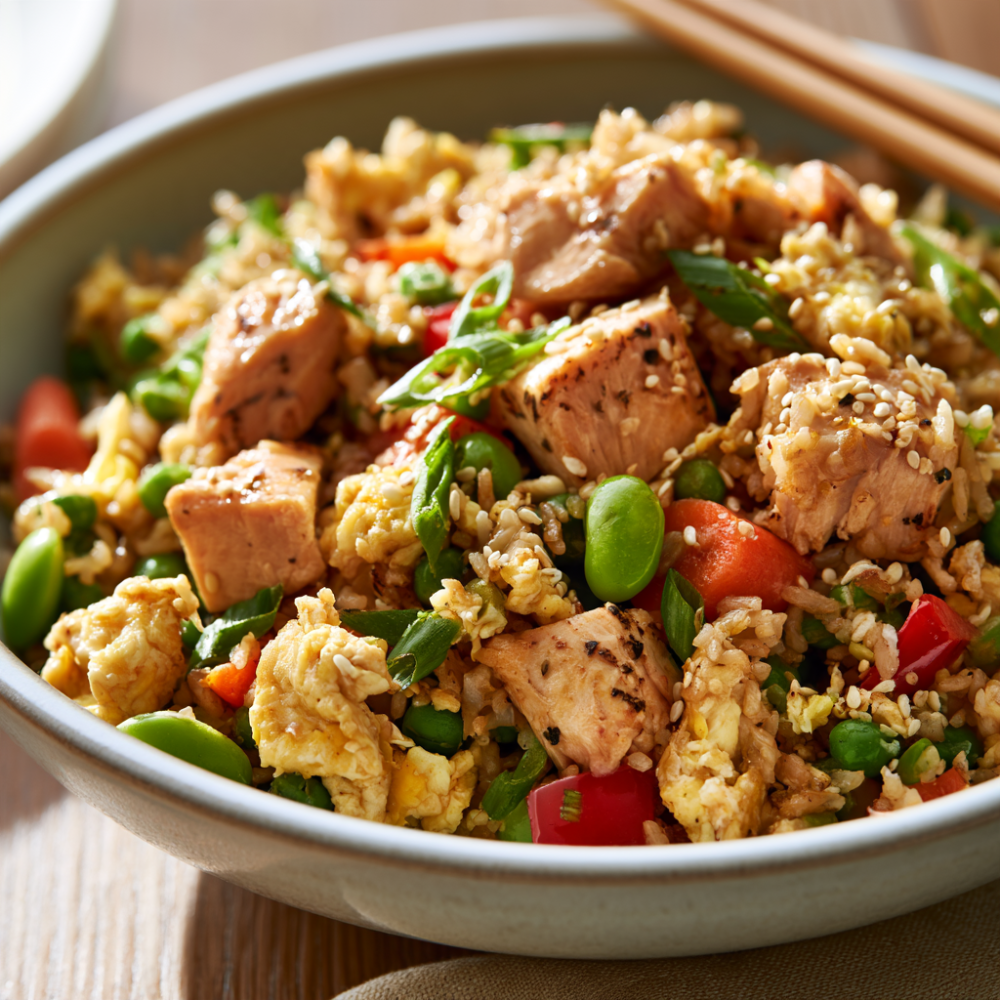
This chicken fried rice is different. It’s built with a generous amount of chicken, a pile of vegetables, and just enough rice to hold it all together.
It’s seasoned with soy sauce, sesame oil, garlic, and ginger — the same flavors that make takeout fried rice so addictive — but without the grease or the MSG headache.
About 32g of protein per serving. A complete meal in one pan. Ready in about 25 minutes.
And it’s genuinely one of the best chicken-and-rice recipes you can make for a family dinner.
The key is the technique. Use day-old rice (or rice that’s been cooled and dried), a screaming-hot pan, and cook in stages so nothing steams or gets soggy.
Do that, and you’ll get fried rice with separate grains, tender chicken, fluffy eggs, and crisp vegetables — the kind you’d pay $14 for at a hibachi restaurant.
This homemade fried rice earns a permanent spot in the rotation. It’s healthy, it’s high-protein, and it’s better than takeout.
Why This Chicken Fried Rice Works
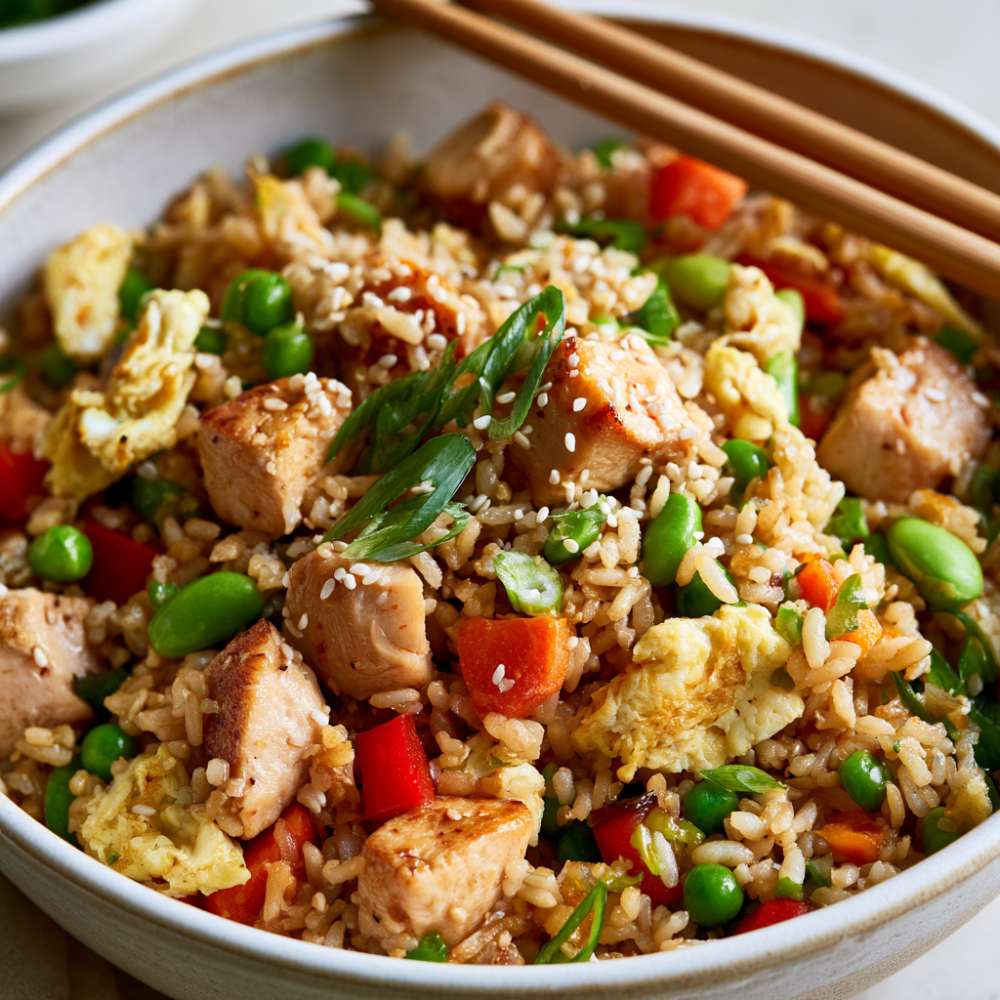
It’s genuinely high in protein. About 32g per serving from the chicken, eggs, and edamame. That’s a real, filling dinner — not a side dish.
Day-old rice is the secret to separate grains. Fresh rice is too moist and steams instead of frying. Day-old rice that’s been chilled and dried out fries into separate, slightly chewy grains. If you don’t have day-old rice, spread fresh rice on a baking sheet and refrigerate it for 30 minutes.
Cooking in stages keeps everything crisp. Cook the chicken first, then the eggs, then the vegetables, then the rice. Each component gets the heat it needs without steaming the others. This technique separates good fried rice from mushy fried rice.
A screaming hot pan is non-negotiable. Fried rice needs high heat to get those slightly charred, caramelized edges. A wok is ideal, but a large cast iron skillet or a heavy stainless skillet works beautifully.
Don’t overcrowd the pan — this is the one real failure point. With 1½ pounds of chicken, vegetables, and 4 cups of rice, a small skillet will steam everything instead of frying it. If your pan is smaller than 12 inches, cook the rice in two batches or use two pans. It’s the easiest fix and the difference between crispy fried rice and a soggy pile.
Add sesame oil at the end, off the heat. Sesame oil is a finishing oil—its flavor cooks off if you heat it too long. Stirring it in at the end gives you that unmistakable fried rice aroma.
The sauce is simple and balanced. Soy sauce, oyster sauce (optional), a splash of rice vinegar, and a pinch of sugar. That’s it: no heavy sauces, no cornstarch, no thickeners.
The chicken doesn’t need cornstarch. A simple marinade of soy sauce, sesame oil, and black pepper is enough. The chicken browns beautifully on its own in a hot pan, and skipping the cornstarch keeps the recipe cleaner without sacrificing texture or flavor.
The vegetables add color, crunch, and nutrition. Peas, carrots, bell pepper, green onion, and edamame. They’re not just filler — they’re what makes this a complete meal.
It’s a one-pan dinner. Everything cooks in one skillet. That’s the beauty of fried rice — protein, vegetables, and carbs in a single pan.
It’s meal-prep and freezer-friendly. Portion it into containers, refrigerate for 4 days, or freeze for 3 months. It reheats in 90 seconds.
It’s budget-friendly. Chicken, rice, eggs, and frozen vegetables. About $2 per serving.
It’s endlessly customizable. Swap the protein, change the vegetables, add heat, make it hibachi-style, or go Indian-inspired. See the variations below.
Healthy Chicken Fried Rice
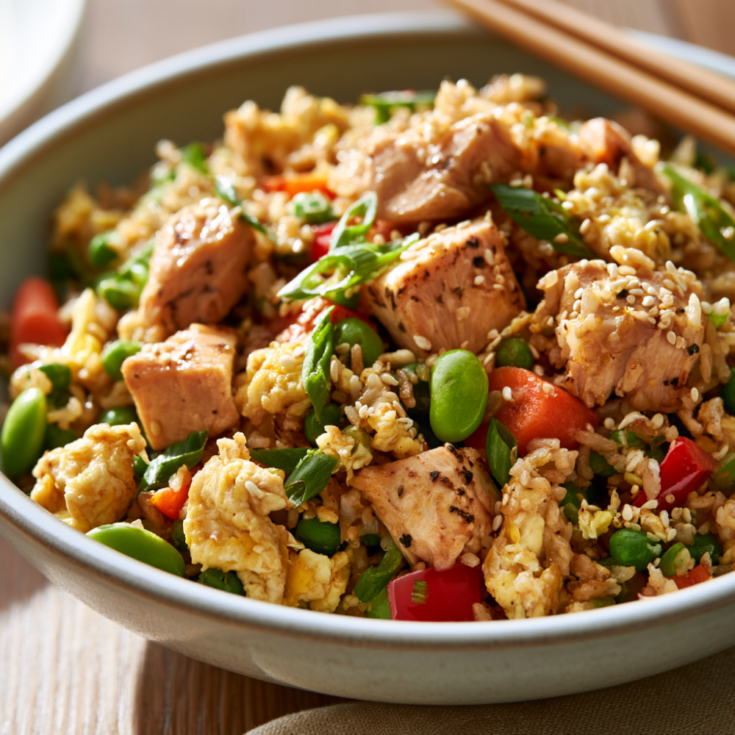
A healthy, high-protein chicken fried rice made with tender chicken, fluffy eggs, crisp vegetables, and day-old rice. Ready in about 25 minutes.
Ingredients
For the chicken:
- 1½ lbs boneless, skinless chicken breast or thighs, cut into ½-inch pieces
- 1 tbsp soy sauce or tamari
- ½ tsp sesame oil
- ¼ tsp black pepper
For the fried rice:
- 4 cups cooked day-old long-grain white rice (chilled)
- 4 large eggs, beaten
- 3 tbsp neutral oil (avocado, canola, or vegetable), divided
- 1 small yellow onion, diced
- 3 cloves garlic, minced
- 1 tbsp freshly grated ginger
- 1 cup frozen peas and carrots mix
- 1 red bell pepper, diced
- ½ cup frozen shelled edamame
- 3 green onions, sliced (white and green parts separated)
- 3 tbsp soy sauce or tamari (plus more to taste)
- 1 tbsp oyster sauce (optional)
- 1 tsp rice vinegar
- ½ tsp granulated sugar
- 1 tsp toasted sesame oil
- ¼ tsp red pepper flakes (optional)
For serving:
- Sliced green onions
- Sesame seeds
- Sriracha or chili oil
- Lime wedges
Instructions
1. Marinate the chicken. In a medium bowl, toss the chicken pieces with the soy sauce, sesame oil, and black pepper. Let it sit while you prep the other ingredients.
2. Prep everything before you cook. Fried rice cooks fast, so have everything ready. Chop the vegetables, beat the eggs, and have the rice, sauces, and seasonings within arm's reach.
3. Cook the chicken. Heat 1 tablespoon of oil in a large wok or 12-inch cast iron skillet over medium-high heat. Add the chicken in a single layer and cook undisturbed for 2 minutes, then stir-fry for 2–3 minutes more, until cooked through and lightly browned. Transfer to a plate and set aside.
If your pan is smaller than 12 inches, cook the chicken in two batches. Overcrowding the pan will steam the chicken instead of browning it.
4. Scramble the eggs. Add another ½ tablespoon of oil to the pan. Pour in the beaten eggs and let them set for 20 seconds, then scramble gently with a spatula until just cooked. Transfer to the plate with the chicken.
5. Sauté the aromatics. Add another ½ tablespoon of oil to the pan. Add the diced onion and cook for 2 minutes, until softened. Add the garlic and ginger and cook for 30 seconds, until fragrant.
6. Cook the vegetables. Add the peas and carrots mix, diced bell pepper, and edamame. Stir-fry for 2–3 minutes, until the vegetables are tender-crisp and any frozen vegetables have thawed.
7. Add the rice. Add the remaining 1 tablespoon of oil to the pan, then add the chilled rice. Break up any clumps with your spatula and stir-fry for 3–4 minutes, until the rice is heated through and starting to get slightly crispy at the edges.
If your pan is smaller than 12 inches, cook the rice in two batches. This is the single most important step for getting crispy fried rice instead of a soggy pile.
8. Add the sauce. Push the rice to the side of the pan and pour the soy sauce, oyster sauce (if using), rice vinegar, and sugar into the center. Stir to combine, then toss everything together until the rice is evenly coated.
9. Return the chicken and eggs. Add the cooked chicken and scrambled eggs back to the pan, along with the white parts of the green onions. Stir-fry for 1–2 minutes, until everything is combined and heated through.
10. Finish with sesame oil. Turn off the heat and stir in the toasted sesame oil and red pepper flakes (if using). Taste and add more soy sauce if needed.
11. Serve. Transfer to a serving platter or individual bowls. Top with the green parts of the green onions and sesame seeds. Serve with sriracha, chili oil, or lime wedges on the side.
Notes
Protein per Serving: About 32g
Nutrition note: Protein per serving depends on the size of your chicken breasts, the rice, and your portion size. Calculate with your specific ingredients for accurate numbers.
Tips for the Best Chicken Fried Rice
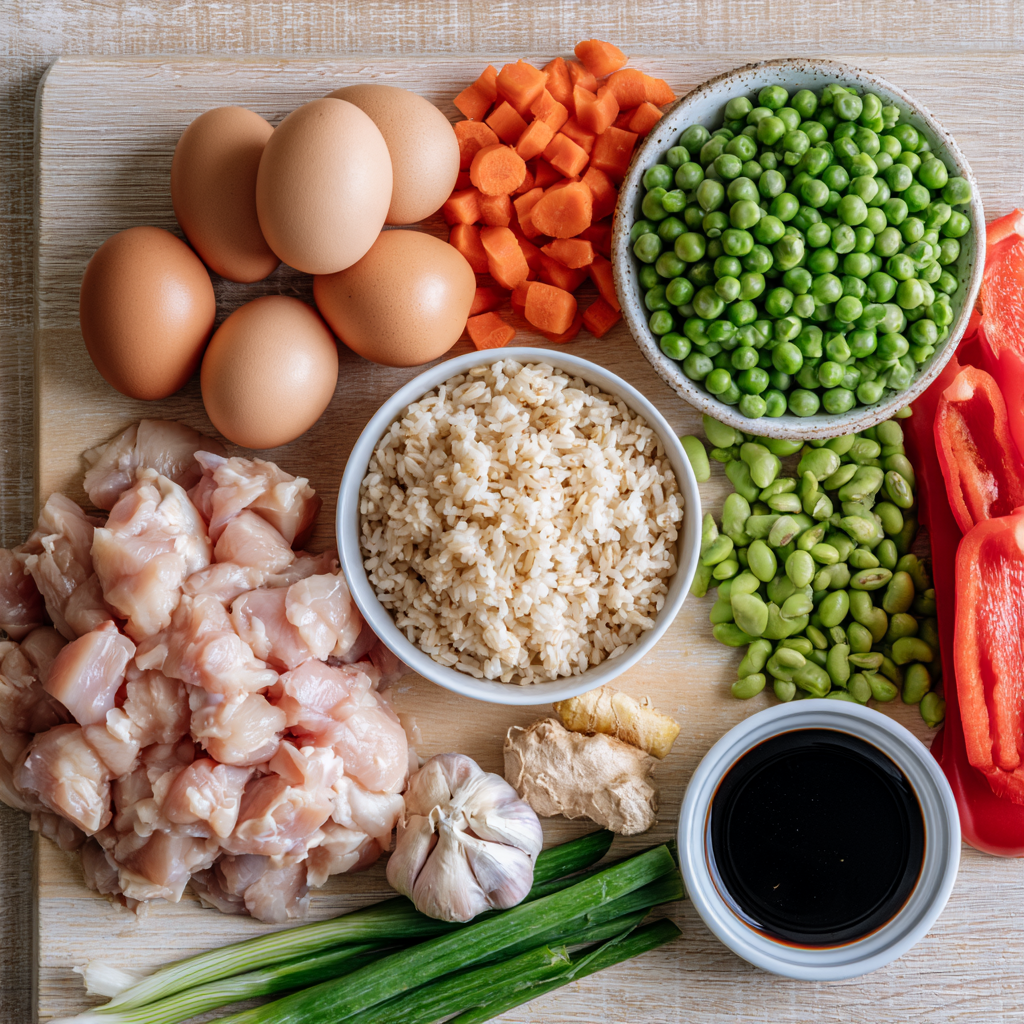
Use day-old rice, not fresh. Fresh rice is too moist and steams instead of frying. Day-old rice that’s been chilled and dried out fries into separate, slightly chewy grains. If you don’t have day-old rice, spread freshly cooked rice on a baking sheet and refrigerate for 30 minutes.
Long-grain white rice is the best choice. Jasmine rice is the classic for fried rice — it’s aromatic and stays separate. Basmati works too. Short-grain rice (like sushi rice) turns sticky and clumps.
Prep everything before you turn on the heat. Fried rice cooks in about 10 minutes. You won’t have time to chop vegetables or measure sauces once you start. Have everything ready on the counter.
Get the pan screaming hot. Fried rice needs high heat to get those slightly charred, caramelized edges. A wok is ideal, but a large cast iron skillet or heavy stainless skillet works beautifully.
Don’t overcrowd the pan — this is the one real failure point. With 1½ pounds of chicken, vegetables, and 4 cups of rice, a small skillet will steam everything instead of frying it. If your pan is smaller than 12 inches, cook the chicken and the rice in two batches. It’s the easiest fix and the difference between crispy fried rice and a soggy pile. Don’t try to redesign the recipe around multiple pans — just split the batch if you need to.
Use a high-smoke-point oil. Avocado, canola, and vegetable oil all work. Don’t use olive oil — it burns at the high heat fried rice requires.
Cook in stages. Chicken first, then eggs, then vegetables, then rice. Each component gets the heat it needs without steaming the others.
Skip the cornstarch. Chicken fried rice doesn’t need cornstarch to be tender or flavorful. A simple marinade of soy sauce, sesame oil, and black pepper is enough. The chicken browns beautifully on its own in a hot pan, and skipping the cornstarch keeps the recipe cleaner.
Break up the rice clumps before it goes in the pan. Use your hands or a fork to separate the grains. Clumps of rice won’t fry evenly.
Add the sesame oil at the end, off the heat. Sesame oil is a finishing oil—its flavor cooks off if you heat it too long. Stirring it in at the end gives you that unmistakable fried rice aroma.
Use frozen peas and carrots. They’re already blanched and diced, and they thaw in the pan in about 2 minutes—no prep required.
Taste before adding more soy sauce. Different soy sauce brands have different sodium levels. Taste the rice before adding more.
For extra protein, add edamame or extra eggs. The edamame adds about 3g of protein per serving. An extra egg adds about 2g per serving.
For a hibachi-style version, add butter and garlic. See the Hibachi Fried Rice variation below.
For an Indian-inspired version, add curry powder and garam masala. See the Indian Egg Fried Rice variation below.
Easy Variations
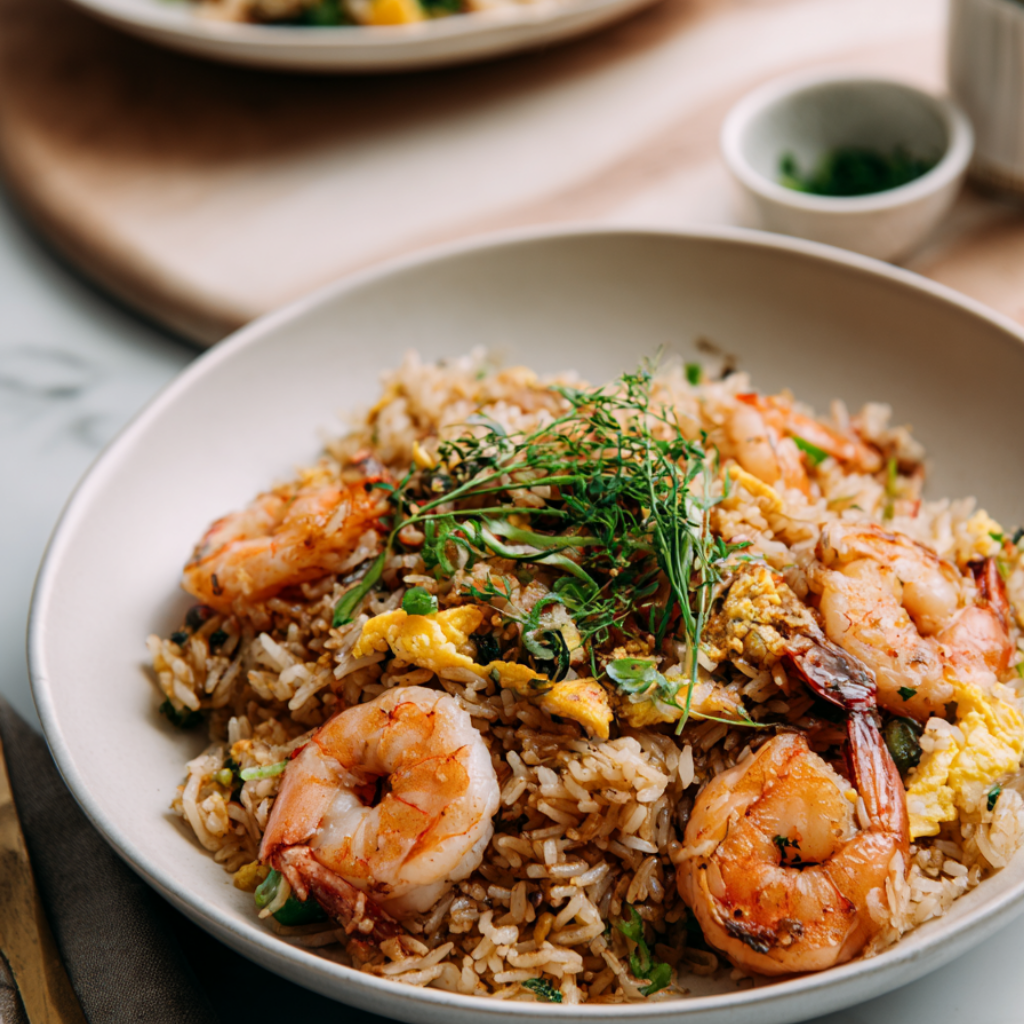
Best Fried Rice Recipe (The Classic)
This is the recipe as written — chicken, eggs, vegetables, and day-old rice with a simple soy-based sauce. It’s the version most people mean when they search for the best fried rice recipe or homemade fried rice.
Hibachi Fried Rice
Add 1 tablespoon of butter along with the oil when cooking the rice, and add an extra clove of minced garlic. The butter gives the rice a rich, restaurant-style flavor. Add 1 cup of diced zucchini along with the other vegetables. Serve with yum yum sauce on the side.
Chinese Fried Rice Recipe
Add 1 cup of diced Chinese sausage (lap cheong) along with the chicken. Skip the oyster sauce and add 1 extra tablespoon of soy sauce. Use 1 cup of frozen mixed vegetables instead of the peas and carrots mix. It’s a more traditional Chinese-American version.
Indian Egg Fried Rice
Add 1 tbsp curry powder, 1 tsp garam masala, and ½ tsp ground turmeric to the rice with the soy sauce. Add ½ cup of frozen peas and 1 diced tomato. Top with a fried egg (masala fried egg) instead of the scrambled eggs. This Indian-Chinese fusion version is deeply flavorful.
Storage, Freezing, and Reheating
Refrigerator: Store in an airtight container for up to 4 days. The rice will absorb moisture as it sits — add a splash of soy sauce or a drizzle of sesame oil when reheating.
Freezer: Cool completely, then portion into freezer-safe containers. Freeze for up to 3 months. The rice holds up beautifully through freezing and thawing.
To reheat from frozen: Thaw overnight in the refrigerator, then reheat in the microwave in 60–90 second intervals, or in a skillet over medium-high heat with a splash of oil.
Reheating: Reheat on the stovetop over medium-high heat with a splash of oil for the best texture, or in the microwave in 60–90 second intervals. The microwave works fine, but the rice won’t be as crispy.
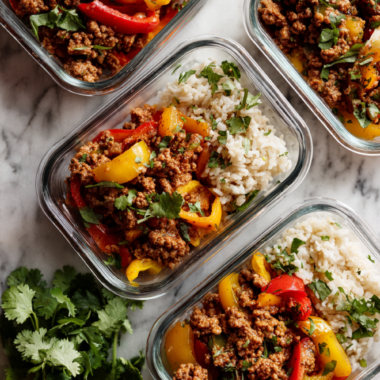
Meal prep note: Portion the fried rice into individual glass containers. Refrigerate 4 for the week and freeze the rest. Reheat in the microwave for 90 seconds. Add fresh green onions and a drizzle of sesame oil after reheating.
Food safety: Refrigerate within 2 hours of cooking. Reheat leftovers until hot throughout — 165°F. Don’t leave cooked rice at room temperature for more than 2 hours — it’s more prone to bacterial growth than other foods.
Frequently Asked Questions
What’s the best rice for chicken fried rice?
Long-grain white rice, preferably jasmine. It stays separate and has a slightly chewy texture that’s perfect for fried rice. Basmati works too. Short-grain rice turns sticky and clumps.
Can I use fresh rice instead of day-old rice?
You can, but the fried rice will be softer and less crispy. If you only have fresh rice, spread it on a baking sheet and refrigerate it for 30 minutes to dry it out. It’s a quick fix that makes a big difference.
How do I keep the rice from getting mushy?
Three things: use day-old rice, get the pan screaming hot, and don’t overcrowd the pan. If your pan is smaller than 12 inches, cook the rice in two batches. Crowding lowers the temperature and steams the rice instead of frying it.
Do I need cornstarch in the chicken marinade?
No. A simple marinade of soy sauce, sesame oil, and black pepper is enough. The chicken browns beautifully on its own in a hot pan, and skipping the cornstarch keeps the recipe cleaner without sacrificing texture or flavor.
Can I use chicken thighs instead of chicken breast?
Yes. Chicken thighs are more forgiving and stay juicy, but they take slightly longer to cook. Cut them into ½-inch pieces and cook for 3–4 minutes, until they reach 165°F.
Can I use frozen vegetables?
Yes. Frozen peas and carrots are the classic choice. They’re already blanched and diced, and they thaw in the pan in about 2 minutes—no need to thaw them first.
How much protein is in each serving?
About 32g per serving, from the chicken, eggs, and edamame. The exact number depends on the size of your chicken breasts and your portion size.
Is this recipe gluten-free?
Not as written — soy sauce and oyster sauce contain gluten. Use tamari or gluten-free soy sauce, skip the oyster sauce, and confirm your other ingredients are gluten-free.
Can I make this in an Instant Pot?
Yes, but the texture is different. Sauté the chicken and vegetables on sauté mode, add the rice and sauce, and cook on high pressure for 3 minutes, then let it release naturally for 5 minutes. Then stir in the eggs and sesame oil. It’s faster but not quite as crispy.
Can I make this without eggs?
Yes. Skip the eggs and add an extra cup of edamame or ½ cup of diced tofu. It’s still high in protein and works for anyone with an egg allergy.
Can I make this vegan?
Yes. Skip the chicken and eggs. Use 1½ cups of diced extra-firm tofu and 1 cup of edamame. Use tamari instead of soy sauce and skip the oyster sauce—about 18g of protein per serving.
Can I add other vegetables?
Yes. Broccoli, snap peas, zucchini, mushrooms, and bok choy all work well. Add harder vegetables (broccoli, carrots) earlier and softer ones (zucchini, mushrooms) later so they don’t get mushy.
What’s the best pan for fried rice?
A wok is ideal because its shape lets you use high heat and toss easily. A large cast iron skillet or a heavy stainless skillet works beautifully too. Nonstick pans work but don’t get as hot, so that you won’t get the same char.
Can I make this ahead of time?
Yes. You can make the fried rice up to 4 days ahead and reheat it. It’s one of the best meal prep recipes you can make.
What do I serve with chicken fried rice?
Egg rolls, spring rolls, dumplings, wontons, or a simple cucumber salad. For a complete meal, serve it with steamed broccoli or a bowl of hot and sour soup.
Can I double the recipe?
Yes. Use a very large wok or two skillets. Cooking time stays roughly the same, but you’ll need to cook in batches so the rice fries instead of steams.
How much does this recipe cost per serving?
About $2 per serving, depending on chicken and rice prices in your area. It’s one of the most budget-friendly family dinners you can make.
More Healthy Chicken Dinner Recipes You’ll Love
- Crockpot Chicken and Potatoes: Garlic Parmesan Dump-and-Go Dinner
- Crockpot Coconut Curry Chicken Thighs
- Healthy Chicken Cordon Bleu: High-Protein, Lightened-Up Weeknight Dinner
- Meal Prep for One Person: Crispy Maple-Mustard Chicken
- Crockpot Buffalo Chicken
Conclusion
This chicken fried rice is the healthy, high-protein, better-than-takeout dinner that your whole family will ask for again.
Tender chicken, fluffy eggs, crisp vegetables, and day-old rice tossed in a simple soy-sesame sauce. About 32g of protein per serving, ready in about 25 minutes, and it’s a complete meal in one pan.
The keys are simple: use day-old rice, get the pan screaming hot, cook in stages, don’t overcrowd the pan, marinate the chicken in soy sauce and sesame oil (no cornstarch needed), add the sesame oil at the end, and taste before adding more soy sauce.
Do that, and you’ll get fried rice with separate grains, tender chicken, and that unmistakable takeout flavor—made at home.
Make it for a busy weeknight, a family dinner, or meal prep for the week. It freezes beautifully, and the leftovers are arguably better than the first serving. This homemade fried rice earns a permanent spot in the rotation.