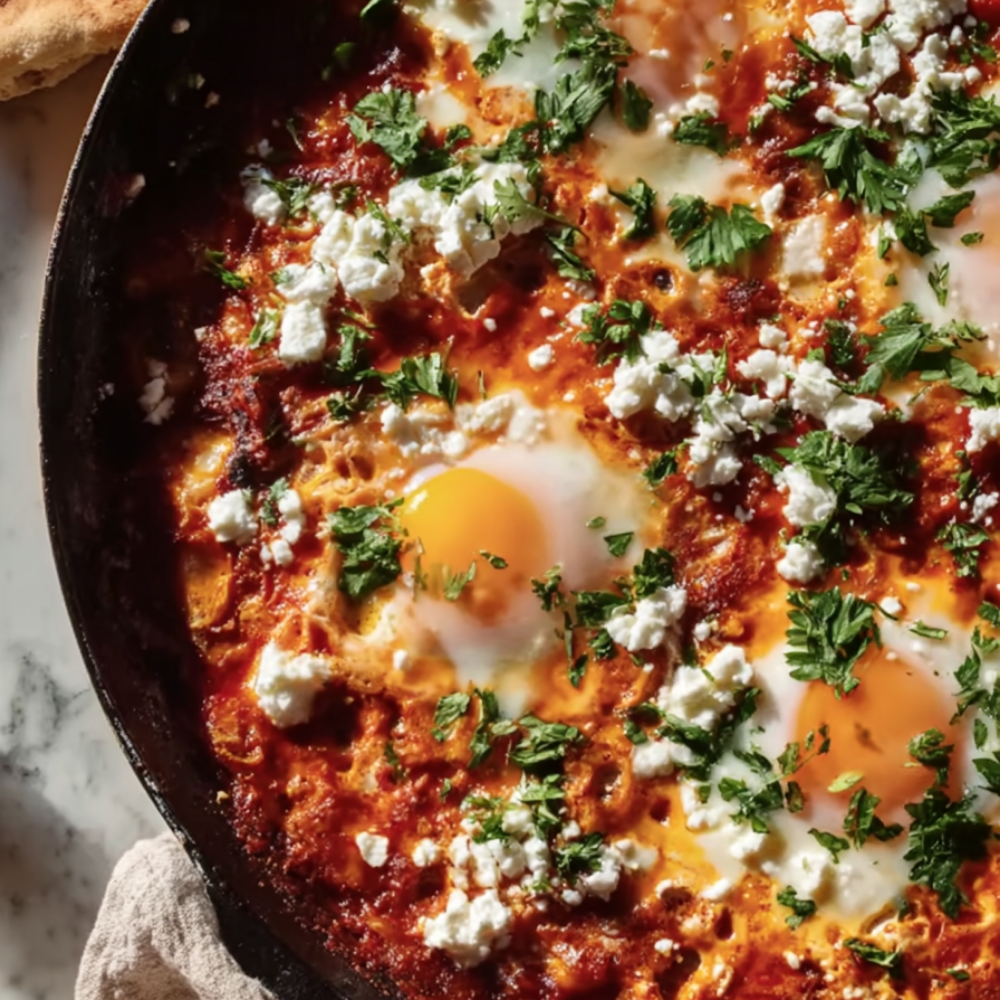
Shakshuka is one of those dishes that looks like it took hours and actually takes about 35 minutes.
Eggs poached in a simmering tomato-and-pepper sauce, spiced with cumin, paprika, and coriander, then finished with feta, Greek yogurt, and fresh herbs.
You bring the skillet to the table with a stack of crusty bread and let everyone help themselves.
It’s a North African and Middle Eastern staple—popular in Tunisia, Libya, Israel, and across the Levant— and one of the most forgiving breakfast-for-dinner dishes you can make. The sauce does the work.
The eggs just need a few minutes of gentle heat at the end.
One honest thing worth knowing up front: traditional shakshuka is moderate in protein, not high. Two eggs plus feta lands at about 15–17 grams per serving. That’s a fine breakfast, but it won’t keep you full until lunch.
This version fixes that. Chickpeas go into the sauce, adding fiber and about 5 grams of protein per serving. Greek yogurt replaces some of the feta and adds another 2–3 grams. Together they push each serving to about 22–25 grams of protein — a genuine high-protein breakfast that still tastes like shakshuka, not a protein shake in tomato sauce.
And a second honest note: the sauce must be thick before the eggs go in. Watery tomato sauce is the number one reason shakshuka turns out disappointing. The eggs end up floating instead of nestled in a rich, jammy sauce. Simmering it down until it holds its shape when you drag a spoon through it is the single most important step.
Why This High-Protein Shakshuka Recipe Works
The chickpeas add protein, fiber, and body. A can of drained chickpeas adds about 21 grams of protein to the whole pan and gives the sauce more substance. It’s a real variation — chickpea shakshuka is a classic across the Middle East.
Greek yogurt adds protein and a cool, creamy contrast. A dollop on top balances the sauce’s heat and adds about 8 grams of protein.
The sauce is built from whole ingredients. It uses canned tomatoes, fresh bell peppers, onion, garlic, and a from-scratch spice blend. No jarred sauce, no shortcuts.
Cumin and paprika are the backbone. Together they give the sauce its warm, smoky, distinctly North African character. Without them, it’s just tomato sauce with eggs.
Simmering the sauce down is what makes it work. The sauce needs to reduce until it’s thick and jammy — that’s what gives you eggs nestled in sauce instead of eggs floating in soup.
Making wells with a spoon keeps the eggs contained. The whites stay together instead of spreading across the pan, and each serving gets its own whole egg.
Covering the pan poaches the tops of the eggs. Without a lid, the whites stay raw on top while the bottoms overcook.
The yolks should still be runny. This is the whole point of shakshuka. You’re going for runny yolks mixed into the spiced tomato sauce.
Feta and fresh herbs finish it. Crumbled feta adds salt and creaminess. Parsley and cilantro add brightness. Add both after you take the pan off the heat.
Crusty bread is not optional. You need something to scoop with. A baguette, pita, sourdough, or challah all work.
It’s a genuine one-pan meal. Everything happens in a single skillet. No separate pots, no side dishes required.
High-Protein Shakshuka Recipe
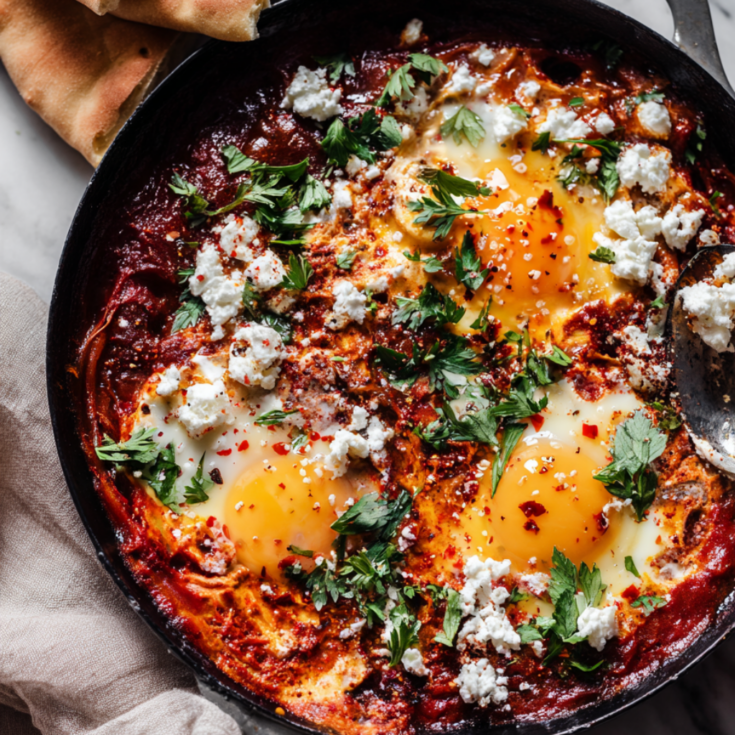
A flavorful one-pan shakshuka made with eggs gently poached in a rich tomato, pepper, and chickpea sauce seasoned with cumin, paprika, garlic, and coriander. Finished with creamy feta, Greek yogurt, and fresh herbs.
Ingredients
- 2 tbsp extra-virgin olive oil
- 1 large yellow onion, finely diced
- 2 red bell peppers, diced
- 4 cloves garlic, minced
- 2 tbsp tomato paste
- 1 tsp ground cumin
- 1 tsp smoked paprika
- ½ tsp ground coriander
- ¼ tsp cayenne pepper (optional, for heat)
- 1 tsp kosher salt, plus more to taste
- ½ tsp freshly ground black pepper
- 1 can (28 oz) crushed tomatoes
- ½ cup water
- 1 can (15 oz) chickpeas, drained and rinsed
- 8 large eggs
- ½ cup crumbled feta
- ½ cup plain Greek yogurt
- ¼ cup fresh parsley, chopped
- 2 tbsp fresh cilantro, chopped (optional)
- 1–2 tsp fresh lemon juice, to taste
For serving:
- Warm pita, crusty bread, or sourdough
- Lemon wedges
- Extra feta or Greek yogurt
Instructions
1. Cook the onion and peppers. Heat the olive oil in a large, deep skillet over medium heat. Add the onion and bell peppers. Cook for 8–10 minutes, stirring occasionally, until the vegetables soften and begin to develop golden edges. Don't rush this step — the softened peppers and onions form the flavor base of the sauce.
2. Add the garlic and spices. Add the garlic, cumin, smoked paprika, coriander, cayenne (if using), salt, and black pepper. Cook for about 30–60 seconds, stirring constantly, until the garlic is fragrant and the spices are toasted.
3. Cook the tomato paste. Add the tomato paste and stir it into the vegetables. Cook for about 1 minute, stirring frequently, until the tomato paste darkens slightly.
4. Add the tomatoes and chickpeas. Pour in the crushed tomatoes and water. Stir well, scraping up any flavorful bits from the bottom of the skillet. Add the drained chickpeas. Bring the mixture to a gentle simmer.
5. Reduce the sauce. Reduce the heat to medium-low and simmer uncovered for 12–15 minutes, stirring occasionally. The sauce should become thick enough to hold the eggs without them sinking completely into the tomatoes. Drag a spoon through the sauce — the trail should remain visible for a moment before slowly filling back in. If the sauce still looks watery, continue simmering for a few more minutes before adding the eggs.
6. Make the egg wells. Use the back of a large spoon to make 8 shallow wells in the sauce, spacing them evenly around the skillet. Crack one egg into each well. Season the eggs lightly with a little salt and black pepper.
7. Cook the eggs. Cover the skillet and reduce the heat to low. Cook for 5–8 minutes, checking after 5 minutes. The whites should be completely set while the yolks remain soft and slightly runny. For firmer yolks, continue cooking for another 1–2 minutes. If some whites are still translucent while others are already set, gently spoon a little hot tomato sauce over the uncooked whites and continue cooking with the lid on.
8. Finish the shakshuka. Remove the skillet from the heat. Sprinkle the feta, parsley, and cilantro over the top. Finish with a squeeze of fresh lemon juice and a dollop of Greek yogurt. Taste the tomato sauce around the edges and add a little more salt or lemon juice if needed.
9. Serve. Serve immediately with warm pita or crusty bread for scooping up the eggs and sauce.
Notes
Protein per Serving: About 22–25g
Nutrition note: Protein varies depending on the size of the eggs, chickpeas, feta, and Greek yogurt. This estimate assumes 2 large eggs, about ⅓ cup chickpeas, 2 tablespoons of feta, and 2 tablespoons of Greek yogurt per serving. Calculate with your specific ingredients for accurate numbers.
Tips for the Best Shakshuka Recipe
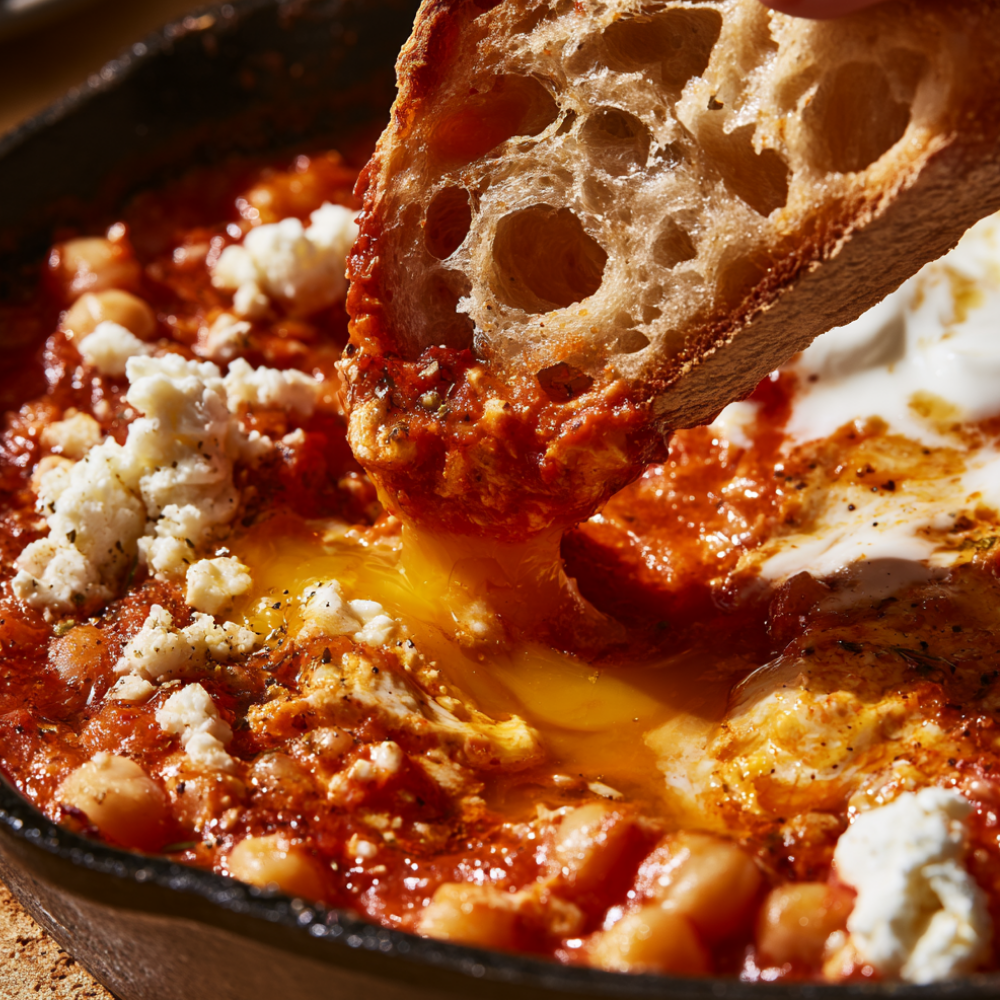
Don’t rush the tomato sauce. The sauce should be thick before you add the eggs. If it’s too thin, the eggs can sink into the sauce and become difficult to cook evenly. Drag a spoon through the sauce — if the trail stays visible for a moment, it’s ready.
The chickpeas need the sauce to reduce around them. Adding chickpeas means the sauce needs to simmer a bit longer than in a traditional version. 12–15 minutes, not 10–12.
Use a wide skillet. A 12-inch skillet gives the eggs room to sit in their own space. A crowded pan means eggs overlap and cook unevenly.
Don’t rush the peppers and onions. Cooking them for 8–10 minutes, until softened and lightly golden, gives the sauce its sweetness and depth.
Toast the spices in the oil. Cook the cumin, paprika, and coriander with the garlic for 30–60 seconds to bloom their flavor and make the sauce taste layered instead of flat.
Cook the tomato paste briefly. Cooking it for a minute before adding the tomatoes concentrates its flavor and removes the raw, tinny taste.
Check the eggs at 5 minutes. Cook time depends entirely on your pan, your stove, and how cold your eggs are. Start checking early and pull the pan when the whites are just set.
For runny yolks, pull the pan early. The residual heat continues cooking the eggs slightly after they come off the stove. If you want runny yolks, remove the skillet at the moment the whites set.
For firmer yolks, cook 7–9 minutes. Cook until they reach your preferred firmness. Check at 6 minutes and continue as needed.
Serve immediately. Shakshuka waits for no one. The yolks keep cooking in the residual heat, so bring it to the table as soon as it comes off the stove.
Use crusty bread, not soft bread. You need something with structure to scoop the sauce without falling apart.
Easy Variations
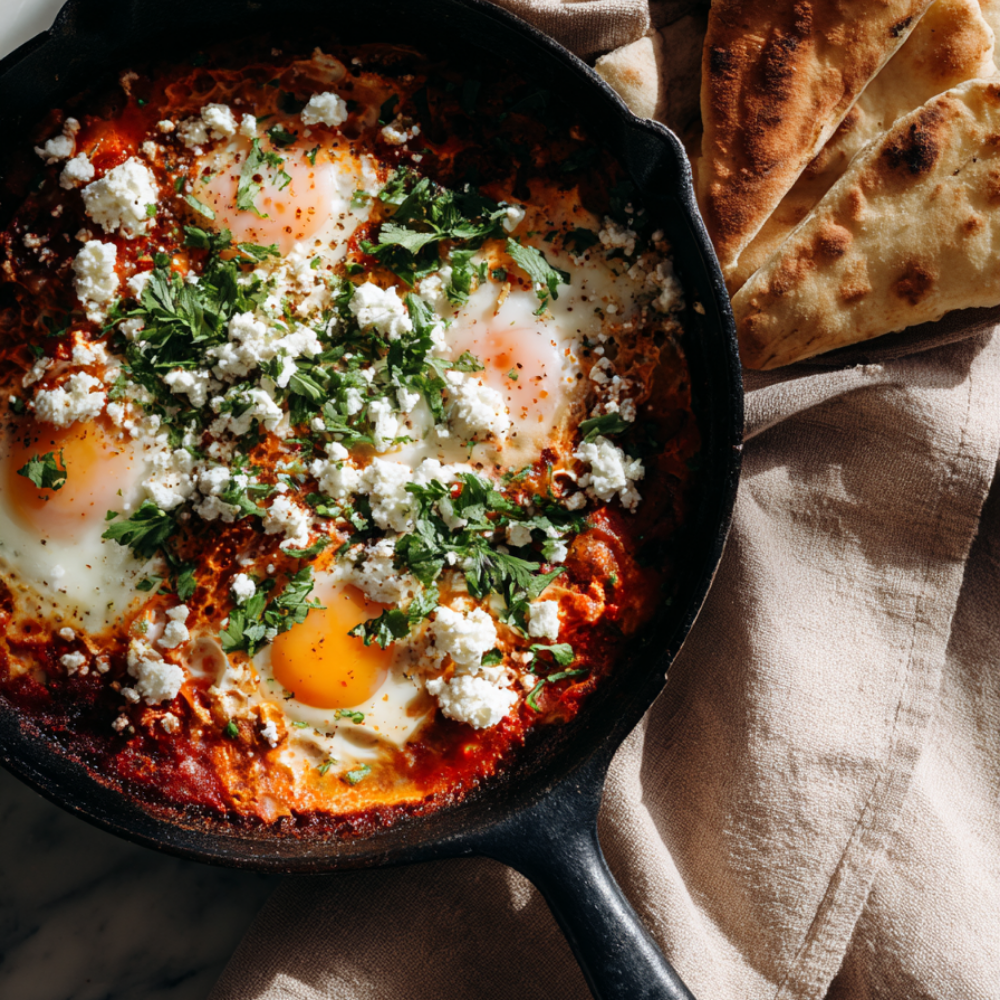
Traditional Shakshuka (Lower Protein Version)
Skip the chickpeas and use ½ cup of feta instead of adding Greek yogurt. It’s the more traditional version, and each serving lands at about 15–17g of protein. Still a great breakfast — just not a high-protein one.
Green Shakshuka
Skip the crushed tomatoes and build the sauce with 1 lb chopped tomatillos or 2 cups chopped green tomatoes, plus 2 cups chopped spinach or kale. Add 1 diced jalapeño and use ground cumin and coriander as the main spices. Finish with crumbled feta, Greek yogurt, and fresh cilantro.
Spicy Harissa Shakshuka
Add 2 tablespoons of harissa paste along with the tomato paste, and reduce the cayenne to a pinch. The harissa brings a deeper, smokier heat than straight cayenne. Top with fresh mint instead of parsley for a North African twist.
Merguez Shakshuka (Maximum Protein Version)
Brown 12 oz of crumbled merguez sausage (or lamb sausage) in the skillet before adding the onion and peppers, then proceed with the recipe. It pushes each serving to about 32–35g of protein and turns shakshuka into a substantial dinner. Halal merguez is widely available at Middle Eastern markets
Storage and Food Safety
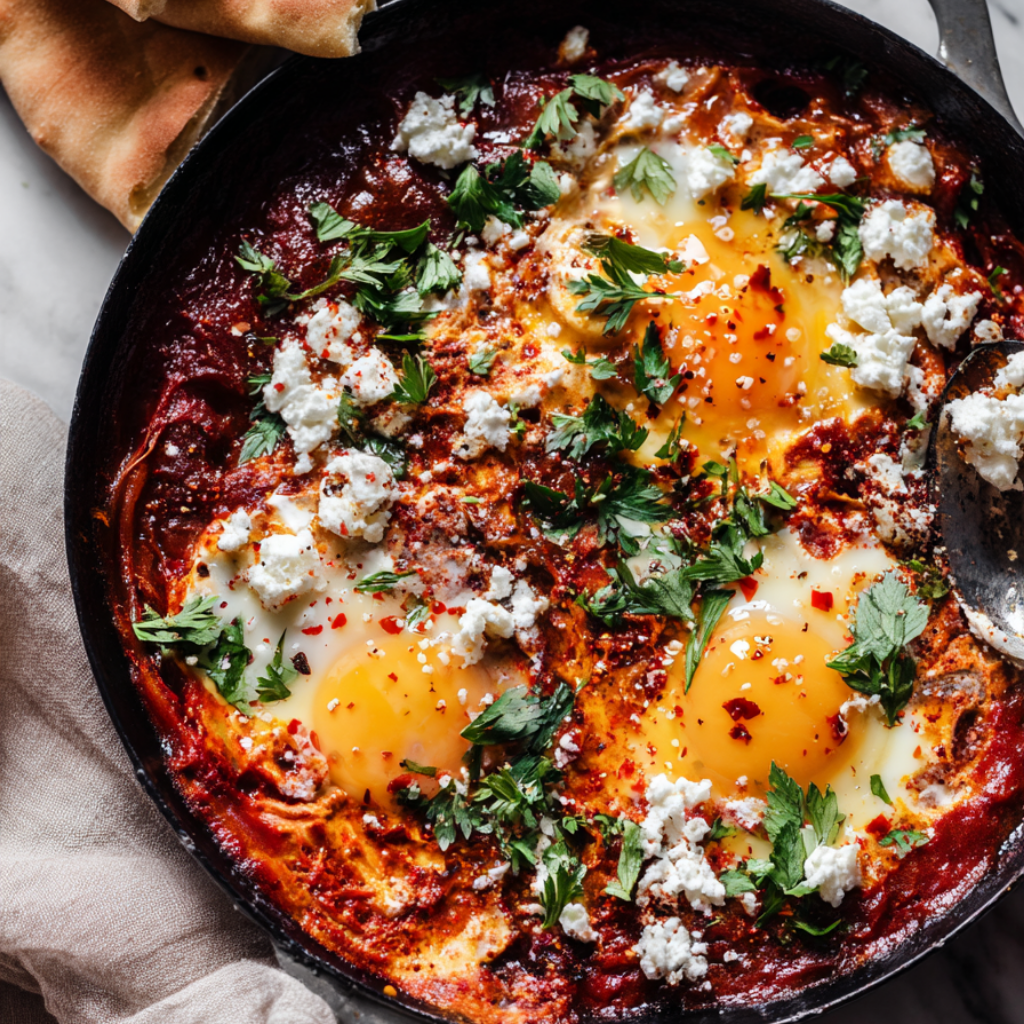
Refrigerator: Shakshuka is best fresh, but leftovers keep in an airtight container for up to 3 days. The yolks will firm up in the fridge.
Freezer: Not recommended. The eggs become rubbery after freezing and thawing.
Reheating: Reheat gently on the stovetop over low heat with a splash of water, covered, for 3–4 minutes. The microwave works but firms the yolks further.
Food safety: Refrigerate within 2 hours of cooking. Reheat leftovers until hot throughout — 165°F.
Frequently Asked Questions
What is shakshuka?
Shakshuka is a North African and Middle Eastern dish of eggs poached in a spiced tomato and pepper sauce. It’s traditionally served for breakfast or brunch with crusty bread for scooping, though it works just as well for lunch or dinner.
How much protein is in each serving?
About 22–25g per serving, including the chickpeas and Greek yogurt. Without them, a traditional version lands at about 15–17g per serving. The chickpeas and Greek yogurt are what make this a genuine high-protein breakfast.
Why is my shakshuka watery?
The sauce wasn’t simmered long enough. Crushed tomatoes release a lot of liquid, and it needs to reduce until it’s thick and jammy. Simmer uncovered for 12–15 minutes and use the spoon-trail test — the sauce should hold its shape when you drag a spoon through it.
How do I keep the egg whites from spreading?
Make deep wells with the back of a spoon, pressing all the way to the bottom of the pan. Shallow wells let the whites spread across the surface instead of staying contained.
Should the yolks be runny?
Yes — runny yolks are the point of shakshuka. They mix into the spiced tomato sauce and make every bite richer. If you prefer firmer yolks, cook 1–2 minutes longer.
Can I make shakshuka ahead of time?
You can make the sauce up to 3 days ahead and refrigerate it. When you’re ready to serve, reheat the sauce in a skillet, make wells, and poach the eggs fresh. Don’t poach the eggs ahead — they don’t reheat well.
Can I make this without eggs?
You can, but it becomes a different dish. The sauce with chickpeas works beautifully as a base for crumbled tofu or white beans. Sauté the tofu in the pan first, then add the sauce and simmer.
What bread goes with shakshuka?
Crusty bread with structure — a baguette, sourdough, challah, or warm pita. Soft sandwich bread falls apart in the sauce.
Is shakshuka gluten-free?
The dish itself is naturally gluten-free. Serve it with gluten-free bread, or skip the bread and serve it over rice.
Is shakshuka halal?
Yes, as written. The recipe contains no pork or alcohol, and all ingredients are halal-friendly. If you add the merguez version, confirm the sausage is certified halal.
Can I double this recipe?
Yes, but use two skillets rather than one. Doubling in a single pan crowds the eggs and makes them cook unevenly.
Can I make shakshuka in the oven?
Yes. After making the wells and adding the eggs, transfer the oven-safe skillet to a 375°F oven and bake for 10–12 minutes, until the whites are set.
More One-Pan & Middle Eastern-Inspired Recipes You’ll Love
- Mediterranean Ground Beef Stir-Fry: 20-Minute High-Protein Weeknight Dinner
- Chicken Fried Rice: Healthy, High-Protein & Better Than Takeout
- Japanese Crab Salad Recipe: Creamy, High-Protein & Perfect for Sushi Rolls
- Creamy Crab and Avocado Sushi Bake Recipe
Conclusion
This shakshuka recipe is the high-protein Middle Eastern breakfast that actually keeps you full.
Eggs poached in a spiced tomato, pepper, and chickpea sauce, finished with crumbled feta, Greek yogurt, and fresh herbs, served straight from the skillet with crusty bread. About 22–25g of protein per serving, and it comes together in about 35 minutes.
The keys are simple: cook the peppers and onions until they’re golden, bloom the spices in the oil, cook the tomato paste briefly, simmer the sauce until it’s thick and jammy, make deep wells for the eggs, cover the pan to poach the tops, and pull it off the heat the moment the whites are set.
Do that, and you’ll have shakshuka with runny yolks and a rich, deeply spiced sauce that’s worth every piece of bread you dip into it.
Make it for brunch, a lazy Sunday breakfast, or a breakfast-for-dinner weeknight. It’s one of the most forgiving, most impressive dishes you can make in a single skillet.