Whether you’re craving the sweet-savory umami of a Japanese restaurant bowl but don’t want to pay for takeout, or you’re trying to get more salmon into your week without standing at the stove for an hour, this teriyaki salmon bowl is the answer.
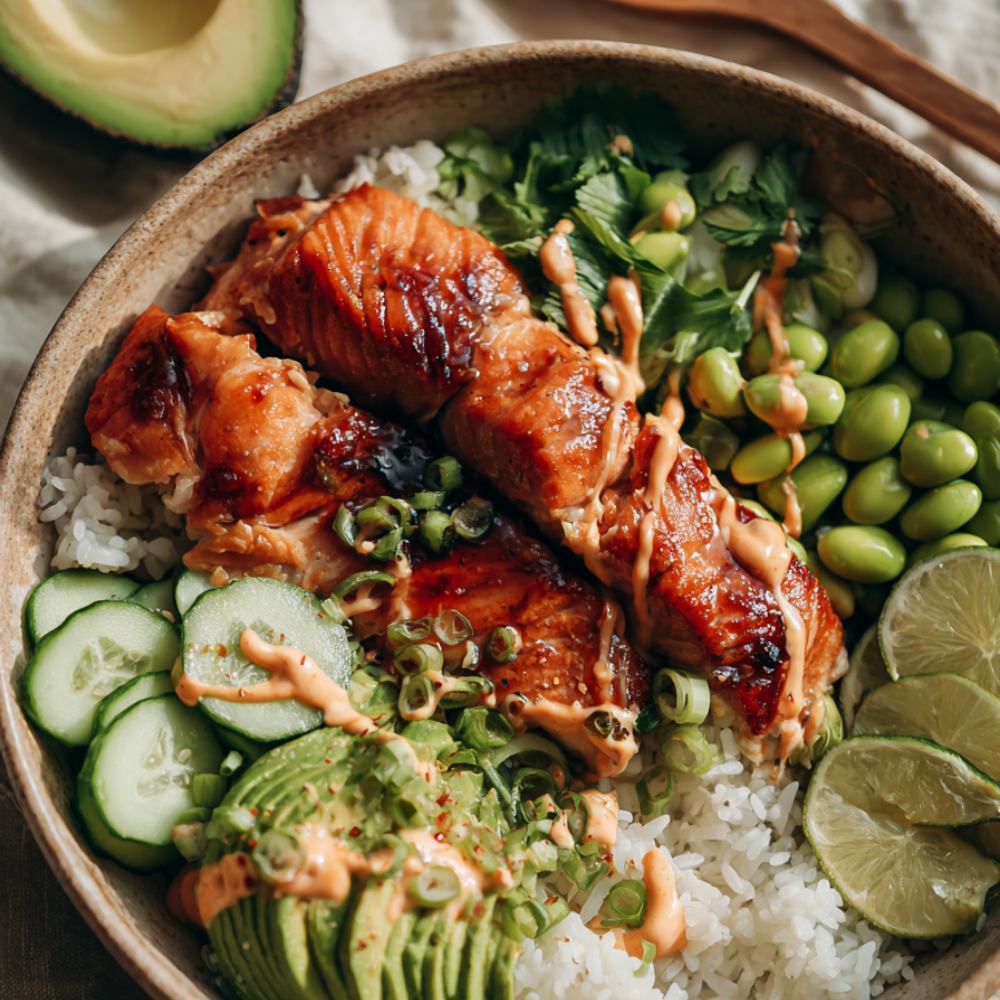
It’s a restaurant-quality bowl you can make in about 20 minutes. Flaky, deeply glazed salmon fillets, protein-packed edamame, fluffy rice, crisp cucumber, and creamy avocado, all drizzled with a homemade teriyaki sauce that’s glossy, sticky, and made without high-fructose corn syrup. About 38–42 grams of protein per bowl.
The trick is the sauce. Store-bought teriyaki is often more sugar than soy sauce, and it burns the moment it hits a hot pan. This version uses low-sodium soy sauce, a measured amount of maple syrup, fresh ginger, garlic, and a touch of rice vinegar. The cornstarch slurry thickens it into that glossy, sticky glaze you want — and it drizzles beautifully over the bowl without turning into a syrup.
The best part is that it’s genuinely a 20-minute meal. The salmon bakes in 10–12 minutes while the rice cooks and the sauce simmers. Everything comes together at the same time, and you’ve got a bowl that looks like it came from a restaurant but took less time than ordering delivery.
Two things decide whether the salmon turns out flaky and moist or dry and overcooked, and neither is optional.
Pull the salmon at 125–130°F for medium or 135–140°F for medium-well. Salmon continues cooking after it comes out of the oven. If you wait until it’s fully opaque and flakes easily in the oven, it’s already overcooked. Use an instant-read thermometer and pull it early.
Brush the glaze on in the last 3–4 minutes, not before. Teriyaki sauce contains sugar, and sugar burns. Glazing the salmon before baking means the sugars caramelize and scorch before the fish is cooked. Brush it on at the end, or spoon it over after baking.
Everything else is forgiving, flexible, and takes about 10 minutes of actual work.
Why This Recipe Works
Salmon is the right protein for a bowl. It’s rich, flavorful, and holds its shape. It’s also one of the best sources of omega-3s you can eat, and a 5–6 oz fillet delivers about 30–35 grams of protein.
Edamame adds plant-based protein and fiber. Shelled edamame has about 18 grams of protein and 8 grams of fiber per cup. It’s one of the only complete plant proteins, and it adds a satisfying pop of texture to every bite.
The teriyaki sauce is balanced, not just sweet. Soy sauce brings salt and umami. Maple syrup brings sweetness. Rice vinegar brings acid. Ginger and garlic bring depth. Cornstarch thickens it into a glaze. Every flavor in a good teriyaki sauce is there, and the ratio is controlled so nothing overwhelms anything else.
Fresh ginger and garlic make a real difference. Jarred ginger paste and garlic paste work in a pinch, but fresh ginger and garlic give the sauce a sharper, more aromatic flavor that jarred versions can’t replicate.
Rice vinegar brightens the sauce. A tablespoon of rice vinegar cuts through the maple syrup’s sweetness and keeps the sauce from tasting cloying.
Cucumber and avocado add contrast—the cool, crisp cucumber cuts through the rich salmon. The creamy avocado adds a buttery texture that balances the sticky glaze. Both are essential to the bowl.
Furikake and sesame seeds add a restaurant-quality finish. Furikake is a Japanese seasoning made with seaweed, sesame seeds, and sometimes dried fish. It adds savory depth and a little crunch. Sesame seeds add a nutty note. Either one takes the bowl from good to great.
It’s a genuine meal prep recipe. The salmon, rice, and edamame all hold up for 3 days in the refrigerator. Keep the cucumber and avocado separate and add them fresh.
Teriyaki Salmon Bowl with Edamame & Rice
Flaky glazed salmon, protein-packed edamame, and fluffy rice with crisp cucumber and creamy avocado, all drizzled with a homemade teriyaki sauce. About 38–42 grams of protein per bowl.
Ingredients
For the Salmon:
- 4 salmon fillets (5–6 oz each, skin on or off)
- 1 tbsp olive oil
- ½ tsp kosher salt
- ¼ tsp black pepper
- 1 tsp toasted sesame oil (for finishing)
For the Teriyaki Sauce:
- ¼ cup low-sodium soy sauce or tamari
- 3 tbsp water
- 2 tbsp pure maple syrup or honey
- 1 tbsp rice vinegar
- 1 tsp fresh ginger, finely grated
- 2 cloves garlic, minced
- 1 tsp cornstarch mixed with 1 tsp cold water (slurry)
- ½ tsp toasted sesame oil
For the Bowls:
- 3 cups cooked jasmine rice, brown rice, or cauliflower rice
- 1½ cups shelled edamame, steamed
- 1 cup cucumber, thinly sliced
- 1 avocado, sliced
- 2 green onions, thinly sliced
- 2 tbsp toasted sesame seeds
- 1 tbsp furikake (optional but recommended)
- Sriracha or spicy mayo, for serving
Instructions
1. Cook the rice. Cook the rice according to package directions. You need 3 cups cooked, which is about 1 cup dry. Keep it warm.
2. Steam the edamame. If using frozen shelled edamame, steam or boil for 4–5 minutes, until tender. Drain and set aside. If using pre-cooked edamame, warm it briefly in the microwave.
3. Make the teriyaki sauce. In a small saucepan over medium heat, combine the soy sauce, water, maple syrup, rice vinegar, ginger, and garlic. Bring to a gentle simmer.
In a small bowl, whisk the cornstarch and cold water until smooth. Stir in the slurry. Cook for 1–2 minutes, stirring constantly, until the sauce thickens into a glossy glaze that coats the back of a spoon.
Remove from the heat and stir in the toasted sesame oil. Set aside.
The sauce will thicken further as it cools. If it becomes too thick, whisk in a teaspoon of warm water.
4. Preheat the oven and prepare the salmon. Preheat the oven to 400°F. Line a rimmed baking sheet with parchment paper.
Pat the salmon fillets dry with paper towels. Place them on the prepared baking sheet, skin-side down if they have skin. Drizzle with the olive oil and season with the kosher salt and black pepper.
5. Bake the salmon. Bake for 10–12 minutes, depending on thickness. For a 1-inch thick fillet, start checking at 10 minutes. For a 1½-inch fillet, start at 12 minutes.
The salmon is ready when the thickest part reaches 125–130°F for medium or 135–140°F for medium-well. It should look slightly translucent in the center and flake easily with a fork. Don't rely on the clock — salmon thickness varies.
For a more caramelized top, switch the oven to broil for the last 2 minutes. Watch closely — the sugar in the glaze can burn in seconds.
6. Glaze the salmon. Remove the salmon from the oven. Brush each fillet generously with the teriyaki sauce. Let the salmon rest for 2–3 minutes before serving.
Brushing the glaze on after baking keeps the sugars from burning. For a stickier finish, spoon a little extra sauce over the top right before serving.
7. Assemble the bowls. Divide the cooked rice among 4 bowls. Top each bowl with a glazed salmon fillet, a scoop of edamame, sliced cucumber, and sliced avocado.
8. Finish and serve. Drizzle the remaining teriyaki sauce over the bowls. Garnish with green onions, toasted sesame seeds, and furikake if using. Add a drizzle of sriracha or spicy mayo if you like heat. Serve immediately.
Make-ahead: Store the salmon, rice, and edamame together in an airtight container for up to 3 days. Keep the cucumber and avocado separate and add them fresh. Reheat gently in the microwave with a damp paper towel over the bowl to keep the salmon moist.
Freezer: The cooked salmon, rice, and edamame freeze well for up to 2 months. Cool completely, then transfer to freezer-safe containers. Thaw overnight in the refrigerator and reheat gently. Don't freeze the cucumber or avocado.
Notes
Protein per Serving: About 38–42g
Nutrition note: Protein and calories vary by salmon, rice, edamame, and sauce brands. Estimated per bowl: ~620 calories, 38–42g protein, ~52 g carbs, ~24 g fat. Calculate with your specific products for the most accurate numbers.
Tips for the Best Teriyaki Salmon Bowl
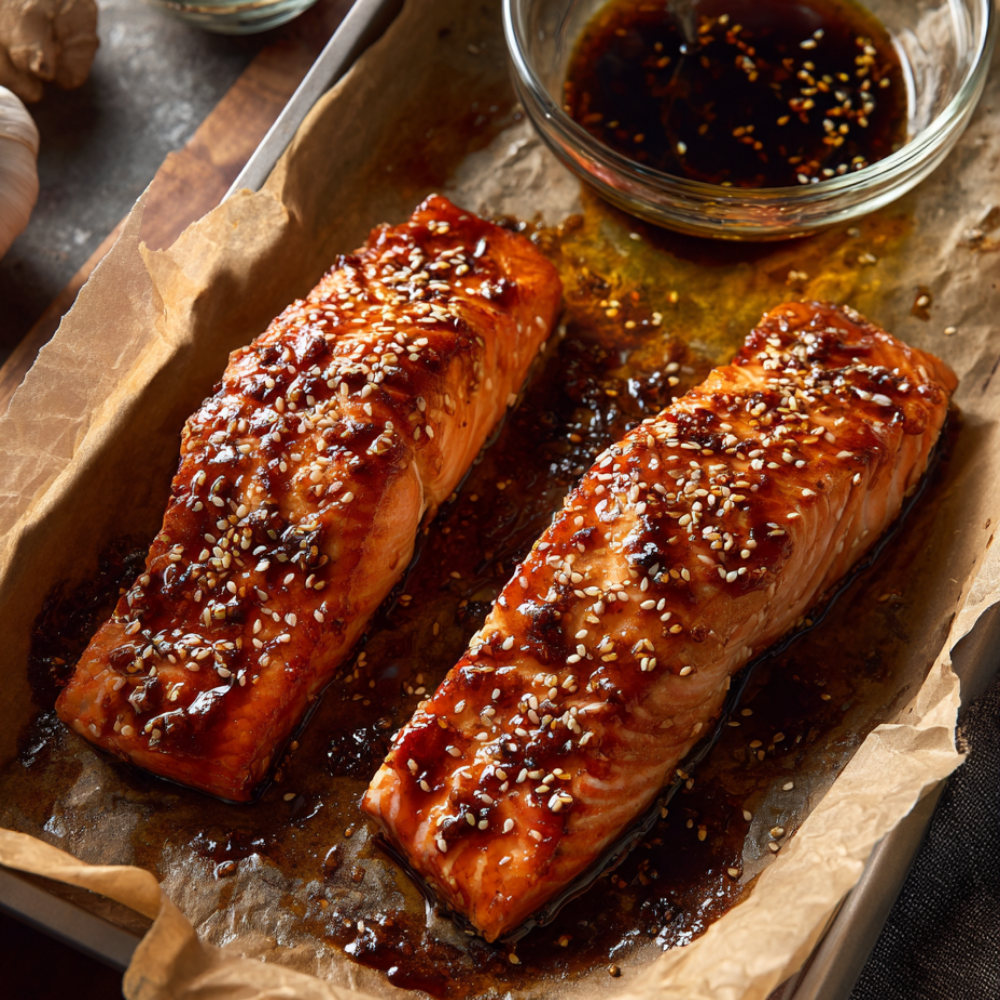
Pull the salmon at 125–130°F for medium. Salmon continues cooking after it comes out of the oven. If you wait until it’s fully opaque and flakes easily in the oven, it’s already overcooked. Use an instant-read thermometer and pull it early.
Pat the salmon dry before baking. Surface moisture prevents the fish from browning. Pat each fillet dry with paper towels.
Glaze the salmon after baking, not before. Teriyaki sauce contains sugar, and sugar burns. Brushing it on before baking means the sugars caramelize and scorch before the fish is cooked.
Use fresh ginger and garlic. Jarred ginger paste and garlic paste work in a pinch, but fresh ginger and garlic give the sauce a sharper, more aromatic flavor that jarred versions can’t replicate.
Add rice vinegar. A tablespoon of rice vinegar cuts through the maple syrup’s sweetness and keeps the sauce from tasting cloying.
Make the sauce slightly thinner than you want. It thickens as it cools. If it’s perfect straight off the heat, it’ll be too thick by the time it hits the bowl.
Toast the sesame seeds. Two minutes in a dry skillet transforms them from flat to nutty. This small step makes a visible difference.
Add furikake if you can find it. It’s a Japanese seasoning made with seaweed, sesame seeds, and sometimes dried fish. It adds savory depth and a little crunch. You’ll usually find it in the international aisle of the grocery store.
Use day-old rice for the best texture. Freshly cooked rice can be sticky. Day-old, refrigerated rice has a firmer, more distinct grain that works better in a bowl.
Keep the cucumber and avocado separate for meal prep. Cucumber releases water and avocado browns. Add them fresh the day you eat the bowl.
Reheat the salmon gently. A damp paper towel over the bowl traps steam and keeps the salmon moist. Medium-low heat in the microwave is better than high heat.
Add sriracha or spicy mayo for heat. A drizzle of either one adds a creamy, spicy contrast to the sweet-savory teriyaki sauce.
Serve with a squeeze of lime. A little acid brightens the whole bowl and keeps it from tasting heavy.
Easy Variations
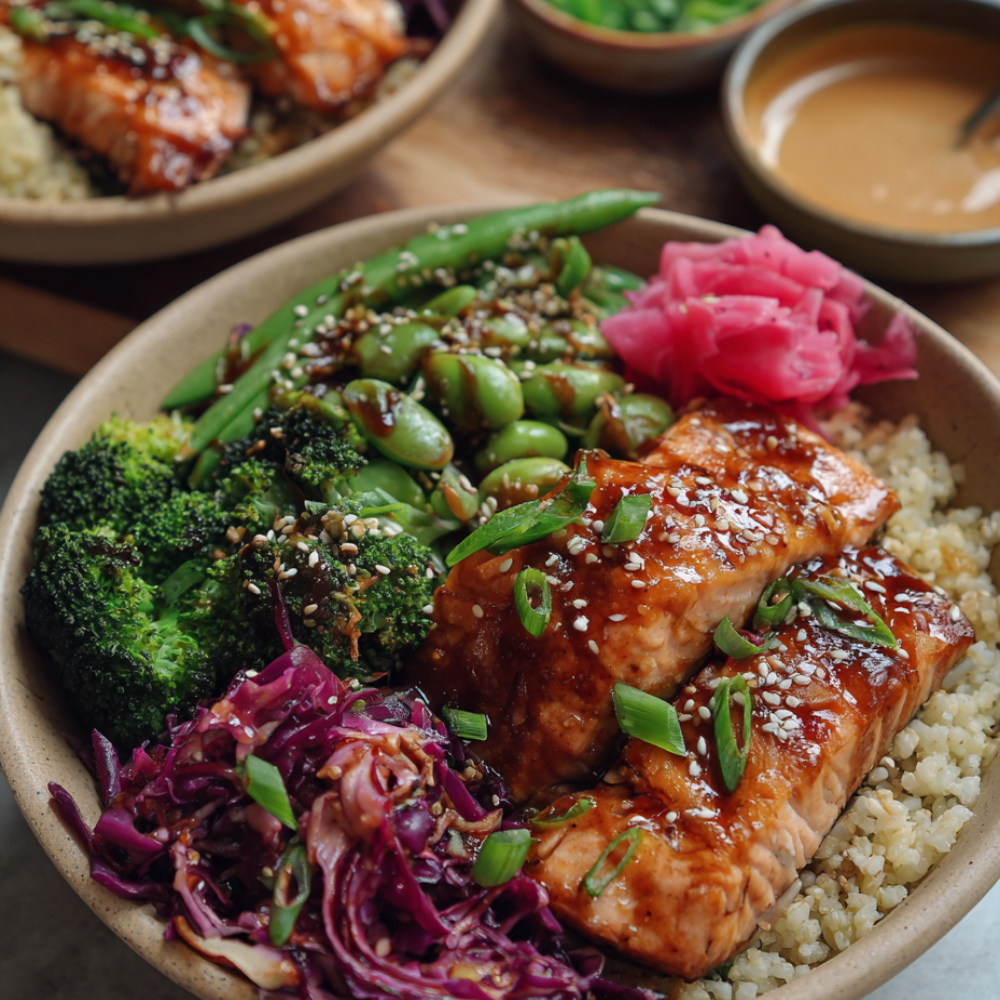
Teriyaki Shrimp Bowl. Swap the salmon for 1½ lbs of large shrimp, peeled and deveined. Cook in a skillet over medium-high heat for 2–3 minutes per side, until pink and opaque. About 34–38g protein per serving.
Salmon Noodle Bowl. Swap the rice for 12 oz of cooked soba noodles or rice noodles. About 38–42g protein per serving.
Salmon Poke Bowl Recipe. Skip the teriyaki sauce. Cube the salmon and marinate it in soy sauce, sesame oil, rice vinegar, and green onions for 30 minutes. Serve over rice with edamame, cucumber, and avocado. About 34–38g protein per serving.
Miso Salmon Bowl. Swap the teriyaki sauce for a miso glaze: whisk together 2 tbsp white miso, 1 tbsp maple syrup, 1 tbsp rice vinegar, and 1 tsp grated ginger. About 38–42g protein per serving.
Bang Bang Salmon Bites Bowl. Cut the salmon into bite-sized pieces, toss in cornstarch, and air fry at 400°F for 8 minutes. Toss with bang bang sauce (mayo, sriracha, honey, rice vinegar). About 38–42g protein per serving.
Crispy Bang Bang Salmon Bites Bowl. Same as above but pan-fried in a little oil until deeply golden and crispy. About 38–42g protein per serving.
Furikake Salmon Rice Bowls. Add an extra tablespoon of furikake and a drizzle of spicy mayo. About 38–42g protein per serving.
Teriyaki Salmon Cauliflower Rice Bowl. Swap the jasmine rice for cauliflower rice. About 36–40g protein per serving.
Healthy Salmon Stir-Fry with Rice. Cut the salmon into cubes and stir-fry with broccoli, bell peppers, and the teriyaki sauce. Serve over rice. About 38–42g protein per serving.
Asian Salmon Bowl. Add pickled ginger, wasabi, and a drizzle of ponzu. About 38–42g protein per serving.
Salmon Fried Rice Meal Prep. Use leftover salmon and rice to make salmon fried rice. Sauté with egg, peas, carrots, and soy sauce. About 34–38g protein per serving.
Japanese Salmon Dish with Rice. Serve the salmon over rice with a side of miso soup and pickled vegetables. About 38–42g protein per serving.
Teriyaki Rice Bowl (Chicken Version). Swap the salmon for 1½ lbs of boneless, skinless chicken thighs. Bake at 400°F for 20–25 minutes. About 36–40g protein per serving.
Asian Pescatarian Recipes (Tofu Version). Swap the salmon for 1½ lbs of extra-firm tofu, pressed and cubed. Bake at 400°F for 20–25 minutes—about 24–28g protein per serving.
Storage and Food Safety
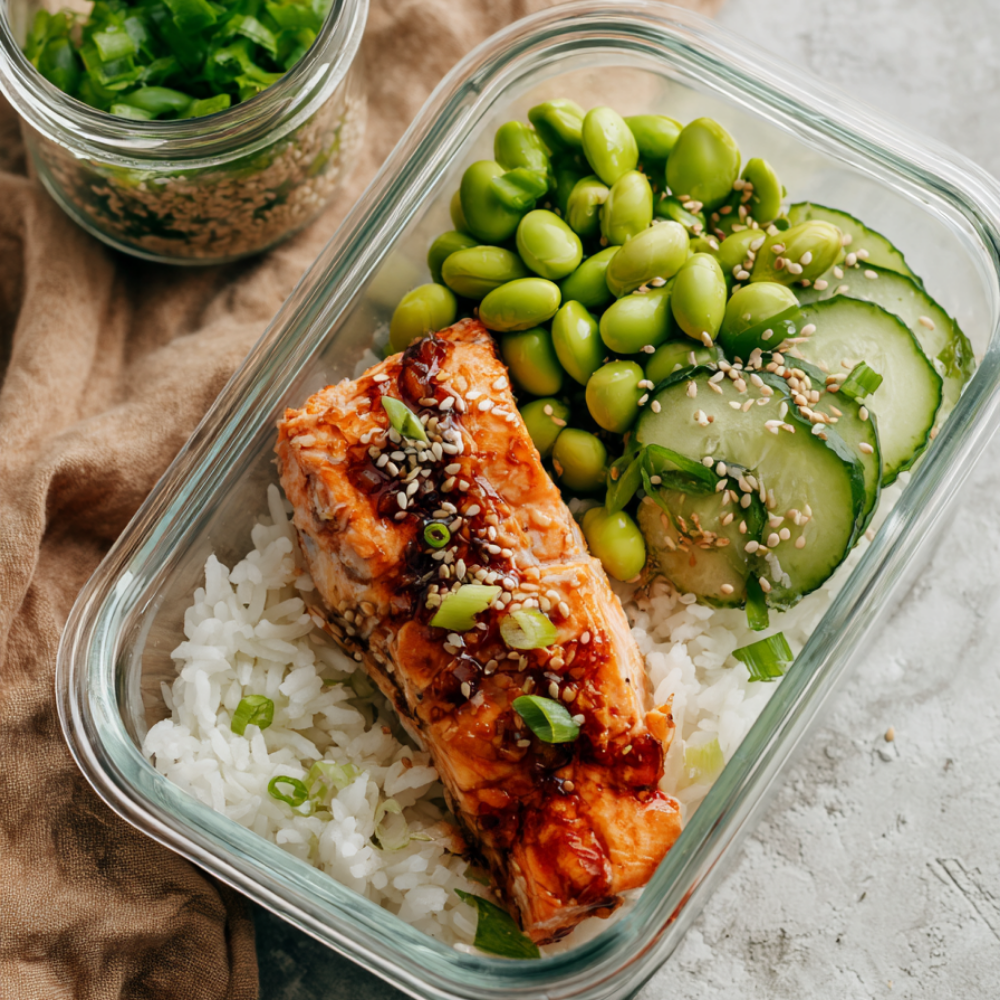
Refrigerator: Store the salmon, rice, and edamame together in an airtight container for up to 3 days. Keep the cucumber and avocado separate and add them fresh.
Freezer: The cooked salmon, rice, and edamame freeze well for up to 2 months. Cool completely, then transfer to freezer-safe containers. Thaw overnight in the refrigerator and reheat gently. Don’t freeze the cucumber or avocado.
Reheating: Reheat gently in the microwave with a damp paper towel over the bowl to keep the salmon moist. Medium-low heat is better than high heat.
Food safety: Cook salmon to 125–130°F for medium or 135–140°F for medium-well (safe minimum is 145°F, but salmon is best when pulled slightly early). Refrigerate leftovers within 2 hours. Reheat leftovers to 165°F.
Frequently Asked Questions
How much protein is in each bowl?
About 38–42 grams per bowl. Most of it comes from the salmon (about 30–35g per serving), with the rest from the edamame and rice.
What’s the best salmon for this recipe?
Atlantic salmon, sockeye, or coho all work. Look for fillets that are uniform in thickness so they cook evenly. Skin-on or skinless both work.
Can I use frozen salmon?
Yes. Thaw it overnight in the refrigerator before baking. Pat it dry before seasoning.
Why did my salmon turn out dry?
You overcooked it. Pull the salmon at 125–130°F for medium. It continues cooking as it rests.
Why did my teriyaki sauce burn?
You glazed the salmon before baking. Sugar burns at high heat. Glaze it after baking, or brush it on during the last 2 minutes of broiling.
Can I make this without cornstarch?
Yes. Simmer the sauce longer — 5–7 minutes — until it reduces and thickens naturally. The result will be slightly less glossy but still good.
Can I make this in an air fryer?
Yes. Air fry the salmon at 390°F for 8–10 minutes, depending on thickness. Check at 8 minutes for a 1-inch fillet.
Is this recipe gluten-free?
Yes, if you use tamari instead of soy sauce. Check your edamame, furikake, and any packaged ingredients to confirm.
Can I make this vegan?
Yes. Swap the salmon for 1½ lbs of extra-firm tofu, pressed and cubed. Bake at 400°F for 20–25 minutes—about 24–28g protein per serving.
Can I double this recipe?
Yes. Use two baking sheets and double all ingredients. The cook time stays roughly the same.
How long does this last in the refrigerator?
Up to 3 days in an airtight container.
Can I eat this cold?
Yes, though the salmon is better warm. The bowl works well as a cold rice bowl if you’re meal prepping for lunches.
What goes with teriyaki salmon bowls?
Miso soup, edamame, pickled ginger, seaweed salad, or a simple cucumber salad.
More High-Protein Asian-Inspired Recipes You’ll Love
- Ground Beef Bulgogi Bowls (15-Minute High-Protein Meal Prep)
- Crockpot Shredded Chicken: Slow Cooker Honey Garlic
- 4 Crispy Air-Fried Edamame Snack Recipes
- Crockpot Jambalaya: Easy Slow Cooker Chicken & Sausage
Conclusion
This teriyaki salmon bowl is the 20-minute dinner that tastes like takeout but works like meal prep. Flaky glazed salmon, protein-packed edamame, fluffy rice, crisp cucumber, and creamy avocado, all drizzled with a homemade teriyaki sauce that’s glossy, sticky, and made without high-fructose corn syrup. About 38–42 grams of protein per bowl.
The keys are simple: pull the salmon at 125–130°F, glaze it after baking, use fresh ginger and garlic, add rice vinegar to balance the sweetness, make the sauce slightly thinner than you want, and keep the cucumber and avocado separate for meal prep. Do that, and you’ll have a bowl that looks like it came from a restaurant but took less time than ordering delivery.
Make it on a weeknight when you want something fast and satisfying, or make it on Sunday and portion it into containers for the week. It’s even better on day two.