Meatloaf has survived every food trend of the last seventy years for a reason. It’s not fancy. It’s not photogenic in a Michelin-star kind of way. But when it’s done right—moist, savory, and glazed with something tangy-sweet—it hits a comfort-food nerve nothing else quite reaches.
The problem is that most meatloaf recipes are a gamble. Too much breadcrumb and you get a dry, crumbly brick. Too little and the whole thing falls apart on the plate. And the flavor? Usually bland, which is why people drown it in ketchup and call it a day.
This recipe solves all of that with one simple swap: Stove Top stuffing mix instead of plain breadcrumbs.
Here’s why it works. Stove Top is already seasoned. It’s already dried and cubed, which means it absorbs liquid and fat more aggressively than fine breadcrumbs, keeping the meatloaf moist without making it mushy. It also brings its own blend of herbs and spices, so you don’t have to measure out ten different seasonings.
Add lean ground beef, a couple of eggs, some Greek yogurt for moisture and protein, and a tangy ketchup glaze, and you’ve got a meatloaf that’s genuinely moist, deeply savory, and packed with 32 grams of protein per slice.
It’s the easiest meatloaf you’ll ever make. And it’s the one your family will ask for again.
Let’s build it.
Why This Recipe Works
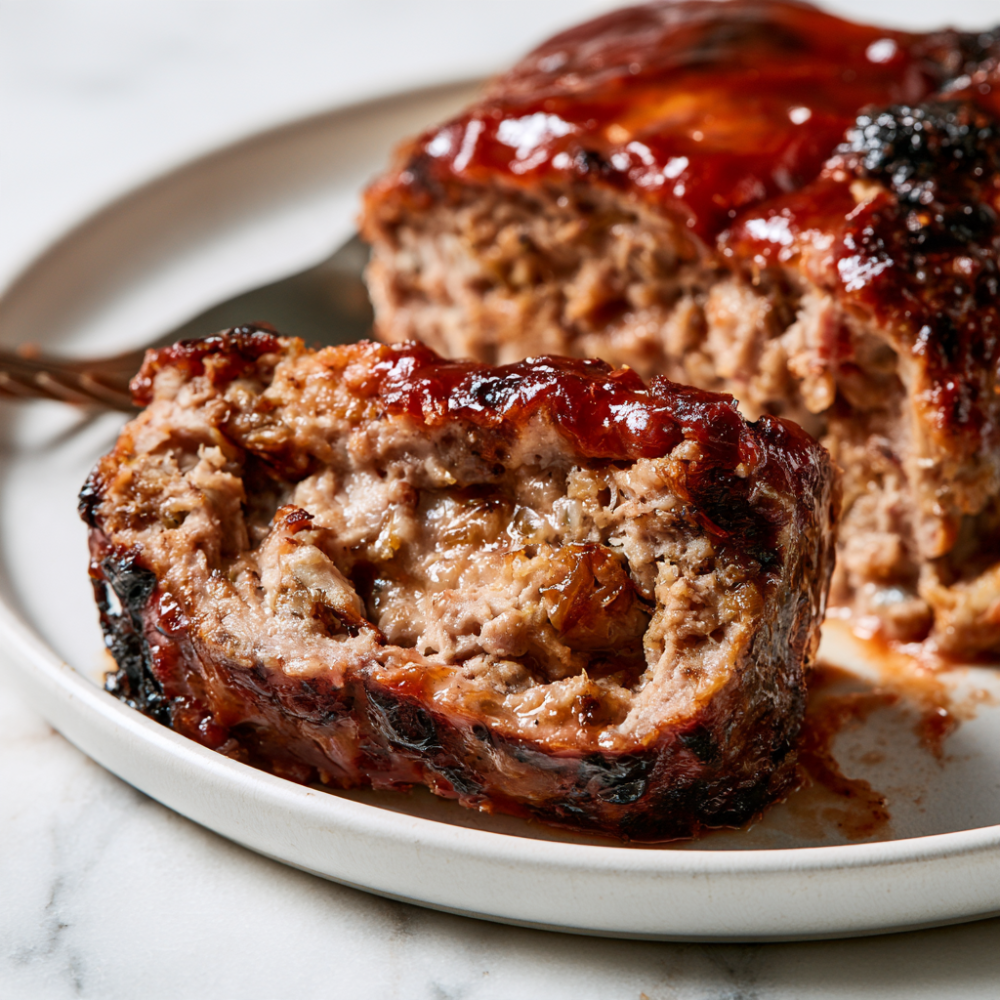
Stove Top stuffing is the secret ingredient. Unlike fine breadcrumbs, Stove Top comes as dried, seasoned cubes that absorb liquid and fat while keeping their structure. The result is a meatloaf that’s moist and tender but never mushy. It also brings its own herb and spice blend, so you don’t need to measure out a dozen seasonings.
The panko and Stove Top blend creates the perfect texture. Panko adds lightness and crunch, while Stove Top brings seasoning and absorbs liquid. Together they create a better texture than either would alone.
Lean ground beef keeps it high-protein and not greasy. Using 90/10 ground beef gives you a meatloaf that holds its shape and delivers 32 grams of protein per slice without the greasy pool that fattier blends leave behind.
Sautéing the onions and garlic first deepens the flavor. Raw diced onion in meatloaf can taste sharp and harsh. Cooking them for a few minutes removes the raw bite and brings out their natural sweetness.
The ice water trick keeps the meat cold. Adding a few tablespoons of ice water to the meat mixture prevents the fat from rendering before it hits the oven. This classic sausage-making technique keeps the meatloaf exceptionally moist.
The egg wash gives it a glossy finish. A light brush of egg wash before baking creates a golden sheen and helps the glaze adhere to the top of the loaf.
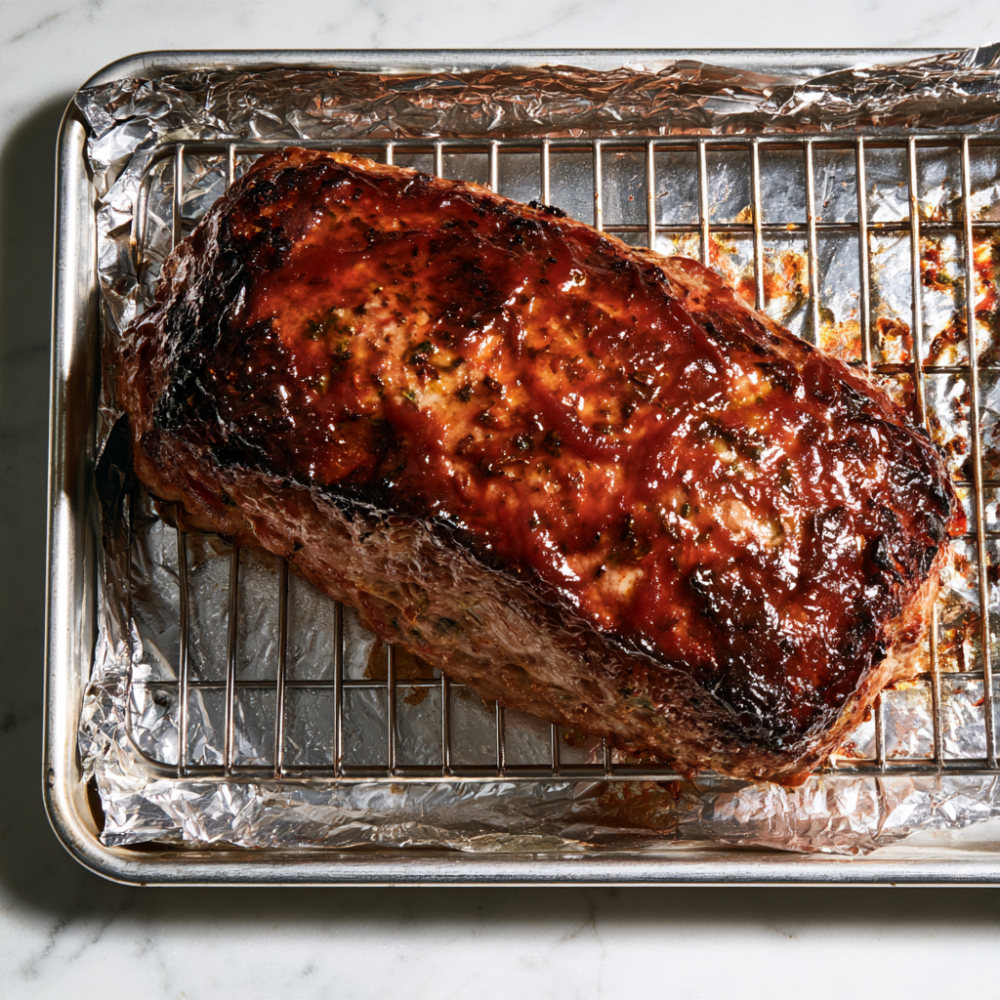
Baking on a wire rack lets the fat drain away. Instead of sitting in a pool of grease, the meatloaf bakes on a wire rack set over a baking sheet. The fat drips away, and the loaf gets a beautiful crust on all sides.
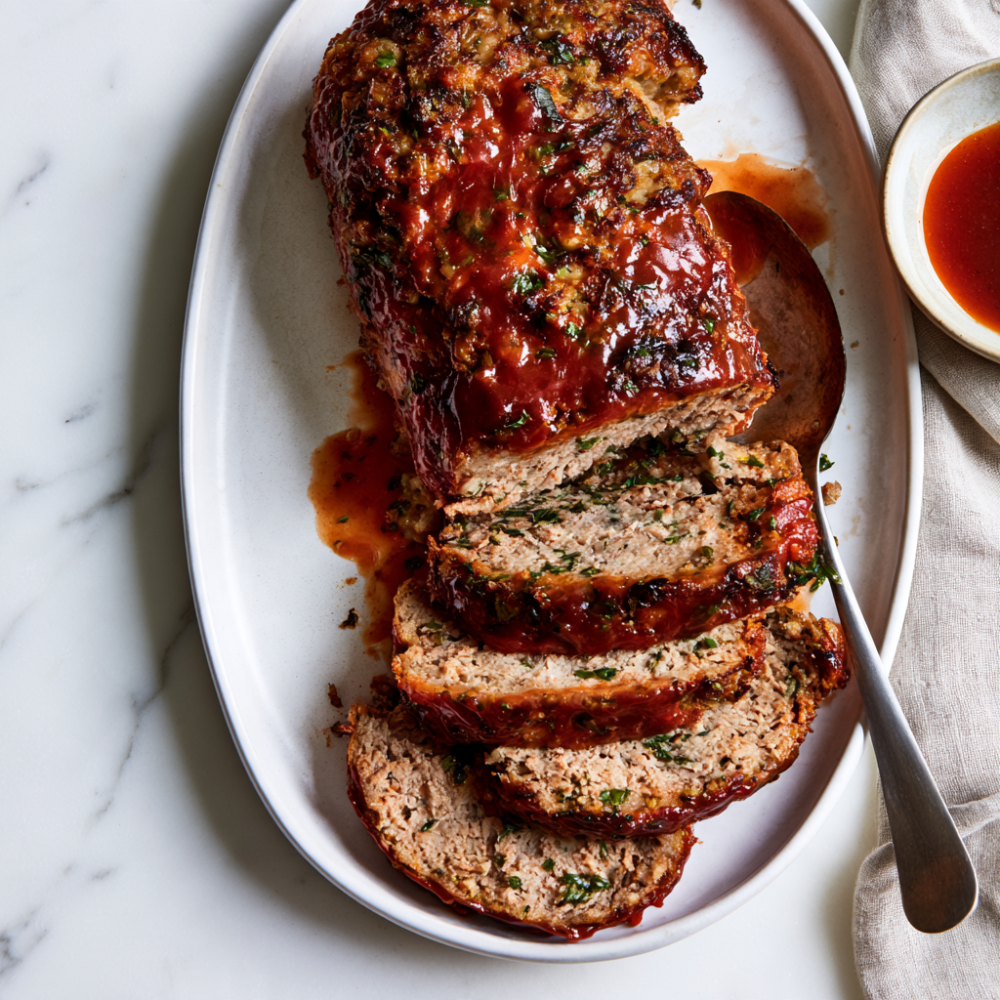
The glaze is tangy, sweet, and glossy. A simple mix of ketchup, brown sugar, and Worcestershire sauce brushed on during the last 15 minutes of baking creates that signature caramelized top. Reserving half the glaze for serving gives people who want extra sauce the option without making the whole loaf soggy.
Let it rest before slicing. Resting for 10 minutes lets the juices redistribute through the loaf. Slice it too soon, and all that moisture ends up on the cutting board instead of in your meatloaf.
It’s meal-prep friendly. Leftover meatloaf slices reheat beautifully and make excellent sandwiches the next day.
Meatloaf with Stove Top Stuffing
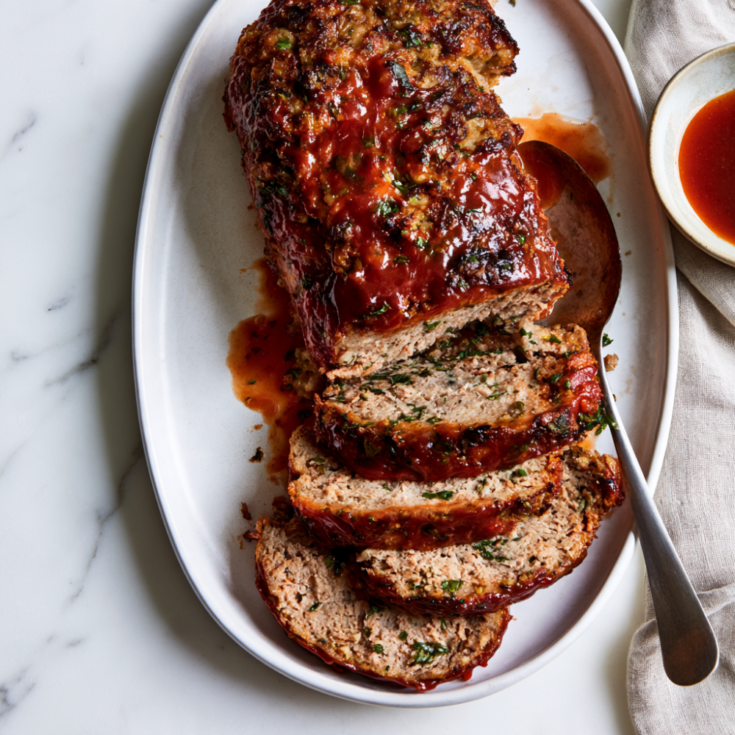
Moist, savory meatloaf made with lean ground beef, Stove Top stuffing mix, panko, and Greek yogurt, topped with a tangy ketchup glaze.
Baked on a wire rack so the fat drains away and the loaf gets a beautiful crust on all sides. 32 grams of protein per slice.
Ingredients
For the Meatloaf:
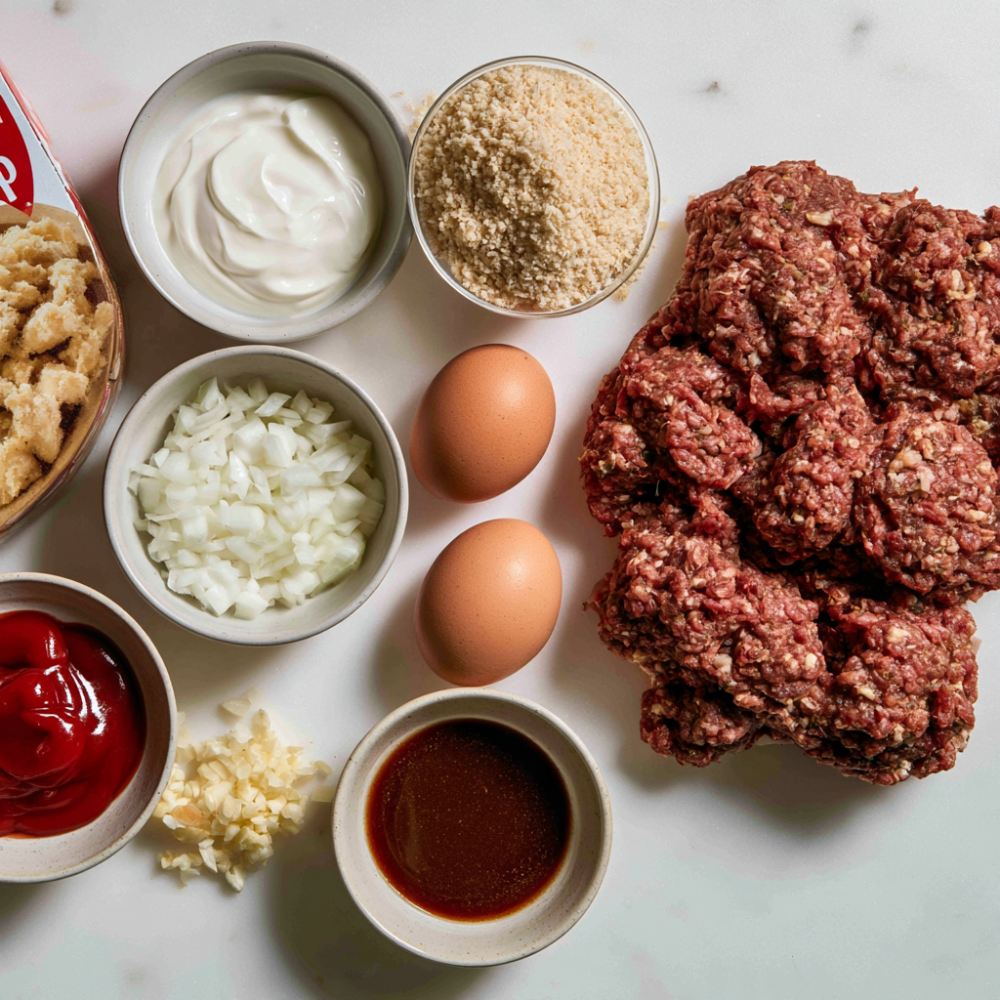
- 2 lbs lean ground beef (90/10 or 93/7)
- 1 (6 oz) box Stove Top stuffing mix (savory herbs or chicken flavor work best)
- ½ cup panko breadcrumbs
- 1 cup boiling water
- ½ cup plain non-fat Greek yogurt
- 2 large eggs
- 1 small yellow onion, finely diced
- 2 cloves garlic, minced
- 1 tbsp Worcestershire sauce
- 1 tsp kosher salt
- ½ tsp freshly ground black pepper
- ½ tsp dried thyme
- 2 tbsp ice water
- 1 tbsp olive oil (for sautéing)
For the Egg Wash:
- 1 large egg
- 1 tbsp water
For the Glaze:
- ½ cup ketchup
- 2 tbsp brown sugar (or sugar-free brown sugar substitute)
- 1 tbsp Worcestershire sauce
- 1 tsp yellow mustard
- ½ tsp garlic powder
Instructions
- Preheat the oven and prepare the pan. Preheat the oven to 350°F. Line a rimmed baking sheet with aluminum foil and place a wire rack on top. Lightly grease the rack with cooking spray. Set aside.
- Sauté the onions and garlic. Heat the olive oil in a small skillet over medium heat. Add the diced onion and sauté for 4–5 minutes until soft and translucent. Add the minced garlic and cook for another 30 seconds until fragrant. Remove from heat and let cool slightly.
- Hydrate the stuffing mix. In a large mixing bowl, combine the Stove Top stuffing mix and 1 cup of boiling water. Stir until the water is absorbed and the stuffing is softened. Let it sit for 5 minutes to cool slightly.
- Add the wet ingredients. Add the Greek yogurt, eggs, sautéed onion and garlic, Worcestershire sauce, salt, pepper, and dried thyme to the softened stuffing. Stir until everything is well combined.
- Add the ground beef and panko. Add the ground beef and panko breadcrumbs to the bowl. Using your hands or a large spoon, mix until just combined. Do not overmix. Stop as soon as the ingredients come together—overmixing makes the meatloaf tough. Add the ice water one tablespoon at a time if the mixture feels dry.
- Shape the loaf. Transfer the mixture to the prepared wire rack and shape it into a freeform loaf about 9 inches long and 5 inches wide. Gently press it together so it holds its shape.
- Brush with egg wash. Whisk together the egg and water for the egg wash. Brush a thin layer over the entire surface of the meatloaf. This gives it a glossy, golden finish and helps the glaze adhere.
- Bake the meatloaf. Bake uncovered for 35 minutes. The meatloaf should be set on the outside but still slightly pink in the center.
- Make the glaze. While the meatloaf bakes, whisk together the ketchup, brown sugar, Worcestershire sauce, yellow mustard, and garlic powder in a small bowl. Reserve half the glaze in a separate bowl for serving.
- Glaze and finish baking. Remove the meatloaf from the oven and brush half the glaze generously over the top. Return it to the oven and bake for another 15–20 minutes, until the glaze is caramelized and the internal temperature reaches 155°F.
- Rest before slicing. Remove the meatloaf from the oven and let it rest on the wire rack for 10 minutes. The internal temperature will rise to 160°F as it rests. This allows the juices to redistribute and keeps the slices intact.
- Serve. Slice into 8 thick pieces and serve with mashed potatoes, green beans, or roasted vegetables. Drizzle the reserved glaze over the top or serve it on the side.
Notes
Protein per Serving: About 32g
Nutrition note: Estimated per serving with 90/10 lean ground beef, plain non-fat Greek yogurt, and Stove Top stuffing mix: ~340 calories, 32g protein, 22g carbs, 14g fat. Using 93/7 ground beef will reduce fat and calories. Using regular Greek yogurt (full-fat) will slightly increase fat.
Tips for the Best Meatloaf with Stove Top Stuffing
Use 90/10 or 93/7 ground beef. Leaner beef keeps the meatloaf from turning greasy and delivers more protein per slice. If you only have 80/20, the wire rack will let the excess fat drain away.
Don’t overmix the meat. This is the number one rule of meatloaf. Overmixing develops the proteins and turns the loaf dense and tough. Mix until just combined—no more.
Hydrate the stuffing fully. Pour the boiling water over the stuffing and let it sit for a full 5 minutes before adding anything else. Dry stuffing will leave pockets of crunchy bread in the finished meatloaf.
Sauté the onions and garlic first. Raw onion can taste harsh and sharp in meatloaf. A quick sauté softens them and brings out their natural sweetness.
Add ice water if the mixture feels dry. A couple of tablespoons of ice water keeps the meat mixture cold and adds moisture without making it wet.
Use a wire rack for baking. This is the single best technique change you can make. The fat drips away from the loaf instead of pooling in the pan, and the meatloaf gets a beautiful crust on all sides.
Brush with egg wash before baking. A thin layer of egg wash gives the meatloaf a glossy, golden sheen and helps the glaze adhere.
Glaze late, not early. Brushing the glaze on at the start of baking will cause it to burn. Add it during the last 15 minutes when the meatloaf is already mostly cooked.
Reserve half the glaze for serving. The baked-on glaze caramelizes and gets sticky. The reserved glaze stays tangy and fresh, and gives people who want extra sauce the option without making the whole loaf soggy.
Use a meat thermometer. The meatloaf is done when the internal temperature reaches 155°F. It will rise to 160°F as it rests. This takes the guesswork out of baking and prevents both undercooking and drying out.
Let it rest before slicing. Resting for ten minutes allows the juices to redistribute. If you slice too soon, the meatloaf will crumble.
Make it in a muffin tin to cook faster. Divide the mixture into a greased 12-cup muffin tin and bake at 375°F for 25–30 minutes. Individual meatloaves cook faster and are great for portion control.
Freeze individual slices. Wrap cooled slices in plastic wrap and foil, then freeze for up to 3 months. Reheat in the microwave or in a 350°F oven.
Troubleshooting
The meatloaf is dry. You used beef that was too lean (like 95/5), or you overbaked it. Use 90/10 or 93/7, and pull it at 155°F. If it’s still dry, add an extra ¼ cup of Greek yogurt next time.
The meatloaf is mushy. You added too much liquid, or you didn’t let the stuffing hydrate properly. Measure the boiling water carefully and let the stuffing sit for the full 5 minutes.
The meatloaf fell apart. You didn’t use enough binder, or you sliced it too soon. Use both eggs and the Greek yogurt, and always rest for 10 minutes before slicing.
The meatloaf is tough and dense. You overmixed the meat. Mix until just combined—stop the moment the ingredients come together.
The glaze burned. You added it too early, or the oven was too hot. Add the glaze during the last 15 minutes of baking.
The center is still pink. Use a meat thermometer. If the internal temperature hasn’t reached 155°F, bake for another 5–10 minutes.
The meatloaf tastes bland. You used plain breadcrumbs instead of Stove Top, or you didn’t add enough salt. Stove Top brings a lot of seasoning—don’t substitute it without adjusting.
The meatloaf is greasy. You used 80/20 ground beef without draining. The wire rack will let the fat drain away. If you used a loaf pan, carefully tilt the pan and spoon off the fat before glazing.
The meatloaf stuck to the wire rack. You didn’t grease the rack enough. Spray it generously with cooking spray before shaping the loaf.
Easy Variations
Turkey Stove Top Meatloaf. Swap the ground beef for 93/7 ground turkey. Add an extra tablespoon of Worcestershire sauce and ½ teaspoon of poultry seasoning to compensate for the leaner meat.
Chicken Stove Top Meatloaf. Use ground chicken instead of beef. Add an extra egg to keep it moist and use chicken-flavored Stove Top.
BBQ Meatloaf. Swap the ketchup glaze for ½ cup of your favorite BBQ sauce. Add a tablespoon of brown sugar for a sticky, caramelized finish.
Italian Meatloaf. Use Italian-flavored Stove Top, add ½ cup of grated Parmesan, and swap the thyme for dried oregano. Top with marinara instead of ketchup glaze.
Mini Meatloaves. Divide the mixture into a greased 12-cup muffin tin and bake at 375°F for 25–30 minutes. Individual meatloaves cook faster and are perfect for portion control.
Slow Cooker Meatloaf. Shape the meatloaf and place it in a slow cooker lined with parchment or foil. Cook on Low for 4–5 hours. Add the glaze during the last 30 minutes.
Gluten-Free Meatloaf. Use gluten-free Stove Top or a gluten-free stuffing mix, and gluten-free panko. Check the Worcestershire sauce label.
Low Carb Meatloaf. Skip the Stove Top and panko and use 1 cup of crushed pork rinds or almond flour instead. Add an extra egg and 1 teaspoon of dried herbs.
Storage and Food Safety
Refrigerator: Store leftover meatloaf in an airtight container in the refrigerator for up to 4 days. Reheat individual slices in the microwave for 1–2 minutes or in a 350°F oven for 10 minutes.
Freezer: Wrap cooled slices individually in plastic wrap, then in foil, and freeze for up to 3 months. Thaw overnight in the refrigerator before reheating.
Make Ahead: You can prepare the unbaked meatloaf mixture up to 24 hours in advance and store it covered in the refrigerator. Add 5–10 minutes to the baking time since the mixture will be cold.
Food Safety: Ground beef must reach an internal temperature of 160°F. Refrigerate leftovers within 2 hours of cooking. Never leave meatloaf out at room temperature for more than 2 hours.
Frequently Asked Questions
Can I use a different flavor of Stove Top?
Yes. Chicken, savory herbs, and turkey flavors all work well. Italian is great if you’re making an Italian-style meatloaf.
Do I need to cook the Stove Top before adding it to the meatloaf?
No. You hydrate it with boiling water, but you don’t cook it separately. It finishes cooking inside the meatloaf.
Can I use ground turkey instead of beef?
Yes. Use 93/7 ground turkey and add an extra egg and an extra tablespoon of Worcestershire sauce to keep it moist.
How do I keep the meatloaf from falling apart?
Use both eggs and the Greek yogurt as binders. Also, let the meatloaf rest for 10 minutes before slicing—this lets the juices redistribute and the loaf firm up.
How long does meatloaf take to cook?
At 350°F, a 2-pound meatloaf takes about 50–55 minutes total. Add the glaze during the last 15 minutes.
Can I make this in a slow cooker?
Yes. Shape the meatloaf, place it in a slow cooker lined with parchment or foil, and cook on Low for 4–5 hours. Add the glaze during the last 30 minutes.
Can I freeze meatloaf?
Yes. Wrap cooled slices individually in plastic wrap and foil, then freeze for up to 3 months. Thaw overnight in the refrigerator before reheating.
What should I serve with meatloaf?
Mashed potatoes, green beans, roasted carrots, corn on the cob, or a simple side salad. Mac and cheese is a classic pairing.
Is this recipe gluten-free?
Only if you use gluten-free Stove Top or a gluten-free stuffing mix and gluten-free panko; check the label on the Worcestershire sauce as well.
How much protein is in one slice?
About 32 grams per slice, thanks to the lean ground beef and the Greek yogurt.
Why bake on a wire rack instead of a loaf pan?
Baking on a wire rack lets the fat drain away from the loaf instead of pooling in the pan. The result is a cleaner, more intensely flavored meatloaf with a better crust on all sides.
More High-Protein Dinner Recipes You’ll Love
- High-Protein Chicken Noodle Soup (From Scratch in 35 Minutes)
- 5-Ingredient Hamburger Meat Recipes (Quick & High-Protein Dinners)
- 40g Protein Crockpot Chicken Ramen
- High-Protein Big Mac Salad (Low Carb & Meal Prep Friendly)
Conclusion
This high-protein meatloaf with Stove Top stuffing is the easiest, moistest meatloaf you’ll ever make. The stuffing mix brings its own seasoning and absorbs liquid better than plain breadcrumbs; the Greek yogurt keeps it tender, the panko adds lightness, and the tangy ketchup glaze gives it that caramelized top everyone fights over.
The keys are simple: use lean ground beef, sauté the onions first, fully hydrate the stuffing, don’t overmix the meat, bake on a wire rack so the fat drains away, brush with egg wash, glaze late, and let it rest before slicing. Do that, and you’ll have a moist, savory meatloaf packed with 32 grams of protein per slice.
Make it this Sunday. Serve it with mashed potatoes. Watch it disappear.