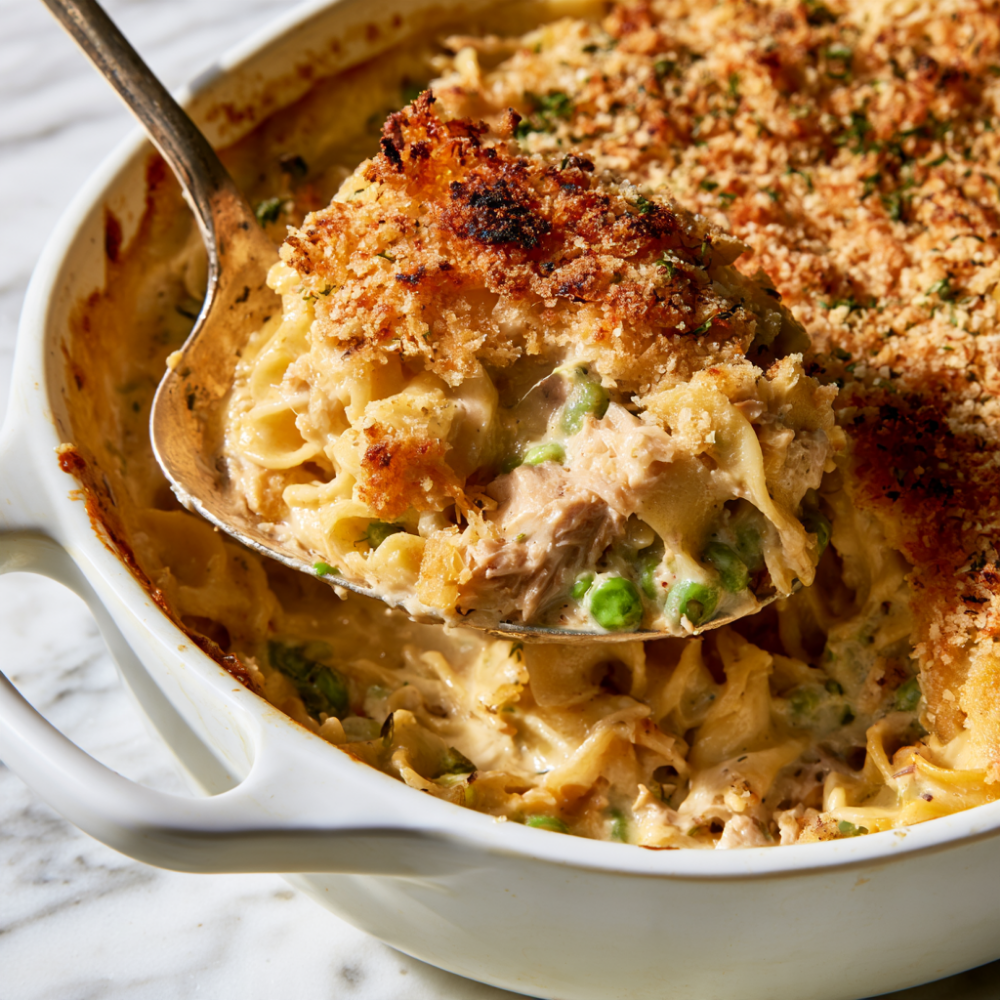

Tuna noodle casserole is one of those dishes that lives in a specific place in people’s memories. Creamy. Cheesy. Topped with something crunchy. The kind of dinner that showed up on a Tuesday night when you were a kid, and that you still think about twenty years later.
The problem is that the version most of us remember was made with two cans of condensed cream of mushroom soup and a bag of crushed potato chips. It tasted great because it was salty, creamy, and crunchy all at once—but it was also a sodium bomb with over 1,000mg per serving and enough fat to put you to sleep by 8 PM.
This version keeps everything you love about the classic and rebuilds the sauce from scratch. Butter, flour, milk, and sautéed mushrooms create a creamy béchamel that tastes like real cream of mushroom soup—without the additives, the sodium, or the metallic aftertaste. Albacore tuna, egg noodles, sweet peas, and a panko topping finish the dish.
It comes together in about 30 minutes and delivers 32 grams of protein per serving. It’s the tuna casserole you remember, made better.
Let’s make it.
Why This Recipe Works
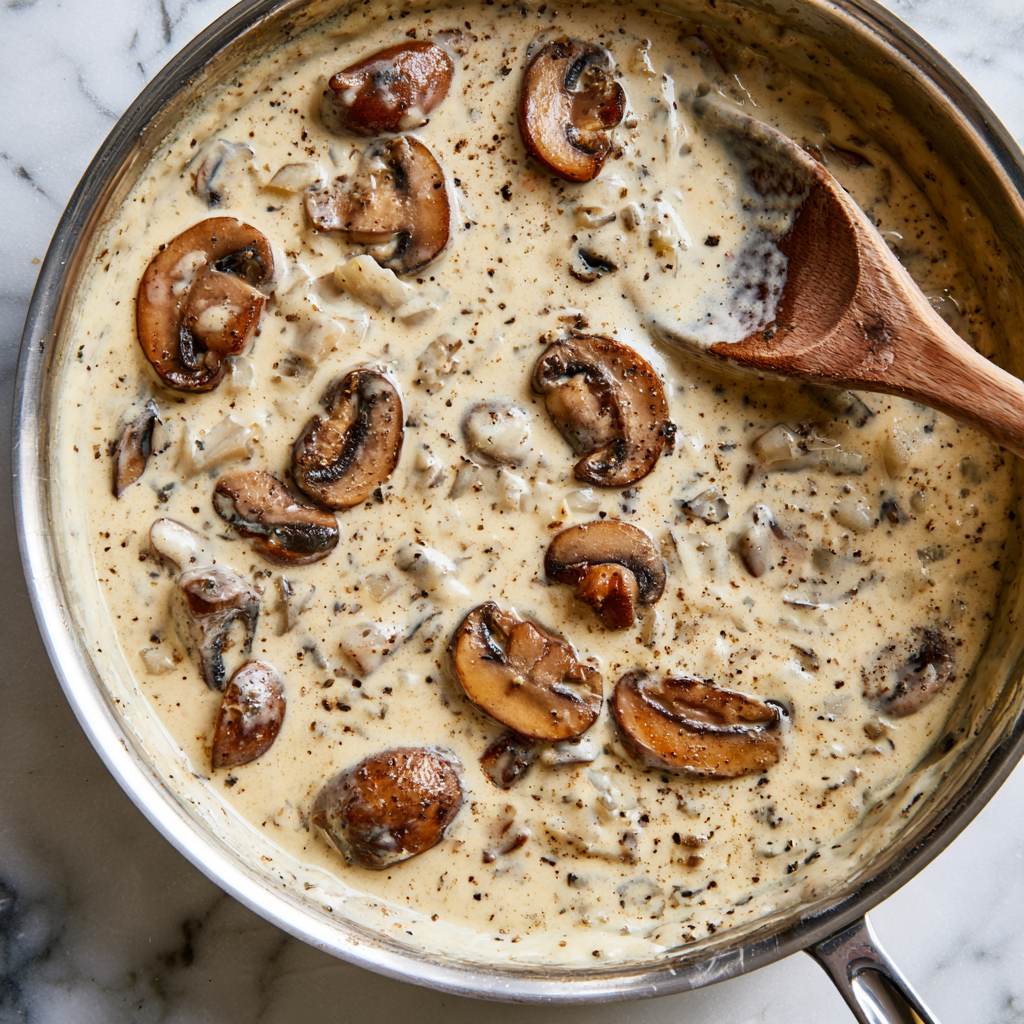
A homemade béchamel replaces two cans of condensed soup. Butter and flour make a roux, milk thickens it into a cream sauce, and sautéed mushrooms give it the earthy flavor that makes cream of mushroom soup taste like cream of mushroom soup. The result is a sauce with cleaner ingredients, less sodium, and a much better flavor.
Sautéed mushrooms and onions build the flavor base. Instead of relying on canned mushroom pieces for texture, fresh mushrooms cooked in butter with diced onion give the casserole a savory depth that canned soup can’t match.
Dijon mustard and Worcestershire sauce add the umami depth that canned soup provides. A teaspoon of each gives the sauce a subtle tang and savory backbone that would otherwise be missing. You won’t taste either one individually—they make the whole casserole taste richer.
Albacore tuna in water is the right tuna for this dish. Chunk light tuna in oil is fine for tuna salad, but it’s too strong and oily for a baked casserole. Solid white albacore in water has a milder flavor and a firmer texture that holds up in the oven.
Egg noodles are the traditional choice and worth keeping. They’re wide, slightly chewy, and hold the sauce better than any other pasta shape. Cook them just to al dente—they’ll continue softening in the oven.
Frozen peas go in straight from the freezer. They thaw in the oven and stay bright green. Thawing them first makes them mushy.
Panko gives you a lighter, crispier topping than potato chips. The classic version uses crushed chips, which are greasy and heavy. Panko tossed with melted butter browns into a golden, crunchy crust that doesn’t weigh down the casserole.
Add cheese to the sauce and on top. Half the cheddar melts into the creamy sauce and the other half gets sprinkled on top with the panko. This distributes the cheese through every bite instead of leaving it as one layer.
It’s a complete meal in one dish. Protein from the tuna and cheese, carbs from the noodles, vegetables from the peas and mushrooms. Serve it with a simple side salad and dinner is done.
It reheats beautifully. Tuna casserole is one of those dishes that tastes even better the next day. Portion it into containers and it’s a meal-prep win.
Tuna Noodle Casserole Recipe (No Canned Soup)
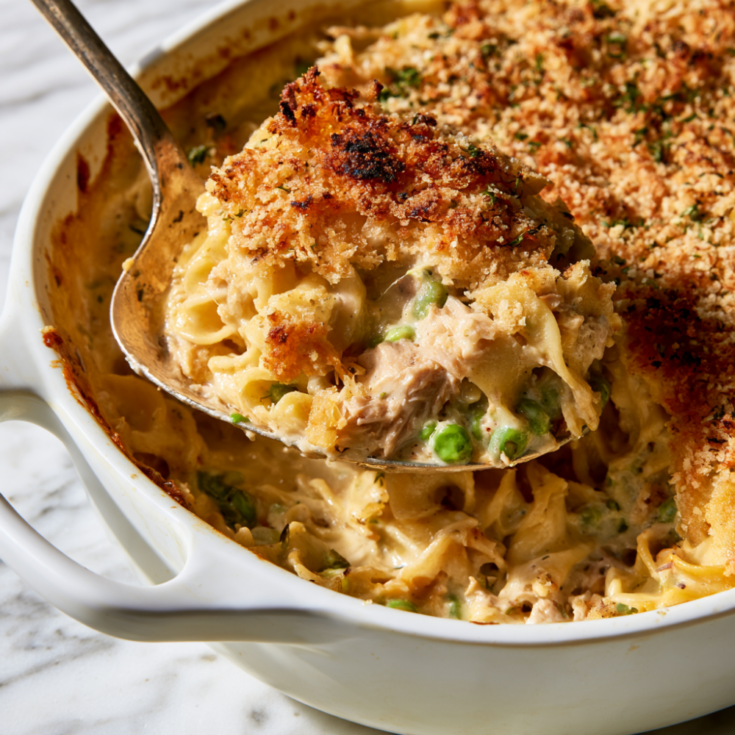
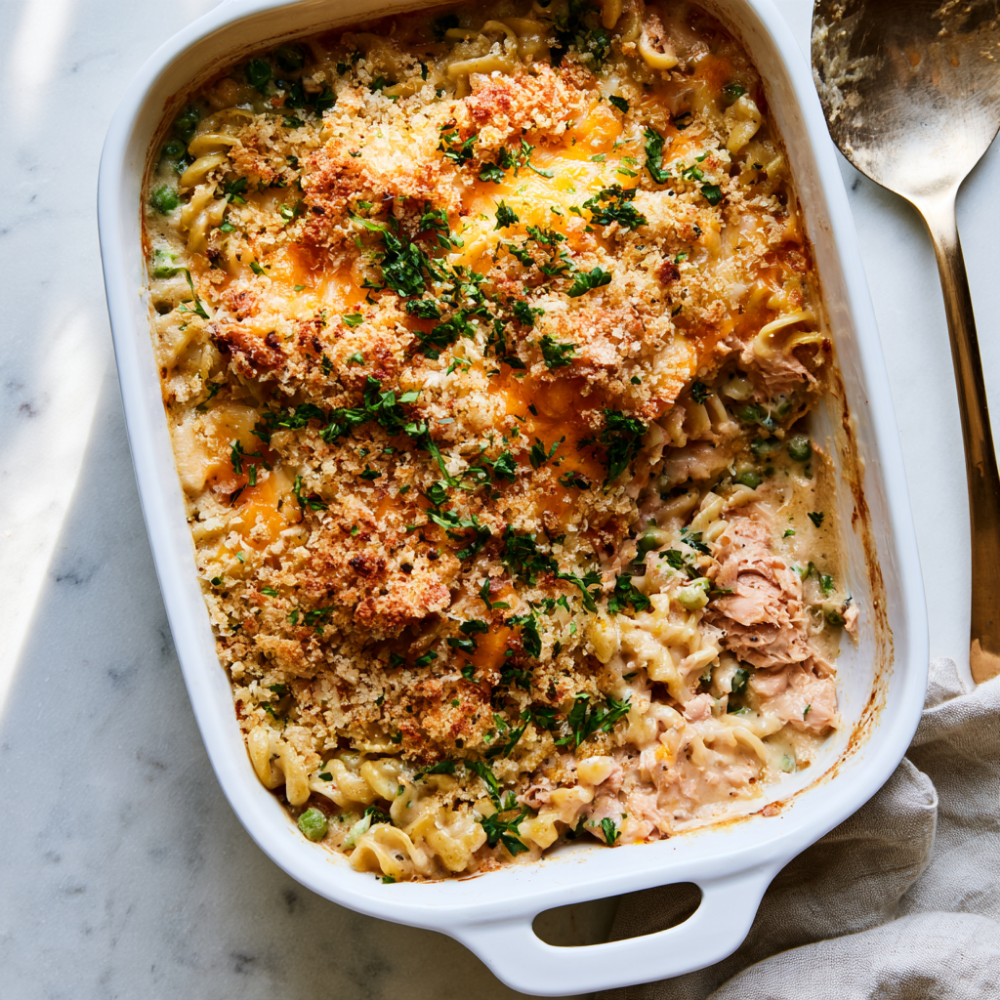
A creamy from-scratch tuna noodle casserole with a homemade mushroom cream sauce, albacore tuna, egg noodles, sweet peas, and a crispy panko topping—32 grams of protein per serving.
Ingredients
For the Casserole:
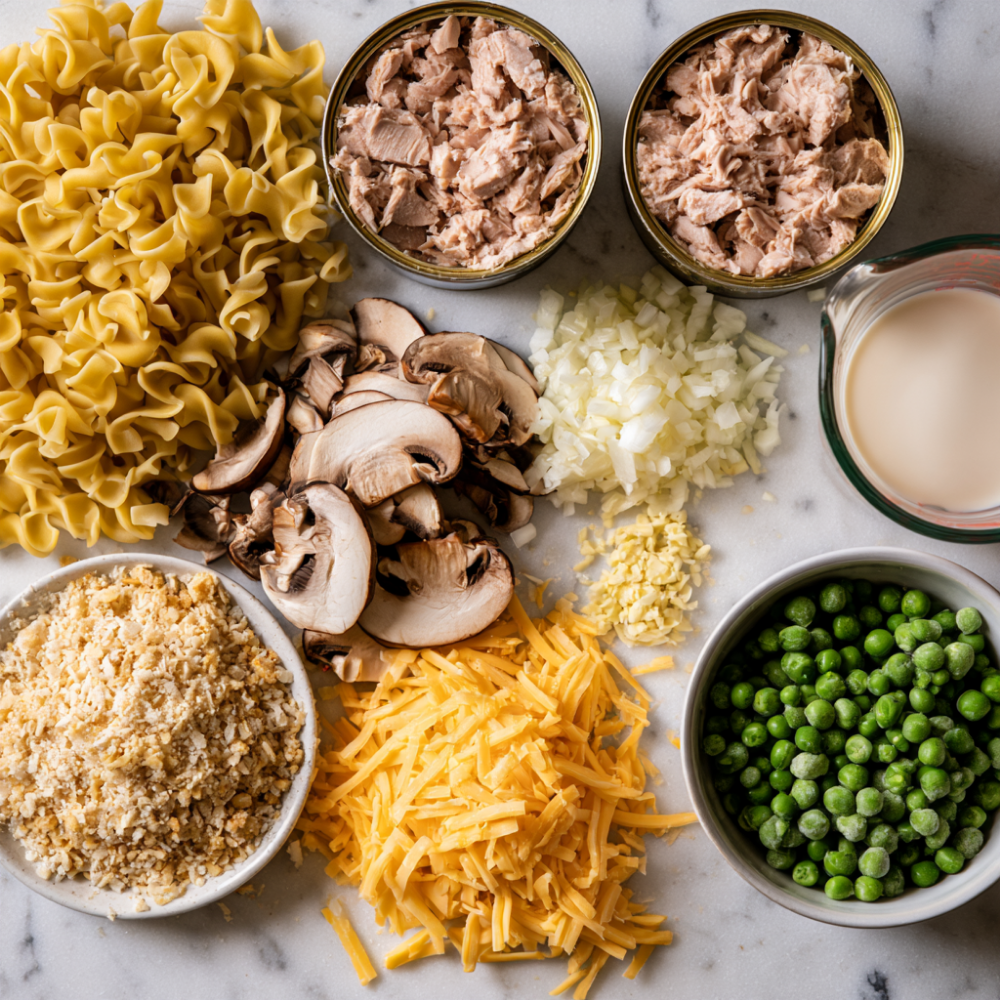
- 12 oz egg noodles
- 3 tbsp unsalted butter
- 8 oz baby bella mushrooms, sliced
- 1 small yellow onion, diced
- 3 cloves garlic, minced
- 3 tbsp all-purpose flour
- 2 cups whole milk
- 1 cup low-sodium chicken broth
- 1 tsp Dijon mustard
- 1 tsp Worcestershire sauce
- ½ tsp dried thyme
- ½ tsp kosher salt
- ¼ tsp freshly ground black pepper
- 1½ cups shredded sharp cheddar cheese, divided
- 2 (5 oz) cans solid white albacore tuna in water, drained and flaked
- 1 cup frozen green peas (no need to thaw)
- ½ cup grated Parmesan cheese
For the Topping:
- 1 cup panko breadcrumbs
- 3 tbsp melted butter
- ½ tsp garlic powder
- ½ tsp kosher salt
- Fresh parsley, chopped, for garnish
Instructions
- Preheat and prep. Preheat the oven to 425°F. Grease a 9x13 inch baking dish with cooking spray or butter.
- Cook the noodles. Bring a large pot of salted water to a boil. Add the egg noodles and cook for 2 minutes less than the package directions—they'll finish cooking in the oven. Drain and set aside.
- Build the mushroom base. While the noodles cook, melt the 3 tablespoons of butter in a large skillet over medium heat. Add the sliced mushrooms and diced onion. Cook for 6–8 minutes, stirring occasionally, until the mushrooms have released their liquid and it has cooked off. Add the minced garlic and cook for 30 seconds, until fragrant.
- Make the roux. Sprinkle the flour over the mushrooms and onions. Stir constantly and cook for 1 full minute to remove the raw flour taste. The mixture should look like a thick, glossy paste.
- Whisk in the liquid. Slowly pour in the milk while whisking constantly to prevent lumps. Add the chicken broth and continue whisking. Bring the sauce to a gentle simmer and cook for 3–4 minutes, stirring frequently, until it thickens enough to coat the back of a spoon.
- Season the sauce. Whisk in the Dijon mustard, Worcestershire sauce, dried thyme, kosher salt, and black pepper. Taste and adjust.
- Melt in half the cheese. Remove the skillet from the heat. Stir in 1 cup of the shredded cheddar until it melts into the sauce.
- Combine everything. In a large mixing bowl, combine the cooked egg noodles, cream sauce, flaked tuna, frozen peas, and grated Parmesan. Stir gently until everything is evenly coated.
- Transfer to the baking dish. Pour the mixture into the prepared 9x13-inch baking dish and spread into an even layer.
- Make the panko topping. In a small bowl, stir together the panko, melted butter, garlic powder, and salt until the panko is evenly coated.
- Top and bake. Sprinkle the remaining ½ cup of cheddar over the casserole, then scatter the panko topping evenly on top. Bake for 15–20 minutes, until the cheese is melted and the topping is golden brown. If the topping browns too fast, tent with foil.
- Rest and serve. Let the casserole rest for 5 minutes before serving. Garnish with fresh parsley.
Notes
Protein per Serving: About 32g
Nutrition note: Estimated per serving with egg noodles, albacore tuna in water, homemade béchamel, sharp cheddar, and panko topping: ~490 calories, 32g protein, 48g carbs, 20g fat. Using low-fat milk reduces fat by about 4g per serving. Skipping the cheese on top reduces another 3g.
Tips for the Best Tuna Noodle Casserole
Cook the noodles 2 minutes under the package directions. They’ll continue cooking in the oven and soak up sauce. Fully cooked noodles turn to mush.
Use a wide skillet for the mushrooms. They release a lot of liquid, and overcrowding steams them instead of browning them. Cook in a single layer if you can.
Let the mushrooms cook until their liquid evaporates. Sliced mushrooms release water first, then brown. Wait for the water to cook off before adding the garlic.
Cook the flour for a full minute. Raw flour tastes chalky. One minute in the hot butter removes that taste and thickens the sauce evenly.
Whisk the milk in slowly. Pouring it in all at once creates lumps that never fully dissolve. Add it in a steady stream while whisking.
Use whole milk for the creamiest sauce. 2% works but produces a thinner sauce. Skim milk will make the casserole watery.
Taste the sauce before combining. This is your only chance to adjust the seasoning. If it tastes flat, add more salt, Dijon, or Worcestershire.
Albacore tuna in water, not chunk light in oil. Albacore is milder and firmer. Chunk light is stronger and oilier.
Drain the tuna thoroughly. Excess liquid from the can dilutes the sauce and makes the casserole watery.
Frozen peas straight from the freezer. Thawed peas release water and turn mushy in the oven. Frozen peas stay bright and firm.
Save the starchy pasta water. If the sauce seems too thick when you combine it, add a splash of the reserved pasta water to loosen it.
Panko, not crushed potato chips. Panko is lighter and crispier. If you want the classic version, use crushed potato chips—but the panko version is better.
Toss the panko with melted butter before topping. Butter helps the panko brown evenly and gives it a rich, golden color.
Tent with foil if the top browns too fast. Bake for 15–20 minutes. Foil keeps the topping from burning while the center heats through.
Rest for 5 minutes before serving. This lets the sauce set up so the casserole holds together on the plate.
Troubleshooting
The casserole is watery. You didn’t drain the tuna well, you used thawed peas, or your sauce was too thin. Drain the tuna thoroughly, use frozen peas, and thicken the sauce until it coats the back of a spoon before combining.
The sauce is lumpy. You added the milk too fast, or you didn’t whisk constantly. Pour the milk in a steady stream while whisking. If it’s already lumpy, push the sauce through a fine-mesh strainer.
The casserole tastes bland. You didn’t season the sauce enough. Add more salt, Dijon, or Worcestershire before combining. The sauce should taste slightly over-seasoned on its own because the noodles will dilute it.
The topping burnt before the center was hot. Your oven runs hot, or the topping is too close to the heating element. Tent with foil and lower the rack.
The noodles are mushy. You overcooked them before baking. Cook 2 minutes under the package directions and no more.
The cheese didn’t melt into the sauce. Your sauce was too hot when you added the cheese, or you used pre-shredded cheese with anti-caking agents. Grate your own cheese and add it off the heat.
The casserole dried out. You didn’t use enough sauce, or you baked it too long. The casserole should be saucy when it goes into the oven—the noodles will absorb some of it during baking.
The tuna tastes fishy. You used chunk light tuna in oil instead of albacore in water. Albacore is much milder.
Easy Variations
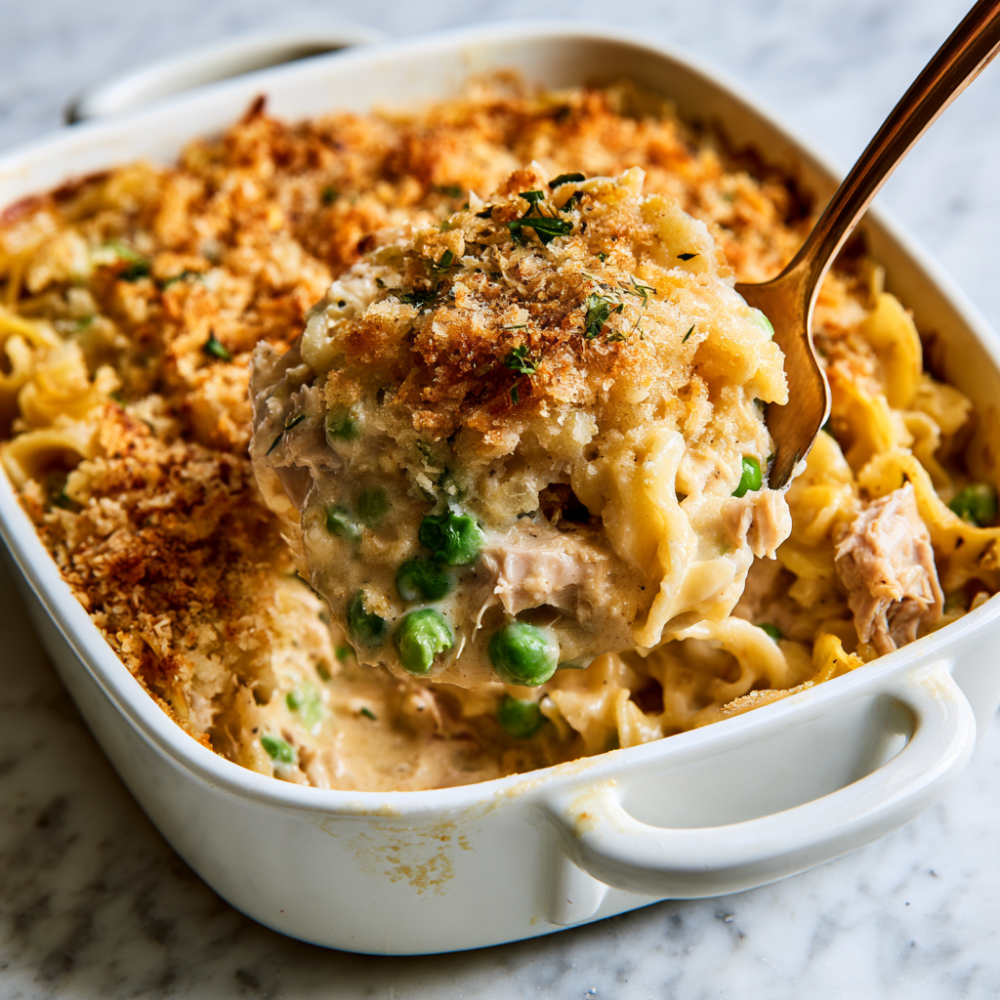
Tuna Noodle Casserole Without Cream Soup (This Recipe). The version above uses a homemade béchamel instead of canned soup. It’s the primary recipe in this post.
Healthy Casserole Recipes Variation. Use whole wheat egg noodles, low-fat milk, and skip the cheese on top. Fat drops to about 12g per serving.
Tuna Bake Recipe With Potato Chip Topping. Swap the panko for 1 cup of crushed potato chips—the classic version—crunchier and saltier, but greasier.
Tuna Noodle Casserole With French Fried Onions. Swap the panko topping for 1 cup of French-fried onions. Bake as directed.
Tuna Casserole With Rice. Swap the egg noodles for 3 cups of cooked white rice. The casserole gets a slightly different texture and cooks a bit faster.
Tuna Noodle Casserole With Cream of Mushroom Soup. If you want the classic shortcut version, swap the béchamel for 2 cans of condensed cream of mushroom soup plus 1 cup of milk. Reduce the salt by half.
Tuna Noodle Casserole With Rotini. Swap the egg noodles for rotini or farfalle: same method, same bake time.
Tuna Noodle Casserole For A Crowd. Double all ingredients and bake in two 9×13 dishes. Add 5 minutes to the bake time.
Tuna Noodle Casserole With Broccoli. Swap the peas for 2 cups of frozen broccoli florets—no need to thaw.
Spicy Tuna Noodle Casserole. Add ½ teaspoon of crushed red pepper flakes to the sauce and 1 minced jalapeño with the mushrooms.
Storage and Food Safety
Refrigerator: Store leftovers in an airtight container for up to 4 days. Reheat individual portions in the microwave for 90 seconds, or cover with foil and reheat at 350°F for 15 minutes.
Freezer: Tuna casserole freezes reasonably well for up to 2 months, though the noodles will soften after thawing. Cool completely, transfer to freezer-safe containers, and freeze. Thaw overnight in the refrigerator before reheating.
Make Ahead: Assemble the casserole up to 24 hours in advance. Cover and refrigerate. Add the panko topping right before baking to keep it crisp. Add 5–10 minutes to the bake time since it will go into the oven cold.
Food Safety: Tuna and dairy are perishable. Refrigerate leftovers within 2 hours. Never leave the casserole at room temperature for more than 2 hours.
Frequently Asked Questions
Can I make tuna noodle casserole without cream of mushroom soup?
Yes. This recipe uses a homemade béchamel with sautéed mushrooms instead. It tastes better, has less sodium, and uses cleaner ingredients.
What’s the best tuna for tuna noodle casserole?
Solid white albacore tuna in water. It’s milder and firmer than chunk light, which is stronger and oilier.
Can I use a different pasta?
Yes. Rotini, farfalle, and small shells all work. Cook them 2 minutes under the package directions, same as the egg noodles.
Why is my tuna casserole watery?
You didn’t drain the tuna well, you used thawed peas, or your sauce was too thin. Drain thoroughly, use frozen peas, and thicken the sauce before combining.
Can I use canned mushrooms instead of fresh?
Yes. Drain a 4.5 oz can of sliced mushrooms and add them with the garlic. The flavor will be slightly less deep but still good.
Can I make this dairy-free?
Yes. Use dairy-free butter, dairy-free milk, and dairy-free cheese. The texture will be slightly different but still works. Skip the Parmesan.
Can I make this gluten-free?
Yes. Use gluten-free egg noodles, gluten-free all-purpose flour for the roux, and gluten-free panko. Confirm your broth and Worcestershire sauce are gluten-free.
Can I freeze tuna noodle casserole?
Yes, for up to 2 months. The noodles will soften slightly after thawing, but the flavor holds.
What do I serve with tuna noodle casserole?
A simple green salad, roasted Brussels sprouts, steamed broccoli, green beans, or crusty bread. The casserole is rich, so a fresh vegetable side balances it.
How much protein is in a serving?
About 32 grams per serving, thanks to the tuna, cheddar, and Parmesan.
Can I make this ahead of time?
Yes. Assemble up to 24 hours ahead, cover, and refrigerate. Add the panko topping right before baking.
Can I use frozen tuna?
Yes, but thaw it completely and drain it thoroughly before flaking.
More Easy Healthy Dinner Recipes You’ll Love
- Creamy Crockpot Corn Chowder Loaded with Bacon (15-Minute Prep!)
- High-Protein Chicken Noodle Soup (From Scratch in 35 Minutes)
- Crockpot Ravioli Lasagna (Lazy 4-Hour Dinner, 32g Protein!)
- Chicken Gnocchi Soup Recipe (Creamy Olive Garden Copycat In 30 Minutes!)
Conclusion
This tuna noodle casserole is the version you remember from childhood, made better.
A homemade béchamel with sautéed mushrooms replaces the canned soup. Albacore tuna, egg noodles, and sweet peas fill out the dish. Sharp cheddar melts into the sauce and gets sprinkled on top.
And a buttery panko crust gives you the crispy topping that makes the whole casserole work.
Thirty minutes from start to finish. Thirty-two grams of protein per serving. Serve it with a green salad and dinner is done.
The keys are simple: cook the noodles 2 minutes under, cook the flour for a full minute, whisk the milk in slowly, season the sauce before combining, use albacore in water, use frozen peas straight from the freezer, and toast the panko with butter.
Do that, and you’ll never make the canned-soup version again.
Make one this week. Your family will ask for it next week.