There is no better feeling on a chaotic Tuesday than pulling a homemade dinner out of the freezer, sliding it into the oven, and walking away. No chopping. No sink full of dishes. No decision to make at 6 PM.
But not every casserole survives the freezer. Most of them come out watery, grainy, or sitting in a pool of oil that separated during thawing. The chicken turns stringy. The rice turns to paste. The broccoli goes gray.
The culprit is almost always the sauce. Canned cream of chicken soup and heavy whipping cream are emulsions built on fat and stabilizers. Freeze them and the emulsion breaks. Reheat them, and you get a greasy, curdled mess that no amount of stirring fixes.
This casserole is engineered around that problem.
The sauce is blended cottage cheese, chicken bone broth, Parmesan, and a small amount of cornstarch. Blended cottage cheese does not break when frozen — it holds its structure, thickens in the oven, and delivers about 12 grams of protein per cup on its own.
Bone broth adds body and flavor without the sodium bomb of a canned soup. The cornstarch is the insurance policy that keeps everything bound together through freeze, thaw, and bake.
The result is a casserole that tastes like it was just made from scratch — three months after you made it.
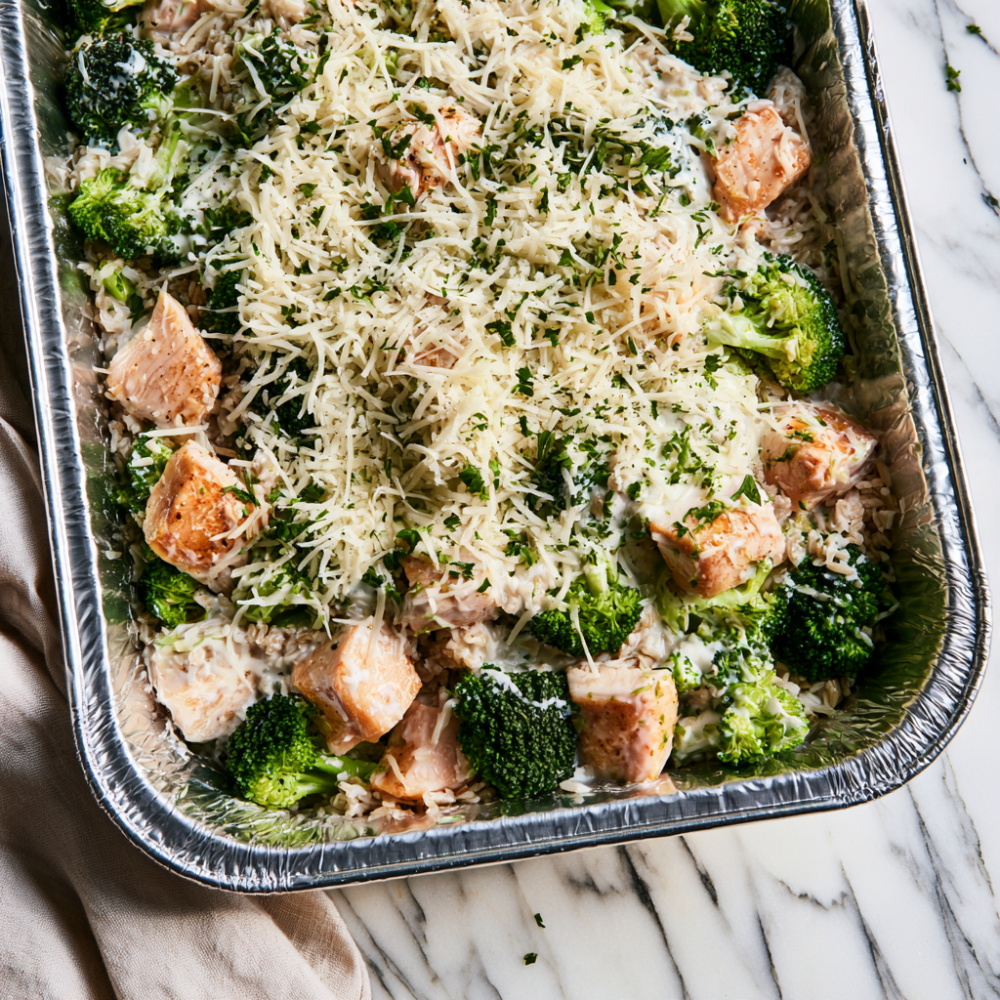
And because the whole point is convenience, this is a make-ahead recipe first. You assemble it cold, freeze it unbaked, and bake it straight from the freezer. Chicken, brown rice, and broccoli, all in one pan, no canned soup, no heavy cream, no watery casserole.
Why This Recipe Works
The protein math is honest. Chicken, cottage cheese, Greek yogurt, cheddar, and Parmesan deliver about 40g per serving across 8 portions.
Blended cottage cheese is the freezer-stable cream base. Unlike heavy cream, cottage cheese does not separate when frozen. When blended smooth, it becomes a velvety sauce that holds up through thawing and baking.
Bone broth replaces canned cream soup. Canned soup carries over 800 mg of sodium per can and separates when frozen. Bone broth adds body, collagen, and real flavor without the sodium load.
A small amount of cornstarch binds it. Cornstarch is freeze-thaw stable, unlike flour. One tablespoon keeps the sauce from weeping during thawing.
Par-cooking the rice is essential. Fully cooked rice turns to mush after freezing and a 40-minute bake. Cooking it to about 75% done means it finishes in the oven at exactly the right texture.
Brown rice holds up better than white. Its bran layer keeps the grains from absorbing sauce and collapsing.
Blanching and shocking the broccoli preserves its structure. Sixty seconds in boiling water, then straight into ice water, sets the color and stops the cooking so it does not turn to mush later.
Parmesan adds salt and umami without water. Hard, aged cheese has almost no moisture, so it doesn’t separate.
Searing the chicken first builds flavor and prevents it from drying out. Browning adds a crust that holds up through freezing, and stopping at 150°F means it finishes cooking in the oven without drying out.
Greek yogurt replaces some of the cottage cheese for tang and body. It adds creaminess and another 5g of protein per cup.
Cooling completely before freezing is not optional. Sealing a warm casserole traps steam, which turns into ice crystals and a watery bake.
Freezing flat in a foil pan means it thaws in half the time. A 9×13 foil pan stacked flat takes 24 hours to thaw instead of 48.
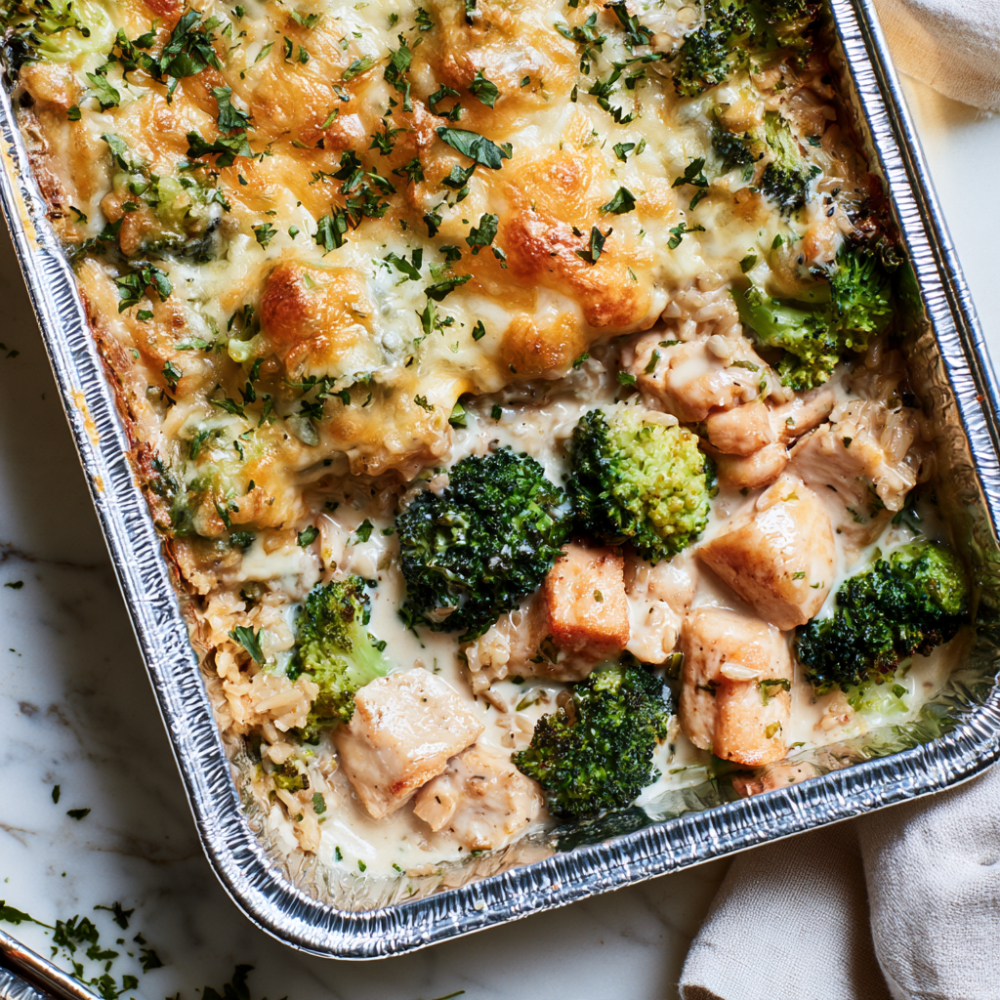
Freezer-Friendly Chicken, Broccoli & Brown Rice Casserole
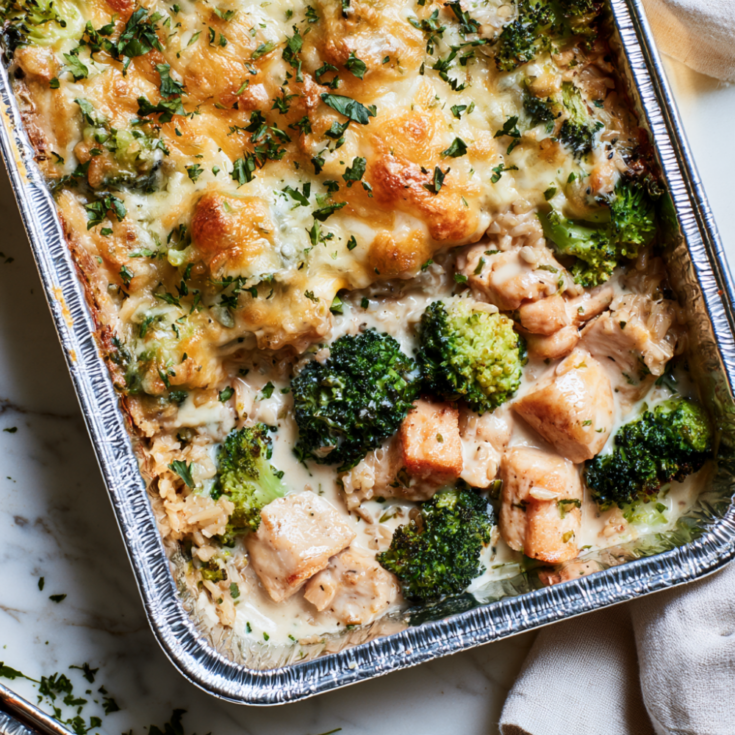
A creamy, high-protein chicken, broccoli, and brown rice casserole made with a blended cottage cheese and bone broth sauce, not canned soup. Assemble ahead, freeze for up to 3 months, and bake straight from frozen.
Ingredients
For the Chicken
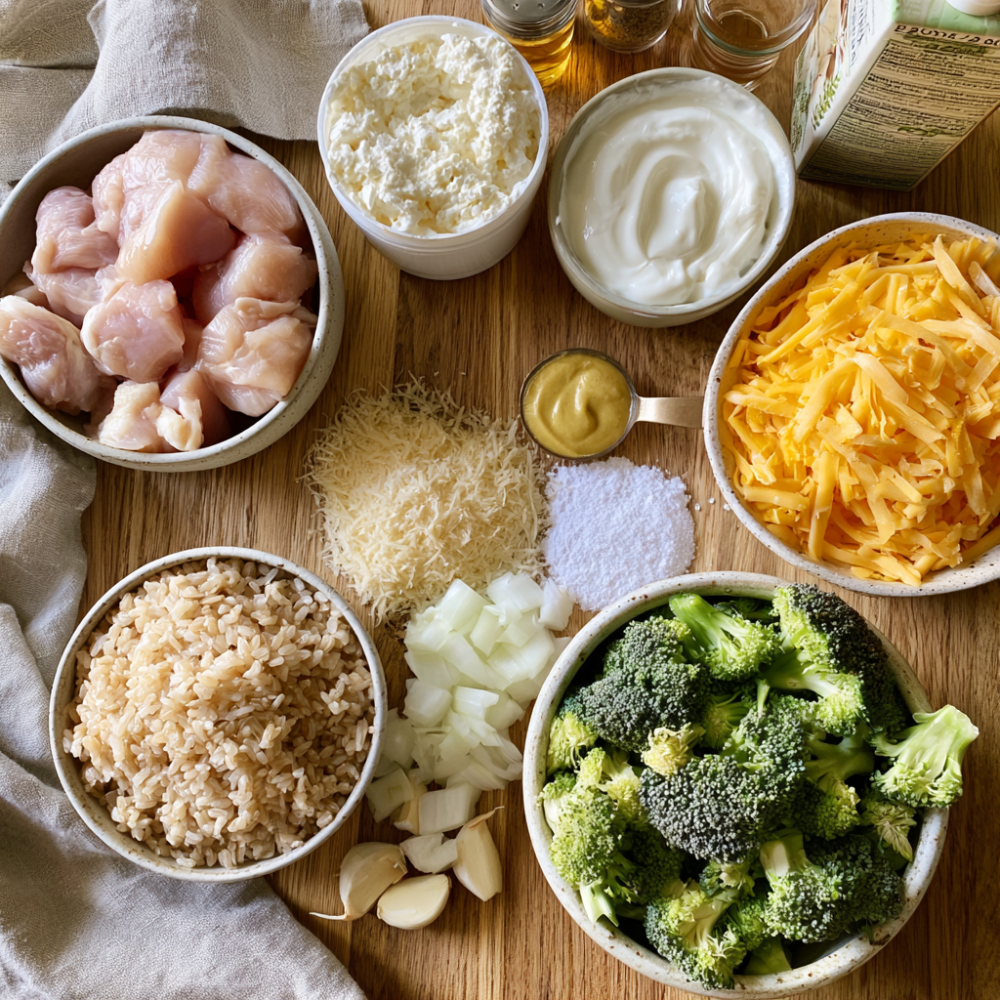
- 2 lbs boneless, skinless chicken breasts, cut into 1-inch cubes
- 1 tbsp olive oil
- 1 tsp kosher salt
- ½ tsp black pepper
- 1 tsp garlic powder
- 1 tsp smoked paprika
For the Sauce
- 2 cups 2% cottage cheese
- 1 cup plain Greek yogurt (2% or full-fat)
- 1½ cups low-sodium chicken bone broth
- ½ cup freshly grated Parmesan
- 1 tbsp cornstarch
- 1 tbsp Dijon mustard
- 1 tbsp Worcestershire sauce
- 1 tsp onion powder
- ½ tsp garlic powder
- ½ tsp dried thyme
- ½ tsp kosher salt
- ¼ tsp black pepper
For the Casserole
- 1 tbsp olive oil
- 1 small yellow onion, diced
- 4 cloves garlic, minced
- 3 cups cooked brown rice, cooked to about 75% done
- 5 cups broccoli florets, blanched and shocked
- 1½ cups sharp cheddar, shredded, divided
- ¼ cup fresh parsley, chopped
Instructions
- Par-cook the rice. Cook brown rice in salted water until it is still firm in the center, about 25 minutes instead of the full 40. Drain and spread on a sheet pan to cool. It finishes cooking in the oven.
- Blanch the broccoli. Bring a pot of water to a boil. Add the broccoli florets and cook for exactly 60 seconds. Drain immediately and plunge into a bowl of ice water for 2 minutes. Drain again and pat completely dry with towels. Wet broccoli is the number one cause of a watery casserole.
- Sear the chicken. Heat the olive oil in a large skillet over medium-high. Season the chicken with salt, pepper, garlic powder, and paprika. Sear in a single layer for 2 minutes per side, until browned but not cooked through — about 150°F. Work in batches if needed. Transfer to a plate.
- Soften the aromatics. Reduce the heat to medium. Add the remaining olive oil, then the onion. Cook 4–5 minutes until translucent. Add the garlic and cook for 30 seconds.
- Build the sauce. Add the bone broth to the skillet and scrape up the browned bits. Whisk in the Dijon, Worcestershire, onion powder, garlic powder, thyme, salt, and pepper. Bring to a low simmer.
- Thicken with the slurry. Whisk the cornstarch into 2 tablespoons of cold water until smooth. Whisk the slurry into the simmering broth and cook for 1 minute, until it thickens slightly. Remove from the heat and cool for 10 minutes.
- Blend the cream base. Add the cottage cheese and Greek yogurt to a blender. Blend for 30 seconds, until completely smooth. Add the cooled broth mixture and the Parmesan. Blend another 20 seconds until uniform. The sauce should be thick and glossy, like a loose alfredo.
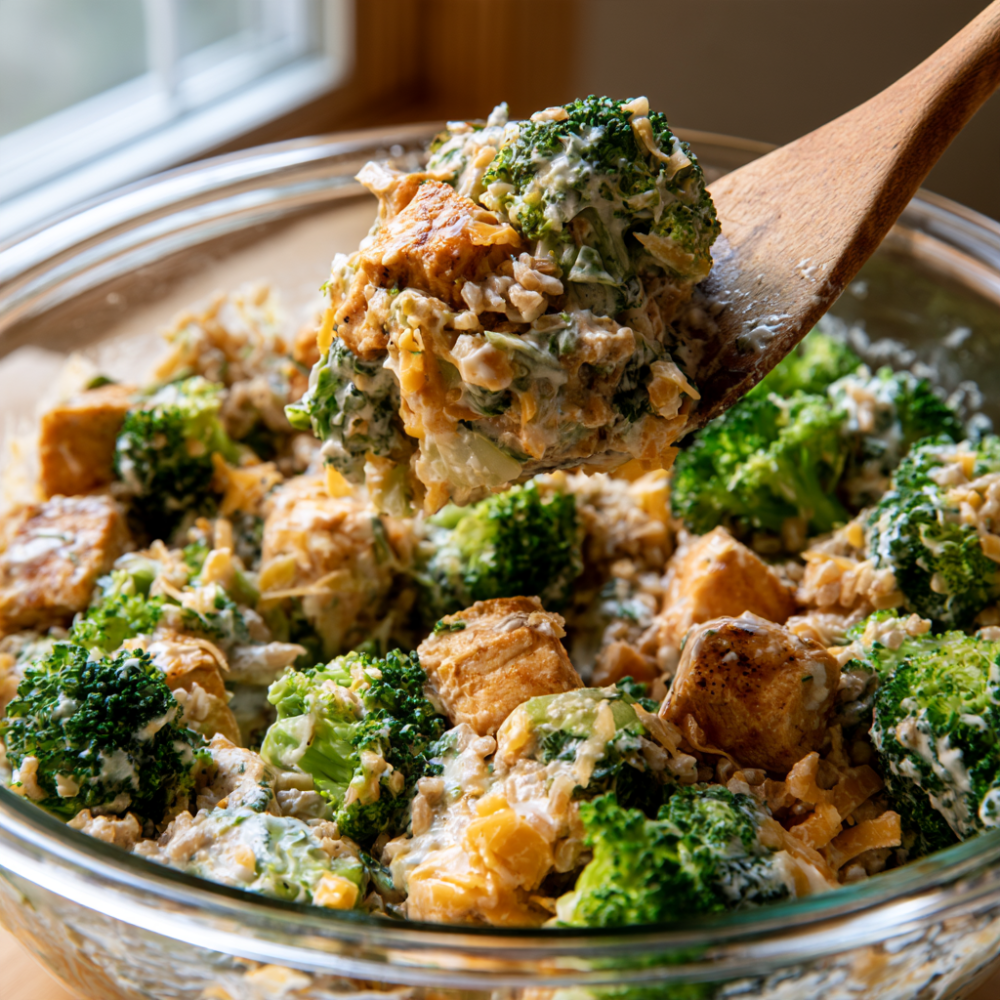
- Assemble the casserole. In a large bowl, combine the seared chicken, par-cooked rice, blanched broccoli, and 1 cup of the cheddar. Pour the blended sauce over the top and fold gently until everything is coated. Do not stir aggressively — you want the broccoli to stay intact.
- Transfer and top. Pour the mixture into a 9x13 foil pan or freezer-safe baking dish. Press gently into an even layer. Top with the remaining ½ cup cheddar and the parsley.
- Cool completely. Let the casserole sit uncovered at room temperature for 30 minutes, then refrigerate uncovered for 1 hour. It must be cold all the way through before freezing.
- Wrap and freeze. Cover tightly with plastic wrap pressed against the surface, then a layer of heavy-duty foil. Label with the recipe name, date, and baking instructions. Freeze flat for up to 3 months.
- Bake from thawed. Thaw 24 hours in the refrigerator. Bake covered with foil at 375°F for 30 minutes, then uncovered for 15–18 minutes, until bubbling at the edges and 165°F in the center.
- Bake from frozen. Preheat to 400°F. Bake covered with foil for 50 minutes, then uncover and bake 20–25 minutes more, until the center reaches 165°F and the top is golden. Rest 10 minutes before serving.
Notes
Protein per Serving: 40 g.
Nutrition Note: Protein calculated from 2 lbs raw chicken breast (≈186g), 2 cups 2% cottage cheese (≈48g), 1 cup Greek yogurt (≈23g), 1½ cups sharp cheddar (≈42g), ½ cup Parmesan (≈20g), 3 cups cooked brown rice (≈15g), and broccoli (≈8g), divided by 8. About 490 calories per serving.
Tips for the Best Freezer Casserole
- Dry the broccoli completely. Any surface water becomes ice crystals that melt into a puddle during baking.
- Par-cook the rice; never fully cook it. Rice that is already done turns to paste after freezing and a 45-minute bake.
- Use brown rice, not white. The bran layer keeps grains separate and firm.
- Blend the cottage cheese for a full 30 seconds. Any curds left whole will separate and look grainy after thawing.
- Cool the sauce before blending in the dairy. Hot broth will warm the cottage cheese and thin the sauce.
- Stop the chicken at 150°F. It finishes cooking in the oven. Cooking it fully now means dry chicken in March.
- Do not skip the cornstarch. It is the single ingredient that keeps the sauce from weeping during thawing.
- Use foil pans for freezer meals. They stack flat, conduct heat evenly, and you can bake and toss.
- Press plastic wrap directly onto the surface. Air is what causes freezer burn and ice crystals.
- Freeze flat, then stack. Flat freezing means a 24-hour thaw instead of 48.
- Label everything. Write the name, date, and bake instructions directly on the foil.
- Thaw in the refrigerator, never on the counter. Counter thawing pushes the center into the danger zone.
- Add fresh herbs after baking if reheating. Dried herbs in the freezer lose potency over 3 months.
- Make two and freeze one. The assembly takes the same amount of time either way.
- Do not overfill the pan. Leave ½ inch of headroom so the sauce does not bubble over in the oven.
Troubleshooting
- The casserole came out watery. The broccoli was wet, the rice was fully cooked, or the casserole was frozen warm. Pat the broccoli dry, par-cook the rice, and cool completely before freezing.
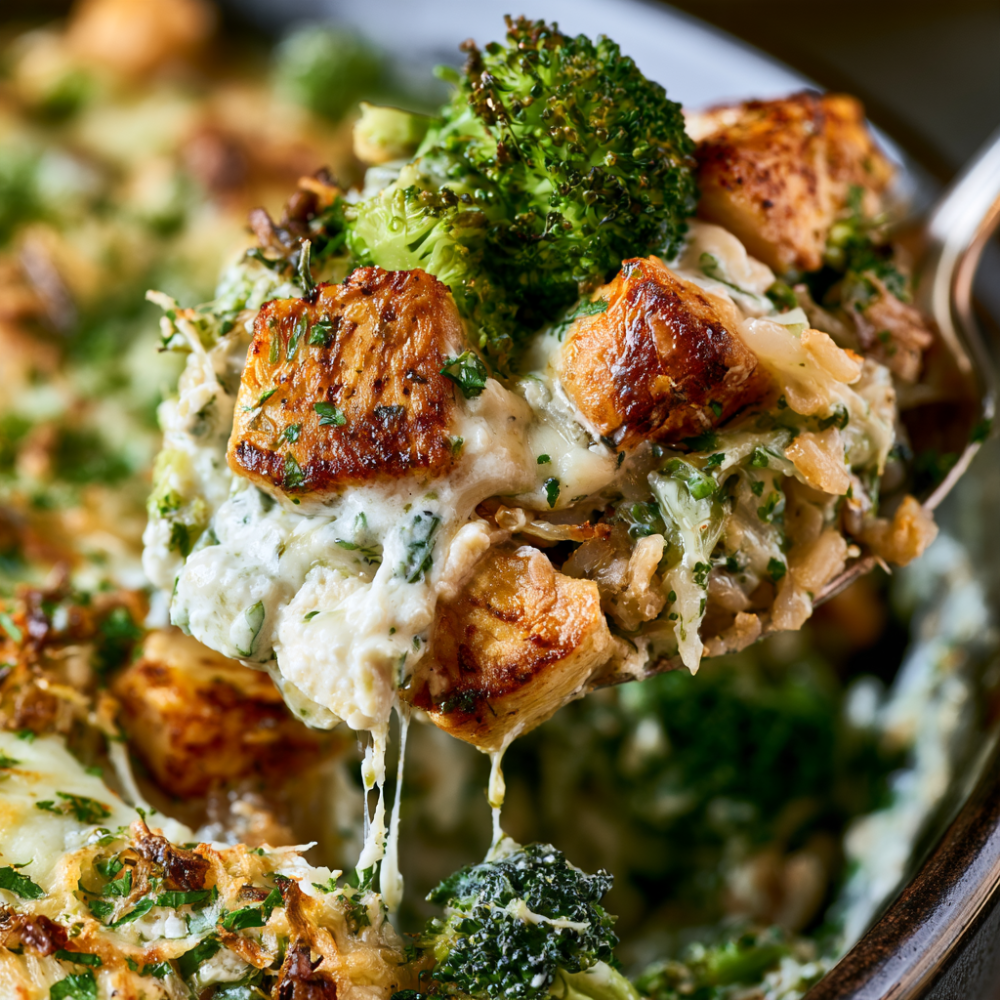
- The sauce separated and looks grainy. The cottage cheese was not blended smooth, or heavy cream was used instead. Blend for a full 30 seconds and stick to cottage cheese.
- The casserole is dry after baking. It was baked uncovered the whole time or overcooked. Cover for the first 30 minutes and pull at 165°F.
- The rice is mushy. It was fully cooked before freezing. Par-cook to 75% and let the oven finish it.
- The broccoli turned gray and soft. It was not blanched and shocked, or it was cooked too long. Blanch for 60 seconds in boiling water, then transfer to ice water.
- The chicken is stringy. It was cooked through before freezing. Sear to 150°F only.
- The top is pale, and the center is cold. Baked from frozen without covering. Cover for the first 50 minutes at 400°F.
- The casserole boiled over in the oven. The pan was overfilled, or the sauce was too thin. Leave headroom and measure the cornstarch.
- It tastes flat after thawing. Freezing dulls seasoning. Add ½ tsp salt, a squeeze of lemon, and fresh herbs before serving.
- The cheese on top turned rubbery. I added it before freezing and baked it too long uncovered. Add the topping cheese in the last 10 minutes if you want it fresh and melty.
- The sauce is too thick. It sat in the oven too long or had too much cornstarch. Stir in 2 tbsp of warm broth before serving.
- Freezer burn on the edges. Wrapping was not airtight. Press plastic wrap against the surface and double-wrap in foil.
Easy Variations
- Dairy-Free Chicken Broccoli Rice Casserole. Swap the cottage cheese and yogurt for 2 cups of blended silken tofu or cashew cream, and use dairy-free cheddar and nutritional yeast.
- Chicken and Rice Casserole Recipes Non-Dairy — Coconut Version. Use full-fat coconut milk instead of the cottage cheese, and skip the cheese entirely. Add 1 tsp curry powder.
- Easy Chicken Casserole Recipes One Dish — Skillet Version. Make it fresh in an oven-safe skillet, simmer covered for 15 minutes, then broil with the cheese on top.
- Chicken Casserole Recipes With Rice — Mushroom Version. Add 8 oz sautéed mushrooms to the onion step for deeper flavor.
- Chicken Freezer Meals Make Ahead — Individual Portions. Divide into 8 single-serve foil containers. Bake from frozen at 400°F for 35–40 minutes.
- Vegetable Freezer Meals — Vegetarian Version. Skip the chicken, add 2 cups of cooked chickpeas, and use vegetable broth. Protein drops to about 22g.
- Frozen Casseroles Make Ahead — Cauliflower Rice Version. Swap the brown rice for 4 cups of riced cauliflower, squeezed dry. Low-carb and freezes well.
Storage and Food Safety
Refrigerator: Store baked leftovers in an airtight container for up to 4 days. Reheat covered at 350°F for 20 minutes or in the microwave for 2 minutes, stirring once.
Freezer: Freeze unbaked for up to 3 months. Freeze baked leftovers for up to 2 months. Always cool completely before freezing — a warm casserole forms ice crystals and bakes up watery.
Make Ahead: Assemble up to 24 hours ahead and refrigerate, or up to 3 months ahead and freeze. Do not hold the unbaked casserole in the refrigerator for more than 24 hours before freezing, as the rice will begin to absorb the sauce.
Food Safety: Chicken must reach an internal temperature of 165°F before serving. Thaw frozen casseroles in the refrigerator, never on the counter. Do not refreeze a thawed casserole. Cool leftovers within 2 hours and refrigerate promptly.
Frequently Asked Questions
How long can I freeze this casserole? Up to 3 months unbaked. After that, the sauce starts to lose texture, and the broccoli fades.
Do I thaw it before baking? Not required. Thawed, it bakes in 45 minutes at 375°F; from frozen, it bakes in 70 minutes at 400°F.
Can I use canned cream of chicken soup instead? You can, but it will separate when frozen and carries far more sodium. The cottage cheese and bone broth sauce is the whole point of this recipe.
Why does my casserole get watery after freezing? Wet broccoli, fully cooked rice, or sealing it while warm. Dry the broccoli, par-cook the rice, and cool completely.
Can I use frozen broccoli? Yes, but thaw and squeeze it completely dry first. Frozen broccoli carries a lot of water.
Can I use white rice? Yes. Long-grain white rice par-cooked to 75% works, though brown rice holds up better.
Can I make this dairy-free? Yes. Use blended silken tofu or cashew cream for the cottage cheese and dairy-free cheddar. The texture will be slightly less creamy.
Can I bake it in a glass dish and freeze it? Yes, if it’s freezer-safe. Foil pans are cheaper and stack better, but glass works if you let it thaw fully before baking — sudden temperature change can crack it.
Can I assemble it and bake it the same day? Yes. Bake covered at 375°F for 30 minutes, then uncovered 15–18 minutes.
How much protein is in each serving? About 40g, from the chicken, cottage cheese, Greek yogurt, cheddar, and Parmesan.
Can I add pasta instead of rice? Yes, but use par-cooked pasta and reduce the bake time. Pasta absorbs more sauce than rice.
Do I need to blanch the broccoli? Yes. It sets the color and stops the cooking so it does not turn to mush in the oven.
Can I freeze it in individual portions? Yes. Divide into single-serve foil containers and bake from frozen at 400°F for 35–40 minutes.
What if I don’t have bone broth? Use low-sodium chicken broth plus 1 tsp gelatin or 1 tsp Better Than Bouillon for body.
Can I reheat this in the microwave? Yes, covered, for 2 minutes per portion, stirring once halfway.
More Freezer-Friendly Recipes You’ll Love
- Lasagna Roll Ups Recipe (Make Ahead & Freezer Friendly, 32g Protein!)
- Crockpot Freezer Meals: 5 Healthy Dump-and-Go Dinners (High-Protein Meal Prep)
- Make Ahead Mashed Potatoes (Freezer-Friendly and Creamy)
- Ground Beef Burritos (Freezer-Friendly & Easy)
Conclusion
Most casseroles fail in the freezer for one reason: the sauce. Canned cream soup and heavy cream break down when frozen, and what comes out of the oven is grainy, greasy, and sitting in a puddle. The fix is not more cheese or more cream. It is a different base entirely.
Blended cottage cheese does not separate when frozen. Bone broth adds body without the sodium. A tablespoon of cornstarch holds it all together through freeze, thaw, and bake. And par-cooking the rice and blanching the broccoli means neither turns to mush on the other side.
This is a casserole you assemble on a Sunday afternoon, wrap in foil, and forget about until February. It is the one you pull out on a night when nobody has the energy to cook, slide into the oven still frozen, and serve forty minutes later to people who assume you made it that day.
Make two. Freeze one. Label it clearly, because you will want to know exactly what it is and exactly how long to bake it.
That is what make-ahead cooking is supposed to feel like — not a chore you did weeks ago, but a favor you did for yourself.