Mashed potatoes are one of the hardest holiday sides to time perfectly. You’re managing the turkey, gravy, casseroles, and everything else on the table, yet the potatoes still need peeling, boiling, mashing, and serving hot.
Making them ahead solves the timing problem. The trick is to use a recipe designed for reheating, not regular mashed potatoes and hope they’ll taste the same the next day.
These make-ahead mashed potatoes use Yukon Gold potatoes, plenty of butter, cream cheese, and half-and-half for a rich texture that holds up well in the refrigerator and freezer. They’re intentionally made a little thicker than you would serve them immediately, then loosened with warm dairy when reheated.
You can make them up to 3 days ahead and refrigerate them or freeze them for up to 3 months. Choose the oven for a large batch, the slow cooker when oven space is limited, or the microwave for individual portions.
That’s the real advantage of make-ahead mashed potatoes: the side dish is already done before the kitchen gets chaotic.
Why These Make-Ahead Mashed Potatoes Work
Yukon Gold Potatoes Have the Right Texture
Yukon Gold potatoes have a naturally creamy, buttery texture and moderate starch content, making them a great choice for mashed potatoes you’ll refrigerate or freeze.
Russets can make excellent fluffy mashed potatoes, but they are more prone to breaking down into a dry or pasty texture if they are overcooked or overworked. For this recipe, Yukon Golds give you a forgiving middle ground between fluffy and creamy.
Butter and Cream Cheese Add Richness
Butter contributes fat and flavor, while cream cheese adds both richness and body. Together, they give the potatoes enough structure to handle chilling and reheating without relying on a large amount of watery dairy.
Full-fat cream cheese works best here. Reduced-fat versions can work, but they may produce a slightly softer or less rich result.
The Potatoes Are Mashed by Hand
A potato masher keeps the process simple and makes it harder to overwork the potatoes accidentally.
For exceptionally smooth potatoes, use a ricer. Avoid food processors, blenders, and aggressive mixing. Too much mechanical mixing releases more starch and can turn creamy potatoes sticky or gluey.
The Dairy Goes in Warm
Cold dairy can cool the potatoes down and make it harder to incorporate the fat evenly. Warming the half-and-half before adding it helps the butter and cream cheese blend smoothly into the hot potatoes.
The Potatoes Are Stored Slightly Thick
Fresh mashed potatoes should be creamy but not runny. For make-ahead potatoes, it’s even better to leave them slightly thicker than your ideal serving consistency.
They firm up in the refrigerator and freezer. A little warm cream and butter during reheating brings them back to the right texture.
Make Ahead Mashed Potatoes
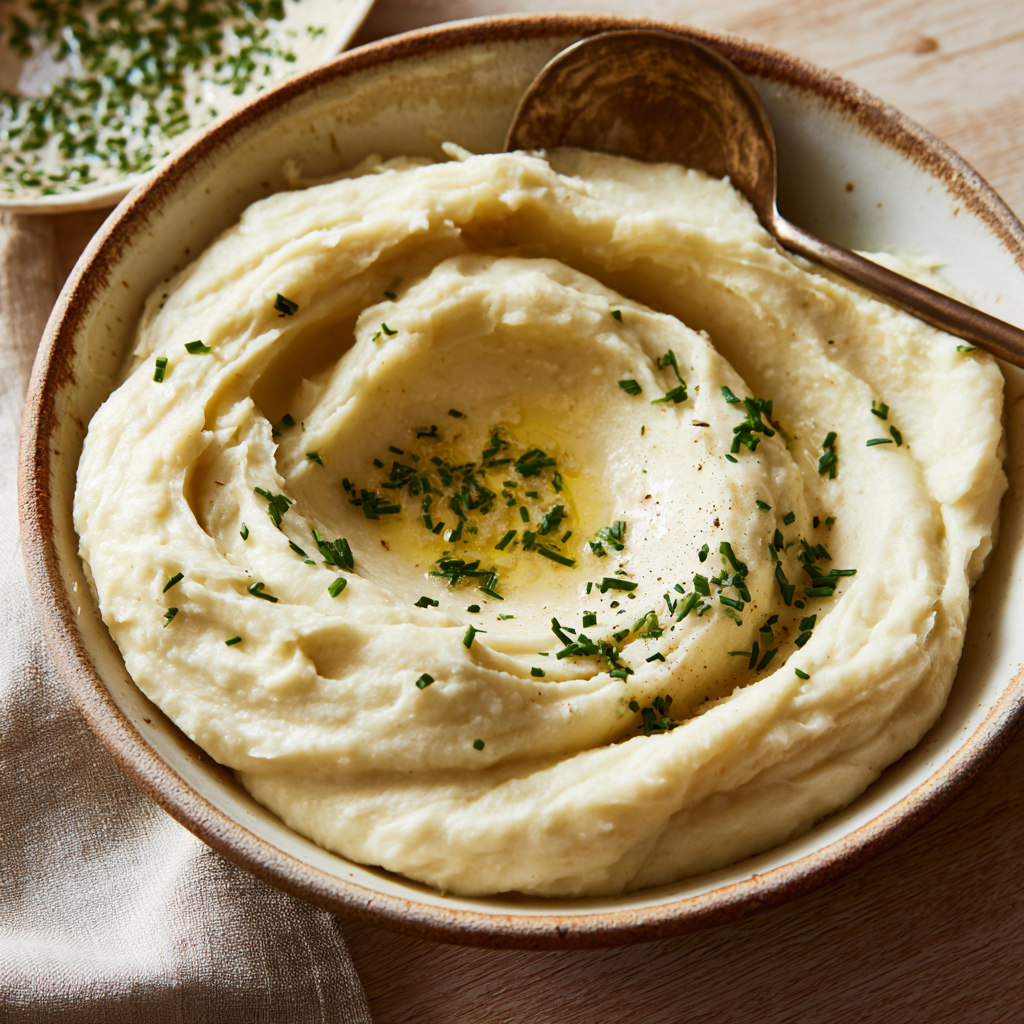
Creamy, buttery mashed potatoes made with Yukon Golds, butter, cream cheese, and half-and-half. Make them up to 3 days ahead and refrigerate, or freeze them for up to 3 months. They reheat especially well in the oven, slow cooker, or microwave when you add a little moisture before reheating.
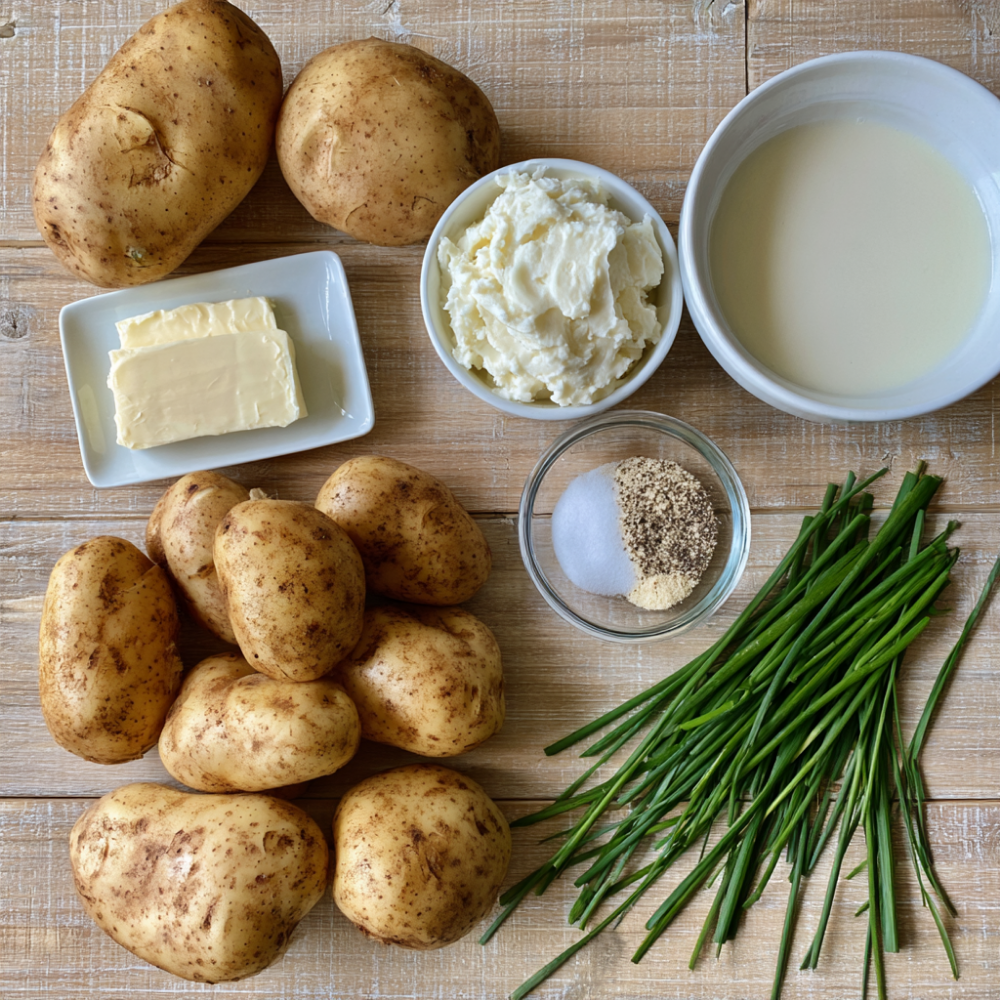
- 5 lbs Yukon Gold potatoes (peeled and cut into 1½- to 2-inch chunks)
- 1 tbsp kosher salt (for the cooking water)
- ½ cup unsalted butter (cut into pieces, plus more for serving)
- 8 oz full-fat cream cheese (softened and cut into cubes)
- 1 cup half-and-half or heavy cream (warmed)
- 1 tsp kosher salt (plus more to taste)
- ½ tsp white pepper or black pepper
- ½ tsp garlic powder (optional)
- ¼ cup fresh chives or parsley (chopped, for serving, optional)
- Boil the potatoes. Place the potatoes in a large pot and cover with cold water, about 1 inch above. Add 1 tablespoon kosher salt. Bring to a boil over high heat, then reduce to a steady simmer. Cook for 15–20 minutes, or until a knife slides through the center of the largest potato piece with almost no resistance. If the center still feels firm, keep cooking and check again in 2–3 minutes.
- Drain and steam-dry. Drain the potatoes thoroughly in a colander, then return them to the warm pot. Let them sit uncovered for 2–3 minutes to evaporate excess moisture. This small step helps prevent watery mashed potatoes.
- Mash with the butter and cream cheese. Add the butter and cream cheese while the potatoes are still hot. Mash with a potato masher until mostly smooth, or press the potatoes through a ricer. Stop as soon as you reach your desired texture. Do not use a food processor, blender, hand mixer, or stand mixer. Overmixing can release excess starch and make the potatoes gluey.
- Add the warm dairy gradually. Stir in ¾ cup of the warm half-and-half, along with 1 teaspoon kosher salt, pepper, and garlic powder (if using). Add some or all of the remaining ¼ cup dairy, a few tablespoons at a time, until the potatoes are creamy but slightly thicker than you want them for serving. Taste and adjust the salt. They will loosen slightly when reheated.
- Cool and refrigerate promptly. Transfer the potatoes to a wide, shallow baking dish or container so they cool more quickly. Let them stop steaming, then refrigerate within 2 hours of cooking. Once chilled, cover tightly. Do not leave the potatoes at room temperature for hours while they cool completely.
- Store. Refrigerate for up to 3 days, or freeze for up to 3 months using one of the storage methods below.
- Reheat gently. Add a little warm half-and-half and butter before reheating. Use the oven, slow cooker, stovetop, or microwave method below, depending on the amount you’re reheating.
- Finish before serving. Stir gently and check the consistency. If the potatoes are too thick, add warm half-and-half 1 tablespoon at a time. Taste again for salt and pepper, then finish with butter and fresh chives or parsley if desired.
Three Ways to Store Make-Ahead Mashed Potatoes
Option 1: Refrigerate for Up to 3 Days
Transfer the cooled potatoes to an airtight container or a buttered 9-by-13-inch baking dish.
If using a baking dish, press plastic wrap directly against the surface of the potatoes, then cover the dish tightly with foil or a lid. This helps prevent the surface from drying out and limits exposure to refrigerator odors.
When you’re ready to reheat, add a little warm half-and-half and butter.
Option 2: Freeze in a Casserole Dish for Up to 3 Months
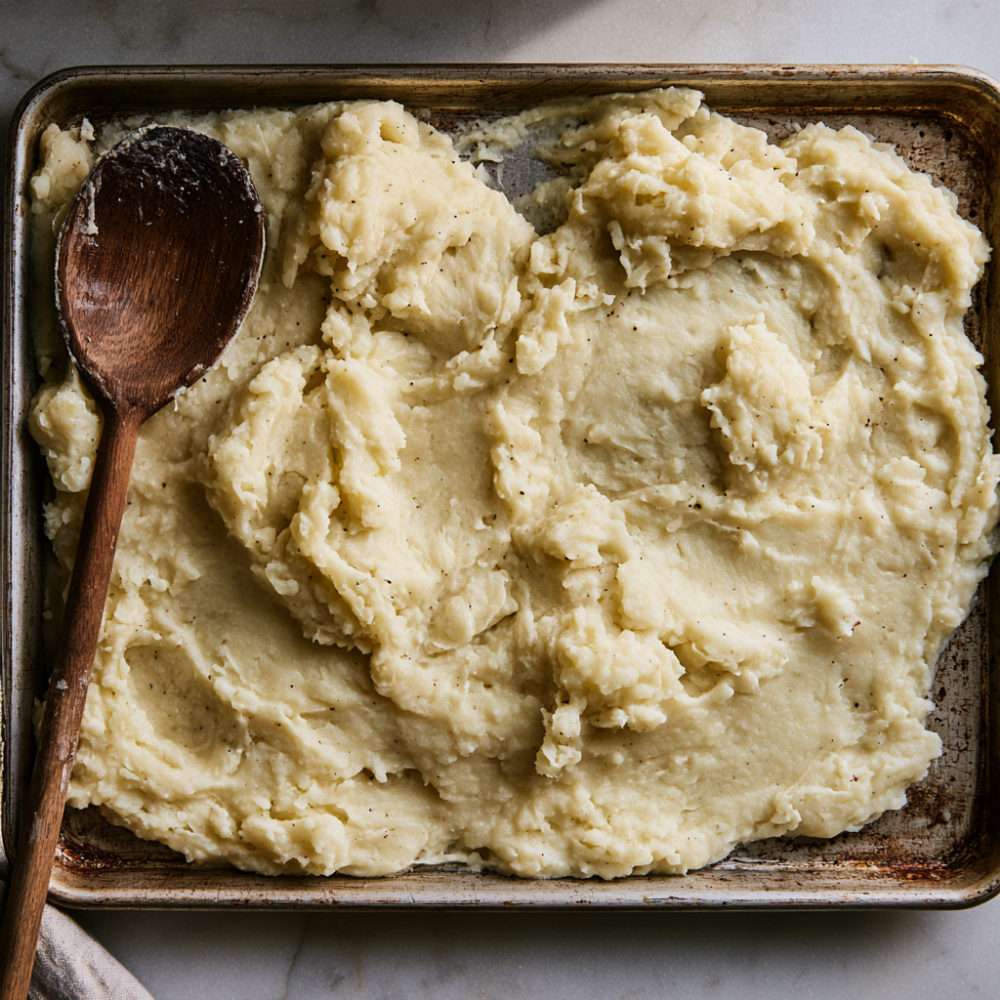
Butter a 9-by-13-inch baking dish or two 8-by-8-inch dishes. Spread the cooled potatoes evenly in the dish and smooth the top.
Press plastic wrap directly against the surface, then wrap the dish tightly with foil. Label it with the date and freeze for up to 3 months.
For the best texture, thaw overnight in the refrigerator before reheating.
You can also reheat the potatoes directly from frozen in the oven. Allow extra time and stir once the edges have begun to thaw.
Option 3: Freeze in Portions for Up to 3 Months
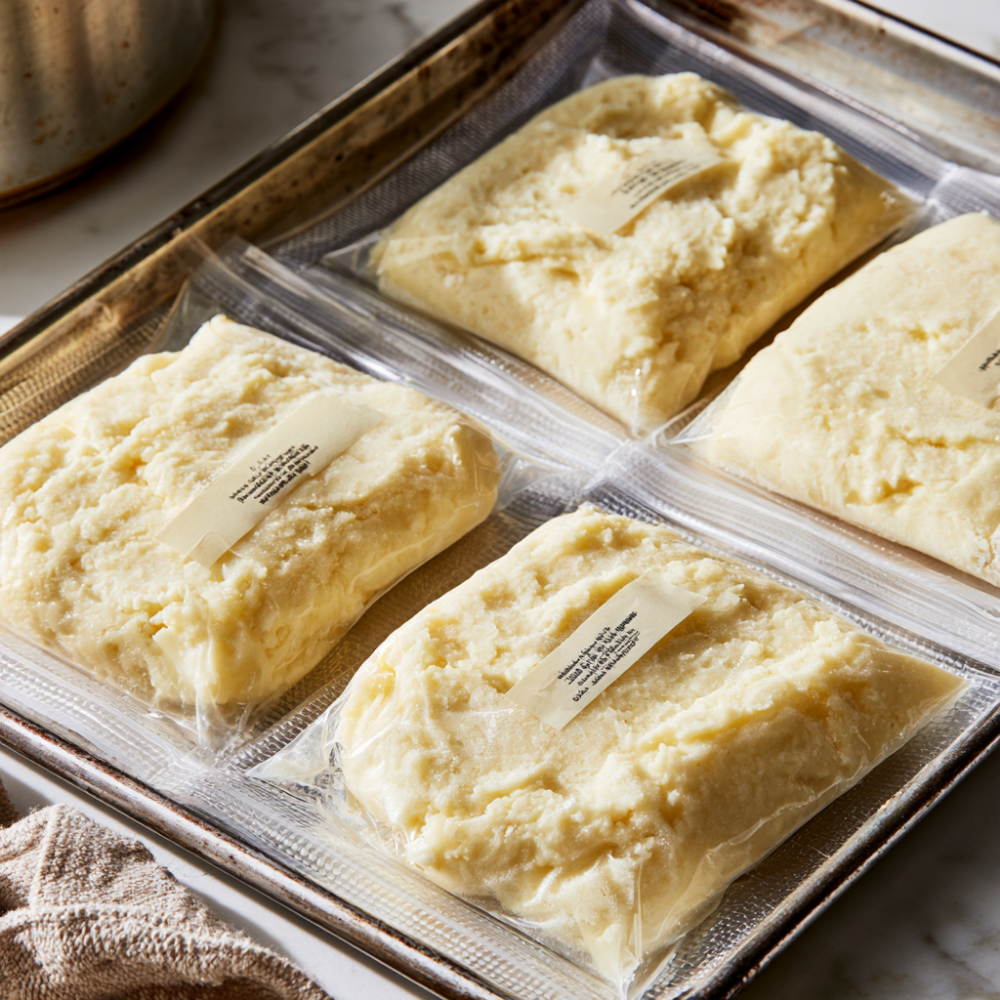
For individual portions, spoon cooled potatoes into a greased muffin tin and freeze until solid. Transfer the frozen portions to a labeled freezer bag.
For family-size portions, place 2-cup portions into freezer-safe bags, press out excess air, flatten, and freeze flat. Flat portions stack easily and thaw more quickly than a large block.
Always label freezer portions with the contents and date.
Four Ways to Reheat Make-Ahead Mashed Potatoes
Slow Cooker: Best for a Crowd
Transfer refrigerated or thawed potatoes to a greased slow cooker. For every 5 pounds of potatoes, add about ¼ cup warm half-and-half and 2 tablespoons butter.
Cover and heat on LOW for 2–3 hours, stirring every 30–45 minutes. If the potatoes become too thick, add another splash of warm half-and-half.
Once they’re hot, switch the slow cooker to WARM.
Best tip: Don’t use the slow cooker to heat frozen potatoes rapidly. Thaw them in the refrigerator first for more even heating.
Oven: Best for a Large Batch
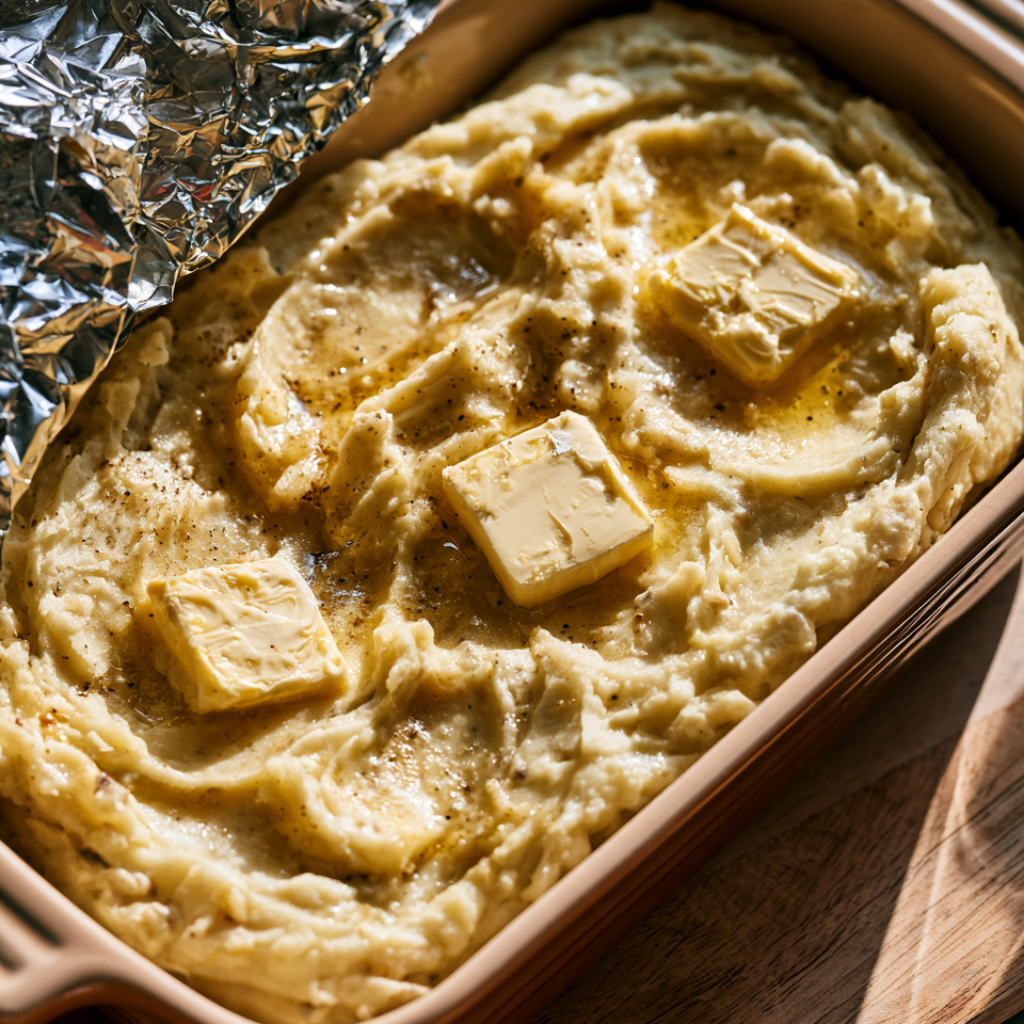
Transfer refrigerated or thawed potatoes to a buttered baking dish. Stir in about ¼ cup warm half-and-half and 2 tablespoons butter.
Cover tightly with foil and bake at 350°F for 30–40 minutes, stirring once halfway through, until hot throughout.
For a lightly browned top, remove the foil during the final 10 minutes and dot the surface with additional butter.
From frozen: Bake covered at 350°F for approximately 60–75 minutes, stirring once the potatoes have softened enough to stir. Continue heating until the center is hot.
Stovetop: Best for a Quick Reheat
Transfer refrigerated potatoes to a heavy-bottomed pot. Add a splash of half-and-half and a pat of butter.
Heat over LOW, stirring gently every few minutes, until hot throughout, about 10–15 minutes.
Keep the heat low. Mashed potatoes can scorch surprisingly quickly on the bottom of a hot pan.
Microwave: Best for Individual Portions
Place one portion in a microwave-safe bowl. Add a splash of half-and-half or milk and a small pat of butter.
Cover loosely and microwave at 50–70% power in 30–60 second intervals, stirring between intervals. Continue until heated throughout.
If the potatoes become thick or dry, add another tablespoon of dairy and stir gently.
Avoid blasting them at full power for several minutes. The edges can dry out before the center is hot.
Why Some Mashed Potatoes Freeze Better Than Others
Freezing mashed potatoes isn’t automatically a problem. The final texture depends on the potato, cooking method, amount of water and fat, and how you thaw and reheat the potatoes.
Potato Texture Matters
Potatoes contain starch and water, and freezing can change the way that water and starch interact. Some potatoes and preparations are more prone to becoming watery or grainy after thawing.
Yukon Golds are a good choice because their naturally creamy texture gives the finished potatoes a smooth, rich consistency before freezing.
Fat Helps Create a Creamier Texture
Butter, cream cheese, and cream contribute richness and help produce a more stable, cohesive mixture than potatoes made primarily with water-based dairy.
That doesn’t mean fat magically prevents every texture problem. Overcooking, undercooking, improper freezing, or aggressive reheating can still produce disappointing potatoes.
Overmixing Is a Bigger Risk Than Most People Think
Potatoes can go from creamy to gluey surprisingly quickly.
A ricer produces exceptionally smooth potatoes with very little mixing. A hand masher produces a slightly more rustic texture but is even more forgiving.
Once the potatoes are smooth enough, stop mixing.
How Far Ahead Can You Make These?
| When | What to do |
| 3 days ahead | Make the mashed potatoes, cool promptly, cover, and refrigerate. |
| 2 days ahead | Make, cool, and refrigerate in an airtight container or covered baking dish. |
| 1 day ahead | Make, cool, and refrigerate. You can also transfer them directly to the baking dish you’ll use for reheating. |
| Up to 3 months ahead | Freeze in a tightly sealed casserole dish or freezer-safe portions. Thaw overnight in the refrigerator when possible. |
| Day of, a few hours ahead | Make the potatoes, transfer them to a slow cooker, and keep them on WARM once heated. Add warm cream if they become thick. |
A note about prepping raw potatoes: If you want to save time several days ahead, don’t peel and leave the potatoes submerged in water in the refrigerator for three days. For the best quality, cut and cook them closer to when you’re making the mashed potatoes.
Making Mashed Potatoes for a Crowd
This recipe makes about 10 servings. If you’re feeding a larger group, scale the ingredients proportionally.
| Servings | Potatoes | Butter | Cream Cheese | Half-and-Half |
| 10 | 5 lbs | ½ cup | 8 oz | 1 cup |
| 20 | 10 lbs | 1 cup | 16 oz | 2 cups |
| 30 | 15 lbs | 1½ cups | 24 oz | 3 cups |
The original recipe can work for 10 servings, but when scaling up, don’t rely on one enormous pot.
For 20 or More Servings
Cook the potatoes in two large pots rather than overcrowding one pot. Overcrowding can slow the cooking process and make it harder to cook the potatoes evenly.
Mash each batch separately, then combine them in a large roasting pan or multiple baking dishes.
For a 30-Person Crowd
Prepare the potatoes in batches and reheat them in two slow cookers or multiple covered baking dishes.
If using slow cookers, heat on LOW until hot, then switch to WARM to keep warm while serving.
How Much Salt Should You Use?
Start with 1 tablespoon kosher salt per 5 pounds of potatoes, then season the finished potatoes to taste.
The exact amount of salt varies by brand and type of kosher salt, as crystal size differs considerably. Taste the finished potatoes rather than relying on a fixed final measurement.
What to Serve With Make-Ahead Mashed Potatoes
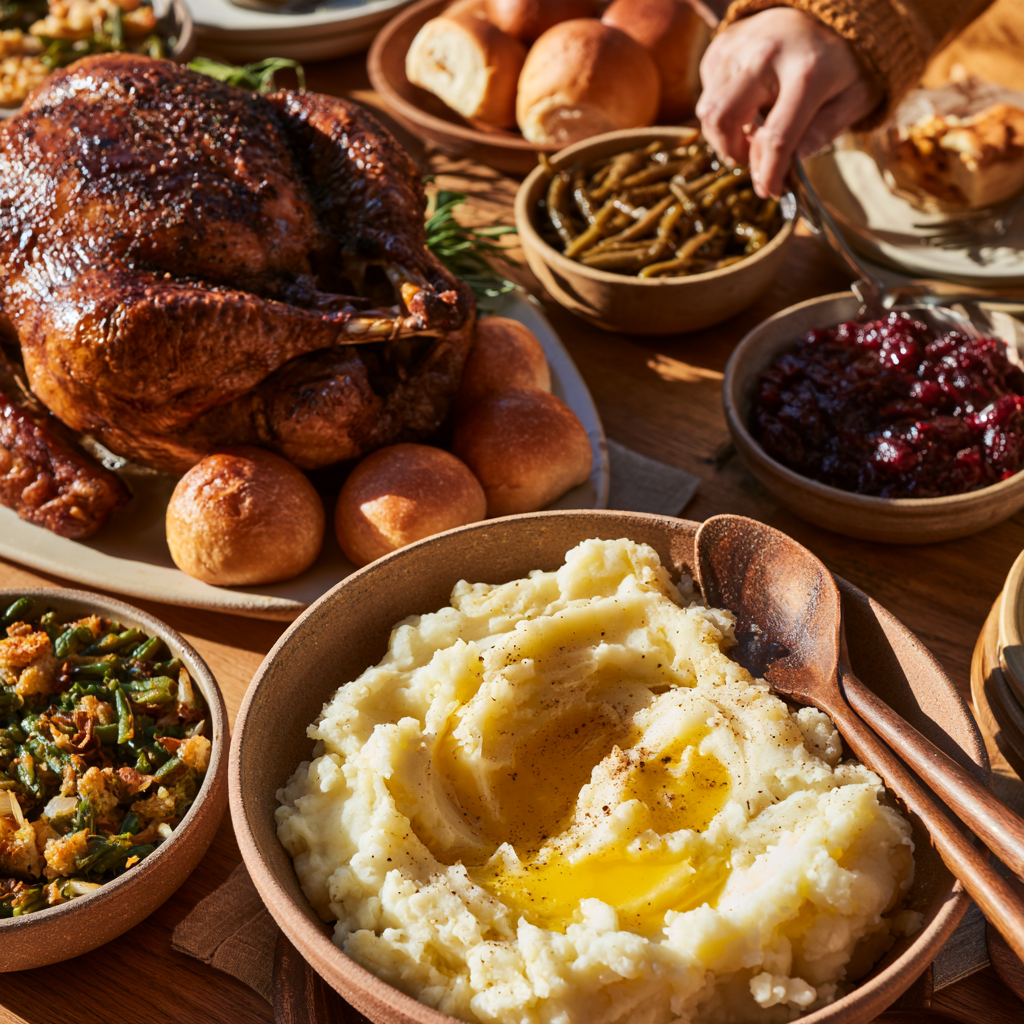
Mashed potatoes are one of the easiest sides to pair with almost any comfort-food dinner.
For a Holiday Table
- Roast turkey
- Roast chicken
- Glazed ham
- Green bean casserole
- Roasted green beans
- Cranberry sauce
- Stuffing or dressing
- Dinner rolls and butter
- Turkey, mushroom, or onion gravy
For a Weeknight Dinner
- Meatloaf
- Crockpot chicken with gravy
- Pan-seared pork chops
- Pot roast
- Beef stew
- Roast chicken thighs
- Meatballs and gravy
For a Comfort-Food Plate
- Fried chicken
- Salisbury steak
- Meatloaf and green beans
- BBQ chicken and coleslaw
Ways to Use Leftover Mashed Potatoes
- Use them as a topping for shepherd’s pie or cottage pie.
- Fold them into a bowl with shredded chicken and gravy.
- Thin them with broth and vegetables for a quick potato soup.
- Form them into potato cakes and pan-fry until crisp.
Frequently Asked Questions
Can You Make Mashed Potatoes a Day Ahead?
Yes. Make the potatoes, cool them promptly, cover tightly, and refrigerate for up to 3 days. Add a splash of warm half-and-half and a little butter when reheating to restore the creamy consistency.
Can You Freeze Homemade Mashed Potatoes?
Yes. Mashed potatoes with a generous amount of butter and full-fat dairy generally freeze better than very lean mashed potatoes. Yukon Golds are particularly well suited to this recipe.
For the best results, cool the potatoes promptly, package them airtight, and thaw them in the refrigerator before reheating when possible.
How Long Do Mashed Potatoes Last in the Freezer?
For best quality, use them within about 3 months. They may remain safe longer if continuously frozen, but their texture and flavor can gradually decline.
How Do You Thaw Frozen Mashed Potatoes?
The easiest method is to thaw them overnight in the refrigerator.
If you’re short on time, you can reheat them directly from frozen in a covered baking dish at 350°F. They will take longer to heat and should be stirred once the edges have softened.
Why Do My Mashed Potatoes Turn Out Gluey?
The most common cause is overmixing. Aggressive mixing releases more starch and can turn potatoes sticky.
Undercooked potatoes can also be difficult to mash smoothly, so make sure the largest pieces are completely tender before draining.
Why Do My Mashed Potatoes Turn Watery After Freezing?
Excess water, inadequate fat, overcooking, or the freezing and thawing process can all contribute to a watery texture.
For better results, drain the potatoes thoroughly, steam off excess moisture, use enough butter and full-fat dairy, and thaw frozen potatoes gradually in the refrigerator.
Can I Make Mashed Potatoes in a Crockpot?
Yes. The slow cooker is particularly useful for keeping mashed potatoes warm during a holiday meal.
Transfer already-cooked potatoes to a greased slow cooker and use the WARM setting once they’re hot. Stir occasionally and add warm cream or half-and-half if they become too thick.
Can I Use a Hand Mixer Instead of a Masher?
You can, but a potato masher or ricer is safer for consistently good texture.
If you use a hand mixer, keep it on the lowest speed and stop as soon as the potatoes are smooth. The longer you mix, the more likely they are to become gluey.
What’s the Best Potato for Make-Ahead Mashed Potatoes?
Yukon Gold potatoes are an excellent choice because they have a naturally creamy texture and enough starch to produce smooth mashed potatoes without requiring aggressive mixing.
Russets can also make excellent mashed potatoes, particularly when served immediately, but they’re less forgiving if overworked or improperly reheated.
Can I Use Milk Instead of Half-and-Half?
Yes, but the finished potatoes will be less rich. For make-ahead and freezer-friendly mashed potatoes, half-and-half or heavy cream gives you a richer texture and more forgiving reheating.
If using milk, add it gradually rather than automatically substituting the full amount.
Can I Add Garlic or Herbs?
Absolutely. Add garlic powder directly to the potatoes, or mix in roasted garlic for a stronger flavor.
Add fresh chives, parsley, or thyme after reheating so they retain their fresh flavor and color.
Can I Make These Dairy-Free?
Yes, although the texture will be somewhat different. Use dairy-free butter, dairy-free cream cheese, and a full-fat dairy-free cream or milk alternative.
Choose unsweetened products and taste carefully for salt. Different dairy-free products vary significantly in flavor and thickness.
Estimated Nutrition
Per serving, based on 10 servings:
- Calories: approximately 330–360
- Protein: approximately 6–7g
- Carbohydrates: approximately 35–40g
- Fiber: approximately 3–4g
- Fat: approximately 18–21g
Nutrition varies depending on the specific potatoes, butter, cream cheese, and half-and-half used.
For a lighter version, you can reduce the butter or cream cheese, but expect a less rich and potentially less forgiving texture after refrigeration or freezing.
A Higher-Protein Version
If you’re looking for mashed potatoes with more protein, try the High-Protein Crockpot Mashed Potatoes. That version uses cottage cheese, high-protein milk, and Parmesan to increase the protein while keeping the potatoes creamy.
Both versions are make-ahead friendly. The crockpot version is particularly useful when you’re preparing a holiday meal because it can be made and kept warm without taking up stovetop space.
More Make-Ahead Recipes You’ll Love
- High-Protein Crockpot Mashed Potatoes — a higher-protein version made entirely in the slow cooker
- 7 High-Protein Meal Prep Dinner Ideas — one-pot, sheet pan, and skillet dinners
- 6 Crockpot Stew Recipes You’ll Make All Fall and Winter — six hearty, high-protein stews
The Bottom Line
Make-ahead mashed potatoes work best when you treat them differently from potatoes you’re serving immediately.
Use creamy Yukon Gold potatoes, don’t overwork them, add enough butter and full-fat dairy, and leave them slightly thicker than your ideal serving consistency. Cool and refrigerate them promptly, then reheat gently with a little warm cream and butter.
You can make them up to 3 days ahead or freeze them for about 3 months. And when the holiday meal gets hectic, the potatoes are already done.
That’s the whole point of a make-ahead recipe: less work when you’re busy, without sacrificing the food everyone came for.