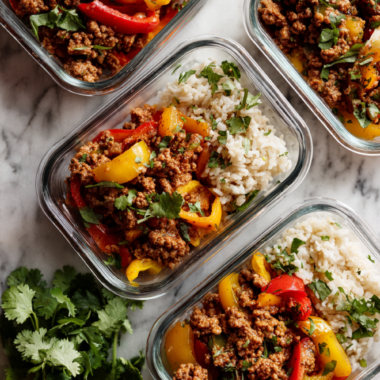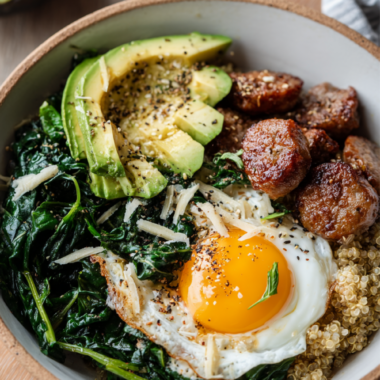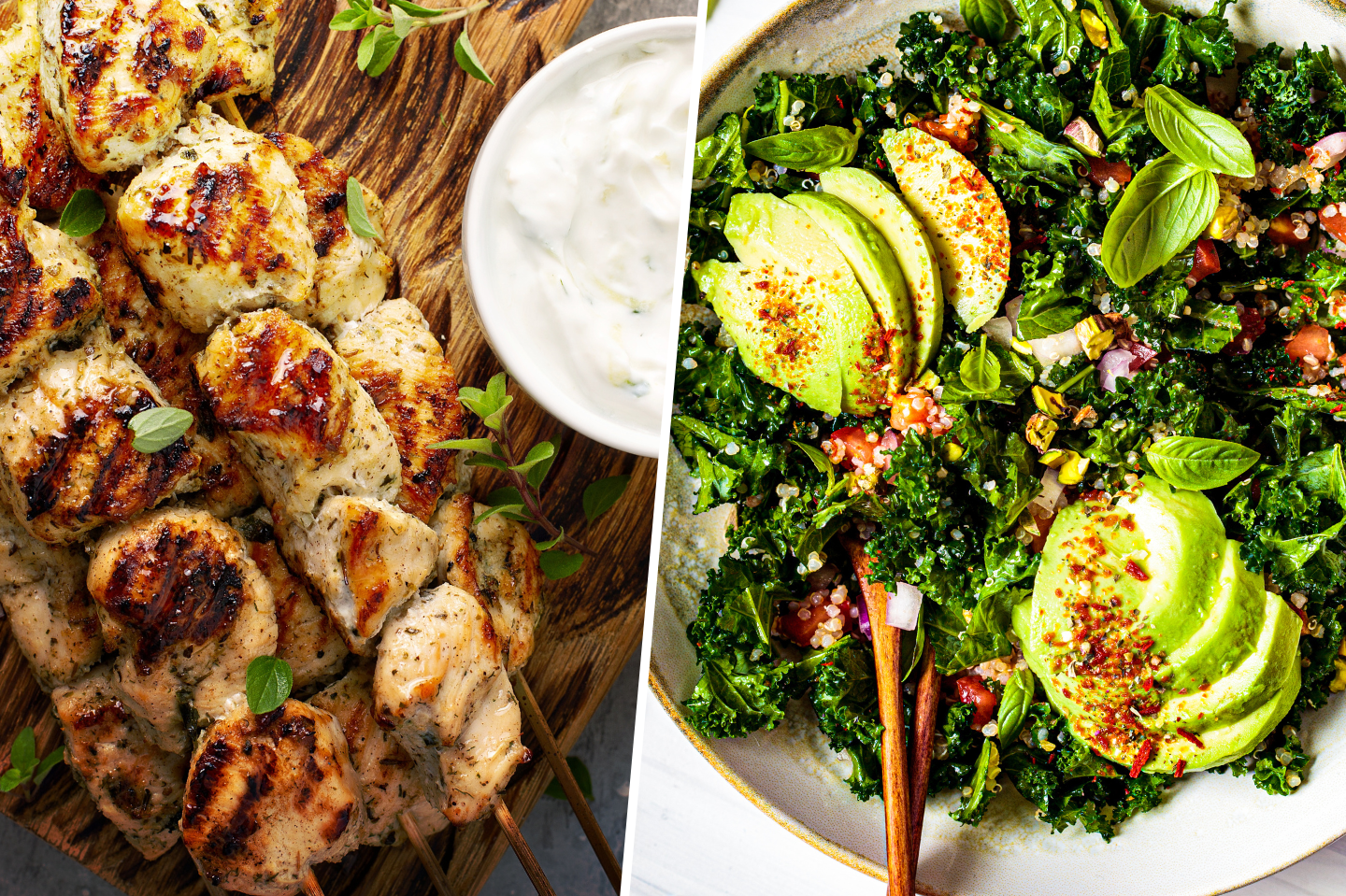
Fall is the one season that blesses the kitchen with an embarrassment of vegetables. Bell peppers in every color. Red onions. Zucchini. Eggplant. Butternut squash showing up in every grocery store and farmers’ market stand. It is the most generous produce season of the year, and the easiest way to actually take advantage of it is to roast a big batch and meal prep it for the week ahead.
That is the whole idea. One sheet pan, forty minutes, and a week of vegetables already cooked, seasoned, and waiting in the refrigerator for whatever you are making.
Here’s what separates a week of good meals from a week of scrambling. It is not protein. It is not grains. It is having vegetables already done. That is the single most useful thing you can prep on a Sunday, and it is the one that makes everything else easier.
Fall roasted vegetables are that prep. Eggplant, zucchini, bell peppers, red onion, and butternut squash, roasted at high heat until the edges caramelize and the middles go sweet, then finished with olive oil, oregano, smashed garlic, and fresh lemon zest. Portion it into five containers for a week of meals that come together in minutes.
Add it to a bowl of grains and a protein for a full dinner. Fold it into pasta or a frittata. Pile it onto a piece of toast with ricotta. Serve it as a Thanksgiving side. Or eat it straight from the container while standing at the counter, which is honestly what happens most often in my house.
It is one of the best meal-prep vegetables you can make because roasted vegetables hold their texture better than steamed or sautéed ones, reheat without turning to mush, and taste better on day three than on day one.
This is the guide — how to roast them, how to season them, and how to meal prep them so they last.
Why This Recipe Works
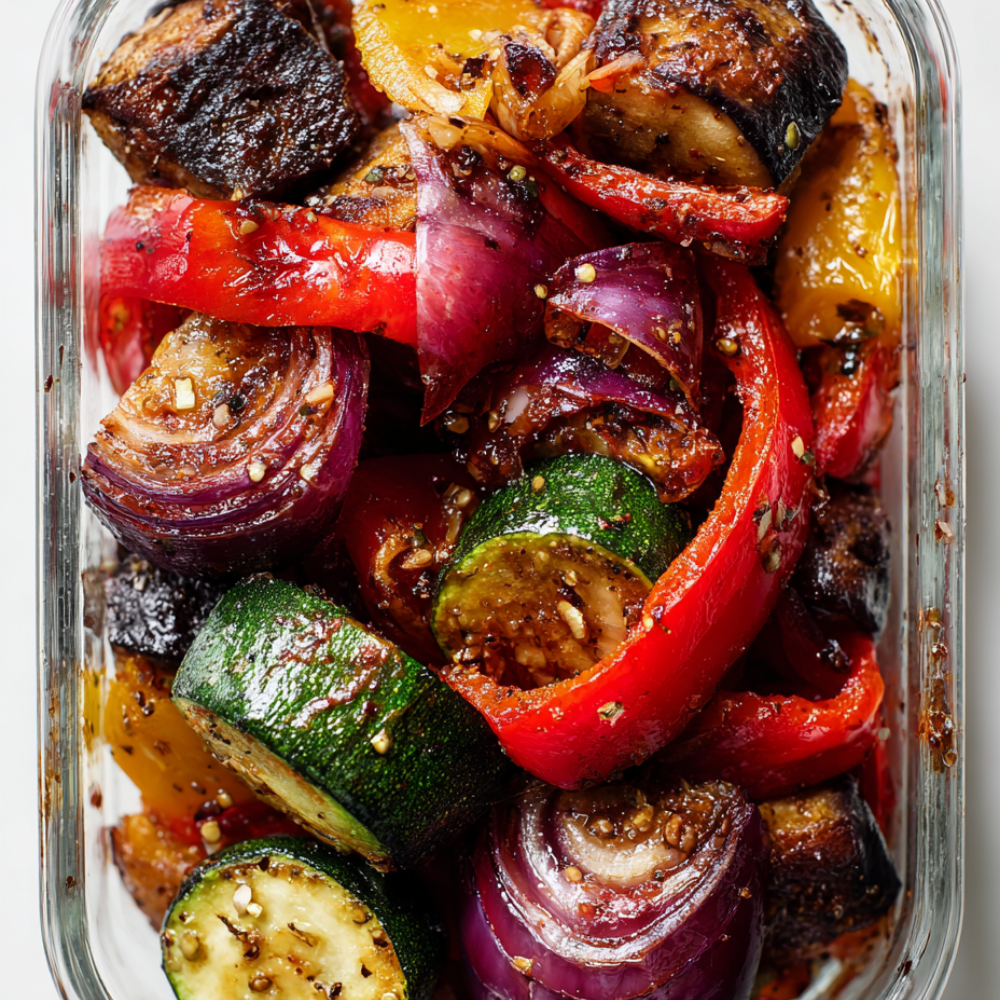
- Roasting at high heat is what concentrates the flavor. Vegetables are mostly water. At 425°F, the water evaporates, and the natural sugars caramelize at the edges. That depth is hard to get from steaming or sautéing.
- A single layer on the pan is what gives you browning instead of steaming. Crowded vegetables release steam and turn soft. Spread them out with space between them; they brown at the edges and stay firm in the middle.
- Cutting the vegetables into similar sizes helps them cook evenly. The butternut squash needs to be the same size as the zucchini, or the zucchini will be mush before the squash is done.
- Salting the eggplant first is what keeps it from turning greasy. Eggplant is a sponge. Twenty minutes of salt draws out the excess moisture so it browns instead of soaking up oil.
- Put the butternut squash in the pan first. It takes longer to cook than the other vegetables. Giving it a ten-minute head start means everything finishes at the same time.
- Smashing the garlic cloves instead of mincing them is what keeps them from burning. Whole cloves soften and caramelize in the oven. Minced garlic burns and turns bitter within fifteen minutes.
- Add the lemon zest and fresh oregano after roasting, not before. Zest loses its brightness in the oven, and fresh herbs turn dark. Added at the end, they stay vivid and fragrant.
- A squeeze of lemon juice at the end is what makes the whole pan taste finished. Roasted vegetables are sweet and rich. One tablespoon of acid wakes up the entire tray.
- Roasted vegetables hold their texture in the refrigerator for five days. Unlike steamed or sautéed vegetables, which turn soft after a day or two, roasted vegetables stay firm and even improve as they sit.
- They reheat in ninety seconds in the microwave or ten minutes in a toaster oven. Either way, they come back tasting like they just came out of the oven.
- The prep is genuinely a component, not a full meal. Four grams of protein per serving. It is what makes the rest of the week easier, and it earns its place in the refrigerator by doing that job.
Fall Roasted Vegetable Medley
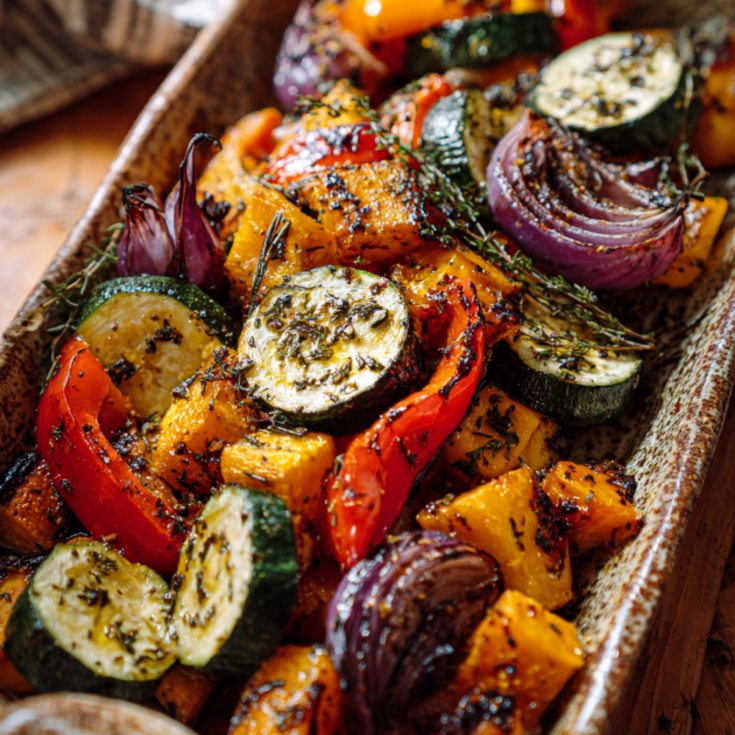
A colorful sheet pan of eggplant, zucchini, bell peppers, red onion, and butternut squash, roasted at high heat with olive oil, oregano, and garlic, then finished with fresh lemon zest, lemon juice, and oregano. Portioned into five meal prep containers.
Ingredients
- 1 small eggplant (about 12 oz), cut into 1-inch cubes
- 2 medium zucchini, cut into ½-inch half-moons
- 2 bell peppers (1 red, 1 yellow), cut into 1-inch pieces
- 1 large red onion, cut into 1-inch wedges
- 3 cups butternut squash, peeled and cut into ¾-inch cubes
- 4 tbsp olive oil, divided
- 1½ tsp kosher salt, divided
- 1 tsp black pepper
- 2 tsp dried oregano
- ½ tsp red pepper flakes
- 6 cloves garlic, smashed and peeled
- Zest of 1 lemon
- 1 tbsp fresh lemon juice
- 2 tbsp fresh oregano or flat-leaf parsley, chopped
- Lemon wedges, for serving
Instructions
- Salt the eggplant. Cut the eggplant into 1-inch cubes and spread them on a sheet pan lined with paper towels. Sprinkle ½ tsp of kosher salt over the top and let it sit for 20 minutes. Pat dry with paper towels. This step keeps the eggplant from soaking up oil and turning greasy.
- Preheat and prep the pan. Preheat the oven to 425°F. Line two large rimmed sheet pans with parchment paper.
- Start the squash first. Toss the butternut squash with 1 tbsp olive oil and ¼ tsp kosher salt on one sheet pan. Spread it in a single layer and roast for 10 minutes while you prep the rest of the vegetables.
- Season the remaining vegetables. In a large bowl, toss the salted eggplant, zucchini, bell peppers, and red onion with the remaining 3 tbsp olive oil, ¾ tsp kosher salt, black pepper, dried oregano, and red pepper flakes. Add the smashed garlic cloves and toss again.
- Add to the pans. Pull the squash pan out of the oven and push the squash aside. Spread the remaining vegetables across both pans in a single layer, leaving space between pieces. Use two pans — crowding steams the vegetables, and they turn soft.
- Roast. Roast for 25 to 30 minutes, rotating the pans once halfway through, until the vegetables are tender and browned at the edges. The eggplant should be soft and deeply golden, the zucchini should have crisp edges, and the peppers should be blistered.
- Finish with lemon and herbs. Transfer the roasted vegetables to a large bowl. Add the lemon zest, lemon juice, and fresh oregano or parsley. Toss gently to combine.
- Cool completely before storing. Spread the vegetables back onto the sheet pans and let them cool at room temperature for 20 minutes. Do not lid them while warm — trapped steam softens the edges and creates water in the container.
- Portion into containers. Divide the cooled vegetables between five glass meal prep containers, about 1½ cups each. Lid and refrigerate up to 5 days.
- Reheat and serve. Microwave for 90 seconds, or reheat in a toaster oven at 350°F for 8 to 10 minutes for crisper edges. Serve as a side, over grains, folded into pasta, or on toast with ricotta.
Notes
Protein per Serving: 4 g.
Nutrition Note: Protein is naturally low in vegetables — about 4g per serving from the eggplant, zucchini, peppers, and squash combined. This is a meal prep component, not a full meal. Pair it with a protein and a grain for a complete plate. About 190 calories per serving including the olive oil.
How to Turn This Into a Complete Mediterranean Meal Prep Bowl
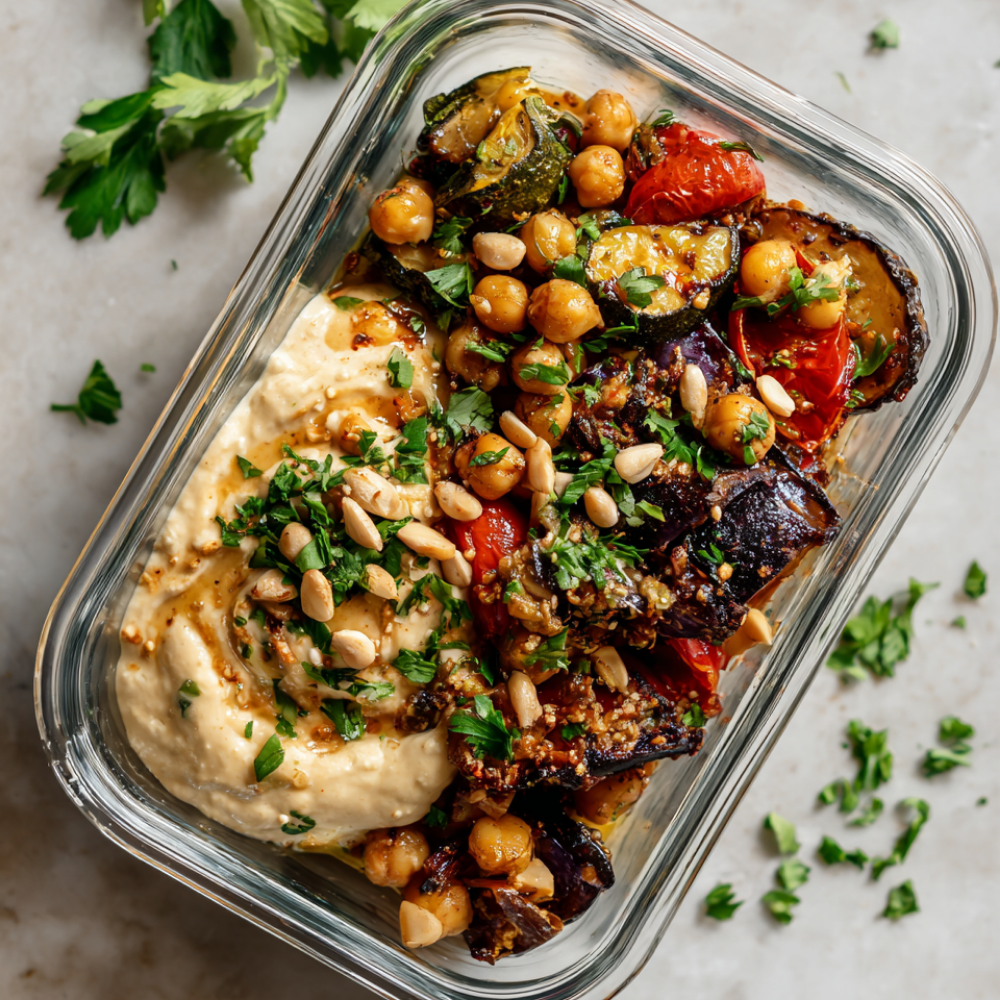
The roasted vegetables are the component. This is how you build them into a full lunch box that packs real protein and eats like a proper meal—no meat required.
The Mediterranean Bowl. One container, about five minutes to assemble, and thirty-two grams of protein. It is one of the most satisfying vegetarian meal preps you can make, and it works entirely off the roasted vegetables you already have in the refrigerator.
What goes in one box:
- 1½ cups fall roasted vegetables (from this recipe)
- 1½ cups cooked chickpeas, drained, rinsed, and patted dry
- 2 tbsp hummus
- 1 tbsp tahini, thinned with 1 tsp lemon juice and 1 tsp water
- 1 tbsp toasted pine nuts
- 1 tbsp fresh flat-leaf parsley, chopped
- ¼ cup crumbled feta, optional but recommended
- Lemon wedge
How to build it:
- Add the roasted vegetables to one side of the container.
- Add the chickpeas to the other side. If you want them warm, toss them in a skillet with a drizzle of olive oil and a pinch of smoked paprika for 3 minutes before adding them.
- Spoon the hummus into a small corner of the container, or into a small separate cup if you want to keep it clean.
- Drizzle the tahini over the chickpeas and vegetables. The tahini should be thin enough to pour — whisk it with lemon juice and water until it loosens.
- Scatter the pine nuts and parsley over the top. Add the feta if you are using it.
- Pack the lemon wedge on the side.
Protein math: About 32g per bowl from the chickpeas (≈22g), hummus (≈2g), tahini (≈3g), pine nuts (≈2g), and roasted vegetables (≈4g). Adding feta brings it to about 36g. About 620 calories per container.
The full meal prep setup: Make a batch of roasted vegetables and a batch of chickpeas on Sunday. Assemble four or five Mediterranean bowls in glass containers. Keep the hummus and tahini in small separate cups so the vegetables stay crisp. The bowls keep for 4 days in the refrigerator, and you can pack everything except the pine nuts and parsley the night before.
Other proteins that work in this format:
- Roasted salmon — 25g protein per 4 oz fillet
- Grilled chicken thigh — 22g protein per 4 oz
- Soft-boiled eggs — 6g protein each, two per bowl
- Marinated tofu — 18g protein per 6 oz, baked at 425°F for 25 minutes
- Halloumi — 12g protein per 3 oz, pan-seared until golden
Tips for the Best Roasted Vegetables
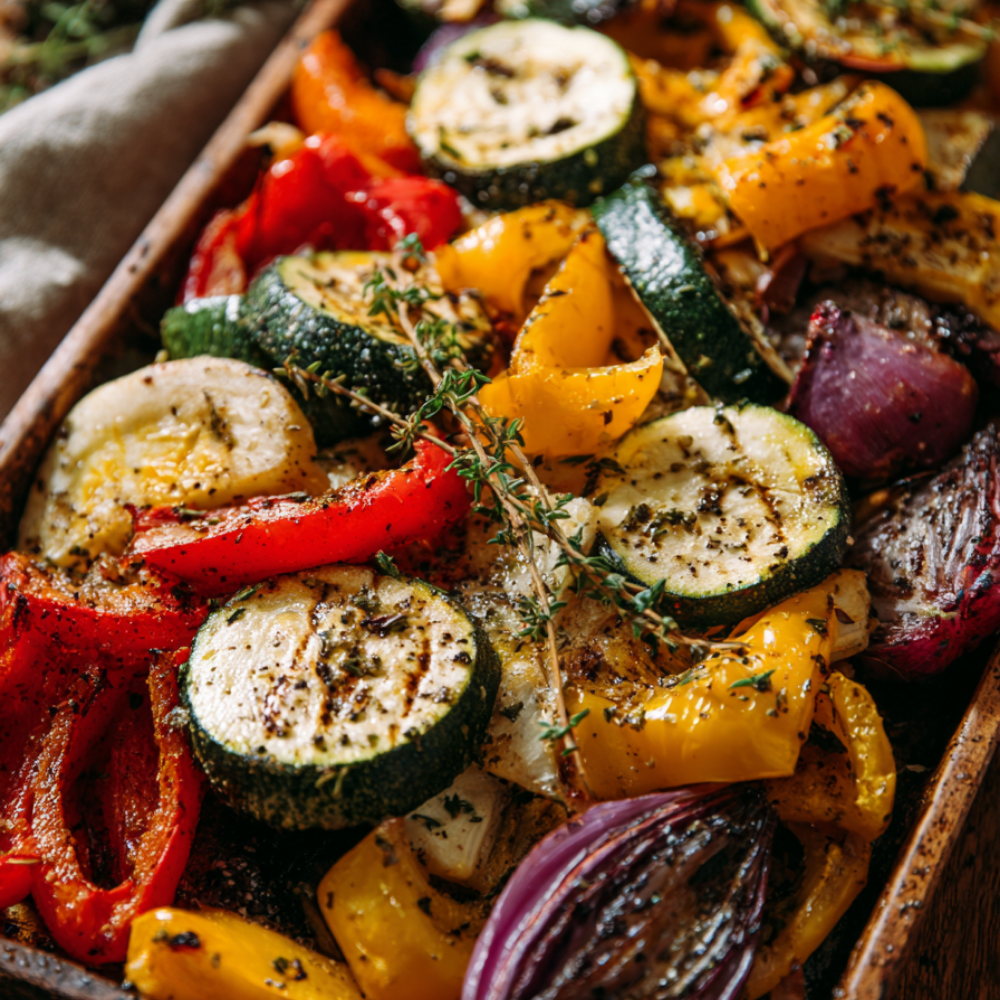
- Cut everything the same size. Cut the squash and eggplant the same size as the zucchini, or they will not cook at the same rate.
- Salt the eggplant first. Twenty minutes draws out moisture so it browns instead of soaking up oil.
- Give the butternut squash a 10-minute head start. It takes longer than the other vegetables.
- Use two sheet pans. Crowding steams the vegetables, and they turn soft. Spread them out with space between them; they caramelize at the edges.
- Smash the garlic; do not mince it. Whole cloves soften and sweeten in the oven. Minced garlic burns.
- Finish with lemon zest and juice after roasting. Zest loses its brightness in the oven, and fresh herbs turn dark.
- Cool completely before you lid the containers. Warm vegetables steam inside the container and turn soft by day two.
- Reheat in the microwave for 90 seconds, or in a toaster oven for 8 to 10 minutes. The toaster oven brings back the crisp edges.
Troubleshooting
- The vegetables turned out mushy. They were crowded on the pan or roasted too long. Use two pans and pull them at 25 minutes if the edges are browned.
- The eggplant turned greasy. It was not salted first, or too much oil went into the bowl. Salt it for 20 minutes and pat it dry before roasting.
- The vegetables stuck to the pan. The parchment paper was missing, or the pan was not large enough. Always line with parchment and use two pans.
- The garlic burned. It was minced instead of smashed, or the pan was on the top rack. Smash whole cloves and roast on the middle rack.
- The vegetables are bland. Not enough salt or acid. Add ¼ tsp more salt and a squeeze of lemon at the end.
- The lemon flavor disappeared. You added the zest and juice before roasting. Add them after the pans come out of the oven.
- The vegetables are soggy after reheating. They were covered while warm, or stored in one deep container instead of spread out. Cool fully and portion into shallow containers.
- The butternut squash is undercooked. It was cut too large, or it did not get a head start. Cut into ¾-inch cubes and roast it 10 minutes before the rest.
Easy Variations
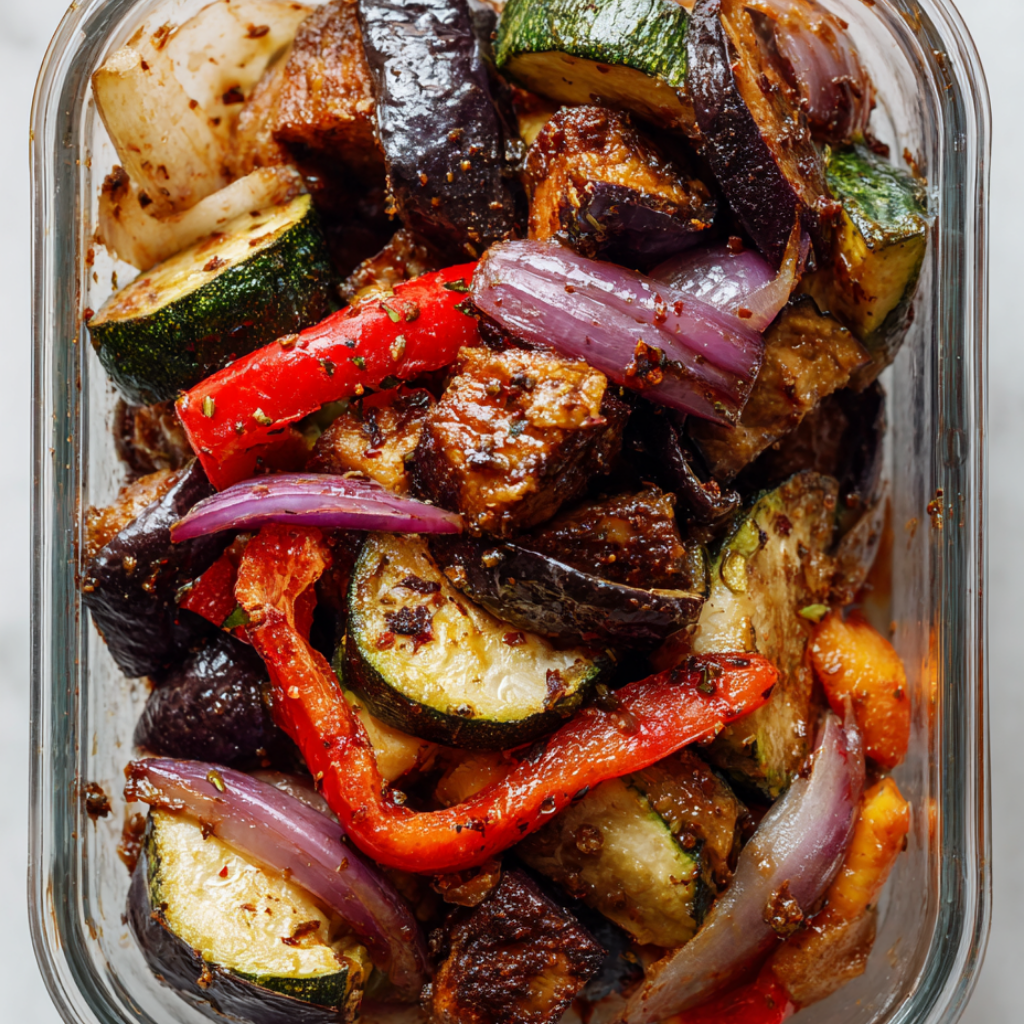
- Mediterranean Roasted Vegetables. Increase the dried oregano to 1 tbsp, add 1 tsp of dried thyme, and finish with crumbled feta and Kalamata olives.
- Fall Root Vegetable Medley. Substitute the zucchini and eggplant for 2 cups of diced carrots, 2 cups of diced parsnips, and 2 cups of diced sweet potatoes. Roast 40 minutes total.
- Balsamic Roasted Vegetables. Whisk 2 tbsp of balsamic vinegar into the olive oil before tossing. The vinegar caramelizes in the oven and turns the vegetables glossy and sweet.
- Spicy Harissa Roasted Vegetables. Add 1 tbsp of harissa paste to the olive oil. Finish with a squeeze of lemon and a dollop of Greek yogurt.
- Sheet Pan Vegetables and Chickpeas. Add 2 cups drained, dried chickpeas to the pan for extra protein. The chickpeas crisp at the edges and add about 5g of protein per serving.
Storage and Food Safety
Refrigerator: Store in an airtight glass container for up to 5 days. Roasted vegetables hold their texture better than any other cooked vegetable. Keep them in a shallow container instead of a deep one so moisture doesn’t pool at the bottom.
Freezer: Roasted vegetables freeze for up to 3 months, though the texture softens on thawing. Thaw overnight in the refrigerator and reheat in a 375°F oven for 10 minutes to bring back some crispness. Best used after freezing in soups, pasta, or grain bowls.
Make Ahead: This is the entire point of the recipe. Roast on Sunday, portion into five containers, and eat through Friday. They taste better on day three than day one as the lemon and oregano settle in.
Food Safety: Cool cooked vegetables within 2 hours and refrigerate promptly. Do not leave them at room temperature for more than 2 hours. Reheat leftovers to 165°F, though roasted vegetables are excellent cold or at room temperature as a salad component.
Frequently Asked Questions
How long do roasted vegetables last in the refrigerator? Up to 5 days in an airtight container. They taste better on day three than day one.
What is the best temperature for roasting vegetables? 425°F for a mix of soft and firm vegetables. Higher heat browns without steaming. Lower heat takes longer and produces softer results.
Can I roast all these vegetables together? Yes, as long as you cut them into similar sizes. The butternut squash needs a 10-minute head start.
Why do my roasted vegetables turn out soggy? They were crowded on the pan, or they were covered while warm. Use two pans and cool completely before storing.
Can I prep the vegetables ahead of time? Yes. Cut the vegetables up to 3 days ahead and refrigerate them in a sealed container. Do not roast them until the day you plan to store them.
Can I freeze roasted vegetables? Yes, up to 3 months. The texture softens on thawing, so they are best used in soups, pasta, or grain bowls rather than eaten on their own.
How do I reheat them without turning them to mush? Microwave 90 seconds, or reheat in a toaster oven at 350°F for 8 to 10 minutes. The toaster oven brings back the crisp edges.
Can I add protein? Yes. Add 2 cups of drained and dried chickpeas to the pan before roasting, or serve the vegetables alongside grilled chicken, sausage, or a fried egg. See the Mediterranean Bowl section above for a full high-protein meal prep build.
What goes with roasted vegetables? Grains (rice, quinoa, farro), pasta, frittata, toast with ricotta, a simple green salad, or any protein.
Can I use frozen vegetables? Not recommended. Frozen vegetables release too much water and steam instead of roasting.
What is the best oil for roasting vegetables? Olive oil or avocado oil. Both have a high smoke point and good flavor. Do not use butter — it burns at 425°F.
Can I use this as a Thanksgiving side dish? Yes. Double the recipe, roast on two sheet pans, and serve at room temperature. It holds beautifully for 2 hours on a buffet table.
More Meal Prep Recipes You’ll Love
- Loaded Baked Potato Meal Prep — 45g protein, four work lunches.
- Meatball Meal Prep — 40g protein, five lunches in 45 minutes.
- Freezer Lasagna — 28g protein, makes two pans, freezes for three months.
Conclusion
The single most useful thing you can prep on a Sunday is a sheet pan of vegetables. It takes forty minutes, it costs about eight dollars, and it makes every meal for the next five days easier.
Fall roasted vegetables are the version to make right now. Eggplant, zucchini, bell peppers, red onion, and butternut squash, roasted at high heat until the edges caramelize and the middles go sweet. Olive oil, oregano, garlic, and fresh lemon zest finish the pan and make it taste like more than the sum of its parts.
Portion into five containers for a week of components that work in grain bowls, on pasta, on toast, alongside any protein, and as a Thanksgiving side.
Or build Mediterranean meal prep bowls — chickpeas, hummus, tahini, pine nuts, and roasted vegetables in one container — and you have a full vegetarian lunch with 32 grams of protein.
Roast a pan this Sunday. Roast a second pan for Thanksgiving.
This prep earns its place in the refrigerator every week of the fall.