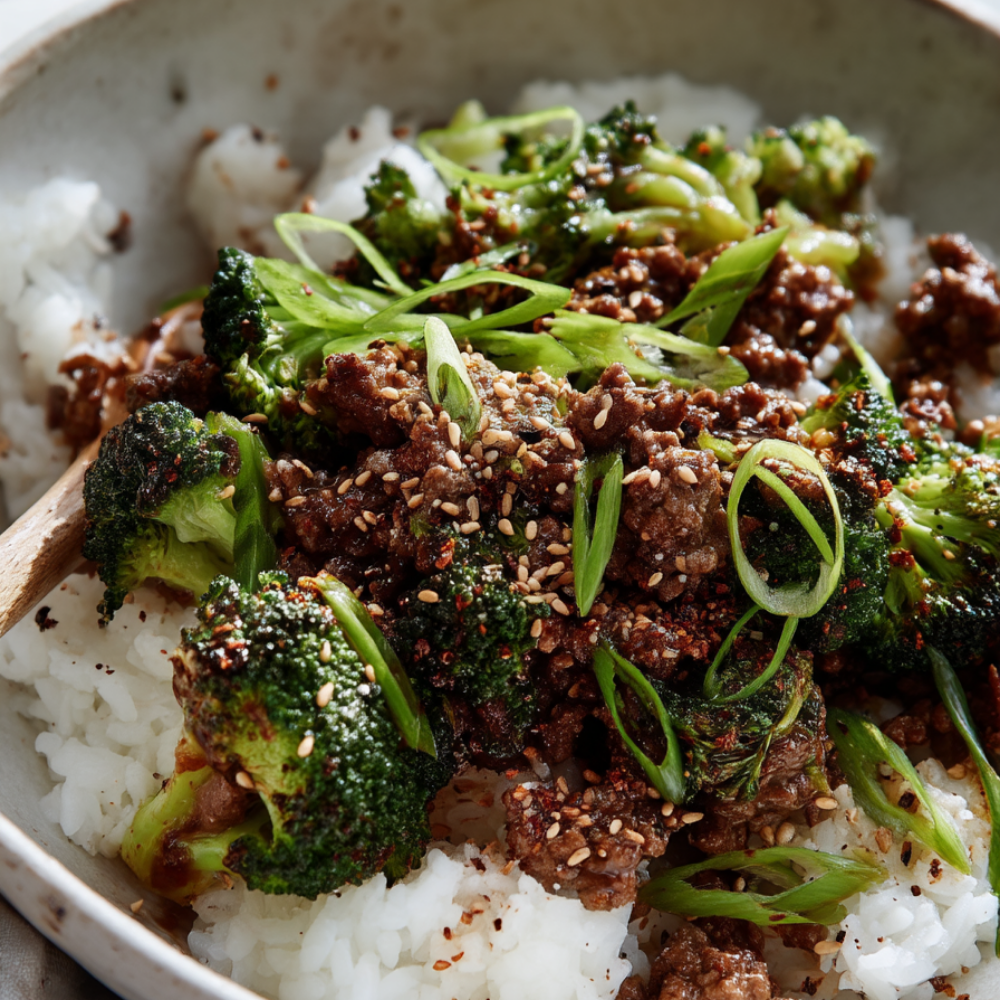

When an Asian food craving hits, you don’t always have to reach for takeout or head to a restaurant. You can recreate your favorite Asian beef bowls at home, often with just a few pantry staples.
Ground beef makes it possible for the whole family. No flank steak, no short ribs, no expensive cuts that run the grocery bill through the roof. Just ground beef, a few pantry sauces, and a bag of coleslaw or broccoli. Everyone at the table stays happy — from the teenagers to the grown-ups — and the grocery total stays where it should be.
There is one more thing. These are all high-protein meals that keep growing kids growing.
Every bowl in this lineup lands between twenty-seven and thirty-six grams of protein per serving, and that protein comes from real food — beef, eggs, edamame, cabbage.
It is the kind of dinner that fills a teenager up and still works for the adult who wants something lighter.
And one note on the rice before we get into the recipes. In Japanese, Korean, and Chinese cooking, the rice under an Asian bowl is short-grain, not long-grain.
Short-grain rice — white or brown — is stickier and clumps gently, which is exactly what you want under a saucy bowl.
It holds together and soaks up the sauce instead of sitting under it in separate grains. Long-grain rice like jasmine or basmati is the wrong texture here.
Six bowls, one formula. Korean bulgogi with soy, sesame, and pear. Spicy gochujang with a sweet-heat glaze. Beef and broccoli with a glossy ginger-soy sauce.
Teriyaki with a sticky caramelized finish. Mongolian beef with a deep, savory scallion sauce. And an egg roll in a bowl that skips the fried wrapper entirely.
Every bowl is on the table in under half an hour.
Why Asian Beef Bowls Work
- Ground beef cooks in seven minutes. No slicing, no trimming, no waiting for a steak to come to room temperature. Brown it, sauce it, and it is done.
- The sauce adds the personality. Same beef, same rice, same technique. Soy, sesame, gochujang, mirin, and ginger are what make each bowl taste like a different cuisine.
- Ground beef absorbs sauce better than sliced steak. Crumbles have more surface area. Every piece soaks up the glaze instead of sitting under it.
- A fried egg on top is the cheapest protein upgrade you can make. Six grams for about twenty cents, and the yolk becomes a second sauce once it breaks.
- The bowls are genuinely kid-friendly. Mild bulgogi and teriyaki taste sweet and savory, not spicy. You can serve the gochujang bowl with the sauce on the side for anyone who wants less heat.
- They reheat better than almost any stir-fry. Sliced steak toughens when reheated. Ground beef stays tender. The bowls hold four days in the refrigerator.
- The protein math is honest. Ground beef, rice, eggs, and vegetables deliver between twenty-seven and thirty-six grams per bowl, depending on the recipe.
The Base Every Bowl Needs
One note before the rice.
In Japanese, Korean, and Chinese cooking, the rice under an Asian beef bowl is short-grain, not long-grain.
Short-grain rice is stickier and clumps gently, which is exactly what you want under a saucy bowl — it holds together and soaks up the sauce instead of sitting under it in separate grains.
Long-grain rice like jasmine or basmati is the wrong texture here. It works in a pinch, but the bowl will not taste quite right.
- 1½ cups short-grain white rice (sushi rice, Calrose, or Koshihikari), rinsed
- 2 cups water
- ½ tsp kosher salt
Rinse the rice under cold water for 30 seconds, until the water runs mostly clear. Combine the rice, water, and salt in a medium saucepan. Bring to a boil, reduce to a low simmer, cover, and cook for 15 minutes.
Turn off the heat and let it sit covered for 10 minutes. Fluff with a fork or rice paddle.
For brown short-grain rice, use 2¼ cups water and cook 35 to 40 minutes. For cauliflower rice, sauté 4 cups riced cauliflower in 1 tbsp sesame oil for 5 minutes.
For the Mongolian noodles: Cook 12 oz of dry lo mein noodles 1 minute shy of the package directions. Reserve ½ cup of cooking water before draining. Toss the noodles directly in the beef skillet; they don’t need any other prep.
Standard Toppings
- 4 large eggs, fried or soft-boiled
- ½ cup sliced scallions
- 2 tbsp toasted sesame seeds
- 1 cup shelled edamame, steamed
- Pickled vegetables or kimchi
- Sriracha or chili crisp, for serving
Recipe 1: Korean Ground Beef Bulgogi Bowl
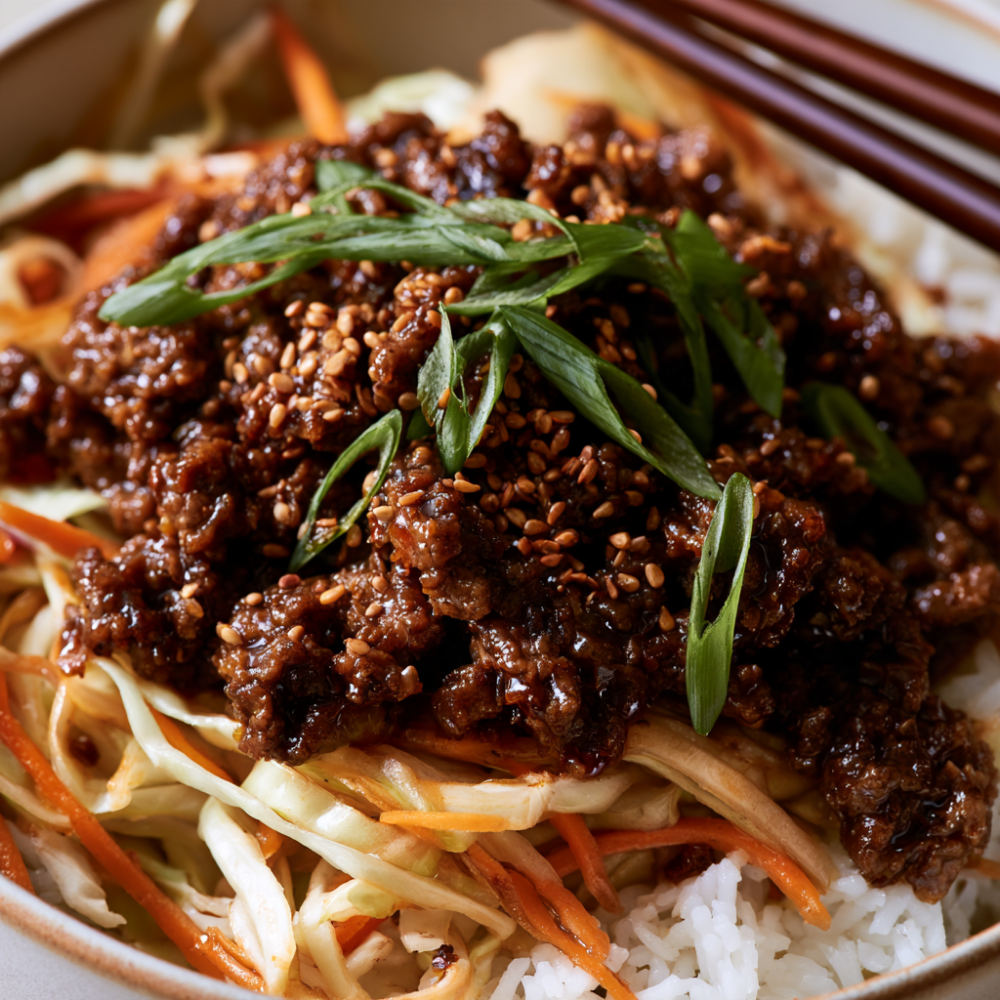
This bowl introduced many people to Korean cooking at home, and it is still the most satisfying in the lineup.
Sweet, savory, garlicky ground beef simmered in a bulgogi sauce made with soy, brown sugar, rice vinegar, fresh ginger, grated Asian pear, and a gentle gochujang kick.
Shredded cabbage and carrots get tossed into the same skillet, which means the vegetables soak up the sauce and turn tender-crisp in three minutes flat.
Piled over short-grain rice with a fried egg, toasted sesame seeds, and green onions, it eats like a restaurant bowl and costs a fraction of what you would pay for one.
It is genuinely one of the best weeknight dinners in this entire collection.
Protein: About 32–36g per bowl
Time: 30 minutes
Why it stands out: The Asian pear is what makes it taste like real bulgogi. If you cannot find one, a Fuji apple works the same way.
Get the full recipe → Ground Beef Bulgogi Bowls
Recipe 2: Korean Gochujang Beef Bowl
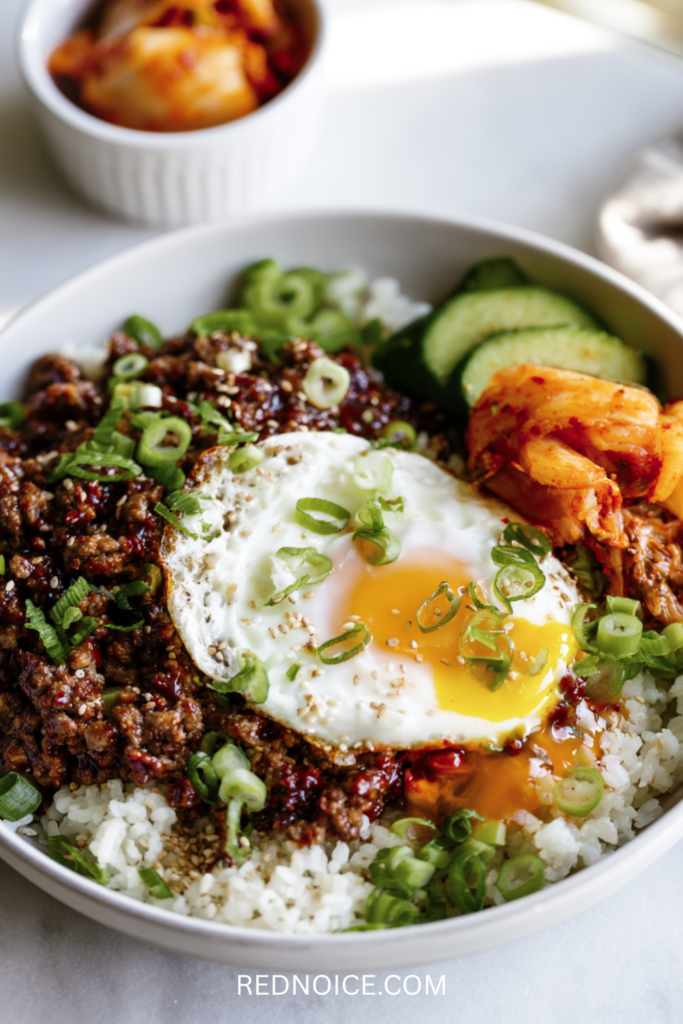
This is the fastest bowl in the lineup — five ingredients, fifteen minutes, and a bowl that tastes like it took an hour.
Ground beef gets crisped hard in a hot skillet, then coated in a glossy gochujang glaze made from Korean red pepper paste, soy sauce, honey, and garlic.
The glaze clings to every crumble, turns deep red, and delivers that sweet-heat combination that makes gochujang so addictive.
Serve it over short-grain rice, and that is the whole dinner.
It is the bowl to make on the nights when you have almost nothing in the kitchen and need something on the table in fifteen minutes.
Thirty-two grams of protein per serving, and it also freezes beautifully.
Protein: 32g per bowl
Time: 15 minutes
Why it stands out: Five ingredients. That is the entire recipe. The gochujang does all the work.
Make it spicier: The base recipe is medium-spicy. To push the heat higher without breaking the sauce, do one of three things.
Add 1 extra tablespoon of gochujang alongside the existing 3 tablespoons — the sauce will thicken slightly and deepen in color.
Add 1 teaspoon of gochugaru (Korean red pepper flakes) to the glaze for a drier, more direct heat.
Or finish the bowl with a drizzle of chili crisp or a few drops of toasted sesame chili oil right before serving, which adds surface heat without changing the sauce itself.
Serve extra gochujang on the side for anyone who wants to build their own heat level at the table.
Get the full recipe → Korean Gochujang Beef Bowl
Recipe 3: Ground Beef and Broccoli Bowl
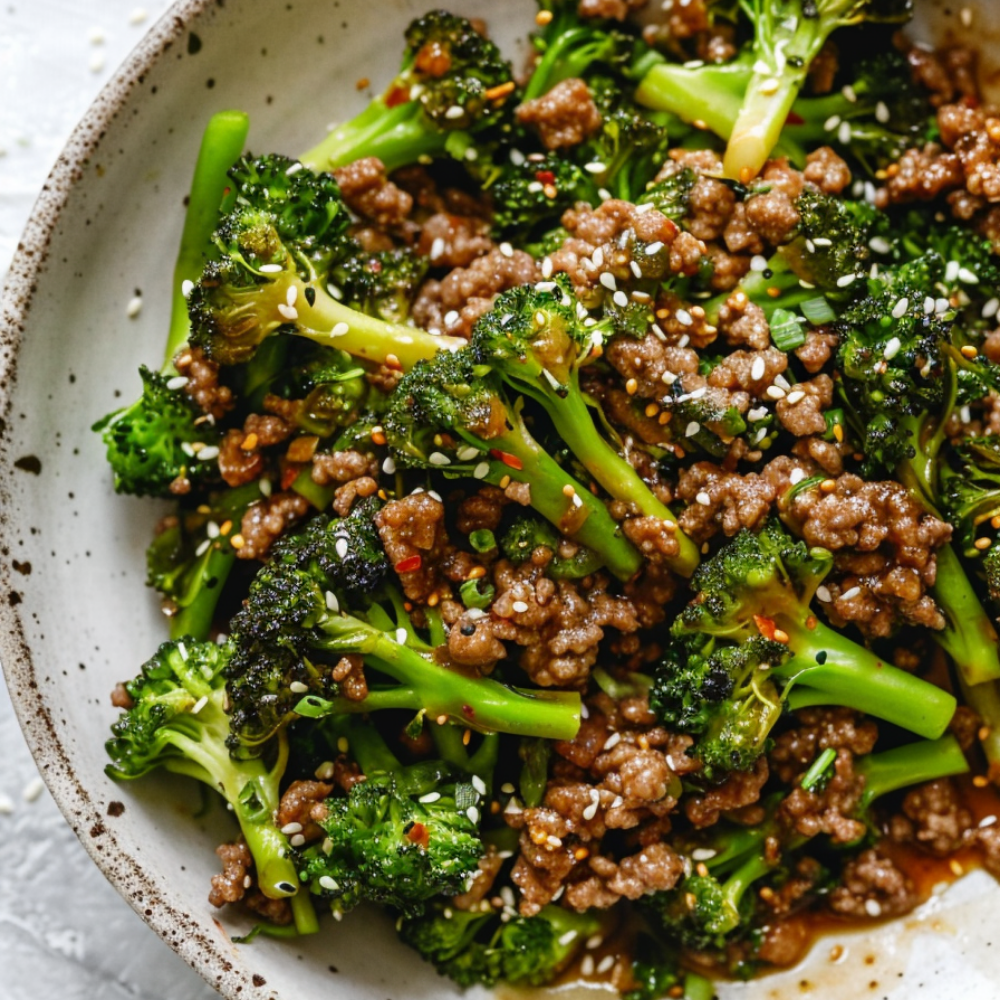
This bowl tastes like the classic Chinese-American takeout dish, made with ground beef instead of sliced steak in a fraction of the time.
The beef sears hard in a hot skillet for a deep golden-brown crust, then gets tossed with tender-crisp broccoli florets in a glossy sauce made from soy, oyster sauce, brown sugar, rice vinegar, and a touch of cornstarch.
The sauce thickens into a shiny glaze that coats every piece of beef and every broccoli floret.
Piled over short-grain rice with toasted sesame seeds and green onions, it is genuinely restaurant-quality and takes 24 minutes start to finish.
Protein: About 33g per bowl
Time: 24 minutes
Why it stands out: Letting the beef sear undisturbed for three full minutes is what builds the crust. Do not stir it. That crust is the entire difference between this and a gray, steamed version.
Get the full recipe → Ground Beef and Broccoli Stir-Fry
Recipe 4: Teriyaki Ground Beef Stir Fry Bowl
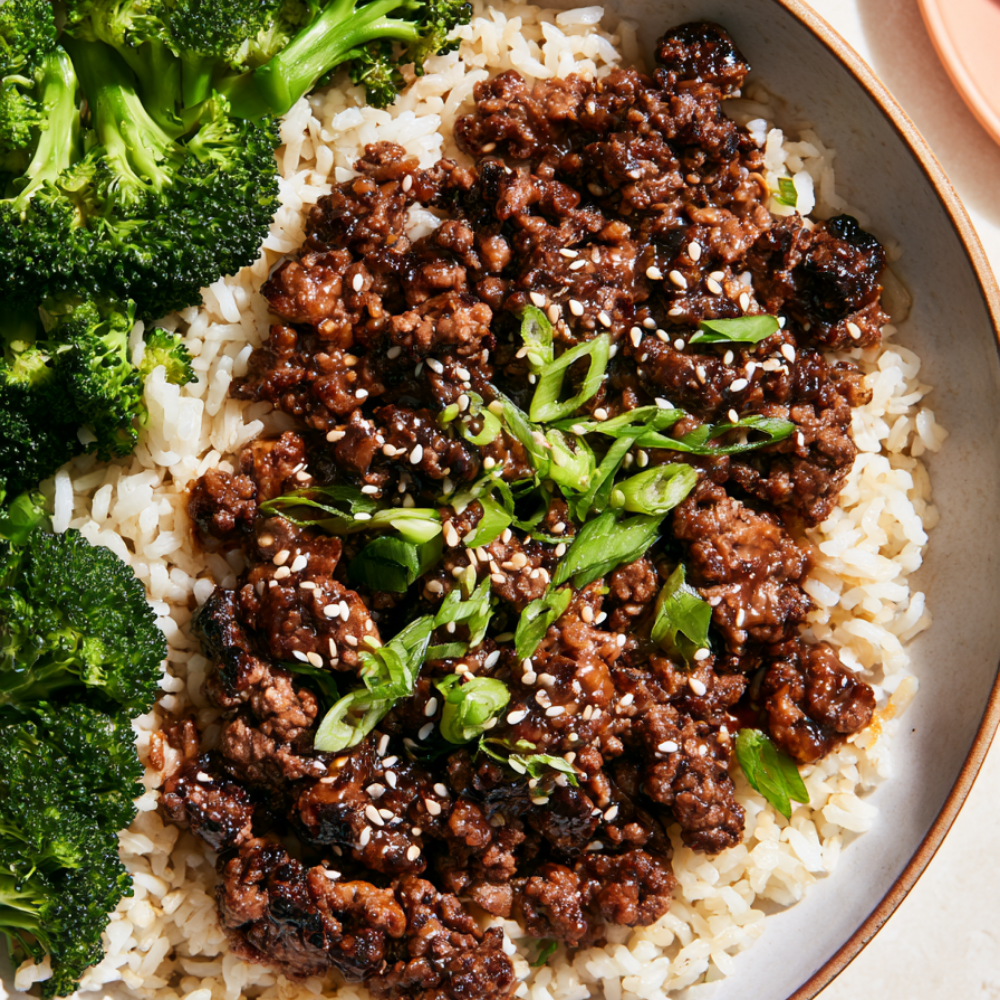
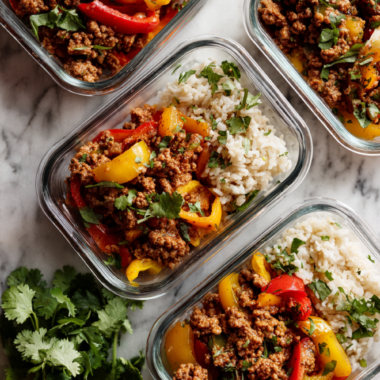
Sweet, sticky teriyaki ground beef with bell peppers and carrots over short-grain rice. The sauce caramelizes as it reduces, coating every crumble.
Servings: 4
Prep Time: 10 minutes
Cook Time: 15 minutes
Total Time: 25 minutes
Protein per Serving: 33g
Nutrition Note: Protein calculated from 1¼ lbs 85% lean ground beef (≈105g protein), 4 cups cooked short-grain rice (≈16g), bell peppers and carrots (≈4g), and 2 tbsp soy sauce (≈2g), divided across 4 bowls — about 33g per bowl. About 560 calories. Add edamame for 3 more grams per bowl.
Ingredients
- 1¼ lbs ground beef (85% lean)
- 1 small yellow onion, finely diced
- 4 cloves garlic, minced
- 1 tbsp grated fresh ginger
- 2 bell peppers (1 red, 1 yellow), sliced thin
- 2 medium carrots, peeled and cut into thin matchsticks
- ⅓ cup low-sodium soy sauce or tamari
- 3 tbsp mirin
- 2 tbsp brown sugar
- 1 tbsp rice vinegar
- 1 tsp cornstarch
- 2 tbsp cold water
- 1 tsp toasted sesame oil
- 4 cups cooked short-grain rice
- 2 tsp toasted sesame seeds
- 3 scallions, thinly sliced
Instructions
- Mix the sauce. Whisk the soy sauce, mirin, brown sugar, rice vinegar, and sesame oil. Whisk the cornstarch into the cold water in a separate small bowl.
- Stir-fry the vegetables. Heat a large skillet over medium-high heat with 1 tbsp of oil. Add the bell peppers and carrots and stir-fry for 3 minutes, until crisp-tender. Transfer to a plate.
- Brown the beef. Add the beef to the skillet and let it sit 3 minutes, then break it into crumbles and cook 4 minutes more.
- Add the aromatics. Add the onion and cook for 3 minutes. Add the garlic and ginger and cook for 30 seconds.
- Sauce and glaze. Pour the sauce over the beef and simmer for 2 minutes. Add the cornstarch slurry and stir for 1 minute, until the sauce turns glossy and thick.
- Combine. Return the vegetables to the skillet and toss to coat.
- Build the bowls. Add rice to each bowl, top with teriyaki beef and vegetables, and finish with sesame seeds and scallions.
Recipe 5: Mongolian Ground Beef Bowl
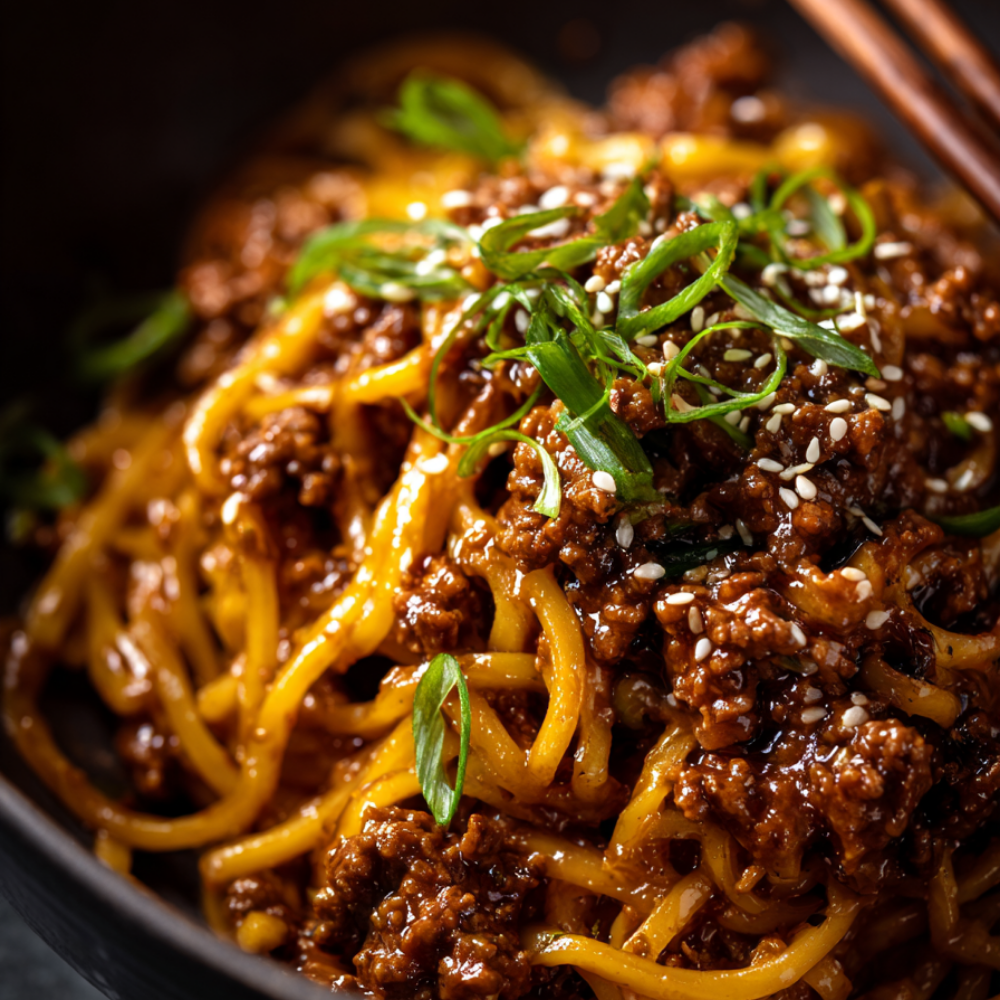
Ground beef in a deep, savory Mongolian sauce tossed with lo mein noodles until every strand is coated. Thick, glossy, and finished with green onions and sesame seeds.
Servings: 4
Prep Time: 10 minutes
Cook Time: 15 minutes
Total Time: 25 minutes
Protein per Serving: 34g
Nutrition Note: Protein calculated from 1¼ lbs 85% lean ground beef (≈105g protein), 12 oz dry lo mein noodles (≈24g protein), and 6 scallions (≈2g), divided across 4 bowls — about 34g per bowl. About 620 calories. Use 90% lean beef for a lighter bowl.
Ingredients
- 1¼ lbs ground beef (85% lean)
- 12 oz dry lo mein noodles (or ramen noodles, seasoning discarded)
- 1 small yellow onion, finely diced
- 5 cloves garlic, minced
- 1 tbsp grated fresh ginger
- ⅓ cup low-sodium soy sauce or tamari
- 3 tbsp brown sugar
- 2 tbsp rice vinegar
- 1 tbsp hoisin sauce
- 1 tsp cornstarch
- 2 tbsp cold water
- 1 tsp toasted sesame oil
- 6 scallions, cut into 2-inch pieces
- 2 tsp toasted sesame seeds
- 1 tsp red pepper flakes
- ½ cup reserved noodle cooking water
Instructions
- Cook the noodles. Bring a large pot of water to a boil and cook the lo mein noodles 1 minute shy of the package directions. Reserve ½ cup of the cooking water, then drain. Do not rinse. Set aside.
- Mix the sauce. Whisk the soy sauce, brown sugar, rice vinegar, hoisin, and sesame oil in a small bowl. Whisk the cornstarch into the cold water in a separate bowl.
- Brown the beef. Heat a large skillet over medium-high heat. Add the beef and let it sit undisturbed for 3 minutes, then break it into crumbles and cook 4 minutes more, until well browned.
- Add the aromatics. Add the onion and cook for 3 minutes, until softened. Add the garlic and ginger and cook for 30 seconds.
- Sauce and thicken. Pour the sauce over the beef and simmer for 2 minutes. Add the cornstarch slurry and stir constantly for 1 minute, until the sauce turns glossy and thick.
- Toss the noodles. Add the cooked noodles to the skillet along with ¼ cup of the reserved cooking water. Toss with tongs over medium heat for 1 to 2 minutes, until every strand is coated in the sauce. Add more cooking water 1 tbsp at a time if the sauce tightens too much.
- Finish and serve. Add the scallions in the last 30 seconds to keep them green. Serve in deep bowls, finished with sesame seeds and red pepper flakes. Chopsticks on the side.
Prefer steak instead of ground beef? The slow cooker version uses sliced flank steak and simmers for hours in the same sauce. Different dish, same flavor profile.
Get the slow cooker version → Crockpot Mongolian Beef
Recipe 6: High-Protein Egg Roll in a Bowl
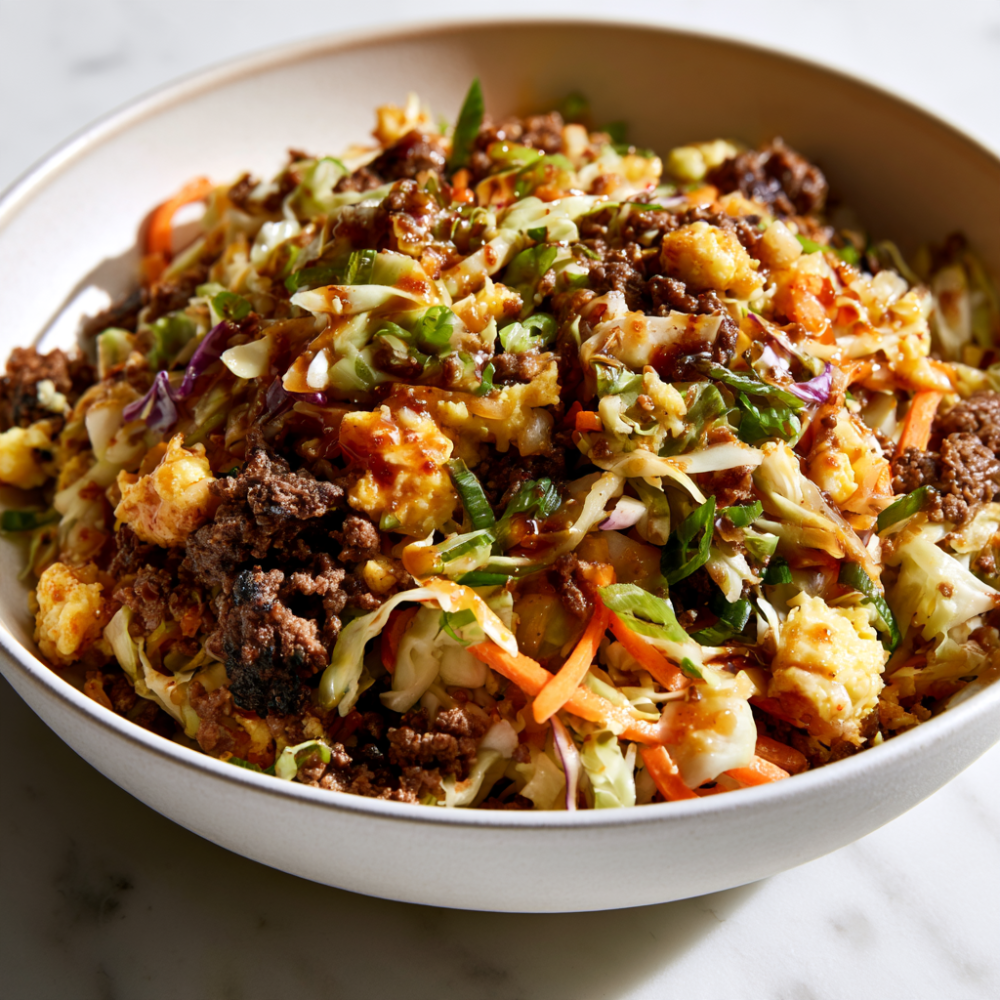
This bowl skips the fried wrapper entirely and keeps every bit of the flavor.
All the savory, gingery, garlicky filling of a classic egg roll — lean ground beef, shredded cabbage, grated ginger, garlic, scrambled eggs, and a sesame-soy sauce — piled into a bowl in seventeen minutes.
It has 27 grams of protein per serving, and it is one of the highest-protein bowls in the lineup once you add the four scrambled eggs and optional edamame.
A spicy mayo drizzle on top makes it taste like something you would order. Serve it over cauliflower rice, short-grain rice, or in lettuce cups for a lighter version.
Protein: About 27g per bowl, up to 31g with the optional edamame
Time: 17 minutes
Why it stands out: Fold in the scrambled eggs at the very end, off the heat. That is what keeps them soft instead of rubbery. Do not skip them — they are half the flavor of a real egg roll.
Get the full recipe → High-Protein Egg Roll in a Bowl
Tips for the Best Asian Beef Bowls
- Use short-grain rice, not jasmine or basmati. Japanese, Korean, and Chinese cooking all use short-grain rice in a saucy bowl. It sticks together gently and soaks up the sauce the way the dish is meant to be eaten.
- Use 85% lean ground beef, not 90% or higher. Leaner beef turns dry and crumbly. 85% has enough fat to stay juicy without making the bowl greasy.
- Brown the beef hard before breaking it up. Let it sit undisturbed for 3 minutes. That crust is where the flavor lives.
- Bloom the garlic and ginger in the fat for 30 seconds. Do not let them brown. Burnt garlic turns the whole sauce bitter.
- Mix the sauce before you turn on the heat. These bowls come together in the last five minutes. Everything should be ready.
- The cornstarch slurry makes the sauce glossy. Whisk it into cold water first. Added dry, it clumps.
- Fold the scrambled eggs into the egg roll bowl off the heat. Heat makes them rubbery. Off the heat, they stay soft.
- Reduce the sauce until it coats the back of a spoon. Runny sauce sinks to the bottom of the bowl. Thick sauce clings to the beef.
Troubleshooting
- The beef turned out greasy. The beef was fattier than 85% lean, or you didn’t drain the fat. Use 85% and spoon off excess fat after browning.
- The sauce is too thin. It wasn’t reduced long enough, or you skipped the cornstarch. Simmer 2 more minutes, or add another ½ tsp cornstarch whisked into cold water.
- The sauce is too thick and clumpy. Too much cornstarch, or you added it dry. Whisk in 2 tbsp of warm broth until it loosens.
- The sauce tastes too sweet. Too much brown sugar or mirin relative to the soy and vinegar. Add 1 tsp rice vinegar and 1 tsp soy sauce.
- The rice is mushy. Too much water or too long on the heat. Use 1½ cups rice to 2 cups water for short-grain, and pull at 15 minutes.
- The cabbage turned to mush. It was cooked too long. The window is three to four minutes. Wilted but still with a bite.
- The scrambled eggs turned rubbery in the egg roll bowl. They were cooked too long or added back over direct heat. Pull them while they still look glossy and fold them in off the heat.
- The bowl is dry. Not enough sauce, or the rice absorbed it all. Double the sauce next time, or drizzle a little sesame oil over the rice before serving.
Easy Variations
- Korean Beef Quinoa Bowl. Swap the short-grain rice for cooked quinoa. Protein stays about the same, and the bowl becomes gluten-free if you use tamari.
- Thai Basil Beef Bowl. Use the gochujang recipe as a base, swap the gochujang for 2 tbsp of Thai red curry paste, and add 1 cup of Thai basil at the end.
- Asian Beef Bowl with Cauliflower Rice. Replace the short-grain rice with 4 cups of riced cauliflower sautéed in sesame oil for 5 minutes.
Storage and Food Safety
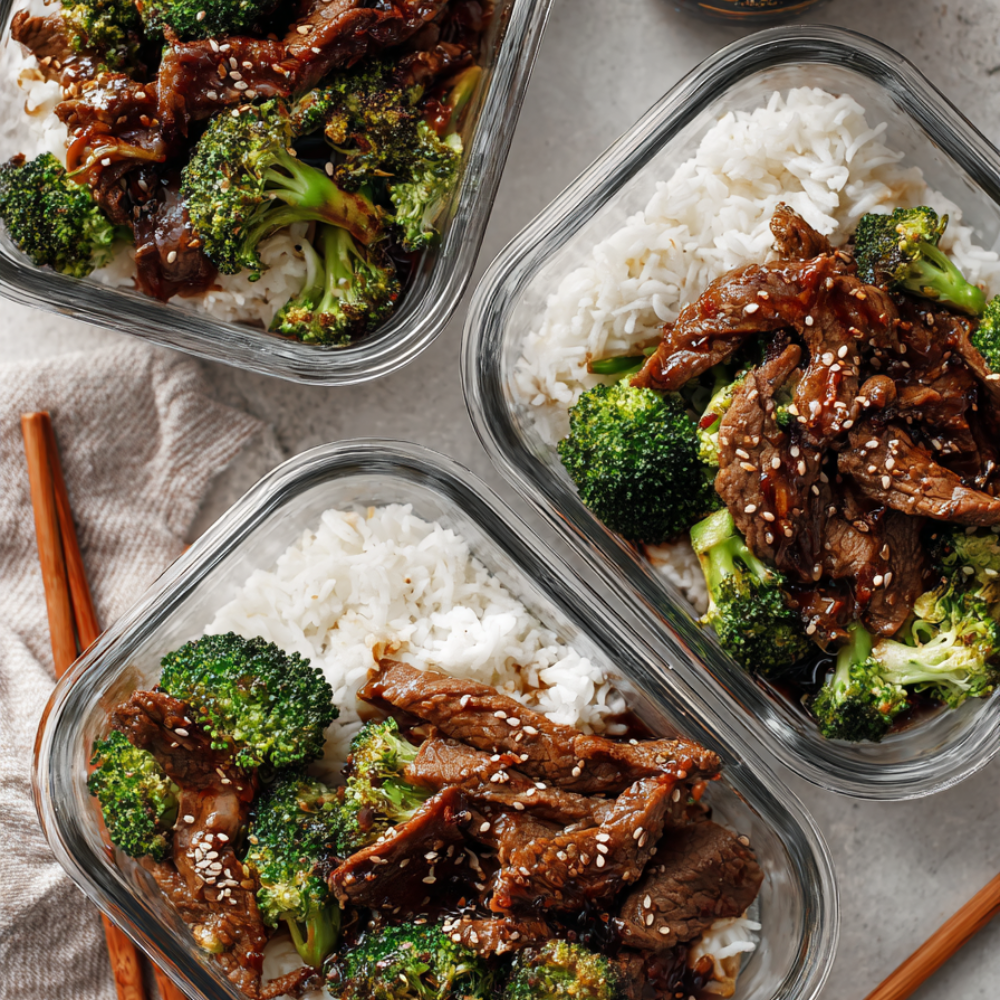
Refrigerator: Store the beef and rice in separate airtight containers for up to 4 days. Reheat the beef in a covered skillet over medium-low heat for 4 minutes, or in the microwave for 90 seconds. Add the fried egg fresh. Refrigerate rice within 1 hour of cooking.
Freezer: The cooked beef freezes for up to 3 months in a freezer bag or container. Thaw overnight in the refrigerator and reheat covered with a splash of broth. Rice freezes for 3 months, but the texture softens slightly.
Make Ahead: Brown the beef and make the sauce up to 3 days ahead. Cook the rice the day you plan to eat, or use the Rice Meal Prep guide for storage. Assemble the bowls fresh each day.
Food Safety: Ground beef must reach an internal temperature of 160°F. Cool leftovers within 2 hours and refrigerate promptly. Refrigerate cooked rice within 1 hour and consume within 4 days. Reheat leftovers to 165°F.
Frequently Asked Questions
How much protein is in each bowl? Between 27g and 36g per bowl, depending on the recipe. The bulgogi bowl is the highest at 32–36g, and the egg roll in a bowl is the lowest at 27g.
Can I use ground turkey instead of ground beef? Yes. Use 93% lean turkey and add 1 tbsp of olive oil when browning.
What kind of rice should I use? Short-grain rice — the kind sold as sushi rice, Calrose, or Koshihikari. Japanese, Korean, and Chinese cooking all use short-grain rice under a saucy bowl. Long-grain rice like jasmine or basmati works in a pinch, but the texture is wrong for these dishes.
What is gochujang and where do I find it? It is a Korean fermented chili paste. Look for it in the international aisle of most grocery stores or at an Asian market.
What is mirin? It is a sweet Japanese rice wine used in teriyaki sauce. If you do not have it, substitute 2 tbsp rice vinegar plus 1 tsp sugar.
Can I make these bowls gluten-free? Yes. Use tamari instead of soy sauce and verify your gochujang, hoisin, and oyster sauce are gluten-free.
Can I make these bowls keto? Yes. Skip the rice and use cauliflower rice or shredded cabbage. Use a sugar-free sweetener in place of brown sugar.
Are these bowls spicy? Only the gochujang bowl. Bulgogi, beef and broccoli, teriyaki, Mongolian, and egg roll in a bowl are mild and sweet-savory. Serve extra gochujang on the side for anyone who wants heat.
Can I meal prep these? Yes. Store the beef and rice separately and assemble the day you eat. The beef holds 4 days, and the rice holds 4 days.
Do I need a wok? No. A large skillet works. The key is high heat and not crowding the pan.
What do I serve with the bowls? They are complete meals on their own. Steamed edamame, kimchi, or a simple cucumber salad work as sides.
Can I double the recipes? Yes. Brown the beef in two batches so the pan does not crowd, and double the sauce.
More Ground Beef Recipes You’ll Love
- Ground Beef Burrito Bowl — 41g protein, Chipotle-style.
- Mac and Cheese with Ground Beef (Creamy Cheeseburger Pasta Skillet)
- Cornbread Casserole with Ground Beef — 30g protein, honey butter crust.
Conclusion
An Asian beef bowl solves a Tuesday.
It takes twenty-five minutes, it uses ground beef instead of an expensive cut, and it tastes like something you ordered from a restaurant.
The sauce does the work, the rice does the filling, and the fried egg on top makes it feel like a real meal.
Six bowls, one formula. Korean bulgogi with soy, sesame, and pear. Spicy gochujang with a sweet-heat glaze. Beef and broccoli with a glossy ginger-soy sauce. Teriyaki with a sticky caramelized finish. Mongolian beef with a deep, savory scallion sauce. And an egg roll in a bowl that skips the fried wrapper entirely.
Every bowl lands between twenty-seven and thirty-six grams of protein. Every one is on the table in under half an hour. And every one of them is a real dinner that everyone at the table will eat — from the teenager who never stops eating to the grown-up who wants something lighter.
Pick one for tonight. Pick a different one next week. This rotation makes Asian beef bowls a permanent weeknight answer.