Korean short ribs make dinner feel like an event. The sizzle when they hit the grill. The smell of soy, sesame, and garlic in the air.
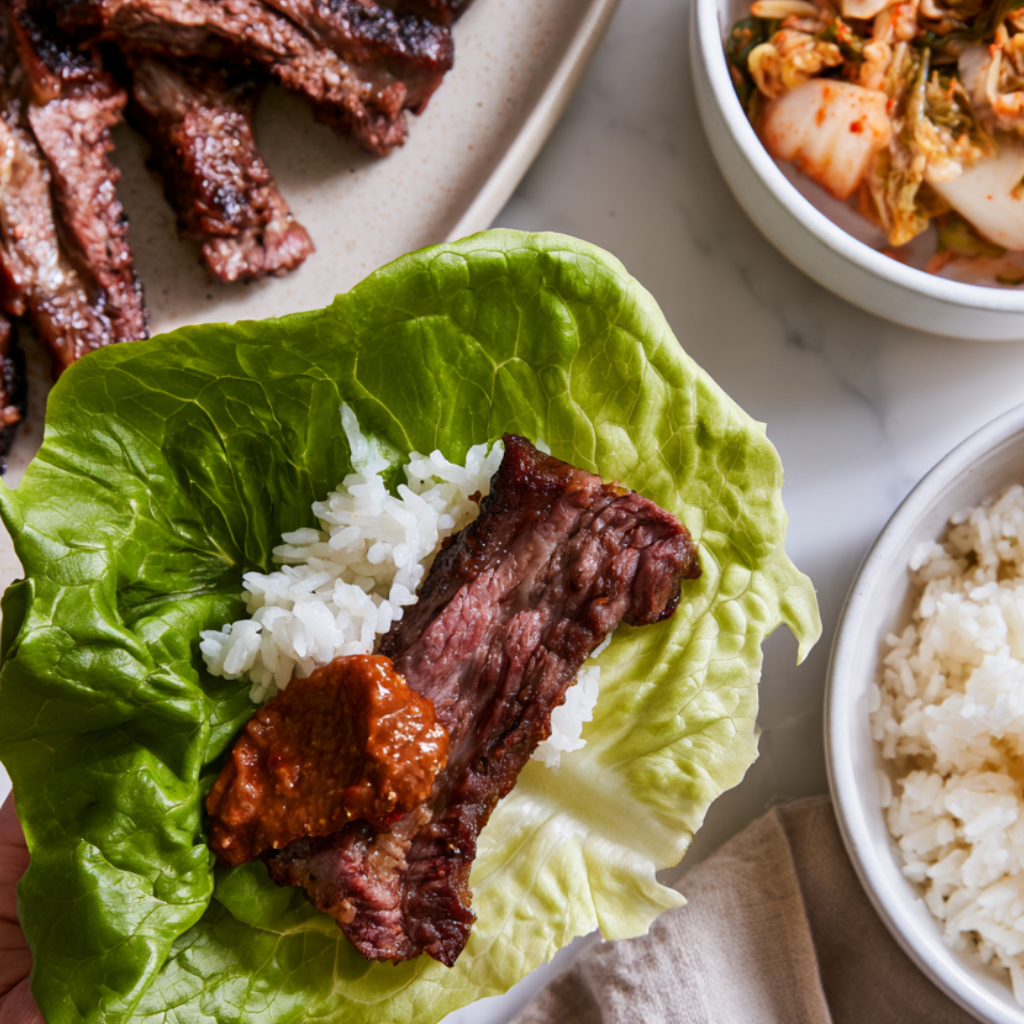
Everyone gathers around the table to wrap the caramelized beef in lettuce with rice and kimchi.
And here’s what surprises most people: making galbi at home is easier than it sounds.
The marinade comes together in a food processor in about 5 minutes. The ribs sit in it overnight. And then they cook in 2 to 3 minutes per side—so fast that dinner is on the table before you’ve set out the banchan.
What makes this version reliable is three small techniques that most recipes skip. First, rinsing the ribs to remove the bone dust left behind by the butcher’s band saw.
Second, straining the marinade so the fruit and onion pulp doesn’t char into bitter black spots.
Third, blotting the ribs dry before they hit the heat. The marinade is full of sugar, and wet ribs steam instead of sear—meaning they burn on the outside before they caramelize.
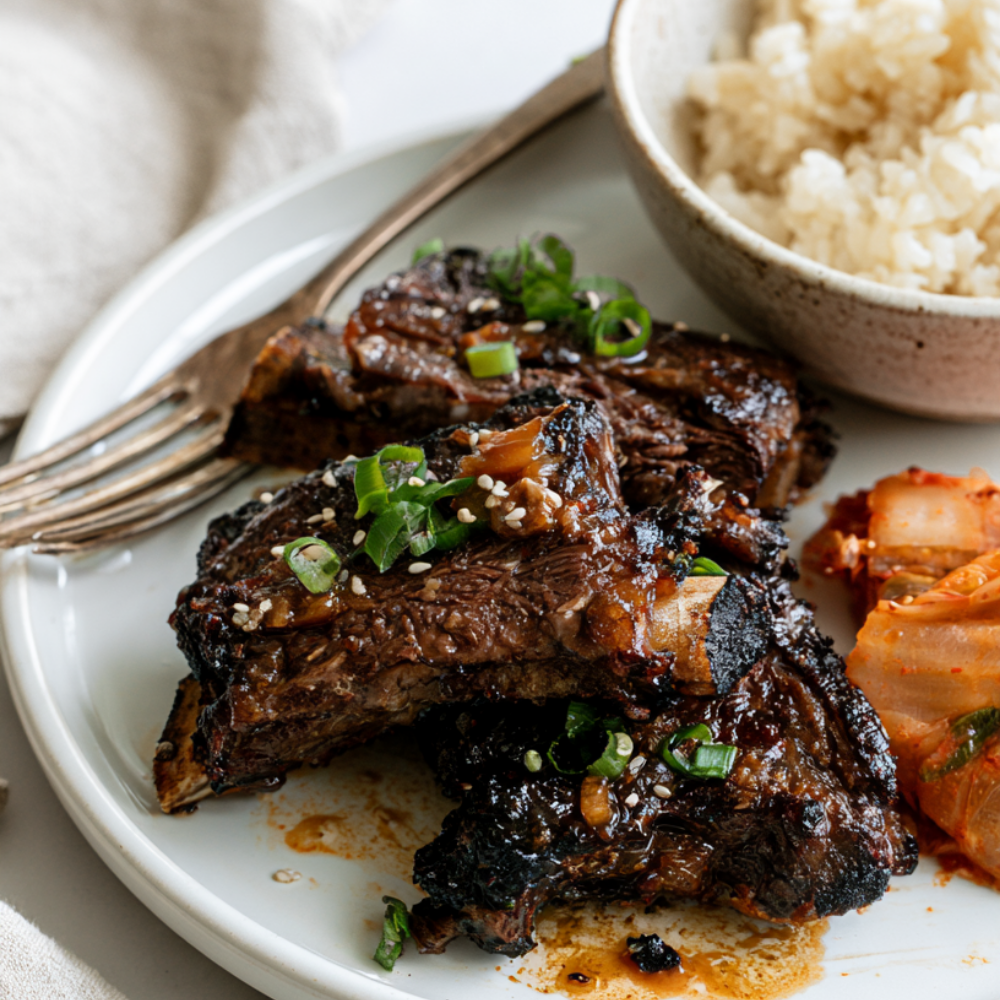
The result is tender, deeply flavored beef with those caramelized, slightly charred edges you get at a Korean BBQ restaurant. About 44 grams of protein per serving. And it works just as well in the oven or a grill pan as it does on an outdoor grill.
This galbi earns a permanent spot in your rotation.
Why This Recipe Works
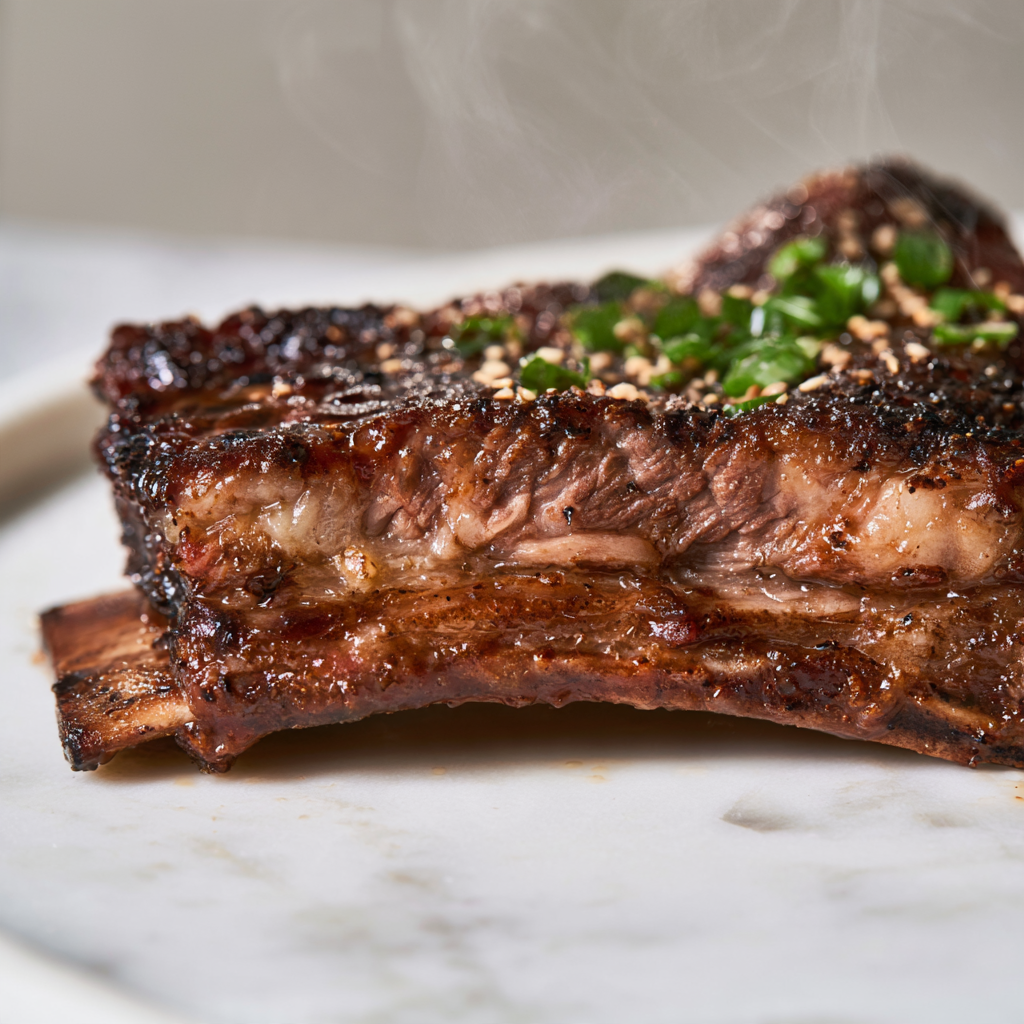
This isn’t a complicated dish, but a few small decisions make it work better than most Korean short rib recipes. Here’s what actually matters:
Rinse the Ribs to Remove Bone Dust. Flanken-style short ribs are cut across the bone with a commercial band saw. That leaves fine bone dust, tiny fragments, and dried marrow on the meat’s surface. If you skip rinsing, you’ll feel grit between your teeth with every bite. Soak the ribs in cold water for 15 minutes, then rinse each one individually under running water to wash it all away.
Strain the Marinade. Blending Asian pear, onion, garlic, and ginger creates a thick fruit-and-vegetable pulp. Even after blotting, that pulp gets trapped in the meat’s crevices and chars into bitter black spots over high heat. Straining the marinade through a mesh sieve leaves you with a clean liquid that penetrates the meat just as deeply while letting the surface caramelize evenly.
Asian Pear Is the Secret Ingredient. Asian pear does two jobs in this marinade. First, its natural sweetness balances the soy sauce and sesame. Second, it contains an enzyme called calpain that breaks down the beef’s connective tissue. That’s why the ribs come out tender after just a few minutes of cooking. If you can’t find an Asian pear, a ripe Bosc or Anjou pear works as a substitute—slightly less enzyme activity, but still effective.
Thin-Cut Ribs Are Essential. Korean short ribs—also called flanken ribs or LA-style ribs—are cut across the bone into ¼ to ⅜-inch thick slices. That thin cut is what makes them cook in minutes. If your ribs are closer to ½-inch thick, pound them gently with the pointy side of a meat mallet before marinating. If you can only find boneless short ribs, cut them into ¼-inch thick slices against the grain.
Mirin Adds Depth. Traditional galbi marinades often use rice wine or mirin instead of plain rice vinegar. Mirin is sweeter and milder, adding a rounder, more complex flavor that pairs beautifully with the soy and sesame. A splash of Shaoxing wine works too if you have it on hand.
Toasted Sesame Seeds in the Marinade. Most recipes sprinkle sesame seeds on top at the end. Adding a tablespoon of toasted sesame seeds directly into the blended marinade deepens the nutty, savory flavor from the inside out. You still garnish with more at the end.
Overnight Marinade for Real Flavor. The marinade needs at least 8 hours, and overnight is better. The soy sauce, sugar, and sesame oil take time to penetrate the meat. Move the ribs around once or twice in the marinade so they coat evenly. Beyond 18 hours, the pear enzymes start to break down the meat too much, and the texture turns mushy.
Blot the Ribs Dry Before Cooking. This step keeps the sugar in the marinade from burning before the meat caramelizes. Blotting with paper towels removes the surface marinade so the meat sears and caramelizes instead of charring.
Cook in Small Batches. Crowding the pan or grill drops the temperature and steams the ribs instead of searing them. Cook 3 to 4 ribs at a time, leaving space between each. This is the single most important step for getting that caramelized, slightly charred crust.
Sear Over High Heat for 2 to 3 Minutes Per Side. That’s it. Korean short ribs are thin, and they cook fast. Any longer and they’ll overcook. Pull them when they’re nicely browned with a slight char at the edges.
Wipe the Pan Between Batches. On the stovetop, the marinade caramelizes and burns, leaving a bitter residue. Wipe the pan out with a paper towel between batches so the next batch starts fresh.
Rest for 3 to 5 Minutes Before Serving. Like any steak, short ribs benefit from a short rest. This lets the juices redistribute so they stay in the meat instead of running out onto the plate.
Serve With Lettuce Wraps, Rice, and Kimchi. The classic Korean BBQ experience is wrapping the beef in a lettuce leaf with a spoonful of rice, a piece of kimchi, and a dab of ssamjang. It’s messy, it’s interactive, and it’s the best way to eat galbi.
This is the kind of meal people ask for again and again. It’s sweet, savory, and undeniably delicious.
Korean Short Ribs Recipe
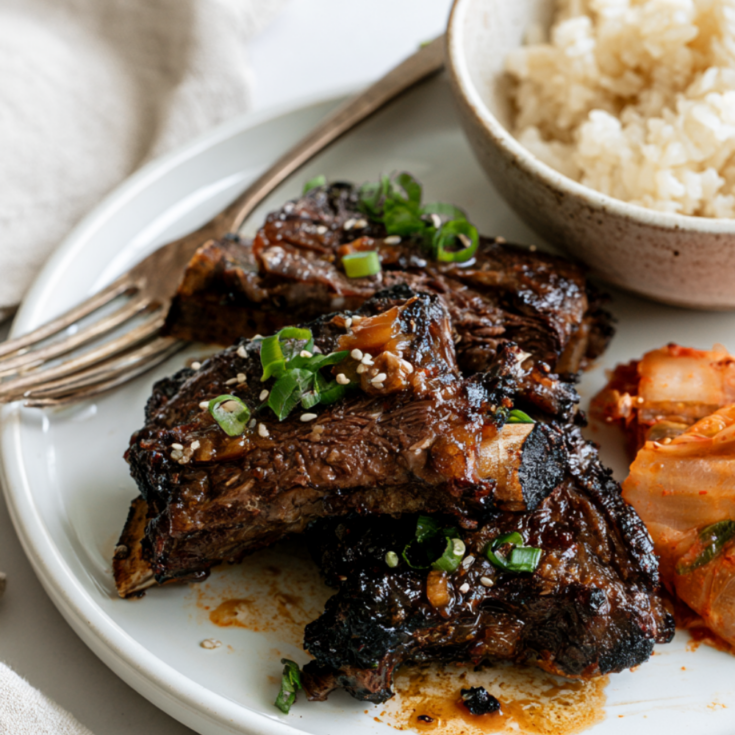
Tender, caramelized Korean short ribs marinated overnight in a sweet-savory pear, soy, and sesame marinade. Ready in 15 minutes of cooking and packed with 44 g of protein per serving.
Ingredients
For the Ribs
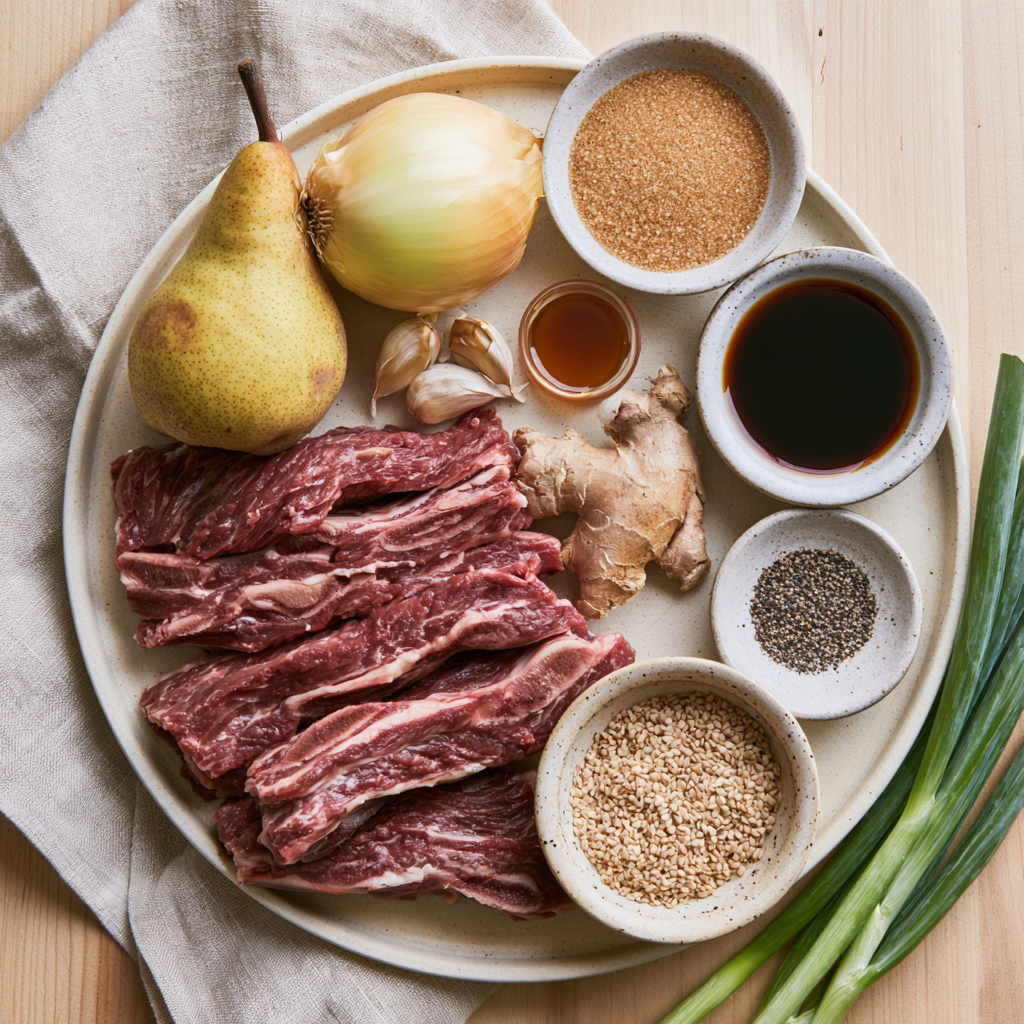
- 3 lbs thin-sliced bone-in beef short ribs (¼ to ⅜-inch thick), also called flanken, LA-style, or galbi ribs
- Cold water, for soaking
For the Galbi Marinade
- 1 Asian pear, peeled, cored, and cut into 1-inch pieces (or 1 ripe Bosc or Anjou pear)
- 1 small yellow onion, cut into 1-inch pieces
- 5 garlic cloves
- 1 (1½-inch) piece fresh ginger, peeled and roughly chopped
- ½ cup low-sodium soy sauce or tamari
- ¼ cup packed dark brown sugar
- 2 tbsp honey or malt syrup
- 2 tbsp mirin or rice wine
- 2 tbsp toasted sesame oil
- 1 tbsp toasted sesame seeds
- 1 tsp freshly ground black pepper
For Cooking and Serving
- 1 tbsp avocado oil or canola oil (for the grill pan or skillet)
- 3 green onions, thinly sliced
- Toasted sesame seeds, for garnish
- Butter lettuce leaves
- Steamed short-grain rice
- Kimchi
- Ssamjang (Korean dipping sauce), optional
Instructions
- Rinse the ribs. Submerge the short ribs in a large bowl of cold water and let them soak for 15 minutes. Drain, then rinse each rib individually under cold running water to wash off any bone dust or fragments left by the butcher's band saw. Pat completely dry with paper towels. If your ribs are thicker than ⅜ inch, use the pointy side of a meat mallet to gently pound them to an even thickness.
- Make and strain the marinade. Add the pear, onion, garlic, ginger, soy sauce, brown sugar, honey, mirin, sesame oil, sesame seeds, and black pepper to a food processor bowl. Pulse until completely smooth, scraping down the sides as needed. Strain the marinade through a fine-mesh sieve into a bowl, pressing the pulp with the back of a spoon to extract all the flavored liquid. Discard the solid pulp. This is what keeps the ribs from charring into bitter spots.
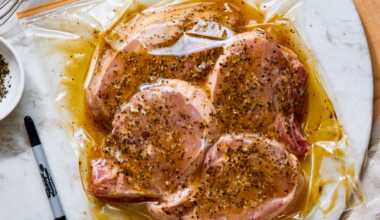
- Marinate the ribs. Place the dried ribs in a large bowl or a resealable zip-top bag. Pour the strained marinade over the ribs and massage it into the meat so every piece is evenly coated. Cover the bowl or seal the bag, then refrigerate for at least 8 hours or overnight. Move the ribs around once or twice during the marinade so they coat evenly. Do not marinate beyond 18 hours—the pear enzymes will start to break down the meat.
- Blot and temper the ribs. About 30 minutes before cooking, remove the ribs from the marinade and lay them on a wire rack set over a sheet pan. Blot them thoroughly with paper towels to remove excess moisture. Discard the used marinade. Let the ribs sit at room temperature for 20 to 30 minutes while you preheat the cooking surface.
- Cook the ribs. Choose your method:
- Outdoor grill: Heat the grill to high (about 450°F). Cook the ribs in batches, 2 to 3 minutes per side, until caramelized and slightly charred at the edges.
- Grill pan or cast-iron skillet: Heat the oil over high heat until it shimmers. Sear the ribs in single-layer batches, 2 to 3 minutes per side. Wipe out the pan with a paper towel between batches so burnt marinade doesn't transfer to the next batch.
- Oven broiler: Line a sheet pan with foil and set a wire rack on top. Arrange the ribs in a single layer on the rack. Broil on the top rack for 3 to 4 minutes per side, until caramelized and charred at the edges. Watch closely—the sugar in the marinade can go from caramelized to burnt in under a minute.
- Rest and serve. Transfer the ribs to a platter and let them rest for 3 to 5 minutes. Scatter the sliced green onions and toasted sesame seeds over the top. Serve with lettuce leaves, steamed rice, kimchi, and ssamjang for wrapping.
Notes
Protein per Serving: About 44gNutrition Note: Protein calculated from 3 lbs thin-sliced bone-in beef short ribs. Bone-in short ribs yield about 60 to 65% meat by weight, so 3 lbs yields about 28 to 30 oz of cooked meat. Divided across 6 servings, that's about 4.5 to 5 oz of cooked beef per serving, at about 8 to 9 grams of protein per ounce — about 44g per serving. About 520 calories per serving. Using boneless short ribs yields slightly more meat and closer to 48g per serving.
Tips for the Best Korean Short Ribs
Rinse the ribs to remove bone dust. Flanken-style short ribs are cut across the bone with a band saw. That leaves fine bone dust and fragments on the surface. Soaking and rinsing removes it so you don’t get grit between your teeth.
Strain the marinade. Blending pear and onion creates a thick pulp that chars into bitter black spots over high heat. Straining through a mesh sieve leaves you with a clean liquid that flavors the meat evenly and lets the surface caramelize cleanly.
Ask for ¼ to ⅜-inch thick ribs. These are sold as “Korean-style,” “flanken ribs,” “LA-style beef short ribs,” or “galbi ribs.” If your butcher doesn’t have them, ask for thin-cut bone-in short ribs and specify the thickness.
Use an Asian pear if you can find one. Asian pear, also called Korean pear or Nashi pear, has the highest enzyme activity and the cleanest sweetness. Bosc or Anjou pears work as a substitute. Avoid very soft, overripe pears—they’ll make the marinade watery.
Add sesame seeds and mirin to the marinade. Toasted sesame seeds deepen the nutty flavor from the inside out, and mirin adds a rounder, more complex sweetness than plain rice vinegar.
Blot the ribs dry before they hit the heat. The marinade is sugar-heavy, and sugar burns fast. Blotting removes the surface marinade so the meat sears and caramelizes instead of charring.
Cook in small batches. Crowding the pan or grill drops the temperature and steams the ribs. Cook 3 to 4 at a time, leaving space between them.
Wipe the pan between batches on the stovetop. If the marinade caramelizes and burns in the pan, it leaves a bitter residue. Wipe out the pan with a paper towel between batches to keep each round fresh.
Watch the broiler closely. The broiler is the fastest way to cook these indoors, but the sugar in the marinade can go from caramelized to burnt in under a minute. Stay near the oven and check every 60 seconds.
Rest for 3 to 5 minutes before serving. A short rest lets the juices redistribute so they stay in the meat.
Serve with lettuce wraps. The classic Korean BBQ experience is wrapping the beef in a lettuce leaf with a spoonful of rice, a piece of kimchi, and a dab of ssamjang. It’s the best way to eat galbi.
Easy Variations
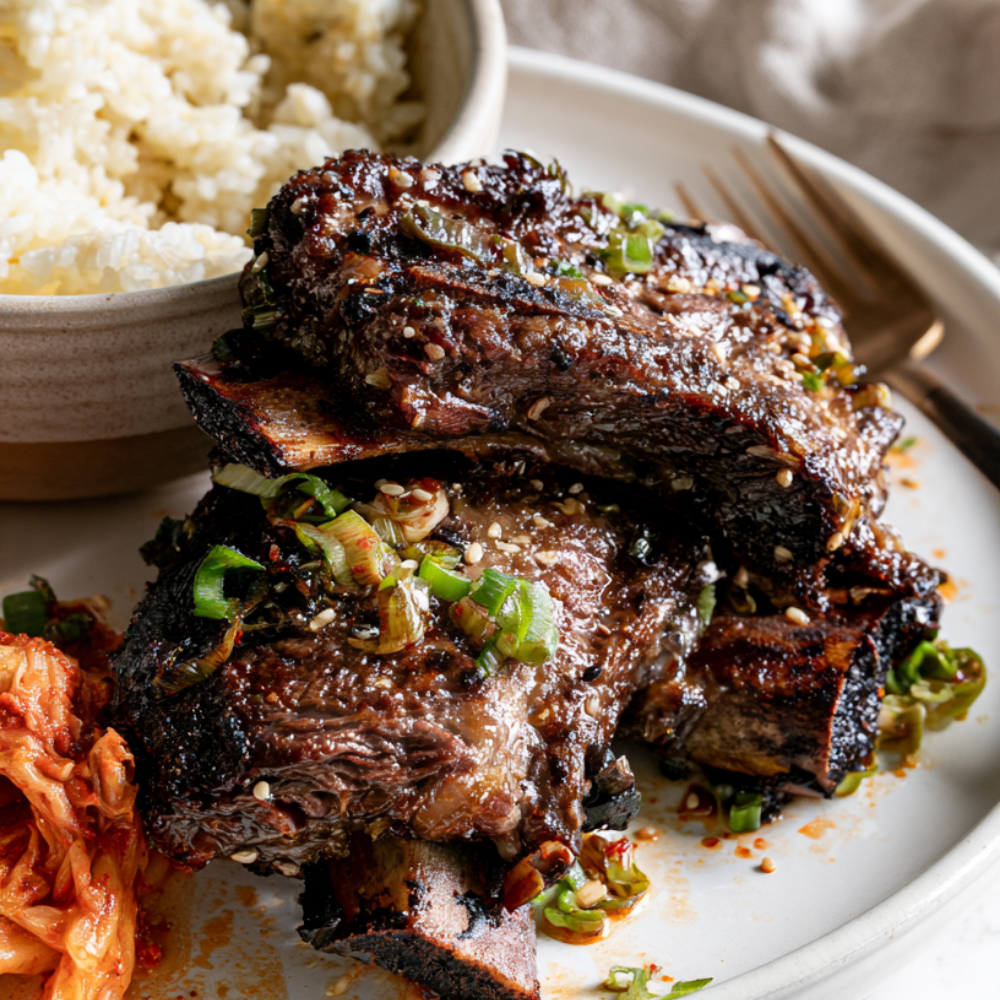
Korean BBQ Short Ribs Oven. Arrange the marinated ribs on a wire rack set over a foil-lined sheet pan. Bake at 425°F for 15 to 18 minutes, flipping once, until caramelized and cooked through. For extra char, broil for 1 to 2 minutes at the end.
Spicy Korean Braised Short Ribs. Use thicker-cut bone-in short ribs (2 to 3 inches thick) instead of thin-cut. Sear them, then braise in a mixture of soy sauce, gochujang, brown sugar, garlic, ginger, and beef broth in a covered Dutch oven at 325°F for 2½ to 3 hours. The meat falls off the bone.
Korean Braised Beef Short Ribs (Galbi Jjim). Same as above, but add carrots, potatoes, and dried shiitake mushrooms during the last 45 minutes of braising. Serve with steamed rice.
Korean Pork Short Ribs Recipe. Swap the beef short ribs for 3 lbs of bone-in pork ribs, cut into individual ribs. Marinate overnight, then grill or bake at 400°F for 25 to 30 minutes, flipping once, until cooked through and caramelized.
Japanese Beef Short Ribs (Yakiniku Style). Swap the Asian pear for 2 tablespoons of mirin. Add 1 tablespoon of sake and 1 tablespoon of toasted sesame oil. The marinade is slightly lighter and more savory, closer to Japanese yakiniku.
Storage and Food Safety
Refrigerator: Store leftovers covered in an airtight container for up to 4 days. Reheat in a skillet over medium heat for 2 to 3 minutes per side, or in the microwave for 60 to 90 seconds.
Freezer: The cooked ribs freeze well. Cool completely, then wrap tightly in plastic wrap and foil. Freeze for up to 3 months. Thaw overnight in the refrigerator and reheat in a skillet.
Make Ahead: You can make the marinade and strain it up to 3 days ahead and refrigerate it. Marinate the ribs overnight, then cook fresh when you’re ready. You can make the cooked ribs up to 2 days ahead and reheat them.
Food Safety: Beef short ribs must reach an internal temperature of 145°F for medium-rare or 160°F for medium. Cool leftovers within 2 hours and refrigerate promptly. Reheat leftovers to 165°F.
Frequently Asked Questions
How much protein is in Korean short ribs? About 44g per serving from 3 lbs of bone-in beef short ribs across 6 servings. Bone-in short ribs yield about 60 to 65% meat by weight, so each serving gets about 4.5 to 5 oz of cooked beef.
Why do I need to rinse the ribs first? Flanken-style short ribs are cut across the bone with a band saw, which leaves fine bone dust and tiny fragments on the surface. Soaking and rinsing removes them so you don’t get grit between your teeth.
Why do I need to strain the marinade? Blending pear and onion creates a thick pulp that chars into bitter black spots over high heat. Straining through a mesh sieve leaves you with a clean liquid that flavors the meat evenly and lets the surface caramelize cleanly.
What kind of short ribs should I buy? Look for thin-sliced, bone-in short ribs, ¼ to ⅜ inch thick. They’re sold as “Korean-style,” “flanken ribs,” “LA-style beef short ribs,” or “galbi ribs.” If your butcher doesn’t have them, ask for thin-cut bone-in short ribs and specify the thickness.
Can I use boneless short ribs? Yes. Cut boneless short ribs into ¼-inch thick slices against the grain. They cook in the same amount of time and yield slightly more meat per pound, so protein goes up slightly.
Can I make these in the oven? Yes. Arrange the marinated ribs on a wire rack set over a foil-lined sheet pan. Bake at 425°F for 15 to 18 minutes, flipping once. For extra char, broil for 1 to 2 minutes at the end.
Can I use a different fruit instead of Asian pear? Yes. Bosc or Anjou pears work. Kiwi, pineapple, or even a splash of apple juice works too. The pear is traditional because it has the right enzyme activity and a clean, mild sweetness.
How long can I marinate the ribs? Marinate for at least 8 hours and up to 18 hours. Beyond 18 hours, the pear enzymes start to break down the meat too much, and the texture turns mushy.
Can I make these ahead of time? Yes. You can make the marinade and strain it up to 3 days ahead. Marinate the ribs overnight and cook them fresh. You can make the cooked ribs up to 2 days ahead and reheat them.
What do I serve with Korean short ribs? Steamed short-grain rice, lettuce leaves for wrapping, kimchi, ssamjang, and banchan (Korean side dishes). A simple cucumber salad with rice vinegar is also a nice contrast.
More High Protein Beef Recipes You’ll Love
Korean Ground Beef (Sweet, Savory & Ready in 15 Minutes)
Korean Cucumber Salad (Oi Muchim) — Spicy, Tangy & So Easy
Korean Gochujang Beef Bowl: A Quick High-Protein Dinner (5 Ingredients)
Conclusion
A Korean Short Ribs recipe is the kind of meal that earns its spot in the rotation. It’s tender, caramelized, and undeniably delicious. And with about 44 grams of protein per serving, it’s a real meal that keeps you full.
The restaurant version is delicious and also expensive.
This one keeps every bit of the sweet-savory soy marinade, the tender beef, and the caramelized edges you love, and rebuilds it at home with an overnight marinade and 15 minutes of cooking.
Rinsing the bone dust off the ribs. Straining the marinade so it doesn’t char. Adding sesame seeds and mirin for depth. Blotting the ribs dry before they hit the heat. Small batches for that perfect char.
The three things that make it work are these. Rinse the ribs to remove bone dust. Strain the marinade so it doesn’t burn. And cook in small batches over high heat.
About 44 grams of protein per serving. Six generous portions. Ready in 20 minutes of prep, then marinate overnight, then cook for 15 minutes.
Make it for your next weekend dinner and watch everyone gather around the table. This galbi earns a permanent spot on the menu.