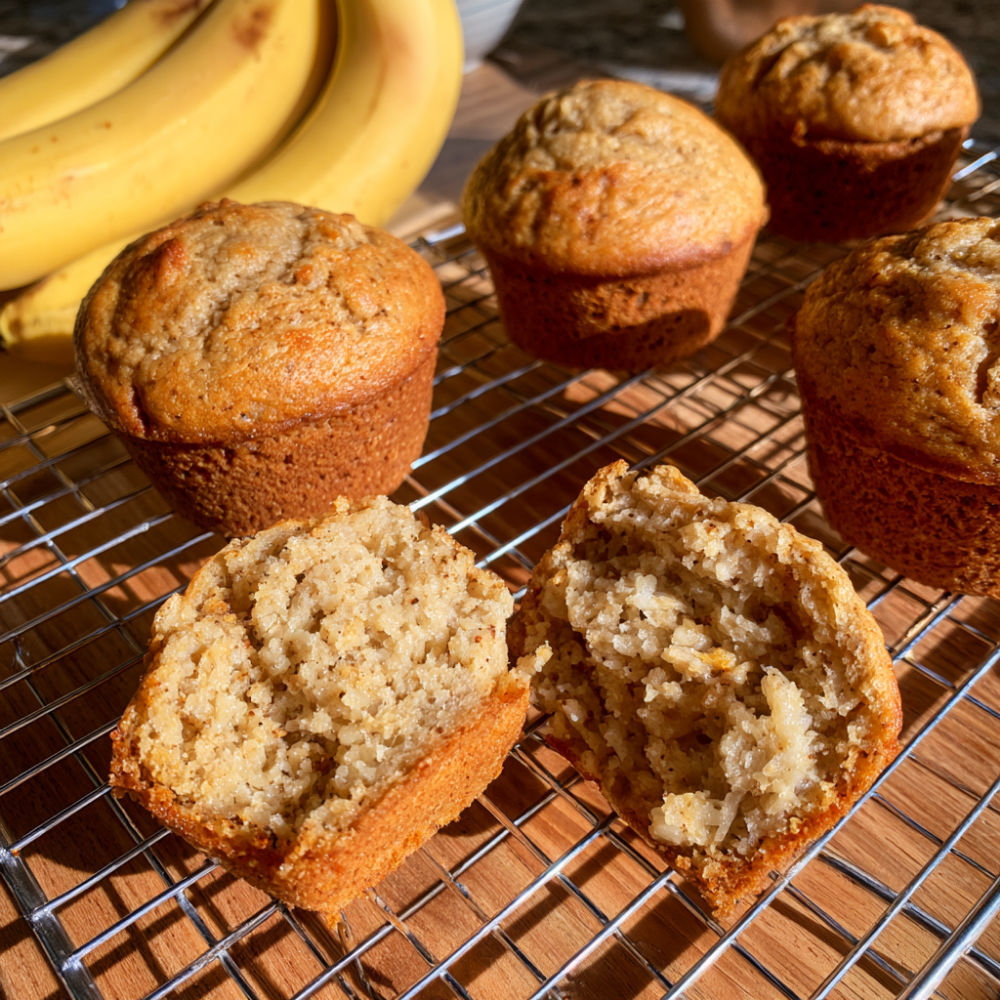

The best protein muffins shouldn’t taste like protein muffins.
If you’ve ever pulled a batch from the oven only to find that they’re dry, rubbery, gummy, or dominated by the taste of protein powder, these banana protein muffins are designed to avoid exactly that.
Very ripe bananas do most of the flavor and sweetness work, while Greek yogurt and a small amount of butter or oil help create a softer, more tender crumb. Vanilla whey adds protein without overwhelming the banana-bread flavor, and cinnamon gives them that familiar warm, homemade taste.
The result is a soft banana oat muffin that tastes much closer to banana bread than a typical high-protein muffin.
They’re also easy enough for meal prep. Bake a batch of 12 on the weekend, and you’ve got a high-protein breakfast, snack, or lunchbox option ready to go.
And if you add mini chocolate chips? They taste even more like a treat.
Why You’ll Love These Banana Protein Muffins
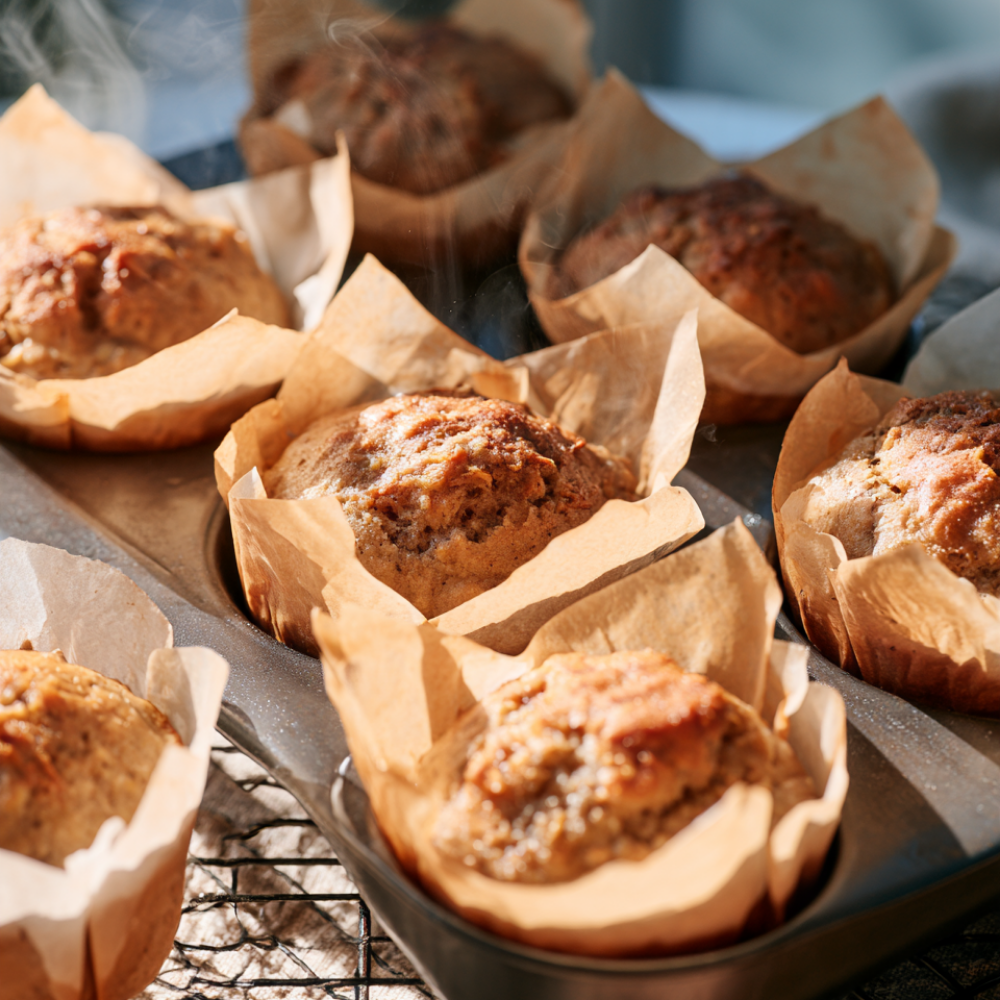
They actually taste like banana bread.
This recipe doesn’t try to get most of its protein from protein powder. Instead, it uses one scoop of vanilla whey alongside bananas, eggs, and Greek yogurt.
That means you get a protein boost without turning the muffins into a dense, protein-heavy substitute for the real thing.
They’re soft and tender.
Bananas and Greek yogurt provide moisture, while a little melted butter or neutral oil helps keep the crumb tender.
That’s especially useful in protein baking, where the combination of oat flour and protein powder can otherwise produce a firmer texture.
They’re an easy protein muffin recipe.
There’s no mixer and no complicated technique. Mix the wet ingredients, whisk the dry ingredients separately, combine them, and bake.
The only part worth paying close attention to is the batter consistency and baking time.
They’re made with oats.
These banana oat muffins use oat flour instead of refined white flour, giving them a slightly hearty flavor that pairs naturally with ripe bananas and cinnamon.
You can use packaged oat flour or make your own by blending old-fashioned rolled oats until finely ground.
They’re genuinely high-protein compared with a standard banana muffin.
Each muffin contains about 6–7g of protein, depending on the protein powder and Greek yogurt you use.
That’s enough to make these a useful high-protein breakfast muffin or snack without trying to turn one muffin into a protein shake in disguise.
They’re freezer-friendly
Make the full batch, eat a few fresh, and freeze the rest. You can thaw individual muffins whenever you need a quick breakfast or snack.
Tips for the Best Banana Protein Muffins
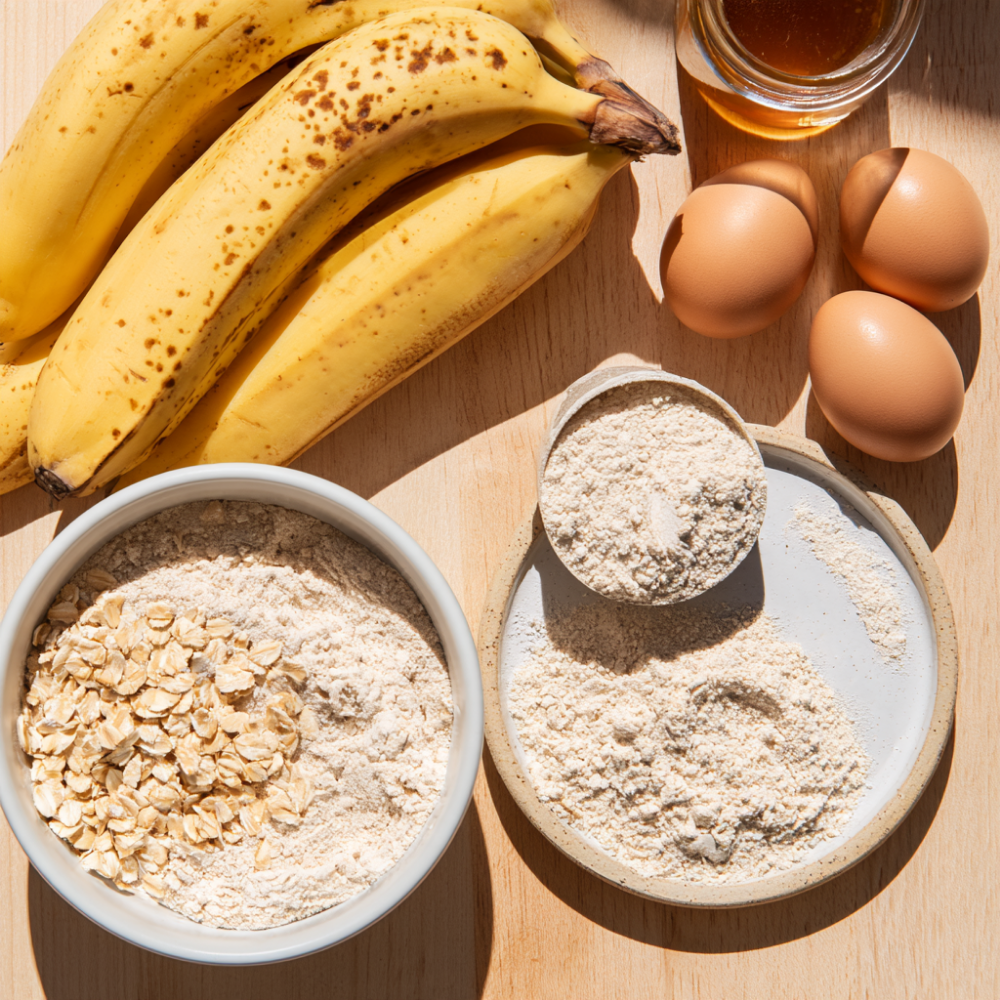
Use very ripe bananas.
This is the single most important tip.
Look for bananas that are heavily speckled or mostly brown. They’re sweeter, softer, and more intensely flavored than yellow bananas.
That extra banana flavor helps them taste like banana bread instead of a generic healthy muffin.
Use whey protein for the best texture.
This recipe is designed around vanilla whey or a whey-blend protein powder.
Whey tends to produce a lighter, more tender muffin and has a flavor that blends nicely with banana and vanilla.
Plant-based protein powder can work, but the texture may be noticeably denser, and the protein flavor may be stronger.
Don’t overmix the batter.
Once you’ve incorporated the dry ingredients, stop stirring.
Overmixing can make the muffins heavier and less tender.
Weigh your oat flour if possible.
Oat flour can become packed when measured directly from a bag.
For the most consistent results, use a kitchen scale and measure 190g oat flour.
If you’re making oat flour at home, blend the oats first and then weigh the flour.
Pay attention to batter consistency.
Different protein powders absorb different amounts of liquid.
Your batter should be thick enough to scoop but not so stiff that you have to press it into the muffin cups.
If it looks dry, add milk one tablespoon at a time.
Don’t overbake
A few moist crumbs on the toothpick are exactly what you’re looking for.
Waiting until the toothpick comes out completely dry can leave you with a firmer, drier muffin once they cool.
Banana Protein Muffins
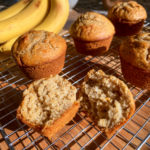
Soft, moist banana oat muffins made with very ripe bananas, Greek yogurt, vanilla whey protein, and cinnamon. A little butter or neutral oil helps give them the tender crumb you’d expect from a good banana muffin.
- 3 very ripe medium bananas (mashed (about 350g peeled or 1½ cups mashed))
- 2 large eggs (about 100g)
- ½ cup plain Greek yogurt (120g, preferably 2% or whole-milk)
- ¼ cup honey or maple syrup (about 85g honey or 80g maple syrup)
- 2 tablespoons neutral oil (melted coconut oil, or melted butter (28g))
- 1 teaspoon vanilla extract
- 2 cups oat flour (190g, measured after blending if homemade)
- 1 scoop vanilla whey or whey-blend protein powder (about 30g)
- 1½ teaspoons baking powder
- ½ teaspoon baking soda
- 1 teaspoon ground cinnamon
- ¼ teaspoon salt
- 2 –4 tablespoons milk or unsweetened almond milk (only if needed)
- ½ cup mini chocolate chips (90g, optional but recommended)
- Prepare the muffin pan.
Preheat the oven to 350°F.
Line a standard 12-cup muffin pan with paper or parchment liners, or lightly grease the cups. - Mash the bananas.
Place the peeled bananas in a large mixing bowl and mash until mostly smooth.
A few small pieces are fine. In fact, little pockets of banana can add even more banana-bread flavor to the finished muffins. - Mix the wet ingredients.
Add the eggs, Greek yogurt, honey or maple syrup, melted butter or oil, and vanilla.
Whisk until the mixture is evenly combined. - Mix the dry ingredients.
In a separate bowl, whisk together the oat flour, vanilla whey protein powder, baking powder, baking soda, cinnamon, and salt.
Break up any visible lumps of protein powder. - Combine the batter.
Add the dry ingredients to the wet ingredients.
Using a spatula, gently stir just until the dry ingredients disappear.
Don’t overmix. A few small lumps are perfectly fine.
The batter should be thick and scoopable but still moist.
If it looks unusually stiff or dry, add milk 1 tablespoon at a time, using up to 4 tablespoons if necessary. Whey protein usually needs little or no extra milk, while some protein powders absorb considerably more liquid. - Add the chocolate chips.
Fold in the mini chocolate chips if using.
You can also leave them out for a more classic banana-bread flavor. - Fill the muffin cups.
Divide the batter evenly among the 12 muffin cups.
A cookie scoop makes this quick and helps keep the muffins a consistent size. - Bake.
Bake at 350°F for 18–22 minutes, starting to check at 18 minutes.
The muffins are done when the tops look set, the centers spring back lightly when pressed, and a toothpick inserted into the center comes out with a few moist crumbs attached.
Don’t wait for the toothpick to come out completely clean. Overbaking is one of the easiest ways to make protein muffins dry. - Cool.
Let the muffins cool in the pan for 5 minutes, then transfer them to a wire rack.
For the best texture, let them cool for another 10–15 minutes before eating. The centers continue to set as they cool.
Estimated Nutrition Per Muffin(Based on 12 servings)
- Calories: ~165 kcal
- Protein: ~10g
- Carbohydrates: ~22g
- Dietary Fiber: ~2 g
- Total Fat: ~4.5 g
- Saturated Fat: ~2 g
- Sodium: ~145mg
Easy Variations
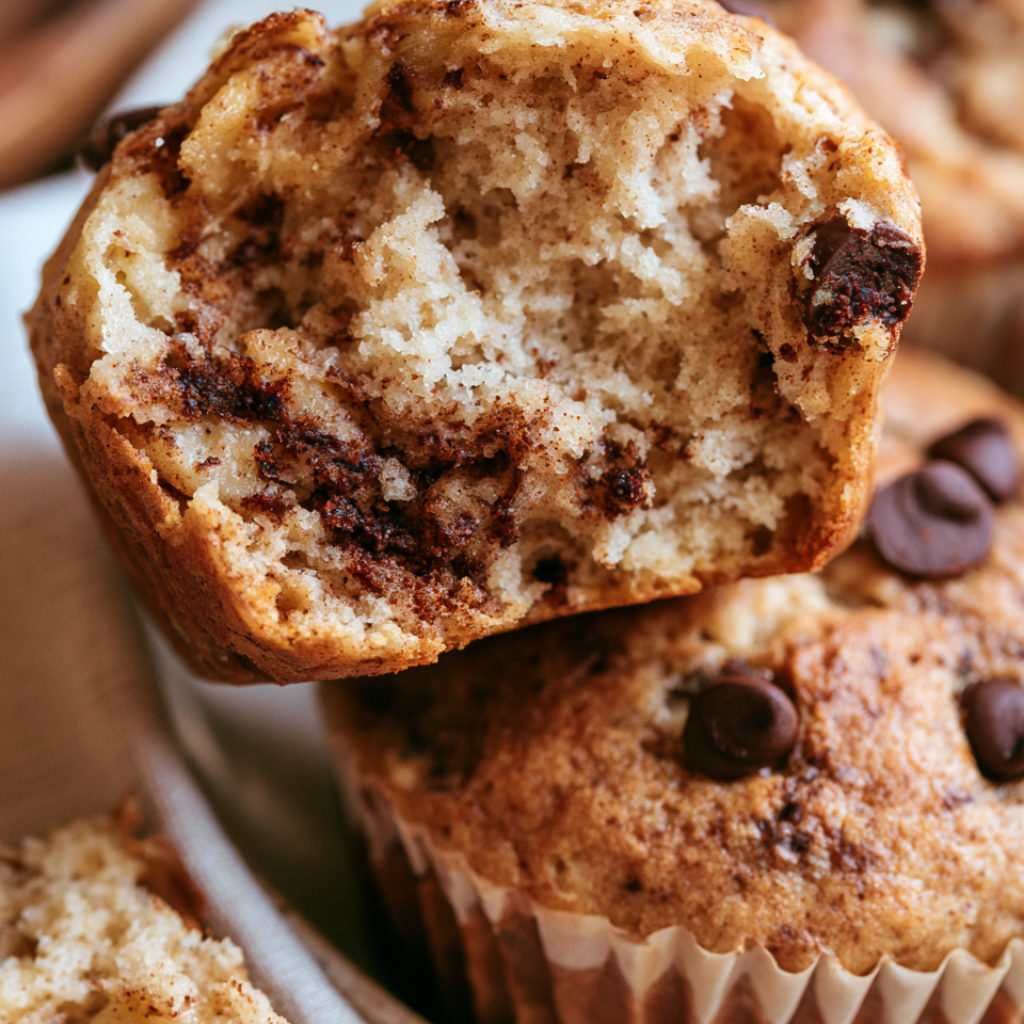
Chocolate Chip Banana Protein Muffins
The easiest variation is also one of the most popular.
Fold ½ cup mini chocolate chips into the batter before baking.
The melted chocolate pairs especially well with the banana, cinnamon, and vanilla, making these feel more like an indulgent banana muffin.
Blueberry Banana Protein Muffins
Fold in ¾ cup fresh blueberries.
If using frozen blueberries, add them straight from the freezer rather than thawing them first. Fold them in gently to avoid breaking the berries and adding excess moisture to the batter.
Walnut Banana Protein Muffins
Fold in ½ cup chopped walnuts for a little crunch and a classic banana-bread combination.
For extra flavor, lightly toast the walnuts first, then let them cool before adding them.
Chocolate Banana Protein Muffins
For a chocolate version, replace ¼ cup of the oat flour with ¼ cup unsweetened cocoa powder and use chocolate whey protein powder instead of vanilla.
Check the batter before filling the muffin cups. Cocoa powder can thicken the batter, so add a tablespoon or two of milk if needed.
Are These Good for Kids?
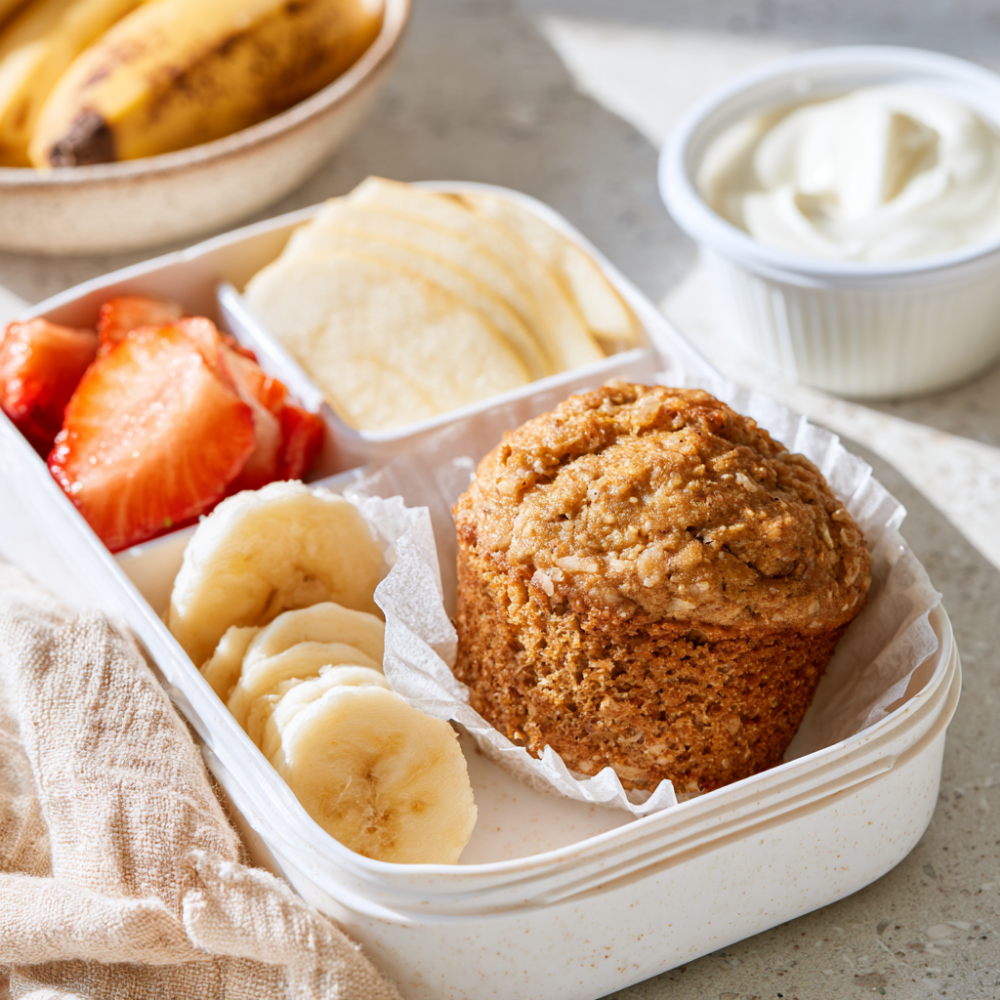
Yes. These are a particularly easy way to make a more filling breakfast muffin or snack that still tastes familiar.
The banana provides plenty of natural sweetness, and mini chocolate chips can make the muffins more appealing to kids who might otherwise turn down a “healthy” muffin.
If your child notices the taste of protein powder, use a mild vanilla or unflavored powder rather than a strongly flavored one.
Important: If you’re serving these to young children, choose a protein powder appropriate for their age and dietary needs rather than assuming every adult protein powder is suitable for kids.
Can You Make These Without Protein Powder?
You can, but I wouldn’t treat it as a direct substitution.
Protein powder adds both protein and dry matter to the batter, so removing it changes the recipe’s balance.
If you want a traditional banana muffin without protein powder, it’s better to use a recipe developed without it than to leave the scoop out of this one.
Can I Make These Gluten-Free?
Yes, as long as you use certified gluten-free oat flour or certified gluten-free oats.
Oats themselves don’t naturally contain gluten, but they can come into contact with wheat during growing, processing, or packaging.
Are These Low-Carb Protein Muffins?
The base recipe is not low-carb. Bananas and oat flour are both carbohydrate sources.
I wouldn’t recommend simply swapping the oat flour for almond flour and reducing the bananas. Those ingredients behave differently enough that you should treat the result as a separate recipe.
If you’re specifically looking for low-carb protein muffins, use a recipe developed and tested specifically for that purpose.
How to Store Banana Protein Muffins
Once completely cool, store the muffins in an airtight container at room temperature for up to 1 day.
For longer storage, refrigerate them for up to 4 days.
Because refrigeration can make oat-based muffins firmer, let them sit at room temperature for a few minutes or warm them briefly before eating.
Can You Freeze Banana Protein Muffins?
Yes. These muffins freeze well for 2–3 months.
Let them cool completely before freezing. Place them in a freezer-safe bag or container, separating layers if necessary so they don’t stick together.
For an easy grab-and-go breakfast, freeze the muffins individually so you can remove only what you need.
Thaw overnight in the refrigerator or microwave from frozen for about 15–30 seconds, checking the center before eating.
Frequently Asked Questions
Why are my banana protein muffins dense?
The most common causes are overmixing, too much protein powder, using too much oat flour, or overbaking.
For this recipe, gently stir the batter only until combined and use the recommended 30g of protein powder.
If your protein powder absorbs a lot of liquid, add milk one tablespoon at a time until the batter becomes thick but scoopable.
Why are my protein muffins gummy?
Gummy protein muffins can result from excess moisture, underbaking, or using a protein powder that doesn’t perform well in baked goods.
Make sure the center is set before removing the muffins from the oven, and allow them to cool before judging the final texture.
Whey or a whey blend is the best choice for the texture this recipe is designed to produce.
Can I use plant-based protein powder?
Yes, but expect some differences.
Plant-based protein powders can make these muffins denser and may give them a more noticeable protein flavor. They can also absorb more liquid.
If you use plant protein, check the batter consistency and add milk as needed.
Can I use homemade oat flour?
Absolutely.
Blend old-fashioned rolled oats in a high-speed blender or food processor until they reach a fine, flour-like consistency.
Then measure out 190g for the recipe.
Can I use quick oats instead of oat flour?
Not as a direct 1:1 volume substitution.
If you don’t have oat flour, blend old-fashioned rolled oats into a fine flour first. This gives you the texture the recipe was developed for.
How much protein is in each muffin?
Each muffin contains approximately 6–7g of protein, depending on the protein powder and Greek yogurt you use.
For the most accurate nutrition information, calculate the recipe using the exact brands and ingredients you purchase.
Can I make these ahead for meal prep?
Yes. That’s one of the reasons these muffins work so well for breakfast meal prep.
Bake the full batch, let them cool completely, then refrigerate or freeze them. Grab an individual muffin whenever you need a quick breakfast or snack.
More High-Protein Breakfasts You’ll Love
If you like easy protein-rich breakfasts that don’t feel overly “healthy,” try:
- Cottage Cheese Breakfast Toast
- Peanut Butter Protein Overnight Oats
- High-Protein Chocolate Pudding
- Microwave Mug Egg Scramble
Final Thoughts
These banana protein muffins are proof that a higher-protein breakfast doesn’t have to taste like a compromise.
The trick is to keep the protein powder in the background and let the ingredients that naturally belong in banana bread—very ripe bananas, vanilla, cinnamon, and a tender crumb—lead the recipe.
The Greek yogurt adds moisture, a little butter or oil helps keep the texture soft, and vanilla whey provides the protein boost without taking over the flavor.
For the best results, use very ripe bananas, don’t overmix the batter, add a little milk if your protein powder makes it too thick, and start checking the muffins around the 18-minute mark.
Bake a batch, keep a few for the week, and freeze the rest.
They’re soft, banana-forward, easy to meal prep, and satisfying enough to make again.