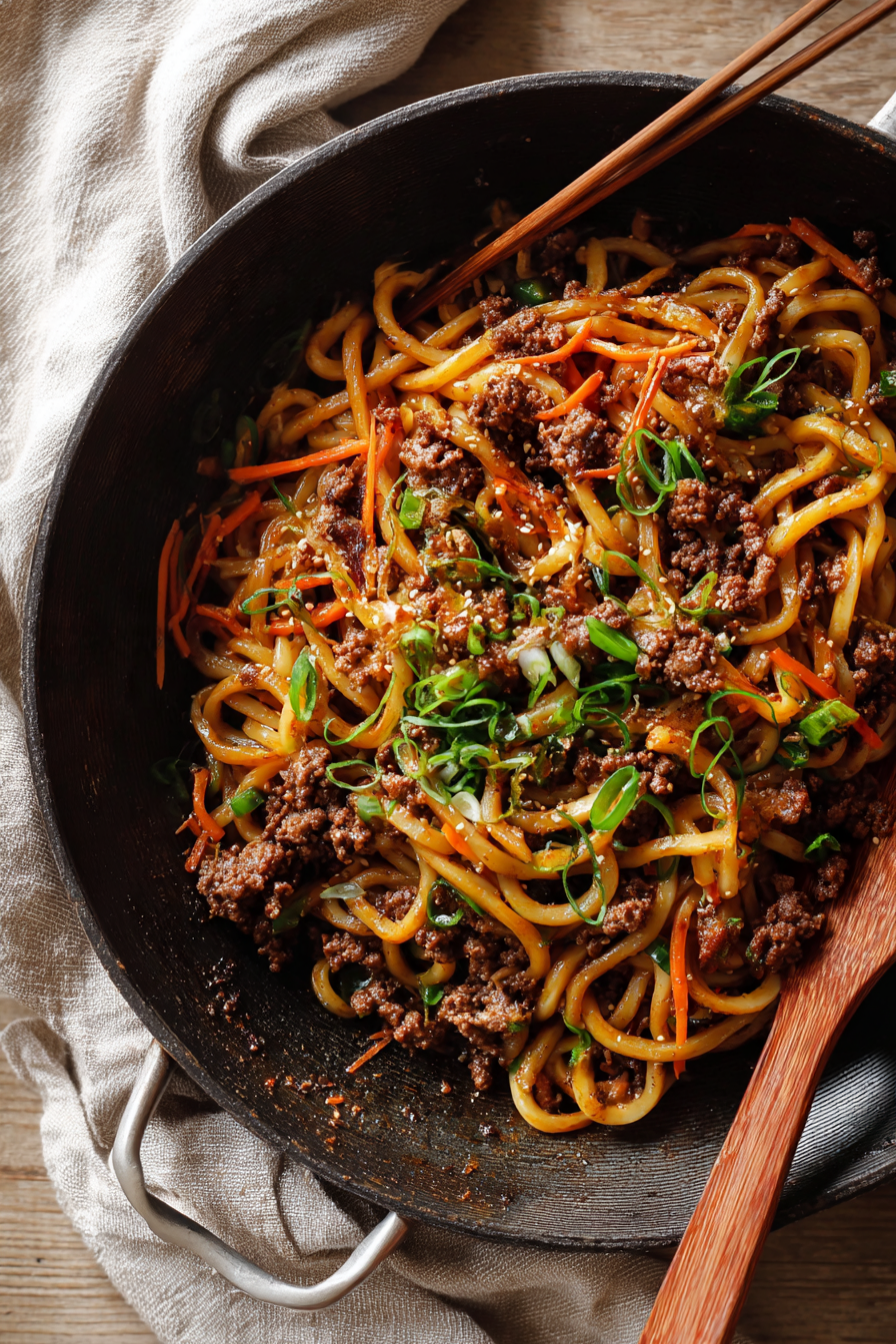

Yaki udon is the noodle dish I make when I want something fast, savory, and a little bit slurpable without ordering takeout. The first time I made it, I used udon straight from the pot without draining it properly, and the noodles went into the pan wet — they steamed instead of seared and the sauce turned thin and gray. The fix was simple: cook the noodles, drain them well, and let them sit in the colander for a minute while the beef browns. Dry noodles sear. Wet noodles steam.
The other thing that matters is the beef. Ground beef is not the traditional yaki udon protein — that’s usually pork or chicken — but it’s what I keep in the freezer, and it works because it browns fast, holds onto the sauce, and gives you little crumbles of beef in every bite. You press it flat into a hot pan and let it sear undisturbed until a deep crust forms, then break it up. That crust is where the flavor comes from. Then the ginger and onion go in, then the carrots, then the noodles and sauce. Everything happens in one pan in about 30 minutes.
The sauce is a shortcut I’m not going to apologize for. Teriyaki sauce from Whole Foods is what I use at home — it’s balanced, it’s not too sweet, and it saves me from mixing five ingredients in a bowl while the beef burns. If you’d rather make your own, my Homemade Teriyaki Sauce — The Golden Ratio takes 10 minutes and makes about 1½ cups, so you’ll have plenty left for another batch. The ginger is not optional — it cuts through the sweetness of the teriyaki and makes the whole pan taste brighter.
This version uses a pound and a half of ground beef instead of one pound, which is what takes it from a nice noodle dish to a real high-protein dinner at 37 grams per bowl. It comes together in about 30 minutes with dry udon cooked per the package instructions, ground beef, teriyaki, ginger, onion, carrots, and green onions on top. It’s a weeknight noodle dinner that tastes like something you’d order at a Japanese restaurant, made in your own kitchen with what’s already in the fridge.
Why This Recipe Works
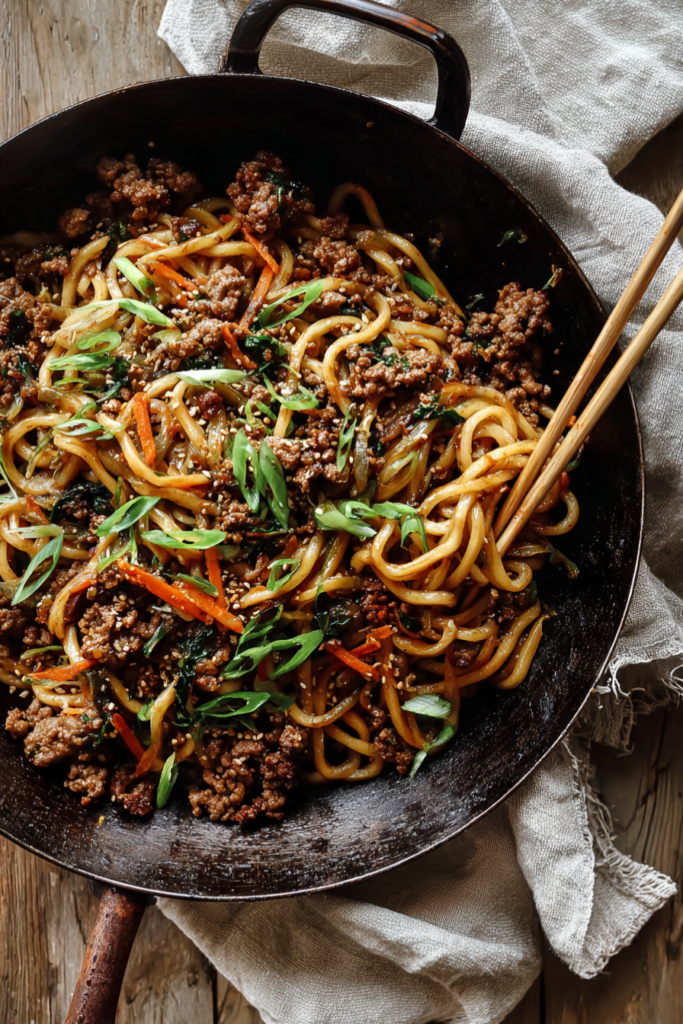
Yaki udon goes wrong in three specific ways: mushy noodles, a thin sauce that won’t cling, and greasy beef. Here’s how this version solves each one.
1. Drain the Udon Well and Save the Starchy Water
Cooked udon comes out of the pot coated in starchy water. If it goes straight into the pan wet, that water steams the noodles and thins the sauce. Drain it in a colander, rinse briefly under cool water to stop the cooking, and let it sit while the beef browns. Before you drain, scoop out 2 tablespoons of the starchy cooking water and set it aside. That starchy water is what turns the teriyaki into a glossy glaze that coats every noodle instead of pooling at the bottom of the pan. It’s the same idea as pasta water in an Italian pasta dish.
2. Sear the Beef Flat Before You Break It Up
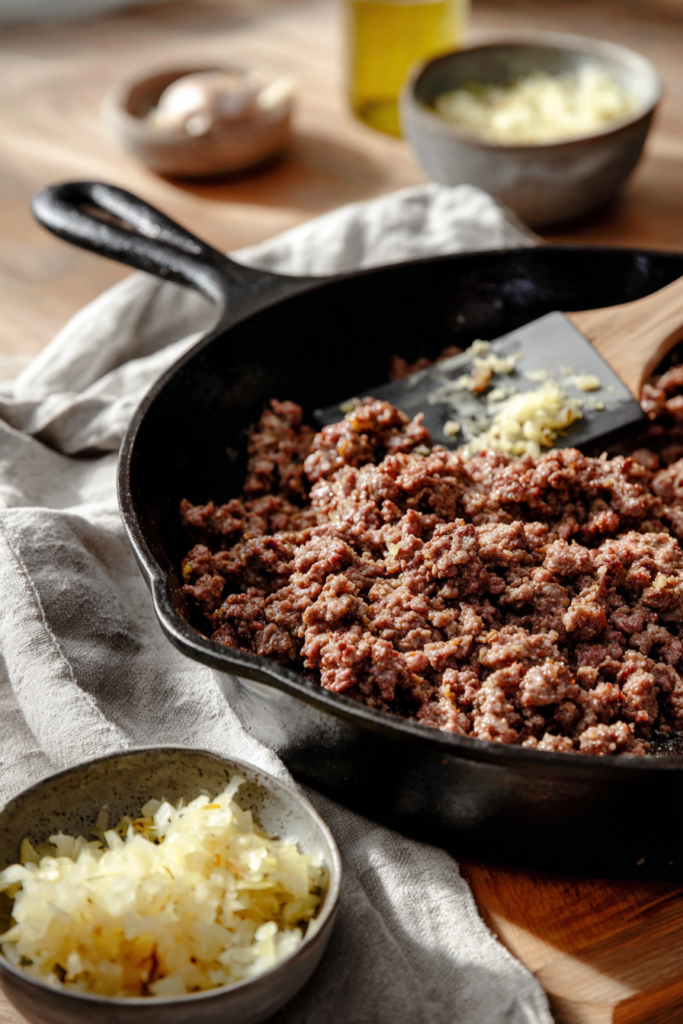
Ground beef broken into crumbles the moment it hits the pan never gets a crust — it just steams in its own fat and turns gray. Pressing it flat into the hot pan and leaving it undisturbed for 3 to 4 minutes lets a deep golden crust form on the bottom, which is where the flavor lives. Then you break it up and finish cooking it. Don’t drain the fat — it’s what the ginger and onion cook in and what carries the teriyaki onto the noodles.
3. Bloom the Ginger in the Beef Fat, Not the Sauce
Grated ginger stirred into the sauce at the end tastes sharp and raw. Bloomed in the hot beef fat for a minute or two, it turns warm and fragrant and loses its harsh edge. Add it with the onion right after the beef is browned, cook until the onion softens, and then move on to the carrots and noodles.
Ingredients That Matter
Dry udon noodles. Three 7-ounce packages, cooked per the package instructions. Dry udon is what I keep in the pantry. Fresh or frozen Sanuki udon (about 20 oz) has an even springier texture if you want to upgrade — cook per the package, drain well, and use the same way.
Lean ground beef. One and a half pounds of 90/10. The extra half pound over the usual one pound is what takes this to 37 grams of protein per serving — a real high-protein dinner instead of a noodle side dish. Don’t drain the fat; it carries the ginger and the sauce.
Whole Foods 365 Organic Teriyaki Sauce. Half a cup. This is the brand I use at home — balanced, not too sweet, and reliably good. If you use a different brand, taste it first, because some teriyaki sauces run much sweeter and may need a splash of soy sauce or rice vinegar to balance. If you’d rather make your own, my Homemade Teriyaki Sauce — The Golden Ratio makes about 1½ cups — use ½ cup here and save the rest for another batch.
Fresh ginger, finely grated. One tablespoon. This is what keeps the dish from tasting like sweet sauce on noodles. Grate it on a microplane so it melts into the beef fat, and add it with the onion.
Yellow onion. Half a medium onion, thinly sliced or diced. It softens in the beef fat and adds sweetness that plays against the ginger and the teriyaki.
Carrots, thinly sliced on a bias or julienned. Two medium carrots. Thin slices cook through in the same time the noodles take to heat, so nothing comes out raw. Thick slices will still be crunchy when everything else is done.
Green onions, finely chopped. Three, for the top. The green parts go on at the very end, off the heat, so they stay bright and fresh. If you’re meal-prepping, pack them separately so they stay crisp when you reheat.
Neutral oil. One tablespoon of avocado or canola. You need a little oil in the pan even with the beef fat — it keeps the noodles from sticking, especially with 90/10 beef.
How to Make Beef Yaki Udon
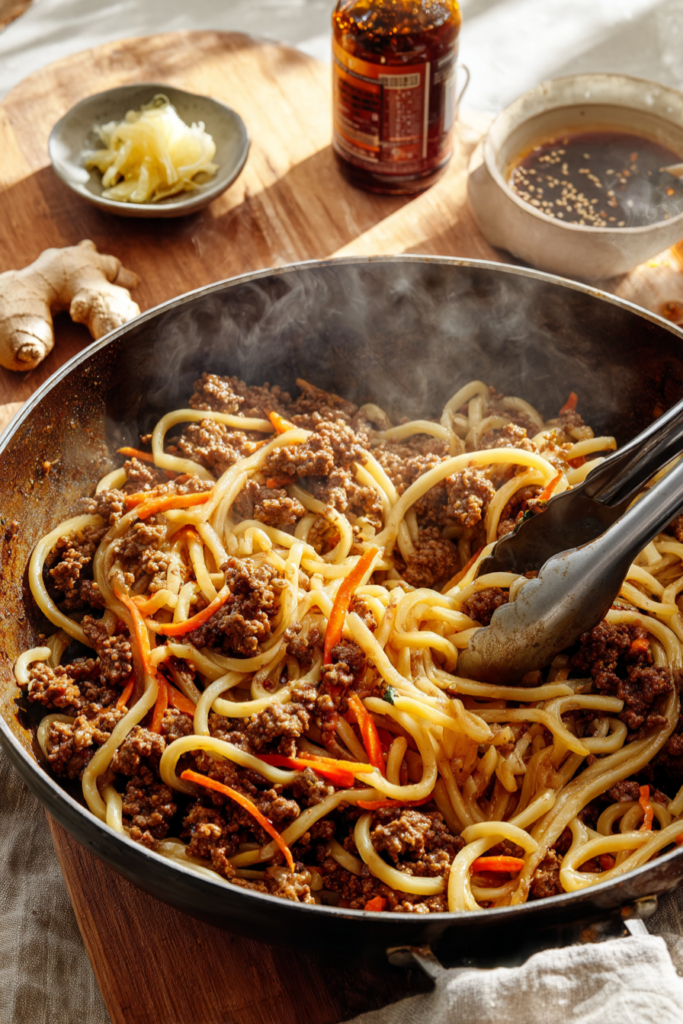
(See the recipe card below — the steps are identical and the card is the single source of truth.)
Tips and Troubleshooting
The noodles turned mushy. They weren’t drained well, or they overcooked in the pot. Cook them just to the package time, drain, rinse briefly under cool water, and let them sit in the colander while the beef browns.
The sauce is thin and won’t cling. The noodles went in wet, or there was no starchy water to emulsify with. Drain thoroughly, save 2 tablespoons of the starchy cooking water before you drain, and add it with the sauce to build the glaze.
The dish tastes too sweet. The teriyaki brand is sweeter than expected. Add a splash of soy sauce or rice vinegar to balance it, and taste before serving.
The beef is greasy. You used a fattier grind than 90/10, or you didn’t brown it hard enough to render the fat. Brown it hard until the fat runs clear, and if it’s still pooled, spoon off all but a tablespoon or two.
The dish tastes flat. The ginger was skipped, or the beef wasn’t seared hard enough. Grated ginger bloomed in the beef fat plus a real Maillard crust are what make this taste like yaki udon instead of ground beef with noodles.
The carrots are still crunchy. They were sliced too thick. Slice them thin on a bias, or julienne them, so they cook through in the same time the noodles do.
The noodles stuck to the pan. Not enough oil, or the pan wasn’t hot enough. Add a little more oil and get the pan hot before the noodles go in.
The green onions turned dark and slimy. They went in too early. The green parts go on at the very end, off the heat, right before serving.
Substitutions and Swaps
Dry udon → fresh or frozen Sanuki udon. About 20 oz. Frozen udon has the springiest texture — a 60- to 90-second dip in boiling water loosens it. Cook per the package, drain well, and use the same way.
Ground beef → ground pork, ground chicken, or sliced chicken thigh. Ground pork is the most traditional choice. Ground chicken is leaner and needs a little extra oil. Sliced chicken thigh should be cooked through before the noodles go in.
Whole Foods teriyaki → Homemade Teriyaki Sauce. Use ½ cup of my Homemade Teriyaki Sauce — The Golden Ratio. You’ll have about 1 cup left over, which keeps 3 weeks in the fridge — perfect for the next batch.
Teriyaki sauce → oyster sauce + soy sauce. Use 3 tablespoons oyster sauce and 2 tablespoons soy sauce for a less sweet, more savory version. Add 1 teaspoon brown sugar if you want it balanced toward the teriyaki flavor.
Carrots → snap peas, bell pepper, or broccoli florets. Same quantity, sliced thin. Snap peas and bell pepper cook in the same time as the noodles; broccoli needs a minute or two longer, so add it with the carrots.
For a spicy version: add 1 teaspoon of chili garlic sauce or sambal oelek with the ginger and onion.
For a gluten-free version: use gluten-free udon or rice noodles, and confirm your teriyaki sauce is gluten-free.
Storage and Reheat
Refrigerate leftovers in an airtight glass container for up to 3 days. Reheat in a skillet over medium heat with 1 to 2 tablespoons of water for about 3 minutes, tossing gently to re-emulsify the teriyaki glaze without drying out the noodles.
Meal prep tip: keep the green onions packed separately so they stay crisp when you reheat.
Freeze for up to 2 months. Thaw overnight in the fridge and reheat in a skillet. The noodles soften slightly on freezing but hold up well.
Don’t reheat in the microwave. The noodles steam and turn gummy. A skillet with a splash of liquid is the only way to reheat this so it stays firm.
Food safety: store within 2 hours of cooking. Reheat to 165°F before serving. Discard anything left at room temperature longer than 2 hours.
Beef Yaki Udon
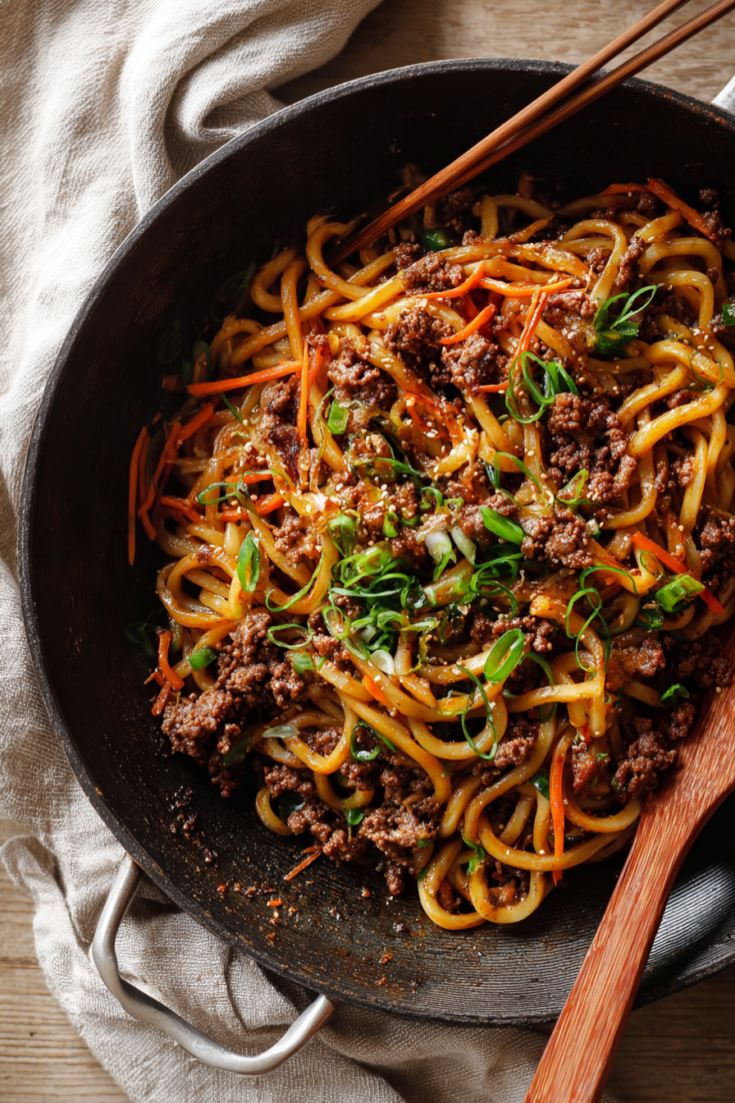
Chewy udon noodles stir-fried with hard-seared ground beef, matchstick carrots, and tender onions tossed in a glossy teriyaki glaze — 37g protein per serving.
Ingredients
Noodles & High-Protein Beef Base
- 1½ lbs lean ground beef (90/10 recommended)
- 3 packages (7 oz each) dry udon noodles (or about 20 oz frozen Sanuki udon)
- 1 tablespoon neutral oil (avocado or canola)
- 2 tablespoons reserved starchy noodle cooking water
Veggies & Aromatics
- ½ medium yellow onion, thinly sliced or diced
- 2 medium carrots, peeled and thinly sliced on a bias or julienned
- 1 tablespoon fresh ginger, finely grated
- 3 green onions, finely chopped, for finishing
Sauce
- ½ cup Whole Foods 365 Organic Teriyaki Sauce (or ½ cup Homemade Golden Ratio Teriyaki, below)
- Optional balancing splash: 1 teaspoon low-sodium soy sauce or rice vinegar, if extra sharpness is desired
Instructions
- Boil Udon & Save Starch Water: Cook the dry udon noodles in a large pot of boiling water according to the package instructions until tender but still chewy. Right before draining, scoop out 2 tablespoons of starchy cooking water and set aside. Drain the noodles in a colander, rinse briefly under cool water to stop the cooking, and shake off excess moisture.
- Sear the Beef (Maillard Crust): Heat the neutral oil in a large skillet or wok over medium-high heat. Add the ground beef and press it flat across the pan surface with a spatula. Let it sear undisturbed for 3 to 4 minutes until a deep golden-brown crust forms underneath. Break into small crumbles and cook 2 more minutes until fully browned. Do not drain the rendered fat — it carries the ginger and the sauce.
- Bloom Ginger & Soften Onions: Add the diced onion and grated ginger directly to the beef and rendered fat. Stir-fry 1 to 2 minutes, until the onion softens and the ginger becomes sweet and fragrant.
- Stir-Fry Carrots: Add the sliced carrots and cook 2 to 3 minutes, tossing constantly, until tender-crisp.
- Gloss the Noodles: Add the drained udon, the reserved 2 tablespoons starchy water, and the ½ cup teriyaki sauce to the skillet. Toss continuously with tongs over medium-high heat for 2 to 3 minutes, until the sauce reduces into a glossy glaze that coats every noodle strand. Taste and adjust with a splash of soy sauce or rice vinegar if needed.
- Finish & Serve: Turn off the heat, scatter the finely chopped green onions over the top, and serve immediately in warm bowls.
Notes
Notes:
Drain the noodles well and save 2 tablespoons of the starchy cooking water before you drain — that starchy water is what turns the teriyaki into a glossy glaze that clings to every noodle instead of pooling in the pan.
Press the beef flat and let it sear undisturbed before breaking it up; that crust is where the flavor lives. Don't drain the beef fat — it's what the ginger and onion cook in.
Taste your teriyaki before using it: some brands run sweeter than others and may need a splash of soy sauce or rice vinegar.
Leftovers keep 3 days in the fridge; reheat in a skillet with a splash of water, never in the microwave. Nutrition is an estimate and varies by teriyaki brand and beef grind.
Estimated per serving (using 90/10 beef and Whole Foods teriyaki): 490 calories · 37g protein · 56g carbs · 12g fat · 3g fiber · 920mg sodium
Frequently Asked Questions
Can I use fresh or frozen udon instead of dry?
Yes. Frozen Sanuki udon has the best texture for stir-frying — a 60- to 90-second dip in boiling water loosens it. Fresh udon works too. Cook any of them per the package, drain well, and reserve the starchy water.
What if I don’t have teriyaki sauce?
Use my Homemade Teriyaki Sauce — The Golden Ratio — 10 minutes, makes about 1½ cups. Or use 3 tablespoons oyster sauce plus 2 tablespoons soy sauce for a less sweet, more savory version.
Why do I need to reserve starchy noodle water?
That starchy water thickens the teriyaki into a glossy glaze that clings to the noodles instead of pooling at the bottom of the pan. It’s the same idea as pasta water in an Italian pasta dish.
Can I use a different protein?
Yes. Ground pork is the most traditional choice. Ground chicken is leaner and needs a little extra oil. Sliced chicken thigh should be cooked through before the noodles go in.
Why did my noodles turn mushy?
They weren’t drained well, or they overcooked in the pot. Cook them just to the package time, rinse briefly under cool water, and let them drain in the colander while the beef browns.
Is this spicy?
Not as written. If you want heat, add 1 teaspoon of chili garlic sauce or sambal oelek with the ginger and onion.
Can I make this gluten-free?
Yes, with gluten-free udon or rice noodles and a gluten-free teriyaki sauce. Check both labels.
How do I reheat leftovers?
In a skillet over medium heat with 1 to 2 tablespoons of water for about 3 minutes, tossing gently to re-emulsify the glaze. Don’t use the microwave — the noodles steam and turn gummy.
More Easy Asian Dinner Recipes You’ll Love
Slow-Cooker Lemon Herb Chicken Breast — 44g protein, juicy every time, one pot.
Chimichurri Chicken Thighs — 44g protein, hand-chopped herb sauce, 30-minute marinade.
Flank Steak Salad With Blue Cheese — 38g protein, meal-prep ready, 35 minutes.
High-Protein Crockpot Taco Soup — creamy, 36g protein, tempered cream cheese trick.
High-Protein Slow Cooker Dinners — ten weeknight dinners organized by cook time.
14 Dinner Ideas That Actually Save Your Weeknight Sanity — the whole easy-dinner category covered.
Closing
I’ve made this beef yaki udon more times than I can count, and the two things that changed everything for me were draining the noodles well before they hit the pan and searing the beef flat before breaking it up. The first batch I made, the noodles went in wet and the whole pan turned gray. The drain-and-sear habits are the steps I’d fight you over now.
If you make it with the homemade teriyaki or add a teaspoon of chili garlic sauce, let me know how it turns out in the comments.