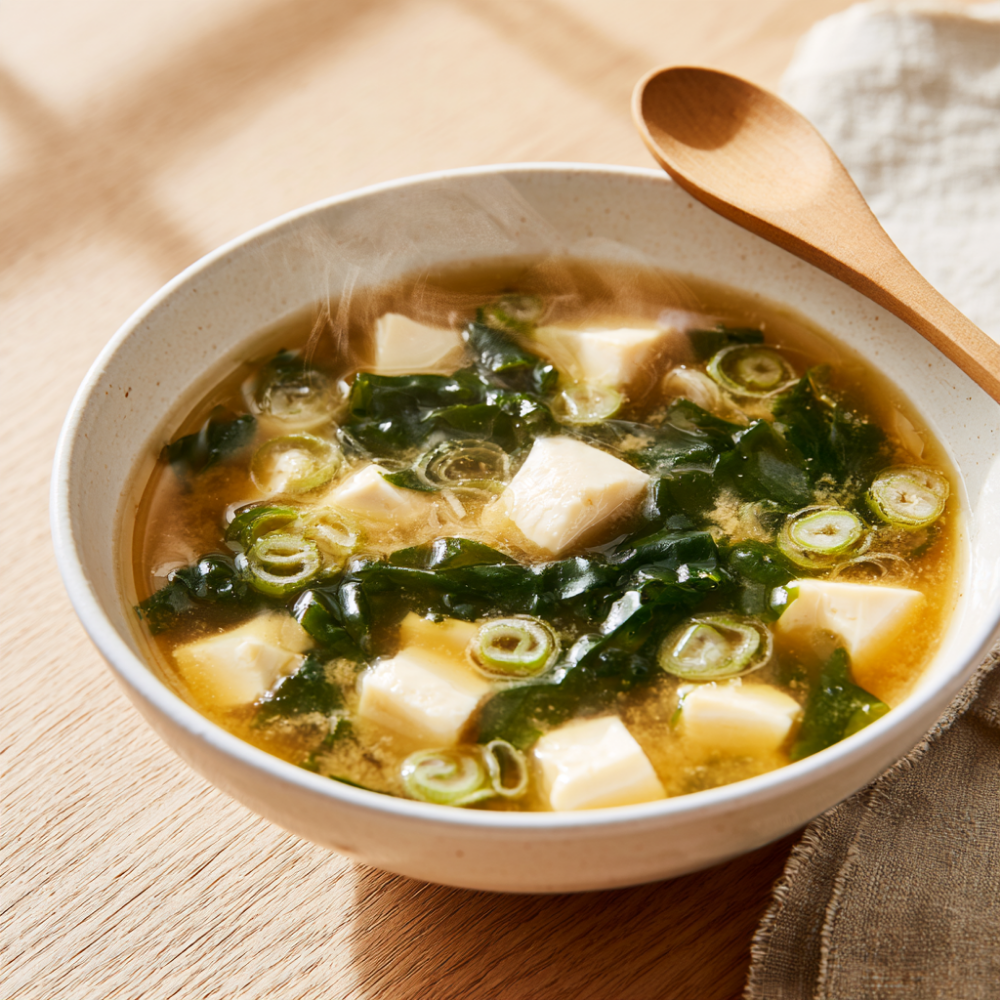

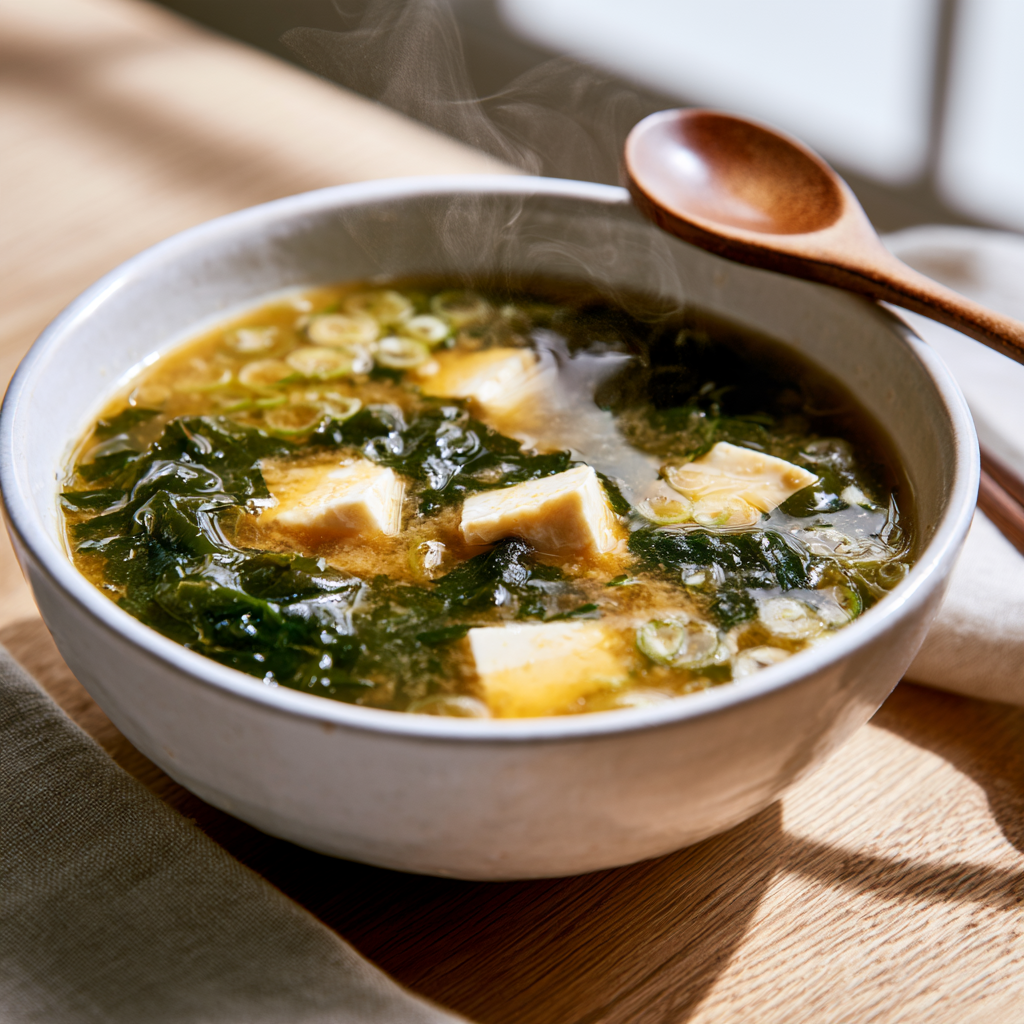
This miso soup recipe is the real thing — a warm, savory bowl of dashi broth, silky tofu, and tender wakame seaweed, finished with a spoonful of miso paste stirred in at the end. It’s the bowl that sits alongside sushi, starts a Japanese breakfast, and goes from a cold pot to the table in about 15 minutes.
It’s light enough to serve as a starter and satisfying enough to be a meal with rice and a protein on the side. It’s naturally high in protein from the tofu, low in calories, and one of the easiest Japanese soup recipes you can make at home — no special equipment, no long simmering, just four core ingredients and a few pantry staples.
If you’ve ever wondered how to make miso soup that tastes like the version from your favorite restaurant, this is the recipe.
Why This Recipe Works
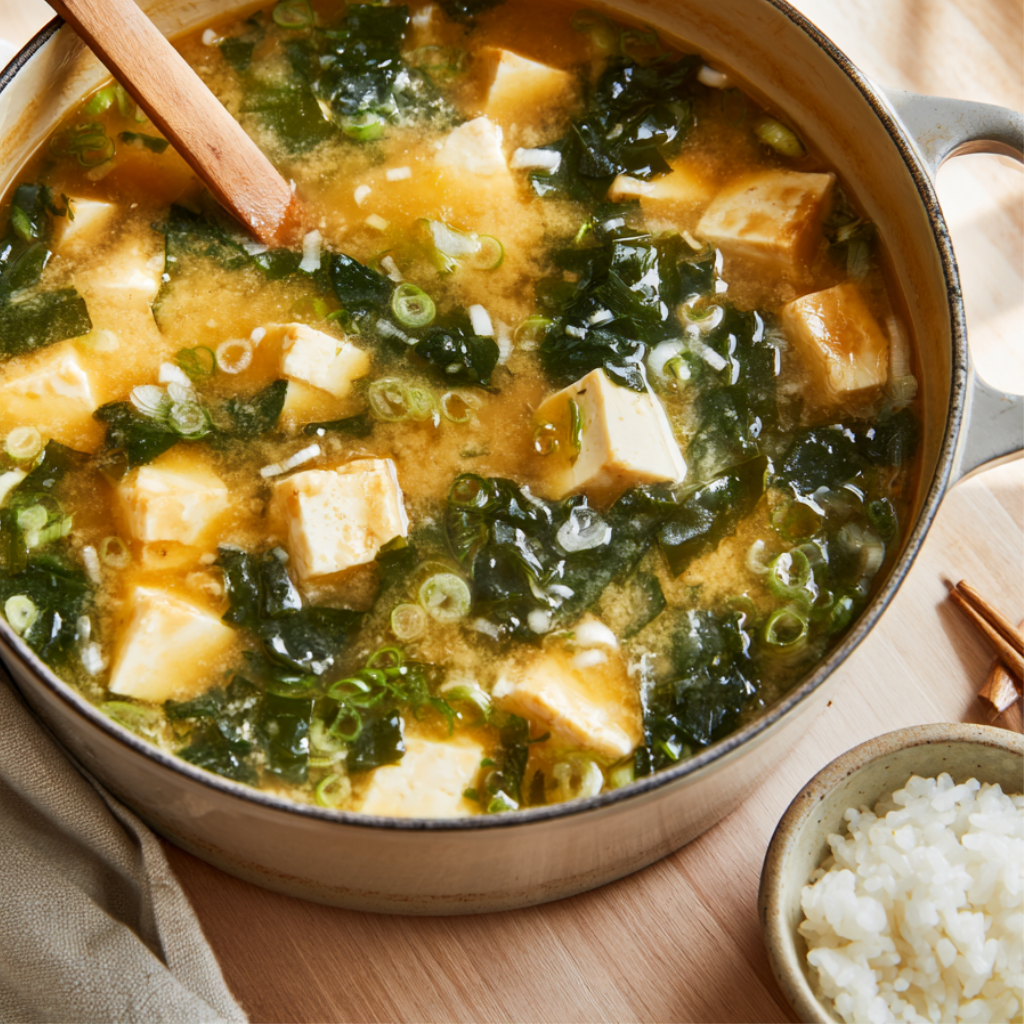
A few small decisions make this bowl taste authentic instead of flat:
Pull the Kombu Before the Boil. This is the single most important step in Japanese soup making. Boiling kombu releases bitter, slimy alginic acid. Removing it right before the water comes to a full boil extracts pure glutamic acid — the compound responsible for umami.
Dissolve the Miso Separately. Ladling hot dashi into a small bowl and whisking the miso in until smooth is how professional chefs avoid salty miso lumps. Add the smooth mixture back to the pot instead of dropping paste straight in.
Turn Off the Heat Before the Miso Goes In. Miso is a fermented paste with live cultures and delicate aroma compounds. Boiling it dulls the flavor and kills the probiotics. Add it off the heat and the bowl tastes bright instead of flat.
Hydrate the Wakame in Cold Water First. Soaking dried wakame for 5 minutes before it hits the pot keeps it supple, not slimy. Dried wakame expands to roughly five times its size, so a little goes a long way.
Use Dashi, Not Plain Water. Dashi is the backbone of miso soup — a quick Japanese stock made from kombu and bonito flakes. It takes 10 minutes, and it’s the difference between a bowl that tastes like miso soup and one that tastes like salty water.
Add the Tofu Gently. Silken tofu is delicate. Slide it in, let it warm through for 2 to 3 minutes, and don’t stir aggressively, or it will break apart.
Authentic Japanese Miso Soup
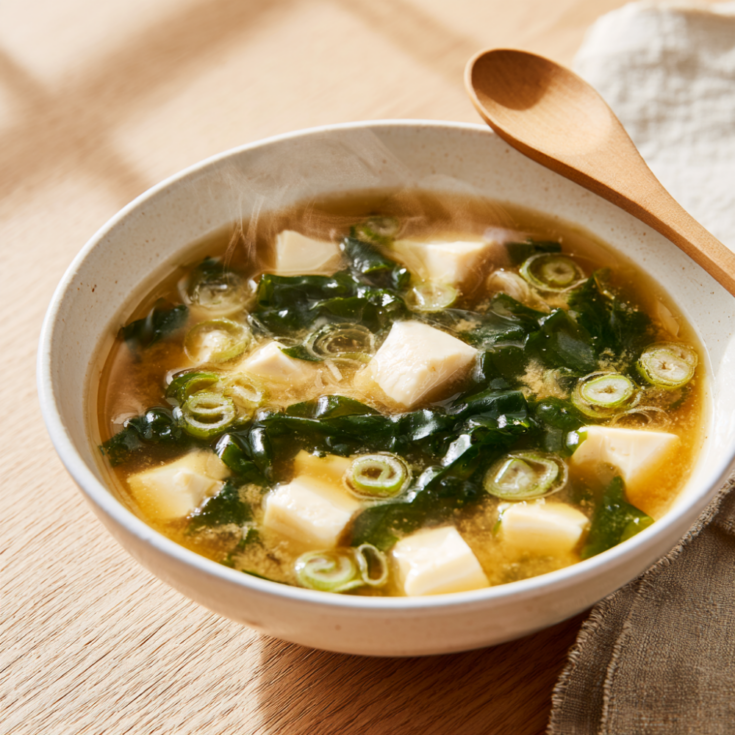
An authentic miso soup recipe with tofu and wakame, made with fresh dashi broth and white miso paste. Ready in 15 minutes.
Ingredients
For the Authentic Dashi Base
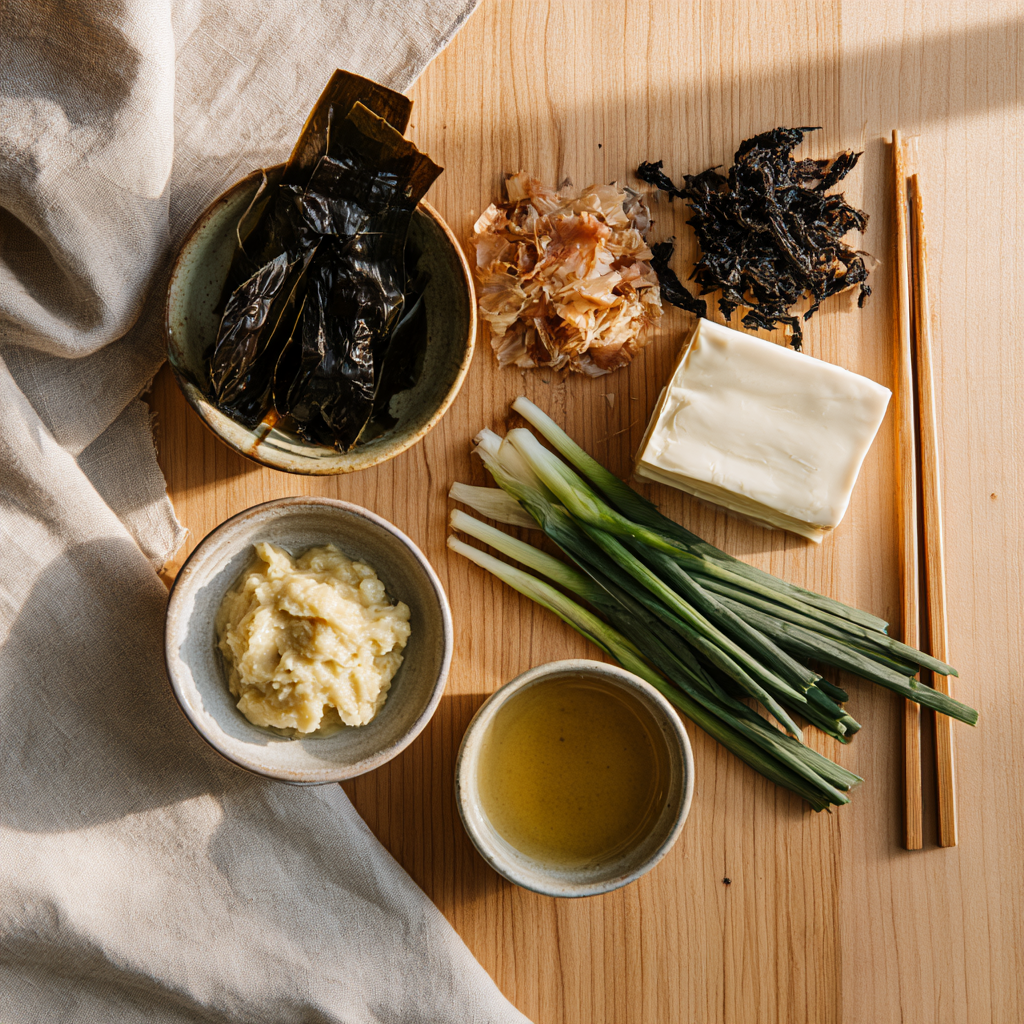
- 4 cups cold water
- 1 piece (4-inch) dried kombu (kelp)
- ½ cup bonito flakes (katsuobushi), or 1 tsp instant dashi powder (Hondashi)
For the Soup Add-Ins
- 3 tbsp white or yellow miso paste (shiro miso), plus more to taste
- 8 oz silken tofu (or firm tofu cut into ½-inch cubes)
- 2 tbsp dried wakame seaweed
- 2 green onions, thinly sliced
- Optional protein booster: 1 cup shelled edamame, or 1 egg whisked into the hot broth
For Serving
- Steamed white or brown rice
- A side of pickled ginger or cucumber
- Grilled salmon, teriyaki chicken, or edamame
Instructions
- Hydrate the wakame. Place the dried wakame in a small bowl of cold water. Soak for 5 minutes, until expanded and tender. Drain well and set aside.
- Make the fresh dashi. Add the 4 cups of cold water and the kombu to a medium pot over medium-low heat. Just as small bubbles begin to form around the edges — right before a boil, about 5 minutes — remove and discard the kombu. Add the bonito flakes, bring to a gentle simmer, and cook for 2 minutes. Turn off the heat, let the flakes settle to the bottom for 2 minutes, then strain through a fine-mesh sieve into a clean bowl. If using instant dashi powder, simply stir 1 teaspoon into 4 cups of hot water.
- Simmer the tofu. Return the strained dashi to the pot over medium-low heat. Add the cubed tofu (and edamame if using) and simmer for 2 minutes, until warm. Do not let it boil.
- Dissolve the miso. Turn off the stove heat completely. Ladle ½ cup of warm dashi into a small bowl. Add 3 tablespoons of miso paste and whisk vigorously until smooth and lump-free.
- Combine and finish. Pour the dissolved miso mixture back into the pot. Add the hydrated wakame and gently stir to combine. Taste and add another ½ teaspoon of miso for deeper flavor.
- Serve. Ladle into warm Japanese soup bowls and garnish with sliced green onions. Serve immediately alongside steamed rice and a grilled protein.
Notes
Each serving has about 90 calories and 6g of protein, with roughly 7g of carbs, 4g of fat, 1g of fiber, and 700mg of sodium. Classic miso soup is traditionally an appetizer or side broth rather than a main dish, so the protein is naturally light. With the high-protein additions below, each serving climbs to about 18g of protein while staying under 150 calories.
Tips for the Best Miso Soup
- Never boil the miso. Add it off the heat to protect the flavor and the live cultures.
- Remove the kombu before the water boils. Boiling kombu makes the broth slimy and bitter.
- Strain the dashi. A fine-mesh sieve keeps the bonito flakes out of the final bowl.
- Use a whisk, not a spoon, for the miso. A whisk breaks up lumps in seconds.
- Soak the wakame in cold water, not hot. Hot water makes it mushy.
- Use silken tofu for classic texture, or firm tofu for more protein.
- Add the green onions last. They stay bright and crisp when they hit the bowl, not the pot.
What to Serve With Miso Soup
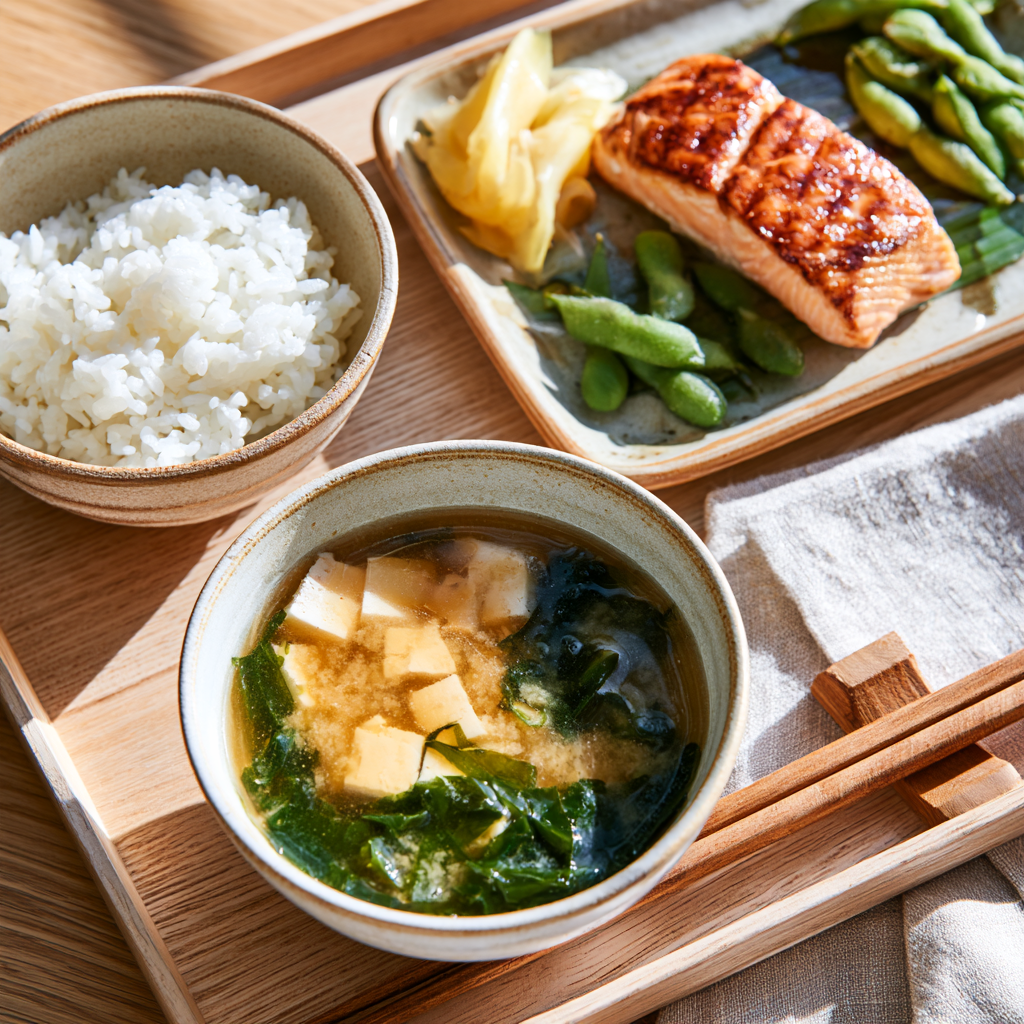
Miso soup is a supporting player in a Japanese meal, but it works as a light meal on its own with the right sides:
- Steamed white or brown rice
- Grilled salmon or teriyaki chicken
- Edamame with sea salt
- Cucumber sunomono salad
- Pickled ginger or pickled daikon
- Gyoza or dumplings
Make-Ahead and Storage Instructions
Make Ahead: Miso soup is best fresh, but you can prepare the dashi and soak the wakame up to 3 days in advance. Store the dashi in a sealed container in the refrigerator.
Refrigerator: Store leftover soup in a sealed container for up to 3 days. The tofu will firm up slightly, and the wakame will soften further.
Reheating: Reheat gently on the stovetop over low heat. Do not boil — high heat dulls the miso flavor. If you have leftover soup, consider adding a fresh spoonful of miso after reheating to brighten the flavor.
Freezer: Miso soup does not freeze well. The tofu becomes spongy, and the miso flavor fades.
Meal Prep: Portion the dashi, tofu, and wakame into containers and store the miso paste separately. When ready to eat, heat the broth, dissolve the miso off the heat, and combine.
Easy Variations
Chicken Miso Soup. Add 1 cup of shredded cooked chicken to the pot with the tofu. This makes the soup a more substantial meal, with about 18g of protein per serving.
Miso Noodle Soup. Add 4 oz of cooked ramen, soba, or udon noodles to the bowls before ladling in the soup. This is the easiest way to turn miso soup into a full meal.
Mushroom Miso Soup. Add 1 cup of sliced shiitake or enoki mushrooms to the dashi and simmer for 5 minutes before adding the tofu. The mushrooms add an earthy depth that pairs beautifully with the miso.
Make It a High-Protein Meal
Classic miso soup is traditionally an appetizer or side broth, so it has about 6g of protein per serving. To turn it into a high-protein meal that fits this blog’s focus, you have a few easy options.
Stir 1 cup of shelled edamame into the pot during step 3 to add about 8g of protein across the whole batch. Swap the silken tofu for firm or extra-firm high-protein tofu to add another 6g. Or simply pair the bowl with a high-protein main — 6 oz of pan-seared salmon, teriyaki chicken, or a side of steamed edamame — to hit 35g or more for the full meal.
Storage and Food Safety
Refrigerator: Store in a sealed container for up to 3 days.
Freezer: Not recommended. Tofu becomes spongy, and the miso flavor fades.
Make Ahead: Prepare the dashi and soak the wakame up to 3 days ahead. Store separately.
Food Safety: Keep the soup refrigerated within 2 hours of cooking. Reheat to 165°F before serving. Do not reheat more than once.
Frequently Asked Questions
What is miso soup made of?
Miso soup is made from dashi broth (kombu and bonito flakes), miso paste, tofu, wakame seaweed, and green onions. Some versions add mushrooms, noodles, or chicken.
What does miso soup taste like?
Miso soup is savory, slightly salty, and deeply umami. The flavor depends on the type of miso — white miso is milder and sweeter, red miso is saltier and more intense.
Is miso soup healthy?
Yes. Miso soup is low in calories, provides protein from the tofu, and contains probiotics from the fermented miso paste. It also provides essential minerals from the seaweed and dashi.
What are the benefits of miso soup?
Miso soup benefits include probiotics for gut health, protein from tofu, minerals from seaweed, and a low-calorie, hydrating base that fits most diets.
Can I make miso soup without dashi?
Yes. Use a simple vegetable broth or mushroom broth instead. The flavor will be different but still good.
Can I make miso soup vegan?
Yes. Use kombu dashi (skip the bonito flakes) and make sure your miso paste is vegan. Most white and red miso pastes are plant-based, but check the label.
What type of miso should I use?
White miso (shiro miso) is the mildest and most versatile, and this recipe calls for it. Red miso (aka miso) is saltier and has a deeper flavor. Yellow miso is in between.
Can I add noodles to miso soup?
Yes. Cook the noodles separately and add them to the bowl before ladling in the soup. This is one of the most popular miso soup ideas.
Can I make miso soup ahead of time?
You can prepare the dashi and soak the wakame up to 3 days ahead. Add the miso fresh when you reheat so the flavor stays bright.
How long does miso soup last in the fridge?
Up to 3 days in a sealed container. Reheat gently and do not boil.
More Easy Healthy Dinner Recipes You’ll Love
- Honey Garlic Shrimp and Broccoli Recipe — High Protein, 38g Protein, 20 Minutes
- Salmon Bites Air Fryer Recipe — Crispy, 10 Minutes, 30g Protein
- Best Korean Short Ribs (Galbi) — Overnight Marinade, 44g Protein
Conclusion
This miso soup recipe earns a permanent spot in your rotation. It’s warm, savory, and deeply umami, and it comes together in 15 minutes with four core ingredients and a few pantry staples.
The three things that make it work are these. Pull the kombu before the water boils so the dashi stays clean instead of bitter. Dissolve the miso in a small bowl of hot dashi before adding it back to the pot so there are no lumps. Turn off the heat before adding the miso so the flavor stays bright.
About 90 calories per serving. 6g of protein, or up to 18g with the high-protein additions. Four servings. Ready in 15 minutes, meal prep friendly, and endlessly adaptable with chicken, noodles, dumplings, or mushrooms.
Pin it to your easy healthy dinner board and make it your new go-to Japanese soup recipe.