
If you got hooked on a cucumber salad at your local sushi restaurant and have been quietly searching for a copycat recipe ever since, you came to the right place. You know the one — that cold, crunchy, slightly spicy, slightly tangy little side dish that somehow upstages everything else on the table. You finish it and immediately wish there was more.
Unlike Greek or Mediterranean cucumber salads or the familiar creamy picnic-style mayo, this one stands out. Here, the heat from ginger and chili melds with the tang of rice vinegar, the depth of soy sauce, and an almost-pickled sourness that keeps each bite irresistible. It’s bright, sharp, and loaded with addictive flavor—distinct from the milder versions you might know.
Building on that, it’s incredibly versatile. The salad shines next to teriyaki chicken, over poke or salmon bowls, or beside Korean grilled beef at a summer BBQ. Honestly, if you’re craving Asian flavors and have a cucumber handy, you might finish this entire dish at the counter before it even reaches the table. No judgment—same.
This versatility is what makes it a must-have recipe. No cooking, just ten minutes, and it’s endlessly adjustable to your mood.
Why Asian Cucumber Salad Became the Recipe Everyone’s Making
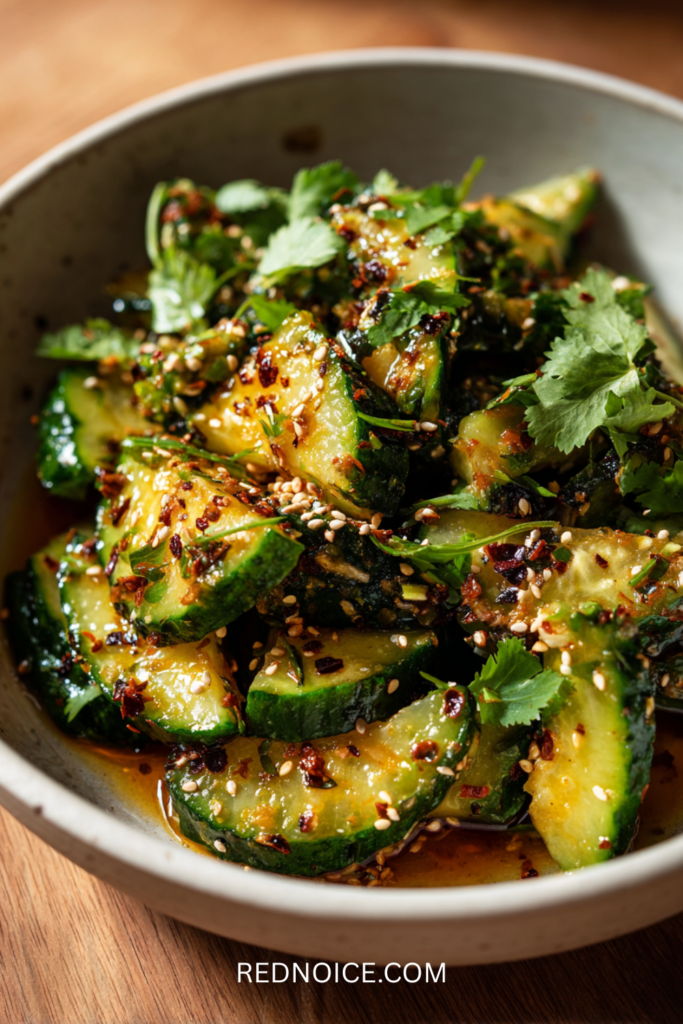
Asian cucumber salad didn’t become the recipe everyone started making by accident. The flavor combination does something that most simple salads don’t — it transforms cucumbers from a background ingredient into the main event.
Salty soy sauce, bright rice vinegar, nutty sesame oil, sharp garlic, fresh ginger, and heat combine to create a complex flavor that cucumbers quickly absorb. The salad is ready in minutes and feels rewarding, despite being effortlessly simple.
That’s the real reason it spreads. Once you make it, you understand.
What Kind of Cucumbers Work Best
The short answer: Persian or English cucumbers. The longer answer is worth knowing, so you don’t have to guess at the grocery store.
Persian cucumbers are the small, thin-skinned ones. Slightly sweet, barely any seeds, and all crunch. These are the best option if you can find them — every bite is clean and crisp with no wateriness.
English cucumbers are the long ones wrapped in plastic. Thin skin, mild flavor, very few seeds. These are the most widely available and work beautifully in every variation on this list.
Japanese cucumbers are similar to Persian but slightly longer and even more delicate. For a traditional Japanese-style cucumber salad, these are the most authentic choice — but English cucumbers are a completely acceptable substitute.
Standard American cucumbers (the big waxy ones) work if that’s what you have, but peel them and scoop out the seeds first. Otherwise, they’ll make the whole salad watery.
One tip that actually matters: salt your cucumbers before you dress them. Slice or smash them, toss with a generous pinch of salt, let them sit for 10 to 15 minutes, then pat dry with a paper towel. This draws out excess moisture so the dressing clings properly and your salad doesn’t turn into cucumber soup. It’s a small step that makes a real difference.
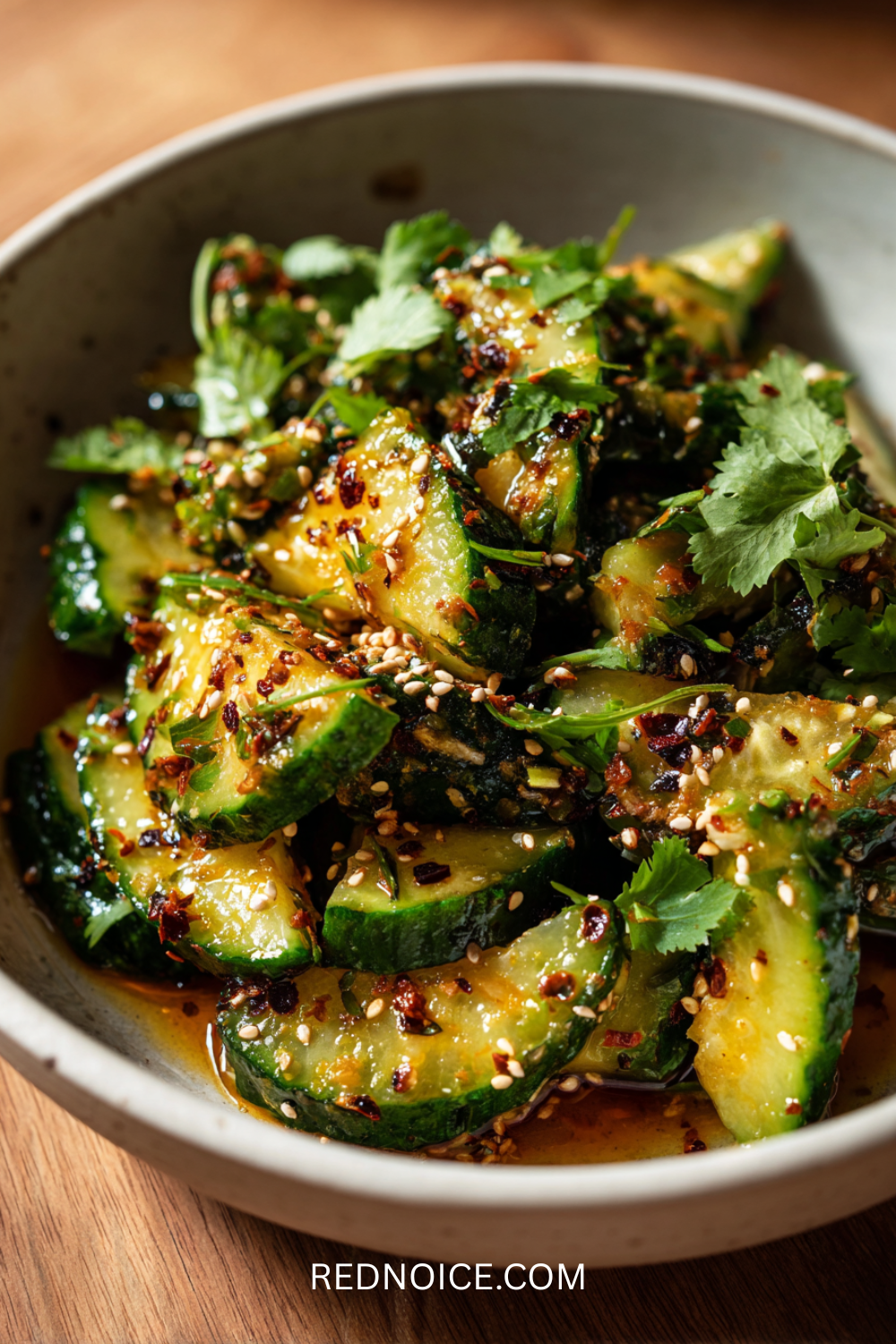
Viral Asian Cucumber Salad (Easy, No-Cook & Healthy)
Crisp Asian cucumber salad with soy sauce, rice vinegar & sesame oil. Fresh, healthy, no-cook side ready in 15 minutes!
- 2 English or Persian cucumbers
- 1 tablespoon soy sauce (tamari works for gluten-free)
- 1 tablespoon rice vinegar
- 1 teaspoon sesame oil
- 1 teaspoon honey or sugar
- 1 clove garlic (minced or grated)
- 1 teaspoon fresh ginger (grated)
- 1 teaspoon toasted sesame seeds
- 2 green onions (thinly sliced)
- Red pepper flakes or chili oil to taste
- Slice cucumbers into thin rounds or half-moons, or smash with the flat side of a knife and chop. Toss with salt, let sit 10 minutes, and pat dry.
- Whisk soy sauce, rice vinegar, sesame oil, honey, garlic, and ginger. Toss cucumbers with the dressing. Top with sesame seeds, green onions, and chili as desired.
- Eat immediately for crunch, or chill 20–30 minutes to deepen flavor. Both options work well.
If you want to explore more, here are Asian cucumber salad variations worth trying.
Instead of slicing, you smash whole cucumbers with the flat side of a knife until they crack and split, then tear them into rough pieces. The jagged edges absorb dressing like a sponge — more than sliced cucumbers ever do.
This version uses more garlic and chili, often swapping in black vinegar for rice vinegar. Black vinegar brings a deeper, slightly malty tang. Finish with crispy chili oil (crunchy bits like Lao Gan Ma) and toasted sesame seeds.
Different technique. Completely different experience. This is probably the version you’ve seen all over TikTok cucumber salad content, and the hype is justified.
Healthy Japanese Cucumber Salad (Sunomono)
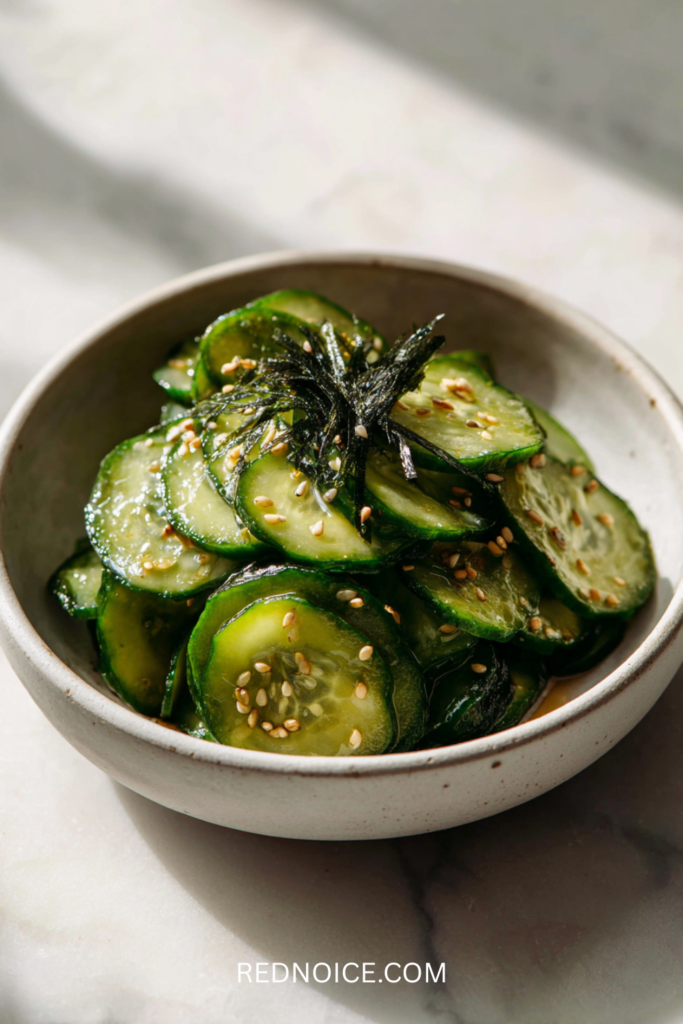
Light, crisp, quietly refreshing.
Sunomono is the minimalist cousin of the bold chili-heavy variations. The dressing is stripped back to rice vinegar, a little sugar, and a pinch of salt — sometimes a small splash of soy sauce, but not always. That’s genuinely it.
The cucumbers are sliced paper-thin, salted, pressed, and dressed with the sweet-tart vinegar mixture. It’s traditionally served as a small side dish alongside sushi or grilled fish, which tells you everything about its flavor profile: clean, delicate, and palate-refreshing rather than bold. If you want a healthy Japanese cucumber salad that actually tastes like a cucumber, this is the one.
Optional additions include wakame seaweed, thinly sliced radish, or cooked shrimp — any of these make it substantial enough to serve as a light lunch on its own.
Sesame Ginger Cucumber Salad
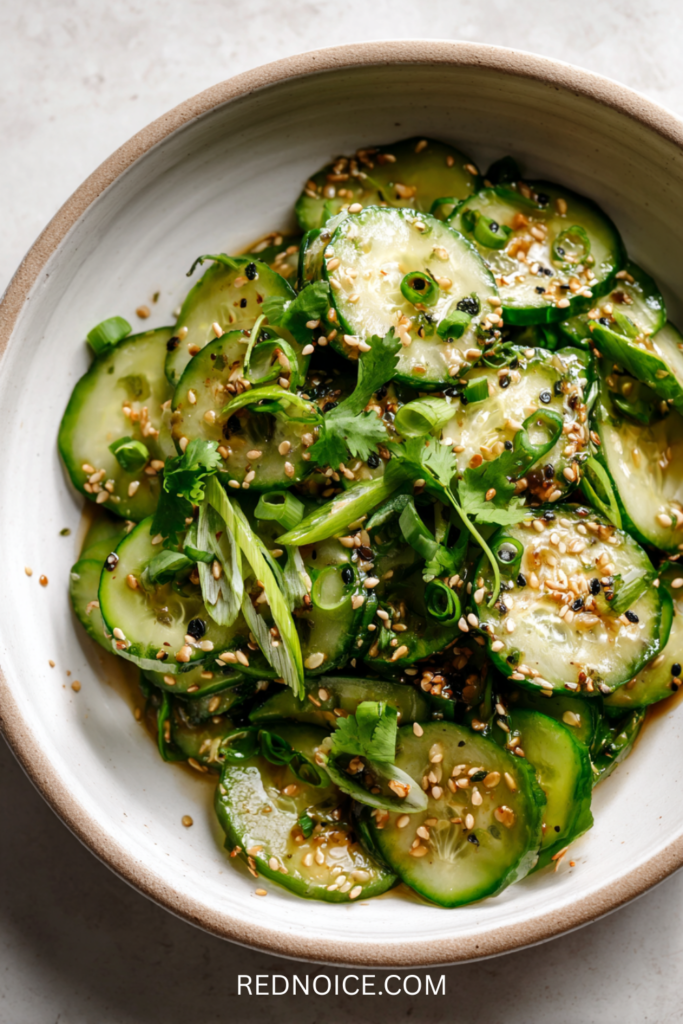
Take the base recipe and add a spoonful of tahini or peanut butter to the dressing. Whisk until smooth for a creamy, nutty coating that enhances the salad without heaviness. The flavor blends sesame and peanut, which is delicious.
This version works especially well alongside grilled proteins — the richer dressing holds up to bolder main-dish flavors in a way the lighter vinaigrette versions don’t.
Spicy Asian Cucumber Salad
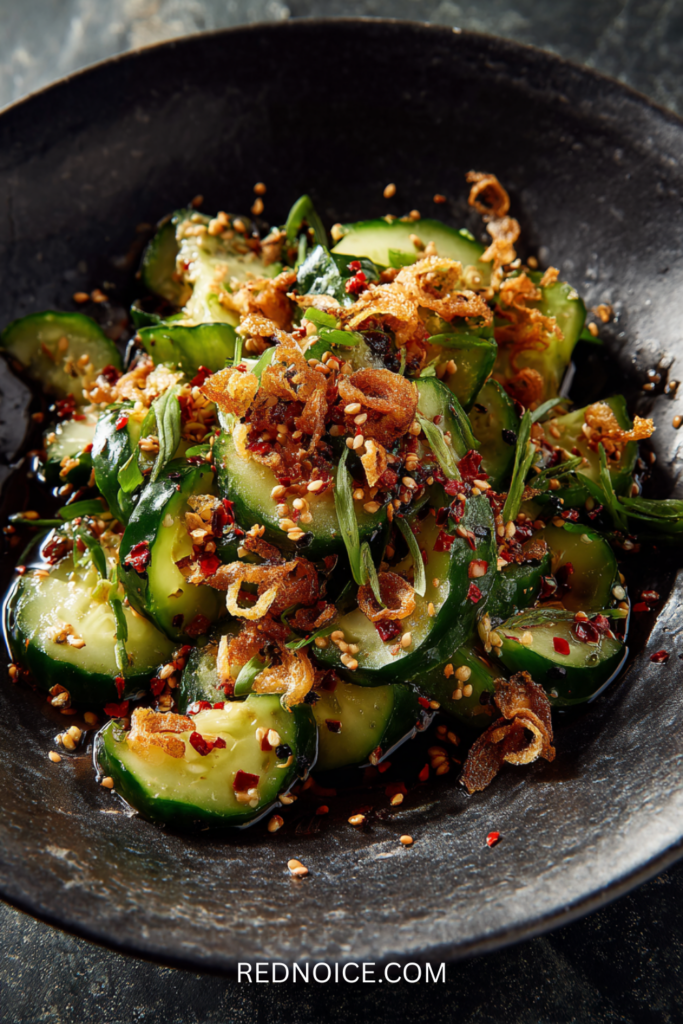
Cold cucumber. Fiery heat. Perfect contrast.
This is the variation that satisfies a very specific craving — something spicy, tangy, and impossible to stop eating. Use the base recipe and double the heat: chili oil, gochujang, sambal oelek, or a heavy hand with red pepper flakes. A little extra sugar balances the fire, and a little more rice vinegar keeps everything bright.
Thinly sliced shallots or red onion add a sharp edge that plays well against the spice. This is the version to make when you want something that actually wakes you up.
How to Build Your Own Cucumber Salad
Once you understand the components, you no longer need a recipe. Here’s the framework:
Base: English, Persian, or Japanese cucumber — sliced, smashed, or spiralized
Acid: Rice vinegar (mild, slightly sweet), black vinegar (deeper, maltier), or lime juice (brighter, more citrusy)
Salt element: Soy sauce, tamari, or coconut aminos for a slightly sweeter, lower-sodium version
Fat: Sesame oil (classic), chili oil (adds heat and depth), or a small amount of tahini or peanut butter for creaminess
Sweetener: Honey, maple syrup, or sugar — just enough to balance the acid, not enough to taste sweet
Aromatics: Fresh garlic, fresh ginger, or both — these are doing most of the flavor work, so don’t skip them
Heat: Red pepper flakes, fresh chili, chili oil, sambal, or gochujang
Toppings: Toasted sesame seeds, crushed roasted peanuts, crispy shallots, green onions, fresh cilantro, or Thai basil
Adjust ratios to taste, and you’ve got a different salad every time without ever opening a recipe again.
What to Eat with Cucumber Salad
More things than you’d expect. This salad is one of those versatile side dishes that punches above its weight.
Grilled or pan-seared protein: The acidity cuts through richness beautifully. It’s excellent alongside soy-glazed chicken thighs, grilled salmon, teriyaki anything, or pan-seared shrimp. It serves as both a sauce and a side dish.
Rice and grain bowls: A scoop of cucumber salad over a rice or poke bowl adds crunch, brightness, and acidity, making the whole bowl feel more complete. Works with jasmine rice, brown rice, or soba noodles.
Dumplings and gyoza: This is one of the most natural pairings. The clean, tangy cucumber salad is exactly what you want alongside rich, doughy dumplings — better than dipping sauce in a lot of ways.
Summer BBQ proteins: Korean grilled beef, grilled chicken skewers, even burgers — the fresh, acidic cucumber salad works as a palate cleanser between bites and brings some balance to heavier grilled food.
On its own, with a handful of edamame or some sliced avocado on the side, Asian cucumber salad is a complete, light lunch. It’s one of those lunch ideas with cucumbers that sounds too simple until you’re actually eating it and realize it’s more than enough.
Cucumber Salad Meal Prep — What Actually Works
Real talk: cucumbers are mostly water. They release moisture over time, softening the texture and diluting the dressing. Plan for this.
The best approach for meal prep: Keep everything separate. Make the dressing and store it in a small jar. Prep the cucumbers — salt, pat dry, refrigerate in an airtight container. Combine when ready to eat. Two minutes of assembly, much better result.
If you dress in advance, eat within 24 hours. A dressed cucumber salad that sat overnight in the fridge is still good — the flavors meld and deepen — but the cucumbers will be softer. Some people prefer this texture. Just know going in.
Smashed holds up better than sliced. The larger, more irregular pieces don’t go limp as fast as thin slices. If cucumber salad meal prep is your goal, smash it, don’t slice it.
Always add toppings fresh. Sesame seeds, crushed peanuts, crispy shallots, and herbs lose their texture quickly once they come into contact with the dressing. Add them right before eating, not before storing.
Cucumber Toppings Worth Adding
Most people default to sesame seeds and green onions, which is the right call — those two do a lot. But if you want to go further:
Crispy shallots: Buy them pre-fried in bags at Asian grocery stores. They add savory crunch and depth that sesame seeds alone don’t give you.
Crushed roasted peanuts: Especially good in the spicy or peanut-sesame versions. They add fat and texture, making the salad feel more substantial.
Furikake: A Japanese seasoning blend of sesame seeds, seaweed, and dried fish. Sprinkle it over a sunomono-style salad for an umami hit that’s hard to fake with individual ingredients.
Fresh herbs: Cilantro is the obvious choice. Thai basil is less common but genuinely excellent — more floral and complex than regular basil — and pairs beautifully with the sesame-ginger dressing.
Frequently Asked Questions
Why is my cucumber salad watery? Almost always, there is excess moisture from the cucumbers. Salt them before dressing, let them sit for 10 minutes, then pat thoroughly dry. This one step fixes the problem in most cases.
How do you keep cucumbers crunchy? Salt and dry them before dressing. Store undressed if making ahead. Add any toppings right before eating. And if you’re using American cucumbers, scoop out the seeds — they hold the most water.
Can you freeze cucumber salad? No. Cucumbers are mostly water, and the texture completely falls apart when frozen. Make it fresh, or refrigerate for up to 24 hours.
Can I make this without sesame oil? You can, but sesame oil does most of the flavor work in Asian cucumber salad. If you’re out, a neutral oil plus a little tahini can fill some of the gap. It won’t be the same, but it’ll still be good.
How spicy can this get? As spicy as you want. The base recipe is mild enough for most people. The spicy variation with doubled chili oil and gochujang is genuinely hot. Start with less and add more — you can always increase the heat, but you can’t take it back.
Is this the same as Korean cucumber salad? Related, but not the same. Korean cucumber salad (oi muchim) typically uses gochugaru (Korean chili flakes) as the primary heat source and has a slightly different flavor profile. The recipes in this article are Asian-inspired but not specifically Korean — closer to Chinese and Japanese flavor profiles.
Final Thoughts
Asian cucumber salad is one of those recipes that’s almost impossible to mess up and genuinely hard to get bored with once you know the formula. Whether you’re making it as a quick side for weeknight dinners, something fresh for a summer BBQ, or just satisfying a craving for something bright and tangy on a hot day, it fits the moment every time.
Make it once, and it stops being a recipe you look up and becomes something you just make. That’s the best thing a dish can do.