Beef Wellington has a reputation. It’s the dish that shows up in cooking competitions as a test of skill, the one that can go spectacularly wrong — soggy pastry, overcooked beef, a filling that leaks.
And it’s also one of the most impressive things you can put on a holiday table.
For anyone hosting Thanksgiving who isn’t a turkey fan, or Christmas, or an anniversary, or a birthday that deserves a little theater, this is the main course that makes people sit up.
The recipe below is adapted from Gordon Ramsay‘s classic in his Ultimate Cookery Course.
It’s the same architecture: seared fillet, mushroom duxelles, Parma ham, puff pastry, red wine sauce. What I’ve changed are the two things that trip up home cooks.
Cook the duxelles in a dry pan first, so all the moisture is gone before it goes anywhere near the pastry. And the bake is temperature-based, not time-based — an instant-read thermometer in the center of the beef tells you exactly when it’s done.
The result is individual Wellingtons, one per person, which are easier to handle than a whole tenderloin and cook more evenly.
The red wine sauce is a full-bottle reduction that takes about an hour, and most of that time is hands-off. It’s a project, and it’s worth it for the right occasion.
Why This Recipe Works
Cooking the mushrooms in a dry pan first is what prevents a soggy bottom. Mushrooms are about 90% water, and cooking them in oil traps that moisture inside the fat coating. Dry-sweating them first forces the water out; then you add the butter. A bone-dry duxelles is the single biggest defense against a soggy Wellington.
The Parma ham is a moisture barrier, not just a flavor layer. The ham wraps completely around the beef and duxelles, creating a sealed layer that keeps the mushroom moisture away from the pastry. It also seasons the beef as it bakes.
Searing the beef cold and briefly is what keeps the center rare. The sear is for Maillard flavor, not for cooking the interior. Thirty to sixty seconds per side on a cold fillet gives you a crust without warming the center, and you put the beef back in the fridge immediately after.
The temperature-based bake is what makes this foolproof. Ramsay’s published recipe calls for 15 to 20 minutes at 200°C, a wide window that depends on your fillet size and oven temperature. Pulling the Wellington when the center reads 120°F for medium-rare is the only reliable way to know it’s done.
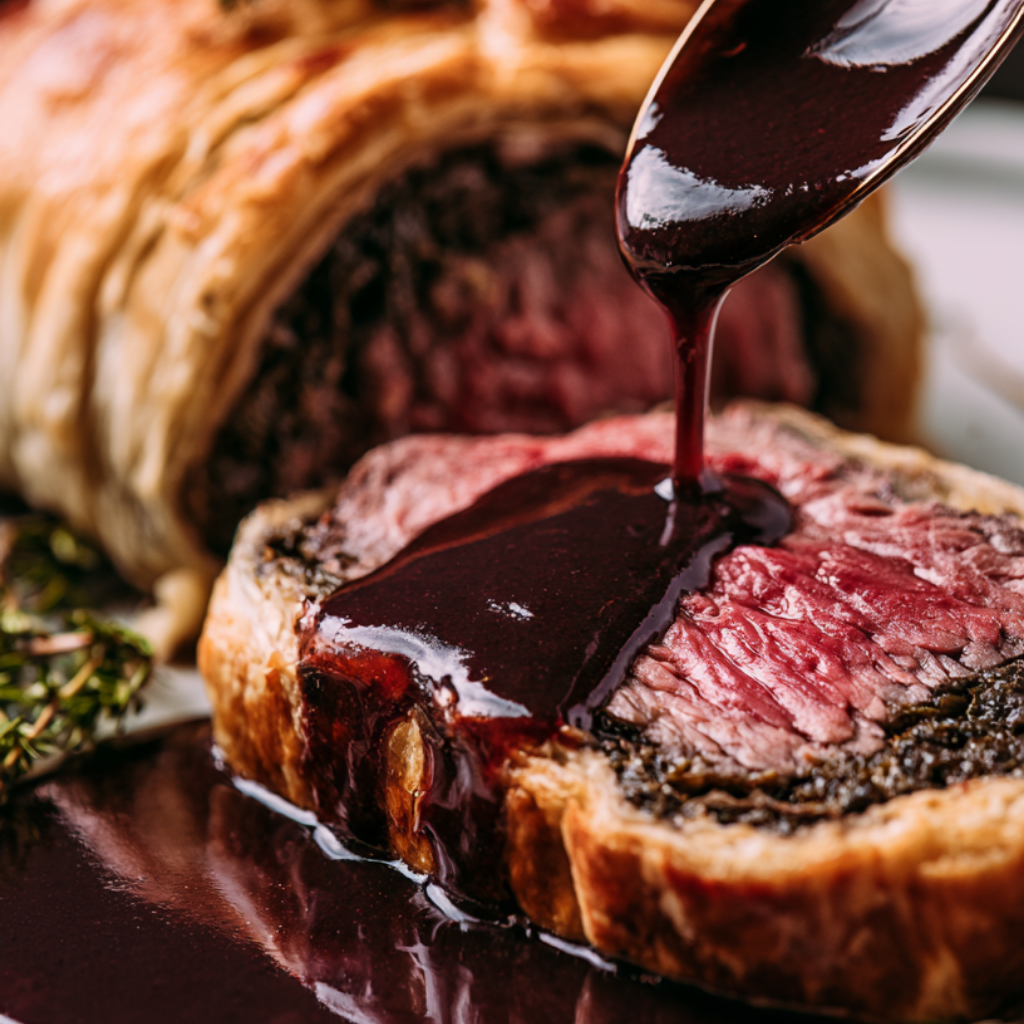
Resting for 10 minutes is what finishes the cooking and sets the juices. Carryover heat brings the center from 120°F to about 130°F, which is perfect medium-rare. If you slice immediately, the juices run onto the board, and the pastry gets soggy.
The red wine sauce is a pure reduction, no starch. Reduce a full bottle of wine almost completely, then combine it with beef stock and simmer for an hour to get a glossy, deeply savory sauce that coats the back of a spoon. It’s the classic accompaniment, and it’s worth making while the Wellington bakes.
Ingredients That Matter
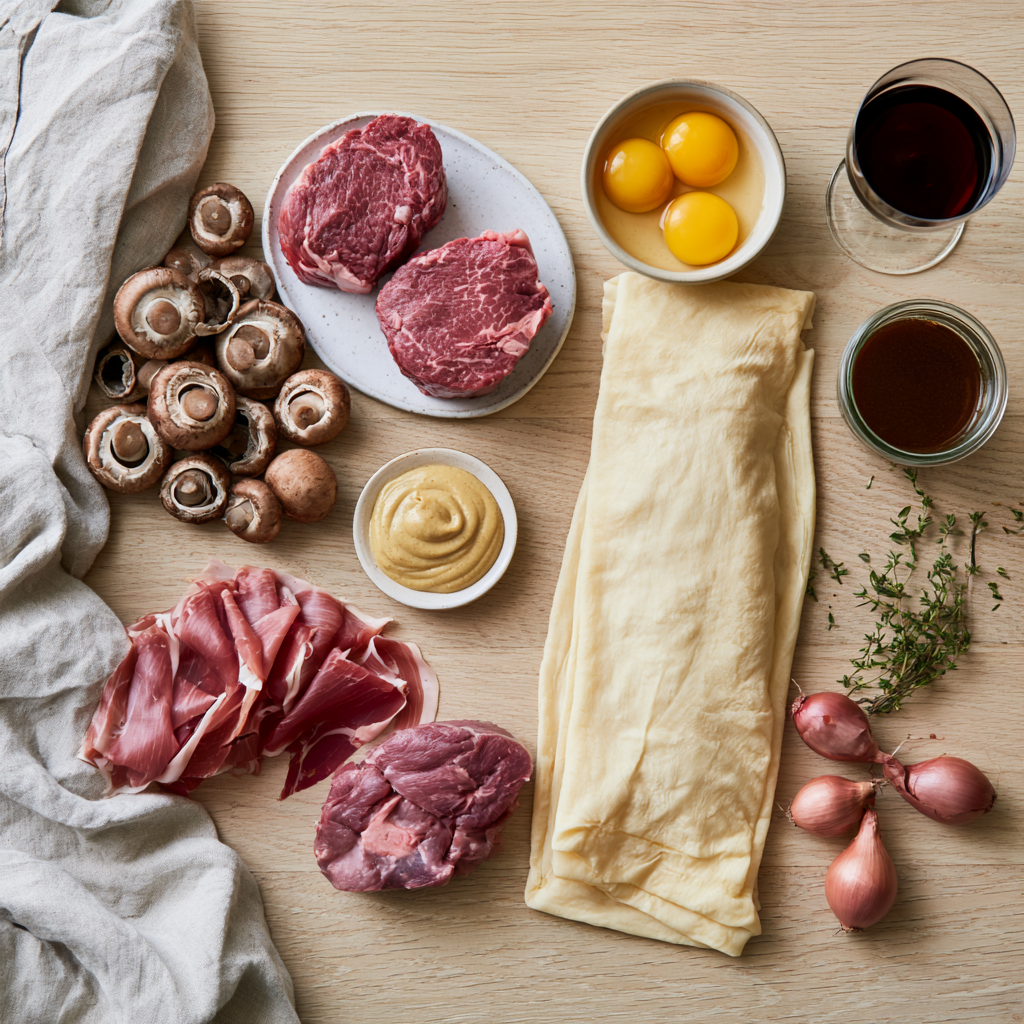
Most of this list is flexible. Three ingredients are easy to get wrong, so those are the ones worth explaining.
Center-cut beef fillet, 6 to 8 ounces per person. Fillet is the traditional cut because it stays tender through the bake. Look for pieces of even thickness so they cook evenly. Top sirloin works as a budget alternative, but it’s denser and needs a slightly longer bake.
Dried mushrooms, cooked until bone-dry. Cremini, shiitake, or a wild mix all work. The key is the dry-sauté step. If the duxelles is even slightly wet, the pastry will steam from the inside.
All-butter puff pastry, chilled. Store-bought is fine, and most home cooks use it. Keep it cold until the moment it goes around the beef, and work quickly so the butter doesn’t soften.
How to Make It
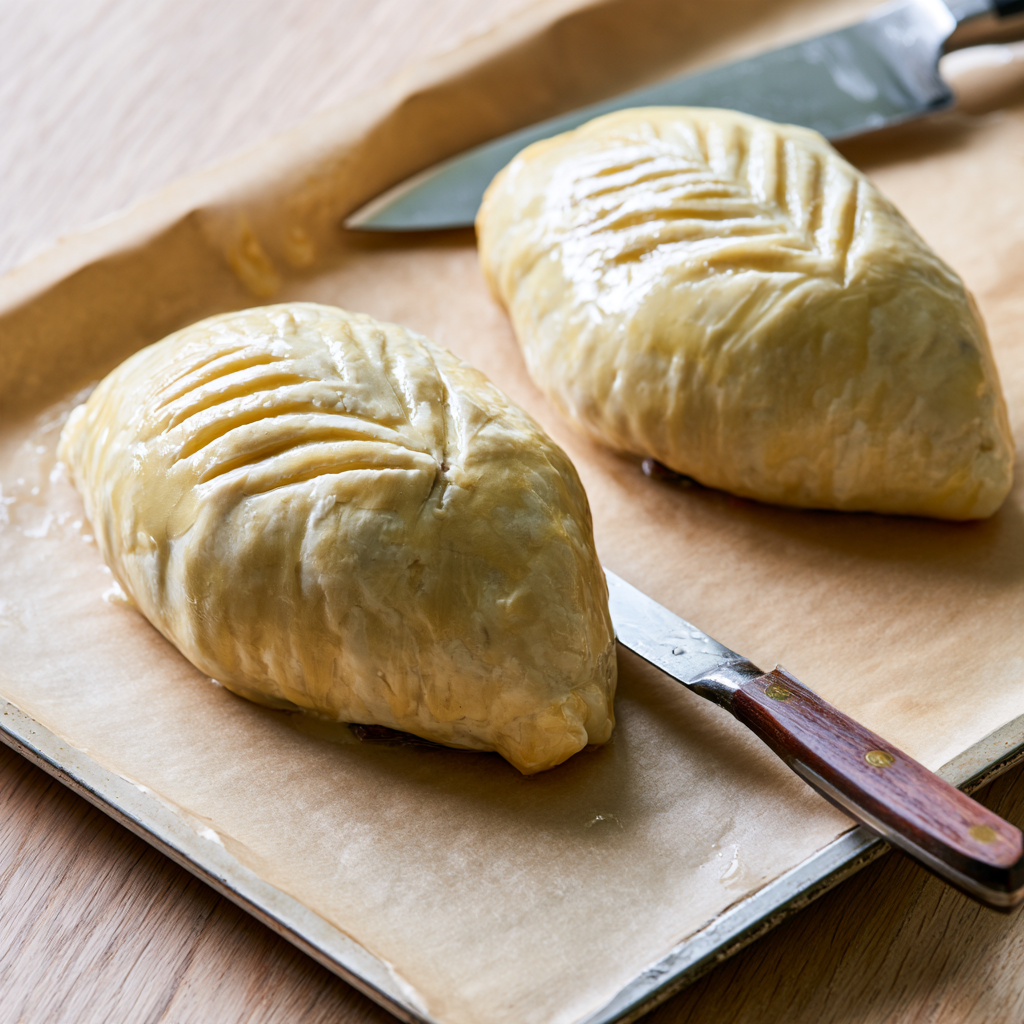
Step 1: Shape and chill the beef.
Wrap each fillet tightly in plastic wrap and twist the ends to form a uniform cylinder. Chill for at least 2 hours, or overnight.
Step 2: Sear and brush with mustard.
Remove the plastic and pat the beef dry. Heat a skillet over high heat until smoking. Sear each fillet for 30 to 60 seconds per side, until browned all over but still raw in the center. Remove from the heat and immediately brush all sides with Dijon or English mustard. Cool completely.
Step 3: Make the bone-dry duxelles.
Finely chop the mushrooms. Add them to a dry skillet over medium-high heat with a pinch of salt and cook for 8 to 10 minutes, stirring frequently, until all the moisture has evaporated and the mushrooms are a dry paste. Add a tablespoon of butter and the thyme leaves, then cook for 2 more minutes. Cool completely.
Step 4: Wrap in Parma ham and duxelles.
Lay a sheet of plastic wrap on the counter. Arrange 4 slices of Parma ham in an overlapping square. Spread half the cooled duxelles evenly over the ham. Place a cooled beef fillet in the center and roll the ham tightly around it using the plastic wrap. Twist the ends to seal into a log. Repeat with the second fillet. Chill for 30 minutes.
Step 5: Wrap in pastry.
Roll the puff pastry into rectangles large enough to enclose each log. Brush the edges with egg wash. Unwrap the beef logs and place them on the pastry. Roll tightly to enclose, trim the excess, and seal the seam underneath. Brush all over with egg wash and chill for 30 minutes.
Step 6: Make the red wine sauce.
Heat olive oil in a saucepan over high heat. Brown the beef trimmings for 5 minutes. Add the shallots, peppercorns, bay leaf, and thyme and cook for 5 minutes, until the shallots are golden.
Pour in the red wine vinegar and let it bubble until almost dry. Add the red wine and boil until almost completely reduced, about 15 to 20 minutes. Add the beef stock, bring to a boil, then simmer gently for 45 to 60 minutes, until glossy and syrupy. Strain through a fine-mesh sieve and season.
Step 7: Bake.
Preheat the oven to 200°C (400°F). Score the pastry lightly and brush with egg wash. Bake for 15 to 20 minutes, until the pastry is deep golden and an instant-read thermometer in the center of the beef reads 120°F for medium-rare. If the pastry is browning too fast, tent it loosely with foil.
Step 8: Rest and serve.
Rest the Wellingtons on a wire rack for 10 minutes. Slice with a sharp serrated knife and serve with the warm red wine sauce.
Tips and Troubleshooting
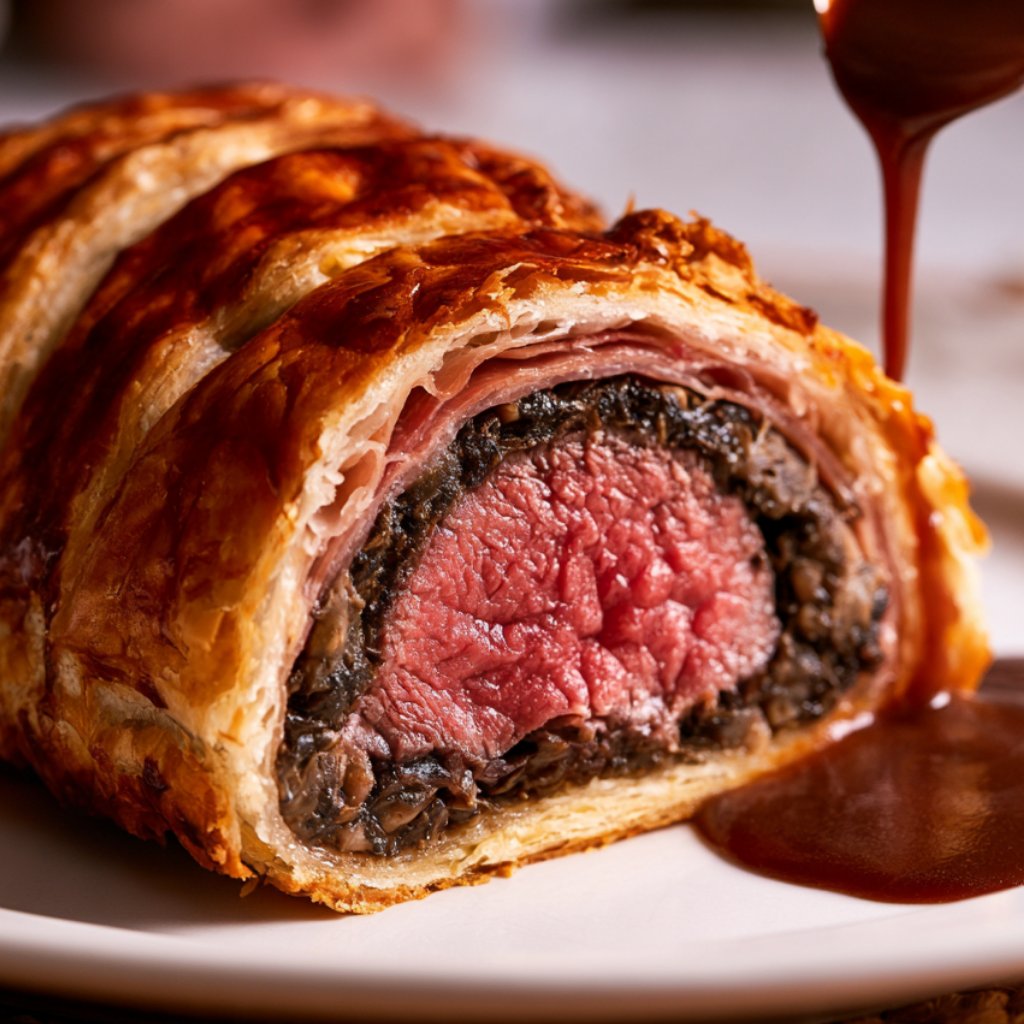
The bottom is soggy. The duxelles was too wet, or the Wellington sat too long before baking. Cook the mushrooms until bone-dry, and bake on a preheated sheet pan or a wire rack set inside a pan.
The beef is overcooked. It went into the oven warm, or it baked too long. Sear it cold, chill it thoroughly before wrapping in pastry, and use a thermometer.
The pastry is pale. The oven wasn’t hot enough, or you skipped the egg wash. Preheat fully and brush the pastry all over with egg wash.
The filling leaked out. The ham didn’t overlap enough, or you didn’t seal the pastry seam. Overlap the ham slices and press the pastry seam firmly.
The sauce is thin. The wine wasn’t reduced enough before you added the stock. Reduce it until it’s almost dry, then add the stock and simmer until it coats a spoon.
The beef is cold in the center after resting. The fillet was too thick. Ask the butcher for fillets of even thickness, and check the temperature at 15 minutes.
The pastry burned before the beef was done. The oven rack was too high. Bake on the middle rack and tent with foil if the top darkens too fast.
Storage and Make-Ahead
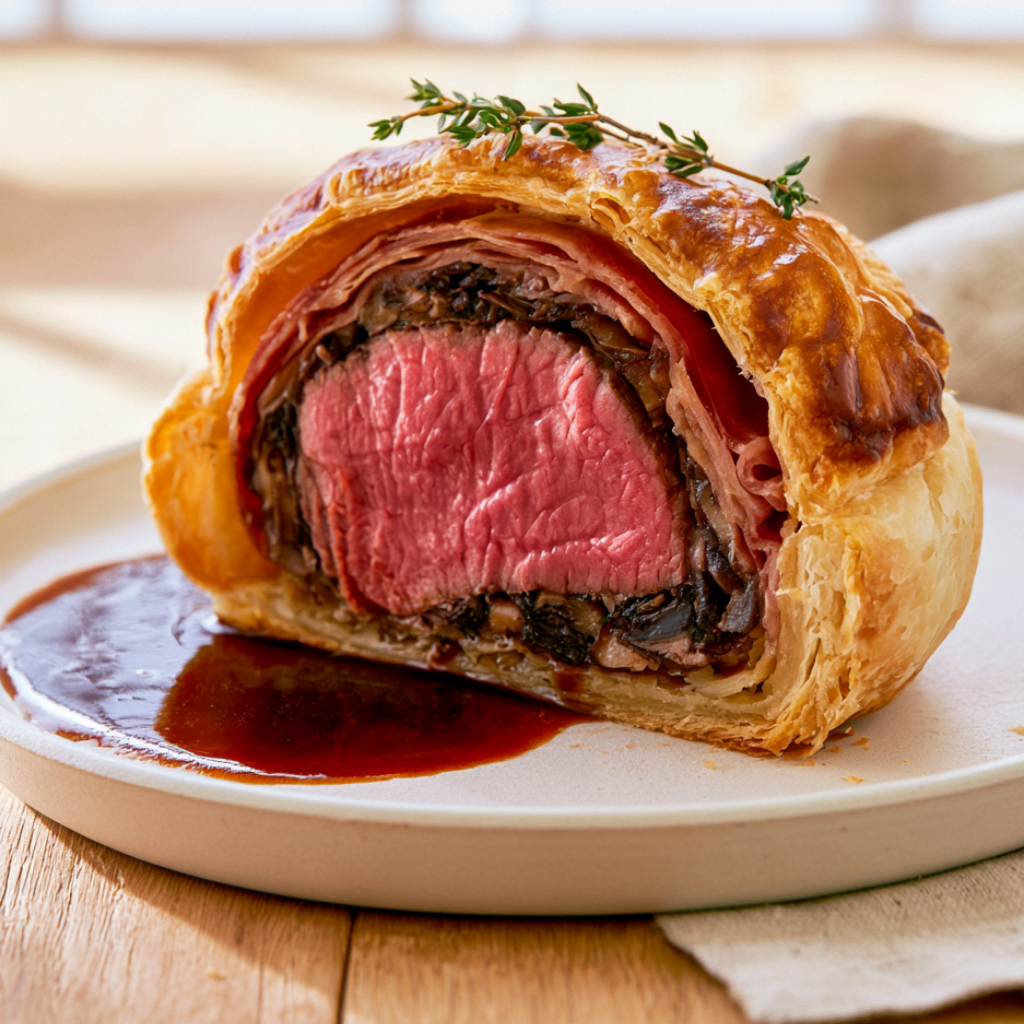
Refrigerate assembled, unbaked Wellingtons overnight, wrapped tightly. Bake straight from the fridge, adding 3 to 5 minutes to the bake time.
You can make the red wine sauce up to 3 days ahead and refrigerate it. Reheat gently on the stovetop.
Leftover baked Wellington keeps in a sealed container in the refrigerator for up to 2 days. Reheat in a 350°F oven for 10 to 12 minutes, until warmed through but not overcooked.
Store leftovers in the refrigerator within 2 hours of cooking, and discard anything left at room temperature for more than 2 hours.
Beef Wellington — Individual Portions
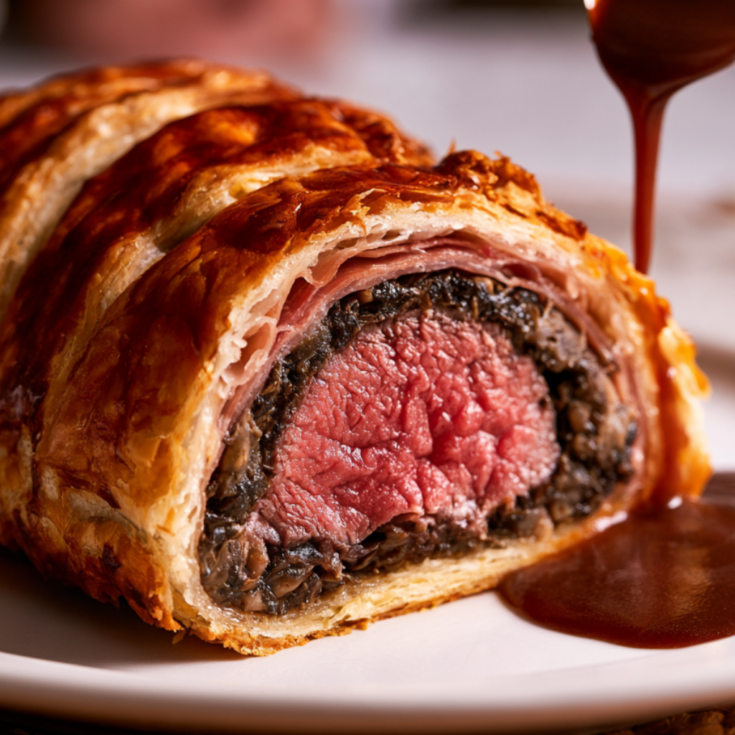
Seared beef fillets wrapped in mustard, bone-dry mushroom duxelles, Parma ham, and golden puff pastry, served with a red wine reduction. Adapted from Gordon Ramsay's classic.
Ingredients
For the Wellingtons:
- 2 center-cut beef fillets, 6–8 oz each
- 1 tbsp olive oil
- 1 tbsp Dijon or English mustard
- 500g mushrooms, finely chopped
- 1 tbsp butter
- 1 tsp fresh thyme leaves
- 8 slices Parma ham
- 500g all-butter puff pastry, chilled
- 2 egg yolks, beaten with 1 tbsp water and a pinch of salt
- Salt and black pepper
For the red wine sauce:
- 2 tbsp olive oil
- 200g beef trimmings
- 4 shallots, sliced
- 12 black peppercorns
- 1 bay leaf
- 1 thyme sprig
- Splash red wine vinegar
- 1 bottle (750ml) red wine
- 750ml beef stock
Instructions
- Wrap the fillets in plastic and chill for 2 hours. Sear in hot oil for 30–60 seconds per side, brush with mustard, and cool.
- Dry-sauté the mushrooms with salt until bone-dry, about 8–10 minutes. Add the butter and thyme, cook for 2 minutes, then cool.
- Lay Parma ham in an overlapping square on plastic wrap. Spread duxelles over the ham, place the beef in the center, and roll tightly. Chill 30 minutes.
- Roll the pastry, wrap each ham-wrapped fillet, seal the seam, brush with egg wash, and chill 30 minutes.
- Brown the trimmings, add shallots and aromatics, deglaze with vinegar, reduce the wine almost dry, add stock, and simmer 45–60 minutes. Strain.
- Bake the Wellingtons at 200°C (400°F) for 15–20 minutes, until the pastry is golden and the beef reads 120°F.
- Rest 10 minutes, slice, and serve with the sauce.
Notes
Notes: Assemble up to a day ahead and refrigerate. Sauce keeps for 3 days. Leftovers keep for 2 days. Nutrition information is an estimate.
Nutrition (per serving, estimated): About 780 calories, 42g protein, 38g carbs, 42g fat, 2g fiber, 820mg sodium.
FAQ
Can I use a different cut of beef?
Yes. Top sirloin is the most common alternative, but it’s denser and needs a slightly longer bake. Check the temperature at 15 minutes and add time in 1-minute increments.
Do I need the Parma ham?
It’s the traditional moisture barrier, and it seasons the beef. Prosciutto works the same way. If you skip it, the duxelles must be completely dry, and the pastry may still soften.
Can I make this ahead?
Yes. Assemble, wrap in pastry, and refrigerate overnight. Bake straight from the fridge, adding 3-5 minutes.
What side dishes go with beef wellington?
Serve with roasted potatoes, green beans, a simple green salad, or mashed potatoes. The sauce is rich, so keep the sides simple.
Can I make a turkey Wellington instead?
Yes, but it’s a different recipe. Turkey breast needs to be brined and cooked through, and it takes longer to bake. The Wellington architecture stays the same.
What’s the best wine for the sauce?
A dry red like Cabernet Sauvignon or Merlot. Use one you’d drink — the reduction concentrates the flavor, so a wine you don’t like won’t improve.
More High-Protein Meals You’ll Love
- Fall-Apart Tender Braised Short Ribs with Red Wine Sauce— 38g Protein
- Best Lamb Chop Recipe — Garlic Herb Crusted with Red Wine Reduction
- Prime Rib Roast in the Oven — 50g Protein, Herb Butter, Holiday Ready
- Crockpot Turkey Breast with Cranberry-Cider Gravy — Holiday Favorite
Closing
Beef Wellington is a project, and it’s the kind of project that makes a holiday feel like a holiday.
The two changes that make this version more forgiving than the classic are the bone-dry duxelles and the thermometer — one keeps the pastry crisp, the other keeps the beef from going past medium-rare.
If you’re hosting Thanksgiving for people who don’t love turkey, or Christmas, or a birthday that deserves a little drama, this is the main course that delivers it.
Give yourself the afternoon, pour a glass of the wine you’re using in the sauce, and enjoy the process.