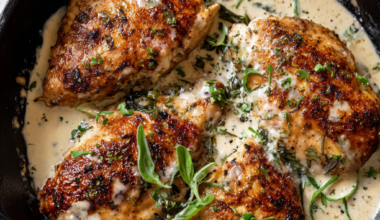
When you want a simple, classic dinner that can’t really go wrong, I go to this rosemary chicken and potatoes sheet pan dinner.
It’s the whole meal on one pan, most of the work happens in the oven, and the flavors — lemon, garlic, rosemary, and chicken drippings — do all the work for you.
The chicken skin comes out crispy, the potatoes come out golden at the edges and creamy in the middle, and you only have one pan to wash at the end.
The technique is to give the potatoes a head start.
Potatoes take longer than chicken thighs, and if you add them at the same time, the chicken finishes before the potatoes are tender.
Roasting the potatoes alone for the first 15 minutes gets them softening and browning, and then the chicken goes in — nestled in the center so its rendered fat bastes the potatoes around the edges.
And it’s high in protein.
Bone-in chicken thighs are more forgiving than breasts and stay juicy through a long roast, and pulling them at 175 to 185°F instead of 165°F keeps the meat tender, not chewy. A serving lands around 40 grams.
Why This Recipe Works
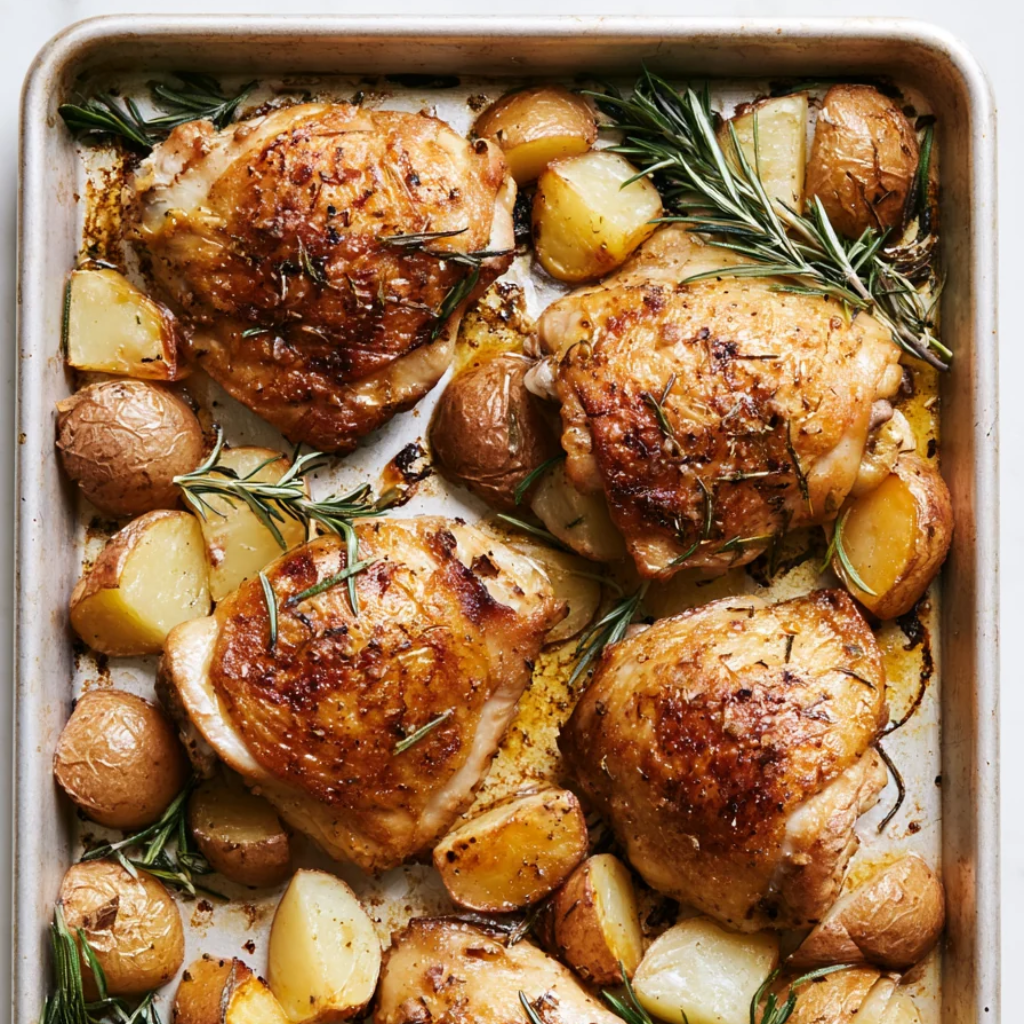
Giving the potatoes a 15-minute head start ensures everything finishes at the same time. Potatoes need about 45 minutes at 425°F to get tender and golden. Chicken thighs need 30 to 35. Roasting the potatoes alone first means the chicken goes in when the potatoes are already softening, and both come out done at the same moment.
No broth in the pan is what keeps the potatoes roasting instead of steaming. A quarter cup of liquid on a flat sheet pan pools under the potatoes and blocks the dry heat that makes them crisp. Olive oil and lemon juice are all they need, and the chicken’s rendered fat adds more as it roasts.
Placing the chicken in the center with the potatoes around the perimeter lets the fat baste the potatoes. The thighs render a lot of fat during the roast, and that fat runs down into the potatoes at the edges. If the potatoes sit under the chicken, they absorb fat and turn greasy.
Patting the chicken completely dry before seasoning is what gives you crispy skin. Surface moisture steams in the oven, and a dry thigh browns. It’s the same principle as drying a steak before searing.
Roasting the thighs to 175 to 185°F instead of 165°F is what makes the meat tender instead of chewy. The USDA minimum is 165°F, but dark meat thighs have connective tissue around the joint that needs higher heat to break down. At 175 to 185°F, the collagen turns to gelatin, and the meat gets tender.
Add the lemon juice in two stages. Half goes on the potatoes before they roast, where it caramelizes and seasons them. The rest gets squeezed over the chicken and potatoes right out of the oven, where it stays bright and cuts through the richness of the fat.
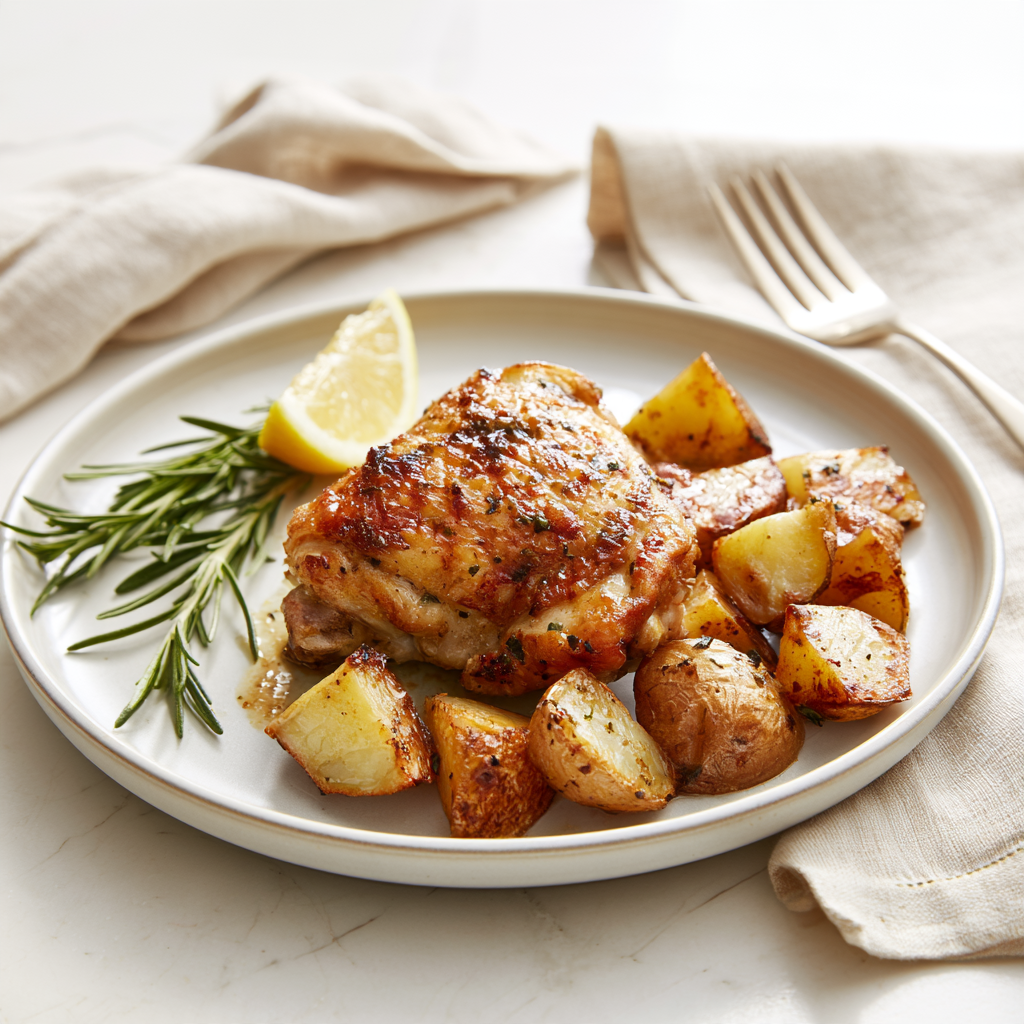
The rosemary goes on in two forms. Chopped rosemary goes on the potatoes and in the rub, flavoring the meat and potatoes as they cook. Whole sprigs go on the pan, where they perfume the whole thing and look like the photo.
Ingredients That Matter
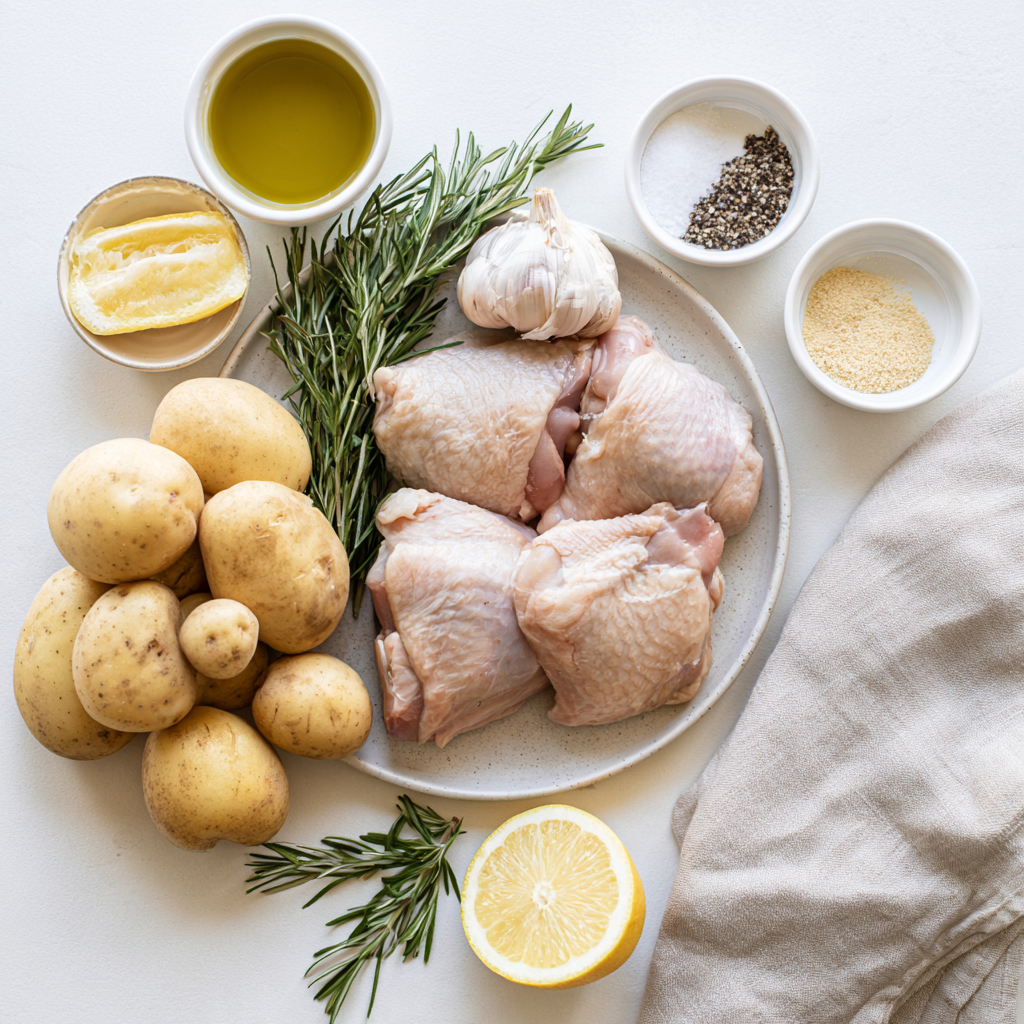
Most of this list is flexible. Three ingredients are easy to get wrong, so those are the ones worth explaining.
Bone-in, skin-on chicken thighs, 6 pieces. The skin protects the meat and crisps in the oven, and the bone keeps the thigh juicy. Boneless thighs work but cook faster and don’t get the same skin.
Yukon Gold potatoes, cut into 1-inch chunks. Yukon Golds hold their shape, get creamy inside, and absorb the lemon, garlic, and rosemary. Cut them evenly so they cook evenly.
Fresh rosemary. Dried works in a pinch, but fresh sprigs and chopped leaves give this the aroma of a Sunday roast. Strip the leaves from the stems and chop them, and leave a few sprigs whole for the pan.
How to Make It
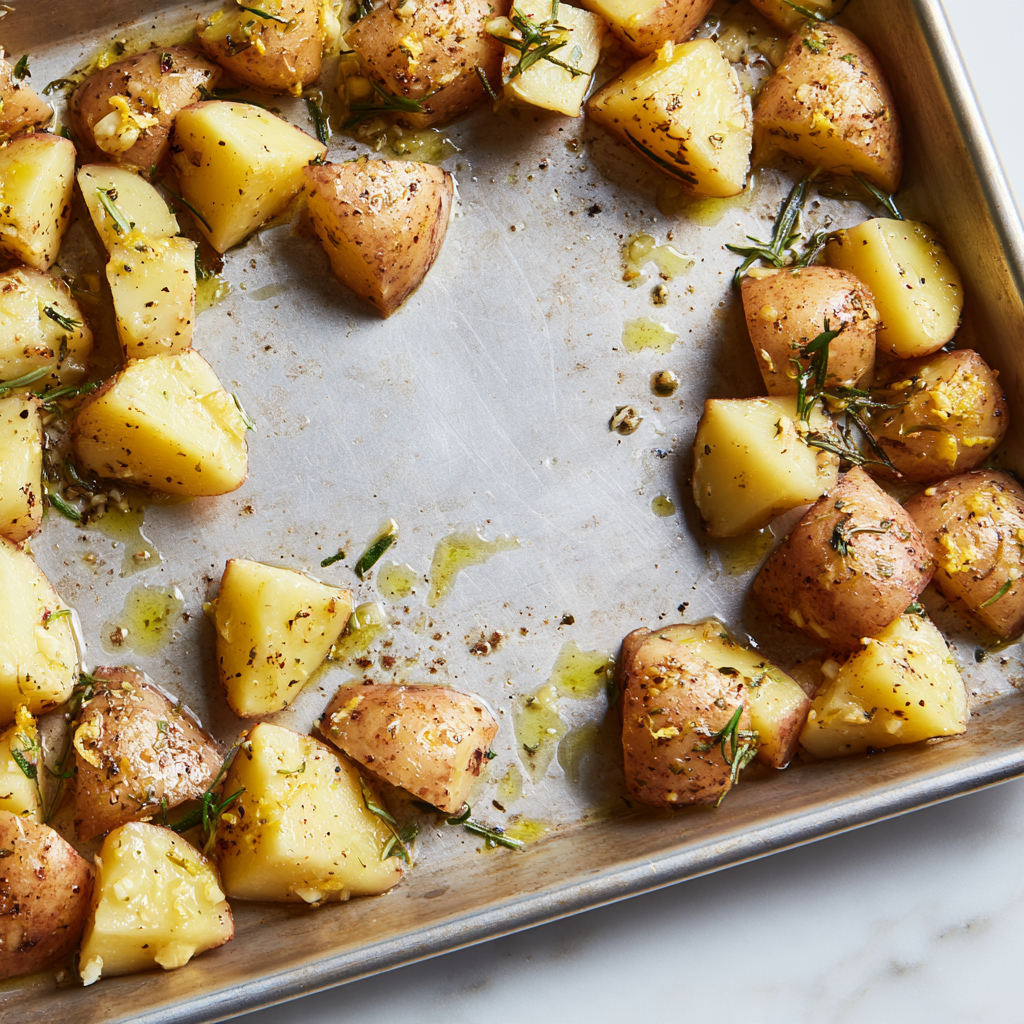
Step 1: Preheat and prep.
Preheat the oven to 425°F. Line a large, heavy-duty rimmed baking sheet with foil or parchment.
Step 2: Season and pre-roast the potatoes.
In a large bowl, toss 1½ pounds of 1-inch Yukon Gold potato chunks with 1½ tablespoons olive oil, 1 lemon zest, 1 tablespoon fresh lemon juice, 4 minced garlic cloves, 1 tablespoon chopped rosemary, ¾ teaspoon kosher salt, and ¼ teaspoon black pepper. Spread the potatoes in an even layer around the pan’s edges, leaving the center empty. Roast for 15 minutes.
Step 3: Season the chicken.
While the potatoes roast, pat 6 bone-in, skin-on chicken thighs completely dry. Rub them with 1 tablespoon olive oil, ¾ teaspoon kosher salt, ¼ teaspoon black pepper, ½ teaspoon garlic powder, and ½ teaspoon onion powder.
Step 4: Nestle the chicken and roast.
Remove the pan from the oven and nestle the chicken thighs, skin-side up, into the center of the pan among the potatoes. Scatter lemon slices and whole rosemary sprigs around the pan.
Step 5: Roast to golden.
Return the pan to the oven and roast for 30 to 35 minutes, until the skin is deep golden and the chicken reaches 175 to 185°F in the thickest part. If you want extra-crispy skin, broil for the last 2 minutes, watching closely.
Step 6: Finish and rest.
Squeeze the remaining lemon juice over the hot chicken and potatoes, let rest for 5 minutes, garnish with parsley, and serve.
Tips and Troubleshooting
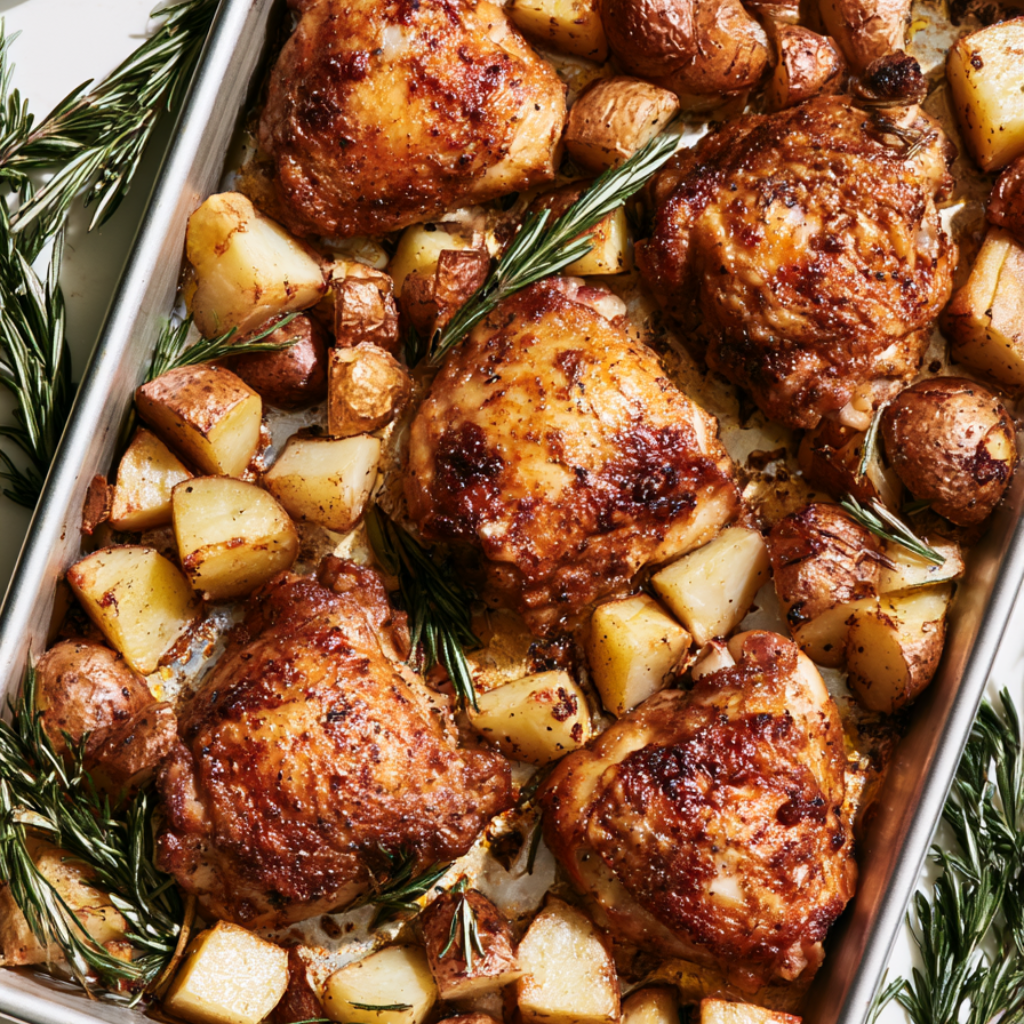
The potatoes are still hard when the chicken is done. They didn’t get enough of a head start. Roast them the full 15 minutes before the chicken goes in, and cut them into even 1-inch pieces.
The potatoes are soggy instead of crispy. You added liquid to the pan, or you crowded the potatoes. Skip the broth and use a pan large enough to spread them in a single layer.
The chicken skin isn’t crispy. The thighs were wet when they went into the oven, or the oven wasn’t fully preheated. Pat them dry and preheat for the full 15 minutes. If you need more color and crisp, remove the potatoes and you can broil the chicken for a couple of minutes.
The chicken is chewy. It was pulled at 165°F. Cook thighs to 175 to 185°F so the connective tissue breaks down.
The potatoes taste bland. They need more salt than you think. Taste one before serving and add flaky salt if needed.
The pan is smoking. The chicken fat is rendering at high heat, which is normal. If it’s excessive, move the rack down one position.
The lemon slices burned. They went on too early. Add them when the chicken goes in, not at the start.
Storage and Make-Ahead
Store the chicken and potatoes in a sealed container in the refrigerator for up to 4 days. Reheat in a 375°F oven for 10 to 15 minutes, until heated through and the skin re-crisps. The microwave works but softens the skin.
You can cut the raw potatoes and store them in cold water up to a day ahead. Drain and pat dry, then toss with oil and seasonings.
I don’t recommend freezing the assembled dish. The potatoes get watery on thawing. Cooked chicken freezes well for up to 3 months.
Store leftovers in the refrigerator within 2 hours of cooking, and discard anything left at room temperature for more than 2 hours. Reheat to 165°F.
Rosemary Chicken and Potatoes Sheet Pan Dinner
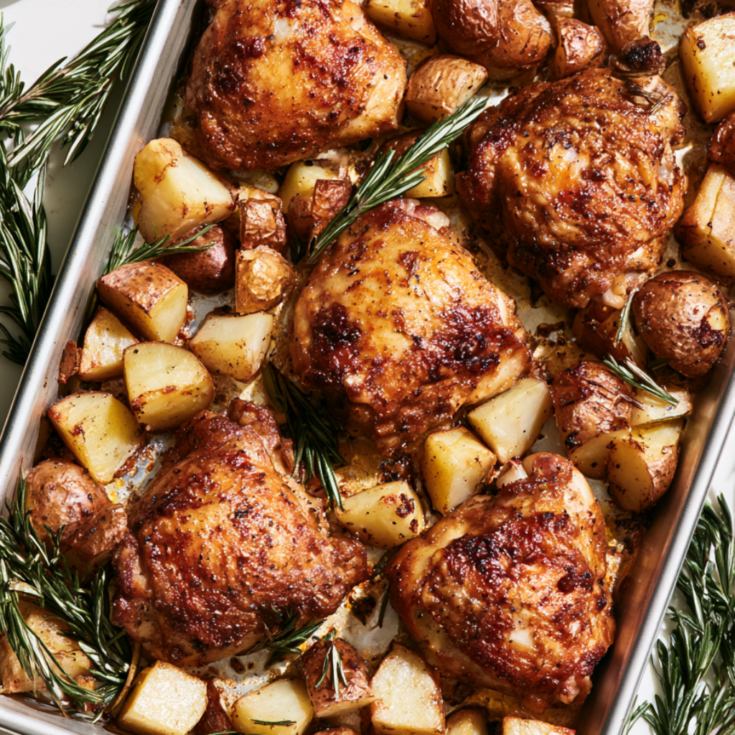
Crispy, golden bone-in chicken thighs roasted on a single sheet pan with lemon-garlic Yukon Gold potatoes and fresh rosemary. A complete dinner with about 40g of protein per serving.
Ingredients
- 6 bone-in, skin-on chicken thighs (about 2 to 2.5 lbs)
- 1½ lbs Yukon Gold potatoes, cut into 1-inch chunks
- 2½ tbsp olive oil, divided
- 1 lemon, zested and juiced, plus 1 extra lemon sliced into rounds
- 4 cloves garlic, minced
- 1 tbsp chopped fresh rosemary, plus 3 to 4 whole sprigs
- 1½ tsp kosher salt, divided
- ½ tsp black pepper, divided
- ½ tsp garlic powder
- ½ tsp onion powder
- Fresh parsley, for garnish
Instructions
- Preheat the oven to 425°F and line a large rimmed baking sheet with foil or parchment.
- Toss the potatoes with 1½ tablespoons olive oil, lemon zest, 1 tablespoon lemon juice, garlic, chopped rosemary, ¾ teaspoon salt, and ¼ teaspoon pepper. Spread around the edges of the pan, leaving the center empty, and roast for 15 minutes.
- Pat the chicken dry and rub with 1 tablespoon olive oil, ¾ teaspoon salt, ¼ teaspoon pepper, garlic powder, and onion powder.
- Nestle the chicken skin-side up in the center of the pan. Scatter lemon slices and rosemary sprigs around.
- Roast 30 to 35 minutes, until the skin is deep golden and the chicken reaches 175 to 185°F. Broil 2 minutes for crispier skin if desired.
- Squeeze the remaining lemon juice over the top, rest 5 minutes, garnish with parsley, and serve.
Notes
Notes: No broth in the pan — it steams the potatoes. Nestle the chicken in the center so the fat bastes the potatoes at the edges. Cook thighs to 175 to 185°F for tender meat. Refrigerate leftovers for up to 4 days, and reheat best in the oven. Nutrition information is an estimate.
Nutrition (per serving, estimated): About 520 calories, 40g protein, 28g carbs, 28g fat, 3g fiber, 620mg sodium.
FAQ
Can I use boneless chicken thighs?
Yes. Boneless thighs cook faster, so add them when the potatoes have about 20 minutes left and check them at 20 to 25 minutes.
Can I use chicken breasts instead?
Yes. Pound them to an even thickness, add them with the thighs, and pull them at 165°F. They may finish a few minutes earlier.
Can I use dried rosemary instead of fresh?
Yes. Use 1 teaspoon dried rosemary instead of 1 tablespoon fresh.
Can I add other vegetables?
Yes. Add green beans, asparagus, and broccoli to the pan with the chicken for the last 15 to 20 minutes. Heartier vegetables like carrots can go in with the potatoes.
Can I make this ahead for meal prep?
Yes. Roast everything, cool, and store in containers for up to 4 days. Reheat in the oven to keep the skin crisp.
What do you serve with this?
It’s a complete meal on its own, but a simple green salad or crusty bread rounds it out.
More High-Protein Sheet Pan Meals You’ll Love
- Easy Sheet Pan Salmon and Veggies (One-Pan, No-Fuss Dinner)
- Steak Sheet Pan Dinner — Garlic Butter Steak, Potatoes & Green Beans
- 35-Minute Easy and Healthy Sheet Pan Sausage and Veggies for Fall
Closing
This is the dinner I make when I want something that feels like a Sunday roast but takes an hour and one pan.
The potatoes get a head start, the chicken goes in the middle so its fat does the work, and the lemon and rosemary finish it.
It’s the kind of meal that makes a weeknight feel a little more deliberate.