Mongolian beef is usually made with thinly sliced flank steak, and it’s delicious—but it also requires a trip to the butcher, careful slicing, and a marinade.
This version uses ground beef instead and delivers the same sticky, garlic-ginger, sweet-savory profile in about twenty minutes, with ingredients you probably already have.
The glaze is the whole point. Soy sauce, brown sugar, hoisin, garlic, and ginger simmer together with a cornstarch slurry until they turn into a thick, glossy sauce that coats every strand of noodle and every crumble of beef.
It’s sweet, savory, and a little sticky, tasting like the Mongolian beef you’d order from a takeout place.
And it’s a genuinely fast dinner.
The noodles cook while the beef browns, the sauce comes together in the same skillet, and you toss everything together at the end.
One pan, twenty minutes, and a bowl that tastes like it took more effort than it did.
Why This Recipe Works
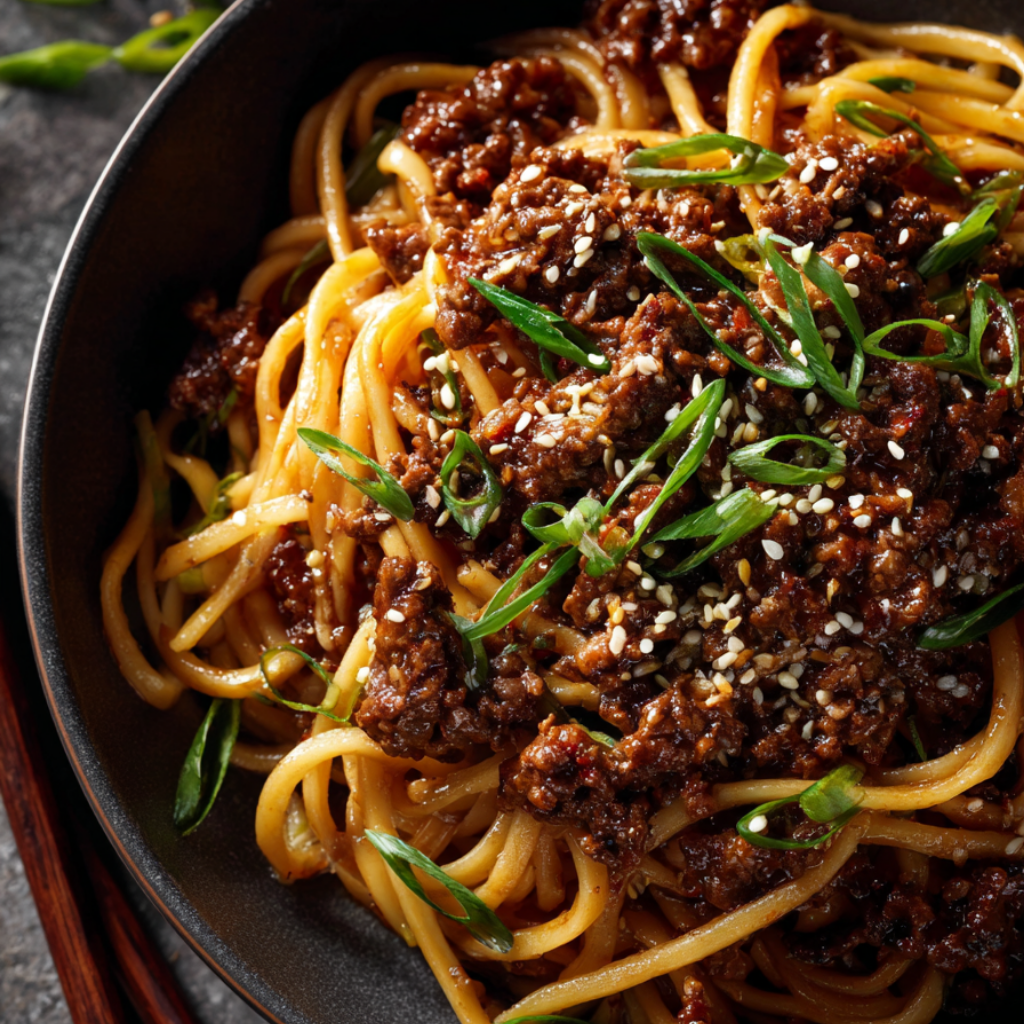
Timing the noodles so they finish when the sauce is ready keeps them from clumping. Noodles that sit drained in a colander cool down, release surface starch, and fuse together. Toss them into the hot sauce immediately, and they stay loose and absorb the glaze.
Adding a quarter cup of water to the sauce keeps the sugar from burning. Brown sugar and hoisin poured directly into a hot pan with ground beef scorch before the slurry can do its job. The water dissolves the sugar and creates a braising base that lets the sauce come together smoothly.
Whisking the cornstarch with cold water before adding it prevents lumps. Dry cornstarch dumped into a hot pan clumps instantly. Stir in a smooth slurry to thicken the sauce evenly into a glossy glaze.
Ground beef is the right protein for this dish because it browns fast and holds the sauce. Flank steak needs to be sliced thin and seared quickly, which is a different technique. Ground beef browns in five minutes, and the crumbles catch the glaze in every bite.
Add the garlic and ginger after the beef is browned. If you add them to a hot pan with raw beef, they burn before the beef is done. Bloom them for a minute after the beef comes off the heat, and they stay sweet and fragrant.
Hoisin gives the sauce its depth. Soy sauce and brown sugar alone are salty and sweet. Hoisin adds a fermented, savory note that makes the glaze taste like more than the sum of its parts.
Tossing the noodles in the skillet for a minute or two is what makes them glossy. The pan heat and the noodles’ starch combine with the glaze to coat every strand. Noodles tossed in a bowl with sauce stay drier.
Ingredients That Matter
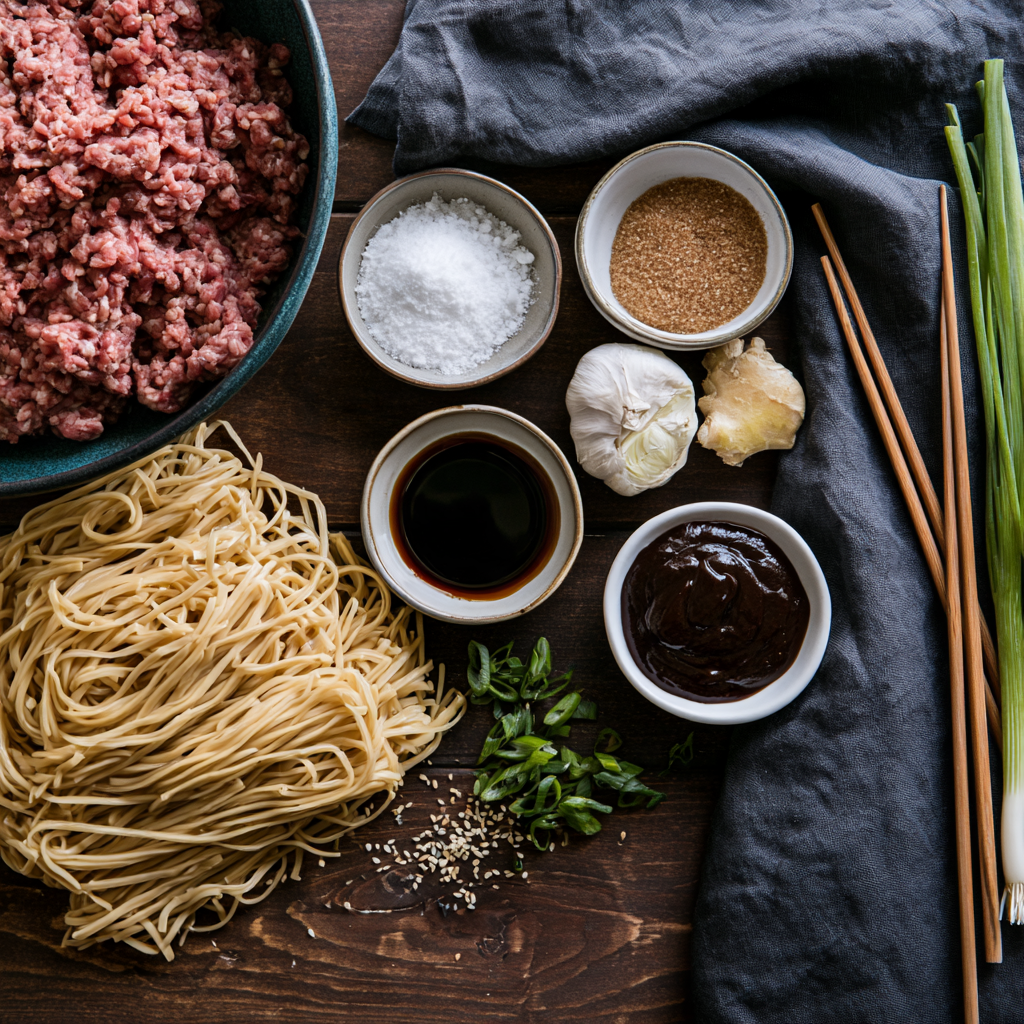
Most of this list is flexible. Three ingredients are easy to get wrong, so those are the ones worth explaining.
Ground beef, 85/15 or 90/10. The fat content matters because it’s what carries the sauce. 85/15 gives you enough fat to brown and flavor the dish without leaving grease in the pan. 90/10 works and is leaner, but drain any excess.
Use lo mein noodles, ramen blocks (without the seasoning), or spaghetti. Lo mein is the classic choice because it’s thick and chewy and holds the glaze. Ramen blocks work well too — just discard the seasoning packet. Spaghetti is a fine substitute if that’s what you have.
Hoisin sauce. This adds depth to the glaze. It’s sweet, savory, and slightly fermented, and it’s what makes Mongolian sauce taste like Mongolian sauce instead of just soy and sugar.
How to Make It
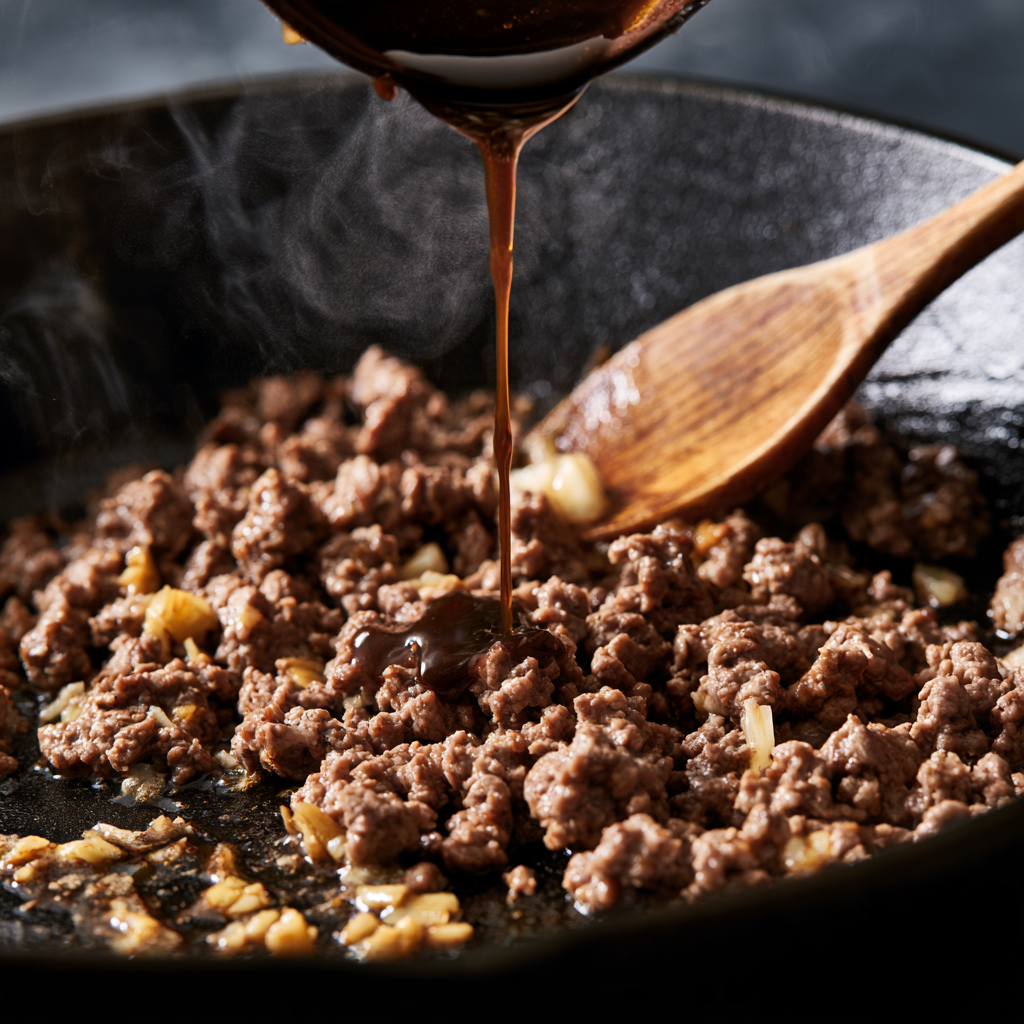
Step 1: Boil the noodles.
Cook 8 ounces of lo mein noodles according to the package directions, until al dente. Drain well, and time this so they finish right around when the sauce is ready.
Step 2: Brown the beef.
Heat a large skillet over medium-high heat. Add 1 pound of ground beef and cook for 5 to 6 minutes, breaking it apart, until fully browned. Drain any excess fat if needed.
Step 3: Bloom the garlic and ginger.
Lower the heat to medium. Add 3 minced garlic cloves and 1 tablespoon of grated ginger directly to the beef, stirring constantly for 1 minute, until fragrant.
Step 4: Build the sauce.
Pour in ¼ cup low-sodium soy sauce, ¼ cup brown sugar, 2 tablespoons hoisin sauce, and ¼ cup water. Stir well to dissolve the brown sugar and bring the mixture to a gentle simmer.
Step 5: Thicken with the slurry.
Whisk 1 tablespoon cornstarch with 2 tablespoons cold water until smooth, then pour into the simmering skillet. Stir continuously for 30 to 60 seconds, until the sauce bubbles and thickens into a glossy, sticky glaze.
Step 6: Toss and serve.
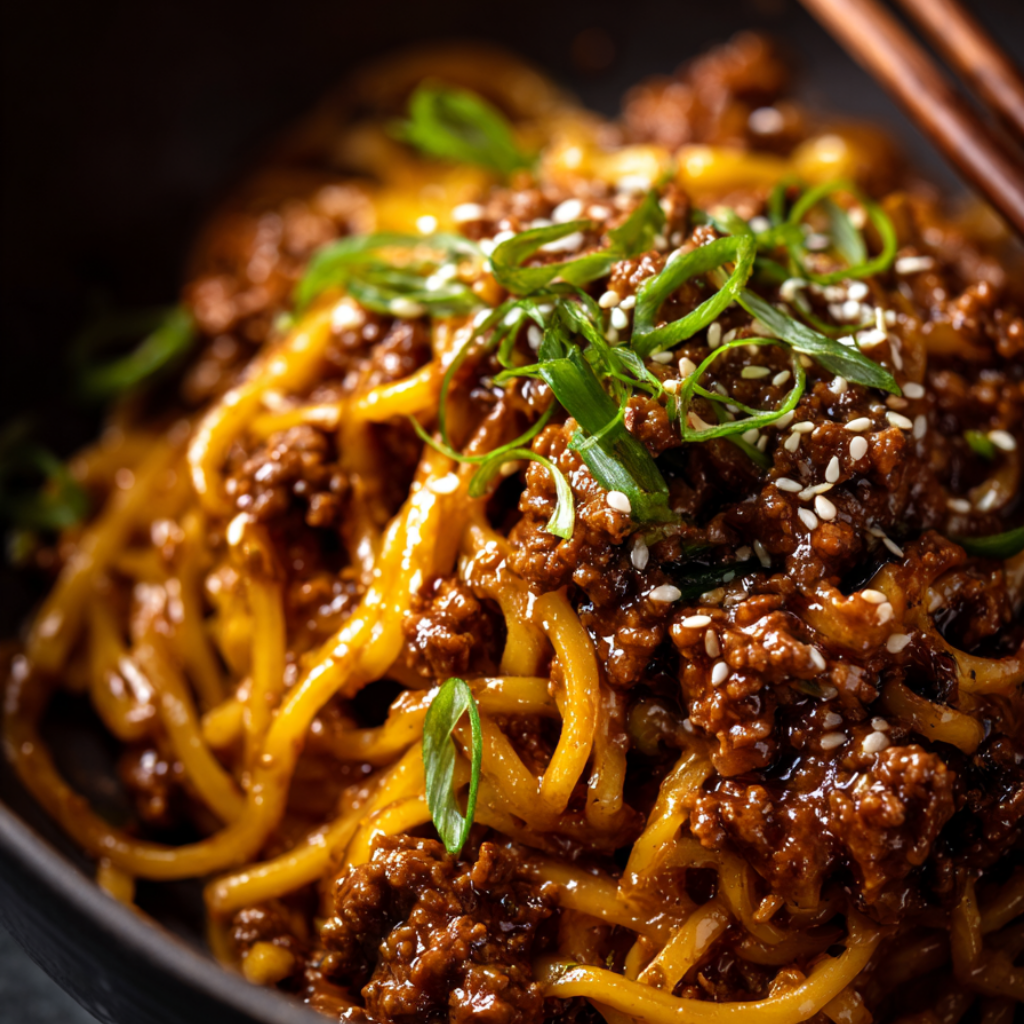
Add the cooked, drained noodles directly into the skillet and toss vigorously for 1 to 2 minutes, until every noodle and every bit of beef is coated. Garnish with sliced green onions and toasted sesame seeds, and serve hot.
Tips and Troubleshooting
The noodles clumped together. They sat drained too long before going into the sauce. Time them to finish when the sauce is ready, and toss them in immediately.
The sauce burned or tasted bitter. The sugar scorched before the water went in. Add the water with the sauce ingredients and stir to dissolve the sugar before it simmers.
The sauce is lumpy. The cornstarch didn’t fully dissolve, or you added it to a pan that was too hot. Whisk the slurry until smooth, then add it to a gentle simmer, stirring constantly.
The sauce is too thick. It reduced too much, or you used too much cornstarch. Whisk in a splash of water or broth until it loosens.
The dish is too sweet. The brown sugar was high, or the hoisin was very sweet. Add a splash of soy sauce or rice vinegar to balance it.
The beef is dry. It was 90/10 and overcooked. Use 85/15 and pull it as soon as it’s browned.
The noodles are mushy. They were cooked past al dente, or they sat in the sauce too long. Cook them just to al dente and serve immediately.
Storage and Make-Ahead
Store the noodles and beef in a sealed container in the refrigerator for up to 3 days. Reheat gently in a skillet over medium heat with a splash of water, until the sauce loosens and the noodles warm through.
You can mix the sauce up to 2 days ahead and refrigerate it. The noodles are best cooked fresh, but leftover noodles reheat well with a splash of water.
I don’t recommend freezing the assembled dish. The noodles get mushy on thawing.
Store leftovers in the refrigerator within 2 hours of cooking, and discard anything left at room temperature for more than 2 hours. Reheat to 165°F.
Mongolian Ground Beef Noodles
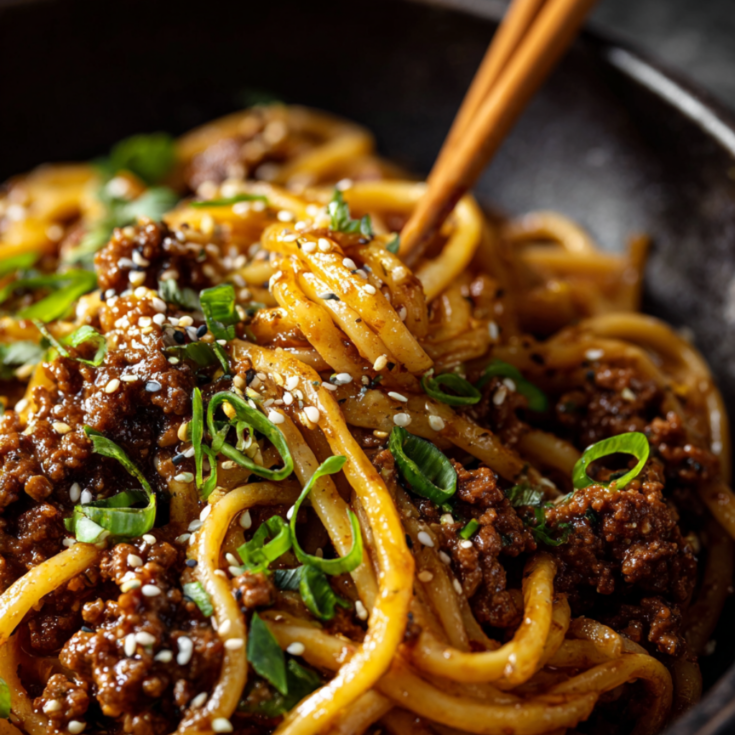
Savory, sweet, and coated in a glossy takeout-style glaze, these garlic-ginger beef noodles come together in a single skillet in about twenty minutes. About 30g of protein per serving.
Ingredients
- 1 lb ground beef (85/15 or 90/10)
- 8 oz lo mein noodles, ramen blocks without seasoning, or spaghetti
- ¼ cup low-sodium soy sauce
- ¼ cup brown sugar
- 2 tbsp hoisin sauce
- ¼ cup water
- 3 cloves garlic, minced
- 1 tbsp fresh ginger, grated
- 1 tbsp cornstarch mixed with 2 tbsp cold water
- Sliced green onions and toasted sesame seeds, for garnish
Instructions
- Cook the noodles al dente and drain, timing them to finish when the sauce is ready.
- Brown the beef in a large skillet over medium-high heat for 5 to 6 minutes, breaking it apart. Drain excess fat if needed.
- Lower the heat to medium, add the garlic and ginger, and stir for 1 minute until fragrant.
- Add the soy sauce, brown sugar, hoisin, and water. Stir to dissolve the sugar and bring to a gentle simmer.
- Whisk the cornstarch with cold water, then pour into the skillet and stir for 30 to 60 seconds, until the sauce thickens into a glossy glaze.
- Add the noodles and toss for 1 to 2 minutes, until everything is coated. Garnish with green onions and sesame seeds.
Notes
Notes: Time the noodles so they finish with the sauce — drained noodles clump as they cool. Add the water with the sauce so the sugar doesn't burn. Refrigerate leftovers for up to 3 days. Not recommended for freezing. Nutrition information is an estimate.
Nutrition (per serving, estimated): About 480 calories, 30g protein, 54g carbs, 16g fat, 2g fiber, 680mg sodium.
FAQ
Can I use a different noodle?
Yes. Lo mein, ramen, and spaghetti all work. Egg noodles are a little softer but still good. Avoid very thin noodles like angel hair, which turn mushy.
Can I make this spicy?
Yes. Add a teaspoon of chili-garlic sauce or a pinch of red pepper flakes with the garlic and ginger. It becomes a spicy Mongolian beef noodle bowl.
Can I use ground turkey instead of beef?
Yes. Use 93/7 ground turkey and add a teaspoon of oil to the pan. Season a little more aggressively — turkey has less flavor than beef.
Can I make this in a slow cooker?
Not with this method. The noodles and glaze come together in a skillet, and a slow cooker can’t brown the beef or reduce the sauce.
Is this the same as Mongolian beef?
It’s inspired by it. Traditional Mongolian beef uses thinly sliced flank steak, and this version uses ground beef for speed and accessibility. The sauce is very similar.
What do you serve with Mongolian ground beef noodles?
It’s a complete meal on its own. Steamed broccoli or a simple cucumber salad on the side adds a vegetable.
More Ground Beef Recipes You’ll Love
- Beef Fried Rice — Ground Beef, 25 Minutes, One Skillet
- Korean Ground Beef (Sweet, Savory & Ready in 15 Minutes)
- Korean Gochujang Beef Bowl: A Quick High-Protein Dinner (5 Ingredients)
Closing
This is the dinner I make when I want takeout noodles without the delivery wait or the price.
The glaze comes together in one skillet, the noodles get tossed in while they’re still hot, and the whole thing is on the table in twenty minutes.
It’s the kind of recipe that earns a permanent spot in the weeknight rotation.