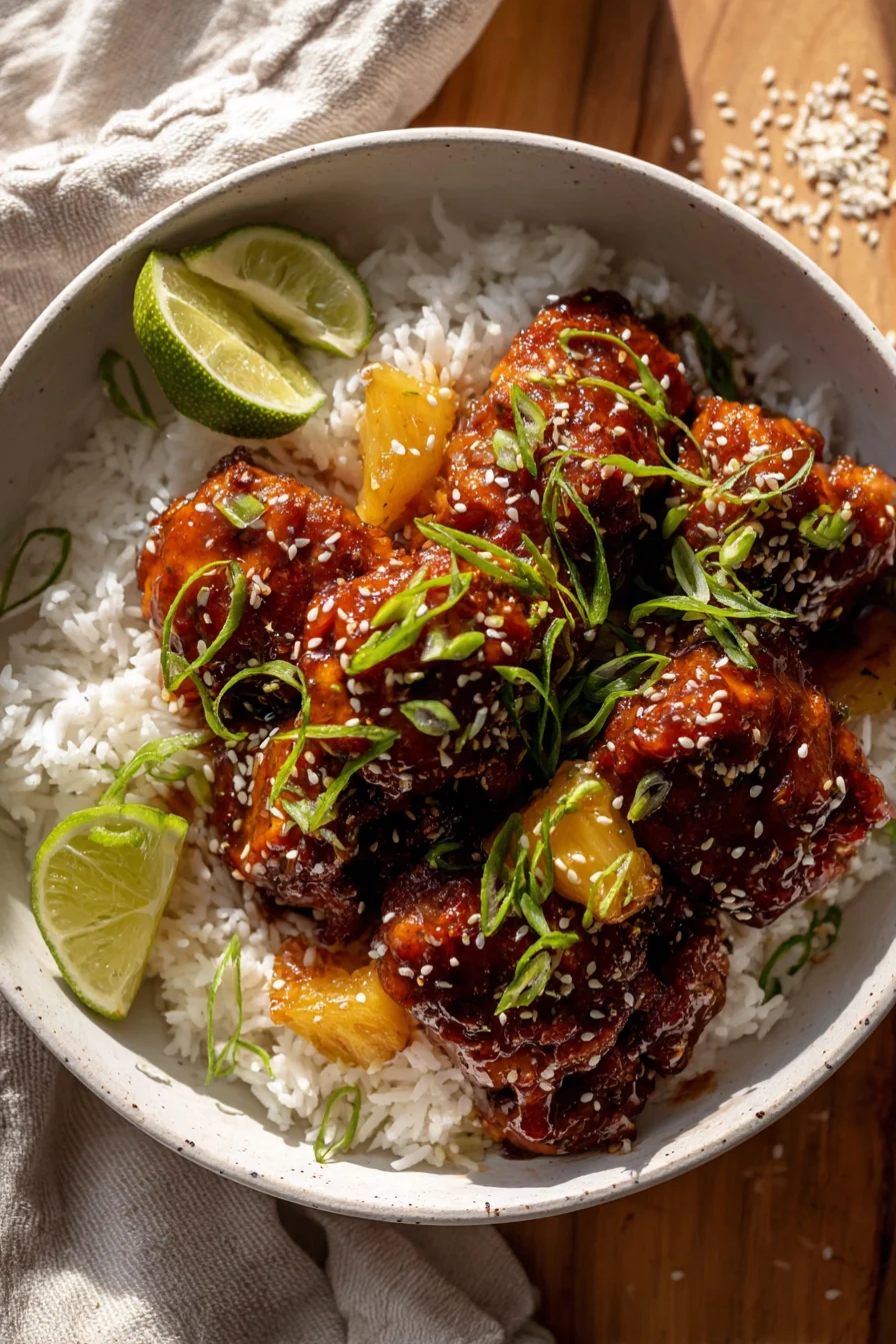

Hawaiian chicken brings me right back to my time in Hawaii — the local plate lunch with a scoop of white rice, a pile of Hawaiian mac salad, and this sweet-savory chicken that ties the whole plate together. That combo is the way to eat it. And if you can add a family-style Kalua Pork Crockpot Recipe on the side, or a bowl of miso soup, life is good.
It’s the dish I make when I want to daydream about being on the beach on Oahu, watching the keikis run around, and finishing the day with shaved ice. My next Hawaii vacation has to wait, so in the meantime I cook the flavor at home. And thankfully, it’s not complicated.
The trick is the balance. This isn’t just pineapple and soy sauce — it’s the harmony between the acidity of the rice vinegar, the sweetness of the pineapple and brown sugar, and the savoriness of the soy and ginger that makes the sauce taste like something. If you’ve never cooked with pineapple before, I know it takes a bit of faith. Trust the process. You’d be surprised how everything comes together in this tropical braise.
The chicken comes out at about 34 grams of protein per serving, made with boneless skinless thighs, pineapple chunks, fresh ginger, and a handful of pantry staples. It takes 10 minutes of prep and 4 to 5 hours on LOW, and it’s a dump-and-go bag you can assemble the night before.
It’s a high-protein crockpot chicken that tastes like a plate lunch, made on a Tuesday.
Why This Recipe Works
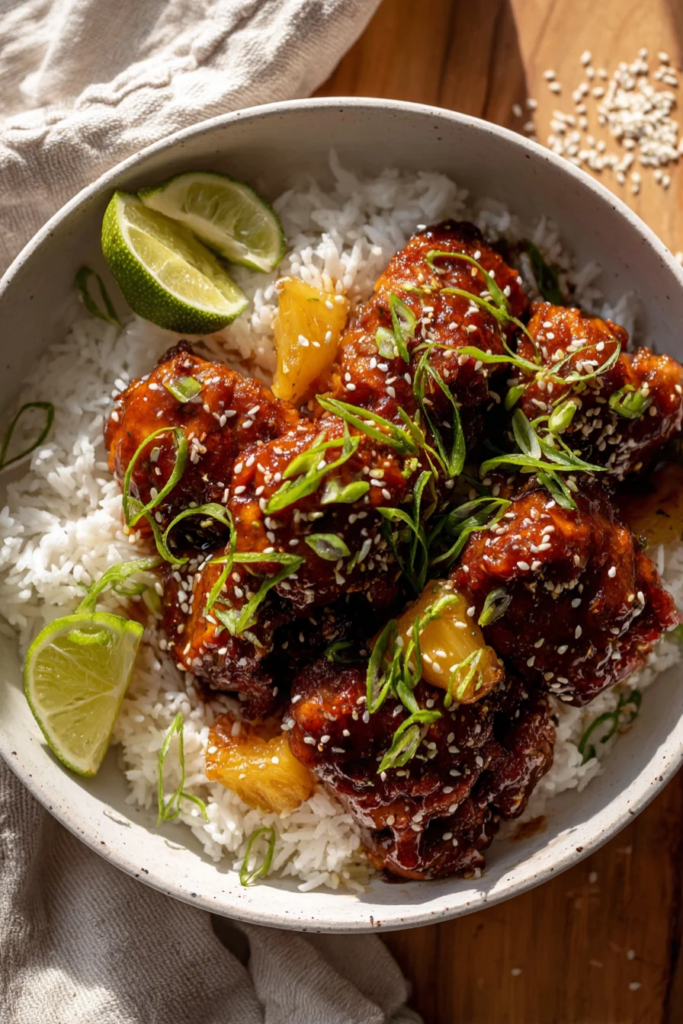
Hawaiian chicken crockpot goes wrong in three specific ways: a sauce that’s too sweet, a glaze that won’t cling to the chicken, and chicken that falls apart into mush. Here’s how this version solves each one.
1. Pineapple in 100% Juice, Not Heavy Syrup
Pineapple canned in heavy syrup turns the sauce into dessert. There’s already brown sugar in the recipe, and the syrup pushes it over the edge — the sauce comes out cloying instead of balanced. Pineapple in 100% juice gives you the fruit and its liquid without the added sugar, and the sauce stays balanced between sweet and savory, with the rice vinegar and soy doing their part.
2. Reduce the Sauce on the Stovetop, Then Slurry It
The cooking liquid from the slow cooker is thin — flavorful, but thin. Pouring it off, bringing it to a simmer, and whisking in a cornstarch slurry gives you a glossy glaze that coats every piece of chicken. If you add cornstarch directly to the slow cooker, it clumps and the sauce turns cloudy instead of glossy. The stovetop reduction is where the sauce becomes a glaze.
3. Thighs, Not Breasts
Chicken thighs are more forgiving in a slow cooker — they stay juicy past 165°F, which means a 30-minute overshoot doesn’t ruin dinner. Breasts dry out the moment they pass 165°F. If you use breasts, check them at 2½ to 3 hours and pull them as soon as they hit temperature.
Ingredients That Matter
Boneless, skinless chicken thighs. Two pounds, trimmed. Thighs stay juicy through the long cook and pull apart into tender pieces. Breasts work but need to be pulled early — see the note in Substitutions.
Pineapple chunks in 100% juice. One 20-ounce can, drained, with ⅓ cup of the juice reserved. Chunks hold their shape through the slow cook and look better on the plate than crushed, which breaks down into a jammy texture. Either works — I use chunks for the contrast.
Low-sodium soy sauce. ⅓ cup. The salt level in the finished sauce depends on this, so low-sodium is not optional. If you use regular soy sauce, taste the reduced sauce before serving and adjust.
Light brown sugar or honey. Two tablespoons. The pineapple already brings sweetness — this is the background note that rounds out the soy and vinegar.
Fresh ginger, grated. One teaspoon. Grate it on a microplane so it melts into the sauce instead of sitting in shreds.
Garlic, minced. Three cloves. Fresh, not powder.
Unseasoned rice vinegar. One tablespoon. The acid that keeps the sauce from tasting flat and one-note. This is the ingredient doing the heaviest lifting on the “not too sweet” side.
Toasted sesame oil. One teaspoon. A small amount, but it’s what makes the sauce taste finished instead of raw.
Cornstarch and cold water. One tablespoon cornstarch whisked into two tablespoons cold water. This is what thickens the reduced sauce into a glaze.
Green onions and toasted sesame seeds. The garnish. The green parts go on at the end, off the heat, so they stay bright.
Do not add salt to the chicken at the start. The soy sauce carries enough sodium, and the sauce reduces, which concentrates it. Taste at the end and adjust.
How to Make Hawaiian Chicken Crockpot
(See the recipe card below — the steps are identical and the card is the single source of truth.)
Tips and Troubleshooting
The sauce is too sweet. Pineapple in heavy syrup was used instead of 100% juice, or too much brown sugar went in. Switch to pineapple in juice and taste the sauce before serving — a splash of rice vinegar balances it.
The sauce is thin and won’t coat the chicken. It wasn’t reduced long enough on the stovetop, or the cornstarch slurry wasn’t cooked enough. Simmer the sauce for the full 1 to 2 minutes after the slurry goes in, until it coats the back of a spoon.
The sauce is too thick. The reduction went too far. Whisk in a tablespoon of water at a time until it reaches the consistency you want.
The chicken fell apart into mush. It cooked too long, or it was shredded too aggressively. Thighs are forgiving, but past 6 hours on LOW they start to break down. Pull them out and coat them gently in the glaze instead of stirring hard.
The sauce is too salty. Regular soy sauce was used instead of low-sodium. Taste before serving and add a splash of water or a pinch of brown sugar to balance.
The pineapple tastes bland. It was canned in water instead of juice, or it was underripe fresh pineapple. Use pineapple in 100% juice and taste the sauce before cooking.
The chicken breasts dried out. They were cooked past 165°F. If using breasts, check at 2½ hours and pull as soon as they reach temperature.
The sesame seeds turned dark. They went in too early. Toast them separately in a dry skillet and add at the very end, off the heat.
Substitutions and Swaps
Chicken thighs → chicken breasts. Cook 2½ to 3 hours on LOW, check at 2½, and pull at 165°F. Expect a slightly less rich sauce without the thigh fat.
Canned pineapple → fresh pineapple. Finely chop or crush fresh pineapple and add ⅓ cup unsweetened pineapple juice to maintain the sauce consistency. Fresh is brighter but slightly less sweet, so taste the sauce before cooking.
Brown sugar → honey. Same quantity. Honey is slightly sweeter, so reduce to 1½ tablespoons if you want to keep it balanced.
Soy sauce → tamari. Same quantity, and it makes the recipe gluten-free. Coconut aminos work but need a pinch of salt to compensate.
Rice vinegar → apple cider vinegar. Same quantity. Slightly different flavor, but it works.
For a spicy version: add ½ teaspoon of red pepper flakes or a minced Fresno chile with the ginger and garlic.
For a Hawaiian chicken bowl: serve over jasmine rice with diced avocado, sliced green onions, and a squeeze of lime.
For a plate-lunch spread: serve with steamed white rice and a scoop of Hawaiian Macaroni Salad — the combo the dish is meant for.
Storage and Reheat
Refrigerate leftovers in an airtight container for 3 to 4 days. The glaze thickens in the cold, so a splash of water or broth when reheating is normal.
Reheat gently in a covered skillet over medium-low heat with 1 to 2 tablespoons of water or chicken broth, stirring occasionally until heated through. Reheat to 165°F.
Meal prep: divide the chicken and sauce into individual portions and store the green onions and sesame seeds separately so they stay fresh. Add them just before serving.
Freeze the chicken and sauce together for up to 3 months. Thaw overnight in the fridge and reheat gently.
Food safety: store leftovers within 2 hours of cooking. Discard anything left at room temperature longer than that.
Frequently Asked Questions
Can I use chicken breasts instead of thighs?
Yes. Boneless skinless chicken breasts work well, although they’re leaner and can dry out more easily. Check them earlier — around 2½ hours — and pull them once they reach 165°F. Thighs are more forgiving and produce a juicier result.
Can I use fresh pineapple instead of canned?
Yes, but canned pineapple in juice gives more consistent results. If using fresh, finely chop or crush it and add ⅓ cup unsweetened pineapple juice to maintain the sauce consistency.
Can I make Hawaiian chicken without brown sugar?
Yes. Substitute honey in the same amount, or omit the added sweetener for a less sweet sauce — the pineapple already brings natural sweetness.
Can I shred the chicken?
Absolutely. Once cooked, the chicken should be tender enough to pull apart with two forks. Shred it into large pieces and toss with the thickened glaze before serving.
What should I serve with Hawaiian chicken?
Jasmine rice is the classic pairing because it absorbs the sweet-savory sauce. Brown rice, cauliflower rice, steamed broccoli, roasted vegetables, or a simple cabbage slaw also work well. For the full plate-lunch experience, add a scoop of Hawaiian Macaroni Salad.
How much protein is in one serving?
About 34 grams per serving when divided into 5 portions (about 6 oz cooked chicken each). If you divide the recipe into 4 portions, each one gets about 42 grams; into 6, about 28 grams.
Can I make this ahead for meal prep?
Yes. Cook it fully, cool it, and store the chicken and sauce together in portioned containers for up to 4 days. Keep the green onions and sesame seeds separate and add them right before serving.
Is this the same as huli huli chicken?
No. Huli huli is a Hawaiian grilled chicken, and the grill is part of what makes it what it is. This recipe is a slow cooker Hawaiian chicken with a pineapple-soy glaze — it borrows the sweet-savory balance of island cooking, but the method is different. If you want the grilled version, you’ll need a grill.
More Hawaiian and High-Protein Crockpot Recipes You’ll Love
Kalua Pork Crockpot Recipe — three-ingredient slow cooker kalua pork with Hawaiian sea salt and liquid smoke, 42g protein per serving.
Hawaiian Macaroni Salad — the traditional island-style mac salad, mayo-forward and lightly sweet, the side that completes the plate.
High-Protein Crockpot Taco Soup — creamy, 36g protein, and the tempered cream cheese trick that stops curdling.
Slow-Cooker Mississippi Chicken — 36g protein, five-ingredient dump-and-go, and a gravy that tastes like you worked all day.
Crockpot Salsa Verde Chicken — 40g protein, bright and tangy, ready for tacos, bowls, or meal prep.
15 Easy Chicken Crockpot Recipes for Busy Families — the full collection, organized by night-type.
Closing
I’ve made this Hawaiian chicken crockpot more times than I can count, and the two things that changed everything for me were switching to pineapple in 100% juice instead of heavy syrup and reducing the sauce on the stovetop at the end instead of adding cornstarch to the pot.
The first batch I made was too sweet and the sauce was thin — those two fixes turned it into something that tastes like the plate lunch I remember.
If you make it with the Hawaiian mac salad on the side or serve it over cauliflower rice, let me know how it turns out in the comments.