Healthy dinners don’t have to be complicated. Sometimes they’re as simple as marinating a few salmon fillets, tossing them in the air fryer, and letting a homemade teriyaki glaze do all the heavy lifting.
That’s exactly what this air fryer salmon is.
A clean, protein-packed dinner on the table in about 15 minutes of active time. It’s the kind of meal that fits a weeknight, a meal prep Sunday, or any night you want something that tastes like takeout but leaves you feeling good, not sluggish.
And here’s what makes this version stand out: the teriyaki sauce is made from scratch. Mirin, sake, soy sauce, fresh ginger, and garlic reduce down into a glossy, authentic glaze that’s naturally gluten-free and free of the corn syrup and preservatives you’ll find in a bottle.
The salmon cooks at 380°F in the air fryer, giving it a caramelized exterior and a tender, flaky interior without burning the sugars in the marinade.
With 38 grams of protein per serving and clean, real ingredients, this salmon dinner earns a permanent spot in your rotation.
Why This Recipe Works
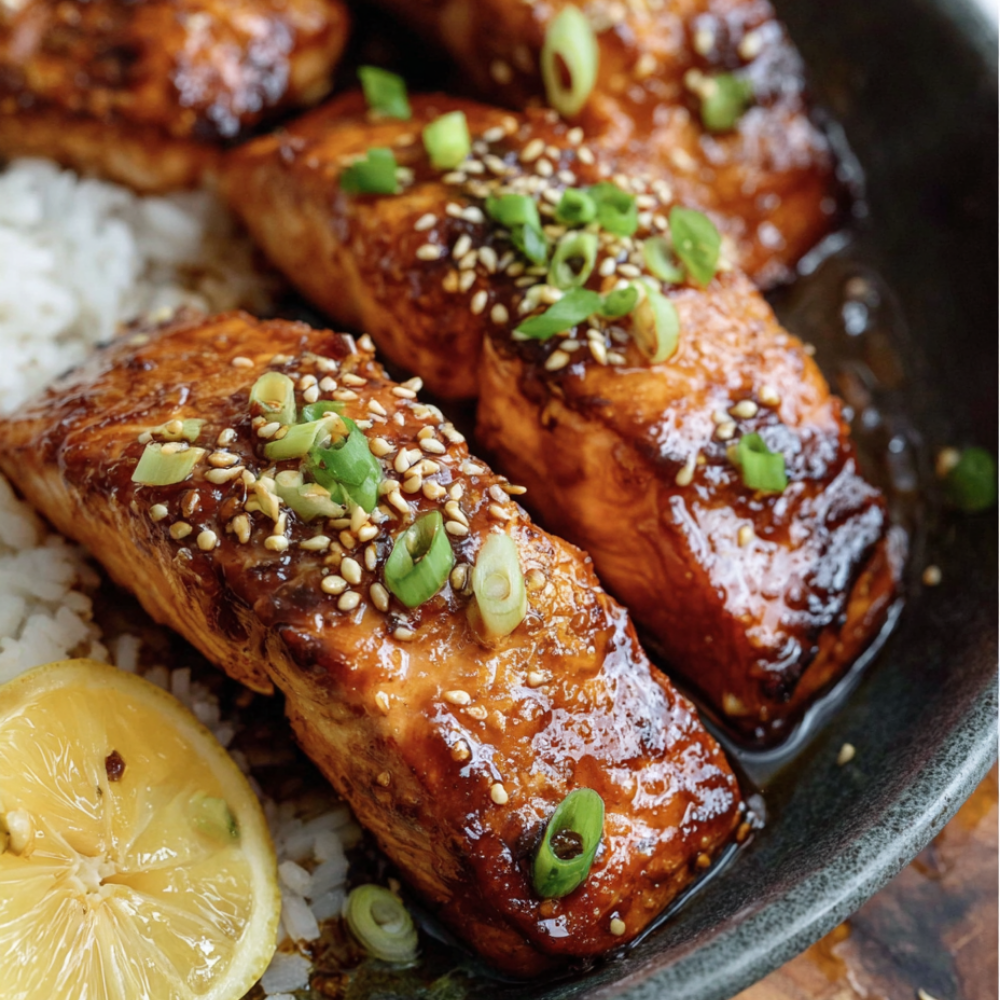
This isn’t a complicated recipe, but a few small decisions make it work better than most air fryer salmon recipes. Here’s what actually matters:
Authentic Teriyaki Sauce, Not Bottled. Traditional teriyaki is a reduction of equal parts mirin, sake, soy sauce, and sugar. No cornstarch, no thickeners, no corn syrup. This version adds fresh ginger and garlic to that base, deepening the flavor and balancing the sweetness. The result is a savory, glossy, complex glaze—the kind you’d get at a Japanese restaurant.
380°F, Not 400°F. This is the fix that prevents burnt sugar. A 20-minute marinade in a sugar-heavy liquid leaves sugar on the fish’s surface. Air frying at 400°F with circulating high heat can char those sugars into a bitter burn before the interior cooks through. Dropping to 380°F and brushing on fresh sauce during the last minute gives you a caramelized glaze without the bitterness.
Two-Stage Glazing. Marinate the salmon in teriyaki sauce for 20 minutes to absorb flavor. Then, after 7 minutes in the air fryer, brush the fillets with fresh sauce that never touched raw fish and cook for another 1 to 2 minutes. That final brush is what gives the salmon its glossy, caramelized finish.
Fresh Ginger and Garlic. Mirin, sake, soy sauce, and sugar make an authentic teriyaki base. Fresh ginger and garlic make it exceptional. The ginger adds warmth and a slight bite, and the garlic rounds out the sweetness. Both go directly into the sauce reduction.
Marinate Briefly, Not Overnight. Twenty to thirty minutes is the sweet spot. The salmon absorbs the flavor without changing texture. Beyond 40 minutes, the salt in the soy sauce starts to cure the fish, which firms it up in a way you don’t want here.
Pat the Salmon Dry Before Marinating. Excess surface moisture dilutes the marinade and keeps the glaze from clinging. Thirty seconds with a paper towel makes a noticeable difference.
Never Reuse the Marinade. Once raw fish has been in it, discard the marinade. The reserved sauce that never touched the fish is what you brush on at the end. This is a food safety standard, not a suggestion.
Pull at 125°F to 130°F. Salmon is best medium, when the center is still slightly translucent and flakes easily. It will continue to cook for a minute or two after it comes out of the air fryer. Overcooked salmon is dry salmon.
Serve Over Rice to Catch the Glaze. Jasmine rice, basmati, or cauliflower rice all work. The glaze is the best part—you want something underneath to soak it up.
This is the kind of meal people request again and again. It’s sticky, savory, and undeniably delicious.
Air Fryer Salmon with Teriyaki Glaze Recipe
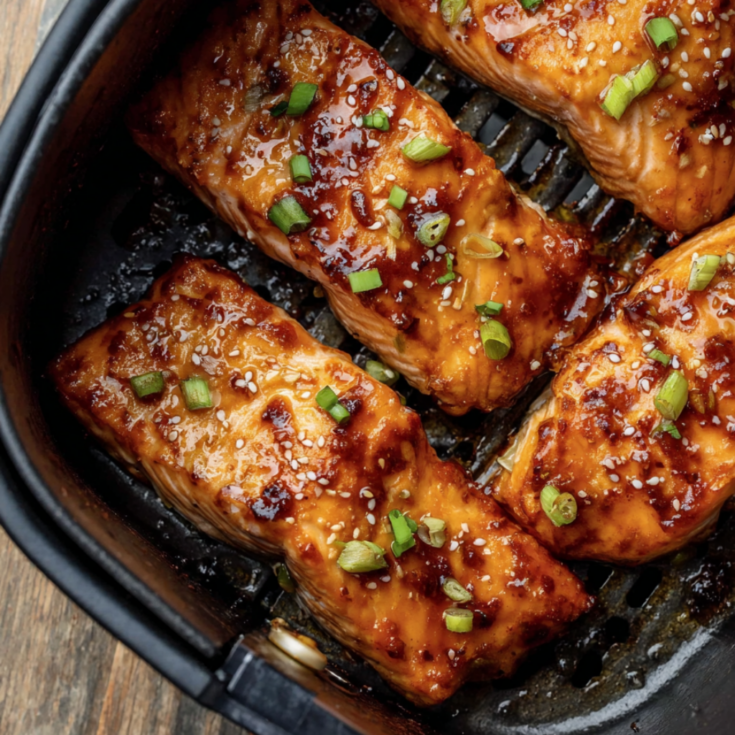
A tender, flaky air fryer salmon with a homemade teriyaki glaze made from mirin, sake, soy sauce, fresh ginger, and garlic. Ready in 15 minutes and packed with 38 g of protein per serving.
Ingredients
For the Homemade Teriyaki Sauce (Makes About 1 Cup)
- ½ cup low-sodium soy sauce or tamari (gluten-free)
- ½ cup mirin
- ¼ cup sake (or dry white wine, or extra broth)
- 3 tbsp brown sugar or honey
- 1 tsp freshly grated ginger
- 2 cloves garlic, minced
- ½ tsp toasted sesame oil, stirred in at the end
For the Salmon and Assembly
- 4 salmon fillets (about 5.5 to 6 oz each, skin-on)
- 1 tbsp toasted white sesame seeds
- 2 green onions, thinly sliced
- Cooked jasmine rice or cauliflower rice, for serving
Instructions
- Reduce the teriyaki glaze. In a small saucepan, combine the soy sauce, mirin, sake, brown sugar, grated ginger, and minced garlic over medium heat. Bring to a gentle boil, then reduce the heat and simmer for 8 to 10 minutes, until reduced by nearly half and slightly syrupy. Remove from the heat, stir in the toasted sesame oil, and let the sauce cool to room temperature. It will thicken further as it cools. Measure out ⅓ cup for marinating and keep the rest separate for serving.
- Pat the salmon dry. Pat each salmon fillet completely dry with paper towels. This helps the marinade cling and prevents the fish from steaming in the air fryer.
- Marinate the salmon. Pour the ⅓ cup of cooled teriyaki sauce into a shallow dish that fits the salmon snugly. Place the salmon skin side up in the marinade. Let it marinate at room temperature for 20 minutes. Do not exceed 40 minutes—the salt in the soy sauce will start to cure the fish and change its texture.
- Preheat the air fryer. Preheat the air fryer to 380°F for 3 minutes. Line the basket with perforated parchment paper or an air fryer liner.
- Air fry the salmon. Remove the salmon from the marinade and let the excess drip off. Discard the used marinade. Place the fillets skin side down in the air fryer basket, leaving a little space between each piece. Air fry at 380°F for 7 minutes.
- Glaze and finish. Brush the top of each fillet generously with the fresh, reserved teriyaki sauce that never touched raw fish. Air fry for another 1 to 2 minutes, until the glaze caramelizes and the internal temperature reaches 125°F to 130°F for medium.
- Garnish and serve. Transfer the salmon to plates and drizzle with extra fresh teriyaki sauce. Sprinkle with toasted sesame seeds and sliced green onions. Serve immediately over jasmine rice or cauliflower rice.
Notes
Protein per Serving: About 38gNutrition Note: Protein calculated from 4 salmon fillets (about 5.5 to 6 oz each, ≈152g protein) — about 38g per serving. About 390 calories per serving, including glaze. Adding 1 cup of cooked jasmine rice brings it to about 590 calories per serving. The sauce recipe makes about 1 cup, which is more than you need for this dish. Store the extra in a sealed jar in the refrigerator for up to 2 weeks and use it for chicken, tofu, or stir-fries.
Tips for the Best Air Fryer Salmon
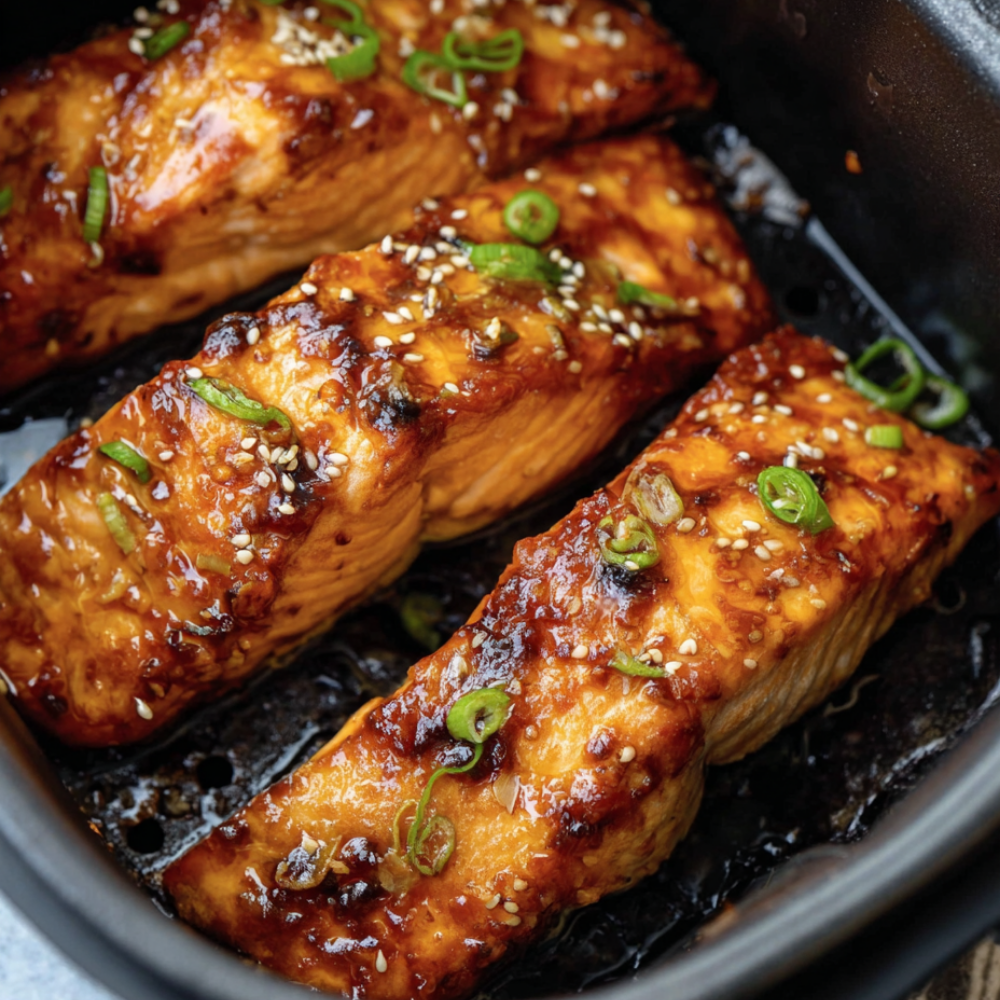
Make the teriyaki sauce ahead. It keeps in the refrigerator for up to 2 weeks in a sealed jar. Make a double batch and keep it on hand for quick weeknight dinners, chicken, tofu, or stir-fries.
Air fry at 380°F, not 400°F. A 20-minute marinade in a sugar-heavy liquid leaves sugar on the fish’s surface. Lower heat prevents those sugars from burning while the salmon cooks through evenly.
Pat the salmon dry before marinating. Surface moisture dilutes the marinade and keeps the glaze from sticking. Thirty seconds with a paper towel makes a difference.
Don’t marinate longer than 40 minutes. Twenty to thirty minutes is the sweet spot. Beyond that, the salt in the soy sauce starts to cure the fish and firms up the texture.
Never reuse the marinade. Once raw fish has been in it, discard the marinade. The reserved sauce that never touched the fish is what you brush on at the end.
Watch the cook time. Air fryers vary in power, and salmon fillets vary in thickness. Start checking at 7 minutes. The salmon should flake easily with a fork and reach 125°F to 130°F for medium.
Let it rest for 2 minutes. Like any protein, salmon benefits from a brief rest before serving. The juices redistribute, and the fish stays moist.
Serve over rice to catch the glaze. Jasmine rice, basmati, or cauliflower rice all work. The glaze is the best part—you want something underneath to soak it up.
Easy Variations
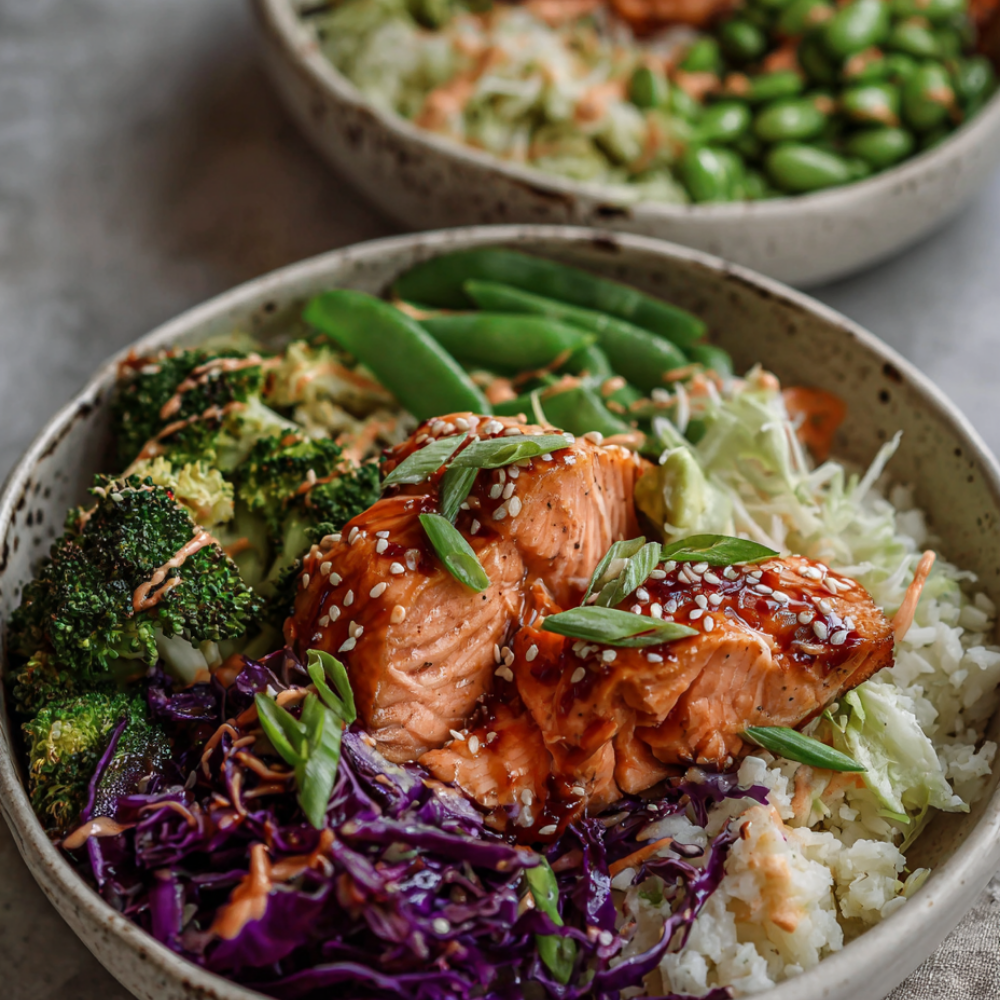
Asian-Inspired Salmon Bowl. Flake 2 teriyaki salmon fillets over 1½ cups of jasmine rice or cauliflower rice. Add 1 cup steamed broccoli, ½ cup snap peas, and ½ cup shredded red cabbage. Top with sesame seeds, sliced green onions, and pickled ginger. Drizzle with sriracha mayo.
Salmon Teriyaki with Broccoli. Add 2 cups broccoli florets to the air fryer basket with the salmon for the last 5 minutes of cooking. Spray lightly with oil and toss with a pinch of salt. The broccoli roasts in the salmon glaze that drips down.
Teriyaki Salmon Rice Bowl with Avocado. Serve the salmon over rice with sliced avocado, cucumber, and a drizzle of spicy mayo. This sushi-inspired bowl comes together in 15 minutes.
Honey Garlic Teriyaki Salmon. Swap the brown sugar in the teriyaki sauce for 3 tablespoons of honey. The glaze is a little stickier and has a floral sweetness that pairs beautifully with salmon.
Miso Teriyaki Salmon. Add 1 tablespoon of white miso paste to the teriyaki sauce while it simmers. The result is a deeper, more savory glaze with an umami backbone.
Storage and Food Safety
Refrigerator: Store leftover salmon covered in an airtight container for up to 3 days. Reheat gently in the air fryer at 350°F for 3 to 4 minutes, or in the microwave for 60 to 90 seconds. The salmon will be slightly less tender the second day, but the flavor holds. Store the teriyaki sauce separately in a sealed jar for up to 2 weeks.
Freezer: Cooked salmon freezes well. Cool completely, then wrap each fillet tightly in plastic wrap and foil. Freeze for up to 3 months. Thaw overnight in the refrigerator and reheat gently.
Make Ahead: Make the teriyaki sauce up to 2 weeks ahead and refrigerate. Marinate the salmon up to 40 minutes ahead. Cook fresh when ready to serve.
Food Safety: Salmon must reach an internal temperature of 145°F for well-done, or 125°F to 130°F for medium. Cool leftovers within 2 hours and refrigerate promptly. Reheat leftovers to 145°F. Do not leave salmon at room temperature for more than 2 hours. Never reuse marinade that has touched raw fish.
Frequently Asked Questions
How much protein is in air fryer salmon with teriyaki glaze? About 38g per serving from four 5.5- to 6-oz salmon fillets across 4 servings.
Can I use bottled teriyaki sauce instead of homemade? Yes. Use ⅓ cup of bottled teriyaki sauce for the marinade and reserve a few extra tablespoons for brushing. The flavor will be sweeter and less complex than the homemade version, and it may burn more easily because of added sugars.
Can I make this without sake? Yes. Use an equal amount of dry white wine or chicken broth instead of sake. The flavor will be slightly different but still delicious.
Why is the air fryer temperature 380°F instead of 400°F? A sugar-heavy marinade can burn at higher heat. 380°F cooks the salmon through without charring the glaze.
Can I use frozen salmon? Yes, but thaw it completely first. Frozen salmon releases too much water in the air fryer and prevents the glaze from setting properly.
What if I don’t have an air fryer? Bake the salmon on a parchment-lined sheet pan at 400°F for 10 to 12 minutes, or until the internal temperature reaches 125°F to 130°F. Brush with the reserved glaze during the last 2 minutes of baking.
How do I know when the salmon is done? The salmon is ready when the thickest part flakes easily with a fork and the internal temperature reads 125°F to 130°F for medium. For well-done salmon, cook to 145°F.
Can I make this gluten-free? Yes. Use gluten-free mirin, gluten-free sake, and gluten-free soy sauce or tamari. The recipe is already gluten-free as written if you use those versions.
What do I serve with air fryer salmon? Serve with jasmine rice, basmati rice, cauliflower rice, steamed broccoli, snap peas, or a simple cucumber salad with rice vinegar.
More Easy Healthy Salmon Recipes You’ll Love
Teriyaki Salmon Bowl with Edamame & Rice (Easy Healthy Dinner)
Smoked Salmon Meal Prep: 5 High-Protein No-Cook Recipes for the Week
Salmon Meal Prep: 6 High-Protein Ideas for Healthy Lunches & Dinners
20 Easy Salmon Recipes Ready in 20 Mins (Healthy & Delicious)
Conclusion
An Air Fryer Salmon with Teriyaki Glaze is the kind of dinner that earns its spot in the weekly rotation. It’s tender, flaky, and undeniably delicious. And with about 38 grams of protein per serving, it’s a real meal that keeps you full.
The takeout version is delicious and also loaded with sugar and sodium. This one keeps all the sticky glaze, tender, flaky fish, and sweet-savory depth, and rebuilds it at home with homemade teriyaki sauce, fresh salmon, and an air fryer that does the work in under 10 minutes. No deep fryer. No delivery fee. No mystery ingredients.
The three things that make it work are these. Make the teriyaki sauce from scratch with fresh ginger and garlic. Air fry at 380°F so the glaze caramelizes without burning. Brush with fresh sauce in the last minute for a glossy finish.
About 38 grams of protein per serving. Four generous portions. Ready in about 40 minutes, including marinade time, and endlessly adaptable for rice bowls, salads, or a simple dinner plate.
Make it tonight and add it to your weekly rotation. This salmon earns a permanent spot on the table.