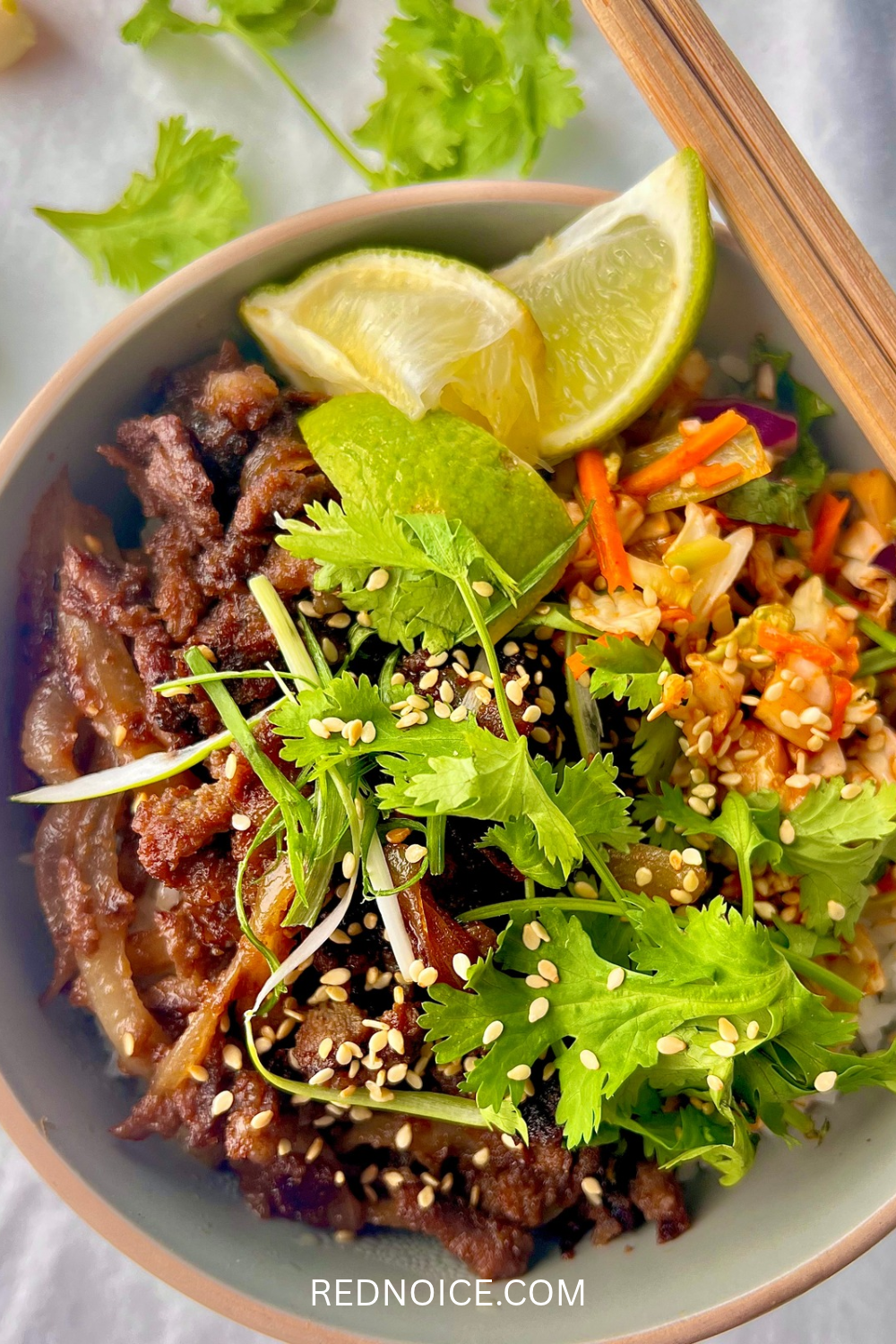

A beef bulgogi bowl is one of those dinners that hits every note at once — sweet, savory, spicy, crunchy, and a little bit smoky from the hot pan.
The beef is paper-thin ribeye, marinated in grated Asian pear, soy sauce, brown sugar, sesame oil, garlic, and ginger, then seared hard over high heat so the edges caramelize and the meat stays tender.
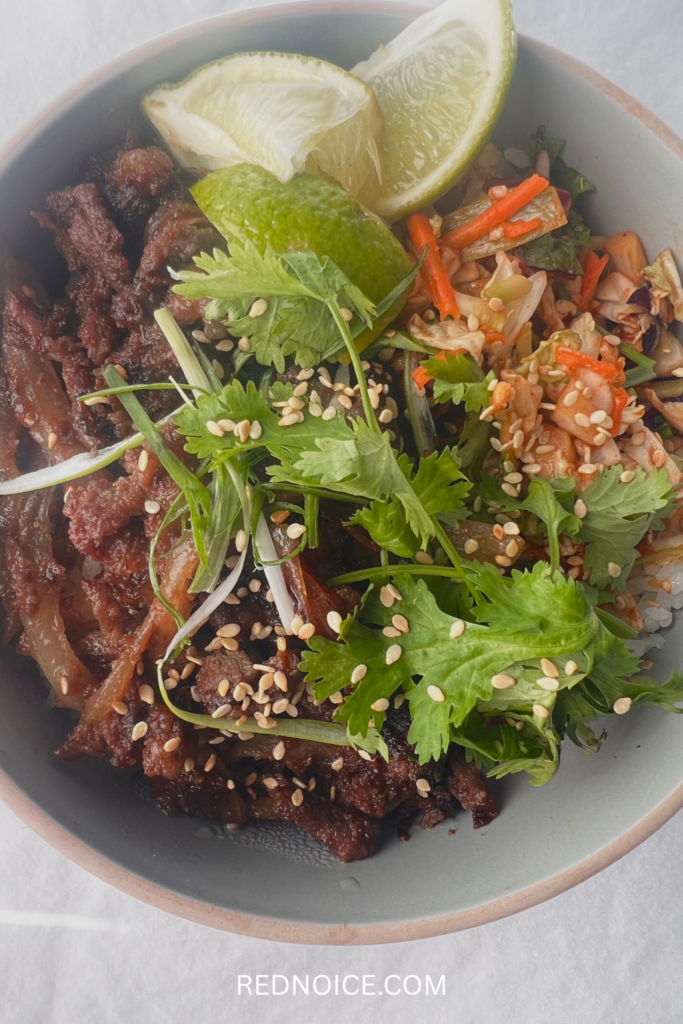
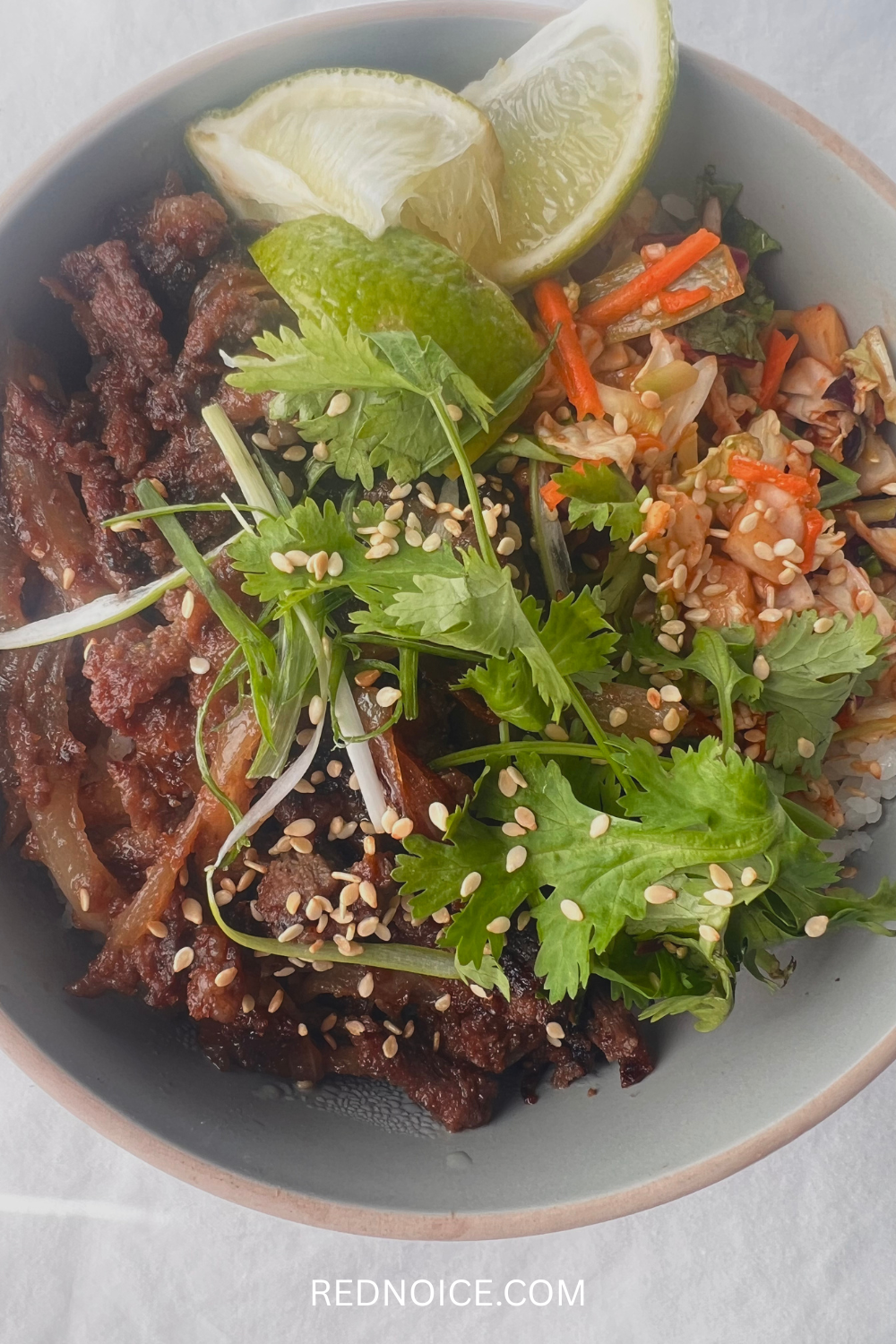
It goes on top of warm short-grain rice with a spicy gochujang slaw on the side, and the whole thing is finished with cilantro, green onions, and a squeeze of lime.
The marinade is what makes bulgogi taste like bulgogi. The Asian pear is doing the heavy lifting — it’s a natural tenderizer, and its sweetness balances the soy sauce and the sesame oil.
The brown sugar helps the beef caramelize in the pan, and the garlic and ginger give it the depth that makes the whole bowl taste like something you’d order at a Korean restaurant.
The key is to let the beef marinate for at least 30 minutes but not overnight — the Asian pear will over-tenderize the ribeye if it sits too long, and the texture gets mushy.
The searing technique is what makes the beef taste like it came off a grill instead of out of a slow cooker.
The beef gets lifted out of the marinade with the excess liquid shaken off, then spread in a single layer in a screaming-hot cast-iron skillet.
It sears undisturbed for 2 minutes to build a caramelized crust, then gets tossed and cooked for another minute or two.
You cook it in two batches so the pan stays hot and the beef browns instead of steaming.
The gochujang slaw is the other half of the bowl. It’s a simple cabbage slaw dressed with gochujang, soy sauce, honey, garlic, ginger, and lime juice.
It’s spicy, tangy, and a little sweet, and it’s what cuts through the richness of the beef.
The cool crunch of the cabbage against the hot caramelized beef is the contrast that makes the bowl work.
The recipe makes 4 bowls and takes about 15 minutes of prep, 30 minutes to 2 hours of marinating, and 8 minutes of cooking.
It’s a weeknight dinner that tastes like a weekend project, and it’s a meal prep favorite because the components hold up well when stored separately.
Why This Recipe Works
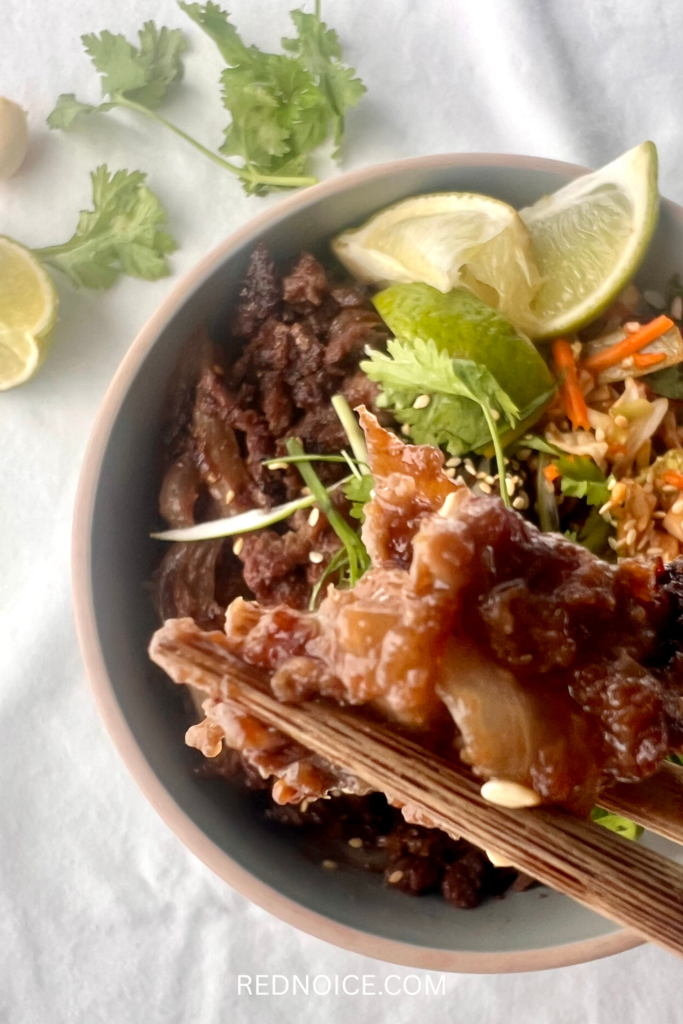
Beef bulgogi bowls go wrong in three specific ways: tough beef, a marinade that’s too sweet or too salty, and a bowl that turns soggy by the time you eat it. Here’s how this version solves each one.
1. Freeze the Ribeye Before Slicing It Paper-Thin
Slicing ribeye paper-thin is what makes bulgogi tender and fast-cooking. A 20- to 25-minute stint in the freezer firms up the outside of the steak so you can slice it into ⅛-inch strips without the meat squishing under the knife. Slicing across the grain is the other half of the technique — it shortens the muscle fibers so every piece is tender.
2. Use Asian Pear in the Marinade
The Asian pear is what makes bulgogi taste like bulgogi. It’s a natural tenderizer, and its sweetness balances the soy sauce and the sesame oil. It also helps the beef caramelize in the pan. Grate it finely and include all the juices — that’s where the flavor lives.
3. Sear in a Screaming-Hot Pan in Two Batches
The beef needs a screaming-hot pan to caramelize the outside without overcooking the inside. If you crowd the pan, the beef steams instead of sears, and you lose the caramelized edges that make bulgogi taste like bulgogi. Cook it in two batches so the pan stays hot and the beef browns.
Ingredients That Matter
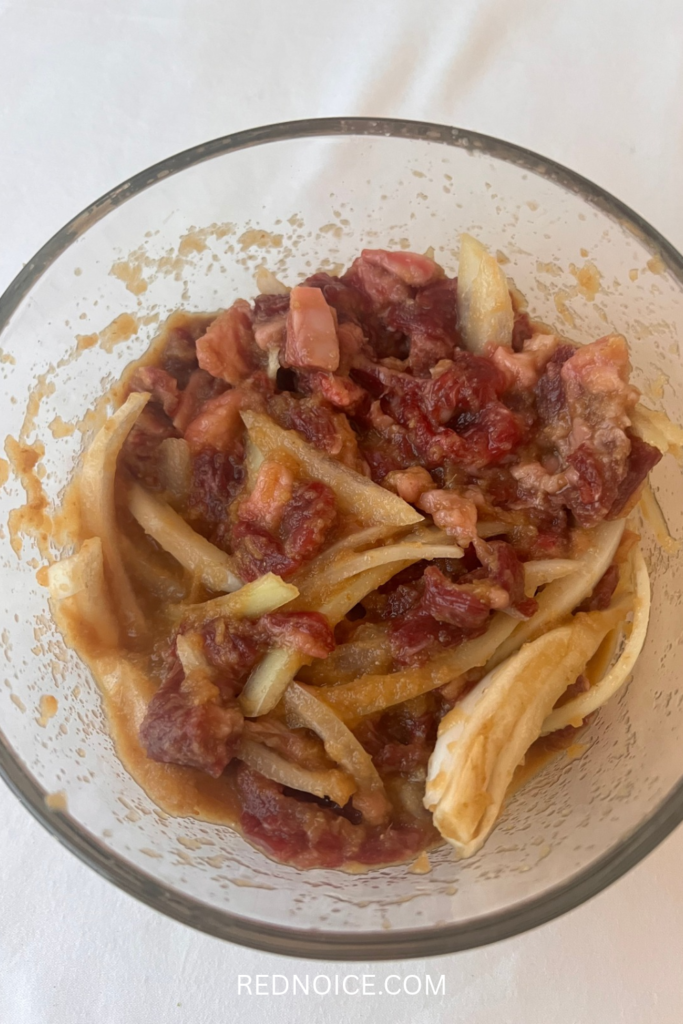
Boneless ribeye steak. 1½ pounds, sliced paper-thin across the grain. Freeze it for 20 to 25 minutes first to make slicing easier. Ribeye has enough fat to stay tender under high heat, and it caramelizes beautifully.
Asian pear. ½ ripe pear, peeled and finely grated, including all the juices. The Asian pear is the secret to bulgogi — it’s a natural tenderizer, and its sweetness is what makes the marinade taste balanced instead of just salty.
Soy sauce. ¼ cup, regular or low-sodium. The salt and umami base of the marinade.
Brown sugar. 2 tablespoons, packed. The sweetness that balances the soy sauce and helps the beef caramelize.
Toasted sesame oil. 1 tablespoon. The nutty flavor that makes bulgogi taste like bulgogi. Don’t use more than 1 tablespoon — it burns at high heat.
Garlic and ginger. 4 cloves of garlic, finely minced, and 1 tablespoon of fresh ginger, finely grated. The aromatics that give the marinade its depth.
Kosher salt and black pepper. ¼ to ½ teaspoon of kosher salt, depending on how salty your soy sauce is, and ½ teaspoon of black pepper.
Yellow onion. 1 medium, thinly sliced. The onion goes into the marinade with the beef and softens as it cooks, adding sweetness.
Avocado oil. 1 tablespoon, divided. The high-heat oil for searing.
Gochujang slaw. Cabbage, gochujang, soy sauce, honey, garlic, ginger, and lime juice. The spicy, tangy slaw that goes on the side of the bowl.
Short-grain rice. Cooked, for the base of the bowl. Sushi rice or Calrose rice is the right choice — it’s sticky enough to hold the beef and the slaw.
Cilantro, green onions, and lime wedges. The garnishes that finish the bowl.
How to Make Beef Bulgogi Bowls
(See the recipe card below — the steps are identical and the card is the single source of truth.)
Tips and Troubleshooting
The beef turned out tough. It was sliced too thick, or it was sliced with the grain. Freeze the ribeye for 20 to 25 minutes first and slice it paper-thin across the grain.
The beef turned out mushy. It marinated too long. Stick to 30 minutes to 2 hours — past that, the Asian pear over-tenderizes the ribeye and the texture gets mushy.
The beef steamed instead of seared. The pan wasn’t hot enough, or the beef was crowded. Get the pan screaming hot, shake off the excess marinade before the beef goes in, and cook in two batches.
The marinade is too salty. Too much soy sauce, or the soy sauce was regular instead of low-sodium. Use low-sodium soy sauce and start with ¼ teaspoon of salt instead of ½.
The marinade is too sweet. Too much brown sugar. Reduce it to 1½ tablespoons and taste.
The slaw is too spicy. Too much gochujang. Start with 1 tablespoon and add more if you want it spicier.
The slaw is too thin. The cabbage was very wet, or the dressing was too thin. Pat the cabbage dry before dressing it, and add a little more honey to thicken the dressing.
The bowl turned soggy. The components were assembled too early, or the rice was too wet. Serve over warm (not piping hot) rice, and assemble right before eating.
Substitutions and Swaps
Ribeye → thinly sliced sirloin, flank steak, or ground beef. Same quantity. Sirloin and flank are leaner than ribeye; ground beef makes a faster, more budget-friendly version that’s closer to a ground beef bulgogi bowl.
Asian pear → Bosc pear or apple. Same quantity. Bosc pear is the closest substitute; a sweet apple like Fuji or Honeycrisp works in a pinch.
Brown sugar → honey or maple syrup. Same quantity. Honey is slightly sweeter; maple syrup adds a deeper note.
Gochujang slaw → kimchi or quick-pickled cucumbers. Same quantity. Kimchi is the classic pairing; quick-pickled cucumbers are a milder option.
For a ground beef bulgogi bowl version: swap the ribeye for 1½ pounds of ground beef. Brown it in a skillet, then add the marinade and simmer until the beef is coated and caramelized. This captures the “ground beef bulgogi recipe” keyword.
For a Korean beef bowl version: serve the beef over rice with the gochujang slaw and a fried egg on top. This captures the “korean beef bowl recipe” keyword.
For a chicken bulgogi version: swap the ribeye for 1½ pounds of thinly sliced chicken thighs. Marinate 30 minutes to 1 hour and cook the same way.
Storage and Reheat
Refrigerate the cooked beef and slaw separately in airtight containers for up to 3 to 4 days. Keep the rice in its own container.
Reheat the beef quickly in a hot skillet over medium-high heat for 60 seconds with a splash of water, or in the microwave covered at 70% power for 60 to 90 seconds.
Freeze the cooked beef for up to 3 months. Thaw overnight in the refrigerator and reheat in a skillet.
Food safety: store leftovers within 2 hours of cooking. Reheat to 165°F before serving.
Beef Bulgogi Bowl (Caramelized Ribeye With Spicy Gochujang Slaw)
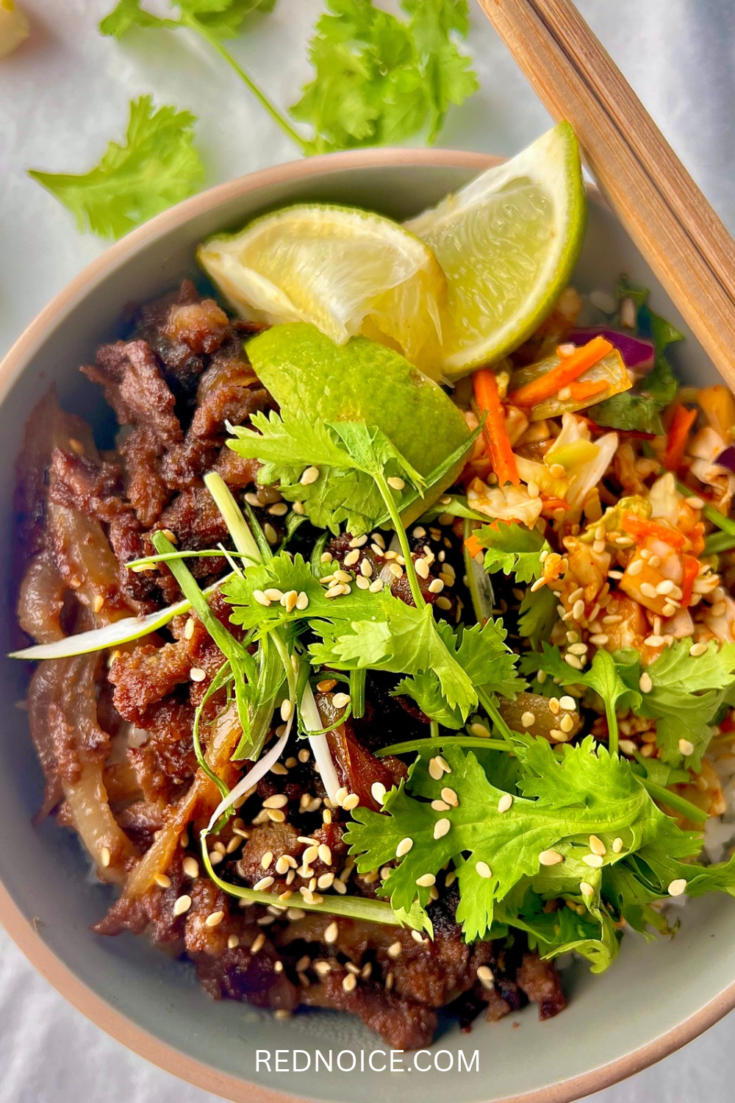
Paper-thin ribeye marinated in Asian pear, soy sauce, brown sugar, and sesame oil, seared fast over high heat and served over rice with a spicy gochujang slaw.
Ingredients
Beef and Onion
- 1½ lbs boneless ribeye steak, sliced paper-thin across the grain (freeze for 20 to 25 minutes first)
- 1 medium yellow onion, thinly sliced
Asian Pear and Savory Marinade
- ½ ripe Asian pear, peeled and finely grated (including all juices)
- ¼ cup soy sauce (regular or low-sodium)
- 2 tablespoons packed light or dark brown sugar
- 1 tablespoon toasted sesame oil
- 4 cloves garlic, finely minced
- 1 tablespoon fresh ginger, finely grated
- ¼ to ½ teaspoon kosher salt (start with ¼ teaspoon if using regular soy sauce)
- ½ teaspoon freshly cracked black pepper
For Searing and Garnish
- 1 tablespoon avocado oil, divided
- 3 green onions, sliced into 1½-inch pieces
- 1 teaspoon toasted sesame seeds
For the Gochujang Slaw
- 4 cups shredded cabbage (green or napa)
- 1 tablespoon gochujang
- 1 tablespoon soy sauce
- 1 tablespoon honey
- 1 clove garlic, finely grated
- 1 teaspoon fresh ginger, finely grated
- 1 tablespoon fresh lime juice
- For the Bowls
- 4 cups cooked short-grain rice (sushi rice or Calrose)
- Fresh cilantro, chopped
- Green onions, chopped
- Lime wedges
Instructions
- Freeze and Slice the Ribeye: Place the boneless ribeye in the freezer for 20 to 25 minutes, until firm on the outside but not frozen solid. Using a sharp knife, slice across the grain into ⅛-inch-thin strips.
- Mix the Marinade: In a large mixing bowl, whisk together the grated Asian pear with its juice, soy sauce, brown sugar, 1 tablespoon toasted sesame oil, minced garlic, grated ginger, ¼ to ½ teaspoon kosher salt, and black pepper until the brown sugar dissolves.
- Marinate the Beef and Onion: Add the sliced ribeye and thinly sliced yellow onion to the bowl. Toss thoroughly with your hands so every slice is coated. Cover and refrigerate for 30 minutes to 2 hours. Avoid marinating overnight so the Asian pear doesn't over-tenderize the ribeye.
- Make the Gochujang Slaw: In a large bowl, whisk together the gochujang, soy sauce, honey, grated garlic, grated ginger, and lime juice. Add the shredded cabbage and toss until evenly coated. Refrigerate until ready to serve.
- Sear the First Batch: Heat ½ tablespoon avocado oil in a large cast-iron or stainless-steel skillet over high heat until shimmering. Lift half of the beef and onions out of the marinade, letting the excess liquid drip back into the bowl, and spread them in a single layer. Cook undisturbed 2 minutes to build caramelized brown edges, then toss and cook 1 to 2 minutes more until browned. Transfer to a warm plate.
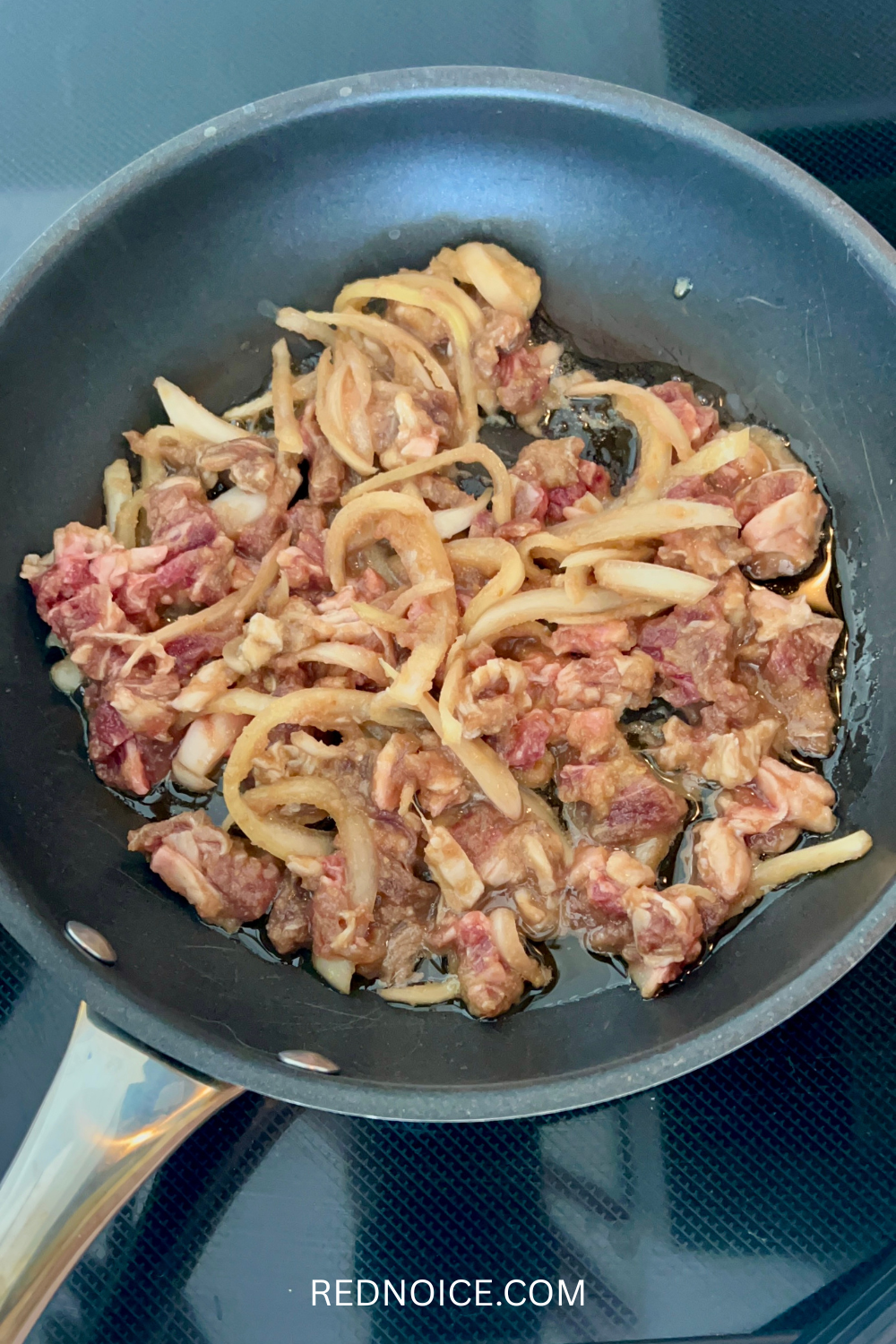
- Sear the Second Batch and Finish: Add the remaining ½ tablespoon avocado oil to the hot skillet and sear the second half of the beef and onions the same way. During the final 30 to 60 seconds, return the first batch to the skillet along with the sliced green onions and toss everything together so the scallions soften slightly and the pan juices glaze the meat.
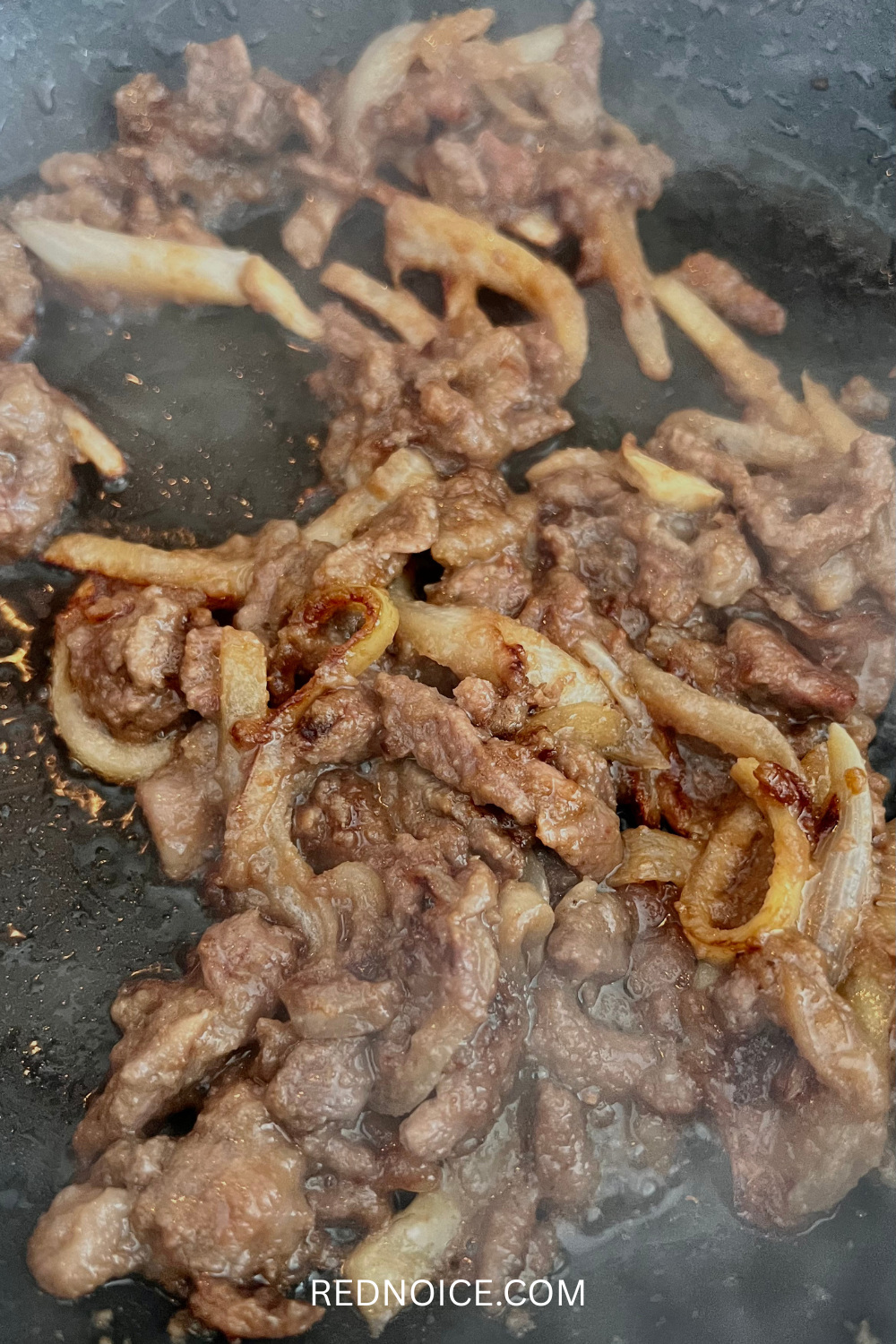
- Assemble the Bowls: Divide the warm rice among four bowls. Top with the bulgogi, then add a generous spoonful of the gochujang slaw on the side. Garnish with fresh cilantro, chopped green onions, toasted sesame seeds, and a lime wedge.
Notes
Estimated per serving (meat and marinade only, without rice and slaw): About 455 calories · 39g protein · 15g carbs · 26g fat · 2g fiber · 790mg sodium
Nutrition varies by ribeye and soy sauce brands. Verify against your labels.
Notes
The Asian pear is the secret to bulgogi — it’s a natural tenderizer, and its sweetness is what makes the marinade taste balanced instead of just salty.
Don’t marinate the beef overnight; the Asian pear will over-tenderize the ribeye and the texture gets mushy. Slice the ribeye paper-thin across the grain — freezing it for 20 to 25 minutes first makes it easier.
Shake off the excess marinade before the beef goes into the pan, and sear it in two batches so the pan stays hot and the beef caramelizes instead of steaming.
The gochujang slaw can be made up to 2 days ahead and stored in the refrigerator.
Leftovers keep 3 to 4 days; reheat the beef in a hot skillet with a splash of water.
Nutrition is an estimate and varies by ribeye and soy sauce brands.
Did you make this recipe? Leave a comment on the blog or share a photo on Pinterest.
Frequently Asked Questions
What is bulgogi?
Bulgogi is a Korean dish of thinly sliced, marinated beef that’s grilled or seared over high heat. The marinade is typically made with soy sauce, sugar, sesame oil, garlic, ginger, and Asian pear or kiwi, which tenderizes the meat and adds sweetness.
Can I use ground beef instead of ribeye?
Yes. Swap the ribeye for 1½ pounds of ground beef. Brown it in a skillet, then add the marinade and simmer until the beef is coated and caramelized. It’s a faster, more budget-friendly version of the same dish.
Why freeze the ribeye before slicing it?
A 20- to 25-minute stint in the freezer firms up the outside of the steak so you can slice it into ⅛-inch strips without the meat squishing under the knife. It’s the trick that makes paper-thin slices possible at home.
How long should I marinate the beef?
30 minutes to 2 hours. The Asian pear is a natural tenderizer, and if the beef sits in the marinade overnight, the texture gets mushy.
Can I use a different fruit instead of Asian pear?
Yes. Bosc pear or a sweet apple like Fuji or Honeycrisp works in a pinch. Asian pear is the traditional choice, but the substitutes work.
What is gochujang?
Gochujang is a Korean fermented chili paste made with red chili, glutinous rice, and soybeans. It’s spicy, sweet, and savory, and it’s the base of the slaw dressing in this bowl.
Can I make the slaw ahead of time?
Yes. The slaw can be made up to 2 days ahead and stored in an airtight container in the refrigerator. It gets slightly softer as it sits, but the flavor deepens.
Is this bowl gluten-free?
Only if you use gluten-free soy sauce (tamari) and confirm your gochujang is gluten-free. Check the labels.
More Asian Recipes You’ll Love
Beef Yaki Udon — teriyaki-glazed noodles with thinly sliced beef.
Soba Noodle Bowl -Peanut Sesame Sauce, 25 Minutes
Crispy Honey-Ginger Chicken With Yum Yum Sauce — the crispy chicken bowl.
Closing
I’ve made this beef bulgogi bowl more times than I can count, and the two things that changed everything for me were slicing the ribeye paper-thin and searing it in a screaming-hot pan in two batches.
The first version I made had thick slices that turned tough and a pan that was too crowded to caramelize — the thin slices and the two-batch sear fixed that completely.
It’s the bowl I make when I want something that tastes like a Korean restaurant, and it’s the one I keep coming back to.
If you make the ground beef version or add a fried egg on top, let me know how it turns out in the comments.