I learned to make bulgogi from a Korean roommate I lived with when I was younger. Technically, her mom taught her, and she taught me — standing in our small kitchen, correcting how I held the knife and telling me the slices were still too thick.
I still remember exactly how her bulgogi tasted: sweet but not sugary, savory without being salty, and tender in a way that made no sense for beef cooked in minutes.
I’ve been chasing that version ever since. Each time I make this, I get a little closer, though I’m not sure I’ll ever land exactly on hers.
What I can tell you is this is a damn good recipe, and I make it on repeat for work lunches and school lunch boxes.
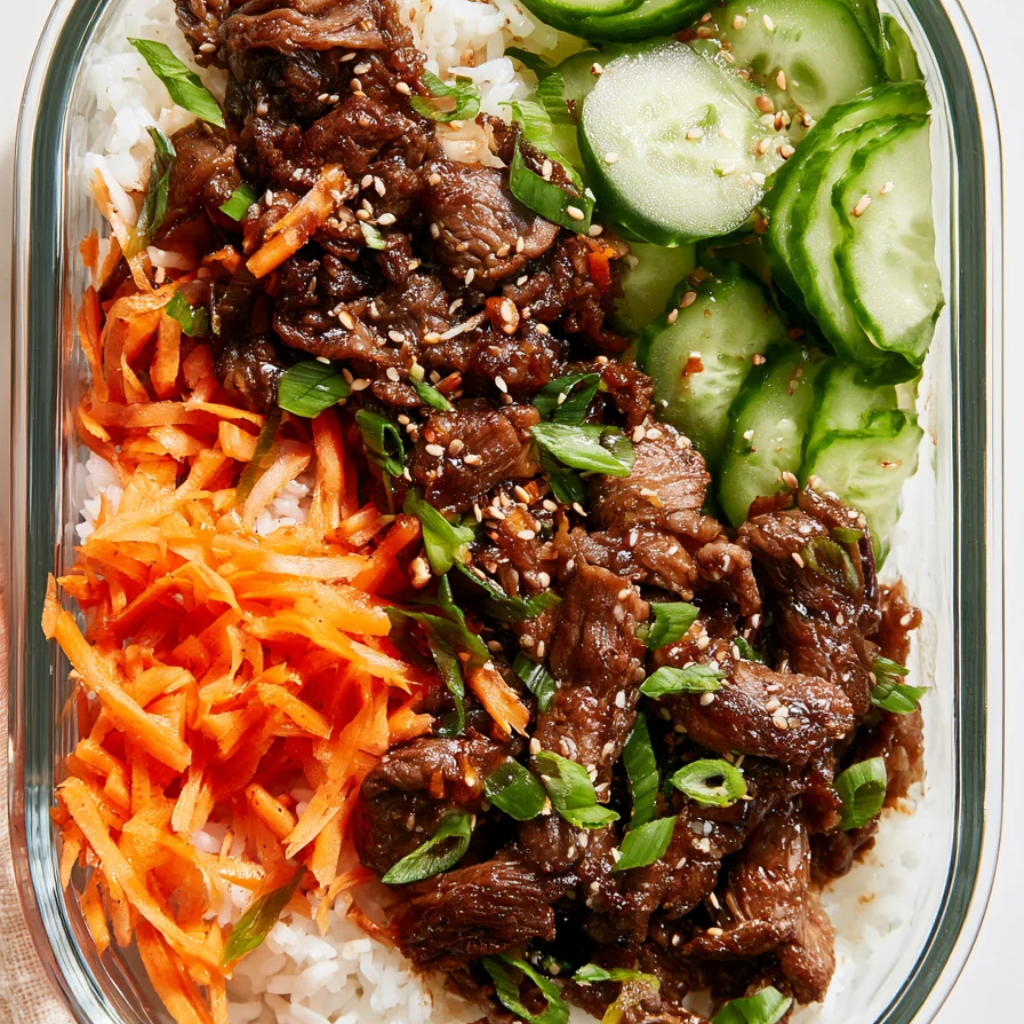
The marinade is built on grated pear and soy, the beef is sliced paper-thin so it sears in under a minute, and the vegetables get a quick pickle so they stay crisp in the container all week.
This recipe solves the main problem with most bulgogi meal prep recipes: they’re written for a single dinner, not a week of containers.
This version gives you thin slices that cook in seconds, a marinade you drain before the beef hits the pan so it sears instead of steams, and quick-pickled vegetables packed in separate cups so they don’t sweat into the rice when you reheat it.
I tested this in my kitchen with ribeye and a cast iron skillet, and the detail that matters most is the 30-minute freeze before slicing.
Cold beef slices paper-thin and evenly, and paper-thin slices make bulgogi tender and fast. Warm ribeye is too soft for a clean cut, and thick slices are what turn bulgogi chewy.
Why This Recipe Works
Freezing the steak for 30 minutes is what makes paper-thin slicing possible. Bulgogi depends on slices an eighth of an inch thick or thinner, and warm ribeye is too soft to cut evenly. Thirty minutes in the freezer firms the exterior without freezing the center, and a sharp knife glides through. Thin slices sear in 45 to 60 seconds per side, which traps the juices inside while the surface caramelizes.
Slicing against the grain shortens the muscle fibers. Ribeye has visible grain, and cutting perpendicular to it means each piece is short and easy to chew. If you slice with the grain, the same beef feels stringy no matter how thin you cut it. Find the direction the fibers run and cut across them.
The grated pear is doing two jobs: sweetness and tenderizing. Asian pear (or Bosc) contains an enzyme that breaks down protein, which is why bulgogi is tender even with a short marinade. It also adds a sweetness that’s more complex than sugar alone. If you can’t find pear, a Gala apple works, but don’t marinate longer than 12 hours — the enzymes keep working and will eventually turn the beef mushy.
Draining the marinade before searing helps the beef caramelize instead of steam. Wet marinade hitting a hot pan boils, releases steam, and cooks the beef in its own liquid instead of browning. Let the excess liquid run off in a colander over a bowl for two minutes, and the marinade already absorbed into the meat still caramelizes into a dark, glossy crust.
Searing in batches over high heat is what gives you char instead of gray beef. A pound and a half of beef in a single layer drops the pan temperature fast. Two batches keep the pan hot enough for the beef to brown in 60 to 90 seconds on the first side, instead of releasing moisture and cooking gray.
Quick-pickled vegetables are the meal-prep move that keeps everything crisp. Cucumber and carrots tossed with rice vinegar and salt stay crunchy and bright for days, and packing them in separate silicone cups keeps them from sweating into the rice when you reheat the container. This is the difference between a bowl that’s still good on Thursday and one that’s watery by Wednesday.
No gochujang, and it doesn’t need it. This is the version my roommate’s mom made — garlic, ginger, sesame, soy, pear, and a little brown sugar. The depth comes from the sear and the sesame oil, not from a fermented chili paste. If you want heat, add red pepper flakes at the table.
Ingredients That Matter
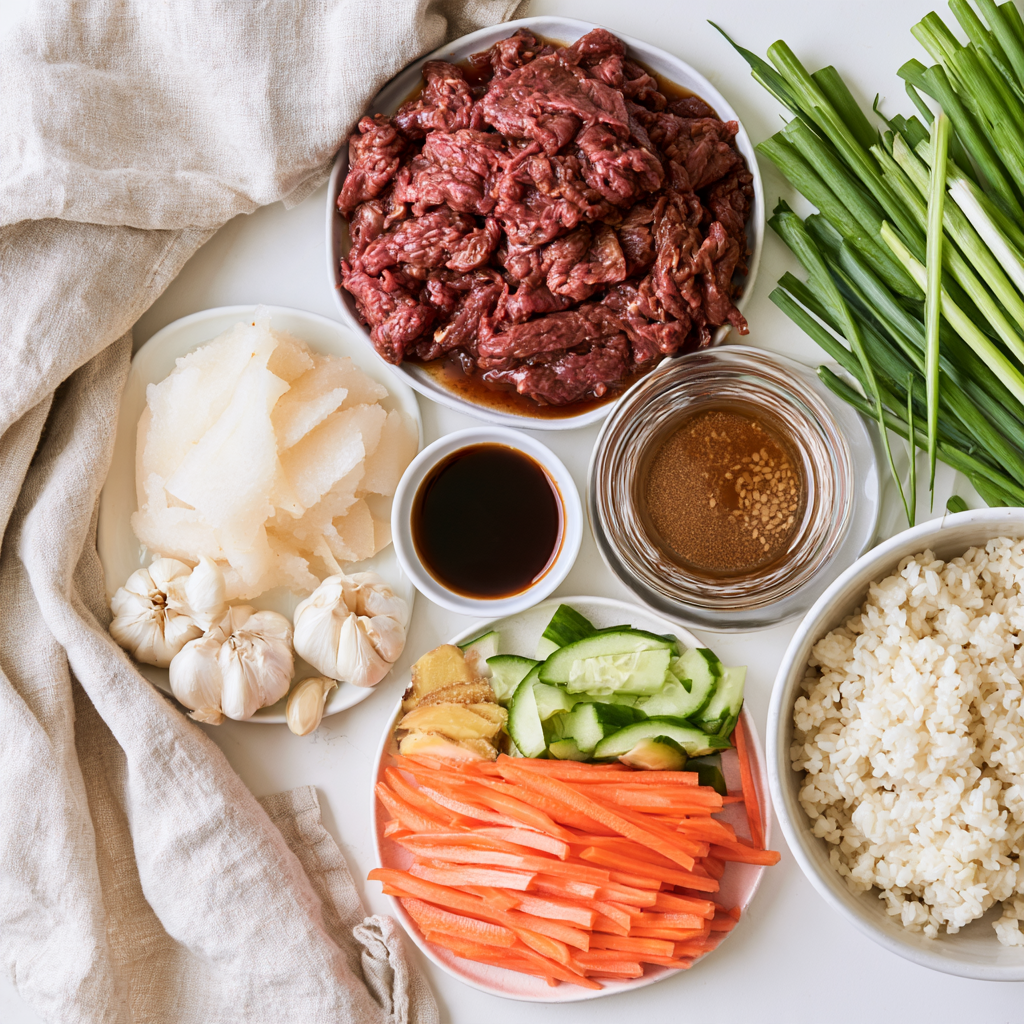
Most of this list is flexible. Three ingredients are easy to get wrong, so those are the ones worth explaining.
Boneless ribeye, or flank or top sirloin if you’re budgeting. Ribeye is the traditional cut and the most tender, but it’s expensive. Flank and sirloin both work, and the marinade is flavorful enough to carry them. Whatever you buy, freeze it for 30 minutes and slice it paper-thin against the grain. Pre-sliced bulgogi beef from a Korean grocery store is the fastest route if you have one nearby.
Asian pear, grated. This is the tenderizer and the subtle sweetness, and it’s what makes this taste like the bulgogi I remember. Bosc pear or a Gala apple works as a substitute. Avoid pineapple juice — its enzyme is much stronger and turns the beef mushy in a couple of hours.
Reduced-sodium soy sauce. The marinade is soy-heavy, and regular soy sauce can push the sodium over the edge, especially if you eat this for lunch four days in a row. Reduced-sodium gives you the flavor without the salt bomb.
How to Make It
Step 1: Freeze and slice the beef.
Wrap 1½ pounds of boneless ribeye in plastic wrap and freeze for 30 minutes, until firm but not solid. Unwrap and slice across the grain into paper-thin strips, ⅛ inch or thinner. A sharp chef’s knife matters more than anything else here.
Step 2: Make the marinade.
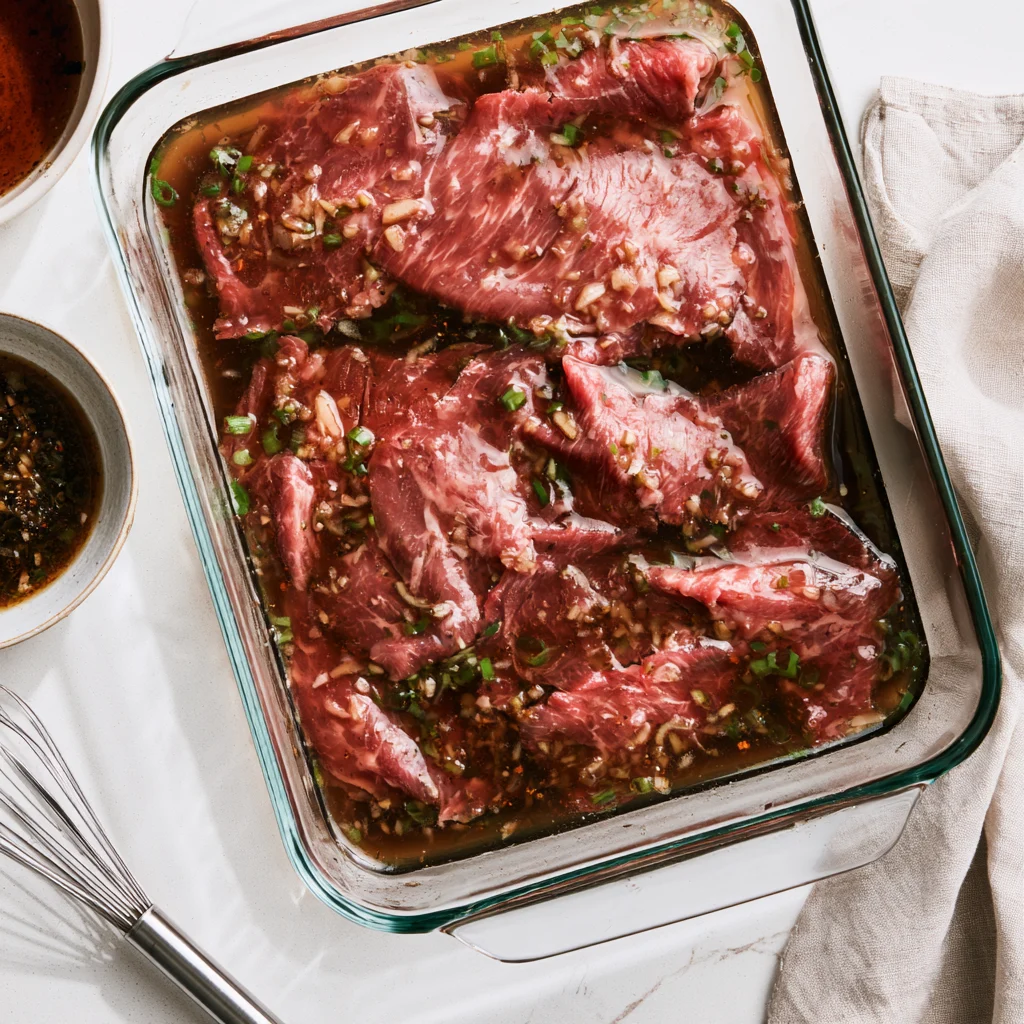
In a bowl, whisk ½ small Asian pear (peeled and coarsely grated), ¼ cup reduced-sodium soy sauce, 2 tablespoons brown sugar, 2 tablespoons toasted sesame oil, 4 cloves minced garlic, 1 tablespoon freshly grated ginger, and 2 finely chopped green onions.
Step 3: Marinate the beef.
Combine the beef and marinade in a zip-top bag. Massage well, press out the air, and refrigerate for at least 2 hours or up to 12 hours. Don’t exceed 12 hours — the pear enzymes will break down the meat too far.
Step 4: Quick-pickle the vegetables.
Toss 1 cup of thinly sliced English cucumber and 1 cup of matchstick carrots with 1 tablespoon rice vinegar and ¼ teaspoon salt in a small bowl. Set aside while you cook the beef. They should taste bright and slightly tangy after 15 minutes.
Step 5: Drain the beef.
Transfer the marinated beef to a colander set over a bowl and let it drain for 2 minutes. The beef should look glossy, not wet — this is what prevents steaming.
Step 6: Flash-sear in batches.
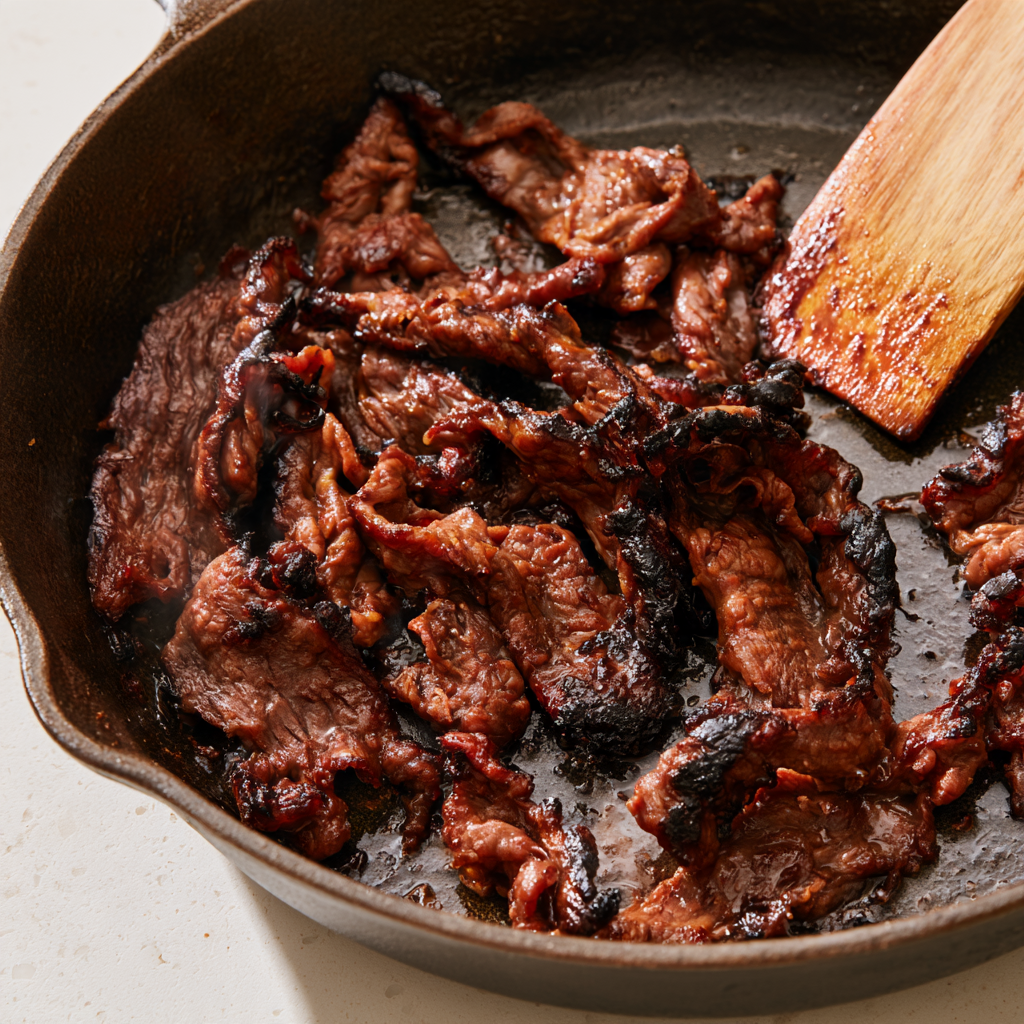
Heat ½ tablespoon of neutral high-heat oil in a large cast iron skillet or wok over high heat until it shimmers. Add half the beef in a flat, single layer. Sear undisturbed for 60 to 90 seconds, until deeply caramelized and charred on the bottom, then flip and cook 30 to 45 seconds more. Transfer to a plate and repeat with the remaining oil and beef.
Step 7: Assemble the containers.
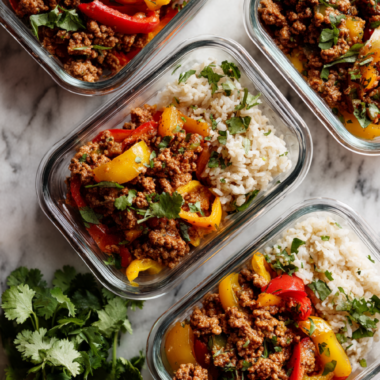
Divide warm cooked rice and the seared beef among 4 meal prep containers. Place the pickled cucumbers and carrots in separate side dividers or silicone cups to keep them cool during reheating. Garnish the beef with sesame seeds and sliced green onions.
Step 8: Store and reheat.
Seal and refrigerate for up to 4 days. To reheat, remove the cold pickled vegetables, cover the container loosely, and microwave for 1½ to 2 minutes until hot. Re-insert the cold vegetables before eating.
Tips and Troubleshooting
The beef is chewy. You sliced it too thick or with the grain. Freeze for 30 minutes and slice paper-thin across the grain. If your slices are a quarter inch, they need 2 to 3 minutes per side, and the interior overcooks before the outside caramelizes.
The beef steamed instead of seared. The marinade wasn’t drained, the pan wasn’t hot enough, or you crowded the pan. Drain in a colander for 2 minutes, heat the oil until it shimmers, and cook in two batches.
The marinade is too salty. Regular soy sauce can push it over. Use reduced-sodium soy sauce, and taste the marinade before adding the beef. If it’s already too salty, add a pinch more brown sugar and a splash of water.
The beef turned mushy after marinating. It sat longer than 12 hours, or you used pineapple juice. Stick to the 2-to-12-hour window with pear.
The cucumbers got watery in the container. They were packed next to the hot beef or reheated with it. Quick-pickle them and pack them in separate cups, then add them back after reheating.
The rice is dry after reheating. Add a tablespoon of water to the container before microwaving, and cover it loosely so the steam rehydrates the rice.
The bulgogi tastes flat. It needs the sesame oil and enough salt. Taste the marinade before adding the beef, and add a pinch of salt if the soy sauce is very low-sodium.
Storage and Make-Ahead
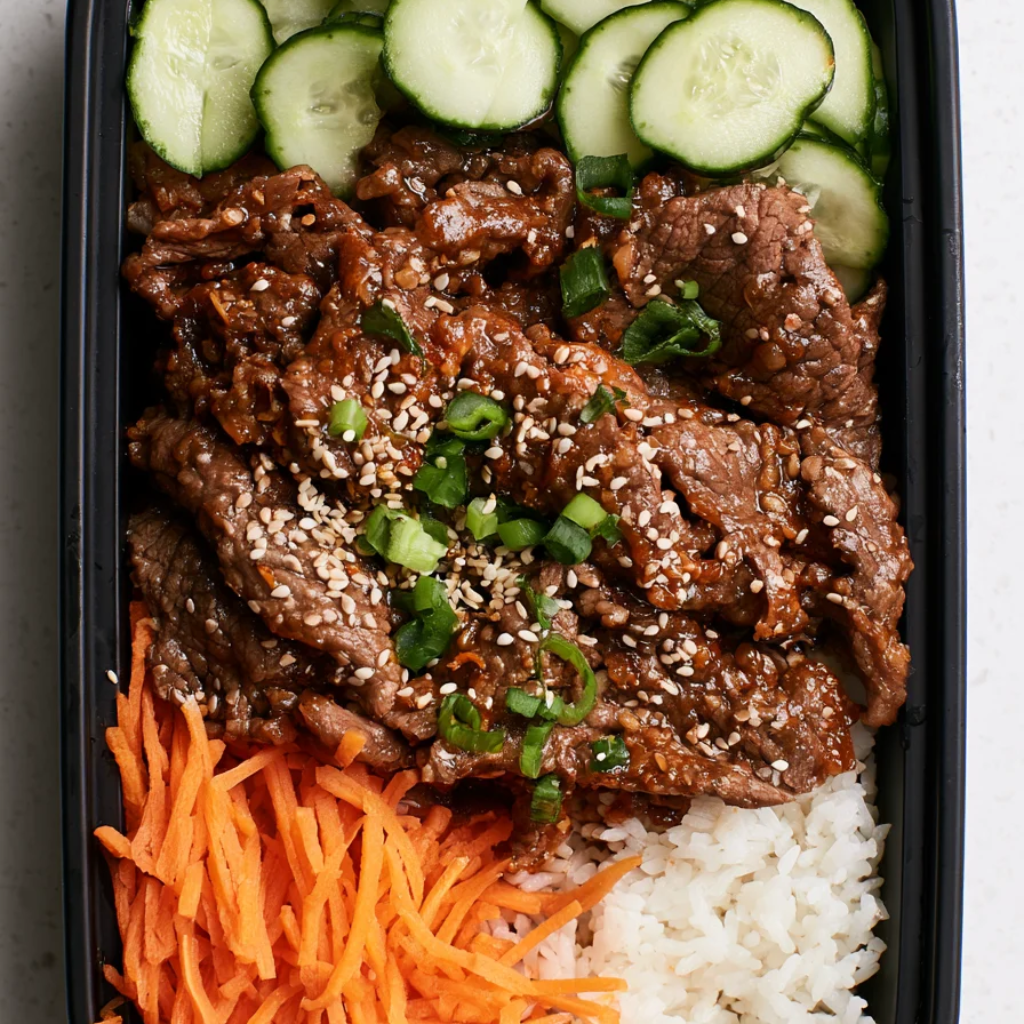
Store the cooked beef in a sealed container in the refrigerator for up to 4 days. The assembled containers — rice, beef, and pickled vegetables in separate cups — keep for the same 4 days, and the pickled vegetables are actually best on days 2 and 3.
The uncooked marinated beef freezes well for up to 3 months. Freeze it flat in a zip-top bag, thaw overnight in the refrigerator, and cook as directed.
I don’t recommend freezing the assembled containers with rice. The rice gets mushy on thawing. Freeze the beef separately, then assemble fresh containers when you’re ready.
Store leftovers in the refrigerator within 2 hours of cooking, and discard anything left at room temperature for more than 2 hours.
Bulgogi Beef — Easy Korean Meal Prep Bowls
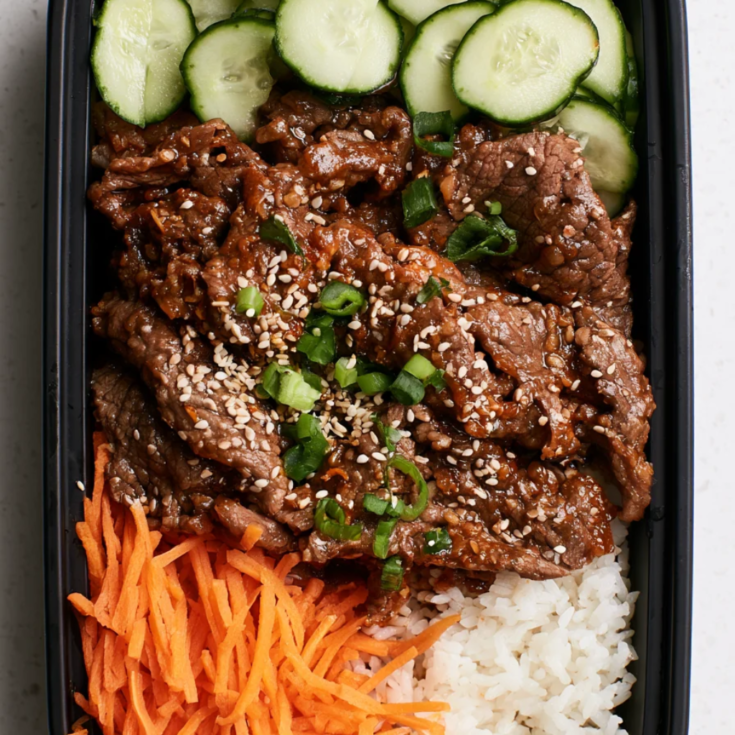
Paper-thin sliced ribeye tenderized in a sweet-savory Asian pear marinade, seared fast over high heat, and packed into meal prep bowls with jasmine rice and quick-pickled vegetables. About 32g protein per bowl.
Ingredients
For the beef and marinade:
- 1½ lbs boneless ribeye steak, frozen for 30 minutes
- ½ small Asian pear (or Bosc pear or Gala apple), peeled and coarsely grated
- ¼ cup reduced-sodium soy sauce
- 2 tbsp brown sugar
- 2 tbsp toasted sesame oil
- 4 cloves garlic, minced
- 1 tbsp freshly grated ginger
- 2 green onions, finely chopped
- 1 tbsp neutral high-heat oil (avocado or canola), divided
For the bowls:
- 2 cups cooked jasmine or short-grain white rice
- 1 cup English cucumber, thinly sliced
- 1 cup matchstick carrots
- 1 tbsp rice vinegar
- ¼ tsp salt
- Toasted sesame seeds and sliced green onions, for garnish
Instructions
- Freeze the ribeye for 30 minutes, then slice across the grain into paper-thin strips, ⅛ inch or thinner.
- Whisk the grated pear, soy sauce, brown sugar, sesame oil, garlic, ginger, and green onions in a bowl. Combine with the beef in a zip-top bag and marinate for at least 2 hours or up to 12 hours.
- Toss the cucumber and carrots with the rice vinegar and salt. Set aside.
- Drain the marinated beef in a colander for 2 minutes.
- Heat ½ tablespoon oil in a cast iron skillet over high heat until it shimmers. Sear half the beef in a single layer for 60 to 90 seconds, until caramelized; flip and cook 30 to 45 seconds more. Repeat with the remaining oil and beef.
- Divide the rice and beef among 4 containers. Pack the pickled vegetables in separate cups or dividers. Garnish with sesame seeds and green onions.
- Refrigerate up to 4 days. Reheat the rice and beef loosely covered for 1½ to 2 minutes, then add the cold pickled vegetables.
Notes
Notes: Marinated uncooked beef freezes for up to 3 months. Don't freeze assembled containers with rice. Nutrition information is an estimate.
Nutrition (per bowl, estimated): About 480 calories, 32g protein, 42g carbs, 18g fat, 2g fiber, 690mg sodium.
FAQ
Can I use ground beef instead of ribeye?
Yes, and it’s faster. Ground beef bulgogi skips the freezing and slicing steps and only needs about 30 minutes in the marinade. Cook it in a hot skillet, breaking it up, until browned and cooked through. The texture is crumbly instead of sliced, but the flavor is the same.
Can I use sirloin or flank steak instead?
Yes. Both work and are cheaper than ribeye. Slice them paper-thin against the grain and don’t overcook them — they’re leaner and dry out faster than ribeye.
What if I can’t find Asian pear?
Bosc pear or a Gala apple works. Avoid pineapple juice — its enzyme is much stronger and turns the beef mushy in a couple of hours.
Why did you leave out gochujang?
Because this is the version I learned from my roommate’s mom, and it doesn’t need it. The depth comes from the sear, the sesame oil, and the pear. If you want heat, add red pepper flakes at the table.
How long does the marinated beef last in the fridge?
Cook it within 12 hours. The pear enzymes keep breaking down the protein, and after that, the texture turns mealy. If you can’t cook it within 12 hours, freeze it.
Can I cook the beef from frozen?
I don’t recommend it. Thaw it overnight in the refrigerator first so it sears evenly instead of steaming.
More Meal Prep Ideas for the Week You’ll Love
Best Korean Short Ribs (Galbi) — Overnight Marinade, 44g Protein
Korean Cucumber Salad (Oi Muchim) — Spicy, Tangy & So Easy
Korean Gochujang Beef Bowl: A Quick High-Protein Dinner (5 Ingredients)
Closing
Make this bulgogi beef on a Sunday and eat it for lunch all week.
The technique in the recipe card — the 30-minute freeze, the paper-thin slices, draining the marinade before searing, and quick-pickling the vegetables in separate cups — is what makes the beef caramelize instead of steam and keeps the bowls crisp through Thursday.
Every time I make this, I get a little closer to the version my roommate’s mom made me, and I’m not sure I’ll ever land exactly on it. But this one is worth making, and it’s the one I’d hand you first. If you try the ground beef version or add red pepper flakes, let me know how it turns out.