Some nights I want a dinner that’s fuss-free and mess-free but still healthy and simple, and this sheet pan salmon with sweet potatoes and string beans checks every box.
There’s almost no cooking involved — you unpack, season, and throw it all in the oven.
No technique, no thermometer anxiety, no pan to deglaze. It’s the kind of dinner that makes you feel like you pulled something off when you really just let the oven do the work.
That’s also why I plan it when I’m not sure of my footing.
An unexpected guest and you need a plan fast but don’t want to actually cook? This.
A date night at home and you want to impress without betting the evening on your knife skills? This.
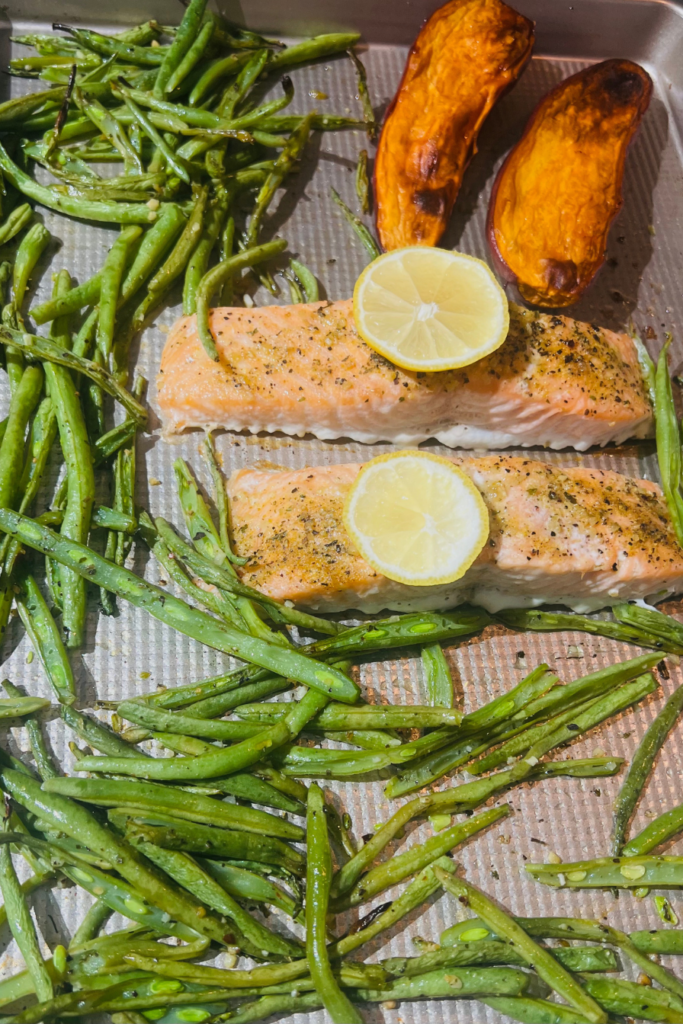
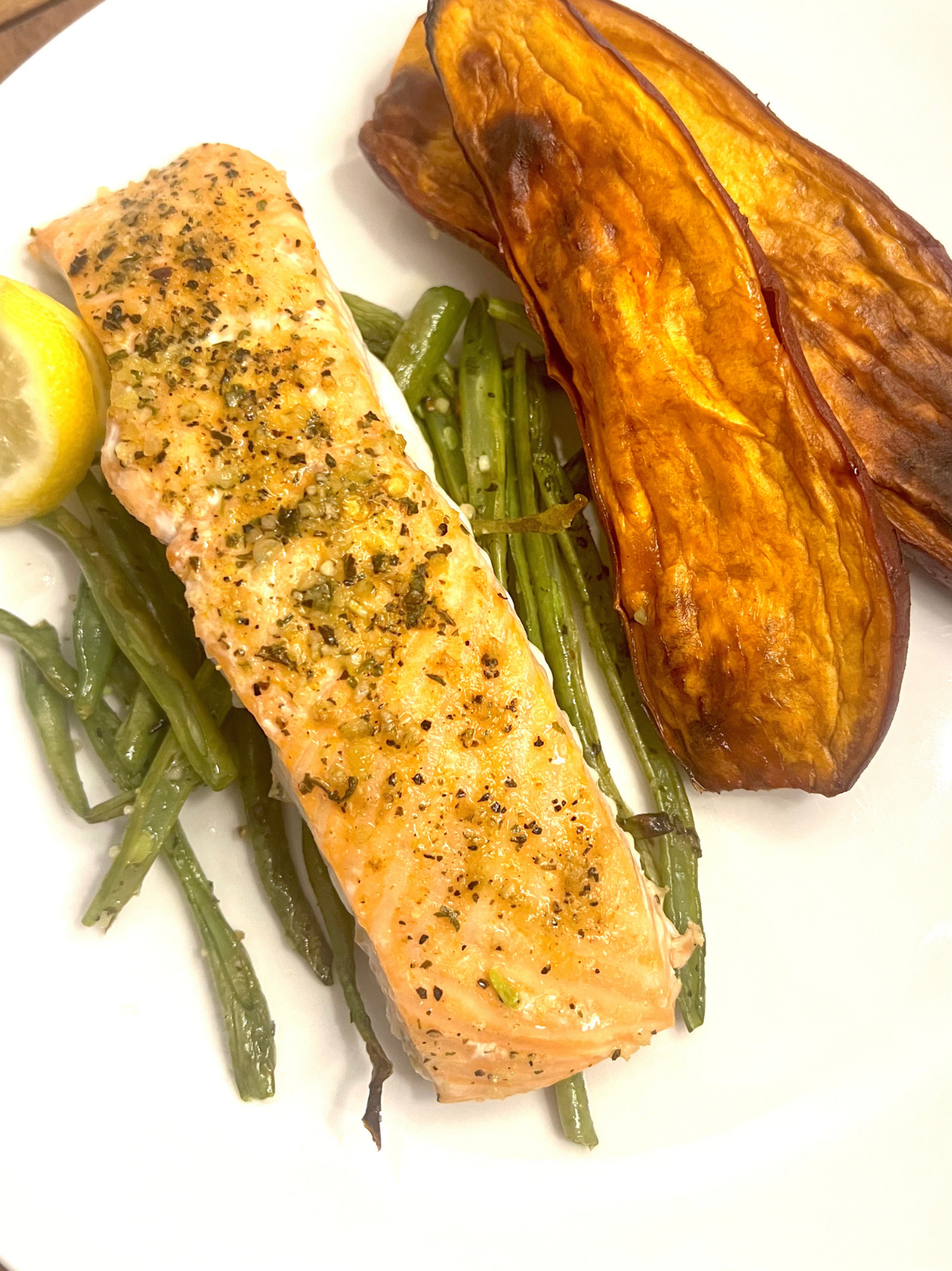
It comes out of the oven looking like a restaurant plate — golden sweet potatoes, bright string beans, flaky salmon — and it pairs with a glass of wine as easily as it works as a family dinner on a busy Tuesday.
My family eats salmon at least once a week, and while I don’t make this exact version every week, it shows up on our table as often as I have a long, tiring day. I love that my family still eats well while I do practically nothing.
It works because of the timing. Most one-pan salmon recipes throw everything in at once, and you end up with raw sweet potatoes and mushy string beans while the salmon dries out waiting for them.
This version staggers it: the sweet potatoes go in first, cut-side down on an oiled sheet pan, and roast at 425°F until they’re nearly tender.
The salmon and string beans get added later, and everything lands at the same moment.
The most important detail is patting the salmon completely dry before it goes in the oven.
A wet fillet steams instead of roasting, and the surface stays pale instead of developing the light golden crust that makes this look as good as it tastes.
Why This Recipe Works
Sheet pan salmon goes wrong in three specific ways: raw vegetables, dry salmon, and a pan that’s crowded enough to steam everything instead of roasting it. Here’s how this version solves each one.
1. Par-Roast the Sweet Potatoes Cut-Side Down
Sweet potatoes take longer than salmon and string beans, so they need a head start. Cutting them in half and laying them flat-side down on an oiled sheet pan maximizes contact with the hot pan, which is where the browning happens. They par-roast for about 20 minutes before the salmon and string beans go in, so by the time the salmon is done, the sweet potatoes are tender and caramelized on the cut side.
2. Add the Salmon and String Beans Together, Later
Salmon fillets and string beans both cook fast — 10 to 12 minutes for medium salmon, 8 to 10 minutes for halved string beans. Adding them together in the last stretch means the salmon stays flaky and the string beans stay bright green and crisp-tender instead of limp. Halving the string beans (cutting them in half crosswise) is what speeds them up — whole string beans take longer to cook through, and they don’t fit in the pan as neatly.
3. Pat the Salmon Completely Dry
Surface moisture must evaporate before browning can start, and in a hot oven, that moisture becomes steam. Pat the fillets dry with paper towels until the surface looks matte, rub them with oil, and season. The oil carries the seasoning and helps the surface color. A wet fillet steams instead of roasting, and the surface stays pale and damp.
Ingredients That Matter
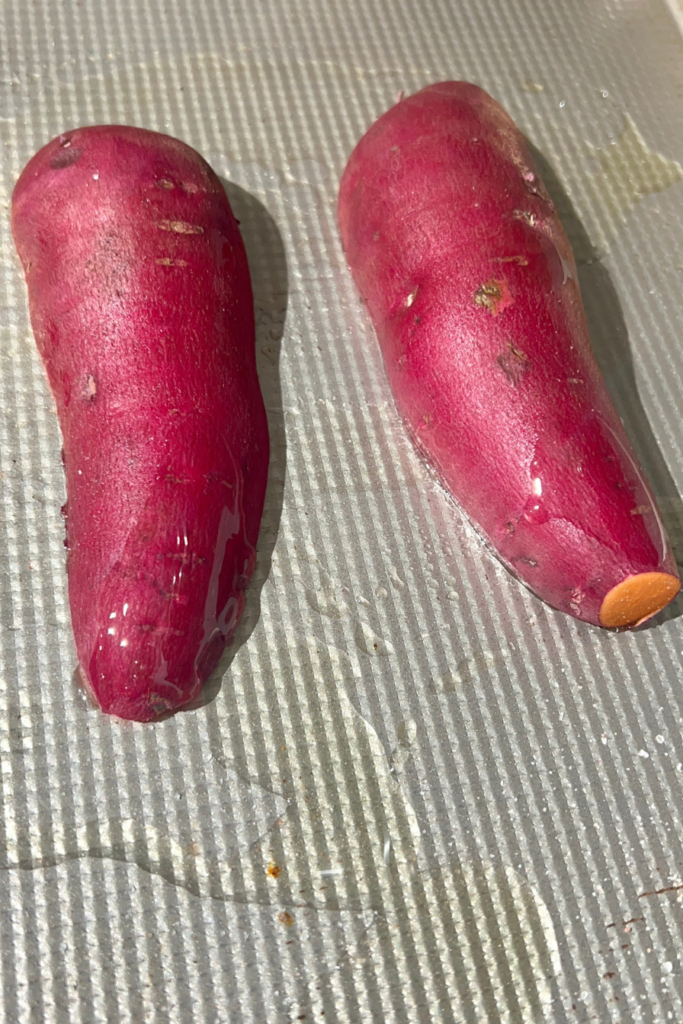
Sweet potatoes. Two medium sweet potatoes, scrubbed and cut in half lengthwise. You don’t need to peel them — the skin holds the flesh together and adds texture. Cut them in half lengthwise so each half has a flat cut side, then lay them flat-side down on the oiled sheet pan. That’s where the caramelization happens. If your sweet potatoes are very large, cut them into thick wedges instead, about 1½ inches thick at the widest point.
Olive oil. Two tablespoons, divided. One tablespoon for the sweet potatoes (to coat them and to oil the pan), one tablespoon for the salmon and string beans. Olive oil has a high enough smoke point for 425°F and it carries the seasoning.
Kosher salt and black pepper. For the sweet potatoes and for the salmon. Season generously — sweet potatoes and salmon both need more salt than you’d think.
Skin-on salmon fillets. Four fillets, 5 to 6 ounces each, patted completely dry. Center-cut fillets of even thickness cook evenly. The skin holds the flesh together and protects the bottom from drying out, and it peels off easily after roasting if you don’t want to eat it.
String beans (green beans). One pound, ends trimmed and cut in half crosswise. Halving them is what speeds up the cooking — whole string beans take longer to cook through, and they don’t fit in the pan as neatly. They also cook more evenly when they’re the same length.
Sweet paprika and garlic powder. Half a teaspoon each, for the salmon. Paprika brings a warm red-gold color and a faint sweetness, and garlic powder adds depth. Both are in the seasoning, not on top, so they don’t burn.
Lemon. Half sliced into rounds, half kept for squeezing. The lemon slices roast on the pan beside the salmon (not on top, which traps steam) and turn jammy and caramelized. The other half gets squeezed over the whole pan at the end — the warm juice adds more flavor than the slices ever did on top.
Fresh parsley or dill. Two tablespoons, chopped, for garnish.
How to Make Sheet Pan Salmon
(See the recipe card below — the steps are identical and the card is the single source of truth.)
Tips and Troubleshooting
The sweet potatoes are still hard when the salmon is done. They were cut too thick, or they didn’t get the full par-roast. Cut them in half lengthwise and lay them flat-side down, and roast them the full 20 minutes before the salmon goes in. If they’re still firm at that point, give them 5 more minutes.
The string beans are limp. They cooked too long. Add them in the last 8 to 10 minutes only, alongside the salmon, and check thin beans at 7 minutes.
The salmon is dry. It was overcooked past 145°F. Start checking at 10 minutes total and pull it as soon as it flakes. If your fillets are thin, pull at 9 minutes.
The salmon surface is pale and damp. The fillets weren’t patted dry, or the lemon slices were on top of the fish. Pat them completely dry before seasoning, and roast the lemon slices beside the salmon, not on top.
The vegetables are steamed instead of roasted. The pan was crowded, or the oven wasn’t fully preheated. Use a large rimmed sheet pan — if it looks tight, use two. Sweet potatoes flat-side down, salmon and string beans in a single layer.
The salmon sticks to the pan. The pan wasn’t oiled, or the fillets were placed on a dry spot. Oil the whole sheet pan (not just the salmon) before the sweet potatoes go down, and the salmon will release easily.
The whole thing tastes flat. It needs salt and a squeeze of fresh lemon at the end. Taste the sweet potatoes before serving and add salt if needed, and don’t skip the warm lemon juice.
The string beans are too al dente. Halved string beans usually cook in 8 to 10 minutes, but if yours are thick, give them 12. Check at 8 minutes and go from there.
Substitutions and Swaps
Sweet potatoes → baby Yukon Gold or red potatoes. Same quantity. Halve or quarter them so each piece is about 1½ inches, and par-roast them the same 20 minutes. Regular potatoes roast slightly faster than sweet potatoes.
String beans → asparagus. Same quantity, woody ends trimmed. Asparagus cooks in 7 to 8 minutes, so add it at the same time as the string beans.
String beans → broccoli florets. Same quantity. Add them with the salmon and string beans — florets roast in about 10 minutes.
String beans → cherry tomatoes. Same quantity. Add them in the last 8 to 10 minutes so they burst without collapsing.
Salmon → arctic char or trout. Same quantity. Both are similar in fat and cook in the same time.
Salmon → shrimp. Add shrimp in the last 5 to 7 minutes of the salmon’s cook time — they cook much faster.
For a sheet pan salmon and broccoli version: swap the string beans for broccoli florets. Same timing.
For a sheet pan salmon and asparagus version: swap the string beans for asparagus. Same timing.
Storage and Reheat
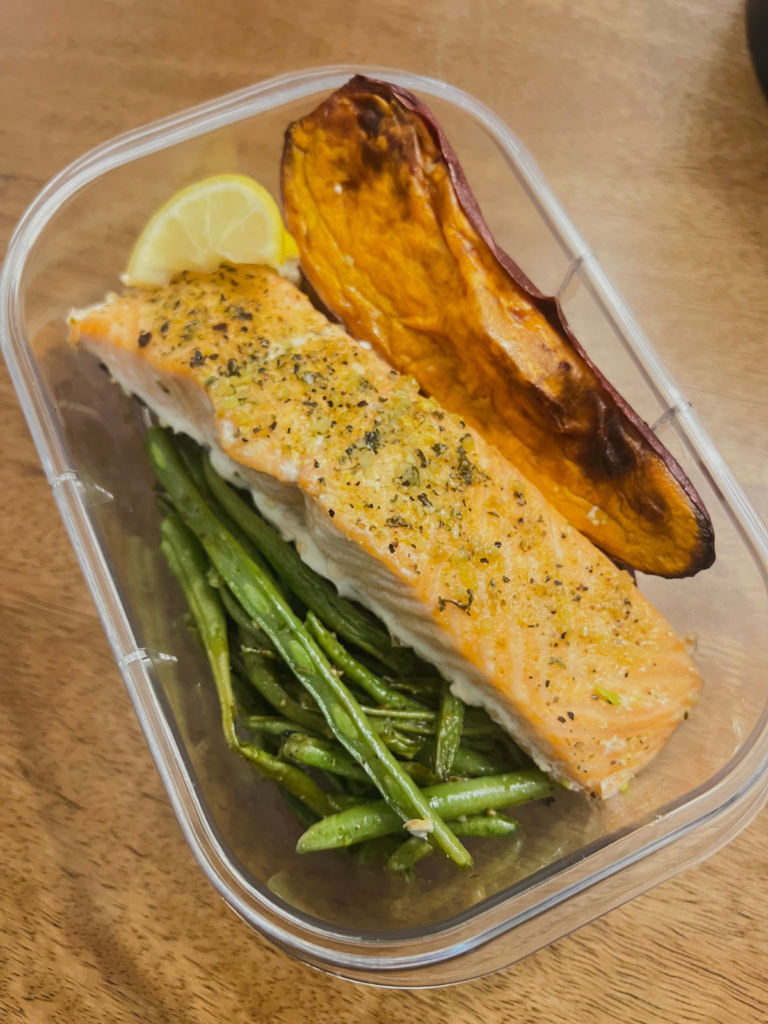
Refrigerate leftover salmon, sweet potatoes, and string beans in a sealed container for up to 3 days.
Reheat gently in a 300°F oven for 10 to 15 minutes, or in the microwave for 60 to 90 seconds, until just warmed through — reheating salmon aggressively dries it out.
Make ahead: you can halve and season the sweet potatoes and trim the string beans up to a day ahead and store them in the refrigerator. Season the salmon right before roasting.
Freezing is not recommended for the assembled dish — the sweet potatoes get mushy and the string beans turn limp on thawing. Leftover salmon freezes better on its own than with the vegetables.
Food safety: store leftovers within 2 hours of cooking. Discard anything left at room temperature longer than 2 hours.
Sheet Pan Salmon With Sweet Potatoes and String Beans
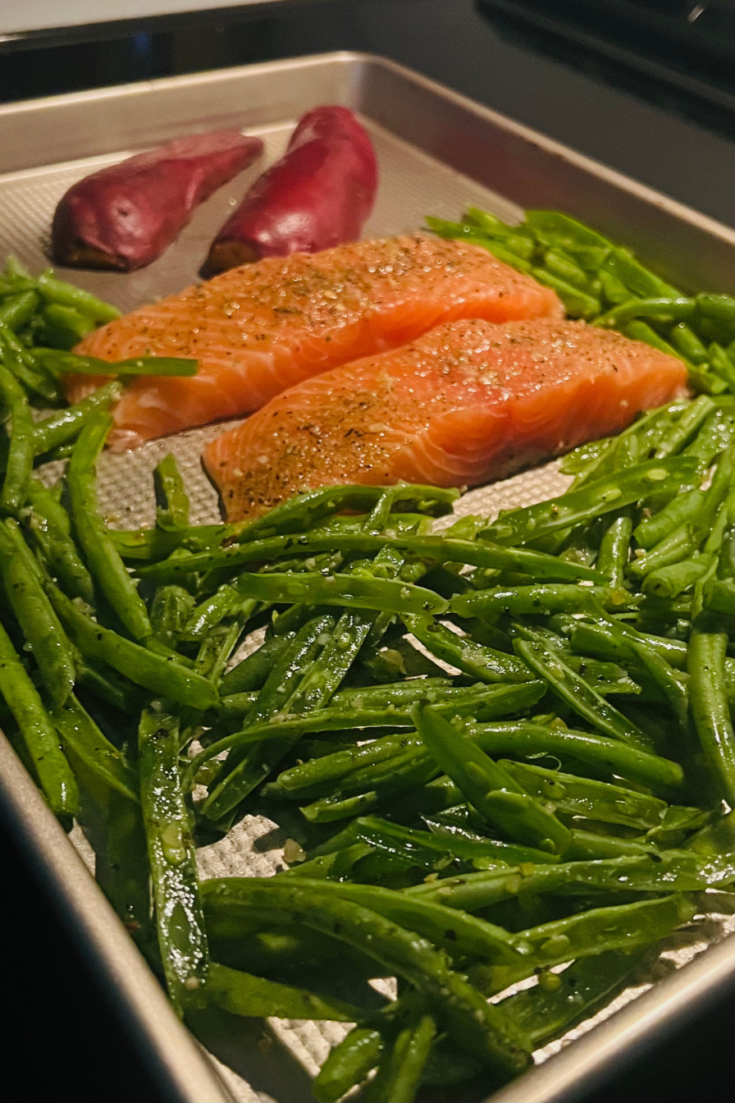
Flaky, tender salmon fillets, caramelized sweet potatoes, and bright string beans roasted on a single sheet pan with lemon and fresh herbs
Ingredients
- 2 medium sweet potatoes, scrubbed and cut in half lengthwise
- 2 tablespoons olive oil, divided
- ½ teaspoon kosher salt, plus more for the salmon
- ¼ teaspoon freshly ground black pepper, plus more for the salmon
- 4 skin-on salmon fillets (5 to 6 oz each), patted completely dry
- ½ teaspoon sweet paprika
- ½ teaspoon garlic powder
- 1 lb string beans (green beans), ends trimmed and cut in half crosswise
- 1 lemon, half sliced into rounds, half kept for squeezing
- 2 tablespoons fresh parsley or dill, chopped, for garnish
Instructions
- Preheat and Prep the Pan: Preheat the oven to 425°F. Brush a large rimmed baking sheet with 1 tablespoon of olive oil.
- Par-Roast the Sweet Potatoes: Toss the sweet potato halves with the remaining 1 tablespoon of olive oil, ½ teaspoon kosher salt, and ¼ teaspoon black pepper. Arrange them flat-side down on the oiled baking sheet. Roast 20 minutes, until the cut sides are deeply golden and the potatoes are starting to soften.
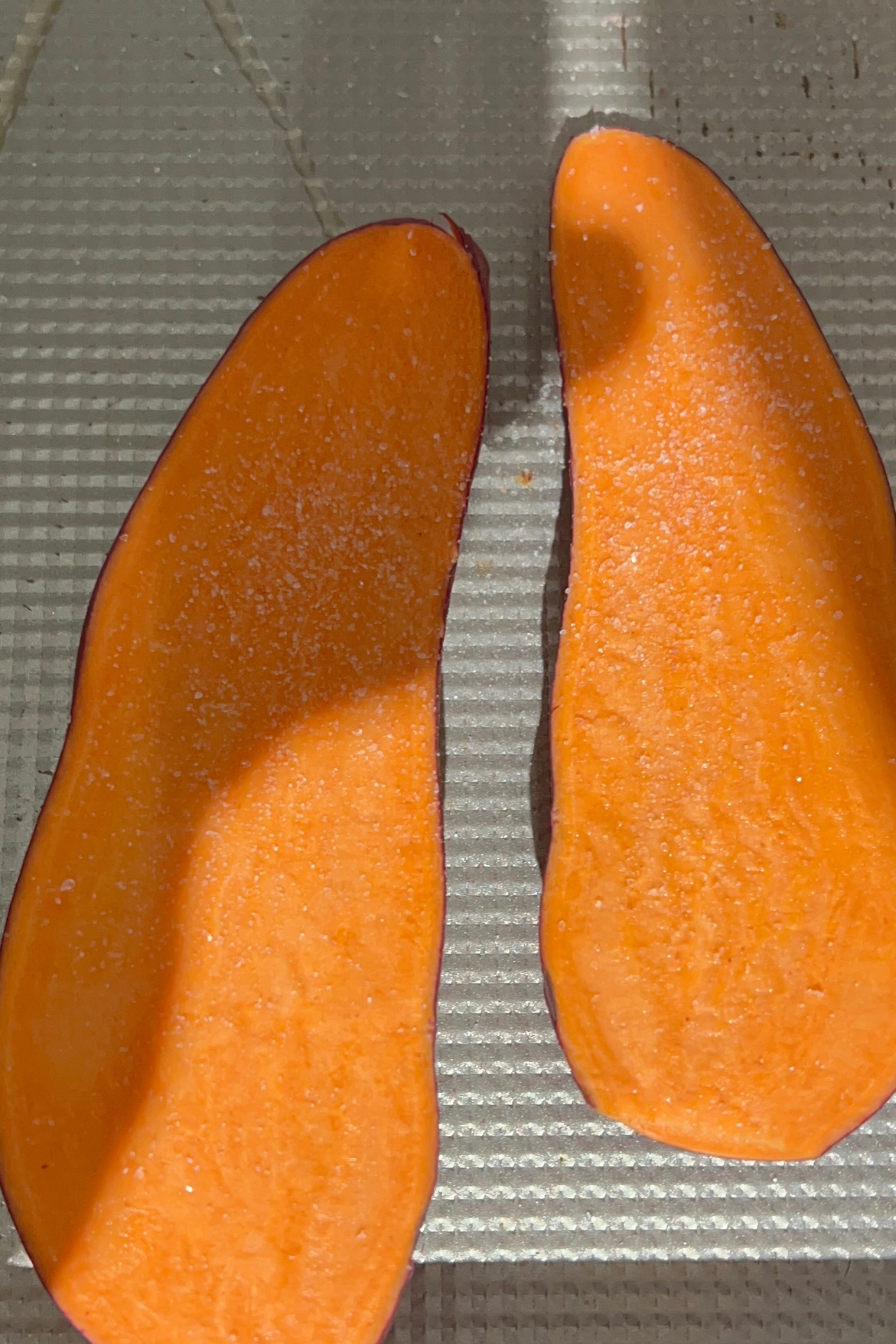
- Season the Salmon and String Beans: While the sweet potatoes roast, pat the salmon fillets completely dry. Rub them with ½ tablespoon olive oil and season evenly with the paprika, garlic powder, and a pinch of salt. Toss the halved string beans with the remaining ½ tablespoon olive oil and a pinch of salt.
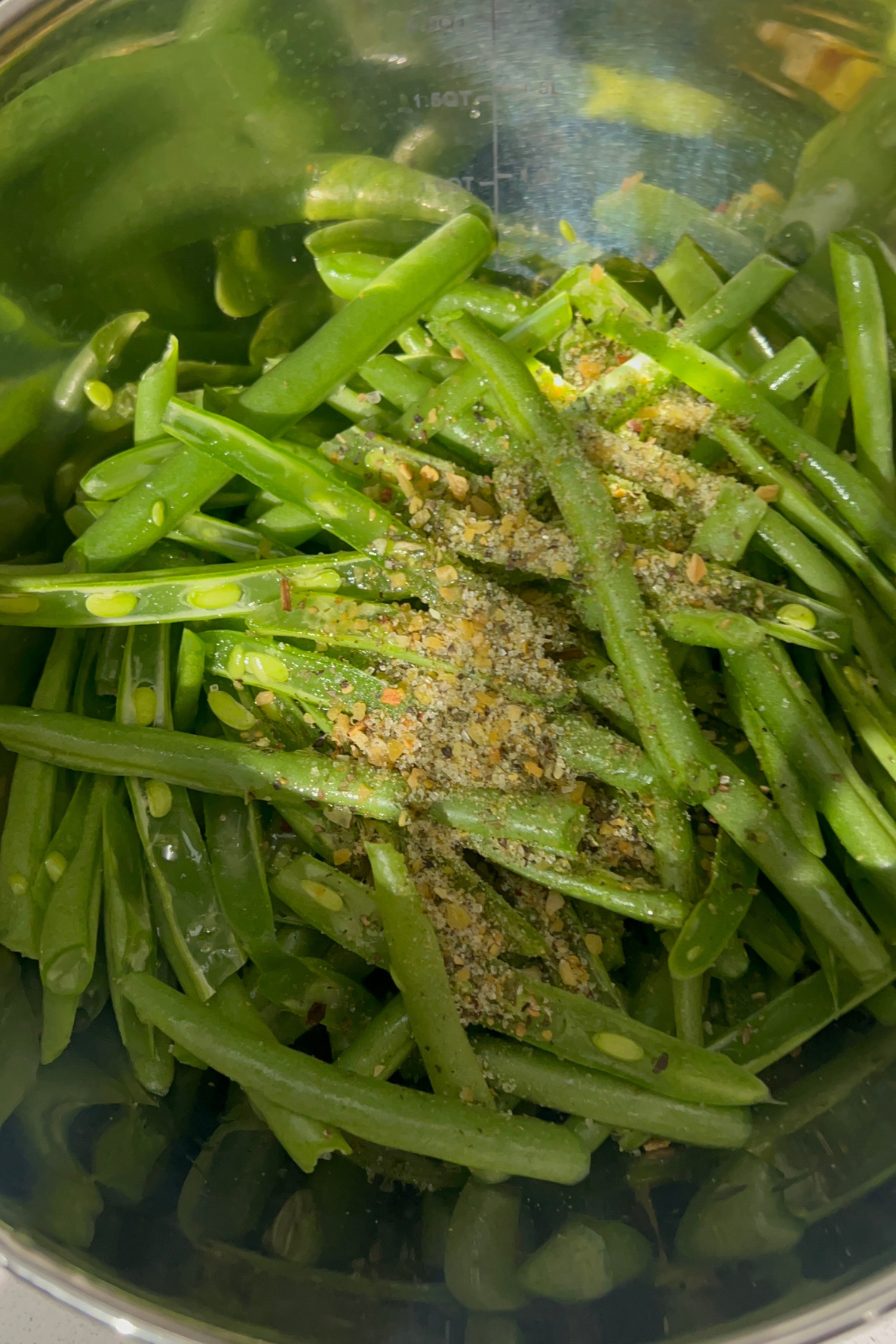
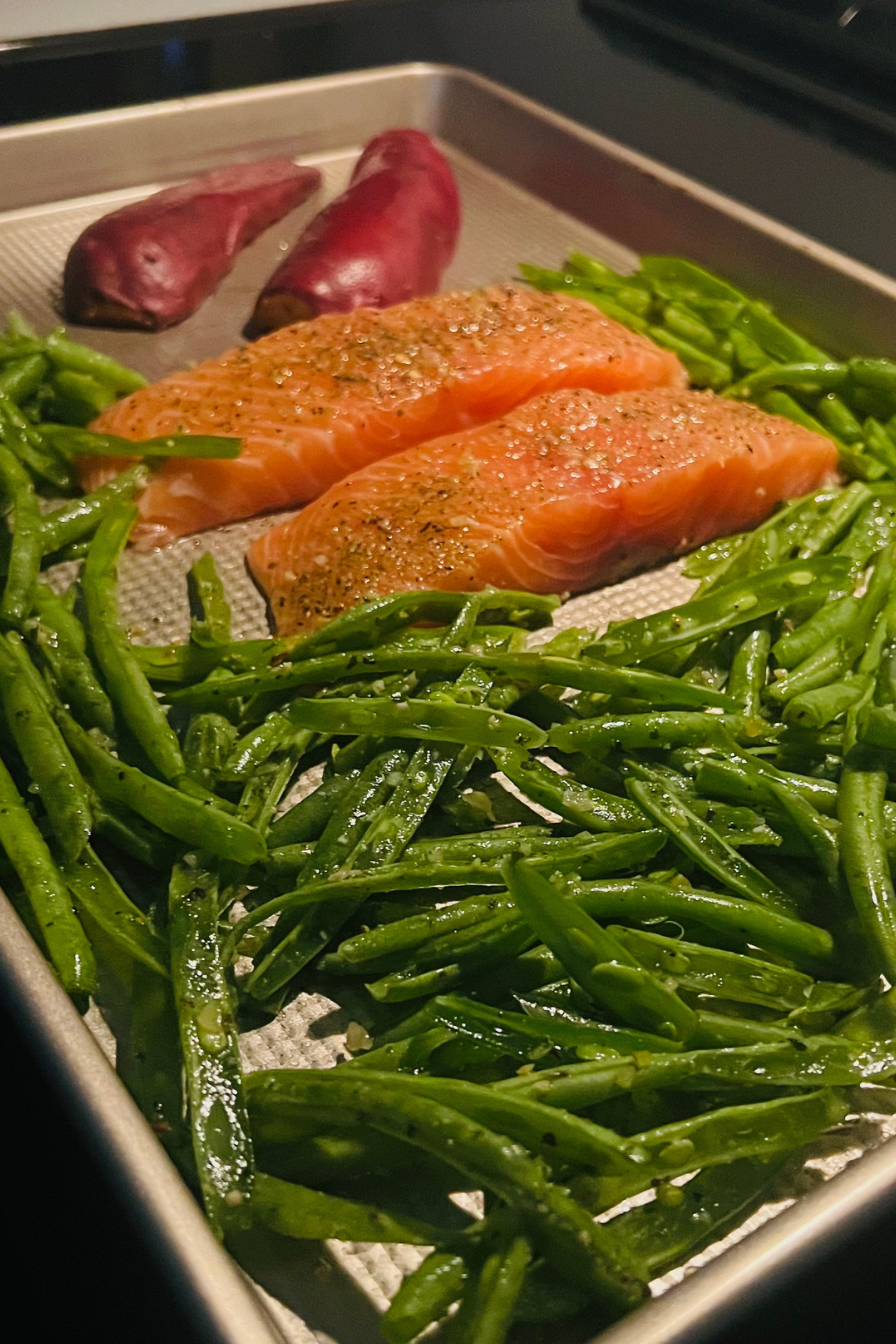
- Add the Salmon and String Beans: Remove the pan from the oven. Arrange the salmon fillets skin-side down in the open space, and lay the lemon slices beside them, not on top. Scatter the string beans in the remaining space. Return the pan to the oven and roast 10 to 12 minutes, until the salmon flakes easily and reaches 140 to 145°F in the thickest part, and the string beans are bright green and crisp-tender.
- Finish and Serve: Squeeze the warm lemon half over everything, scatter with fresh parsley or dill, and serve straight from the pan.
Notes
Notes: Leftovers keep refrigerated for up to 3 days; reheat gently at 300°F. Not recommended for freezing assembled. Nutrition information is an estimate.
Estimated per serving: 420 calories · 34g protein · 24g carbs · 20g fat · 5g fiber · 460mg sodium
Nutrition varies by salmon and sweet potato size. Verify against your labels.
Frequently Asked Questions
Can I use a different vegetable instead of string beans?
Yes. Asparagus, broccoli florets, and cherry tomatoes all work — add them at the same time as the string beans. Asparagus needs 7 to 8 minutes, broccoli florets 10 minutes, and cherry tomatoes 8 to 10 minutes.
Can I use regular potatoes instead of sweet potatoes?
Yes. Baby Yukon Gold or red potatoes work well — halve or quarter them so each piece is about 1½ inches, and par-roast them the same 20 minutes.
Can I use frozen salmon?
Thaw it overnight in the refrigerator first. Frozen salmon releases water as it cooks and steams instead of roasting, and the timing is unreliable from frozen.
How do I know when the salmon is done?
It should flake easily with a fork and register 140 to 145°F in the thickest part. Start checking at 10 minutes of the second bake — oven temperatures and fillet thickness vary.
Why roast the lemon beside the salmon instead of on top?
Lemon slices on top trap steam and leave a pale, damp surface. On the pan, they caramelize and turn jammy, and the warm juice you squeeze over the fish at the end adds more flavor.
Can I add shrimp instead of salmon?
Yes, but shrimp cook much faster — 5 to 7 minutes. Add the shrimp during the last 5 to 7 minutes of the salmon’s cook time, or make a separate sheet-pan shrimp dinner.
How do I reheat leftovers without drying out the salmon?
Reheat gently at 300°F for 10 to 15 minutes, or in the microwave for 60 to 90 seconds. Cover the container with a damp paper towel to help retain moisture.
Why do the sweet potatoes go in first?
Sweet potatoes take longer to cook than salmon and string beans. Par-roasting them cut-side down for 20 minutes gives them a head start so everything finishes at the same time.
More Easy Salmon and Sheet Pan Dinner Recipes You’ll Love
Baked Salmon With Lemon and Herbs — the basic oven method for salmon.
Honey Glazed Salmon Bowl — salmon with a sesame ginger dressing over rice.
Salmon Rice Bowl — crispy salmon bites in a honey soy glaze.
Lemon Herb Shrimp Salad Meal Prep — 20 minutes, 4 days of work lunches.
15 Easy Chicken Crockpot Recipes for Busy Families — the full collection, organized by night-type.
High-Protein Slow Cooker Dinners — ten weeknight dinners organized by cook time.
Closing
Make this sheet pan salmon on a night when you want a real dinner with one pan to wash.
The timing in the recipe card — 425°F, the sweet potatoes flat-side down for 20 minutes, then the salmon and string beans for the last 10 to 12 — is what makes everything finish at the same moment instead of the salmon drying out while the sweet potatoes catch up.
This is the dinner I make when I’ve had a long day and want my family to eat well without me doing much. I hope you enjoy it just as much. If you try it with different vegetables or add shrimp, let me know how it turns out.