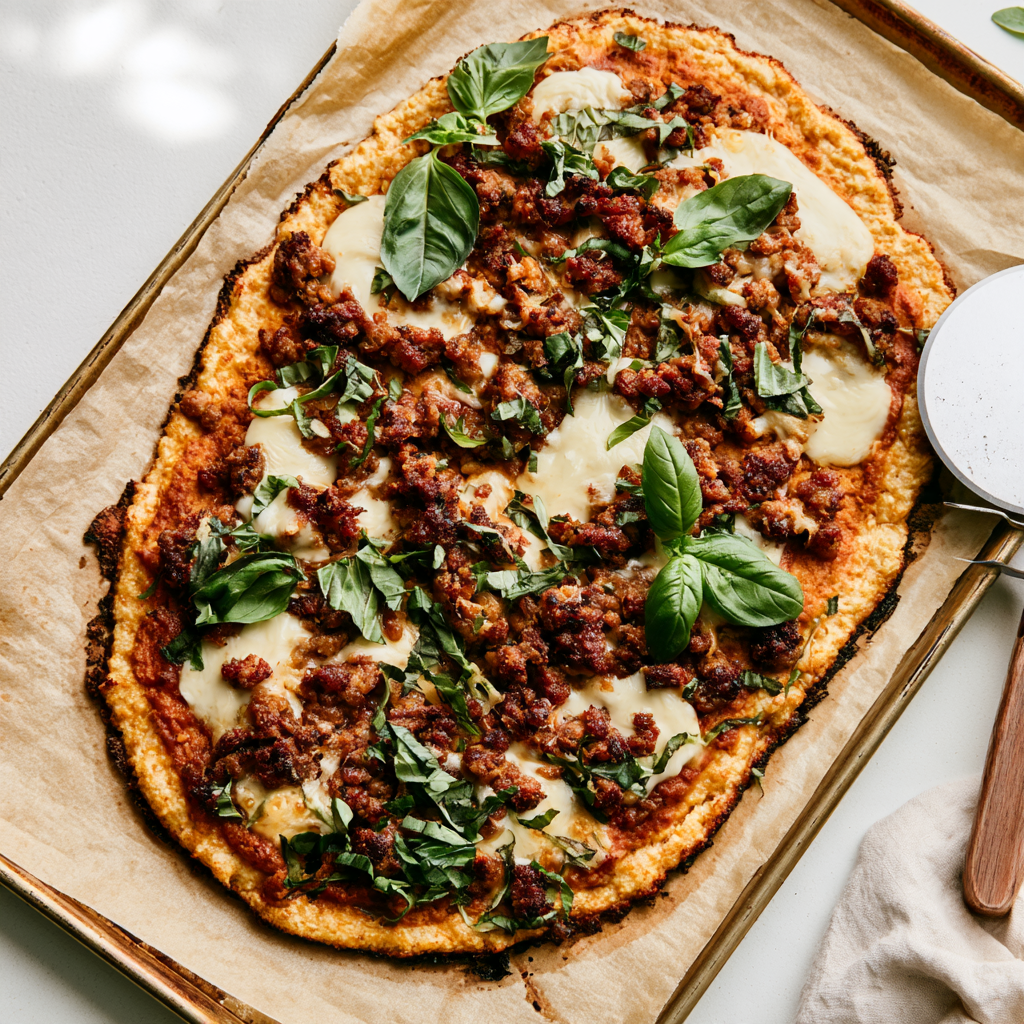

I love pizza, and I’ve made peace with the fact that a regular pizza night doesn’t fit my eating most weeks.
I didn’t want a “healthy pizza” that tasted like a rice cake with tomato sauce. I tried cauliflower crusts, and they were fine for about two bites.
Then I tried the cottage cheese flatbread that was going around — blended cottage cheese and eggs, baked thin — and it changed what I thought a high-protein pizza could be.
This protein pizza uses that flatbread as the crust. It bakes up pliable and slightly chewy, with a tang from the cottage cheese that actually works under tomato sauce and mozzarella.
The topping is crumbled Italian turkey sausage, browned first so it doesn’t release water into the crust, with part-skim mozzarella and a little Parmesan. It comes together in about thirty minutes and lands around 38 grams of protein for a whole personal pizza.
I tested this in my kitchen with 2% cottage cheese and a 9×13 quarter sheet pan, and the most important detail is spreading the batter thin and even—about an eighth of an inch.
A thick crust doesn’t crisp at the edges and tastes like a baked omelet. A thin, even one gets golden at the edges, holds its shape, and lets the toppings do the work.
The second detail is not overloading it. A thin crust can carry about a quarter cup of sauce and three-quarters of a cup of cheese, and no more.
Why This Recipe Works
Blending the cottage cheese until completely smooth is what makes the crust work. Cottage cheese curds stay curds in the oven — they don’t melt into a smooth batter. Thirty seconds in a blender or food processor turns it into a liquid that sets into a thin, pliable flatbread. If you skip this step or under-blend it, the crust comes out grainy and uneven.
The baking powder is doing quiet structural work. Two eggs alone give you a thin omelet. A quarter teaspoon of baking powder gives the batter just enough lift to set into something with a little thickness and chew, which is what makes it read as a crust instead of a crepe. It’s a small amount, but it’s the difference between a flatbread and an egg sheet.
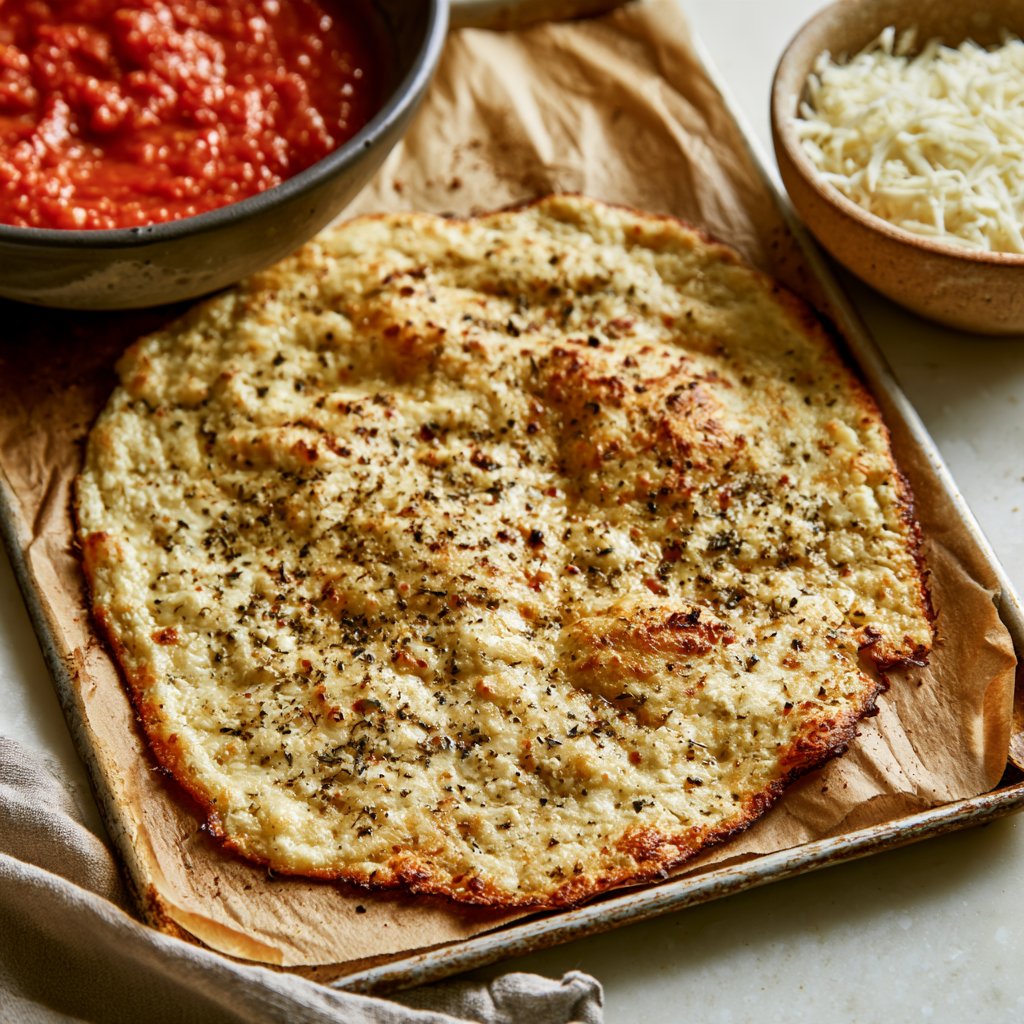
Baking at 375°F for 25 to 30 minutes is what sets the center without burning the edges. A hotter oven browns the edges before the middle firms up, and a cooler one leaves the center wet. The crust is done when the center feels matte and firm and the edges are golden — not when the timer says so.
Letting the crust cool completely before flipping keeps it from tearing. Warm cottage cheese crust is fragile and tears at the corners. Let it cool in the pan for 10 to 15 minutes, until it’s cool enough to handle and lifts off the parchment in one piece.
Browning the sausage before it goes on the pizza is what keeps the crust crisp. Raw sausage releases water and fat as it cooks, and on a thin crust that moisture soaks straight through. Browned and crumbled, it sits on top and stays put.
The sauce stays thin, and the cheese stays moderate for a reason. A wet sauce or too much mozzarella is how a thin crust turns soggy in the middle. Two tablespoons of sauce and about three-quarters of a cup of part-skim mozzarella give you a pizza that holds together when you pick it up.
Add the finishing toppings after the oven. Fresh basil or arugula wilt in a 400°F oven and turn dark. Added after baking, they stay bright and make the pizza look like the photo instead of a cheese-covered flatbread.
Ingredients That Matter
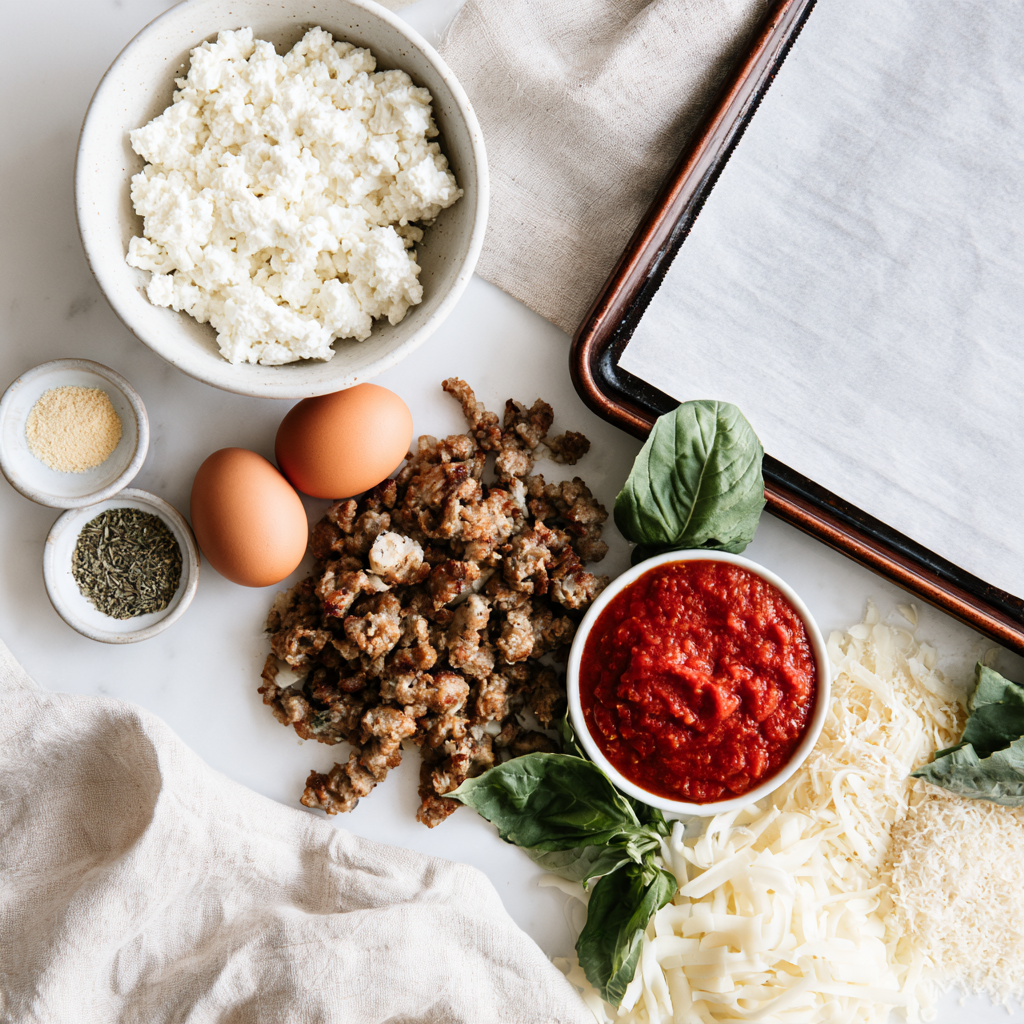
Most of this list is flexible. Three ingredients are easy to get wrong, so those are the ones worth explaining.
Blend cottage cheese (2% or full-fat) until completely smooth. This is the crust and most of the protein. Use full-fat or 2% — nonfat cottage cheese tastes thin and is more likely to separate. Blend it until there are no visible curds, and don’t substitute ricotta or Greek yogurt, which have different moisture and set differently.
Italian turkey or chicken sausage. This is the topping and the flavor. Brown it and crumble it before it goes on the pizza. Brand matters for the protein number — some turkey sausages are 20g protein per 4 oz, and some are closer to 14g, so check the label. Pork Italian sausage works and tastes richer, but the protein drops and the fat climbs.
Part-skim mozzarella, shredded from a block. Pre-shredded mozzarella is coated in cellulose and doesn’t melt as smoothly. Part-skim melts well and keeps the fat number down. Full-fat mozzarella works but pushes the pizza heavier than a high-protein board wants.
How to Make It
Step 1: Preheat and prep the pan.
Preheat the oven to 375°F. Line a 9×13-inch quarter sheet pan with parchment paper and spray the parchment generously with nonstick spray. The spray is essential — the crust will stick without it. If you want, sprinkle 1 tablespoon of finely grated Parmesan evenly over the greased parchment for a crisp bottom.
Step 2: Blend the crust batter.
Add 1 cup of cottage cheese, 2 large eggs, ½ teaspoon garlic powder, ½ teaspoon Italian seasoning, ¼ teaspoon baking powder, a pinch of salt, and a pinch of black pepper to a blender or food processor. Blend on high for 30 seconds, until completely smooth with no visible curds.
Step 3: Spread and bake the crust.
Pour the batter onto the prepared parchment and spread it into a thin, even 9×12-inch rectangle, about ⅛ to ¼ inch thick. Tap the pan firmly on the counter twice to pop large air bubbles. Bake for 25 to 30 minutes, until the center is firm and set, the edges are golden brown, and the surface feels matte to the touch. If a large air pocket balloons up, prick it with a knife.
Step 4: Cool the crust completely.
Let the crust cool in the pan for 10 to 15 minutes, until it’s completely cool and firm. Flip it onto a cutting board and peel off the parchment. Keep the oven on at 400°F.
Step 5: Brown the sausage.
While the crust cools, cook 8 ounces of Italian turkey sausage in a skillet over medium-high heat, breaking it up, until browned and cooked through, about 6 to 8 minutes. Drain off any excess fat and set aside.
Step 6: Build the pizza.
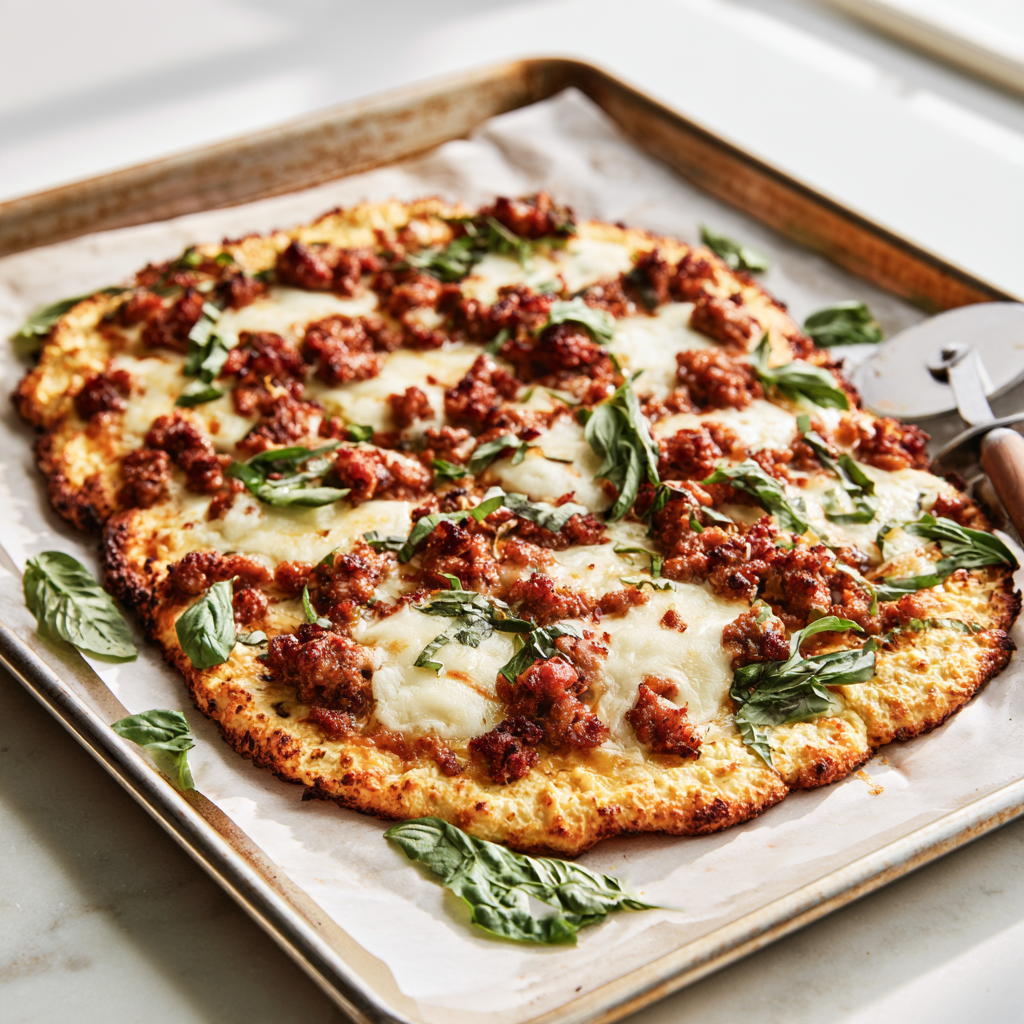
Return the crust to the parchment-lined pan. Spread 2 to 3 tablespoons of pizza sauce over the crust, leaving a half-inch border around the edge. Scatter the browned sausage over the sauce, then top with ¾ cup of part-skim mozzarella and 2 tablespoons of grated Parmesan.
Step 7: Bake the pizza.
Bake at 400°F for 8 to 10 minutes, until the cheese is melted and bubbling at the edges and the crust is crisp at the corners. Watch it closely — a thin crust goes from done to burnt quickly.
Step 8: Finish and serve.
Top with fresh basil or arugula, a drizzle of olive oil, and red pepper flakes if you want heat. Slice and serve immediately.
Tips and Troubleshooting
The crust stuck to the parchment. You didn’t grease the parchment, or the crust wasn’t fully cooled. Spray the parchment generously and let the crust cool completely before flipping it.
The crust is soggy in the middle. The batter was too thick, or you overloaded it with sauce and cheese. Spread the batter thin and even, keep the sauce to 2 to 3 tablespoons, and don’t exceed ¾ cup of mozzarella.
The crust tastes like a baked omelet. It was too thick, or you left out the baking powder. Spread it to an eighth of an inch and don’t skip the baking powder — it’s what gives the crust structure.
The center didn’t set. It needed more time, or the oven ran cool. Bake until the center is matte and firm, and if this happens repeatedly, check the oven temperature with a thermometer.
The pizza is watery. The sausage wasn’t browned and drained, the sauce was too wet, or the mozzarella was fresh rather than part-skim. Brown and drain the sausage, use a thick sauce, and use low-moisture mozzarella.
The edges burned before the cheese melted. The oven was too hot, or the rack was too high. Bake at 400°F on the middle rack, and check at 8 minutes.
The pizza tastes flat. It needs salt and acid. Taste the sauce before it goes on, add a pinch of salt to the cheese, and finish with fresh basil and a drizzle of olive oil.
Storage and Make-Ahead
The baked crust keeps in the refrigerator for up to 3 days with parchment between layers, and it freezes for up to a month. Reheat it in a 350°F oven or toaster before topping, so it doesn’t go into the oven cold and soggy.
The assembled pizza is best eaten right away. Leftovers keep in a sealed container in the refrigerator for up to 2 days and reheat best in a 350°F oven for 8 to 10 minutes — the microwave makes the crust rubbery.
You can cook the browned sausage up to 2 days ahead and store it in the refrigerator.
Store leftovers in the refrigerator within 2 hours of cooking, and discard anything left at room temperature for more than 2 hours.
Protein Pizza — Cottage Cheese Crust with Italian Sausage
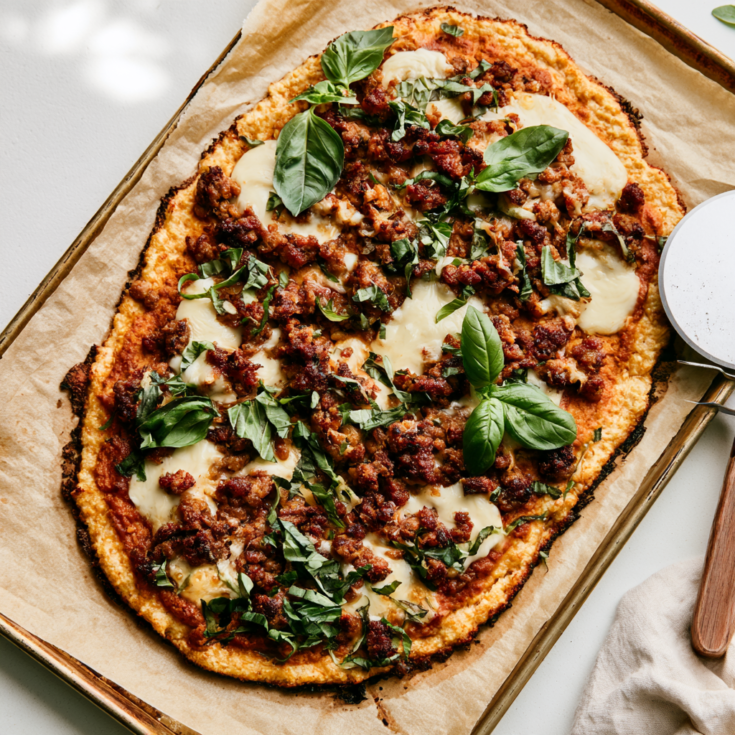
A thin, pliable cottage cheese crust topped with pizza sauce, crumbled Italian turkey sausage, part-skim mozzarella, and Parmesan — a healthy homemade pizza with about 38 g of protein per pizza.
Ingredients
For the cottage cheese crust:
- 1 cup cottage cheese (2% or full-fat)
- 2 large eggs
- ½ tsp garlic powder
- ½ tsp Italian seasoning
- ¼ tsp baking powder
- Pinch of kosher salt
- Pinch of freshly ground black pepper
- Nonstick cooking spray
- 1 tbsp finely grated Parmesan (optional, for the parchment)
For the toppings:
- 8 oz Italian turkey or chicken sausage, casings removed
- 4 to 6 tbsp pizza sauce
- 1½ cups part-skim mozzarella, shredded
- 4 tbsp grated Parmesan
- Fresh basil or arugula
- Olive oil and red pepper flakes, for finishing
Instructions
- Preheat the oven to 375°F. Line a 9x13-inch quarter sheet pan with parchment and spray generously with nonstick spray. Sprinkle with Parmesan if using.
- Blend the cottage cheese, eggs, garlic powder, Italian seasoning, baking powder, salt, and pepper for 30 seconds until completely smooth.
- Spread the batter into a thin, even 9x12-inch rectangle, about ⅛ to ¼ inch thick. Tap the pan twice to pop air bubbles.
- Bake 25 to 30 minutes until the center is firm and matte and the edges are golden. Cool completely in the pan, about 10 to 15 minutes, then flip onto a cutting board and peel off the parchment.
- Brown the sausage in a skillet over medium-high heat, breaking it up, 6 to 8 minutes. Drain excess fat.
- Return the crust to the pan and heat the oven to 400°F. Spread the sauce over the crust, leaving a half-inch border. Top with the sausage, mozzarella, and Parmesan.
- Bake for 8 to 10 minutes, until the cheese is melted and bubbling and the crust is crisp at the corners.
- Finish with fresh basil or arugula, olive oil, and red pepper flakes. Slice and serve.
Notes
Notes: The baked crust keeps refrigerated up to 3 days or frozen up to 1 month; reheat before topping. Assembled pizza leftovers keep up to 2 days and reheat best in a 350°F oven. Nutrition information is an estimate and depends heavily on the sausage and cheese brands.
Nutrition (per serving, estimated): About 400 calories, 38g protein, 8g carbs, 24g fat, 1g fiber, 780mg sodium.
FAQ
Can I use a different protein instead of sausage?
Yes. Shredded chicken breast, turkey pepperoni, or crumbled ground turkey all work. Brown or cook any raw protein first so it doesn’t release water into the crust.
Why did my crust turn out rubbery?
It was too thick, or you didn’t bake it long enough for the center to set. Spread it thin and even, and bake until the center is firm and matte rather than wet.
Can I make the crust ahead of time?
Yes. Bake and cool the crust, then store it in the refrigerator for up to 3 days with parchment between layers, or freeze it for up to a month. Reheat it before topping so it doesn’t go into the oven cold.
Is this actually low carb?
The crust is about 4g carbs per half, so the pizza is much lower in carbs than a flour-crust pizza. The exact number depends on your sauce and toppings — check the labels if carbs matter to you.
Can I use pork Italian sausage?
Yes, but it’s richer and the protein drops. Check the label on your brand — pork sausage is often around 14g protein per 4 oz, while turkey and chicken sausage are closer to 20g.
Why is the parchment spray essential?
The cottage cheese crust sticks to parchment without it. The spray is what lets you lift the crust off in one piece after it cools.
More High-Protein Meals You’ll Love
- Ravioli Lasagna Recipe — The Easiest Lasagna You’ll Ever Make
- Cottage Cheese Pizza Bowl — 38g Protein, 5-Minute Lazy Dinner
- Viral Cottage Cheese Flatbread Wrap (18g Protein & Low-Carb!)
Closing
Make this protein pizza on a night when you want pizza but also want to feel good about it.
The technique in the recipe card — blending the cottage cheese completely smooth, spreading the batter thin, letting the crust cool before you flip it, and browning the sausage first — is what makes it hold together and taste like pizza instead of a healthy substitute.
The crust method comes from the viral cottage cheese flatbread, and I’ve included it in full because it’s worth having. If you try it with chicken or a different cheese, let me know how it turns out.