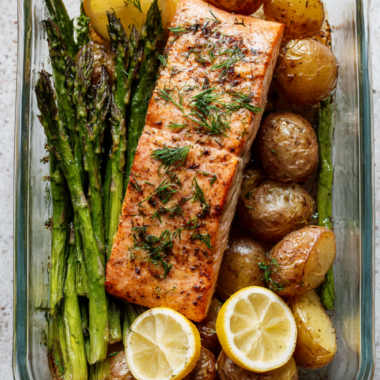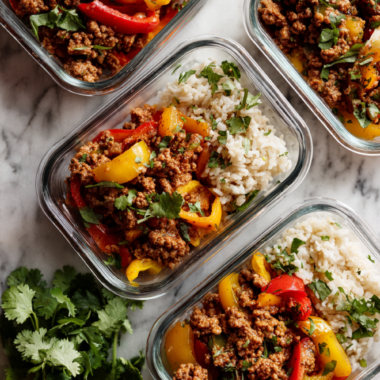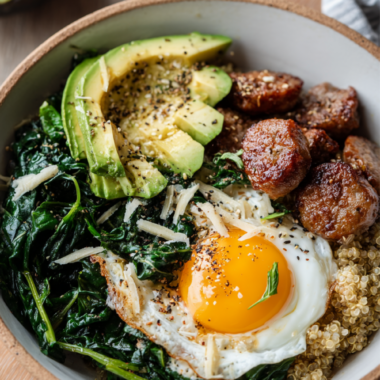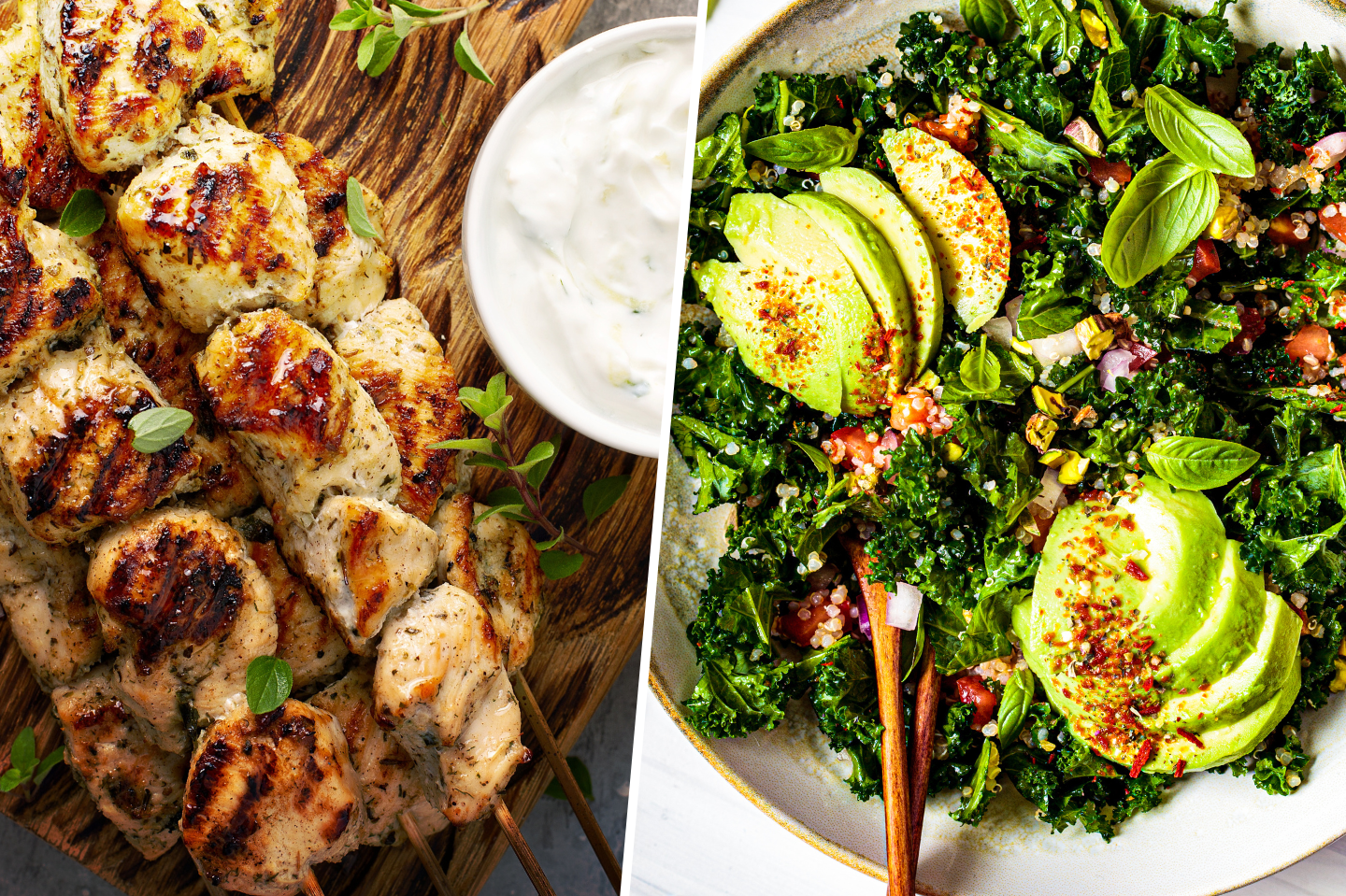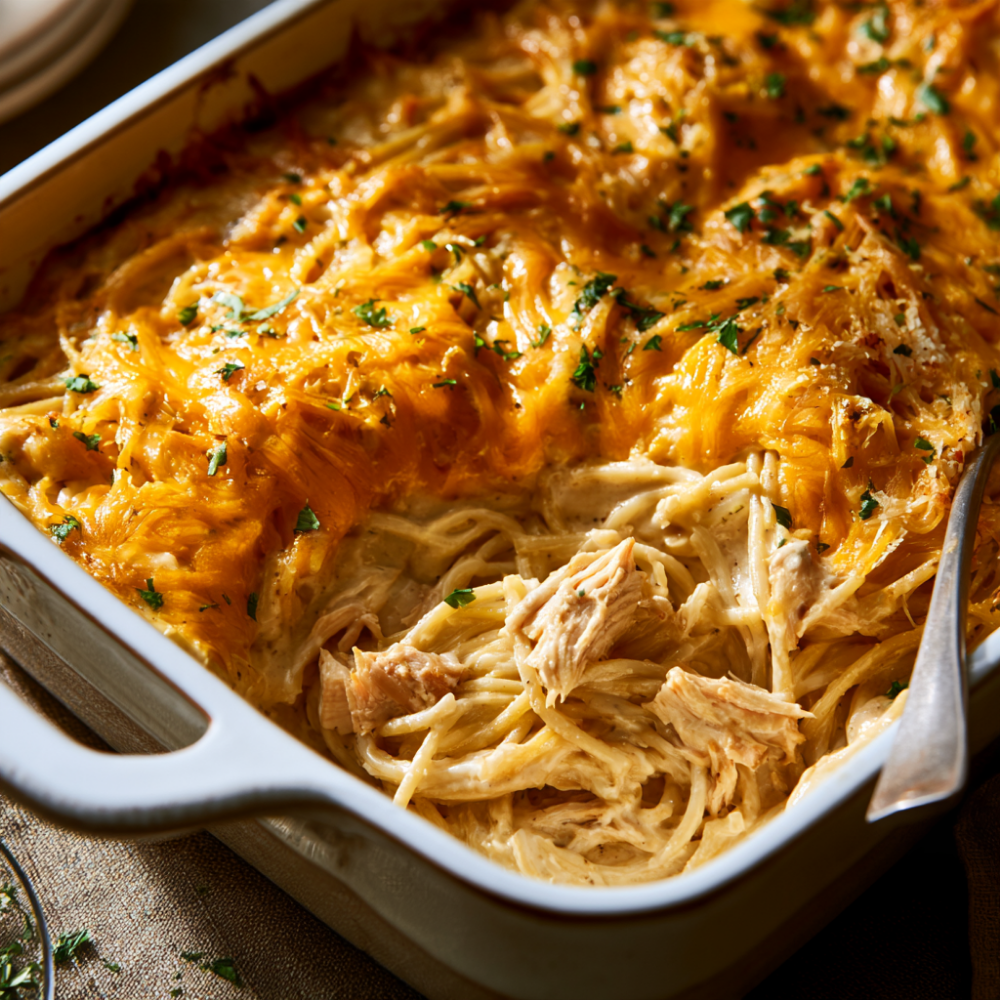

Chicken spaghetti is one of those Southern casseroles that shows up at every potluck, church supper, and family reunion.
It’s creamy, cheesy, deeply savory, and completely irresistible.
The traditional version relies on Velveeta and cream of chicken soup for its signature texture. That works, but it’s not high in protein, and it doesn’t leave you feeling great an hour later.
This version keeps everything you love about chicken spaghetti — the creamy sauce, the melted cheese, the tender shredded chicken, the spaghetti — and rebuilds it with real, protein-rich ingredients.
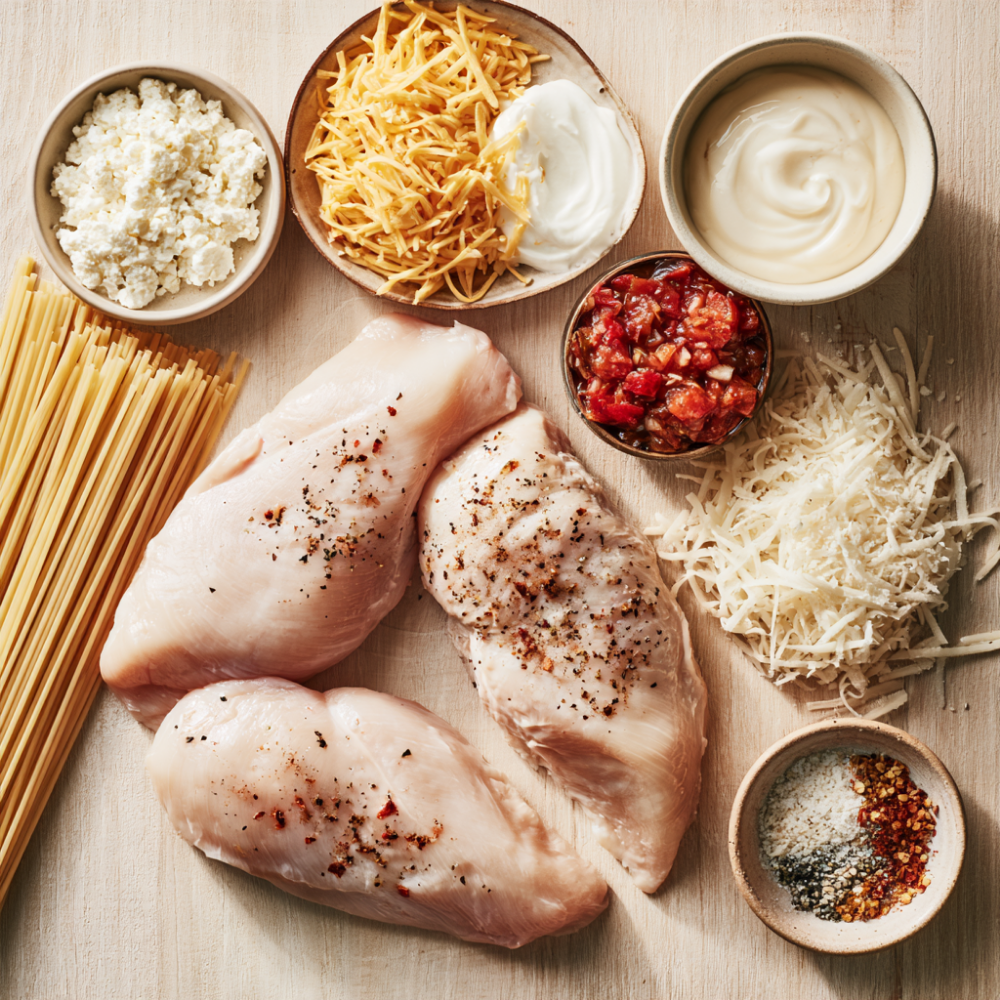
Blended cottage cheese replaces most of the Velveeta. Greek yogurt adds tang and creaminess. Sharp cheddar, mozzarella, and Parmesan bring real cheese flavor. A can of Rotel and cream of chicken soup tie it all together.
About 30–35 grams of protein per serving. It’s the kind of casserole that feels like a Sunday dinner but works on a Tuesday night. And it reheats beautifully, so it’s genuinely meal-prep friendly.
One honest thing worth knowing: this is not a low-calorie dish. It’s a baked cheese casserole, and it earns every calorie. The high-protein angle is real, but it’s still comfort food.
Why This High-Protein Baked Chicken Spaghetti Works
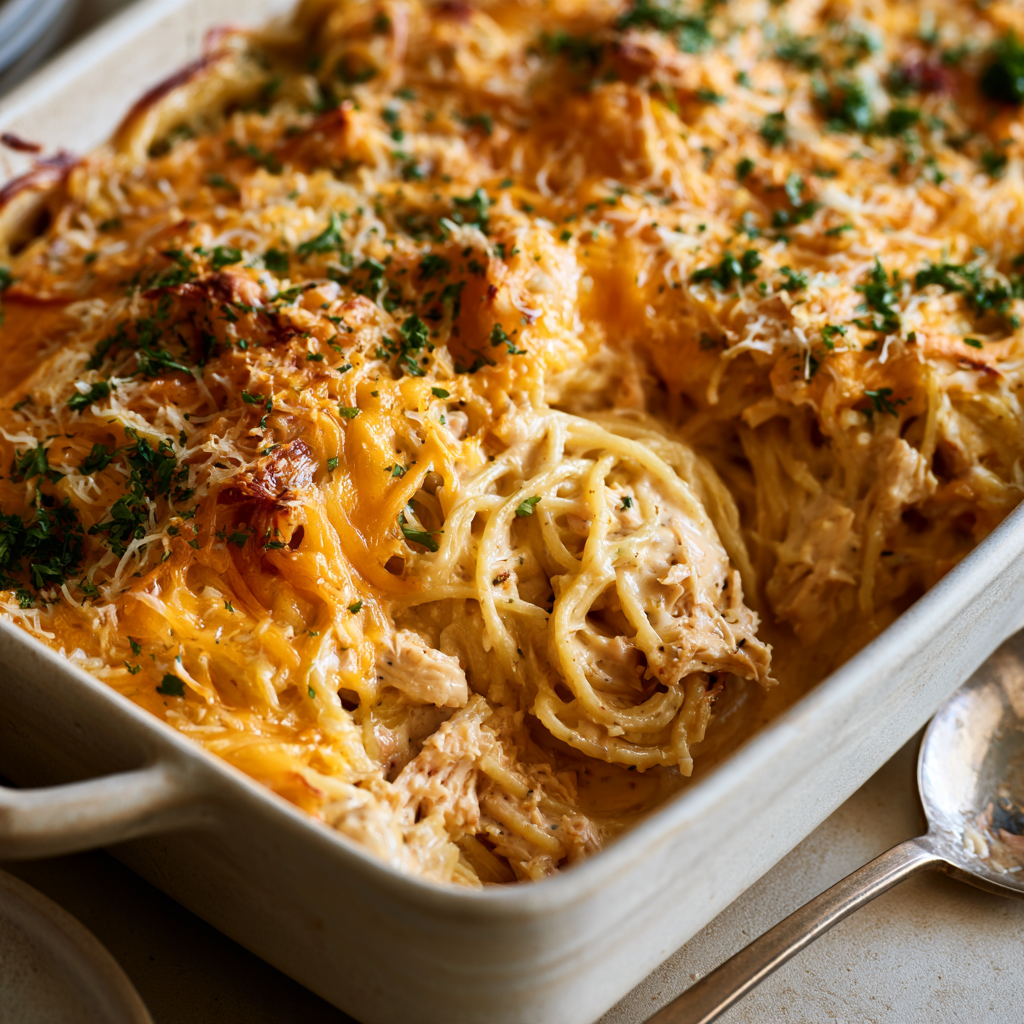
Blended cottage cheese replaces most of the Velveeta. A full cup of cottage cheese blended until completely smooth gives you the creamy, melty texture Velveeta provides, with about 24 grams of protein instead of almost none.
Greek yogurt adds tang and lightness. Half a cup adds creaminess and a subtle tang that balances the cheese’s richness.
Real cheddar, mozzarella, and Parmesan bring actual cheese flavor. Velveeta melts smoothly but doesn’t taste like much. The mix of sharp cheddar, stretchy mozzarella, and salty Parmesan makes this taste like a real baked casserole, not processed cheese sauce.
Rotel adds heat, tang, and texture. Diced tomatoes with green chiles give the casserole its signature Tex-Mex flavor. Don’t drain them — the liquid is part of the sauce.
Reserved pasta water is your insurance against a dry casserole. The starch in pasta water loosens the sauce and helps everything bind. It’s the single biggest technical fix in this recipe.
Cream of chicken soup is the shortcut that still works. One can ties everything together and adds body without requiring a homemade béchamel. If you want to skip it, see the variation below.
Shredded chicken breast is lean, high-protein, and neutral. Shredding two pounds of chicken breast into the sauce boosts the protein count without adding fat. Rotisserie chicken works as a shortcut.
It’s baked, not just mixed. The final bake melts the cheese, sets the sauce, and gives you crispy edges on top.
It reheats beautifully. Unlike pasta dishes with thin sauces, this one thickens as it sits. It tastes just as good on day three as day one.
It feeds a crowd. One 9×13 pan serves 8. Double it for a holiday or potluck and use two pans.
It’s genuinely a complete meal. Protein, carbs, and vegetables in one dish. Add a green salad and dinner is done.
High-Protein Baked Chicken Spaghetti
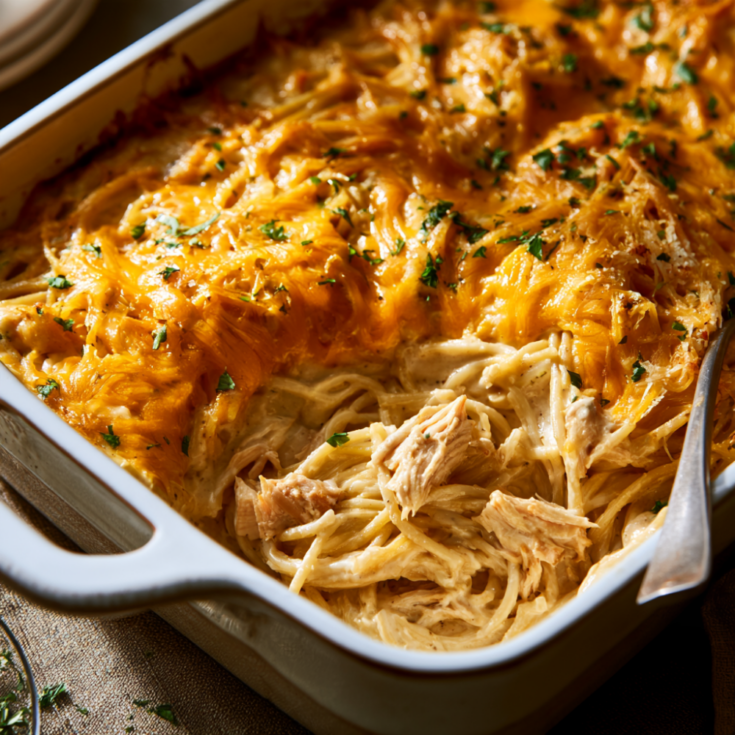
This creamy baked chicken spaghetti combines tender shredded chicken, blended cottage cheese, Greek yogurt, and plenty of melted cheese for a comforting, protein-packed casserole.
It's easy enough for a weeknight, holds together beautifully after baking, and reheats well for meal prep.
Ingredients
For the chicken:
- 2 lbs boneless, skinless chicken breasts
- 1 tbsp olive oil
- 1 tsp kosher salt
- ½ tsp freshly ground black pepper
- 1 tsp garlic powder
- 1 tsp smoked paprika
For the casserole:
- 12 oz spaghetti or high-protein spaghetti
- 1 cup full-fat cottage cheese
- ½ cup plain Greek yogurt
- 1 can (10.5 oz) cream of chicken soup
- 1 can (10 oz) diced tomatoes with green chiles (Rotel), undrained
- ½ cup reserved pasta water, as needed
- 1 tsp onion powder
- ½ tsp dried oregano
- ½ tsp dried thyme
- ½ tsp garlic powder
- ¼ tsp freshly ground black pepper
- 1½ cups shredded sharp cheddar cheese, divided
- ½ cup shredded mozzarella cheese
- ½ cup freshly grated Parmesan, divided
For serving:
- Fresh parsley, chopped
- Additional Parmesan, optional
Instructions
1. Cook the chicken. Preheat the oven to 375°F. Pat the chicken breasts dry. Rub them with the olive oil, then season both sides with the salt, black pepper, garlic powder, and smoked paprika.
Heat a large oven-safe skillet over medium-high heat. Sear the chicken for about 3–4 minutes per side, just until lightly browned. Transfer the chicken to a baking dish or sheet pan and finish cooking in the oven until the thickest part reaches 165°F, about 12–18 minutes depending on thickness.
Let the chicken rest for 5 minutes, then shred or chop it into bite-sized pieces.
Shortcut: Replace the cooked chicken with about 5 cups of shredded rotisserie chicken. Use mostly breast meat and remove the skin and bones to keep the protein count where it should be.
2. Cook the spaghetti. Bring a large pot of well-salted water to a boil. Cook the spaghetti according to the package directions, but stop 1–2 minutes before al dente. Before draining, reserve ½ cup of the pasta water. Drain the pasta. Do not rinse it.
3. Blend the cottage cheese. Place the cottage cheese in a blender or food processor and blend until completely smooth and creamy, about 1–2 minutes. Scrape down the sides once if needed. This step is worth doing — it turns the cottage cheese into a creamy base without leaving noticeable curds in the finished casserole.
4. Make the creamy sauce. In a large bowl, whisk together the blended cottage cheese, Greek yogurt, cream of chicken soup, undrained Rotel, onion powder, oregano, thyme, garlic powder, and black pepper. Stir in 1 cup cheddar, the mozzarella, and ¼ cup Parmesan.
The mixture should be thick but easy to stir. If it seems extremely thick, add 2–3 tablespoons of the reserved pasta water and stir.
5. Combine the pasta and chicken. Add the drained spaghetti and shredded chicken to the bowl. Use tongs to gently toss everything together until the pasta is thoroughly coated. If the mixture looks dry or difficult to stir, add more reserved pasta water 1 tablespoon at a time. You want the sauce slightly looser than you want the finished casserole because the pasta will absorb some moisture as it bakes.
6. Assemble the casserole. Lightly grease a 9x13-inch baking dish. Transfer the spaghetti mixture to the dish and spread it into an even layer. Sprinkle the remaining ½ cup cheddar and ¼ cup Parmesan evenly over the top.
7. Bake. Cover the dish loosely with foil and bake at 375°F for 15 minutes. Remove the foil and continue baking for another 8–12 minutes, until the casserole is hot throughout and the cheese is completely melted with lightly golden edges.
Don't overbake it. Everything inside the casserole is already cooked, so the oven mainly heats the center and melts the cheese. If you want a more deeply browned cheese topping, switch the oven to broil for 1–2 minutes at the end — watch it closely because the cheese can go from golden to burnt quickly.
8. Rest before serving. Let the casserole rest for 5–10 minutes before cutting or scooping. This lets the sauce settle and makes portions easier to serve.
9. Serve. Sprinkle with fresh parsley and additional Parmesan if desired.
Notes
Protein per Serving: About 30–35g
Nutrition note: Protein varies based on the chicken, pasta, cottage cheese, Greek yogurt, soup, and cheese brands you use. Use your specific products to calculate precise nutrition information.
Tips for Creamy, Not Dry Chicken Spaghetti
Don’t overcook the pasta. Cook it 1–2 minutes shy of al dente. It continues cooking in the oven and absorbs sauce as it bakes. Fully cooked pasta turns mushy in the casserole.
Reserve pasta water. It’s your insurance against a sauce that’s too thick. Add it 1 tablespoon at a time until the mixture is easy to stir.
Don’t skip blending the cottage cheese. This is the single most important step for a smooth, creamy sauce. Blend for a full 1–2 minutes until there are zero visible curds.
Use freshly shredded cheese from a block. Pre-shredded cheese is coated in anti-caking agents that prevent it from melting smoothly. Shred it yourself — it takes 5 minutes and makes a noticeable difference.
Don’t drain the Rotel. The liquid is part of the sauce and adds flavor. Drain only the pasta.
Season the sauce, not just the chicken. The pasta needs seasoning too. The onion powder, oregano, thyme, garlic powder, and black pepper in the sauce are what make the whole casserole taste finished.
Don’t overbake. The casserole only needs enough time to heat through and melt the cheese. Everything inside is already cooked. The center should be hot, and the cheese fully melted — that’s your doneness cue.
Use freshly grated Parmesan when possible. It melts more smoothly than shelf-stable grated Parmesan.
Let it rest before serving. The sauce thickens slightly as it cools, making the casserole easier to portion.
Add a green vegetable. Serve with steamed broccoli, sautéed spinach, or a simple green salad on the side. The casserole is rich, and something fresh balances it.
Easy Variations
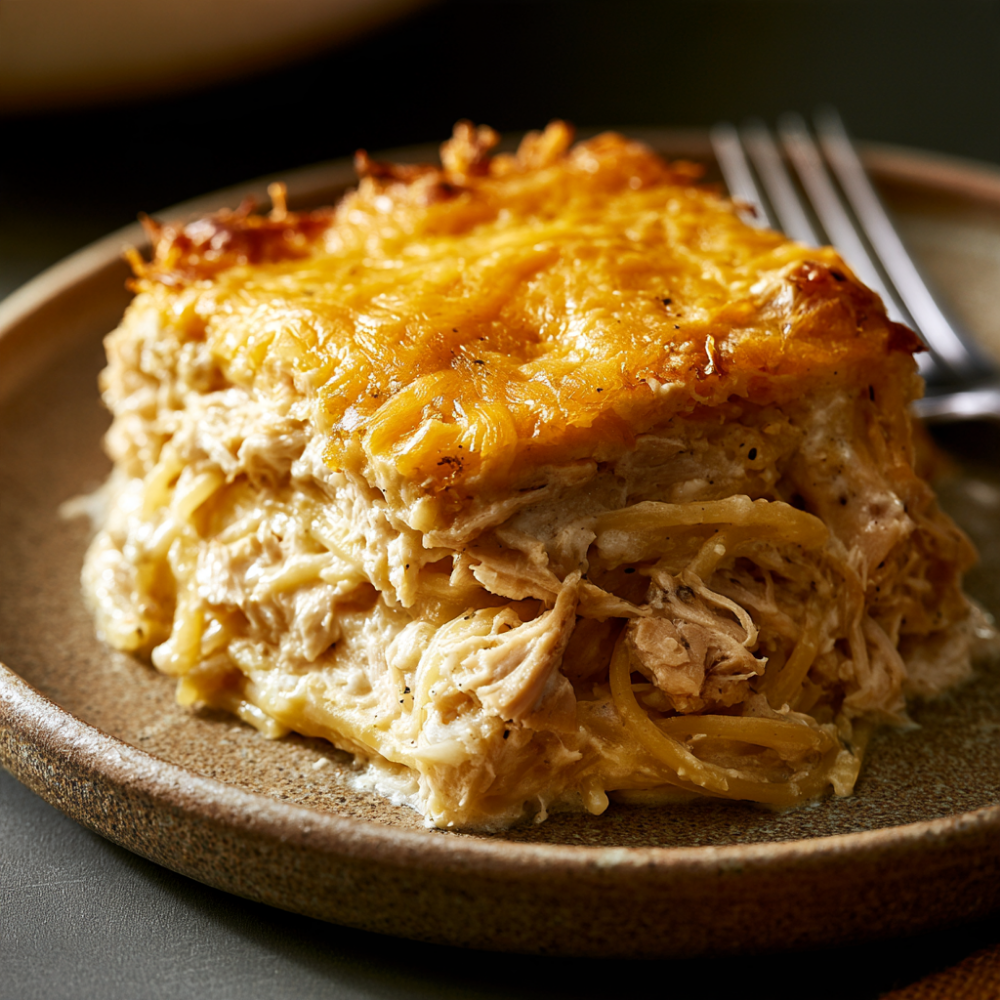
Chicken Spaghetti No Velveeta (The Base Recipe)
This is the recipe as written — real cheddar, mozzarella, Parmesan, blended cottage cheese, and Greek yogurt instead of Velveeta. It’s genuinely creamy and cheesy without any processed cheese product.
Million Dollar Chicken Spaghetti
Add 4 oz of softened cream cheese to the sauce along with the Greek yogurt, and increase the cheddar to 2½ cups. Top with crushed Ritz crackers mixed with 2 tbsp of melted butter before baking. It’s richer, more indulgent, and closer to the “million dollar” versions you see everywhere.
Creamy Rotel Chicken Spaghetti Casserole
Double the Rotel to 2 cans and add 1 can of diced tomatoes (undrained). Add 1 tsp of chili powder and ½ tsp of ground cumin to the sauce. It’s a more tomato-forward, slightly spicier version.
White Chicken Spaghetti Recipe
Skip the Rotel entirely and use 1 can of diced green chiles instead. Use white cheddar instead of sharp yellow cheddar. Add ½ cup of sour cream or additional Greek yogurt. It’s a creamier, milder version without the tomato.
Storage and Food Safety
Refrigerator: Store in an airtight container for up to 4 days. The casserole thickens as it sits — add a splash of milk or broth when reheating.
Freezer: Let the baked casserole cool completely, portion into freezer-safe containers, and freeze for up to 3 months. For best results, thaw overnight in the refrigerator before reheating. Reheat individual portions in the microwave until hot, adding a splash of milk or broth if the sauce has thickened.
Reheating: Microwave individual portions in 60–90 second intervals, covered with a damp paper towel. For the best texture, reheat in a 350°F oven for 12–15 minutes.
Make-ahead: Assemble the casserole through Step 6, cover tightly, and refrigerate for up to 24 hours before baking. Because it will be thoroughly chilled, add 10–15 minutes to the covered baking time. Bake until the center is hot and reaches at least 165°F. For the best texture, don’t assemble it more than a day ahead—the uncooked pasta will keep absorbing sauce while it sits.
Food safety: Refrigerate within 2 hours of cooking. Reheat leftovers until hot throughout — 165°F.
Frequently Asked Questions
What is chicken spaghetti?
Chicken spaghetti is a Southern baked casserole made with spaghetti, shredded chicken, a creamy cheese sauce, and often Rotel diced tomatoes with green chiles. It’s a potluck and family dinner staple.
Is this recipe high in protein?
Yes — about 30–35g per serving from the chicken, cottage cheese, Greek yogurt, and real cheese. That’s significantly higher than traditional chicken spaghetti made with Velveeta.
Does this recipe use Velveeta?
No. This version uses real cheddar, mozzarella, and Parmesan, plus blended cottage cheese and Greek yogurt for creaminess. It’s genuinely creamy and cheesy without any processed cheese product.
Why does the recipe call for reserved pasta water?
Pasta water is starchy and slightly thickened, which makes it the perfect liquid for loosening a sauce that’s too thick. It’s your insurance against a dry casserole. Add it 1 tablespoon at a time until the mixture is easy to stir.
Can I use rotisserie chicken instead of cooking my own?
Yes. Use about 5 cups of shredded rotisserie chicken. Use mostly breast meat and remove the skin and bones to keep the protein count where it should be.
What if I don’t like Rotel?
Swap it for 1 can of diced green chiles and ½ cup of salsa. Or skip the tomatoes entirely and use a can of cream of mushroom soup instead. See the White Chicken Spaghetti variation above.
Can I make this ahead of time?
Yes. Assemble the casserole up to 24 hours ahead, cover, and refrigerate. Add 10–15 minutes to the covered bake time since it will go into the oven cold. Don’t assemble it more than a day ahead—the uncooked pasta will keep absorbing sauce.
Can I freeze chicken spaghetti?
Yes. Cool completely, portion into freezer-safe containers, and freeze for up to 3 months. Thaw overnight in the refrigerator and reheat in the microwave or oven.
How do I keep the casserole from drying out?
Reserve pasta water and add it to the sauce until the mixture looks slightly looser than you want the finished casserole. The pasta will absorb moisture as it bakes. For meal prep, add a spoonful of milk before reheating.
Can I use protein pasta?
Yes. Chickpea, lentil, or high-protein spaghetti adds about 8–10g of protein per serving. Cook it 1–2 minutes less than the package directs since it continues cooking in the oven.
More Cozy Baked Casserole Recipes You’ll Love
- Make Ahead Breakfast Casserole (High-Protein & Meal Prep Friendly)
- Doritos Casserole with Ground Beef: High-Protein & Family-Approved
- Crockpot Chicken and Potatoes: Garlic Parmesan Dump-and-Go Dinner
Conclusion
This high-protein baked chicken spaghetti is everything a Southern casserole should be — creamy, cheesy, deeply savory, and completely satisfying.
About 30–35g of protein per serving, made with real cheese, blended cottage cheese, and Greek yogurt instead of Velveeta.
The keys are simple: blend the cottage cheese until completely smooth, pull the pasta 1–2 minutes early, reserve pasta water to loosen the sauce, use freshly shredded cheese, season the sauce and the chicken, and don’t overbake.
Do that, and you’ll have a casserole that tastes like the classic and delivers real protein.
Make it for a Sunday dinner, a potluck, or meal prep for the week. It freezes beautifully and reheats in minutes.