
Chimichurri is one of those sauces that makes everything it touches taste even better. It’s Argentine, it’s bright green, and it’s built on parsley, garlic, red wine vinegar, and good olive oil.
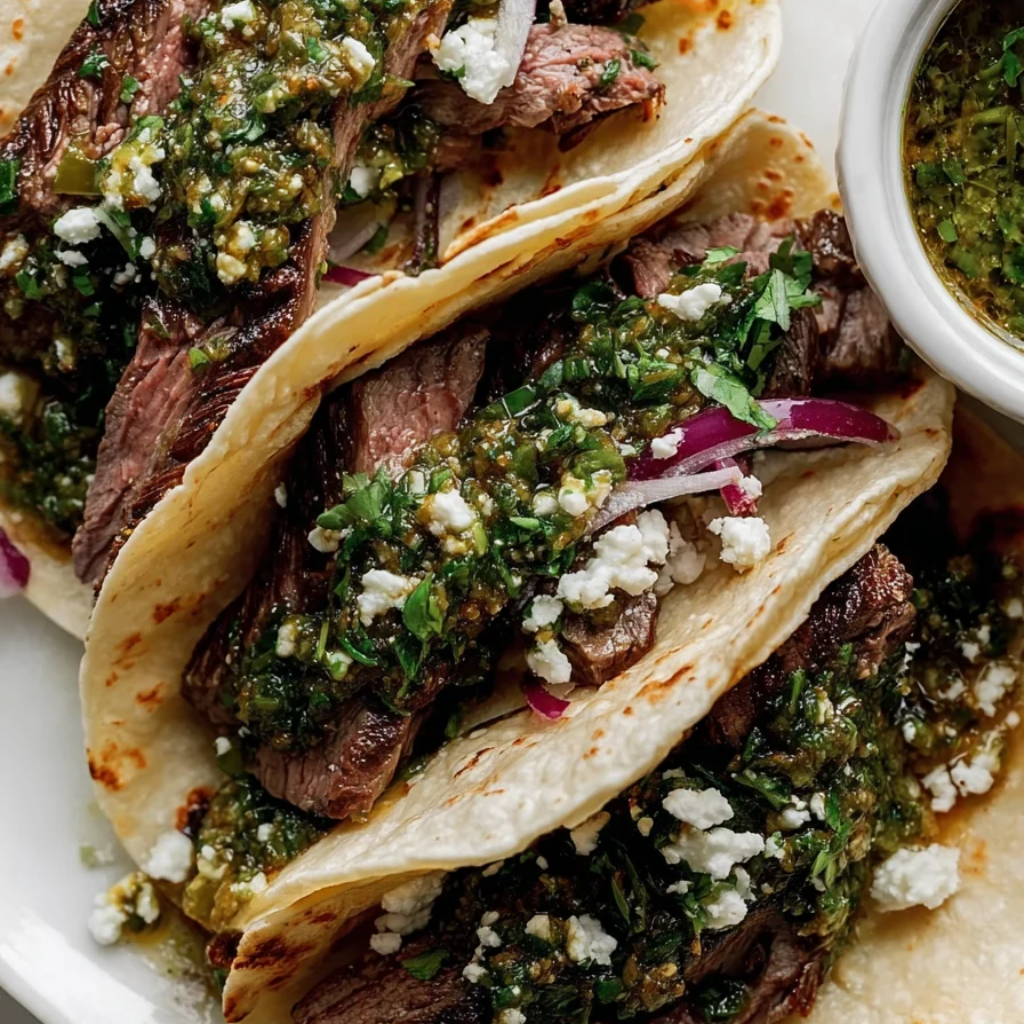
Spoon it over a piece of seared steak, and you have a plate that tastes like a steakhouse — but the version I make most often is this one, piled into warm flour tortillas with cotija and thin slices of red onion.
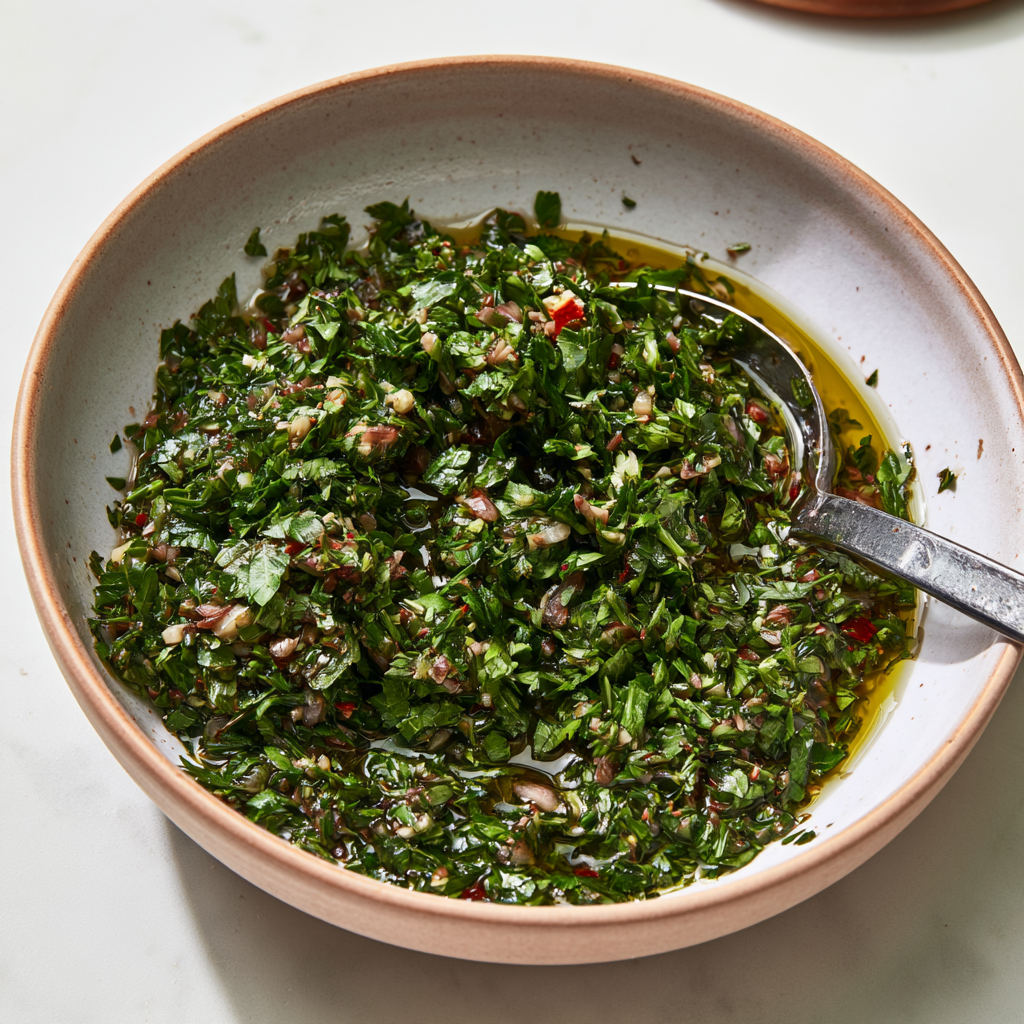
The sauce is the reason these tacos work. A proper chimichurri is chunky and spoonable, not a thin oil dressing with herbs floating in it.
The difference is the herb-to-oil ratio and the way you handle the herbs — hand-chopped parsley, not a food processor, and enough of it that the sauce holds together on a spoon.
The vinegar and garlic get a head start in the bowl, which mellows their raw bite before the oil goes in.
The most important detail is resting the chimichurri for fifteen to thirty minutes before serving.
It gives the herbs time to soften into the vinegar and the oil time to take on the garlic. Made and eaten immediately, it’s sharp; rested, it’s balanced.
Why This Recipe Works
The herb-to-oil ratio is what makes chimichurri spoonable instead of runny. A packed cup of parsley to half a cup of olive oil gives you a sauce that clings to the steak and holds its shape on a spoon. Less parsley and the oil separates, and the herbs sink to the bottom.
Hand-chopping the herbs instead of pulsing them in a food processor is what keeps the sauce from turning bitter. Food processors shear the polyphenols in extra-virgin olive oil and bruise the herbs, leaving a harsh taste. A sharp chef’s knife and thirty seconds of chopping give you clean, bright flavor.
The garlic, shallot, and chili steep in the vinegar for five to ten minutes before you add the oil. Acid breaks down the harsh sulfur compounds in raw alliums, and that short steep smooths the garlic instead of making it taste sharp.
Flank or skirt steak is the right cut for tacos. Both are thin, flavorful, and cook fast over high heat. Slice them against the grain, and they’re tender in a taco. Flank is the more forgiving of the two if you’re new to slicing.
Searing in a hot, dry pan and resting before slicing is what keeps the steak juicy. A screaming-hot cast-iron skillet gives you a crust in three to four minutes per side, and a five-minute rest lets the juices redistribute so they stay in the meat instead of on the cutting board.
Cotija and red onion add the crunch and salt the taco needs. Cotija is salty and crumbly, and it softens slightly against the hot steak. Thin-sliced red onion adds a sharp bite that cuts through the steak’s richness and the oil in the sauce.
Warming the tortillas before you build is what keeps them from cracking. Thirty seconds per side in a dry skillet makes them pliable and adds a little char. A cold tortilla splits when you fold it, and the filling ends up on the plate.
Ingredients That Matter
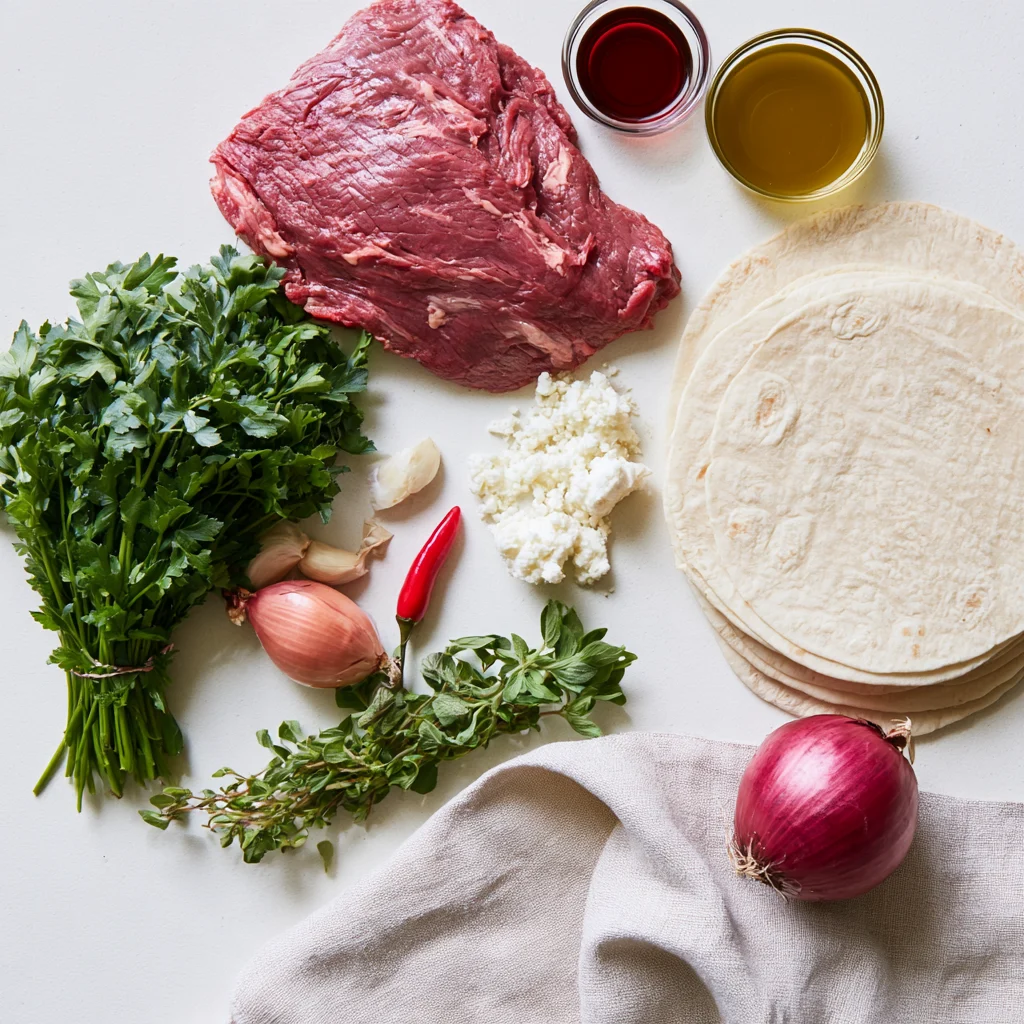
Most of this list is flexible. Three ingredients are easy to get wrong, so those are the ones worth explaining.
Flank or skirt steak. These are the right cuts for tacos — thin, beefy, and quick-cooking. Flank is more uniform and easier to slice; skirt has more flavor but a looser grain. Slice both thin against the grain, and both benefit from a hard sear and a rest.
Fresh flat-leaf parsley, hand-chopped. This is the body of the chimichurri, and it needs to be flat-leaf (Italian), not curly. Curly parsley is milder and doesn’t have the same flavor. One packed cup, finely chopped with a knife.
High-quality extra-virgin olive oil. The oil is half the sauce, and harsh or cheap oil will make the finished chimichurri taste harsh. Use one you’d be happy to dip bread in, and stir it in by hand rather than blending it.
How to Make It
Step 1: Steep the aromatics.
In a medium bowl, combine 4 minced garlic cloves, 1 minced small shallot, 1 seeded and finely diced red Fresno or jalapeño, 1 teaspoon kosher salt, ½ teaspoon black pepper, and 3 tablespoons red wine vinegar. Let it sit for 5 to 10 minutes so the acid mellows the raw bite.
Step 2: Chop the herbs.
Finely chop 1 packed cup flat-leaf parsley and 1 tablespoon fresh oregano with a sharp chef’s knife. Don’t use a food processor — it bruises the herbs and makes the olive oil bitter.
Step 3: Combine the chimichurri.
Add the chopped parsley and oregano to the vinegar mixture. Pour in ½ cup of high-quality extra-virgin olive oil and stir with a fork until the herbs are coated and the sauce is glossy and spoonable. Cover and let it sit at room temperature for 15 to 30 minutes before serving.
Step 4: Sear the steak.
Pat 1 pound of flank or skirt steak dry and season both sides generously with salt and pepper. Heat a cast iron skillet over high heat until it’s smoking. Sear the steak for 3 to 4 minutes per side, until deeply browned and the center registers 130°F for medium-rare. Transfer to a cutting board and rest for 5 minutes.
Step 5: Warm the tortillas.
While the steak rests, warm 8 small flour tortillas in a dry skillet for 30 seconds per side, until pliable and lightly charred. Stack them under a towel to keep warm.
Step 6: Slice and build.
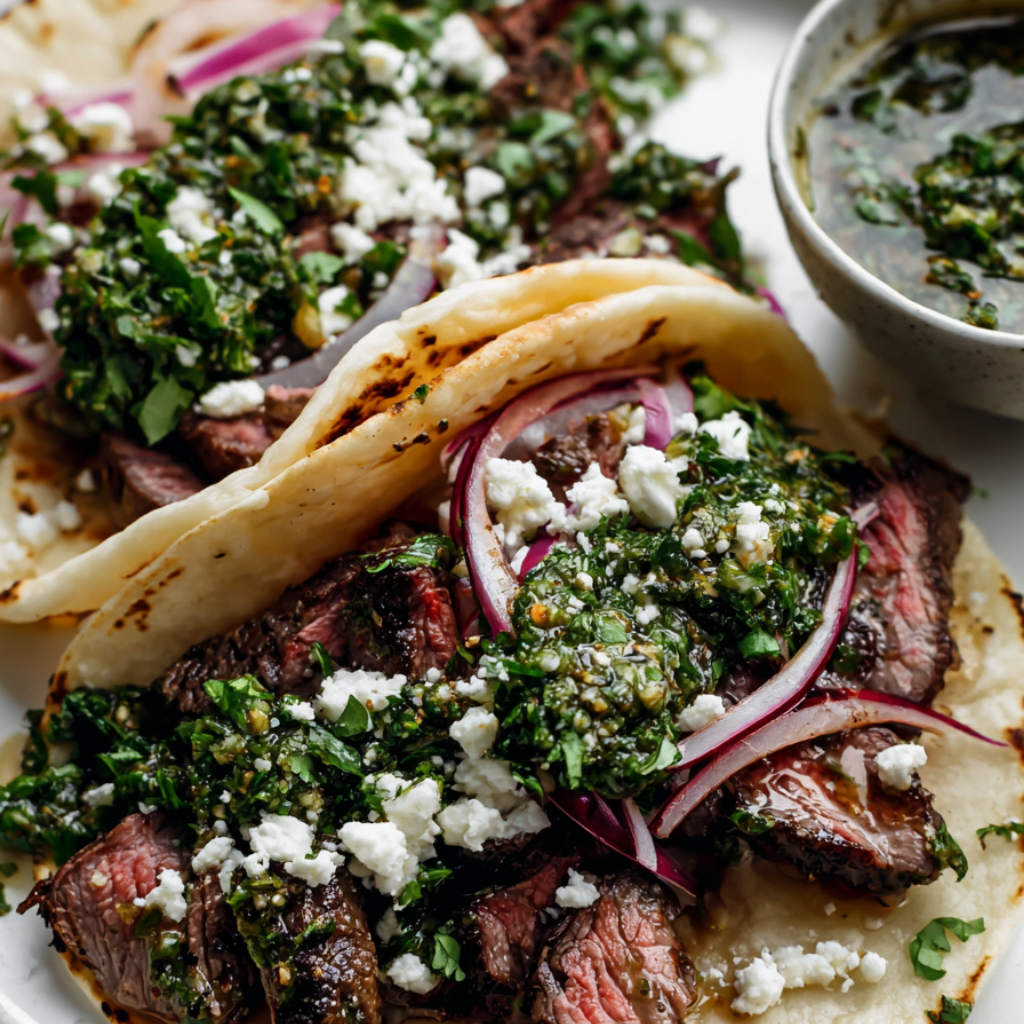
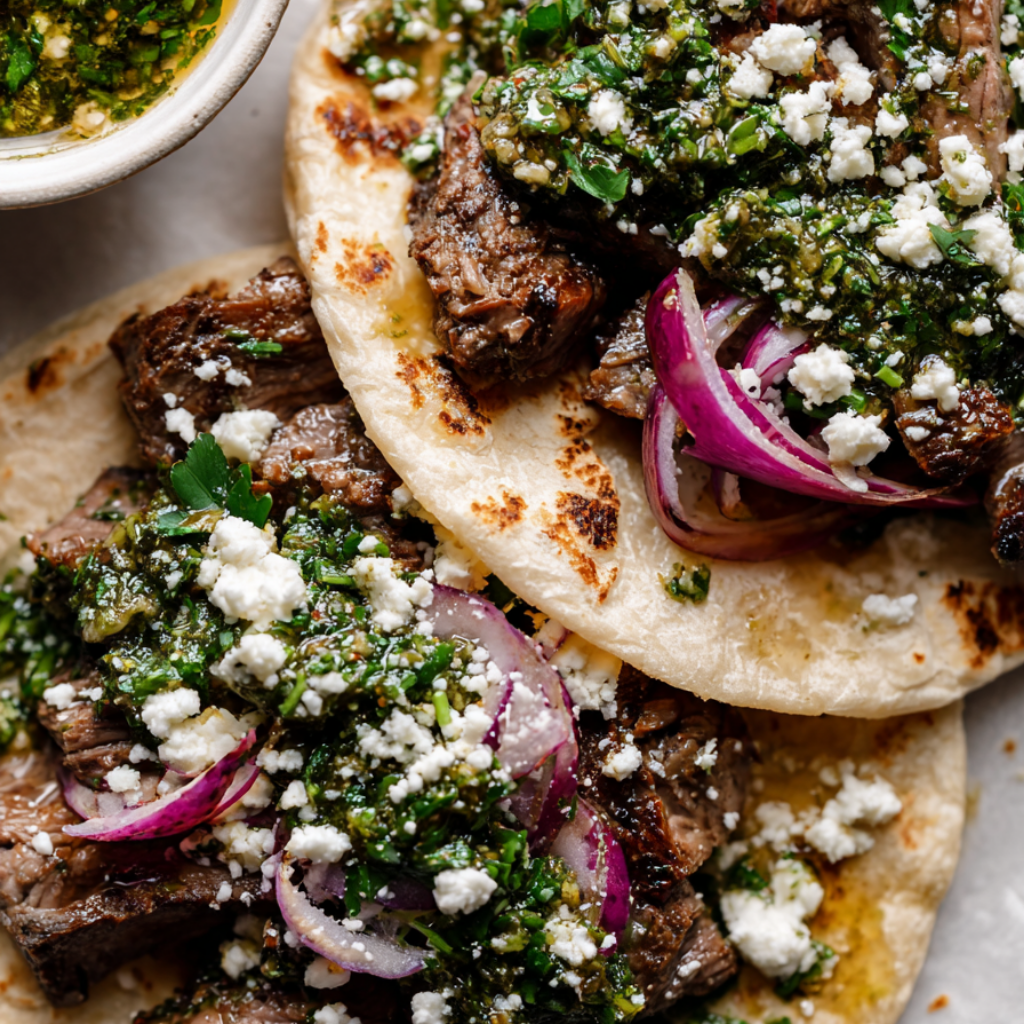
Slice the rested steak thinly against the grain. Pile it into the warm tortillas and top with a generous spoonful of chimichurri, crumbled cotija, and thin slices of red onion. Serve immediately with extra chimichurri on the side.
Tips and Troubleshooting
The chimichurri is runny and the herbs sink. You didn’t use enough parsley, or you chopped it too coarsely. Use a full, packed cup and chop it finely.
The chimichurri tastes bitter. The olive oil was blended in a food processor, or the oil itself is harsh. Stir the oil in by hand and use a good extra-virgin olive oil.
The garlic tastes sharp. It wasn’t steeped in the vinegar. Let the garlic, shallot, and chili sit in the vinegar for the full 5 to 10 minutes before adding the oil.
The steak is tough. It was sliced with the grain or overcooked. Slice thin against the grain and pull it at 130°F for medium-rare.
The steak is dry. It rested too long without cover, or you overcooked it. Rest for 5 minutes under foil and don’t go past medium.
The tortillas cracked. They were cold. Warm them in a dry skillet for 30 seconds per side.
The tacos are greasy. You used too much chimichurri per taco, or the steak was fattier than expected. A spoonful per taco is enough, and skirt steak carries more fat than flank.
Storage and Make-Ahead
Store the chimichurri in a sealed glass jar in the refrigerator for up to 5 days. Bring it to room temperature before serving — the olive oil solidifies when cold. Stir well before using.
The steak is best the day it’s made, but leftovers keep in a sealed container in the refrigerator for up to 3 days. Reheat gently in a skillet or eat it cold in a salad.
I don’t recommend freezing the chimichurri. The herbs turn dark, and the texture breaks down.
Store leftovers in the refrigerator within 2 hours of cooking, and discard anything left at room temperature for more than 2 hours.
Chimichurri Steak Tacos with Cotija and Red Onion
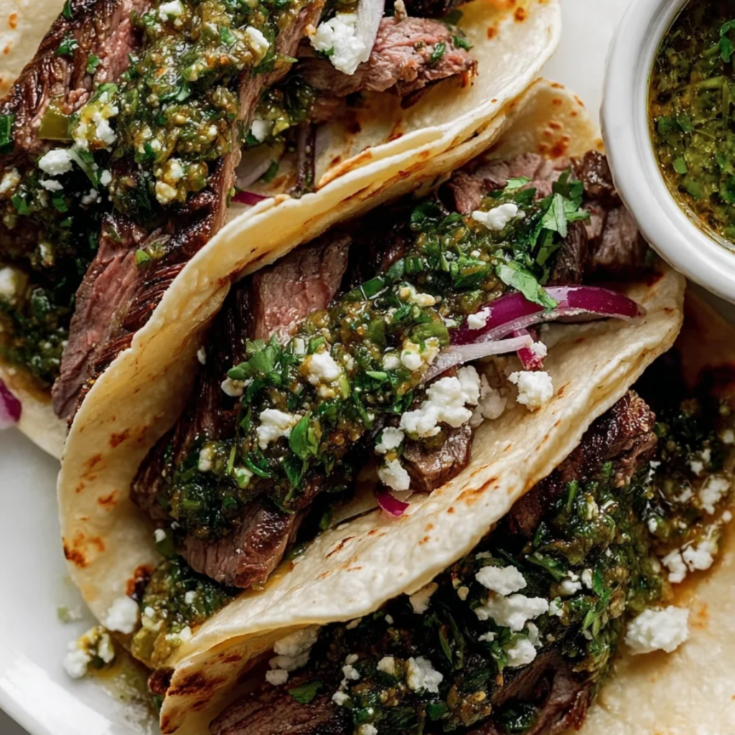
Seared flank steak piled into warm flour tortillas with a bright, garlicky Argentine chimichurri, crumbled cotija, and thin-sliced red onion.
Ingredients
For the chimichurri:
- 1 packed cup fresh flat-leaf parsley, finely hand-chopped
- 1 tbsp fresh oregano leaves, finely chopped
- 4 cloves garlic, finely minced
- 1 small shallot, finely minced
- 1 small red Fresno or jalapeño chili, seeded and finely diced
- 3 tbsp red wine vinegar
- 1 tsp kosher salt
- ½ tsp freshly cracked black pepper
- ½ cup high-quality extra-virgin olive oil
For the tacos:
- 1 lb flank or skirt steak
- Kosher salt and black pepper
- 8 small flour tortillas
- ½ cup crumbled cotija cheese
- ½ small red onion, thinly sliced
- Extra chimichurri, for serving
Instructions
- Combine the garlic, shallot, chili, salt, pepper, and vinegar in a bowl and let sit for 5 to 10 minutes.
- Add the hand-chopped parsley and oregano, then stir in the olive oil until glossy and spoonable. Rest 15 to 30 minutes.
- Pat the steak dry and season both sides. Sear in a hot cast iron skillet 3 to 4 minutes per side until 130°F for medium-rare. Rest 5 minutes.
- Warm the tortillas in a dry skillet for 30 seconds per side.
- Slice the steak thin against the grain. Build the tacos with steak, chimichurri, cotija, and red onion. Serve immediately.
Notes
Notes: Chimichurri keeps refrigerated for up to 5 days; bring to room temperature before serving. Cooked steak keeps up to 3 days. Nutrition information is an estimate.
Nutrition (per serving, estimated, 2 tacos): About 580 calories, 32g protein, 38g carbs, 32g fat, 3g fiber, 720mg sodium.
FAQ
What’s the best cut of steak for these tacos?
Flank and skirt are the classic choices — thin, beefy, and quick-cooking. Sirloin works too if sliced thin against the grain. Avoid stewing cuts.
Can I make the chimichurri ahead of time?
Yes. It’s better made a few hours ahead, and it keeps in the refrigerator for up to 5 days. Bring it to room temperature and stir before serving.
Can I use dried oregano instead of fresh?
Yes. Use 1 teaspoon dried oregano instead of 1 tablespoon fresh. The flavor is earthier and less floral, but it works.
Can I make this with chicken instead of steak?
Yes. Use chicken thighs or breasts, sear or grill them, and slice. The chimichurri works the same way — it’s one of the most popular pairings for chicken.
Can I use a food processor for the chimichurri?
I don’t recommend it. The food processor bruises the herbs and shears the olive oil, and the sauce turns bitter. Hand-chopping takes about thirty seconds and tastes dramatically better.
How do I make this a steak bowl instead of tacos?
Serve the sliced steak and chimichurri over rice with black beans, cotija, and red onion. It’s a chimichurri steak bowl, and it’s great for meal prep.
More Easy Healthy Dinner Recipes You’ll Love
- 11 Best Taco Recipes That Will Make Taco Night Unforgettable
- Easy Ground Beef Tacos Recipe (High Protein, 15 Minutes)
- Lazy Chicken Tacos Crockpot Recipe for Busy Weeknights
Closing
Make these chimichurri steak tacos on a weeknight when you want something bright and green that comes together in under half an hour.
The technique in the recipe card — hand-chopping the herbs, steeping the garlic in vinegar, resting the sauce, and slicing the steak against the grain — is what makes the chimichurri taste fresh instead of sharp and the steak tender instead of chewy.