If I had to pick one seasoning combination for chicken breast over almost any other, it’s this one.
Smoked paprika for depth, garlic for the savory backbone, Dijon and lemon for the tang, and a little honey to keep the whole thing from tipping too sharp.
Chicken breast is a blank canvas, and this combination seasons it all the way through instead of just sitting on the surface.
What makes this version different from most cowboy butter recipes is where you put the seasoning.
In many, butter melts in a pan, spices get dumped in, and you end up with a pool of seasoned butter the chicken sits in.
This one builds the sauce in the pan after the chicken comes out — deglazing with broth, lemon, Dijon, and honey, blooming the garlic and spices in the chicken drippings first, and then whisking cold butter into the whole thing off the heat.
It’s a French technique called monter au beurre, and it’s the difference between a sauce that coats the chicken and one that pools around it.
That order of operations is a small change, and it makes a world of difference.
The chicken stays juicy because it never simmers in the sauce, the sauce stays glossy because the butter goes in cold and off the heat, and the whole thing tastes like a steakhouse plate instead of a weeknight chicken breast.
I’ve made it the wrong way enough times to know exactly what separates the two.
It’s a thirty-minute dinner with about 46 grams of protein per serving, and the sauce is generous enough to spoon over rice or mashed potatoes, not just the chicken.
Why This Recipe Works
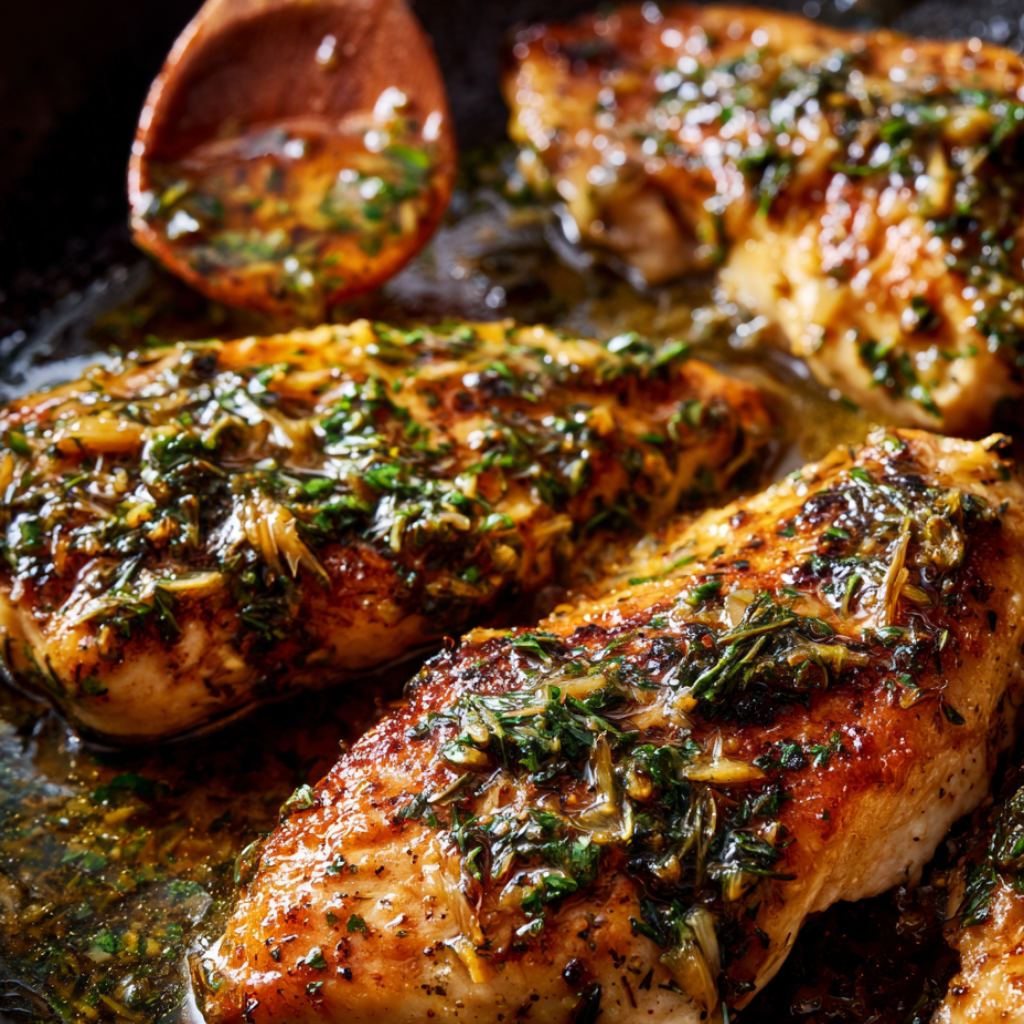
The seasoning combination is the foundation, not the finish. Smoked paprika brings depth and color, garlic brings the savory backbone, Dijon and lemon bring acid and tang, and a tablespoon of honey rounds the whole thing out. It’s a balanced blend that tastes like more than the sum of its parts.
Blooming the garlic, thyme, and red pepper flakes in the residual chicken fat is what seasons the sauce. Spices are fat-soluble, and thirty seconds in hot fat releases the flavor compounds. If you add them after the liquid, they taste flat.
Building the sauce in the hot skillet after the chicken comes out is what captures the fond. The browned bits left from searing dissolve into the broth and lemon juice when you deglaze, and that’s where most of the flavor comes from.
The cold-butter mounting technique makes the sauce glossy instead of greasy. Melting a whole stick of butter and then adding liquid causes the milk solids and fat to separate. Whisking cold cubed butter into the simmered liquid off the heat makes the butter melt gradually and emulsify into a smooth, velvety sauce.
Increasing the broth to ½ cup and reducing it to ⅓ cup is what gives you enough sauce to actually spoon. A quarter cup of broth with the lemon and honey produces a coating, not a sauce. Half a cup reduced down gives you the volume to pool in the pan without changing the butter-to-liquid ratio that makes the emulsion work.
Pounding the chicken to an even ¾-inch thickness helps it sear evenly. Chicken breasts taper, and by the time the thick end reaches temperature, the thin end is dry. When pounded evenly, the whole breast cooks at the same rate and gets a deep golden crust.
Pull the chicken at 155 to 160°F and don’t simmer it in the sauce to keep it juicy. Carryover heat brings it to 165°F during the rest. Slice and spoon it with sauce off the heat to keep it tender. If you simmer it in the sauce, it goes stringy.
Ingredients That Matter
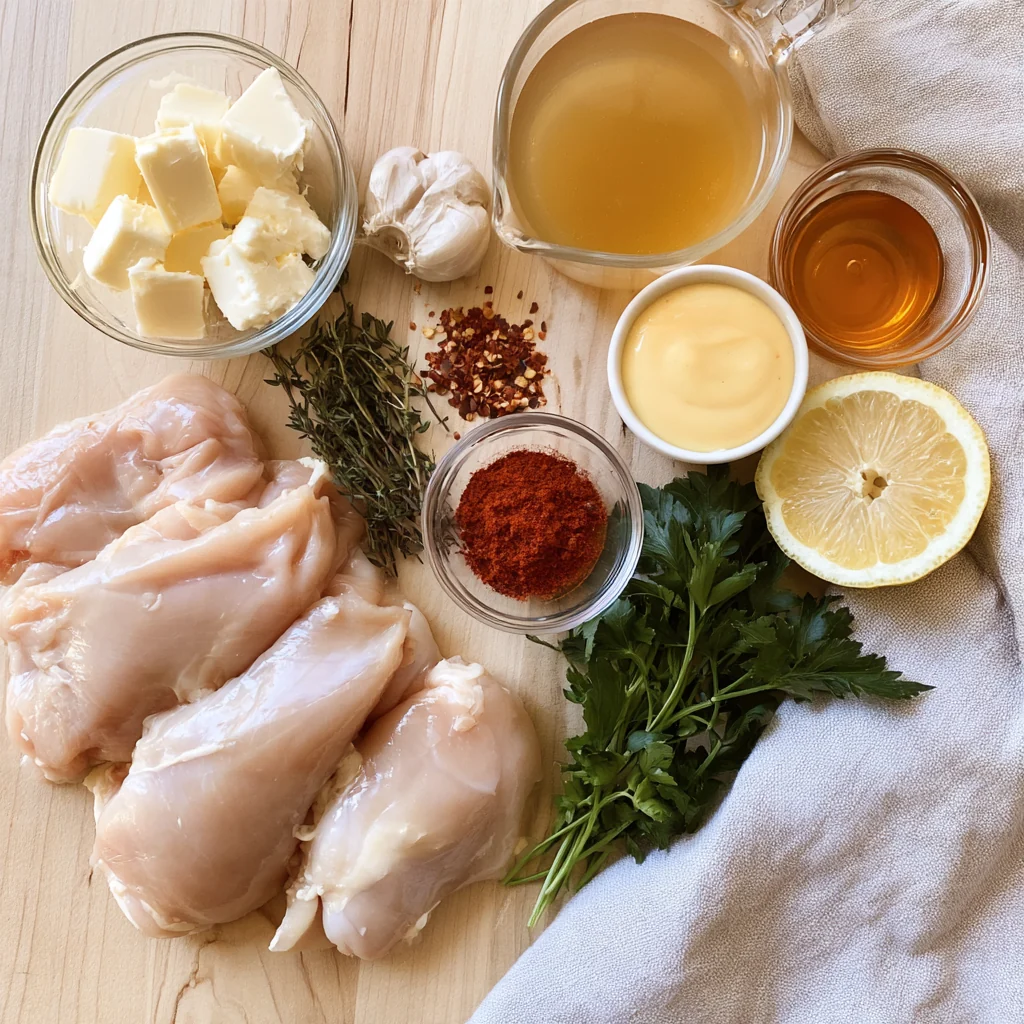
Most of this list is flexible. Three ingredients are easy to get wrong, so those are the ones worth explaining.
Boneless, skinless chicken breasts, pounded to an even ¾-inch thickness. Four breasts, 6 to 8 ounces each. Pounding them even is the step that prevents dry edges.
Cold unsalted butter, cut into eight cubes. The butter must be cold when it goes into the sauce, and you must add it a few cubes at a time. Room-temperature butter or a whole stick dropped in will separate instead of emulsify.
Fresh lemon juice and Dijon mustard. These are the acid and the emulsifier. Bottled lemon juice tastes flat, and the Dijon helps bind the butter into the sauce.
How to Make It
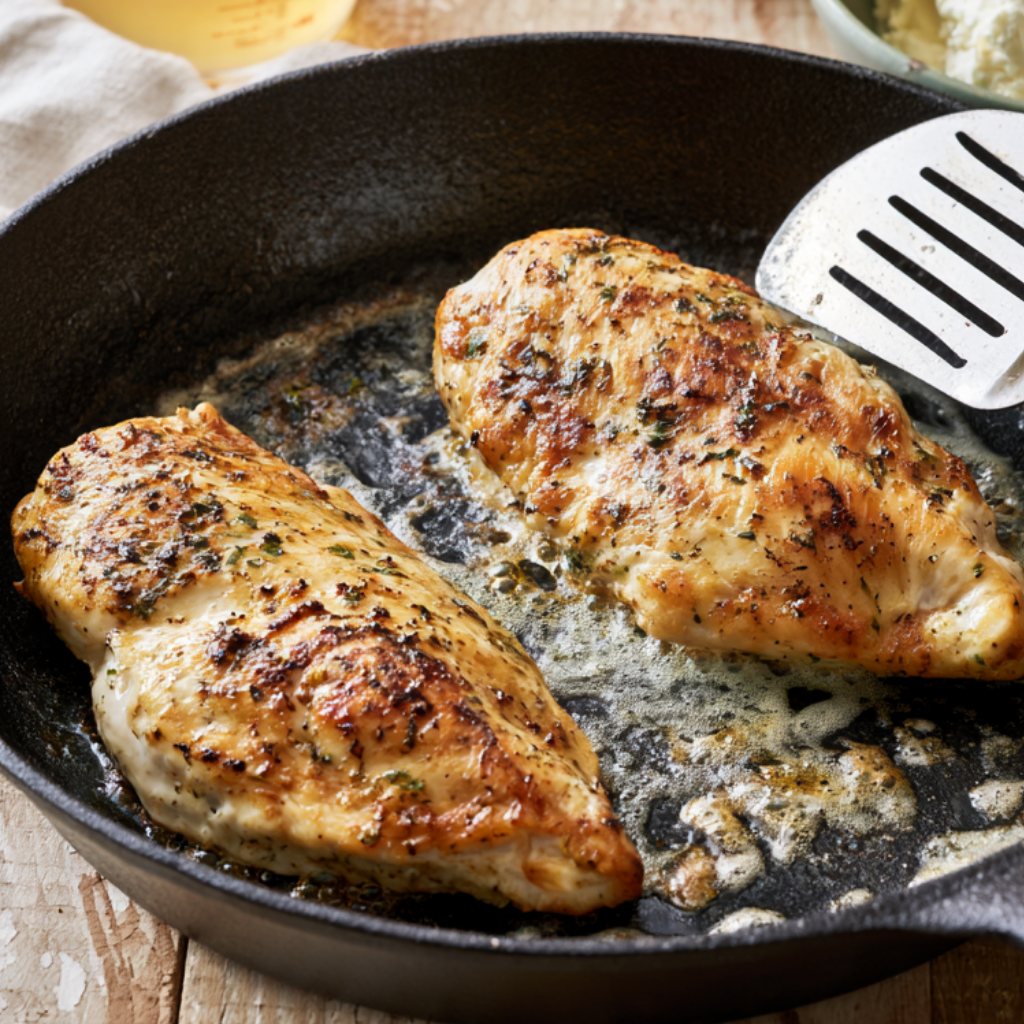
Step 1: Pound and season the chicken.
Pound 4 boneless, skinless chicken breasts to an even ¾-inch thickness between plastic wrap. Pat them dry and season both sides with 1 teaspoon kosher salt, ½ teaspoon black pepper, 1 teaspoon smoked paprika, and 1 teaspoon garlic powder.
Step 2: Sear the chicken.
Heat 2 tablespoons of olive oil in a large cast iron or heavy skillet over medium-high heat until it shimmers. Add the chicken in a single layer and sear undisturbed for 5 to 6 minutes, until a deep golden crust forms. Flip and cook another 3 to 4 minutes, until an instant-read thermometer reads 155 to 160°F. Transfer to a warm plate and tent loosely with foil.
Step 3: Bloom the aromatics and deglaze.
Reduce the heat to medium-low. Add 4 minced garlic cloves, ½ teaspoon dried thyme, ½ teaspoon red pepper flakes, and ½ teaspoon smoked paprika to the residual drippings. Stir constantly for 30 seconds, until fragrant. Pour in ½ cup low-sodium chicken broth, 1 tablespoon fresh lemon juice, 1 teaspoon Dijon mustard, and 1 tablespoon honey, scraping up the browned bits from the bottom of the pan. Simmer for 2 to 3 minutes, until the liquid reduces to about ⅓ cup.
Step 4: Remove the pan from the heat.
Turn the heat to low or remove the pan from the burner. Add the cold cubed butter two cubes at a time, whisking or swirling continuously after each addition until the butter melts seamlessly into a glossy, velvety sauce. Stir in 2 tablespoons of chopped fresh parsley.
Step 5: Slice, coat, and serve.
Slice the rested chicken into thick strips and arrange on a serving platter or back in the skillet. Spoon the sauce generously over the top and serve immediately.
Tips and Troubleshooting
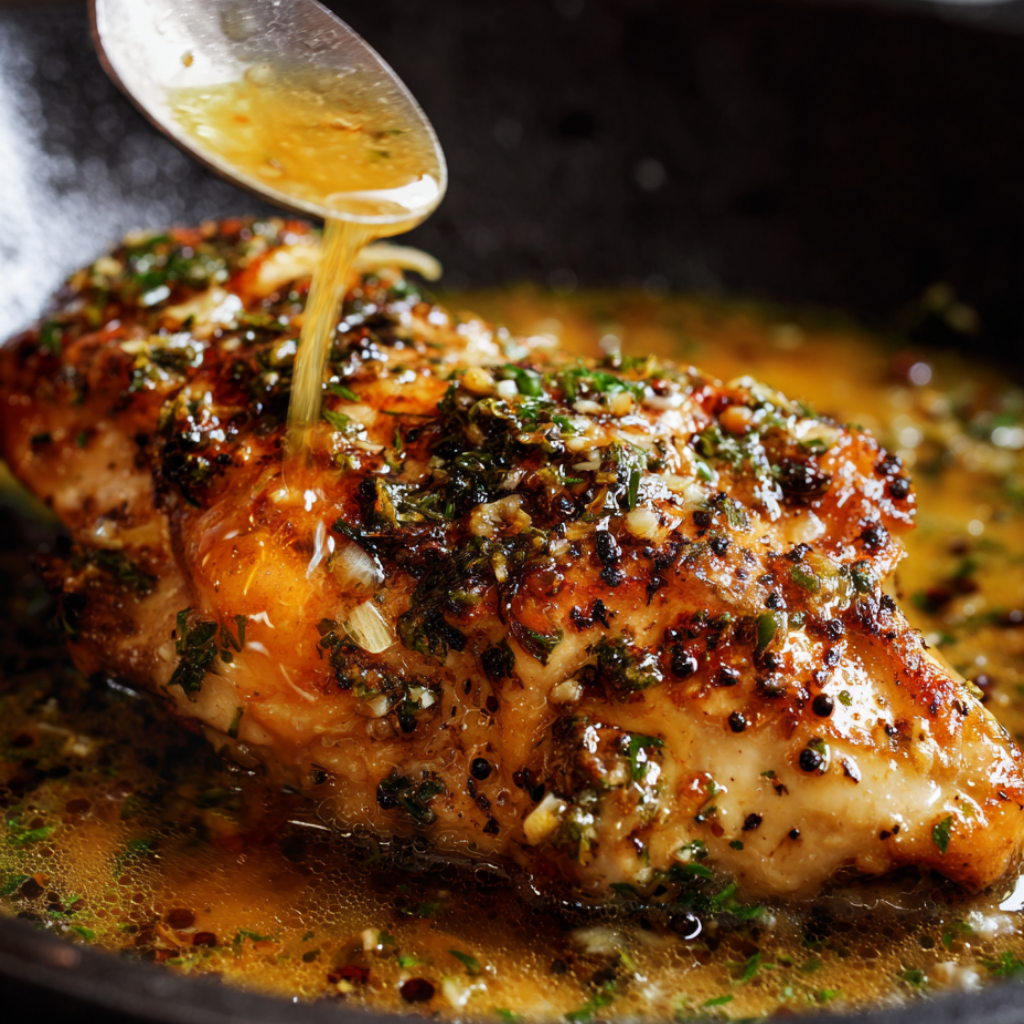
The sauce is greasy and separated. The butter wasn’t cold, or the pan was too hot. Use cold cubed butter, add it off the heat, and whisk constantly.
The sauce is too thin. The broth wasn’t reduced enough before you added the butter. Simmer it until it reduces to about ⅓ cup, then mount the butter.
The sauce is too thick. It reduced too far. Whisk in a splash of broth or water before the butter goes in.
The garlic tastes bitter. It browned instead of turning fragrant. Thirty seconds over medium-low heat is the window — pull the pan off the heat if it starts to darken.
The chicken is dry. It cooked past 165°F, or you simmered it in the sauce. Pull it at 155 to 160°F and spoon the sauce over it off the heat.
The chicken is bland. It wasn’t seasoned directly, or the sauce needed more salt. Season both sides before searing and taste the sauce before serving.
The sauce tastes too sharp. The lemon or Dijon was heavy-handed. Add another teaspoon of honey and taste.
Storage and Make-Ahead
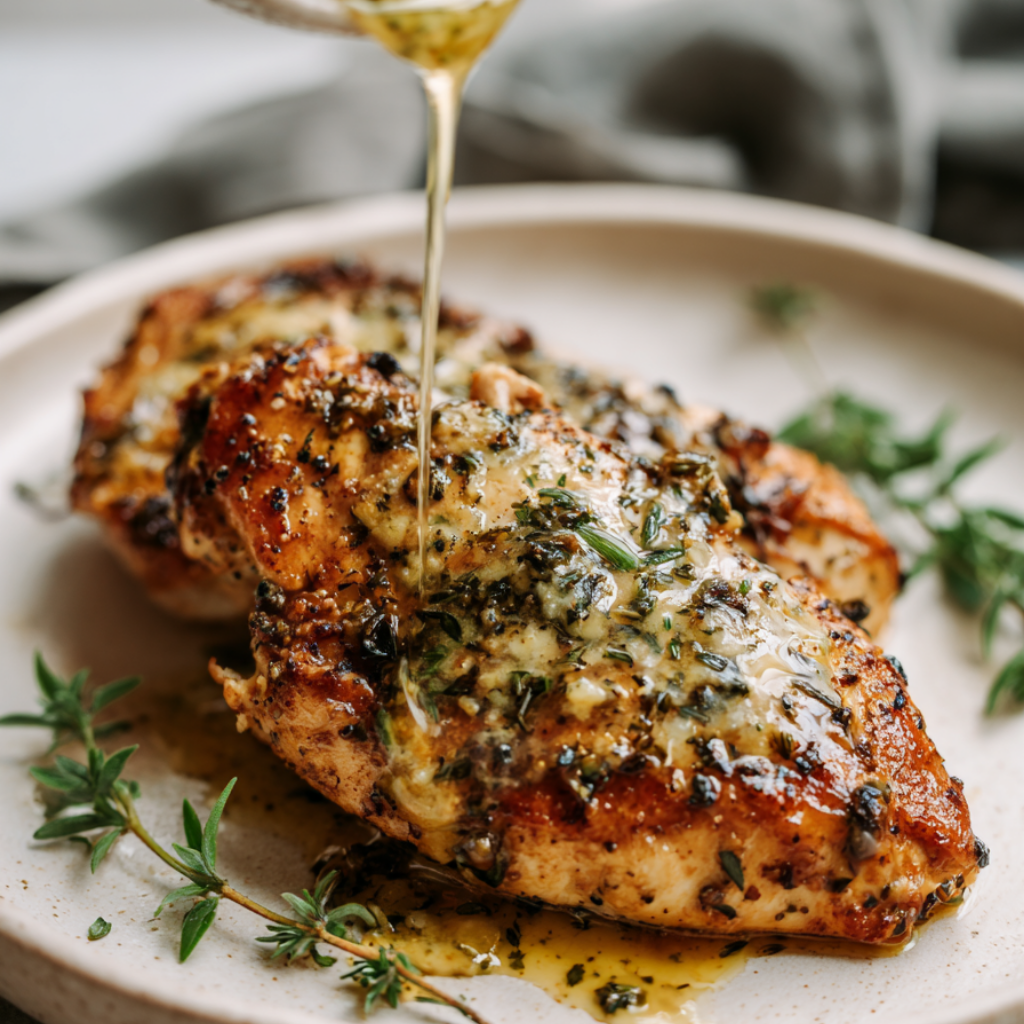
Store the chicken and sauce in a sealed container in the refrigerator for up to 3 days. Reheat gently in a skillet over low heat with a splash of broth, until just warmed through — high heat will break the sauce.
You can pound and season the chicken up to a day ahead and refrigerate it. The sauce is best made fresh, but you can whisk the broth, lemon, Dijon, and honey ahead and refrigerate.
I don’t recommend freezing the finished dish. Butter sauces separate on thawing.
Store leftovers in the refrigerator within 2 hours of cooking, and discard anything left at room temperature for more than 2 hours. Reheat to 165°F.
Skillet Cowboy Butter Chicken with Lemon, Garlic & Herbs
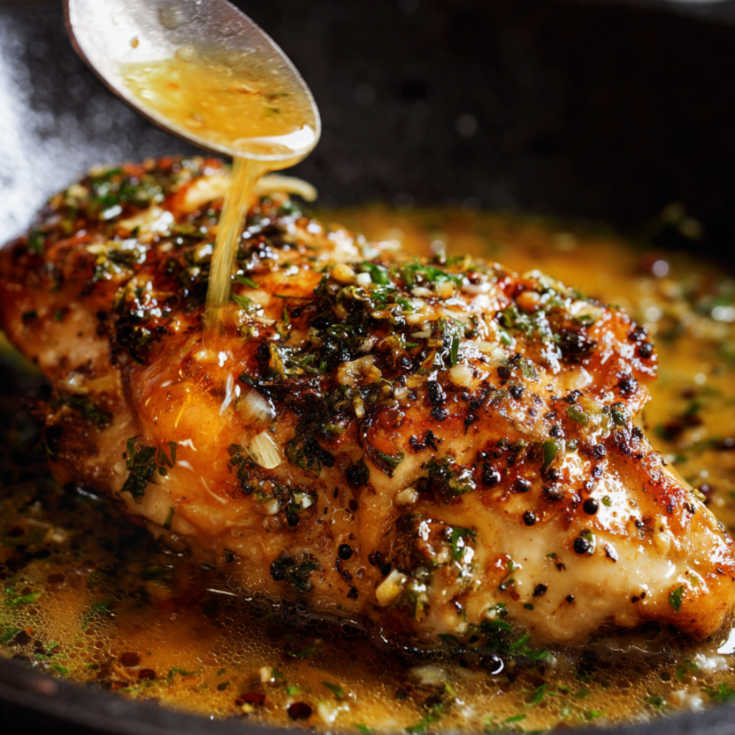
Seared chicken breasts finished in a glossy lemon-garlic butter sauce with Dijon, honey, smoked paprika, and fresh herbs. About 46g of protein per serving.
Ingredients
For the chicken:
- 4 boneless, skinless chicken breasts (6–8 oz each), pounded to ¾-inch thickness
- 1 tsp kosher salt
- ½ tsp black pepper
- 1 tsp smoked paprika
- 1 tsp garlic powder
- 2 tbsp olive oil or avocado oil
For the cowboy butter sauce:
- 8 tbsp unsalted butter, cut into 8 cubes and kept cold
- 4 cloves garlic, finely minced
- ½ tsp dried thyme
- ½ tsp red pepper flakes
- ½ tsp smoked paprika
- ½ cup low-sodium chicken broth
- 1 tbsp fresh lemon juice
- 1 tsp Dijon mustard
- 1 tbsp honey
- 2 tbsp fresh flat-leaf parsley, chopped
Instructions
- Pound the chicken to an even ¾-inch thickness, pat dry, and season both sides with salt, pepper, smoked paprika, and garlic powder.
- Heat the oil in a large skillet over medium-high heat. Sear the chicken for 5 to 6 minutes on the first side, flip, and cook 3 to 4 more minutes, until 155 to 160°F. Transfer to a plate and tent with foil.
- Reduce the heat to medium-low. Add the garlic, thyme, red pepper flakes, and paprika and stir for 30 seconds, until fragrant. Pour in the broth, lemon juice, Dijon, and honey, scraping up the browned bits, and simmer 2 to 3 minutes until reduced to about ⅓ cup.
- Turn the heat to low or off the heat. Whisk in the cold cubed butter two at a time until the sauce is glossy and velvety. Stir in the parsley.
- Slice the rested chicken, spoon the sauce over the top, and serve.
Notes
Notes: The sauce is a coating, not a gravy — it's meant to spoon over the chicken and rice, not to pool like a stew. Cold butter added off the heat is what keeps it glossy instead of greasy. Pull the chicken at 155 to 160°F — carryover brings it to 165°F. Refrigerate leftovers for up to 3 days. Not recommended for freezing. Nutrition information is an estimate.
Nutrition (per serving, estimated): About 530 calories, 46g protein, 7g carbs, 35g fat, 0g fiber, 650mg sodium.
FAQ
Can I use chicken thighs instead of breasts?
Yes. Boneless, skinless thighs work and stay juicy, but they need 6 to 7 minutes per side. Cook them to 175°F.
How much sauce does this make?
About a cup of finished sauce for four breasts, enough to spoon generously over the chicken and serve with rice or mashed potatoes on the side. It’s a coating, not a gravy, so it won’t pool in the pan like a stew.
Can I make the sauce ahead of time?
The sauce is best made fresh, but you can whisk together the broth, lemon juice, Dijon, and honey up to a day ahead and refrigerate. Mount the butter right before serving.
Can I use salted butter?
Yes, but reduce the salt in the chicken seasoning by half. Salted butter plus seasoned chicken can push the dish over the salt line.
What is cowboy butter usually served with?
It’s often a dipping sauce for steak, but it works as a pan sauce for chicken, shrimp, and vegetables. It also works well drizzled over roasted potatoes.
Can I make this dairy-free?
Not easily. Butter is the sauce, and dairy-free butter doesn’t emulsify the same way. I haven’t tested a dairy-free version.
What do you serve with cowboy butter chicken?
Rice, mashed potatoes, crusty bread, or roasted vegetables. The sauce is rich, so it’s worth having something to soak it up.
More Chicken Breast Recipes You’ll Love
- Creamy Baked Million Dollar Chicken Breast Recipe
- Creamy Baked Chicken — Silky Sour Cream Sauce with a Crispy Crust
- Garlic-Herb Mediterranean Chicken Breast — Juicy Yogurt Marinade
Closing
This is the chicken I make when I want a steakhouse plate without the steakhouse bill.
The sear builds the flavor, the cold butter makes the sauce glossy, and the lemon and honey keep it balanced.
It’s the version I keep coming back to, and it’s the one I’d hand you first.