
A baked potato is one of those dinners I forget about for months and then make three times in two weeks. It’s cheap, it’s filling, and it’s a blank canvas — which is exactly the problem.
Most loaded baked potato recipes are side dishes dressed up as meals: butter, sour cream, cheese, bacon, and not much else.
They taste great, and they leave you hungry an hour later.
This version is built to be dinner.
The mash gets blended cottage cheese instead of sour cream, which adds protein without turning the filling tangy or heavy.
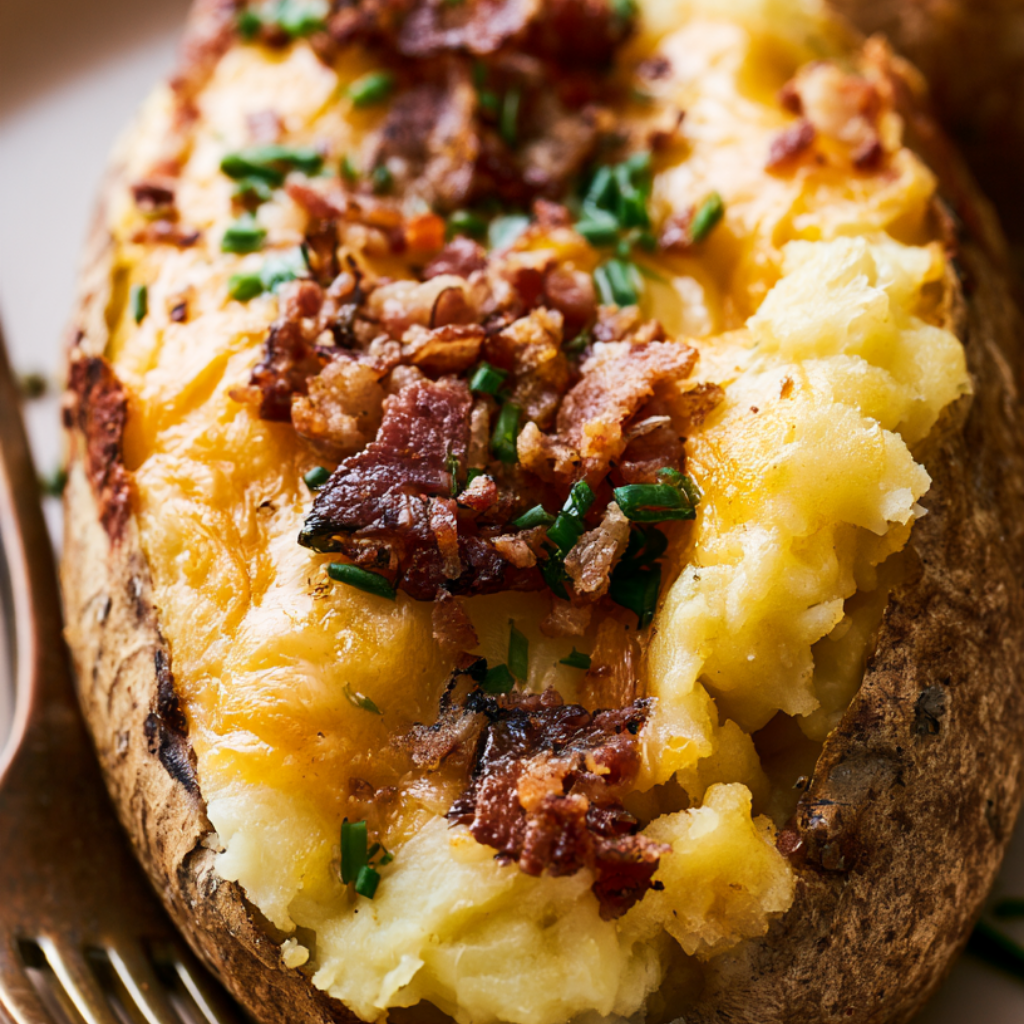
The bacon and the lean beef go in two places — some folded into the mash and the rest piled on top — so every bite has some.
And the whole thing gets a quick broil at the end so the cheese melts into a bubbly crown and the skins stay crisp underneath.
Each potato lands at about 30 grams of protein, which is unusual for something that tastes this much like a loaded potato.
It’s the kind of dinner I make when I want something that feels like a treat but still keeps me going until morning.
If you want the sweet potato version instead — the one stuffed with seasoned ground turkey, black beans, corn, and a creamy cheddar mash — I’ve got that too.
It takes a little more work, and I make it when I want a full Tex-Mex dinner instead of a classic loaded potato.
Why This Recipe Works
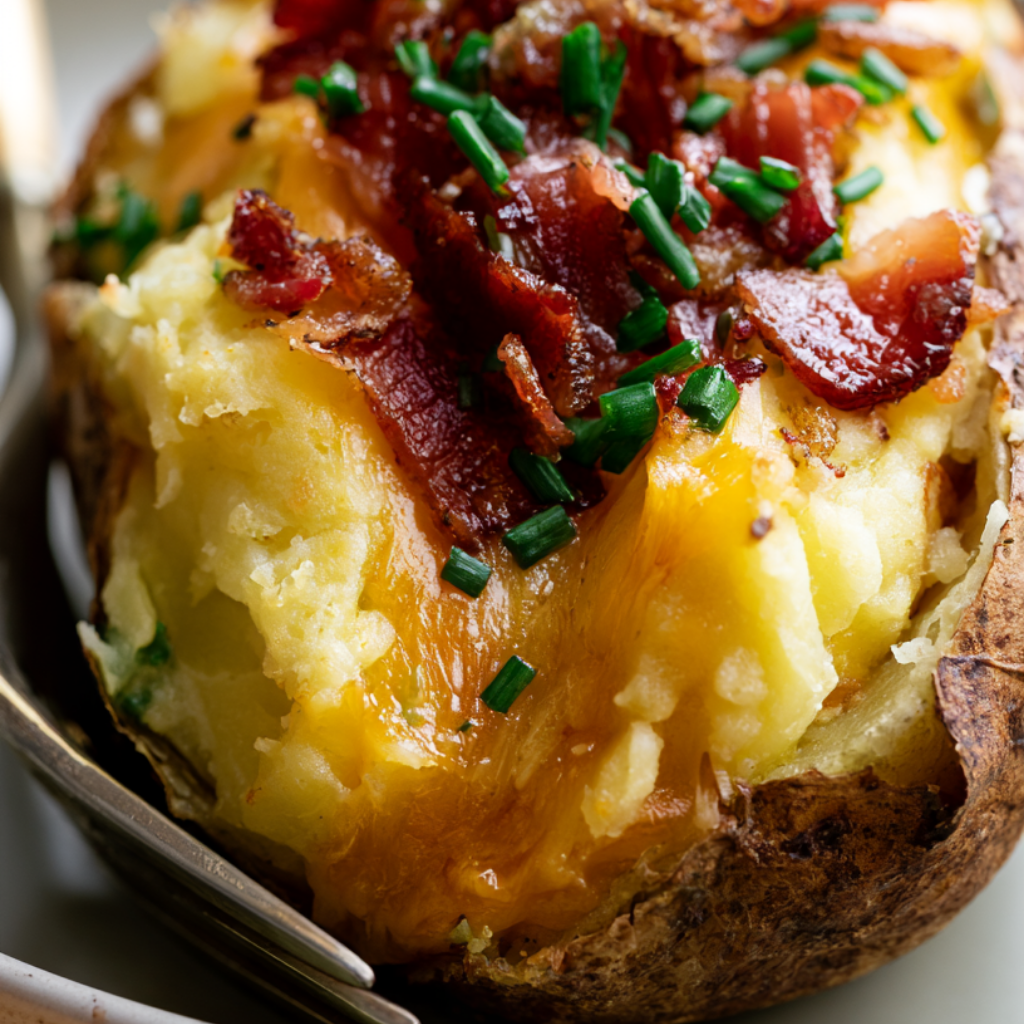
Blended cottage cheese is what makes the mash high-protein without making it tangy. Cottage cheese blended until smooth has about 24 grams of protein per cup, and it whips into the potato flesh like sour cream. Full-fat sour cream tastes richer, but cottage cheese keeps the mash fluffy and adds protein instead of just fat.
Baking the potatoes dry, directly on the oven rack, is what gives you crispy skins. Foil traps steam and the skin comes out soft. On the rack, the skin dries and crisps, and it holds its structure when you stuff it.
Scooping the flesh and leaving a ¼-inch shell is what keeps the potato from collapsing. A thin shell tears when you stuff it; a thick one doesn’t hold enough filling. A quarter inch is the balance.
Adding the bacon and beef in two stages is what makes every bite taste loaded. Half goes into the mash to season the whole potato, and half goes on top to stay crisp and visible. If you put it all in the mash, the top looks plain. Put it all on top, and the mash tastes like plain potato.
Broiling at the end melts the cheese without drying out the potato. Two to three minutes under high heat melts the cheddar into a golden crown, and the potato underneath stays hot and fluffy.
The chives go on after the broil, not before. They stay bright green and fresh, and the mild onion flavor cuts through the richness of the cheese and bacon.
Cooking the bacon until it’s shatteringly crisp is what keeps it crisp under the broiler. Slightly underdone bacon goes soft when it hits the heat. Crisp bacon stays crisp.
Ingredients That Matter
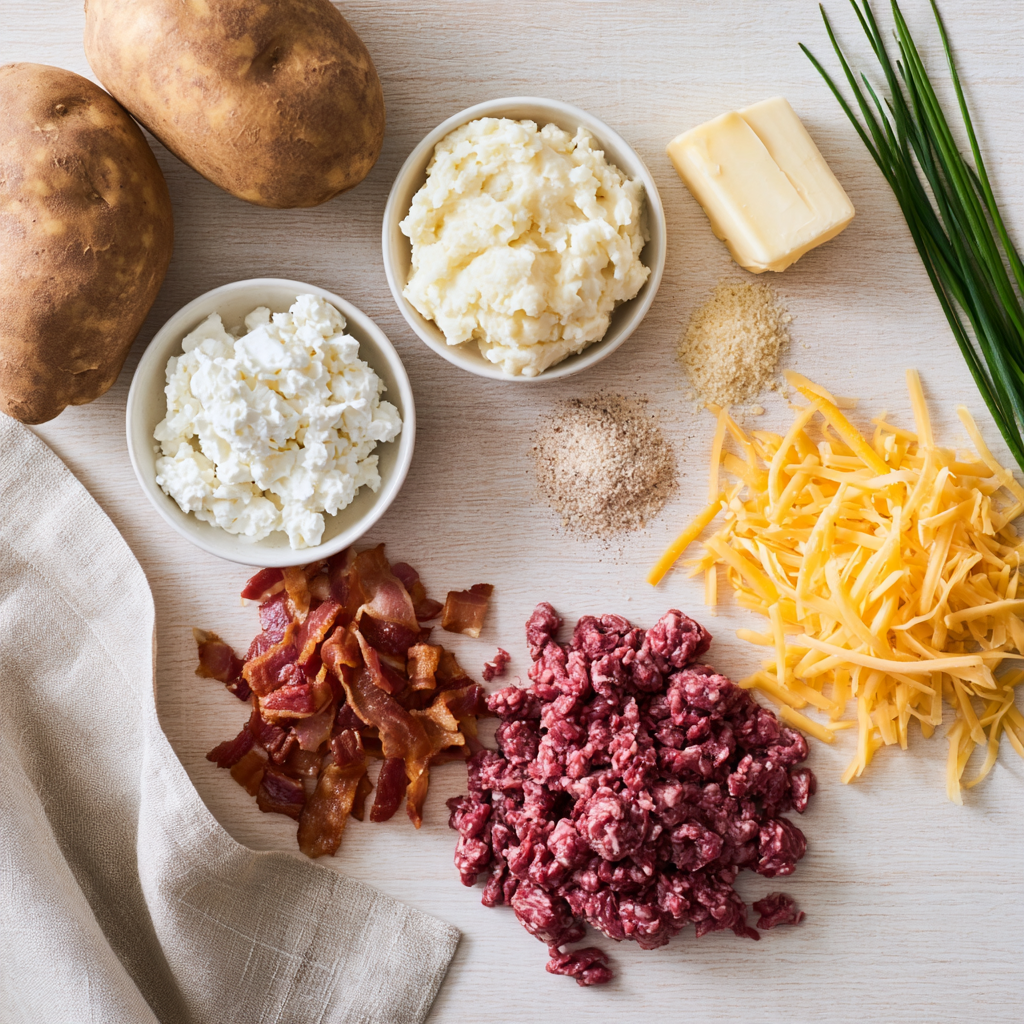
Most of this list is flexible. Three ingredients are easy to get wrong, so those are the ones worth explaining.
Large Russet potatoes, 8 to 10 ounces each. Russets have the starchy, fluffy flesh that mashes well and the thick skins that crisp in the oven. Yukon Golds work, but they’re waxier and the skins don’t crisp the same way.
Blended cottage cheese, full-fat or 2%. The cottage cheese has to be blended until completely smooth — no visible curds — or the mash will be grainy. Full-fat tastes richer; 2% is lighter and still works.
Center-cut bacon or turkey bacon, cooked until shatteringly crisp. Center-cut bacon has more meat and less fat, and it crumbles cleanly. Turkey bacon works and is leaner, but you need to cook it until very crisp for it to hold up.
How to Make It
Step 1: Bake the potatoes.
Preheat the oven to 400°F. Scrub and dry 4 large Russet potatoes, rub them with 1 tablespoon of oil, and sprinkle with 1 teaspoon of coarse kosher salt. Prick each potato 3 to 4 times with a fork and place them directly on the center oven rack. Bake for 50 to 60 minutes, until a knife slides into the center with no resistance.
Step 2: Vent and scoop.
Remove the potatoes from the oven and slice a shallow oval off the top of each. Scoop the flesh into a large bowl with a spoon, leaving a sturdy ¼-inch shell. Place the shells back on a baking sheet.
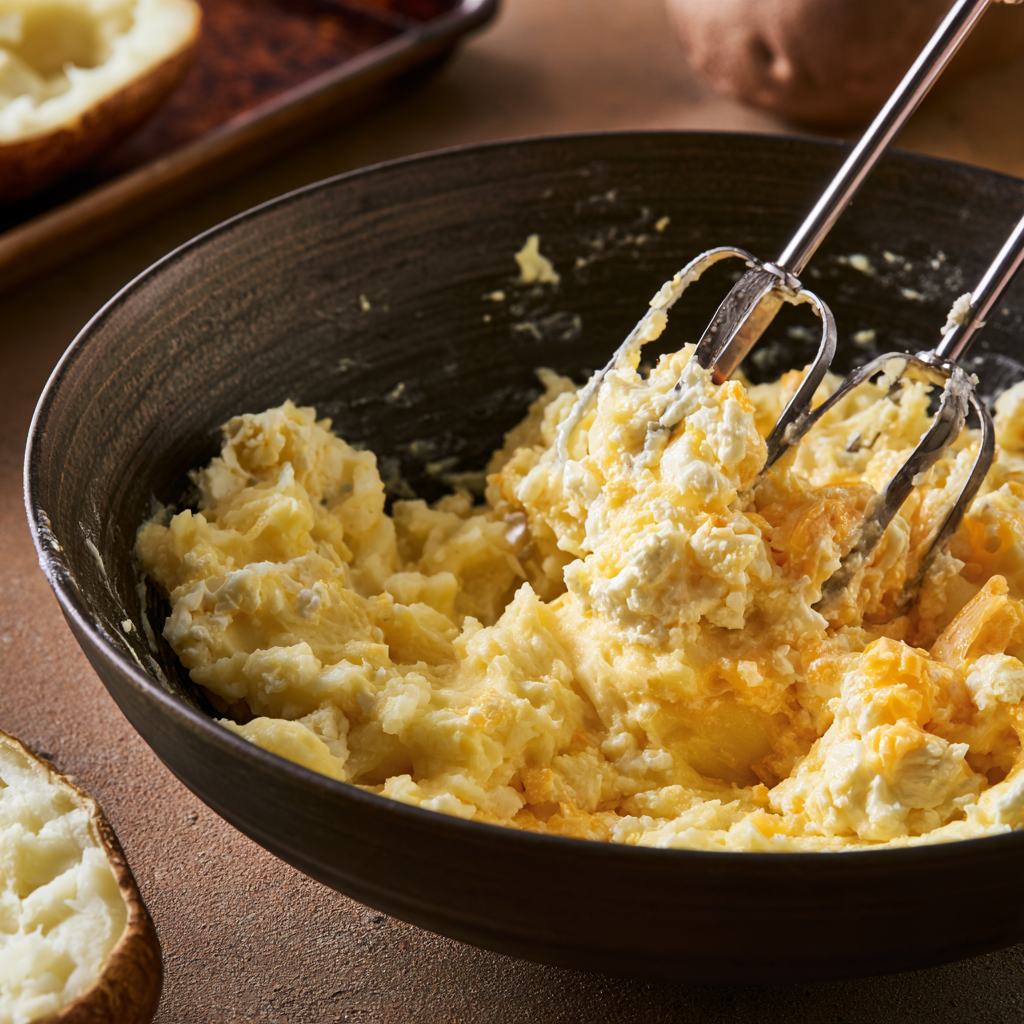
Step 3: Whip the mash.
Add to the bowl with the hot potato flesh 1 cup blended cottage cheese, 2 tablespoons softened light butter, ½ teaspoon garlic powder, ½ teaspoon onion powder, ½ teaspoon kosher salt, black pepper to taste, and ½ cup shredded sharp cheddar. Mash and whip with a fork or hand mixer until creamy and smooth. Stir in half of the cooked lean beef and half of the crumbled bacon.
Step 4: Stuff and layer.
Spoon the mash back into the 4 potato shells, mounding it high. Top each potato with the remaining beef, the remaining ½ cup of cheddar, and the rest of the bacon.
Step 5: Broil.
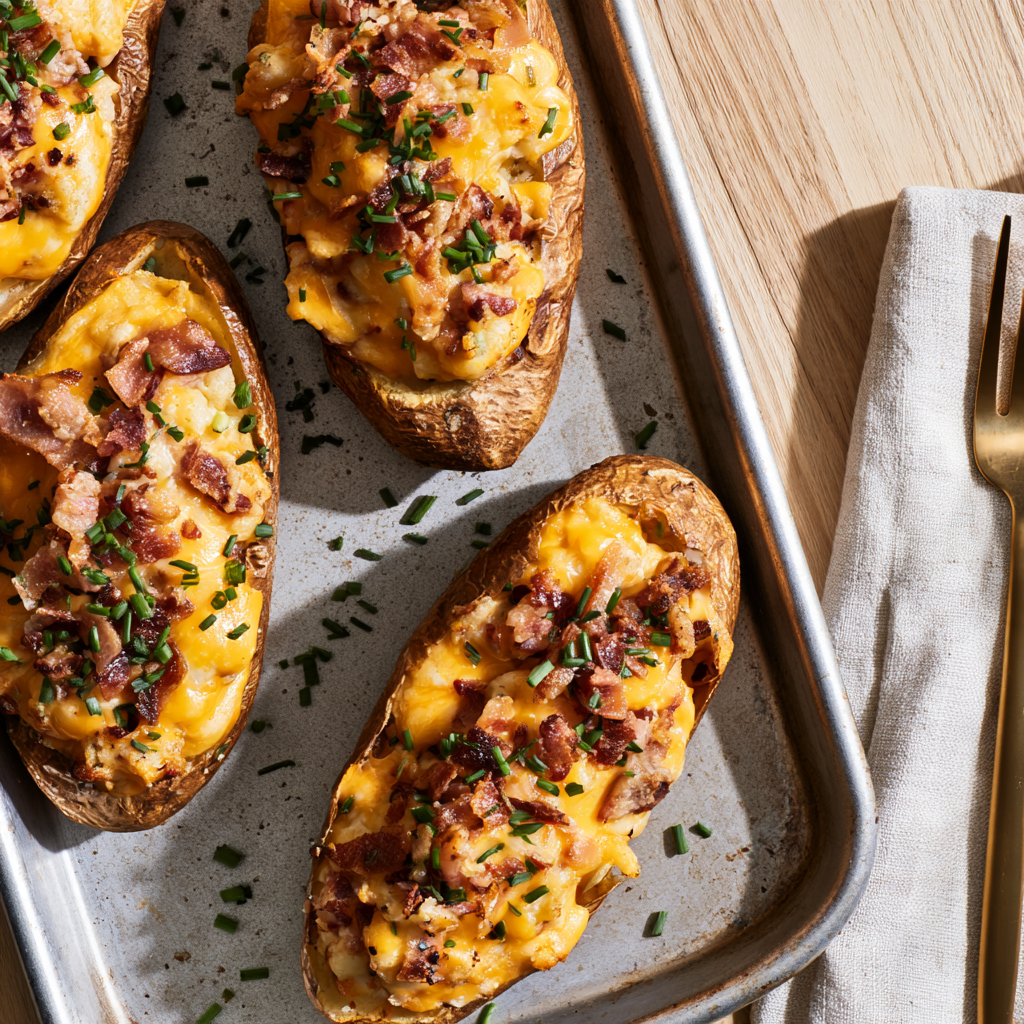
Switch the oven to broil on high. Place the stuffed potatoes on the top rack for 2 to 3 minutes, until the cheddar is melted, golden, and bubbling.
Step 6: Garnish and serve.
Finish with a generous sprinkle of chopped fresh chives or green onions and serve hot.
Tips and Troubleshooting
The potato skins are soft instead of crispy. They were wrapped in foil or baked on a baking sheet instead of directly on the rack. Bake them dry on the rack.
The mash is grainy. The cottage cheese wasn’t blended until completely smooth. Blend it for 45 seconds, until there are no visible curds.
The potato collapsed when stuffed. The shell was too thin. Leave a ¼-inch shell when you scoop.
The cheese didn’t melt. The broiler wasn’t hot enough, or the potatoes were too far from the element. Broil on the top rack and watch closely.
The bacon turned soft. It wasn’t cooked until shatteringly crisp before it went on. Cook it until it crumbles cleanly.
The filling is dry. The potato flesh was cold when you mashed it, or you didn’t use enough cottage cheese. Mash while the potatoes are hot and use the full cup.
The potatoes taste bland. The skins weren’t salted, or the mash needed more salt. Salt the skins before baking and taste the mash before stuffing.
Storage and Make-Ahead
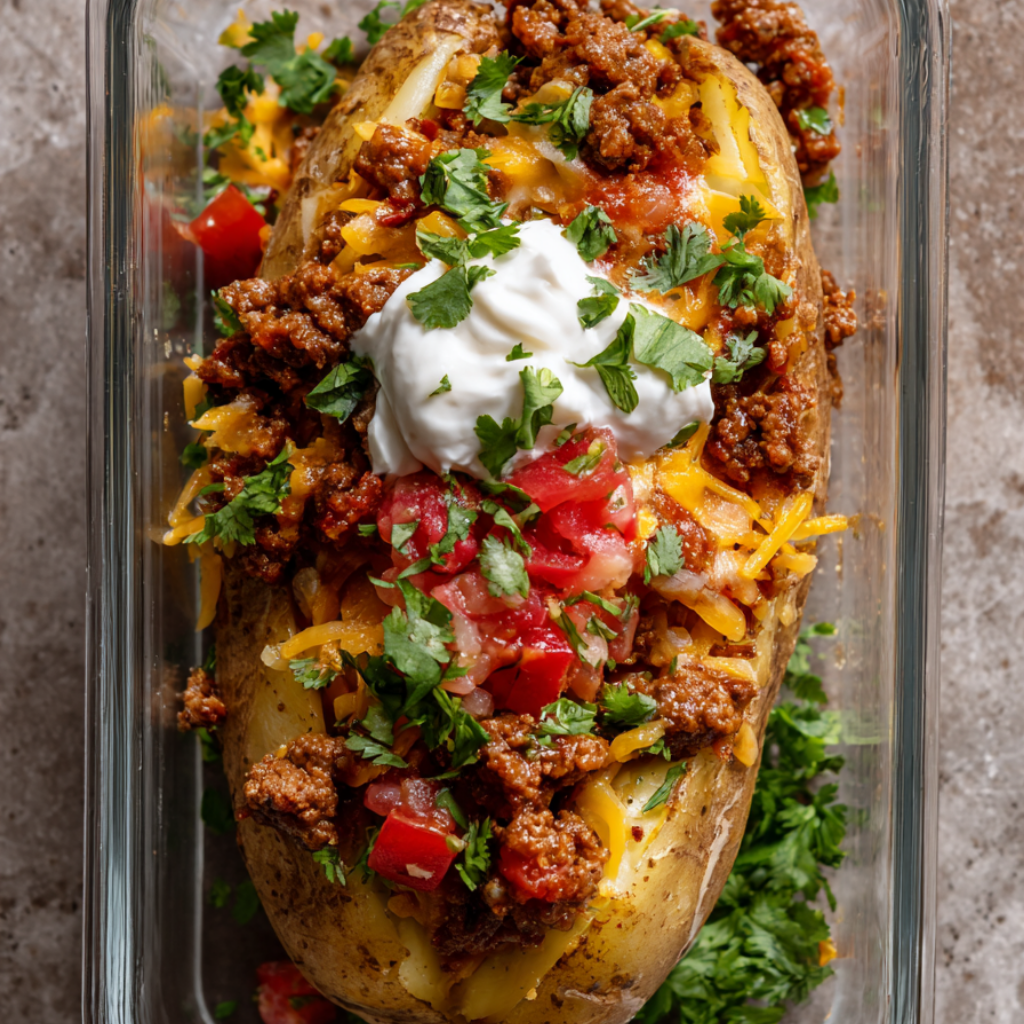
You can bake the potatoes up to a day ahead and refrigerate them whole. Reheat in a 350°F oven for 15 to 20 minutes before scooping and stuffing.
Cover and refrigerate the assembled, unbaked stuffed potatoes up to a day ahead. Add 5 minutes to the broil time if they go in cold.
Leftovers keep in a sealed container in the refrigerator for up to 3 days. Reheat in a 350°F oven for 15 minutes, until heated through and the cheese re-melts.
I don’t recommend freezing the assembled potatoes. The mash separates on thawing.
Store leftovers in the refrigerator within 2 hours of cooking, and discard anything left at room temperature for more than 2 hours. Reheat to 165°F.
High-Protein Loaded Baked Potatoes
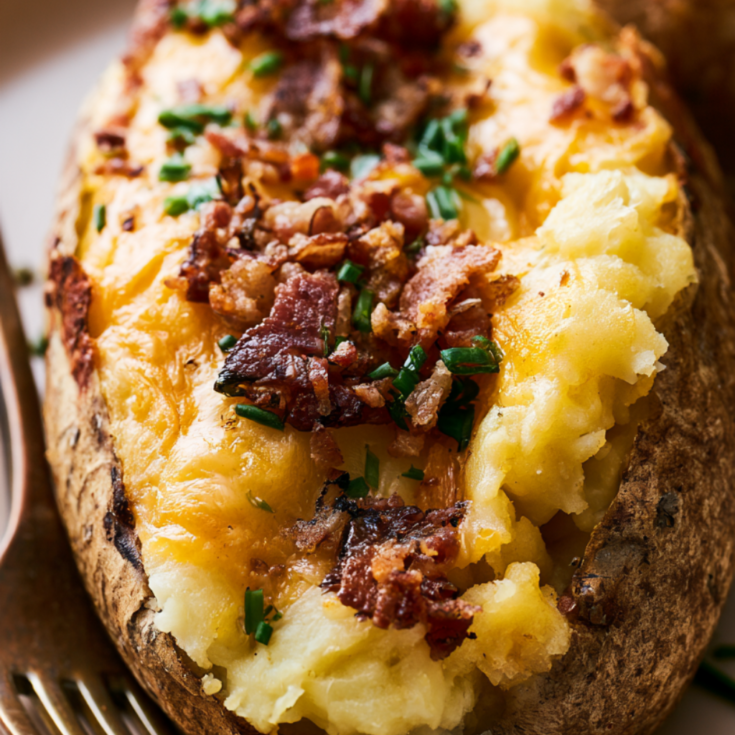
Crispy-skinned Russet potatoes stuffed with a blended cottage cheese mash, lean beef, crisp bacon, and melted sharp cheddar. About 34g of protein per potato.
Ingredients
For the potatoes:
- 4 large Russet potatoes (8–10 oz each), scrubbed and dried
- 1 tbsp avocado or olive oil
- 1 tsp coarse kosher salt
For the mash:
- 1 cup low-fat cottage cheese, blended until smooth
- 2 tbsp light butter or ghee, softened
- ½ cup reduced-fat sharp cheddar, shredded
- ½ tsp garlic powder
- ½ tsp onion powder
- ½ tsp kosher salt
- Black pepper to taste
For the toppings:
- 8 slices center-cut bacon or turkey bacon, cooked crisp and crumbled
- 1 cup cooked lean protein (93/7 ground beef, shredded buffalo chicken, or diced ham)
- ½ cup reduced-fat sharp cheddar, shredded
- ¼ cup fresh chives or green onions, chopped
Instructions
- Preheat the oven to 400°F. Rub the potatoes with oil, sprinkle with salt, prick with a fork, and bake directly on the rack for 50 to 60 minutes, until tender.
- Slice a shallow oval off the top of each potato, scoop the flesh into a bowl, and leave a ¼-inch shell. Return the shells to a baking sheet.
- Mash the hot potato flesh with the blended cottage cheese, butter, garlic powder, onion powder, salt, pepper, and ½ cup cheddar until smooth. Stir in half the beef and half the bacon.
- Stuff the shells with the mash, mounding high. Top with the remaining beef, cheddar, and bacon.
- Broil on high for 2 to 3 minutes, until the cheese melts and turns golden.
- Garnish with chives and serve.
Notes
Notes: Blend the cottage cheese until completely smooth, so the mash isn't grainy. Bake the potatoes dry on the rack for crispy skins. Keep leftovers refrigerated for up to 3 days. Not recommended for freezing. Nutrition information is an estimate.
Nutrition (per serving, estimated): About 520 calories, 34g protein, 42g carbs, 22g fat, 4g fiber, 880mg sodium.
FAQ
Can I use Greek yogurt instead of cottage cheese?
Yes. Plain Greek yogurt works and adds a slight tang. Use the same amount, and blend it if it’s thick.
Can I use ground turkey instead of beef?
Yes. Ground turkey works, but season it a little more aggressively since it has less flavor than beef.
Can I make these vegetarian?
Yes. Skip the bacon and beef and add a can of drained chickpeas and extra cheddar. The protein drops to about 22g per potato.
Can I use a different potato?
Yukon Golds work but are waxier and the skins don’t crisp the same way. Russets are the right choice for this recipe.
Can I microwave the potatoes instead of baking them?
You can, but the skins won’t crisp. Microwave them for 8 to 10 minutes, then finish them in a 425°F oven for 10 to 15 minutes to crisp the skin.
What do you serve with loaded baked potatoes?
They’re a complete meal on their own. A simple green salad or steamed broccoli on the side adds a vegetable.
More High-Protein Meals You’ll Love
- Loaded Baked Potato Meal Prep — 45g Protein, Fall & Winter Work Lunches
- Easy Ground Beef and Potato Casserole for a Crowd
- Easy Crockpot Cheesesteak Potato Casserole — 36g Protein, Weeknight Dinner
Closing
This is the baked potato I make when I want dinner to feel like a treat and still hold me until morning.
The blended cottage cheese does the protein, the bacon and beef go in two places so every bite is loaded, and the quick broil gives you the melted cheese crown.
It’s the version I keep coming back to, and it’s the one I’d hand you first.